On was an interdisciplinary graduate periodical established by RISD graduate students in 2006. It featured essays and student work that related to a general issue theme. On was intended as a quarterly publication, but it is unclear if further issues beyond the first were ever published.
-

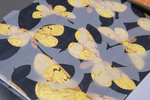
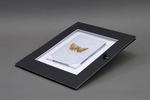
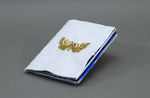
The moment someone opens a book, a Venus flytrap is tightening its cage
Chenlu Hou
his thesis examines transitions as a form of transformation.
-
Conversations in 2019
Kit Howland
This thesis is a collected series of interview questions and my responses. The topics include aesthetics, phenomenology, queerness, the void, distinctions between art and design, designing emotional content, scale, minimalism, duality, multiplicity, formalism, intellectualism, the experience of living with your work, the critique, presentational strategies, and otherness.
-
Architecture as magnet : extension to Fort Adams
Mingyi Hu
According to a study from KADK (The Royal Danish Academy of Fine Arts, Schools of Architecture), social interaction mainly depends on whether people have common interests, such as the economy, politics or ideology.¹ However, it is difficult for some who feel they have different experiences or beliefs to interact within a group, which will affect their psychological state. These people need a physical environment designed to create conditions for more extensive and effective communication opportunities.
Architecture can provide a platform to help people gather together, share ideas, and create a sense of community. Architecture that holds visitors in an enclosure with a relationship to nature is proposed to encourage the development of social relations, making people feel group resonance and unity.
This thesis explores how architecture as a magnet to bring people together and achieve emotional resonance. One fractured group who needs this type of architecture is military veterans, who not only have trouble adjusting to civilian life, but also have difficulty relating to one another. To support the rehabilitation and recovery of veterans and help them embrace community and camaraderie outside of the military, an residential rehabilitation environment to gather and gain a collective identity is proposed. In this project, the northeast corner of Fort Adams in Newport, Rhode Island will become a reconstruction project dedicated to changing this great historical military base into a central hub for veterans integrating accommodation, dining, communication, relaxation, and hot bath therapy. To host this function, five earth-covered constructions have been inserted, with a private courtyard isolated from the interior site where the veterans will gather. Also, an annular circulation has been designed to increase the possibility of encountering with each other during their stay. In addition to the local advantages of Fort Adams, the government will focus on transforming the iconic landmark into a tourist attraction that provides media contact for veterans who want to acclimate faster into urban life. For nearly two centuries, Fort Adams has been standing strong in Newport Bay without being knocked down, and the massive, rough stone walls will continue to provide psychological and physiological security for its residents.
-
Black Aesthetics and Relative Autonomy
Michael Kelly
There has been a recent revival of black aesthetics unprecedented since the 1960s. Some is happening inside academic philosophy, including in this journal (Volume 7, 2009). But there are more examples of black esthetics across other disciplines. A key, controversial concept in transdisciplinary black aesthetics is autonomy. Modern Western aesthetics was racist when it was established in the eighteenth century because blacks were not considered to be capable of autonomy, necessary to have taste. Now that this anti-black racism has been exposed, but until critics are convinced that aesthetics today is free of such racism, autonomy will be viewed as an ideological disguise for racism and even black aesthetics will be under suspicion. Simon Gikandi details the anti-black racism of early aesthetics yet argues at the same time that there was a black counter-aesthetic enacting its relative autonomy. I show that relative autonomy is enacted throughout modern and contemporary black art and aesthetics.
-
Among : a series of enactments
Joel F. Kern
AMONG captures the practice of a constructionist designer, one who oscillates between the characteristics of typography, multi-materiality, and spatiality yet does not attach solely to the physical or digital. The fundamental principles of this practice include open platforms that foster generative collaboration through modular systems. AMONG straddles the borders of graphic design, environmental design and social sculpture. At its core, this practice encourages new ways of connecting communities.
-
The Aesthetic and Financial Markets. Beyond Mere Representing and Supporting
Marcin M. Krawczyk
The aesthetic, according to Wolfgang Welsch, has several semantic variants. One of them is a phenomenalistic one. Referring to this variant, I show that the aesthetic is something more than a secondary component of electronic capital markets, which reflects what is happening to them and supports economic actors in their investment decisions. Namely, it is something that reaches out to such important things as the very existence and functioning of financial markets, their moral and social legitimization, the mode of participation of economic actors on these markets, their experiences and behavior and the popularity of investing in the markets. Thus, it can be said that the aesthetic is an integral and constitutive element of capital markets and not just their supplement, which only represents these markets and supports financial subjects in their investment behavior.
-
The person-less portrait
Katelyn Ledford
In an age of digital technologies, contemporary portraits look different than their predecessors did. Portraiture does not have to continue to rely only on the idea of physical likeness, even though that is generally how portraiture is conceived. Through our virtual lives, we build new versions of ourselves, gain an abundance of information, and consume technological visuals. These newfound engagements and understandings shape the portraits we build of ourselves and of other groups at large. In my painting practice, portraiture is a way to explore the contemporary landscape around me as a woman and a painter who engages in digital life a little too much at times. I find and create portraits within women’s social media profiles, the mass of online images, and the visuals in various technologies. With these sources, I seek a mode of painting that can slow down the viewer and make them consider our image-saturated, online-obsessed, contemporary reality within the framework of portraiture.
-
Tea journeys : exhibition as experience
Liujun Liao
In the past, the public came to see the exhibition because it was a rare opportunity to learn about the culture on the other side of the earth.
With the development of science and technology, exhibition forms are becoming more and more diverse. People can see more exhibits and smaller details without leaving home.
Therefore, I would like to ask: " When it becomes so convenient to get information in modern life, is there any reason for people to enter the exhibition hall?" "When people go into the exhibition hall, what do people really want to get? ”“What can be digitized in an exhibition, and what elements are not supposed to be transformed into virtual?”
My answer is the experience.
In order to make a way of experience as diverse as possible, I chose "tea" as the theme. It can connect the various senses of the human body including seeing, smelling, tasting, listening and touching, and at the same time, tea has a long history and countless kinds, so it can bring unlimited possibility to the exhibition. However, in this design, I tried to break the didactic exhibition design method, not to introduce people to the history or the variety of tea, but to abstractly express the ancient Chinese philosophy behind the tea, that is, Tea Zen.
My design is to extract the key words through the summary of the core ideas of Zen, and then convert the keywords into design language and combine with space.
One of the core ideas of Tea Zen is to "enjoy quiet from noise", which can be understood that seeking a piece of quiet space in noise environment or can also be understood as seeking spiritual stability. The address I chose was located in the“Tea Master” tea flagship store in Hangzhou, Zhejiang Province, China. Hangzhou is one of the most important tea producing areas in China and has a long history. Moreover, it is located on the first floor of the Qinchengli Shopping Center, surrounded by companies like Alibaba, Pioneer Park, and the business circle, which can be seen as a perfect place to conduct the idea of "quiet in the noise ".
-
Picture Collection Art File Index
Fleet Library and Visual + Material Resources
Art Files are arranged by artist and by country. There is a section for art movements and types of art, and a large collection of Illustrators. The mounted art prints include many rare black and white photographs of historic architecture.
-
Road home : family renovation in rural China
Guijiadong Lin
As a traditionally rural- based country, the countryside of China has undergone drastic changing settings since the hasty urbanization procedure and township development over last thirty years. One outstanding manifestation is how residents take shelter. The centuries-old dwellings with rich ornamentation or great historical value caught eyes of researchers, designers and developers, while the rising defective undertow in civilian houses is somewhat neglected.
Rural residences are no longer related to their local context, through wide acceptance of western styles and easy access to modern, standard non-regional materials. In the lower Yangtze River region (also known as Jiangnan district), where the Chinese classic garden culture originates, the built environment condition is far more severe, due to the clash between tradition and the fastest pace modernization across the country against the intrinsic classic garden culture. As a prominent dwelling typology, the architectural language of the garden residence, together with the traditional Chinese aesthetic values, is slipping away. The traditional home, with its living habits and customs, is no more.
It is only when people realized that memories evoked in certain places (lieux de memoire) no longer correspond to the changed surroundings will they become especially aware of changes that had taken place.1 By intervening within a family house compound with characteristics of western and Chinese residences in the rural Jiangnan District, my thesis investigates the current relationships between heterogeneous and local elements, seeking for an optimal solution that could be applied to any number of impacted habitats dwellings in the rural areas.
My intervention strategy aims to embrace various elements into one integral unit, by using the versatility of the non-native elements in new and distinctly indigenous ways. The connection between families, houses, surroundings, house- courtyardgarden hierarchy will be re-established in order to contextualize the rural residences within the region. The self-awareness and cultural identity in modern built environment could be restored from this point.
-
Sky is sinking below the trees : two years of documentation and observations
Xuelun Li
I see landscape through my own eyes, hands and body, and also through the lenses of Chinese poetry, calligraphy and ink painting. These art forms are rich in metaphor. The way they imagine and depict landscape is romantic, often including observations on dual concepts as lightness and heaviness, movement and stillness, change and stability, all of which have inspired this collection of work.
These furniture pieces include benches, tables and lamps. They are abstracted landscapes, to spark imagination about natural forces and transformations, both through the process with which they’ve been made and through their final forms. I engage with concrete casting, bent lamination and stone selecting in making these pieces, which are processes that include chemical reaction, transformation and allow accidents. Their forms are abstracted from the landscape--curve, dimple and solid mass. I hope that they will bring about tactile connection with the environment through being touched and used. And most of all, they exist to help open up an empty space for senses and imagination to fill in.
-
Making common
Elaine Lopez
Making Common sets conditions for communication around cultural diversity and inequality. Through my practice, I create new ways to share, honor, and celebrate the stories that have been neglected for too long due to white supremacy, patriarchy, and other forms of structural oppression. I create immersive graphic design experiences that challenge people to question and expand their worldview. This methodology models an alternative way for designers to work towards a more just society
-
Letters on the Aesthetic Deformation of Man
Katya Mandoki
Friedrich Schiller wrote Letters on the Aesthetic Education of Man hoping to elevate human potential through the arts for the development of free citizens of the Republic, and also in reaction to the decline of the French Revolution into a Reign of Terror. Nowadays, with the prominent role social networks have acquired in human relations, aesthetics is an invaluable tool for capturing attention in marketing and political propaganda, no less than in recruitment and indoctrination by terrorist organizations. Adopting a pragmatics approach, we will examine Schiller’s relevance today regarding uses and abuses of aesthetics related to terrorism, focusing on the context and effects upon subjects’ sensibilities.
-
Spiritual Rituals of Chinese Ink Painting: The Suggestions of Shitao
Eva Kit Wah Man
Ritual has an essential connection with art. This article suggests that the study on Shitao has significance in proposing a ritual theory of art for two reasons. First, textual analysis on his treatise on ink painting, Hua-pu, demonstrates that an artist is/should be involved in the interconnectedness of what he or she depicts. This involvement requires penetration into the primordial intuition towards what he or she perceives and has an ethical imperative to use the artist’s talent conferred by heaven. Second, Shitao’s artistic practice is interpreted as a form of rites that are a reaction to the sociopolitical changes during the Ming-Qing dynastic transition. The elaboration on Shitao’s identity and Hua-pu‘s relevance to Daoism will further support the argument. And it is in this sense that Shitao’s case reveals the claim that “art is ritual,” which is metaphorical as it appeals to an ideal form of art.
-
First-Personal Body Aesthetics as Affirmations of Subjectivity
Madeline Martin-Seaver
This paper redirects some of the philosophical discussion of sexual objectification. Rather than contributing further to debates over what constitutes objectification and whether it is harmful, I argue that aesthetic experience is a useful tool for resisting objectification. Attending to our embodied experiences provides immediate evidence that we are subjects; aesthetically attending to that evidence is a way of valuing it. I consider the human body as an aesthetic site, then as an ethico-aesthetic site, and finally as a site of resistance. In addition to deepening accounts of body aesthetic experience, this paper helps frame human bodies as integral to moral agency, rather than impediments to it.
-
Personal trauma, community healing : reimagining sanctuary for survivors of gun violence
Eva McCarthy
of communities who suffer through high levels of gun violence experience post-traumatic stress disorder at rates equal to military veterans. At the same time, religious participation in the US has plummeted, and churches, once the center of many of these communities, have lost their value as support systems. These structures must become a new type of sanctuary for those dealing with pervasive, gun-related trauma. The reimagined typology will prioritize progressive, sustained benefit over revelatory moments of transcendence, by opening sightlines through a space of safety and support to the outside.
The decaying Bethel Holy Temple Church in North Philadelphia is surrounded by five vacant lots, in a neighborhood plagued by gun violence. The church’s traditional religious role – as a healing space for both the community and the individual – will inform its secular reuse as a public library of everything. As people move through the site, they will gradually transition between places for collective experiences and personal ones. By animating the now-vacant landscape with recreational space, the community will find the library itself. There, its users will borrow far more than books. An expecting mother can check out a car seat; an aspiring maker can learn to use a 3D Printer; a traumatized teen can find new meaning by tending a garden.
Elements that are proven to help people heal will inform the architectural logic of interventions. Spaces for social cohesion will be centralized, serving to anchor both the building and community. Peripheral quiet spaces will foster reflection. Cloistered rooms for therapeutic services will address the effects of trauma directly. Small additions will extrude beyond the existing envelope, providing opportunities for discovery and placing members in worlds outside the bounds of their neighborhood.
Together, these design elements will mutually reinforce one another in the healing process, and become a model for the positive reuse of church buildings nationally. For North Philadelphia and other communities besieged by gun violence, the public library of everything will be emblematic of new possibilities, and a crucial step in mending a frayed social and urban fabric.
-
Externalized : origins of aesthetic motivations
Tim Miller
My thoughts and behaviors are influenced by a compulsive disorder. Observing this, I’ve learned how much my outlook can be shaped by my own ritualistic patterns. I live with a heightened sense of awareness toward my particular compulsions which has shaped how I see the world. In this thesis writing and collection of designed objects, I am seeking to further explore my own experience with compulsive thoughts and behaviors, unpacking how they manifest in the day-to-day, how they direct my perception, and ultimately how they serve as a driving force behind my design process. By observing these tendencies and articulating the source of my convictions, I’m laying bare the process by which I design and hoping to develop a better understanding of which aspects of my design approach lead to compelling results and which become obstacles. This writing takes on a spirit of self exploration and is intended to be an ever-evolving tool for refining my approach to design.
-
Abjad orientations
Mohammed Nassem
This thesis investigates verbal and visual language through a lens of translation, queerness, and diaspora . Looking at graphic design as a reconciliatory space , I make use of its formal and typographic systems as devices to tell stories , examine cultures , and negotiate conflicting principles .
Abjad Orientations is a process of shifting the focal viewpoint to reorient myself and/or my audience and allow for a closer probe of our cultural reality . My eclectic identity as a Queer , Muslim , multilingual Arab living in the United States drives the form and content of my design inquiries to reconcile one or more aspects of my selfhood .
In Abjad Orientations, I utilize subversion , translation , commemoration , and reorientation/disorientation. These methods serve to analyze the dynamics of our complex world and question aspects of it that have always troubled me . In the midst of our political and humanitarian crises , I find myself asking : Can graphic design create better—albeit sometimes ephemeral—realities ? Can it promote dialogue rather than commodities ? By interrupting discourse and re-contextualizing conventions , this body of work attempts to undermine normative systems of thought and making. It celebrates hybridity , liminality , and sometimes illegibility , with nuanced, poetic gestures.