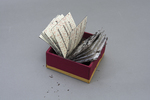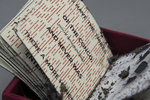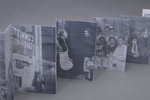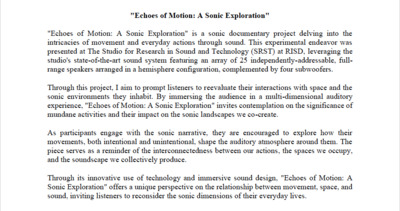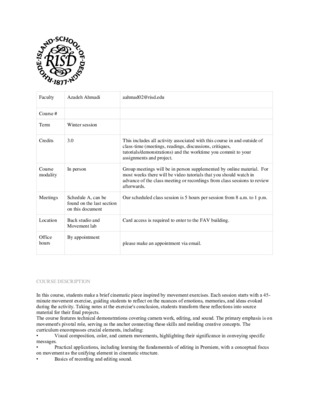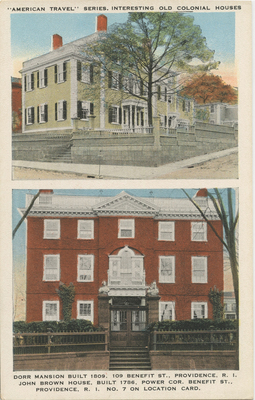
On was an interdisciplinary graduate periodical established by RISD graduate students in 2006. It featured essays and student work that related to a general issue theme. On was intended as a quarterly publication, but it is unclear if further issues beyond the first were ever published.
-

Commencement 2019 Nadya Tolokonnikova Honorary Degree Recipient
Nadya Tolokonnikova and RISD President
Activist and founding member of punk art performance and activist group Pussy Riot Nadya Tolokonnikova receives honorary degree.
-
HAB mitigation : wetland restoration in farmlands
Jae Won Wang
How could landscape strategically contribute to the collection and filtration of the nutrients that get transported in the river and introduce a new wetland system in the farmlands that utilize existing underdrainage systems and introduce a new paradigm of agricultural practice that could be applied in the future and eventually mitigate the Harmful Algae Bloom issue?
-
Regenerative assemblage : future vision for the canals of Pingdingshan
Meng Wang
Most northern Chinese cities have inadequate drainage infrastructures, especially those tertiary cities that were built after World War II. These cities have small to middle size urban area but with high density. They are served by drainage infrastructures which are in the form of canals. These canals were built at the same time as cities with goals of protecting themselves from flooding and transporting stormwater in summer. With the growth and development in the past 80 years, the urban area has become much denser. Many cities have been installing underground pipelines to collect and transport stormwater. Thus the water level of these canals is getting lower and lower and becoming a less important part in drainage infrastructures.
Nowadays, these canals are under used most time of the year because the flooding season in northern Chinese cities is only one to two months in summer. During the dry season, these canals only collect and transport small amount of stormwater. They are isolated from city by elevation differences and constructed walls and fences. They are forgotten by residents and city governments because they are no longer fully functional nor aesthetic. What is the future for these canals? Is it the time for transformation of canals both in forms and functions?
Another common issue in northern Chinese cities is that residents have no access to natural flowing water in dense urban areas. Because dry season during a year in these cities is long, canal systems are the only large water bodies in urban areas. But they are not appreciated. They are treated as knives cutting cities into pieces. However, in another form, canal systems could be seams in cities.
Therefore, the future for canal systems could be creating interaction between stakeholders and water in urban environment. The topic of this thesis is about exploring different design strategies to find a new identity for canal systems and at the same time to meet ecological and social demands of cities. During dry season, canals will be narrow green ways where people have access to flowing water. In different urban context, canals will have different strategies to serve cities. In urban core areas, canals will function as city parks for recreation. In suburban areas, canals will expand to vacant land to collect stormwater from neighborhood. Canals as green way systems could also create more connections between neighborhoods. During flooding season, the canal systems could still protect cities with higher capacity for stormwater. The details of strategies will change depending on cities environments, cultures, histories and etc. This thesis will take Pingdingshan City in northern China as study city.
-
Re-creation : a package design for daily life
Wei-Hao Wang
This thesis grows out of my observations of and inquiries into daily scenes,+ which are wrapped within what I am calling a package. The human mind often puts daily encounters into manageable packages to facilitate interaction with them. This process, however, makes us dull or neglectful. Looking into daily scenes allows me to unpack these packages and reflect on ubiquitous objects, notions and actions so that I am able to see them anew. To me, it offers a break from the habitual responses in life.
Re-creation: A Package Design for Daily Life intends to create a similar occasion for my audience. The work de- familiarizes familiar subjects — repacking these packages — to provoke reflection upon them. It reshapes them to find new levels of appropriateness; it reframes them to discover new interpretations; it restructures them to uncover new inspiration. I enjoy pushing perception away from the habitual, tilting it toward a depth of encounter. A fresh insight. A new proposal. A reimagining.
-
Landscape succession : oil field transformed through landscape process
Yuanbin Wang
The Inglewood Oil Field is located in Los Angeles, California. It is a fully functioning and one of the largest urban oil field in the United States. Facing the increasingly tense relationship between neighboring communities and the expansion of oil fields, the site has attracted a lot of public attention over the years.How to integrate the landscape process as part of the evolution of the industry is critical to this project. This project examines landscape architecture as a remediating agent within a fully functioning oil field. It proposes a process to heal the site through a simultaneous evolution. By using phyto-treatments and seeding and planting strategies, the proposal demonstrates a new approach to how the two processes could work together, as industry continues unabated and landscape heals over time. In the meanwhile, the proposal also preserves the dramatic visual shifts existing on the site and offers an opportunity for adjacent neighborhoods to witness the site transformation.
-
Can you shut the door? : exploring the personal as political in the domestic bathroom
Hannah Winders
In reaction to contemporary society, where women’s authority over space and body is constantly at stake, an unapologetic utilization of the feminist lens, as both disciplinary positioning and generative design device, serves as a means to confront and redefine architecture’s relationship with body. The work of feminists within the discipline of architecture and beyond provide crucial precedents for reclaiming the subjectivity of the female body through a spectrum of subversive misuse.
While cultural and societal roles of the woman in the home has existed for a long period of time prior, the Cult of Domesticity introduced an explicit vernacular and attitude of interior living. Its emphasis of values launched a new chapter in the narrative of domesticity, of the home, in which now the woman plays a completely aestheticized, orchestrated role within the space she occupied. Running parallel to this history of the domestic interior is the emergence and interiorization of the bathroom as an essential architecture. The bathroom, and subsequent realms of sanitation, developed in close proximity to regimes of power, race, and class. The notion of a second bathroom becoming a status symbol, hired help coming in to clean and sanitize a space deemed taboo by the upper classes. We now live in very specific moment in the history of the bathroom, one that elevates the notion of commodified wellness. Corporations push the idea of the bathroom as sanctuary, particularly to young women, marketing and capitalizing on “self care”: light your candles, grab your merlot, put on your moisturizing sheet mask and unwind from the long, arduous day.
Investigating a portrait of American Domesticity, the traditional Levittown Cape Cod home emerges as problematic, fraught with gendered spaces and wholly constructed binaries. These are spaces where women are rendered invisible on multiple levels, including representations of labor and aestheticization. This thesis acknowledges and subsequently rejects an architectural past of gendered spaces and projects an intersectional domesticity. Utilizing a core of feminist theory, the notion of “personal as political,” the Levittown home will embody and encapsulate the subjectivity of the body in a charged context, and ultimately exist as a bathroom. In this strategy of bathroom-as-house/houseas- bathroom, architectural elements are merged and radically redefined with bathroom objects to create bodily conditions that disrupt the canon of domesticity in which Levittown was birthed. This new domesticity provides a spectrum of intense misbehavior, resulting in typologies of both/and as opposed to either/or.
-
Regeneration of memory and home : rebuilding urban resilience and people's mental perceptions after the Camp fire in Paradise, CA
Xinye Xie
We are losing, we are forgetting, we are moving forward, we are adapting to the dynamic world. Just like the growth and regeneration circle of the forest, cultures, and cities are all regenerating themselves based on what they have, what they have lost, and what has been erased. Memories of the past are essential parts of our modern society; they reflect our current situation and are also a metaphor of the future.
As designers, when facing a landscape which has been partially ruined or erased, how can we help people to reconnect themselves with what has been erased, rebuild their mental perceptions to live with memories and move forward?
Wildfire is a strong expression of erasure. It erases homes, structures, lives, and memories. When it’s gone, people face the wreckage: the broken land, the sense of insecurity. As designers, we have the possibility to help people face these hurts and rebuild their homes and perceptions. This design proposal is a response to the devastation after the 2018 Camp Fire in Paradise, California.
-
3,190,000 Barrels: The Deepwater Horizon Oil Spill
Jessica Young, Special Collections, and Fleet Library
-
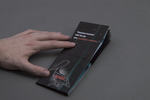
3,190,000 Barrels: The Deepwater Horizon Oil Spill
Jessica Young, Special Collections, and Fleet Library
-
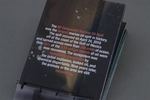
3,190,000 Barrels: The Deepwater Horizon Oil Spill
Jessica Young, Special Collections, and Fleet Library
-

3,190,000 Barrels: The Deepwater Horizon Oil Spill
Jessica Young, Special Collections, and Fleet Library
-

3,190,000 Barrels: The Deepwater Horizon Oil Spill
Jessica Young, Special Collections, and Fleet Library
-

3,190,000 Barrels: The Deepwater Horizon Oil Spill
Jessica Young, Special Collections, and Fleet Library
-

3,190,000 Barrels: The Deepwater Horizon Oil Spill
Jessica Young, Special Collections, and Fleet Library
-

3,190,000 Barrels: The Deepwater Horizon Oil Spill
Jessica Young, Special Collections, and Fleet Library