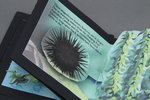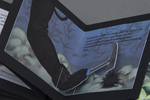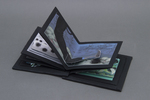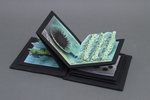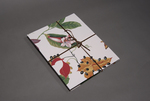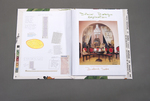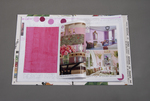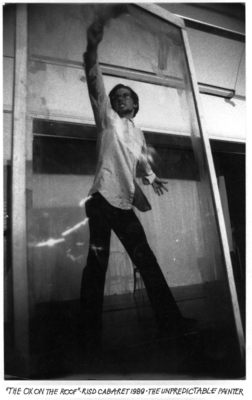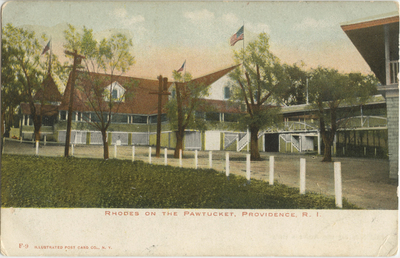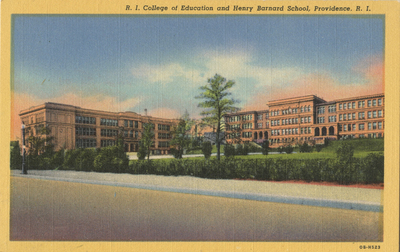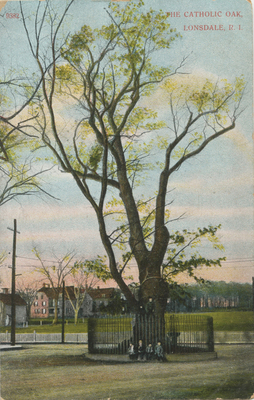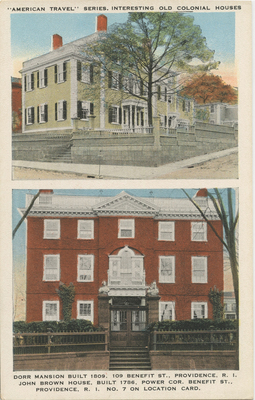
On was an interdisciplinary graduate periodical established by RISD graduate students in 2006. It featured essays and student work that related to a general issue theme. On was intended as a quarterly publication, but it is unclear if further issues beyond the first were ever published.
-

Climate Futures 2 | Design Politics, Design Natures, Aesthetics and the Green New Deal, Session 3: Liberatory Ecotechnologies, Cyborg Ecologies and the Green New Deal
NCSS Graduate Program, Liberal Arts Division, Kai Bosworth, Sasha Costanza-Chock, Holly Jean Buck, and Sophie Lewis
In the 1960s, Murray Bookchin argued that a post-capitalist ecological society would have to incorporate automation plus liberatory eco-technologies to provide the infrastructure of a new ecological society. Eco-design and eco-technology running alongside much broader forms of social change could not only reawaken humanity’s sense of dependence on the environment but restore selfhood and competence to a “client citizenry.” Contemporary debates on the socio-technical infrastructure that could underpin survivable futures have become increasingly anxious, ill-tempered and polemical. Whether we consider debates around 100% renewables or 100% clean, lab meat or the future of agriculture, either/or logics would seem to run through the ever sharper exchanges between de-growthers and ecomodernists. A worsening climate crisis is clearly exacerbating the stakes of the discussion and acting as a ratchet forcing reframings of our understanding of acceptable and unacceptable technologies. In this session we explore what exactly it might mean to advocate for liberatory technologies, design justice and a progressive technological politics in an age of climate chaos and cyborg ecologies.
Sponsored by the Division of Liberal Arts, Rhode Island School of Design
-
Climate Futures 2 | Design Politics, Design Natures, Aesthetics and the Green New Deal, Session 4: Liberatory Aesthetics for a Just Transition?
NCSS Graduate Program, Liberal Arts Division, Paula Gaetano-Adi, Yuriko Saito, Anastasiia Raina, Priscilla Ybarra, and Nicholas Pevzner
Building survivable futures on a warming planet is not simply going to involve policy for a Green New Deal. Just transitions to post-carbon just futures are inevitably going to raise very significant aesthetic, political and cultural issues about the worlds that we are leaving behind and the world that we need to design and make. The Green New Deal or the just transition more broadly has developed little in the way of a new aesthetic or cultural politics. Its primary co-ordinates have been to look back to the political and public aesthetics that emerged around the first New Deal of the 1930s or turn to the aesthetic that emerged out of predominantly white US environmentalisms of the 1970s. Do we need to find other ways to “stay with the trouble” to paraphrase Donna Haraway as we try and construct survivable futures? What might a joyful, aesthetics of a just transition look like that can come to terms with the loss of certain kinds of nature-cultures, modes of valuing and modes of making and be open to the challenge of designing new cosmopolitan nature-cultures, new ways of valuing and new modes of future making? Can we envisage an aesthetic and cultural politics that reclaims low carbon pleasures present in everyday life? Does a progressive cultural politics for a just transition require a broader decentering of Eurocentric or US centric environmental aesthetics and a more sustained engagement with the insights of decolonial, Latinx, post humanist, cosmopolitical and other currents? In this panel we ponder the kinds of liberatory aesthetics and cultural politics that could underpin the just transition and offer solidarity and hope across borders and boundaries.
Sponsored by the Division of Experimental and Foundation Studies, Rhode Island School of Design
-
Climate Futures 2 | Design Politics, Design Natures, Aesthetics and the Green New Deal, Introduction
NCSS Graduate Program, Liberal Arts Division, Jonathan Highfield, and Damian White
-
Climate Futures 2 | Design Politics, Design Natures, Aesthetics and the Green New Deal, Session 1: Architectural Futures, Public Infrastructure + the Green New Deal
NCSS Graduate Program, Liberal Arts Division, Ijlal Muzaffar, Billy Fleming, Peggy Deamer, Daniel Barber, Liliane Wong, Amy Kulper, and Johanna Barthmaier-Payne
The architectures have, to date, been somewhat inconsistent champions of just transitions for low carbon futures. Sustainable design, with its rather one-sided focus on deriving “lessons from nature”, has historically displayed limited interest in class, race, labor, gender, or broader power relations. Design schools and design professionals have regularly proclaimed that they can play a leadership role in building low carbon futures but then continually returned to “business as usual agendas”. The call for a Green New Deal, though, has raised hopes that more radicalized visions of architecture, landscape architecture and interior architecture could be renewed, revitalized and reworked in more sophisticated ways. In this panel we will consider the extent to which new forms of public works for the public good in sustainable urbanism, green infrastructure and adaptive reuse could push back against green gentrification and green neo-liberalism. We will explore the ways in which labor struggles for just working conditions within architecture and design could ally and reinforce the call for a Green New Deal. We consider how architectural innovations with virtual reality could open up community engagements with sea level rise. Finally, we struggle with the extent to which the national imaginary of a Green New Deal can address the profound cross-border impacts and global design challenges posed by climate change.
Sponsored by the Division of Liberal Arts, Rhode Island School of Design
-
Climate Futures 2 | Design Politics, Design Natures, Aesthetics and the Green New Deal, Session 2 - Dialogue: Racial Capitalism, Designs for Energy Transition and the Green New Deal
NCSS Graduate Program, Liberal Arts Division, Lauren Richter, Myles Lennon, Shalanda Baker, and Jacqui Patterson
Industrialized energy has long been predicated on a system of racial capitalism and colonialism. We rely on electricity, heat, and fuels that derive value through the historical and ongoing displacement and exploitation of indigenous, black, and Latinx land, labor and life. The Green New Deal could offer an opportunity to not only overhaul this existing fossil fuel infrastructure but also redress the racial capitalism on which it is built. In this dialogue, we will explore some of the tensions that currently exist between the urgent need to move as fast as possible to implement a clean energy transition and concerns that, if this transition is not done right, it could recreate new environmental injustices and new sacrifice zones. We will consider the ways in which environmental justice movements are productively contributing to new visions of energy transition. Finally, we will explore the opportunities that exist for confronting and dismantling racial capitalism through a Green New Deal framework, focusing on policies, strategies, and overarching principles.
Sponsored the Office of Social Equity and Inclusion, Rhode Island School of Design
-
Climate Futures 2 | Design Politics, Design Natures, Aesthetics and the Green New Deal, Session 5: Thinking Beyond the Ecology of Panic: The Political Opportunity of the Green New Deal
NCSS Graduate Program, Liberal Arts Division, Timmons Roberts, Kian Goh, Dan Traficonte, Alyssa Battistoni, Thea Riofrancos, Camilo Viveiros, Emma Bouton, and Estrella Rodriguez
The prospect that climate conditions may have reached a point of no return has now become a recurring motif of assorted climate doomsters who seem to delight in telling working and marginalized people that “their goose is cooked.” This is a politics that the Green New Deal clearly has to face down. An ecology of panic at best is going to feed “passive nihilism” (Connolly, 2016) and “melancholic paralysis” (Wark, 2015) but in addition it could feed the rise of eco-fascism and eco-apartheid. In this concluding session, we consider the extent to which a politics of a Green New Deal framed around the need for environmentally just investment and infrastructure, a fundamental reworking of class, race and gender relations, new modes of democratic planning and approaches to global politics focused on a new internationalism and solidarity across borders could open up very different paths.
Sponsored by The William R. Rhodes Center for International Economics and Finance and The Institute for Environment and Society, Brown University
-
NEXT: RISD 2020-27 Year One Implementation
Office of Integrated Planning and RISD President
Implementing the plan To translate strategies into action, RISD’s senior leadership is working through existing committee structures or creating working groups that will research and recommend specific courses of action to implement initiatives referenced in the plan. These leaders are also working directly with deans, department heads and other members of the campus community to develop action plans with specific goals for each year, along with annual progress reports that track our success. Every member of the RISD community—on campus and off—makes significant contributions to this effort and is essential as we work together to move RISD forward. Take a moment to review our Year One Implementation Plan and check this page frequently to find updates on progress and metrics. Questions? Email planning@risd.edu.
-
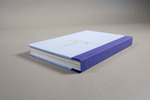
Gone Fishin'
Asuka Ohsawa, Special Collections, and Fleet Library
1 volume : chiefly color illustrations "Written, illustrated, screen-printed, and hand-bound by Asuka Ohsawa in New York, NY, in 2019"--Colophon. "The end sheets were printed by Sun Night Editions in Oakland, CA"--Colophon. "Gone Fishin' began as ... [an] experiment to incorporate the panoramic landscape format of Japanese emaki (narrative hand scroll paintings from the 12th century) into a codex form. During the five month process of drawing and printing, however, the book morphed into a hybrid form that is part emaki, part comics, and part typographic adventure."--colophon. "Screenprinted on Rives Heavyweight paper ... Drum-leaf bound with a drop-spine cover. Edition of 20"--Artist's website. "This book project was inspired by one of my favorite works of art of all time entitled 'Kidai Shoran', an early 19th-century Japanese emaki (scroll painting) by an unknown artist. The scroll depicts a panoramic view of the busy Nihonbashi main street lined with shops and a crowd of consumers and city dwellers. My original idea was to simply incorporate the panoramic landscape format of Japanese emaki into a codex form."--Artist's website. Color illustrated endpapers and title page, in black and light blue. Cloth binding, dark blue spine, light blue on cover boards, illustration in gold on front cover. Library has copy no. 10, signed in pencil by the artist.
-
The In-Betweens: Exploring Integration Within the Arts
Ruchi Pathak
This research analyzes the possibilities of integration within the arts and its potential in affecting change in the teaching and learning environment. To approach to this larger question, I conducted two in-depth case studies as a participatory observer playing two radically different roles:- the role of a student at New Works, a performing arts program at Brown University, and the role of a curriculum planner and programming researcher at Providence CityArts. The nature and educational level of the two programs were drastically different. Providence CityArts is a youth directed community-based nonprofit organization that offers after school art programs while New Works is a collaborative grant based university program that invites international artists, students and local artists to devise a theatre dance piece. My goal in this thesis investigation was to study the nature of integration in these two very different teaching and learning spaces and draw connections that had the potential to inform practice within the field of integration within the arts and which also might raise issue for future research. It is my hope that this qualitative research also offers an insight into the inter-relationships between different art forms, how they may connect, and which elements have the potential to combine. At its core this thesis is aimed at exploring the possible configurations of integration within arts as opposed to arriving at a singular conclusive statement.
-
Feet, Lines, Weather, Labyrinth: The Haptic Engagement as a Suggestion for an Ecological Aesthetics
Nicola Perullo
In this paper I present a philosophical approach stemming from the general framework of ecological aesthetics, specifically defined here as a perceptual attitude that entails intimacy, engagement, participation, and care. In order to develop this approach, I lean on some authors that I find sympathetic to my view; particularly important are John Dewey, Maurice Merleau-Ponty, Arnold Berleant and Tim Ingold. Following Ingold, I propose a revaluation of what he calls “feet” to highlight the active and mobile nature of perception and a consideration for an ontology of living beings as a fluid meshwork composed by lines. I then propose to call ‘haptic perception’ an inter- and trans-sensorial perceptual approach, according to which the world we constantly move along is objectless, a meshwork continuously made of fluid interwoven lines. To understand this, we need to nurture an aesthetic approach free from the logic of the paradigm consisting of subject/object and of a sheer distinction between ontology and epistemology in favor of a radical relationalism.
-
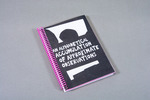
An Alphabetical Accumulation of Approximate Observations
KameelahJanan Rasheed, Special Collections, and Fleet Library
90 unnumbered pages : illustrations Cover title. Edition of 150. "Bright pink and gritty, An Alphabetical Accumulation of Approximate Observations serves as a visual A-Z of dissonant experiences, ranging from Cumulative Caskets to Weaponized Watermelon. The pink-speckled texture paired with crude, black cut-out letters enforces a distinctly D-I-Y feel, with the textual centerpieces serving nonsense literature in a brief and digestible form."-- Printed Matter, Inc., viewed December 9, 2020 Pink coated wire spiral binding. Risograph printed.
-
Commencement 2019 Presentation of Student and Faculty Awards
RISD President
Presentation of the Student and Faculty Awards at RISD's Commencement 2019. Student awards presented by Sophie Weston Chen BARCH 20: The Warren Family Social Engagement Award: Qualeasha Wood 19 PR. Steven Mendelson Award for Community Service: Sruti Suryanarayanan 19 FD. John R. Frazier Award for Excellence in Teaching presented by Provost Kent Kleinman: Nikki Juen, Foundations Studies and Sheri Wills, FAV.