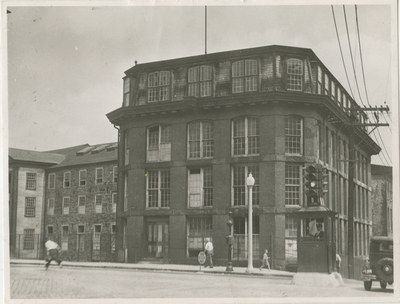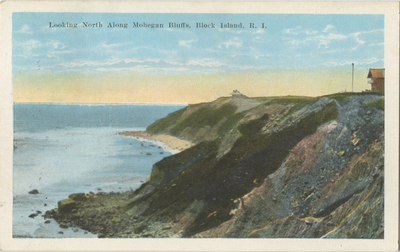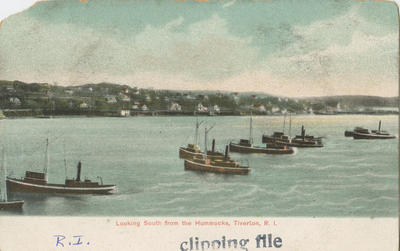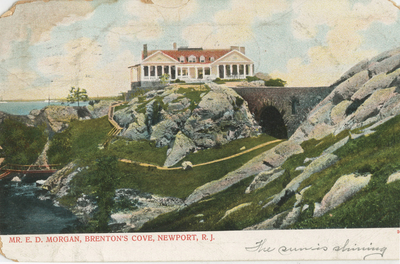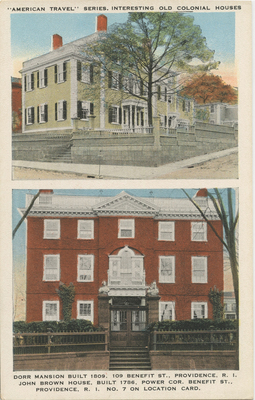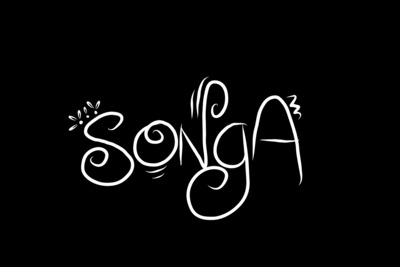
On was an interdisciplinary graduate periodical established by RISD graduate students in 2006. It featured essays and student work that related to a general issue theme. On was intended as a quarterly publication, but it is unclear if further issues beyond the first were ever published.
-
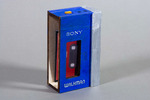
Memotone Musicassette
Maggie Weng, Special Collections, and Fleet Library
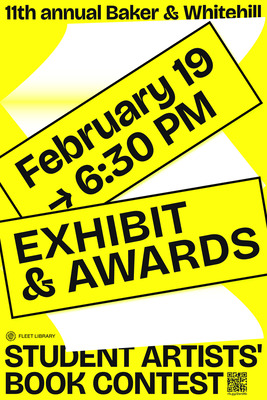
Entry for the 9th Annual Baker & Whitehill Student Artists' Book Contest. Opening Reception Thursday, March 02, 2023, Fleet Library, Main Reading Room. Juror: Andre Lee Bassuet.
-

Commencement 2022 Presentation of Honorary Degrees | Nick Cave, Cheryl D. Miller
Crystal Williams, Nick Cave, Cheryl D. Williams, and RISD President
President Crystal Williams awards honorary degrees to acclaimed artist/educator Nick Cave and keynote speaker Cheryl D. Miller .
Artist/educator Nick Cave works in a wide range of mediums, including sculpture, installation, video, sound and performance. His much-lauded Soundsuits, sculptural forms based on the scale of his body, were created in response to the police beating of Rodney King in 1991 and serve as a visual embodiment of both brutality and empowerment.
Throughout his practice, Cave has created spaces of memorial by combining found historical objects with contemporary dialogues on gun violence, death and catastrophic loss. His work reminds us that while there may be despair, there remains space for hope and renewal. From dismembered body parts stem delicate metal flowers, affirming the potential for new growth.
Cave encourages a profound and compassionate analysis of violence and its effects as the path towards an ultimate metamorphosis. His works ask how we may reposition ourselves to recognize societal issues such as global warming, racism and gun violence, come together on a global scale, instigate change and—ultimately—heal.
Graphic designer, educator and author Cheryl D. Miller aims to end the marginalization of BIPOC designers through her civil rights activism, industry exposé trade writing, rigorous research and archival vision. A nationally recognized advocate for equity and inclusion in graphic design and founder of the NYC social impact design firm Cheryl D. Miller Design, Inc., she currently serves as distinguished senior lecturer in design at the University of Texas–Austin (where she was the 2021 E.W. Doty fellow) and adjunct professor at Howard University.
In 2021 Miller was an AIGA Medalist “Expanding Access,” a Cooper Hewitt “Design Visionary” awardee and an Honorary IBM Design Scholar. She is a member of the Board of Trustees of Vermont College of Fine Arts and the President’s Global Advisory Board of Maryland Institute College of Art.
Miller earned a BFA in Graphic Design from Maryland Institute College of Art, an MS in Communications Design from Pratt Institute, an MDiv from Union Theological Seminary and an honorary degree in Humane Letters from Vermont College of Fine Arts. Her essays appear in PRINT and Communication Arts, and her D&I-related professional research is archived in the Cheryl D. Miller Collection at Stanford University.
-
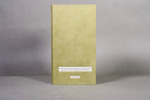
What My Mother Has Taught Me About Trees (a collection of lessons and memories)
Anna Winters, Special Collections, and Fleet Library
Entry for the 9th Annual Baker & Whitehill Student Artists' Book Contest. Opening Reception Thursday, March 02, 2023, Fleet Library, Main Reading Room. Juror: Andre Lee Bassuet.
-
Un-done: The historiographical dialogue between past and present
Rachel Cobler Wollert
Art critic for The Nation and professor of at Columbia, Arthur C. Danto led the charge with his essay “The End of Art” in 1984 to declare the end of art. Thirty-eight years later, the awareness of colonial problematics in the elite institutionalism of art history today warrants a reanalysis of art historical ontologies of progress (and their ties to colonialism), which have seemingly disbanded in the discipline’s current rhetoric. Because Danto’s historical framework to end art focuses on progress through artistic means, does it fall short or even negate itself by missing the deconstruction of colonial afterlives still present in art institutionalism? Moreover, does Danto’s end to art ultimately reiterate colonial and imperial dictations over time, and thus undercut a historical futurity for “non-Western” “artists”? In comparing Danto’s theoretical discipline with the work of Titus Kapar, Yuki Kihara, and Jason Garcia (Okuu Pin), I present a hypothetical dialogue between the art historical constructs of time and the present investment in decolonizing art with a critique through appropriation. Kaphar’s work underlines how representation can challenge the game of identity performance for the benefit of institutions, Kihara challenges the pervasive ignorance towards stereotyping Pacific Islanders by resisting and confusing the West-East binary boundaries, while Garcia challenges the hero complex historical figures still have in popular culture even if they are academically deconstructed. Ultimately, they perform a legitimacy to an end of Western hegemony that Danto alludes to.
-
Beyond Spectacle : parametric design to life in space
Ding Xu
In recent years, with the help of rapid computational developments, Parametric Design has become common in architectural practice. Parametric architecture, due to its unique appearance, has rapidly been associated with certain aesthetic trends. This is mostly because architects initially adopted it to make radical forms, not because parametric techniques demand any specific geometry.
For the Chanel Mobile Art Pavilion by Zaha Hadid Architects, the team built a dynamic and fluid structure using parametric techniques. The form evolved from the spiraling shapes found in nature, and the fluid geometry provides a continuum of space and a system of logic. As a mobile pavilion, it is made of a succession of reduced arched segments, in order to provide easy transportation. In addition to the spectacle to behold, this demonstrates what else parametric design can achieve, and how parametric architecture has the potential to change. Addressing this topic through an exhibition will give visitors a clear view of parametric architecture, which consists of form making by simulating algorithms and morphogenesis, then fabrication schemes, then translating the intellectual and physical into the sensual.
By using the computer to simulate natural and morphogenetic forms, then controlling the design and fabrication process of the pavilion exhibition through adjustment of the parameters, visitors will witness parametric design in action. The narrative space can be automatically generated and modeled by algorithms. In addition to the form, parametric design can produce a low technology fabrication scheme, which is convenient for manufacturing, accurate, and efficient. These features will be all presented in the pavilion.
-
Toona Sinensis 桃花心木
Li Yang
This thesis is my journey as an artist and art educator in search of creativity through the lens of sustainability, which may reveal the existence of questions one wonders about but does not provide a specific answer or solution to this within a limited time frame. Through this inquiry, questions are repeatedly asked: What is the definition of art? If art and education have a tremendous impact on human thought and perception, do they point people in the right direction when confronted with global issues such as cultural and natural sustainability? If so, what is the essential difference between art and education? As a way to explore these questions, this thesis analyzes the artworks of two artists, Maya Lin and Christian Boltanski, as case studies. It also offers an insight into interviews with people who have received or are enrolled in art classes in higher education about their definition of art and their understanding and review of creativity during their art education. It then responds to an analysis of the question of whether art should be educational. This thesis concludes that the common denominator and essence of art and education is the power of inclusion to set the human mind free and to grow the capacity for inquiry through practice in literature, poetry, and art without limitations. Understanding is not a process of seeking direct answers, but sought through the process of creative moments. Stimulating and encouraging alternative thinking is a creative approach.
-
Zoomorphic amalgamation: speculative devices for alternative communication
Yuta Yang
Zoomorphic Amalgamation: Speculative Devices for Alternative Communication is a series of speculative works that assist introverts re-adapting in the extro-oriented society. The work serves as a lens to challenge and question the authority afforded to extroverts in contemporary society, and aims to provide a comprehensive understanding of introverted personality. As a person with an introverted personality, the thesis project draws upon personal experience and to reflect on the current bias and stereotype of characteristics that common to the introverts.
By integrating technological sensors and microcontrollers, the works are created to help the wearer express insecurity, at the same time providing a facsimile of confidence, relaxation, and recharging experience within the duration of wearing. Through interactive engagement the devices embody the connection between the wearer and the observer, and aim to visualize the discomfort of social interaction through forms of movement, sound, and color shift in reference to the defensive behaviors of animals and insects.
-
Flexing boundaries : tectonic strategies for the multi-generational home
Elise Young
In the near future, a large percentage of the human population will have to relocate due to an ever changing climate. This will create both short-term and long-term housing needs. To support this shift, our cities will be forced to modify their current use of spaces so that they may accommodate an increasing population and their ever-changing needs. So, is there a way to design homes specifically to make increased population density not only bearable, but enjoyable? This project seeks to design non-load bearing modules that provide both partitions and furniture. The modules should be easy to manipulate so occupants have the freedom to readapt and shape their spaces to meet their changing needs.
-
The subconscious as politics: an inquiry of collaborative design education through radical speculation
Nina Jun Yuchi
For two years, I’ve been keeping a dream journal in which I record anything I can remember as soon as I wake up. The pages have slowly filled up with scrawls and doodles and fragmented memoirs of a life that doesn’t even seem like mine and yet, every dream I can vividly remember feels like a portal into an alternate dimension in which my subconscious reality is as tangible as my conscious one.
Eventually, dreaming became a key method in my research to seek out and materialize alternative worlds. It became the object of my obsessive interest in visualizing speculative futures in contrast to the one we currently live in. I harnessed my dreams as a space in which I could freely express my politics or explore my interests towards celebrities and fictional characters. It became a reality in which I could rekindle trust with those who hurt me and I could engage in abolitionist praxis with my broken relationships. Patterns about my lifestyle and mental state became more and more visible as I annotated and categorized my journal entries, deciphering their implicit meanings.
My search for answers intersected with my interest in self-publication and zines. Independent publications have an extensive history in political activism, notably dating back to the Civil Rights Movement in the 1960s. Groups used zines as visual and intellectual spaces to imagine change and explore the possibilities outside of a white-dominated sphere. Sustained by the communities for which they served, zines also historically represented spaces for self-determination and radical inquiry free from police and state surveillance, thus embodying a visual artifact of political resistance. My own zine practice then became a key component in finding alternatives to the hegemonies I live in through dreaming and speculation, offering a glimpse into how I can build worlds and imagine new futures for both myself and my communities.
My fantastical dream worlds became a safe refuge for me to mobilize in my politics and rest through burnout. They allow me to extend my reality beyond the oppressive one I currently live in so I can dream towards a world of reflection and liberation. Through my previous and ongoing research, dreaming has become and continues to be an important practice in my politics and life.
-
One land / one ocean: reactivate coastal commons in urban territory
Chengie Zhang
We all live in the same common -– the ocean common, sharing various common pool resources. With industrialization coming after capitalism, the resource regime is shifting and developing. The Blue Revolution and industrial aquaculture stand out as a strategy to efficiently gain resources to meet the population growth and the resource demands. However, it will reveal another form of cultural exploitation. People in the global south will become a labor resource for the global north and increase extreme coastal poverty brought by the depletion of mangroves for land and industrial places. In this book, I want to discuss the possibility of reactivating the coastal common in the global north to alleviate this unethical situation in the global south. The role of coastal commons, especially in the global north where urbanization has rapidly occurred, will be evaluated using two testing sites in Narragansett Bay. Wild oyster habitats will be restored with this intervention, creating public access to natural resources. By reactivating these coastal commons, we can contribute to the local economy, restore the ecosystem, and access critical ecological resources that benefit global food production systems.
-
Bee stations: refueling bees and creating opportunities for education
Jinghan Zhou
Commercial honey bees are transported between pollinated crops and play an essential role in our agricultural system. This thesis proposes a network of bee stations and corridors that could improve the health of transported bee populations, increase local beekeeping, and help educate the public about the importance of bees and pollinators. The bee stations have at least 100 acres of diversified high-quality wildflower species where trucks that transport bees can stop to “refuel” their hives. The bee stations also have an education center where the public can walk through the wildflower fields, observe bees, make beehives, and learn how to keep bees. In addition to the bee stations, habitat corridors would be strategically “spliced” into existing agricultural fields to create a more diversified forage for bees within the farmland mosaic. Combined, both strategies would become a powerful tool to provide a healthy, diversified, and resilient system to support bee health and reduce colony collapse.
-
The importance of interdisciplinary art teaching: reflections on Chinese K-12 Art Education
Shixin Zhou
Central to this thesis investigation is the premise that interdisciplinary art is important for children and youth, especially in the context of Chinese art education. Designed to investigate a movement in art education beyond traditional boundaries, this investigation manifests in four stages of research and concludes with a teaching philosophy for the Chinese school system.
First, the author explores the current state of traditional art classes in China, along with the issues and challenges faced by current art educators. Second, with the objective of creating a positive model built on clear conceptual and practical tools, art integration and interdisciplinary art education within US education are examined in a literature review. Third, She surveys educators from K-12 in Dalian, China. In this survey, data is collected about traditional art classes in China, the perception and essential components of interdisciplinary art teaching, and the strengths and shortcomings of the Chinese education system. Fourth, in order to gain the competency required, the author explores her own personal teaching practice of designing an integrated and interdisciplinary curriculum, and artistic experiments in the two contexts in the United States. This thesis concludes with the creation of a working philosophy born from multiple experiments with a range of students in various spaces and artistic practice in the United States.
-
Cross border conservation - China - North Korea border
Ziyu Zhou
Earth today faces an accelerated species extinction problem because of human presence, which is 1,000 to 10,000 times higher than the natural extinction rates. Over 27.8% of species are threatened (IUCN). An increased extinction rate will cause the ecosystem to lose its balance and break the shield for most species, including human beings. (Wilson, 2017) Conservation is one of the most important methods to save species; conserving in transboundary areas will increase efficiency. These areas are untouched and protected, forming a new biodiversity paradise. The Transboundary conservation project would benefit the ecology aspect and social, cultural, and political. This thesis will use one of the most endangered species on earth, the crane, as the target species to design a conservation project along the China and North Korea border.
-
Together: a transformational sequence of healing
Deborah Zhuang
In June 2019, millions of people in Hong Kong took to the streets to voice their discontent with the extradition to Mainland China. Hong Kong was a former British colony and was handed back to China in 1997. Under the policy of “One Country, Two Systems”, Hong Kong has a separated legal system and judiciary from Mainland China. In 2019, the Hong Kong Government raised an extradition bill that allowed fugitives in Hong Kong to be sent to other jurisdictions, including Marco, Taiwan, and Mainland China, which resulted in the large-scale Anti-Extradition Law Amendment Bill Movement with increasingly serious confrontations. Hong Kong citizens felt unacceptable about standing trials and serving sentences in Mainland China due to the concern of erosion of freedom and the distrust of democracy. The original peaceful processions turned out to be involved vandalism and violence. Streets and public property were set on fire; university campuses became ruins and ordinary citizens experienced indiscriminate violence. Although the amendment bill was fully withdrawn at the end of September 2019, the protesters required deeper political reforms, such as universal suffrage. It was released by the Hong Kong College of Psychiatry in January 2020 showing that over 57% of people under the age of 19 and 23% of people between the age of 20-29 experienced moderate or severe symptoms of depression or Post-traumatic stress disorder (PTSD) after the 2019-2020 Protest.
My Project is a journey of transformation in the city, helping people comfort each other, gain emotional support, and rediscover their hope and identities. Under the new security law, the journey is designed with double meanings. For the public, the spaces are used for entertainment. However, for those who experienced the collective trauma during the protest, they could also be viewed as a series of memorials of a healing journey. Hong Kong is a city surrounded by mountains with 75% of the land undeveloped, so I chose to introduce a healing sequence to guide people away from the chaos in the city toward four natural settings. As the journey encourages a process of overcoming challenges and the rediscovering of identity in a movement forward with faith, the transformative process outlined in Song of Songs is used as the template for an architectural journey. Reconfigured as a secular narrative, the journey unfolds across four sites, starting with Tsim Sha Tsui East, passing Mong Kok, Shek Kip Mei, and finally reaching the Lion Rock. Each destination carries a double meaning, as an entertainment space as well as a restorative and therapeutic retreat or memorial, including a cafe & reading room, a dancing square, a drawing workshop, and a landscape pavilion.
-
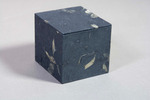
Confession
Sihan Zhu, Special Collections, and Fleet Library
AMERICAN PRINTING HISTORY ASSOCIATION - New England Chapter Purchase Prize | $375 Purchase prize winners receive a cash reward and the books are added to the Fleet Library at RISD Special Collections' Artists' Book collection. Entry for the 9th Annual Baker & Whitehill Student Artists' Book Contest. Opening Reception Thursday, March 02, 2023, Fleet Library, Main Reading Room. Juror: Andre Lee Bassuet.
-
Space of ambience : learning the relationship between environment, emotion, and behavior
Xueyun Zou
I feel like I live life as two different people: one at school, and another at home, and I’m constantly trying to figure out why I feel this way. One of my undergraduate instructors said that he feels I am hiding myself in school, which I hadn’t thought about until he said this to me. I am more social in life, but act introverted in school. I don't want to be attentioned in some context but I want to understand the meaning behind it. This project is a design process for mirroring people in spaces. Mirrors are bridges to connect my inner world and the outer world. When I stare in a mirror, I feel strange. It seems to bring together different parts of me, my fear, my bravery. Reflecting myself there opens up a space for me to focus and explore the space between my feelings and surroundings.
I often act in a very controlled way in my everyday life, so when I show up in different spaces, people only see what I want them to see. Mirrors help me realize that my emotional side is not always visible in how I show myself to others. For example, I would dress up when I am in a fine dining restaurant, but that doesn’t mean I do not want to wear comfortable clothes. But of course, mirrors are not all the same, so my experience with them also shifts. Plane mirrors reflect only a portion of their surroundings and are bound by their own edges. In contrast, curved mirrors have the power to reflect my entire surroundings instead of just a segment of them. Curved mirrors create a moment, a space, for me to stare at the relationship between my human emotion, my behavior, and the environment I relate with. The experience of reflecting in the curved mirror is exciting. My body and surroundings squeezed, merging me in the surroundings and magnifying how I sense space. Those mirrors frame all the components in the environment, and I can see their relationship with my behaviors and feelings in space.
With that in mind, I decided to experiment. I took a mirrored ball, went to different spaces, took photos, and recorded observations of how I felt and the components of those environments that generated strong emotion. I walked through cafe shops, streets, conference rooms, etc, and stayed for a while to experience myself in space. I found several things. For instance, I noticed that my body's movements changed based on my emotions, and my emotions changed regarding my environment. So then, space impacts the way I use and express my body. Due to their exclusivity, curved mirrors became a research tool. They are objects I use as a medium to really see myself in space.
By mapping my experiences in space, I understood that the way I experience architecture goes beyond the physical. Analyzing the relationship between my emotions, behaviors, and surroundings let me understand that we are all components of the environment and that together we create ambiances. My project proposes creating architectures that go beyond the object and can be designed as ambiances that embrace the relationship between emotions, behaviors, and environments. I decided to use the collection of my experiences as data to build a system that works as design tools for me and others. Usually, designers make spaces based on their single narrative experience of understanding. However, in this project, I want to use people's emotional awareness to turn it into a method to design spaces that prioritize users and not designers.
This design process then aims to embrace people's emotions, and behaviors in space by exploring their representations of the environment they inhabit, which are emotionally tinged based on their internal feelings that show up in spatial explorations and behaviors.
Through engaging with individuals and the sphere ball in interviews, I want to collect people's experiences and seek the components of the surrounding environments that affect their emotions and behaviors. I want to appreciate the relationships between people and space and transform the mapping system as a tool into the main source to design a space, focusing on the human emotional experience. I propose creating a space using the collective data of interviewers, which lets users feel approached or avoided based on the attraction and distraction of feeling. Space responds to the user's emotions by reflecting his/her own preference.
This design process aims to create a space beyond helping architects understand how to design concerned about human emotions, behavior, and the environment. It can also support people to become aware of the ambiances they create and are part of by releasing their emotions, completing a self-learning process to learn what environment setting they prefer and how to connect and express their emotions in space.
-
The future of the High Plains Aquifer: addressing potential desertification in the Great Plains
Hongfei Zuo
The past century of extractive pumping of underground water coupled with climate change and extreme weather since the 1950s led to great unpredictability and uncertainty about the future of the landscapes of the high plains. The High Plains, or Ogallala Aquifer, has significantly declined as water continues to be pumped to irrigate crops. Reports and scientists estimate that the aquifer will dry in 30 years. The Dust Bowl of the 1930s is an example of a man-made catastrophe that resulted from the mismanagement of the agricultural landscape. The Shelterbelt Project, proposed as part of the New Deal in 1935, did not directly protect the dust bowl core zone. Most of the shelterbelt areas have degraded or been removed as they are aging or conflict with center pivot irrigation. This thesis learns from the past to preempt a landscape crisis as the Ogallala aquifer dries up and farmland can no longer be irrigated at the rate it has been for the past century. The design proposes multifunctional windbreaks and regenerative agriculture through planned grazing rotation. This model will reduce the underground water usage, restore the prairie ecology, increase biodiversity, help reduce potential desertification, and provide a series of social activities to maintain this landscape’s economic and social viability while restoring the prairie.
-
Insecurities: tracing displacement and migration
Hammad Abid
“Insecurities: Tracing Displacement and Migration,” the title of both my thesis work and thesis book, calls attention to displacement and forced migration as a disruption in the continuity of place, relationships, identity, memory, and time. Through a collection of textiles, I try to capture the psychological, social, and physical effects of forced migration and communicate the impact of political violence on identity and coexistence.
In this book, I position myself within the context of how the current Indian government is attempting to rewrite the nation’s history and distort India’s pluralistic story. I tell a personal narrative of displacement in harrowing tales of loss, alienation, and the search for and reaffirmation of identity, home, and belongingness in a beleaguered nation that seems to have lost its way. The essays in this book traverse a range of subjects from alienation to migration of my family that open the scars of citizenship, home, and belongingness from India’s partition into Hindustan (current India) and Pakistan to the present day.
-
Commencement 2021 Virgil Abloh | Honorary Degree Recipient
Virgil Abloh and RISD President
In his Commencement 2021 keynote address, multidisciplinary artist/designer Virgil Abloh encourages the graduating class to relish in their achievements and get ready to take on the world with full force and creativity.
-
Regeneration with Teju Adisa-Farrar
Teju Adisa-Farrar and Edna W. Lawrence Nature Lab
February 18 hosted the fifth conversation in the Regeneration series with Teju Adisa-Farrar, geographer, writer, and poet focused on contemporary and historical Black geographies as they relate to the environment, urban ecologies and culture. Take a look at this document with resources that were mentioned during the conversation to further your learning.
During this conversation, Teju presented on how gentrification is not only a social issue, but also an environmental issue. Beginning around the time of the violent European conquest of the “New World,” commodification of nature became a global idealogy that aimed to centralize economies around the world. This caused a ripple effect of global shifts, including genocide of Indigenous communities, enslavement and forced migration of Africans, increased control over and mass extraction of natural resources, and entrenchment of European settler colonialism around the world.
These major shifts caused the problems we face today: the overdevelopment of economic urban centers, gentrification of historical spaces, displacement of communities, and destruction of natural landscapes. When we ask ourselves why these changes exacerbate injustices, as Teju asserted, the “environments in the western world are structured by racism.” We need to think about the long-lasting impacts of these environmental shifts before we can begin to understand where our world is now and how to change things for the better.
Teju posed the question, “How can we think about growth differently so that it’s less about scaling and more about reconnecting with sustainable systems and knowledges? How can we design with nature instead of around nature?” We need to design and grow with both our global histories and regenerative futures in mind.
-
Responsive markets: structures supporting economic activity in postcolonial Mumbai
Bilal Ismail Ahmed
This project aims to envision a market that engages activity and brings in life from surrounding markets – connecting better into its environment. The project fits into a larger discussion on how architecture left behind by a colonial regime might be addressed formally and conceptually.