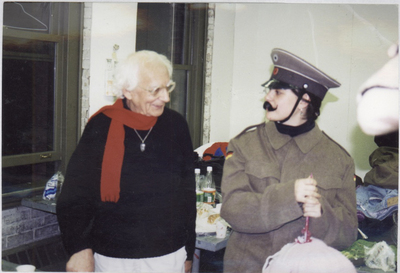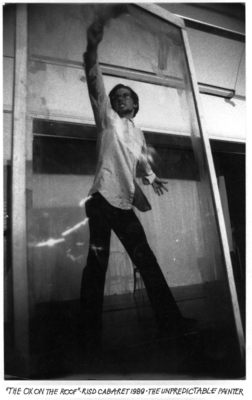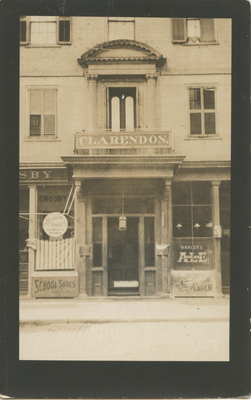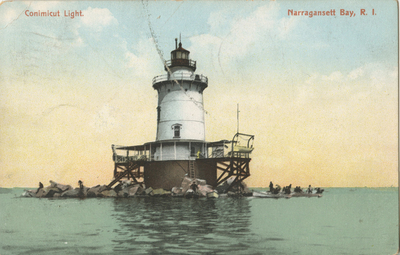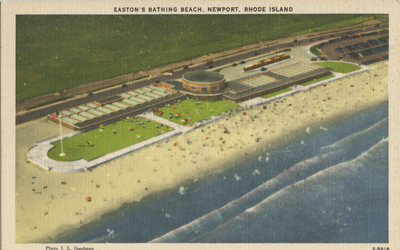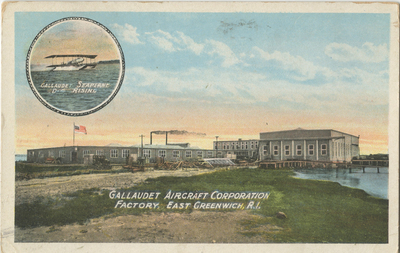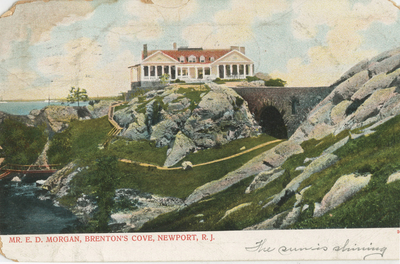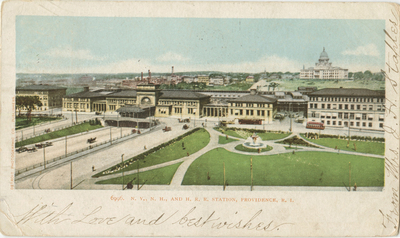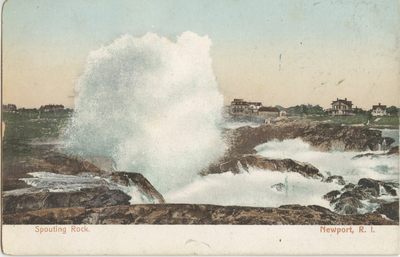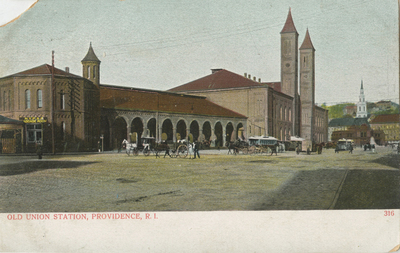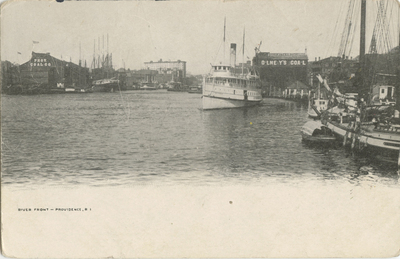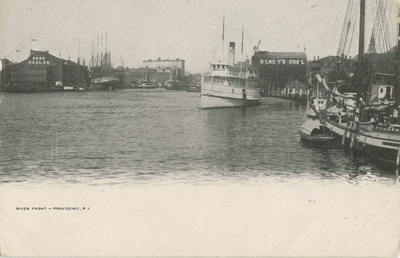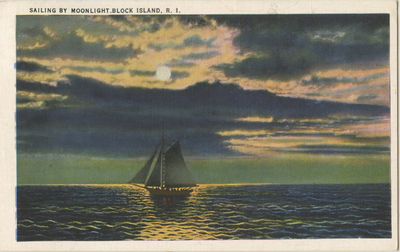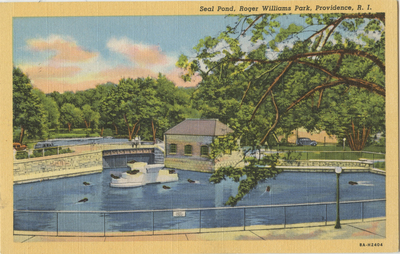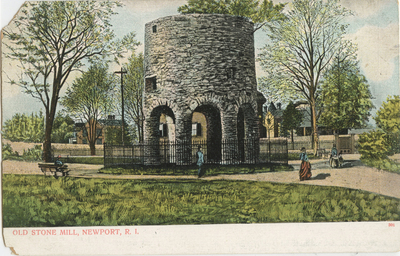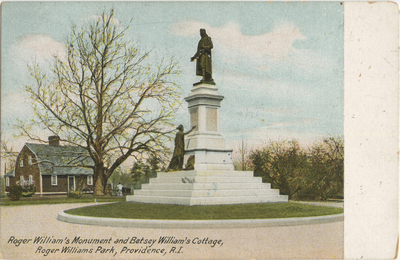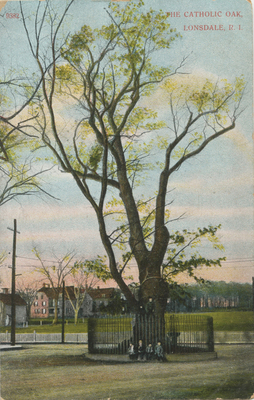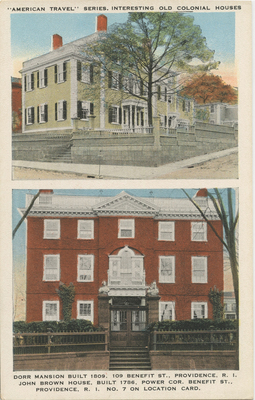
On was an interdisciplinary graduate periodical established by RISD graduate students in 2006. It featured essays and student work that related to a general issue theme. On was intended as a quarterly publication, but it is unclear if further issues beyond the first were ever published.
-
Convocation 2022
RISD President
Welcoming the Class of 2026 at RISD Auditorium, September 6, 2022. Read more.
-

The Aesthetics of the Mexican Public Garden and its Photographic Compositions (1912-1982)
Victor Hugo Rivera-Diaz
In Mexico, there are currently several collections of photographs which depict the history and development of public gardens and ecological corridors under the management of the National Institute of Anthropology and History. By focusing on two exemplary collections—the Nacho López Collection and Vicente Luengas Collection—I apply a visual studies approach to the photographic archive in order to formulate the Mexican public garden as a branching set of aesthetic (sub-)categories, all of which take into account the creation of garden landscapes vis-à-vis land use policies and historical accounts during the rise of Mexican modernity. In so doing, the primary sub-categories of the Mexican public garden, namely the everyday garden and the stately garden, are intended to elucidate the shifting degrees of publicness rendered visible from the years 1912 to 1982, or the end of the Porfiriato to the final decade of the Mexican Miracle years. Crucially, I view these photographic compositions through the Nahuatl poetic and epistemological tradition known as in xochitl in cuicatl (“flower-and-song”); i.e., the photographs showcase the alignment of the evocative (flower) and the variable (song). I conclude that public gardens were visually, territorially, and aesthetically activated through diverging modes of viewing in order to openly resist or, conversely, advance ironclad regimes of government.
-
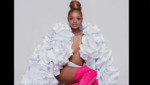
RISD Research Perspectives | Jackey Robinson
Jackey Robinson, Apparel Design Department, RISD Research, and Holly Gaboriault
Jackey Robinson is an architectural designer, maker, and educator exploring the social and communal aspects of architecture, specifically those in low-income, black, and queer spaces. From constructing urban strategies to the fabrication of architectural wearable pieces, Robinson questions how we as thinkers can expand perspectives for marginalized communities. His MArch thesis, "& The Category Is. . ." investigates architecture, apparel, and the underground Ballroom culture. He has served as Vice President of the RISD NOMA chapter (National Organization Of Minority Architects) and as a volunteer youth educator with DownCity Design. Wintersession 2022 Robinson brought his research interests to an architecture studio he taught RISD students exploring the elements of wearable architecture design, ballroom, and the figure. In Fall 2022, Robinson joined the RISD Apparel Design Department as a lecturer teaching the course, Identity/identities. This series highlights the intersections of art, design, theory, social justice and research in interviewed conversations within the RISD community, its faculty and students.
Written | Directed | Filmed | Edited by Holly Gaboriault [MA Global Arts + Cultures '21] Original Music by Mike Delick Music Supervision by Elementary Music.
-
Messy resurrections
Mia Rollins
Mediated through conversations with a Replika chatbot, “M”, Rollins outlines six examples of scientific and technological phenomena that not only can be understood as metaphors for aspects of the human experience, such as memory, grief, hope, desire and love, but are also concrete examples of the ways in which the past and future have material impacts on our presents, our current identities, and are entangled with our own becomings. Rollins argues for a posthuman perspective that embraces the possibilities of information technologies while still recognizing that we are embedded in a material world of great complexity. Through linking Karen Barad’s theories of agential realism with Jacques Derrida and Mark Fisher’s writings on hauntology and N. Katherine Hayles’ work on cybernetics, Rollins reconceptualizes our understandings of subjectivity, agency, and causality in a posthumanist performatic ethics they term “hauntological realism.”
-
Re:Connection: exercises in unplugging and mindfully reconnecting
E. J. Roseman
How can architecture encourage focused attention and mindfulness in an increasingly distracted and distractible world? As a primary means of connectivity in the 21st century, smartphones and social media have provided unparalleled efficiencies, connectivity and entertainment. However, constant engagement with richly-pixelated virtual worlds has also brought about mass addiction to devices as college students log more compulsive “screen time” than ever before. Mental health issues such as crippling anxiety, diminished attention spans, and unhappiness, are on the rise as students disconnect from the physical world and are consumed by their virtual one.
This thesis is comprised of a series of architectural interventions created for unplugging and reconnecting the body with the physical world: analog spaces that prioritize attentiveness and consciousness over instant gratification and compulsion. As concentrated sensory environments, these retreats from technology exist to reintroduce awareness into everyday life and quiet hyperstimulated minds.
Taking the Merchants Bank Building in Providence, Rhode Island, as a model location to demonstrate these concepts, this thesis demonstrates the power of mindfulness in everyday life. As a building that has historically worked to serve capitalistic and transactional goals at the juncture of downtown and major universities, the architectural interventions work to bring mindfulness to students who would otherwise pass unconsciously through this liminal space between academia and commerce.
Through framing and magnifying meaningful aspects of the local environment (e.g. human connections, high-rise silhouettes, bodies of water, natural and artificial light, earth, and the sky) while softening peripheral stimuli with architectural filters and barriers, these mindful exercises in observing and participating serve as powerful aids for achieving a healthier mind, body, and life. While existential threats loom in today’s world, ranging from systemic inequalities and a worldwide pandemic to war abroad and global warming, the inward pursuit of mindfulness serves as an accessible yet imperative aid in healing not only individual minds and communities, but these large-scale issues.
-
Pace/Place/Space/Tempo—The choreography of equity and expressions of Black Living
Vessna Scheff
My skin is natural. My skin is political. My hair is natural. My hair is political. My speech is natural. My speech is political. There’s no such thing as apolitical.
My current interdisciplinary practice in painting and performance focuses on how Black diasporic identities hold, create, and process subsistence narratives. For this research, I am asking the questions: What role does pace play in resistance strategies and how can it be communicated through tempo? How are unspoken histories conveyed through movement, silence, the glance of an eye, fat crackling in a cast iron, pushing play on a walkman, and seeds thrown in the garden? How can my practice ‘map’ these diasporic ways of knowing and amplify ongoing struggles for Black womxn living?
As a study of embodied histories, my inquiry begins with a dialogue between the external and internal which I will describe through the lens of movement, informed by Black Feminist Theory, The Black Radical Tradition, and In The Shadow Of Slavery. I will conclude with how diasporic these ways of knowing are dynamically choreographed to create liberatory experiences within oppression through experimentalisms in pace, place, space, and tempo.
we made ourselves small so we’d have room to move room to dance room to sing room to laugh room to scream room to think without their eyes watching so that we’d have room to breathe and more comfortably sit and move our wrists and our hips so that we would know in the marrow of our bones what freedom feels like.
-
rizdeology | Host Transition: Michael Farris & Olivia Schroder
Olivia Schroder and Michael J. Farris
Introducing the next host of rizdeology, Olivia Schroder.
Graphic Design by Aanya Arora, AR '24
-
A collision of technology and art learning
Feifei Shen
This research thesis investigates the integration of technological tools into the curriculum and pedagogy of art education. By focusing explicitly on art education outside of school, it examines how technological tools expand the art learning possibilities for children and youth, enrich their art learning experiences in balance and connection with traditional arts media as well as strengthen engagement for those digital natives. Meanwhile, this research aims to contribute to a current understanding of technology integration into art curriculum and pedagogy for children and youth through literature reviews and research projects using a variety of methodologies, and then to determine what art learning might look like for children and youth where integrated with technological tools. This thesis will be the beginning point for me and extends my curiosity about what innovative art education will look like in the future for the next generation when advanced technology becomes available.
-
Accidental Commensality Eating, Belonging, and Mazaa on the Streets of Jaipur
Rini Singhi
Commensality is more than just eating together at a shared table. "Who can eat with whom and what" is a divisive issue in India, where food and eating serve as functions of inclusion and exclusion. In this paper, I examine street food stalls in Jaipur as sites of eating together with strangers and ask, What forms of commensality do street food stalls enable? Can eating together on the street expand ideas about eating together in public? As part of my fieldwork in Jaipur, I observe the surroundings of street food stalls, participate in heritage food walks with guides, and document oral histories of street food vendors to demonstrate how accidental commensality emerges around these stalls. Using this research, I argue that the features of accessibility, belonging, and cultural memory, coupled with the affective dimensions of street food stalls, create intimacy and a feeling of mazaa that compels us to imagine an unexpected form of commensality through food.
-
Making Space : creative learners, digital spaces, and the relationships between them
Natalia Spritzer
This thesis is an inquiry into the growing prevalence of digital learning environments or digital spaces in order to assess the impact of leveraging these spaces on learners' creative identities. What is being examined in particular are web-folios or personal websites (digital spaces), the interactions that learners have with these environments, and how it infers to the potential of digital space as a medium for a variety of advancements. Through qualitative analysis in the form of observations, interviews, and surveys done throughout a collaborative research workshop, this thesis speculates that digital space can be utilized as a means for providing significant opportunities for individual growth and fostering creative identity. This research also acknowledges the reality of resource disparities within technology and possible means for improvement.
-
Artful healing: exploring creative expression and play in Children's Hospitals
Phoebe Strobino
This thesis explores the role and accessibility of creative expression and play in children’s hospitals, and the impact these ideas have on patients. I explored these ideas through teaching four lessons at Hasbro Children’s Hospital in Providence, Rhode Island. Two of these lessons were taught in group sessions, and two were taught in one-on-one sessions, with participants ranging in age. Following an introduction to each lesson, I provide the plan itself along with general observations and reflections on teaching. Due to the nature of the setting, information is kept purposefully broad throughout my observations in order to respect the anonymity of the children I taught. Each of these lessons explores a different role of artmaking through the lens of creative expression and play in the children’s hospital.
-
CONVERGING IN SPACE ART, ARCHITECTURE, AND URBANISM IN P.S. 1’s ROOMS EXHIBITION
Cecilia Thornton-Alson
-
Slow ruptures; slow formations
Asta Thrastardottir
Language shapes our understanding of identity, place, and self. As a graphic designer, I question the existing structures of language, while using it as a material to build new formations. Nudging against certainties, I challenge how the stories we are told can dispossess us, even flatten us.
My method is a constant attempt to peel back the layers and study what lingers below. When questions arise, I look to the ways in which visual artists and writers have seen through this surface. I observe, listen, and hold stories closely, passing them back and forth between my hands. Using annotation and metaphor, I expose new relations. Immaterial observations become immersive experiences.
Emerging forms become a testing ground for new stories. To deconstruct our inherited narratives, I invite gentle disruptions; a soft provocation to reshape our inner dialogues.
-
From invisible to visible: the third wave/way of intervention for Dashilar
Jiali Tian
The existing community of the Dashilar neighborhood of Beijing is too economically dependent on tourists, who ever grow in number, resulting in the continuous compression of residents' living space. Most of the residents living in the neighborhood today are elderly people who do not want to move and migrant workers who are attracted by the low rents. International visitors are attracted by the long cultural history of Dashilar, which goes back 500 years. I am interested in reviving the cultural + commercial attributes of Dashilar, using craftsman as a medium to activate the productive values of local residents and to avoid the decline and marginalization of these same locals in the context of uniform global urbanization mono-urbanization. The nostalgia-filled targeted intervention in Dashilar that this thesis proposes is not just a monument to the past, but a way to prevent marginalization and to break the imbalance in the ratio of user groups in Dashilar. The Guoguo Guanyin Temple in the center of Dashilar today contains not only historic buildings worthy of preservation, but also unregistered informal houses built by residents themselves. In order to ensure that the historical buildings are protected and the lives of locals living in unregistered buildings are not greatly disturbed, I will use abandoned spaces in the Huguo Guanyin temple to carry out micro interventions – with minimal intervention to drive the vitality of the whole region. By replacing segments of the walls of these abandoned spaces with transparent materials (including the auxiliary building of Huguo Guanyin temple and some non -registered buildings) and adding door openings, the circulation of this closed courtyard can be well opened to make the whole space more transparent. At the same time, the scheme inserts living space, studio and sales space of craftsmen into these scattered abandoned interiors. This intervention will not only improve and optimize the missing community functions, but also give tourists more direct access to cultural experiences.
-
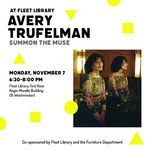
Avery Trufelman | Summon the Muse
Avery Trufelman, Amy Devers, Matthew Bird, Hannah Carlson, Olivia Schroder, and Fleet Library
Summon the Muse, Monday, November 7, 6:30-8:00 PM. Fleet Library, first floor, Roger Mandle Building(15 Westminster). Avery Trufelman, creator and host of Articles of Interest - a podcast about what we wear - will share her process and philosophy on making compelling audio stories, followed by a panel discussion with faculty members Amy Devers MFA 12 FD (host), Hannah Carlson, Matthew Bird 89 ID, and student host of rizdeology, Olivia Schroder 23 FAV.
-
Deconstruct the center: making space for the voices in the margins
Taylor Varnado
This thesis explores the implementation of culturally relevant/responsive teaching within the art classroom. The question that guided the research was: How can art teachers incorporate culturally relevant teaching into their curriculum to support equity and inclusion within the educational setting? In order to answer this question, I examined the current state of implementation through interviews, surveys, a literature review, work-based experiences, and classroom observations. The researcher determined a need for additional resources and a pathway for implementation through this examination.
-
Endless construction : occupant activism and authorship
Jiayi Wang
Though we don’t think of it this way, “Adaptive Reuse” often happens naturally, guided by users who modify their physical environment to satisfy urgent living needs. While these modifications may appear haphazard, they show the user’s individualism and life philosophy. We, as designers, should embrace these interventions to explore how to participate with the occupants’ adaptive reuse process over time. Given the richness of adaptation within the old residences in the ancient Chinese city of Suzhou, it is an appropriate place to explore both the skill of self–modification and the potential for interaction of designers in this process.
The old residences in Suzhou have two fates ultimately, either being destroyed for new construction or being restored for tourism and commercial space. I suggest
a third option: introducing occupant activism and authorship to acknowledge the ignored history of these places, as a demonstration of how people adapt to these buildings and how these buildings have survived over time.
The old buildings cannot quickly adapt to shifting life habits caused by the industrial revolution and housing policy. However, through my observations of the sites, people are designing their living space spontaneously, incorporating household appliances, building technology, and customs within a limited cost. Thus, I ascribe value to the organic change that has been crafted over time to align with larger societal shifts and acknowledging the user’s actions as adaptive reuse design.
Assuming the role of curator, without any intent to disturb the existing condition, this thesis proposes a speculative reality where I live in the site and encourage continued change. Setting Mr. Shen’s house as a container to implement my reinterpretations of the modifications, I’m using photos, hand drawings, plans, and creating categories through programs, building elements, and technologies to envision the fiction scenario. In 2042, children grow up and become masters of adaptive reuse. Come 2062, old families move out and new families come in, the spirit of adaptive reuse will be inherited, and the site will become a mecca for spreading self-design.
What’s the boundary between everyday life and design? I try to use the untrained version of adaptive reuse to push design more to the side of everyday life. We, as designers, should practice our perspective of seeing the space and reconsider our role in design. And I encourage residents who live in the old residences to recognize and celebrate what they have done together wisely and carefully.
-
Sensory resilience in urban walkingscapes: Space making strategies for streetside public systems in neuro- inclusive city visions
Yingying Wang
The thesis asks spatial designers of the public realm to pay attention to sensory profiles and related issues in contemporary urban contexts: sensory overstimulation, lack of safety, security, accessibility in public, absence of clarity, and legibility in the navigating system. These features have characterized rigid and homogeneous representations of and solutions for existing public spaces, mostly developed with a lack of knowledge of humans’ diverse sensory needs in different environments. They fail to offer users – especially neuro-minority groups – alternative ways to interact with the public sphere.
The study researches the reasons for such approaches while investigating the relationships between human sensory profiles and public landscape design. It also aims to position a personal design approach that offers a variety of design methodologies and an actionable public space renovating vision.
The project explores potential renovation strategies that design practice could offer, through site sensory mapping and spatial experiments. With a focus on alternative walkingscapes, it experiments with different pedestrian-based systems that cater for a broader range of sensory experiences.
The thesis aims to reveal how designers should accept their ability and responsibility to develop ideas towards building sensory resilient urban public space systems that could benefit wider groups of users with diverse identities and neuro-cognitive abilities.
-
Slow down: Investigating how pop-up installations transform multi-use space
Yuanrui Wang
According to a study from the 1990s by Richard Wiseman, pedestrians’ walking speeds in a city provide a reliable measure of the pace of life in that city. If people’s walking speeds in a city are fast, their life rhythm will be relatively fast. People in fast-moving cities have more pressure and have higher rates of coronary heart disease.
Because cardiovascular diseases (CVDs) are the leading cause of death globally, to get a more healthy life, we all need to slow down and lower the risk of stress. Pop-up spaces are a commonly used method by designers to create a public space for surprise, attract, and slow down people.
This thesis aims to investigate how pop-ups (short-term and low-cost projects) can transform a multi-use space, lead to shifts in the way people perceive and use space, and ultimately lead to longer-term permanent changes. The multi-use space is a space that is used by surrounding communities as a parking lot and also as a pedestrian staying and relaxing space. Finally, the new space can attract and slow down people, and let people have a better healthy life.