On was an interdisciplinary graduate periodical established by RISD graduate students in 2006. It featured essays and student work that related to a general issue theme. On was intended as a quarterly publication, but it is unclear if further issues beyond the first were ever published.
-
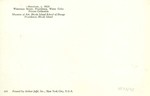
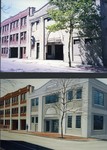
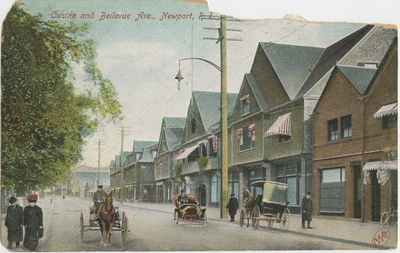
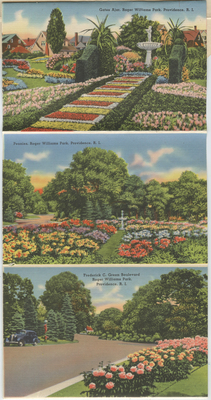
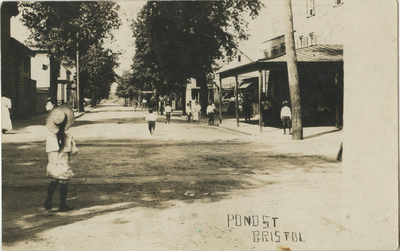
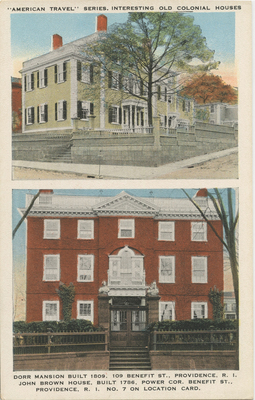
Postcard view down Waterman Illustration #5, verso of postcard
Experimental and Foundation Studies Department
-
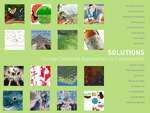
SOLUTIONS Human Centered Approach to Conservation
Illustration Department and History, Philosophy, + the Social Sciences Department
"These essays were were written and illustrated by students at the Rhode Island school of Design in February, 2021. Their perspectives are entirely personal and reflect their efforts within a 5.5-week fused studio/seminar course that was centered on the Sixth Mass Extinction and how biodiversity is changing because of humans. Discovering that science communication is more than delivering just the facts, students were invited to research a topic of personal interest that is relevant to human impacts on biodiversity. Through analysis of data and other scientific information, each sought to synthesize their research and opinions on their topic through a combination of text and illustration. Their work is presented here unedited." Susan Doyle, Dr. Lucy Spelman –– from the Introduction
-

Personal positioning system
Laura Diez de Baldeon
Personal Positioning System (PPS) is an exploration of spatial memory in an unstable world. While the GPS gathers many different, shifting data points in order to provide us with an apparently stable representation of our position, a longitude and latitude in the earth’s grid, PPS offers alternative forms of mapping based on a more flexible unit: memory. PPS reverses the directionality of the GPS and returns to the fragmentary; it disperses rather than unifies, offshooting in different directions, overlaying the intimate on corporate territory, chasing the shifting flow of geographical information. It conceives of design as a spatial practice, one that builds fragile and temporary mnemonic structures, a virtual grid representing changing cognitive maps.
PPS charts the territory of my work through three flexible units: the unit of motion, the unit of space and the unit of time. Measurement is both structural and conceptual: it partitions but it also shapes, serving as a pillar of understanding. Throughout history, units of measurement have been used to build a regimented reality, demanding adherence to schedules and modes of operating that follow militaristic and capitalistic priorities. These units speak the language of efficiency. Instead, PPS repurposes the act of measuring by redefining these units, in order to reconfigure a ground that has already been mapped and prioritize the circuitous and the subjective over the useful and the mechanically indifferent. The creation of parallel, more subjective units of measurement as an entrypoint to my work speaks more broadly of design as a practice of building systems that propose new ways of understanding: design as a reconfiguration. Measuring here acts as an invitation to challenge existing knowledge and question our position.
-
Commencement 2021 Elizabeth Diller | Honorary Degree Recipient
Elizabeth Diller and RISD President
Renowned Architect Elizabeth Diller praises the activist spirit of RISD’s Class of 2021 and urges them to be “problem makers of problems worth solving” in what they do next.
-
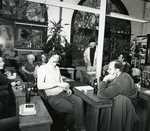
Edna Lawrence, Bruun, Jack Massey, Brisson and George Pappas
Experimental and Foundation Studies Division
-
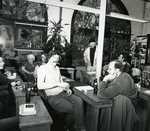
Edna Lawrence, Bruun, Jack Massey, David Brisson, George Pappas
Experimental and Foundation Studies Division
-
John Howard Benson, image form the Howell CollectionHowell Collection
Experimental and Foundation Studies Division
-

Leroy White, Brice Hobbs, Gerald Immonen, John UdvardyUvardy, J
Experimental and Foundation Studies Division