On was an interdisciplinary graduate periodical established by RISD graduate students in 2006. It featured essays and student work that related to a general issue theme. On was intended as a quarterly publication, but it is unclear if further issues beyond the first were ever published.
-
Jonathan Bonner with Alba Corrado
Experimental and Foundation Studies Division, Jonathan Bonner, and Alba Corrado
-
Diane Blair, Joanne Stryker, Nade Haley, Deb Coolidge, Christina Bertoni
Experimental and Foundation Studies Division and Deborah Coolidge
-
Diane Blair, Joanne Stryker, Nade Haley, Deb Coolidge, Alba Corrado, Christina Bertoni
Experimental and Foundation Studies Division, Deborah Coolidge, and Alba Corrado
-

Leslie Hirst, Nade Haley and Deb Coolidge, balloon ride
Experimental and Foundation Studies Division, Deborah Coolidge, and Leslie Hirst
-
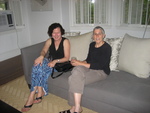
Carol Lasch and Judith Maloney
Experimental and Foundation Studies Division, Carol Lasch, and Judith Maloney
-
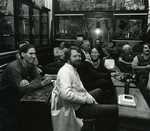
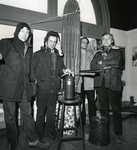
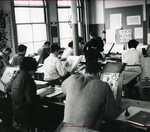
Brice Hobbs, Gerald Immonen, Carpenter, LeRoy White, Ted Weller, Irving Haynes, Eddie Oates, Edna Lawrence
Experimental and Foundation Studies Division and Eddie Oates
-

Kara Rooney, image from RISD Faculty Page
Experimental and Foundation Studies Division and Kara Rooney
-
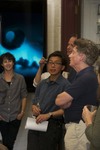
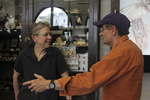
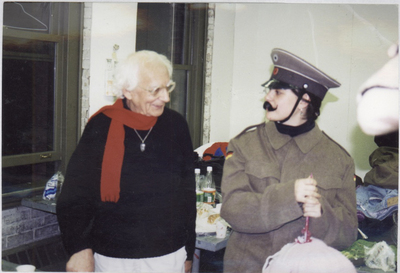
Ken Horii and Gareth Jones, guests at Party for Joanne Stryker
Experimental and Foundation Studies Division and Joanne Stryker
-

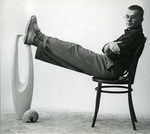
Jonathan Sylvia, image from RISD Faculty Page
Experimental and Foundation Studies Division and Jonathan Sylvia
-
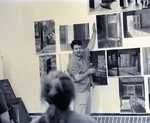
Jeff Hesser, photo by MacDonald Wright
Experimental and Foundation Studies Division and McDonald Wright
-

McDonald Wright, RISD EFS faculty, March 2015
Experimental and Foundation Studies Division and McDonald Wright
-

Karen Zucconi and Diane Blair, RISD EFS staff
Experimental and Foundation Studies Division and Karen Zucconi
-

Cultural acupuncture: decentralization and deocratization in Chinese exhibition design
Ruohan Duan
There is an imbalance between the opportunities for aesthetic education in big cities and underdeveloped areas in China. Taking Shanghai and Beijing as examples, museums in big cities consume most art educational resources. People who live in rural or small towns hardly have access to the arts, making the aesthetic gap larger between cultural centers and cultural deserts.
This thesis proposes a new exhibition system that could send a series of accessible and sustainable exhibition structures around China to narrow the educational resources gap and synchronize cultural curriculum between different places. Decentralizing and democratizing the cultural center and bringing the exhibition space out of the museum will weaken its sanctification into four underdeveloped areas that lack cultural amenities: Qingdao, Handan, Yongshou, and Nuodeng. I will use Qingdao, my hometown, as a specific sample to show how a unit of exhibition structure could separate and regroup according to different cultural contexts. After a few years, I believe the culture desert will no longer be a desert, and the oasis will be across China.
I was inspired by a burr puzzle, an interlocking puzzle consisting of notched sticks in ancient China, to design the configuration of the exhibition’s structure. The structures will be assembled as a cube and transported easily by a truck. Each piece has a different shape and it could be combined into groups or exhibited by itself. This exterior exhibition won’t display any original artworks, but use augmented reality and holograms to show virtual images. The gap of principal structures will be filled by tiny cube seats made with local materials, which will offer regional characteristics to the public and recall nostalgia for the land they are standing on.
-
Katti-Batti : a digital tool for young adolescents to transgress the limitations of gender socialization through empathy & friendship
Chetan Dusane
The genesis of this project lies in the personal experiences that led me to believe that the culturally learned and perceived gender roles, norms, and expectations limit a person’s health, educational, professional, economic, and social abilities.
The work began by finding the evidence connecting the learned, perceived gender roles, norms, and allied cultural expectations to the ability to think freely. The research revealed the limiting effects of gender roles and norms on self-identity, personal belief systems, and a place’s culture. The study further led to uncovering the link between limiting personal belief systems and cultural environment to the lack of openness of a person to receive new knowledge and ideas. This lack of openness was then identified to impair an individual’s decision-making ability, which ultimately negatively affects the ability to self-actualize.
Gender Socialization was identified as a fundamental process that leads to the exposure, development, adoption, and conformity to the limiting gender roles, norms, stereotypes, and expectations.
Research and expert consultations led to identifying continuous consciousness-raising about gender socialization and stereotype conformity as an efficacious strategy to break the gendered lenses. The early adolescence (12-15 yr.) age group was identified as a window of opportunity to mitigate the effects of gender socialization because of the physical, cognitive, and behavioral changes that occur at this age.
In response to this opportunity, initial concept development, prototyping, and testing of a digital tool intended to evoke thought on the topic were accomplished. The tool is designed with the intention to make a complex subject matter accessible and relatable to young adolescents. The goal is to help them reflect on their own biases and gradually become aware of the effects of gender socialization on their choices and decision-making. The emotions of friendship and empathy are used as vehicles to highlight the significance of breaking deeply gendered outlooks.
-
Beyond conscious: the knowing of self-owned anxiety
WenYu Du
To achieve recognition of when we might under anxiety attack, the first step is to introduce the practice of expressing ourselves with wearable devices- Nudo for users to say “no”, “I am not in a good condition” with no words, gently reveal your emotional status and give you the sense of support. Nudo works like the defense mechanism of humans and gathers our body signals that are triggered from anxiety as a recording piece that allows users to track what’s happening during every specific moment. It also works as a reminder for those who might not recognize their own anxiety.
Nudo connects to several sensors including the GSR sensors and heart rate sensors, the motors that can pull the string which is being inserted into its own structure. When those sensors detect the changing of your body conditions such as heart rate goes up, cold sweat, those sensors will send out the signal that triggers the motors to pull the string to achieve the movement of the Nudo. Eventually, Nudo will breathe, shrink and tighten when your body experiences anxiety. And whenever it moves, that’s the moment you need to pay attention to. Because at this moment, your body tries to inform you and take action to protect you. Now Nudo will softly inform this world including you, focusing and listening to your heart. Try to clean your thoughts a bit, by following its temple. Like breathing, a deep breath.
It’s a soft, playable wearable cushion, it creates a small space for you to hide part of your body away, it demonstrates and expresses yourself to the world softly, silently. It gently soothes and accompanies you when you need it. You are welcome to recognize the pattern of how your emotion functions with Nudo. Eventually, every small moment when we feel weird, even we don't recognize it, is still important and worthy to be awarded. After all, rolling stones gather no moss, with the full understanding of ourselves, we can finally know when and how things affect us, and face it, toggle it. Empower yourself, embrace yourself.