
On was an interdisciplinary graduate periodical established by RISD graduate students in 2006. It featured essays and student work that related to a general issue theme. On was intended as a quarterly publication, but it is unclear if further issues beyond the first were ever published.



-

Surfacing: a (loose) manual on unlayering / stuff-making and hypervisibility
Zoë Pulley
This is a (loose) manual on a method I like to refer to as surfacing.
A method that synthesizes narrative through the use of surfaces such as textiles, paper, web & video to reveal the spectacularly ordinary parts of Black life within a growing design practice.
A method I (currently) practice in three (evolving) steps:
Unlayering and piecing together stuff (rememory)
Acknowledgment of ancestry through stuff-making (kin)
Consciousness of oneself and the place / time / space in which the work is being disseminated (hypervisibility)
This is a manual that profiles a (current) design practice of a Black female maker in 2023 (me! lol).
A Black female maker that continues to amalgamate, respond-to and learn-from.
One who recognizes that they are still growing — that their views expressed in this text will shift, evolve or change with time.
-
Shared Obessions | NAHP Members' 2023 Annual Showcase
RISD Color Lab, North American Hand Papermakers, and Fleet Library
Shared Obessions | NAHP Members' 2023 Annual Showcase exhibit on view at the RISD Color Lab, 30 North Main St., Providence, RI in conjunction with the opening reception ceremony held on the 2nd floor of the RISD Fleet Library, 15 Westminster St. Providence, RI. Additional work displayed at the RISD Fleet Library.
-
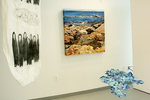
Shared Obessions | NAHP Members' 2023 Annual Showcase
RISD Color Lab, North American Hand Papermakers, and Fleet Library
Shared Obessions | NAHP Members' 2023 Annual Showcase exhibit on view at the RISD Color Lab, 30 North Main St., Providence, RI in conjunction with the opening reception ceremony held on the 2nd floor of the RISD Fleet Library, 15 Westminster St. Providence, RI. Additional work displayed at the RISD Fleet Library.
-
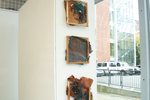
Shared Obessions | NAHP Members' 2023 Annual Showcase
RISD Color Lab, North American Hand Papermakers, and Fleet Library
Shared Obessions | NAHP Members' 2023 Annual Showcase exhibit on view at the RISD Color Lab, 30 North Main St., Providence, RI in conjunction with the opening reception ceremony held on the 2nd floor of the RISD Fleet Library, 15 Westminster St. Providence, RI. Additional work displayed at the RISD Fleet Library.
-
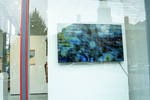
Shared Obessions | NAHP Members' 2023 Annual Showcase
RISD Color Lab, North American Hand Papermakers, and Fleet Library
Shared Obessions | NAHP Members' 2023 Annual Showcase exhibit on view at the RISD Color Lab, 30 North Main St., Providence, RI in conjunction with the opening reception ceremony held on the 2nd floor of the RISD Fleet Library, 15 Westminster St. Providence, RI. Additional work displayed at the RISD Fleet Library.
-
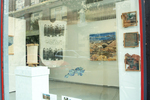
Shared Obessions | NAHP Members' 2023 Annual Showcase
RISD Color Lab, North American Hand Papermakers, and Fleet Library
Shared Obessions | NAHP Members' 2023 Annual Showcase exhibit on view at the RISD Color Lab, 30 North Main St., Providence, RI in conjunction with the opening reception ceremony held on the 2nd floor of the RISD Fleet Library, 15 Westminster St. Providence, RI. Additional work displayed at the RISD Fleet Library.
-
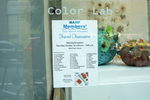
Shared Obessions | NAHP Members' 2023 Annual Showcase
RISD Color Lab, North American Hand Papermakers, and Fleet Library
Shared Obessions | NAHP Members' 2023 Annual Showcase exhibit on view at the RISD Color Lab, 30 North Main St., Providence, RI in conjunction with the opening reception ceremony held on the 2nd floor of the RISD Fleet Library, 15 Westminster St. Providence, RI. Additional work displayed at the RISD Fleet Library.
-
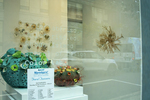
Shared Obessions | NAHP Members' 2023 Annual Showcase
RISD Color Lab, North American Hand Papermakers, and Fleet Library
Shared Obessions | NAHP Members' 2023 Annual Showcase exhibit on view at the RISD Color Lab, 30 North Main St., Providence, RI in conjunction with the opening reception ceremony held on the 2nd floor of the RISD Fleet Library, 15 Westminster St. Providence, RI. Additional work displayed at the RISD Fleet Library.
-
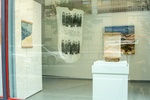
Shared Obessions | NAHP Members' 2023 Annual Showcase
RISD Color Lab, North American Hand Papermakers, and Fleet Library
Shared Obessions | NAHP Members' 2023 Annual Showcase exhibit on view at the RISD Color Lab, 30 North Main St., Providence, RI in conjunction with the opening reception ceremony held on the 2nd floor of the RISD Fleet Library, 15 Westminster St. Providence, RI. Additional work displayed at the RISD Fleet Library.
-
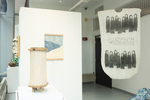
Shared Obessions | NAHP Members' 2023 Annual Showcase
RISD Color Lab, North American Hand Papermakers, and Fleet Library
Shared Obessions | NAHP Members' 2023 Annual Showcase exhibit on view at the RISD Color Lab, 30 North Main St., Providence, RI in conjunction with the opening reception ceremony held on the 2nd floor of the RISD Fleet Library, 15 Westminster St. Providence, RI. Additional work displayed at the RISD Fleet Library.
-
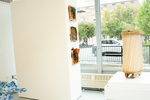
Shared Obessions | NAHP Members' 2023 Annual Showcase
RISD Color Lab, North American Hand Papermakers, and Fleet Library
Shared Obessions | NAHP Members' 2023 Annual Showcase exhibit on view at the RISD Color Lab, 30 North Main St., Providence, RI in conjunction with the opening reception ceremony held on the 2nd floor of the RISD Fleet Library, 15 Westminster St. Providence, RI. Additional work displayed at the RISD Fleet Library.
-
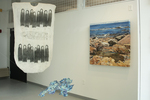
Shared Obessions | NAHP Members' 2023 Annual Showcase
RISD Color Lab, North American Hand Papermakers, and Fleet Library
Shared Obessions | NAHP Members' 2023 Annual Showcase exhibit on view at the RISD Color Lab, 30 North Main St., Providence, RI in conjunction with the opening reception ceremony held on the 2nd floor of the RISD Fleet Library, 15 Westminster St. Providence, RI. Additional work displayed at the RISD Fleet Library.
-
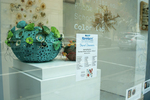
Shared Obessions | NAHP Members' 2023 Annual Showcase
RISD Color Lab, North American Hand Papermakers, and Fleet Library
Shared Obessions | NAHP Members' 2023 Annual Showcase exhibit on view at the RISD Color Lab, 30 North Main St., Providence, RI in conjunction with the opening reception ceremony held on the 2nd floor of the RISD Fleet Library, 15 Westminster St. Providence, RI. Additional work displayed at the RISD Fleet Library.
-
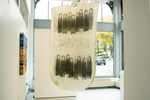
Shared Obessions | NAHP Members' 2023 Annual Showcase
RISD Color Lab, North American Hand Papermakers, and Fleet Library
Shared Obessions | NAHP Members' 2023 Annual Showcase exhibit on view at the RISD Color Lab, 30 North Main St., Providence, RI in conjunction with the opening reception ceremony held on the 2nd floor of the RISD Fleet Library, 15 Westminster St. Providence, RI. Additional work displayed at the RISD Fleet Library.
-
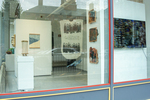
Shared Obessions | NAHP Members' 2023 Annual Showcase
RISD Color Lab, North American Hand Papermakers, and Fleet Library
Shared Obessions | NAHP Members' 2023 Annual Showcase exhibit on view at the RISD Color Lab, 30 North Main St., Providence, RI in conjunction with the opening reception ceremony held on the 2nd floor of the RISD Fleet Library, 15 Westminster St. Providence, RI. Additional work displayed at the RISD Fleet Library.
-
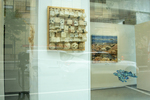
Shared Obessions | NAHP Members' 2023 Annual Showcase
RISD Color Lab, North American Hand Papermakers, and Fleet Library
Shared Obessions | NAHP Members' 2023 Annual Showcase exhibit on view at the RISD Color Lab, 30 North Main St., Providence, RI in conjunction with the opening reception ceremony held on the 2nd floor of the RISD Fleet Library, 15 Westminster St. Providence, RI. Additional work displayed at the RISD Fleet Library.
-
Commencement 2023 Presentation of Honorary Degrees | Walter Hood, Do Ho Suh
RISD President
President Crystal Williams and Provost Anais Missakian 84 TX award honorary degrees to visionary designer and educator Walter Hood and internationally acclaimed artist and RISD alum Do Ho Suh 94 PT.
Walter Hood is the creative director and founder of Hood Design Studio in Oakland, CA, a cultural practice focused on art, fabrication, design, landscape, research and urbanism. He is also the David K. Woo Chair and Professor of Landscape Architecture and Environmental Planning at the University of California, Berkeley, and a recipient of the 2017 Academy of Arts and Letters Architecture Award, a 2019 Knight Foundation Public Spaces Fellowship, a 2019 MacArthur Fellowship, a 2019 Dorothy and Lillian Gish Prize and—most recently—the 2021 United States Artists Fellowship.
Hood creates urban spaces that resonate with and enrich the lives of current residents while also honoring communal histories. He melds architectural and fine arts expertise with a commitment to designing ecologically sustainable public spaces that empower marginalized communities. He has transformed traffic islands, vacant lots and freeway underpasses into spaces that challenge the legacy of neglect in urban neighborhoods. Hood Design Studio’s award-winning work has been featured in such publications as Dwell, The Wall Street Journal, The New York Times, Fast Company and Architectural Digest.
Do Ho Suh BFA 94 PT works across diverse mediums, including drawing, film and sculpture, to confront questions of memory, psychic space and displacement. Born in South Korea, Suh studied at Seoul National University and later moved to the US to study at RISD and Yale. His work draws attention to how we inhabit the public space around us. Many of his pieces defy standard notions of scale.
His work is featured in collections worldwide including MoMA, New York; Whitney Museum of American Art, New York; Los Angeles County Museum of Art (LACMA); National Museum of Modern and Contemporary Art, Seoul; and Tate, London. He was the recipient of the 2017 Ho-Am Prize and represented Korea at the Venice Biennale in 2001 and the Architecture Biennale in 2018. Recent solo shows have been presented at MCA Sydney (2022), LACMA, Los Angeles (2019); V&A, London (2019); Museum Voorlinden (2019) and Smithsonian American Art Museum, Washington (2018). Suh lives and works in London, UK.
-

Convocation 2023
RISD President and RISD Provost
RISD's 146th Convocation ceremony welcoming the Class of 2027 at RISD Auditorium, September 5, 2023.
-
Objects and Apparitions: A Portable Museum
Yesuk Seo
My work transcends the boundaries between painterly printmaking and sculpture. Through hand-pulled silkscreen prints, I create abstract pixelated images depicting our constantly changing relationship with meaning and reality. Memories are often glamorized and distorted whether it is our childhood home, our neighborhood, or the city. My practice archives my family history and traces patterns in memory and space by using invisibility as a phenomena to render newer explorations of abstraction, in time and in urban landscapes. Objects & Apparitions: A Portable Museum, pairs moiré patterns of ghostly printmaking with wooden objects in specific arrangements. It captures my nomadic journey between 2-dimensional and 3-dimensional genres of art.
-
The Incremental Ecosystem: Hybridizing Self-Built + Conventional Processes as a Solution to Urban Expansion
Shayne Serrano
Already dense urban areas will inevitably require further densification and sprawl. Given the United Nations projection of 68% of the World’s population living in cities by 2050, there is an urgency to resolve matters of urban expansion. At this time, it is estimated that 25% of the world’s urban population reside within the construct of a self-built settlement. Undoubtedly, these communities face a wide range of challenges including, but not limited to, a lack of urban infrastructure necessary to support their health and wellness, a lack of transportation to the inner city, a lack of access to healthcare and educational facilities, an inability to claim their land, and the absence of mainstream acceptance as an integral part of their city. This thesis wholeheartedly acknowledges the hardships of such communities and does not aim to romanticize them; instead its objective is to learn from their architectural achievements.
This project aims to create a new architectural typology by shifting the role of the architect from one that is prescriptive to one that is a facilitator for the people. By designing an infrastructural shell that considers access to utilities, accessibility, and safety concerns, and acting as a resource to the community, the architect can provide a safe and affordable neighborhood condition that does not constrict the freedom of its occupants to tailor their spaces to their needs as well as grow over time.
-
Citizens of the English Language: Sociolinguistic Perspectives on Postcolonial India
Prateek Shankar
This paper introduces the concept of "extralingual citizenship," which I define as an expansion of translingualism to include the ethnoracial logic of the nation-state and demonstrates the entanglement of language, governance, and education in the policing of knowledge infrastructures and discursive practices. I am interested in the codification of postcolonial disparity into the teaching, social performance, and material assessment of English language users, and the infrastructural disqualification of World Englishes (and their amalgams) in favor of a standardized English. I frame extralingualism as a kind of citizenship, shifting the focus of English pedagogy/practice from the syntactical/etymological concerns of language use to the agentive prospects of the language user.
I extend the work of translingual scholars such as Trimbur, Cannagararah, and Gilyard—the latter of whom famously pointed to translinguism’s “tendency to flatten language difference”—as well as Kachru on World Englishes (1993), Tupas on unequal Englishes and extralinguistic value (2015), and Flores and Rosa on raciolinguistic ideologies (2015), to frame extralingualism as a kind of citizenship that reflexively informs societal access and individual subjectivity, particularly in postcolonial societies that remain indentured to the remnants of colonial infrastructure within their state machinery. This social value is mediated by ideologies of the nation-state, the native speaker, racial and casteist supremacy, the ethnocentric myth of the monolithic nature of English, its hegemonic status over other languages, as well as the commodification of language in contemporary markets – attitudes that were manufactured during the colonial era and remains largely undisputed in public consciousness, policy, and technology
Centered in India, the study frames English as an archive of the memory and afterlife of colonialism, exploring extralingualism through:
- Vishwanathan’s exploration of English literary study in colonial India,
- autobiographical fictions by Ahmed Ali, Ramabai Ranade, and Shevantibai Nikambe,
- a juxtaposition of formative language debates of the Constituent Assembly of India with the National Education Policy 2020, and
- a comparison of India’s English coaching industry with Writing Centers in India’s private liberal arts schools to speak to the English-markets reified by extralingually-differentiated World Englishes.
My aim is to reframe English as a contested linguistic field where multiple Englishes become analogous to the respective forms of capitalism, sociality, and subjectivity constructed through them.
-
From John Street to Union
Andrew Shea
I have been making paintings constructed loosely from my experience of walking about one mile each morning from my apartment in Fox Point to my studio in downtown Providence, and of walking back each night. My goal is to rediscover the feeling of these outdoor places—their lights, atmospheres, colors, and topographies—through the process of painting inside the studio. As such, the visual representations of these paintings are not straight-forward and objective, but oblique and affective.
I hope that these works draw one’s attention to the idiosyncrasies of natural life and to the particularities of weather. I want the paintings to engage the mysteries of glimpsing, remembering, and reprocessing—of recording a series of moments that, once experienced, begin immediately and inexorably to slip from one’s grasp.
The paintings often incorporate people, who are also ideated. I think of these figures and faces, in part, as metaphors for painting itself. When we look at paintings, we “face” them. In some way they mirror our own faces and look back at us. My figures often look at one another and hail one another. Sometimes they seem to think or speak silently, doing so not through words, but through a kind of abstract paint-language of colored marks. In staging these exchanges and thought processes along the picture’s surface, I think I am asking: is real contact possible, whether through language or through paint?
-
Orchestration of Experience
Jingyi Shen
The sensory experience shaped by the landscape unconsciously influences people’s emotional and mental states. Contemporary urban landscape designers prioritized the functionality of the landscape, sometimes ignoring the spiritual impact of the atmosphere created by imperceptible environmental sonic factors. Orchestration of Experience explores the connections between sound and vision in shaping people’s sensory experience of the landscape. Drawing from soundscape ecology, environmental psychology, and dynamic visualization, this study demonstrates how they are closely intertwined. Motivated by the idea that white noise can unconsciously affect people’s mental health by Michael Rutter, we question how physical and sound landscapes shape each other, how they can shape spatially charged environmental atmospheres, and how the universal experience-creating process can potentially create more immersive experiences for people who experience hearing or visual impairment. The ultimate goal of this work is to encourage new ways of sharing and engaging with the environment thus en-hancing people’s sensory experiences in the landscape.
-
Design: A Path to Agency, Design thinking: An Educational Imperative
seva simone
Design(ing) and Design Thinking are valuable frameworks that should be used to drive agency: This thesis explores what design and design thinking are and builds a case for incorporating design into art education.
Design isn’t a mainstream subject of study in public school curricula. Design offers a unique body of knowledge that is highly relevant to the inner-workings of our world: knowledge imperative to teach if we want to succeed in solving wicked problems like global warming and mitigating global injustices. Studying design allows students to connect academic learning to the world outside the ivy, bridging the gap between the natural world and what is considered human intelligence, and finding self-actualization. Design thinking trains students to think critically, work together, and, most importantly, to ACT, instilling a sense of agency within. Design and design thinking lend themselves to be neatly applied through art education. -
Chinese tea ceremony spirit revival
Hongli Song
The history of tea dates back to ancient China, almost 5,000 years ago, though at this point tea is well-integrated into the history and civilization of various countries throughout the world. However, China, as the birthplace of the tea ceremony, has lost widespread understanding of the traditions they innovated.
For example, the Sencha method that once flourished in the Tang Dynasty (618-907), and the whisked tea method in the Song Dynasty (960-1279) has already been entirely lost. Today the brewing tea methods passed down from the Ming and Qing Dynasties are nearly lost. The Chinese traditional tea ceremony is facing unprecedented challenges since the national transition to a free market economy, which ushered in foreign traditions and a focus on profitability. A further challenge in the survival of these traditions into modernity, in ancient times, the Chinese tea ceremony was usually performed in a natural environment away from the urban area, but for the generation living in modern cities built with steel and concrete nature is distant. The traditional Chinese tea ceremony that advocates people to establish a special harmonious relationship with nature both in physical and spiritual aspects has become an unattainable dream for most city dwellers. So, what can be done to revive the Chinese tea ceremony in our modern city environment?
In the context of urban daily life throughout the world, separate from nature and full of stressors, I want to use the capabilities of space to tell the story of this vital tool to connect humans with nature and each other. This connection is expressed through the five ideological realms of Chinese tea ceremony. There are two parts of the design proposal. Based on Lu Yu's book "The Classic of Tea," which focuses on the tea ceremony during the Tang Dynasty and other articles on tea ceremony culture from both the Ming and Qing Dynasties, combined with the depiction of tearoom arrangement in ancient paintings, this thesis will reveal a blueprint for the physical setting necessary for Chinese tea ceremony culture to survive. The next goal of the design is to apply this blueprint throughout modern urban space, so that the ancient culture can not only enter Chinese people's lives again, but also people who live in other countries. In this way the world will understand the Chinese tea ceremony culture more accurately, and the spirit of this important tradition can be passed on.