
On was an interdisciplinary graduate periodical established by RISD graduate students in 2006. It featured essays and student work that related to a general issue theme. On was intended as a quarterly publication, but it is unclear if further issues beyond the first were ever published.



-
Final Tests (Presentation); BBQ Janet
RISD Archives
This video is not available online due to copyright and privacy issues. Video can be accessed and viewed in RISD Archives, Fleet Library 2nd Floor Rm. 201. Contact risdarchives@risd.edu for more information. Private kitchen conversations.
-
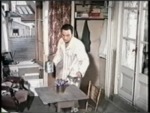
Gene Kelly, Buster Keaton, Jane Langmuir
RISD Archives
This video is not available online due to copyright and privacy issues. Video can be accessed and viewed in RISD Archives, Fleet Library 2nd Floor Rm. 201. Contact risdarchives@risd.edu for more information. Include movie clips from Kelly and Keaton.
-
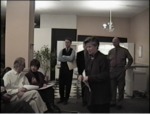
UKD Presentation Advisory Committee
RISD Archives
This video is not available online due to copyright and privacy issues. Video can be accessed and viewed in RISD Archives, Fleet Library 2nd Floor Rm. 201. Contact risdarchives@risd.edu for more information. No sound for first 51:30 minutes.
-

Anybody home? Figural studies in architectural representation
David Auerbach
Architectural figures are charged with the task of bringing an architectural drawing, rendering, or model to life. They speak to us in ways that other elements of a drawing cannot, or rarely ever do. This is their charge, their vitality, their animacy, which can turn without moment’s notice, from the opening of a projective narrative in the tune of an invitation to live, to the swallowing of this extradimensionality by the overdeterminations of scale, proportion, order. I don’t want to assume that architectural figures serve a completely transparent, banal, self-evident role in architectural representation — the trope of human-as-scale. Instead, I would like to try to read architectural figures as sites of an ineliminable expression, perhaps deliberate and perhaps unconscious, within a given project. Watching out for figures, listening for how they might already be speaking, requires that we take a moment to reflect on the life of the figure — on its various appearances and disappearances.
-

The new Dominik now in the night edition
Richard Blank, Fleet Library, and Visual + Material Resources
The new Dominik now in the night edition
-

XVI International Film Festspiele Berlin
Richard Blank, Fleet Library, and Visual + Material Resources
2 copies
-
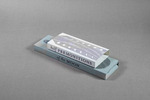
Half Premonitions of the Moon
Sarah Bryant, Special Collections, and Fleet Library
1 volume (36 cards, 2 accordion folded sheets, wooden instrument) : illustrations Edition of 45 copies. In paper binder with belly band enclosure. "Half Premonitions of the Moon is an instrument, modular score, and set of performance instructions housed in a custom-built enclosure. The score and instrument were developed by Holland Hopson, a sound and media artist, composer and improviser. The enclosure was designed, printed, and hand produced by Sarah Bryant, a book artist who works under the name Big Jump Press. The customizable score is assembled from a set of 36 cards. This allows individuals or groups to use chance operations to create a unique version of the piece for each performance. The instrument itself is a custom-designed, laser cut bullroarer played by swinging it in circles on the end of a string. Bullroarers are some of the oldest and most widespread instruments in human cultures. They can be found across the globe from Australasia to Africa and the Americas They are often used to evoke natural phenomena such as wind and rain during ritual events. This musical work favors patience, stasis and quiet focus over drama, development and sudden contrasts."--Big Jump Press website. "To create the score Hopson wrote code using Processing to generate and position graphic shapes on the page. Bryant converted the shapes to printing plates and used traditional printing and bookbinding techniques to convert Holland's digital designs to a set of cards and an accordion folded housing. Presenting the project as a kit allows for the dissemination of the piece to multiple venues, including gallery spaces, outdoor performances, and libraries with collections of artist books. By creating this hybrid object, Bryant and Hopson hope to bring together audiences from the book art, music and visual art worlds."--Big Jump Press website. Letterpress printed from polymer plates and laser-cut oak on French Construction paper. Library has copy no. 32. Jan Baker Artists' Books Fund.
-
Notes on institutional architecture ; towards and understanding of erasure and conversation
Liam Burke
Material Conversations /məˈtirēəl/ /ˌkänvərˈsāSH(ə)ns/ noun 1. derived from an early memory of forming relationships to objects, a way to understand the physical environment through a scaling down process that follows, but is not limited to, space, element, material. 2. the way in which material components are tectonically related 3. a process which would inform one to work with materials in a way which is conceptually informed by both aforementioned definitions 4. an integral aspect of architectural design, Material Conversations enable the architect to establish a language with which to relate to the components of their work, to better speak to those they design for.
I was raised in a religiously adjacent home. Sunday mornings spent in a twill padded pew, the first half hour spent singing. I always mouthed the words, I hated the idea of my voice, out of tune, creating discord amidst the chorus. I was six, or maybe four, probably eight.
The twill of a pew, the wood of a bench, the concrete of a step, the powder-coated steel of a column; all these became moments of familiarity in spite of their setting. Here began an understanding of my relation to space; an imagined conversation between myself and these tactile moments gave meaning to that moment in space. Just as one seeks out familiarity in a crowded room of strangers, I sought out the familiarity of the material qualities of inhuman objects, elements, furniture, etc. These early memories form my architectural intent; to establish conversations between myself and the materials I work with, for the sake of creating a means to converse with others through built environment and informed spatial dialogue.
This intent drove me to architecture, as a means to learn the language I was speaking to those materials, with the hopes that in learning to translate those conversations, I could connect to others as a means to actualize their needs for spatial connection. But, what I have learned is that material conversation is not the substance of a masters degree in architecture, instead there is talk of societal change, political empowerment, projection of identity, institutional reform, and paradoxical theorization (just to name a few). These are conversations I have participated and reveled in. These are conversations which comprised my projects within the institution of architecture that I am writing this in. These are conversations which must be had to produce an architecture that is more than a selfish expression. But to leave out a conversation in the process of design is to ignore a foundation of what informs design as a greater concept.
Here I will explore how a conversation is erased, misunderstood, and retold. Material conversation is a core memory which has taken me four years within an institution of architecture to recall. With this recollection, I seek to express how the absence of this conversation as an integral foundation of a developing architectural practice can produce acts of erasure and misinformed recollections.
This is an archive of subjectified contexts and de-objectified subjects, which informs a culmination of both in a composed representation. By fragmenting and erasing both information that I find superfluous, as well as information I find vital; then ultimately collaging an amalgamation of these artifacts, I seek to demonstrate how the act of erasure is an intuition fostered and encouraged by the institution of architecture. The church, as a metaphor for architecture, is an entity which is rife with both constructive and problematic conversation.
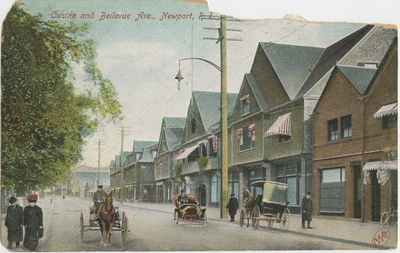
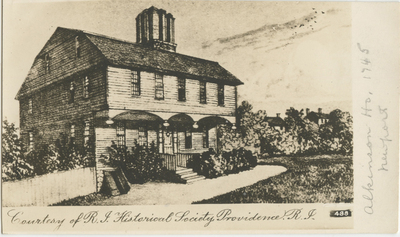
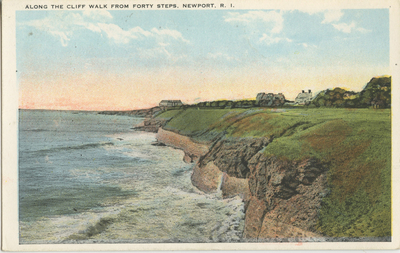
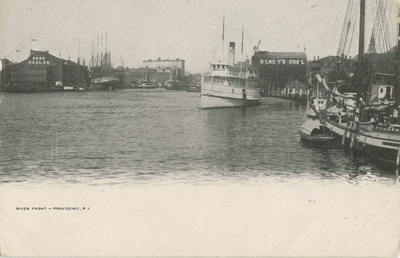
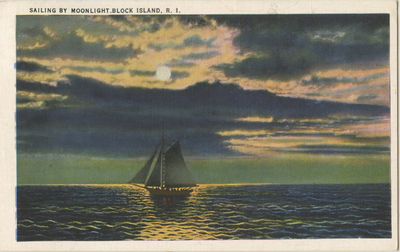
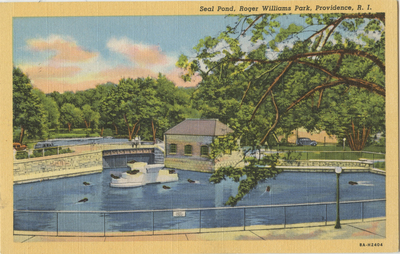
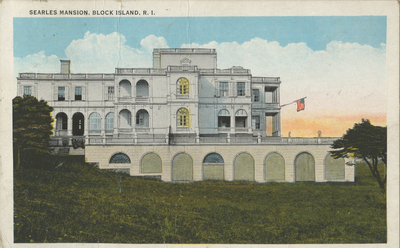
[Working] Artifacts in this archive include: historical preservation designation documents, historic American buildings survey documents and photographs, postcards, false combinations, architectural drawings, photographs of ephemera, redactions, flagrant manipulations, acts of erasure, not-so-clever lies, and other assorted realizations.
-
Designing ecotones : implementing regenerative patches in urban environments for transdisciplinary and transcultural creativity-based education
Cristiane Marie Caro
This thesis has been written to emphasize the educational, social, political and environmental potentials of collectively designed regenerative ecosystems. It aims to encourage students and educators to transform disturbed null patches in urban environments to amplify the scope of the students’ education by simultaneously developing a social ecosystem and cultivating environmental sensibility. I outline the formation of the Regenerative Earth Collective, a student-run group aiming to address topics of sustainability at the Rhode Island School of Design (RISD) and their work to design, implement and maintain groundwork for hands-on, experiential learning. I illustrate the Plot (manifested as a student-run community garden) and its personal, cultural, social, environmental and educational potentials. I explore the idea of ecological ecotones and introduce the concept of Regenerative Patches as a model for spaces of intersections that can enable and facilitate transdisciplinary and transcultural creativity-based learning. Through adopting and practicing community gardening and engaging first-hand with the local ecosystem, The Regenerative Earth Collective has established a framework for ongoing collaboration with the human and nonhuman contributors of the ecosystem. This thesis explores the catalytic effects enabled by Regenerative Patches through literature review, interviews, case studies, arts-based research and visual diagrams.
-
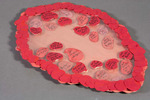
Only Shades of Red
Ally Casa, Special Collections, and Fleet Library
Entry for the 9th Annual Baker & Whitehill Student Artists' Book Contest. Opening Reception Thursday, March 02, 2023, Fleet Library, Main Reading Room. Juror: Andre Lee Bassuet.
-
2022 MLK Keynote Address: Eddie Glaude Jr. Pre-Event Presentation
Center for Social Equity & Inclusion and Eddie Glaude Jr.
One of the nation’s most prominent scholars, Eddie Glaude, Jr. is an author, political commentator, public intellectual and passionate educator who examines the complex dynamics of the American experience. His writings, including his most recent—the New York Times bestseller Begin Again: James Baldwin’s America and Its Urgent Lessons for our Own—take a wide look at Black communities, the difficulties of race in the United States and the challenges we face as a democracy.
In his writing and speaking, Glaude is an American critic in the tradition of James Baldwin and Ralph Waldo Emerson, confronting history and bringing our nation’s complexities, vulnerabilities and hope into full view. Hope that is, in one of his favorite quotes from W.E.B. Du Bois, "not hopeless, but a bit unhopeful."
Glaude is the James S. McDonnell Distinguished University Professor and Chair of the Department of African American Studies at Princeton. He frequently appears in the media, including as a columnist for TIME magazine, and hosts Princeton’s AAS Podcast, a conversation around the field of African American Studies and the Black experience in the 21st century. A highly accomplished and respected scholar of religion, Glaude is a former president of the American Academy of Religion.
Combining a scholar’s knowledge of history, a political commentator’s take on the latest events and an activist’s passion for social justice, Glaude challenges all of us to examine our collective American conscience, "not to posit the greatness of America, but to establish the ground upon which to imagine the country anew."
-
2022 MLK Keynote Address: Eddie Glaude Jr. Presentation
Center for Social Equity & Inclusion and Eddie Glaude Jr.
One of the nation’s most prominent scholars, Eddie Glaude, Jr. is an author, political commentator, public intellectual and passionate educator who examines the complex dynamics of the American experience. His writings, including his most recent—the New York Times bestseller Begin Again: James Baldwin’s America and Its Urgent Lessons for our Own—take a wide look at Black communities, the difficulties of race in the United States and the challenges we face as a democracy.
In his writing and speaking, Glaude is an American critic in the tradition of James Baldwin and Ralph Waldo Emerson, confronting history and bringing our nation’s complexities, vulnerabilities and hope into full view. Hope that is, in one of his favorite quotes from W.E.B. Du Bois, "not hopeless, but a bit unhopeful."
Glaude is the James S. McDonnell Distinguished University Professor and Chair of the Department of African American Studies at Princeton. He frequently appears in the media, including as a columnist for TIME magazine, and hosts Princeton’s AAS Podcast, a conversation around the field of African American Studies and the Black experience in the 21st century. A highly accomplished and respected scholar of religion, Glaude is a former president of the American Academy of Religion.
Combining a scholar’s knowledge of history, a political commentator’s take on the latest events and an activist’s passion for social justice, Glaude challenges all of us to examine our collective American conscience, "not to posit the greatness of America, but to establish the ground upon which to imagine the country anew."
-
Memories unboxed: connecting people with stories of our possessions
Megan Tzu-Hsien Chao
We constantly fall into a cycle of consumption that involves acquiring, retaining, and relinquishing items, whether we need them or not. Even though we are influenced by popular media to declutter more as we acquire new things, the root of the problem will still exist if we continue to neglect the reasons why we own things in the first place and why we hold onto them.
Why is it less stressful to make a list of possessions we enjoy having than to make a list of things we need to throw away?
This thesis hopes to relieve people of making tough decisions like when to relinquish things that are difficult to give up, understanding that it’s more effective to control the urge to acquire things when we know what to value.
To accomplish these goals, I designed a series of light-hearted, non-judgemental conversations to explore the ways that stories develop through objects and so that people could reacquaint themselves with their belongings. To facilitate these conversations, I invited people to take part in a series of workshops where participants reflected on their own values from the perspectives of their belongings.
-
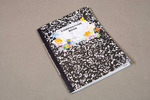
composition diary
Shuo Yun (Julia) Cheng, Special Collections, and Fleet Library
Entry for the 9th Annual Baker & Whitehill Student Artists' Book Contest. Opening Reception Thursday, March 02, 2023, Fleet Library, Main Reading Room. Juror: Andre Lee Bassuet.
-
X-Era: adaptation to the future uncertainty with sustainable Indigenous wisdom
Ruoyuan Chen
Due to human impacts on earth’s geology and ecosystem, the future of this planet and our society is uncertain. To navigate this uncertainty, it is urgent that we understand and explore new strategies to adapt to this unknown future. Over the millennia, indigenous communities around the world have developed advanced and nuanced ways to adapt to living in harsh environments. X is commonly used in science to refer to a variable that can change or be changed. Therefore, the thesis project – X-Era, aims to learn from the sustainability of traditional ecological knowledge to help inform how we may adapt to the possible extreme weather, harsh environments, and unknowns of the future.
Learning from indigenous peoples living in extremely arid and wet areas: the Imuhar in the Sahara Desert, and Tikuna, Cocama, and Yagua in the Amazon Rainforest, this thesis speculates an adaptive possibility for the upcoming X-Era(starting from 2200) to respond to flood and drought conditions. Seasonal route systems, shifting responsibilities, seasonal infrastructures, micro-macro calendar, and seasonal law and property are the key ideas inspired by and transformed from indigenous knowledge.
-
Revolution of STEAM Education: The Importance of Interdisciplinary Art Education (STEAM) In Elementary Education
Suyu Chen
This thesis discusses how interdisciplinary art education benefits young children from different aspects, including gender bias in disciplines, developing creativity and imagination, motivating children to engage the class and improving their efficiency of studying. Through an interview with a STEAM educator and my own curriculum development, I show some examples of what STEAM can look like in the elementary class. I demonstrate that there is evidence showing that STEAM education can create an engaging learning environment for young children. When STEAM projects are introduced, children are more focused and interested in classroom activities when compared to STEM projects alone.
-
For a moment, I was lost ; a visual reflection on the process of grief and mortality within the home
Adam Chiang-Harris
Grief is typically experienced following a loved one’s unexpected death. It is human nature to experience grief or bereavement as a way of processing the end of a person's life and coping mechanism of the living. In cases where we have pre-knowledge of a person's inevitable departure due to illness, such as with terminal illnesses like Alzheimers, grief happens in a longer period preceding death. In this circumstance, caregivers, friends, and family, must endure a duration of hardship dictated by the progression of the disease while knowing the fated outcome of a person's life. Typically this period caused by the severe progression of the disease has the patient in hospice care where they have generally come to accept their death. Oftentimes in the period of hospice, it is generally done at home, where a nurse comes to help make the patient more at ease, but it is the spouse, family, or friends that come to take care of the patient's daily routines of care. Within this environment of the home are opportunities to help the terminally ill as well as friends, family, and loved ones. In cases where speech is limited and patients are afraid of the world around them, multi-sensory environments can help with communication and put the patient at ease. Grief is a period of reflection, and in our current society we don’t speak directly to the reality of death. This presents families and loved ones the hardship of having to navigate on their own, death grief and meaning, I believe there are ways to facilitate the process of grieving the terminally ill that allows for their loved ones to process mortality and be able to be reflective and meditative towards accepting the inevitable last stage of life itself.
-
A thesis on the entanglement of art and design
Racquel Clarke
Design exists in the realm of functionality while art is used to invoke creativity heightened by one’s passion. Rather than perfect art and design as separate entities, we should find ways to entangle art, design, and visual graphics to create new languages that solve problems. Addressing color, and hybridity as it relates to form and identity allows for one to come to a foreground that heightens their experience to elevate. Utilizing the entanglement of art and design can birth a new language while altering the paradigm of how one receives and conveys an idea. Using graphic design as a tool, I will access the unaddressed issues within the built environment that will create a new portal of free expression.
-
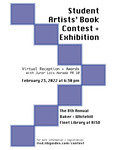
8th Annual Baker & Whitehill Student Artists' Book Contest 2022 Poster
Special Collections and Fleet Library