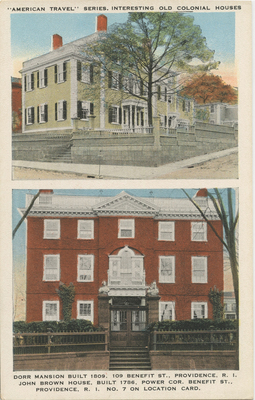
On was an interdisciplinary graduate periodical established by RISD graduate students in 2006. It featured essays and student work that related to a general issue theme. On was intended as a quarterly publication, but it is unclear if further issues beyond the first were ever published.
-

Iteration One
Julian Suver
In the fashion world, companies put a lot of effort towards classifying their products as luxury to the consumer. The age of social media has aggrandized collaborations with famous artists, endorsements by celebrities and even the appointment of pop stars as directors of the biggest fashion houses in the world, as if this makes the clothing better. I can't help but question what luxury actually means when you strip away marketing and if this status can be given or taken away. If a silk dress gets irreparably stained or ripped is it still luxury? Is an old band T-shirt found at a thrift store suddenly a luxury item if a collector is willing to pay an exorbitant price for it? In this collection, you will notice rips and stains, the reworking of worn out denim as well as intricate handwork done with materials and details that were obsessed over. Some have been meticulously planned while others may have resulted from happy accidents but I hope that in each of the pieces you might see the care, the joy and even the frustration that went into them.
-
SENSIBLE NATURE: To “See” As We Once Did
Yuhan Su
This thesis starts with the premise that our growing dependence on tools and digital technologies has led to a gradual decline in our sensory acuity, causing a disconnect between people and nature.
To address this issue, the thesis aims to re-establish lost connections by utilizing plant-based sensorial designs that evoke emotions and instincts, reigniting empathy and intimacy with the natural world.
By utilizing these strategies, this thesis seeks to enhance our ability to perceive, connect with, and appreciate the world around us, thereby creating a stronger, more intimate relationship between humanity and the environment.
-
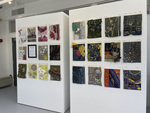
2023 Swarovski Exhibition
Swarovski, Visual + Material Resources, and RISD Color Lab
These unique volumes of textile flags featuring Swarovski crystals were gifted to the Visual and Material Resource Center in 2017 from a local jewelry supplier. Twenty-four volumes dating from 2004-20017, they are a visual feast of color and texture created by individual artisans. Complete volumes may be viewed in the Visual and Material Resource Center, Fleet Library, second floor of 15 Westminster St, Providence, RI.
-
2023 Swarovski Exhibition
Swarovski, Visual + Material Resources, and RISD Color Lab
These unique volumes of textile flags featuring Swarovski crystals were gifted to the Visual and Material Resource Center in 2017 from a local jewelry supplier. Twenty-four volumes dating from 2004-20017, they are a visual feast of color and texture created by individual artisans. Complete volumes may be viewed in the Visual and Material Resource Center, Fleet Library, second floor of 15 Westminster St, Providence, RI.
-
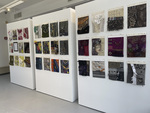
2023 Swarovski Exhibition
Swarovski, Visual + Material Resources, and RISD Color Lab
These unique volumes of textile flags featuring Swarovski crystals were gifted to the Visual and Material Resource Center in 2017 from a local jewelry supplier. Twenty-four volumes dating from 2004-20017, they are a visual feast of color and texture created by individual artisans. Complete volumes may be viewed in the Visual and Material Resource Center, Fleet Library, second floor of 15 Westminster St, Providence, RI.
-
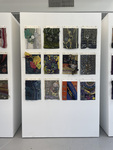
2023 Swarovski Exhibition
Swarovski, Visual + Material Resources, and RISD Color Lab
These unique volumes of textile flags featuring Swarovski crystals were gifted to the Visual and Material Resource Center in 2017 from a local jewelry supplier. Twenty-four volumes dating from 2004-20017, they are a visual feast of color and texture created by individual artisans. Complete volumes may be viewed in the Visual and Material Resource Center, Fleet Library, second floor of 15 Westminster St, Providence, RI.
-
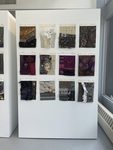
2023 Swarovski Exhibition
Swarovski, Visual + Material Resources, and RISD Color Lab
These unique volumes of textile flags featuring Swarovski crystals were gifted to the Visual and Material Resource Center in 2017 from a local jewelry supplier. Twenty-four volumes dating from 2004-20017, they are a visual feast of color and texture created by individual artisans. Complete volumes may be viewed in the Visual and Material Resource Center, Fleet Library, second floor of 15 Westminster St, Providence, RI.
-
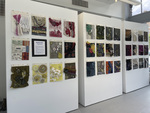
2023 Swarovski Exhibition
Swarovski, Visual + Material Resources, and RISD Color Lab
These unique volumes of textile flags featuring Swarovski crystals were gifted to the Visual and Material Resource Center in 2017 from a local jewelry supplier. Twenty-four volumes dating from 2004-20017, they are a visual feast of color and texture created by individual artisans. Complete volumes may be viewed in the Visual and Material Resource Center, Fleet Library, second floor of 15 Westminster St, Providence, RI.
-
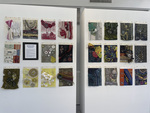
2023 Swarovski Exhibition
Swarovski, Visual + Material Resources, and RISD Color Lab
These unique volumes of textile flags featuring Swarovski crystals were gifted to the Visual and Material Resource Center in 2017 from a local jewelry supplier. Twenty-four volumes dating from 2004-20017, they are a visual feast of color and texture created by individual artisans. Complete volumes may be viewed in the Visual and Material Resource Center, Fleet Library, second floor of 15 Westminster St, Providence, RI.
-
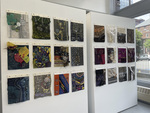
2023 Swarovski Exhibition
Swarovski, Visual + Material Resources, and RISD Color Lab
These unique volumes of textile flags featuring Swarovski crystals were gifted to the Visual and Material Resource Center in 2017 from a local jewelry supplier. Twenty-four volumes dating from 2004-20017, they are a visual feast of color and texture created by individual artisans. Complete volumes may be viewed in the Visual and Material Resource Center, Fleet Library, second floor of 15 Westminster St, Providence, RI.
-
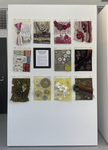
2023 Swarovski Exhibition
Swarovski, Visual + Material Resources, and RISD Color Lab
These unique volumes of textile flags featuring Swarovski crystals were gifted to the Visual and Material Resource Center in 2017 from a local jewelry supplier. Twenty-four volumes dating from 2004-20017, they are a visual feast of color and texture created by individual artisans. Complete volumes may be viewed in the Visual and Material Resource Center, Fleet Library, second floor of 15 Westminster St, Providence, RI.
-
The Design of Consequences
Yuqi Tang
Young professionals entering the architecture industry face an imminent and abrupt realization of the disparity between their academic training and the reality of what a career in practice entails.
The architectural industry has long been susceptible to criticism for unpaid internships and overtime. The issue stems from an ambiguity of architectural practice as neither a service or an outcome product, isolating the perception of our work from constructors, lawyers, doctors and even artists, and making it difficult for design labor to be commodified, or for the value of design labor to be asserted, consolidated and fiscalized1. This thesis aims to calibrate the lens through which we view architectural labor; to elevate aspects of design professionals’ work that are typically overlooked - towards a goal of taking agency over the time and labor of the architectural professional.
To this end, a question is posed:
How can architects think of the design of systems as a method to help streamline workflow, create efficiencies and remuneration, while also acknowledging the importance of individual fulfilment?
The critique of work methods is particularly imperative with the impending Industry 4.0 which concerns job security for architects as it did for draftsmen during the digital revolution. The transition from manual labor to immaterial labor brings new power relations and repositions labor as a political command within capitalist production. The product of architectural labor is not a commodity, but rather a type of information handling that is evaluated by the degree to which a problem is solved. Specialization of tasks firmly plants architects in the realm of management of social relations and communication. It is much more abstract and ambiguous, and involves the subjectivity of the worker, presuming workers to be “active subjects” and self-valorant.
The self-valorization of architects stems from capitalist production, but also internally from architects themselves. The architect’s attitude toward design is that “for passionate workers, work itself is its own reward.”, therefore enabling capitalist exploitation because of the self-inflicted notion of answering to “a calling”. This emotional mindset of this calling obscures the fact that designing buildings is also a
practical profession, deeply rooted in engineering and management. Therefore, the actions and qualifications that produce designs should not be divorced from the ideas of work, labor, value and remuneration.
The death of the calling does not equate to the death of passion. In fact, self-valorization is the very force that drives architects to thrive. Architectural labor should be clarified not just for clients, but also for architects themselves. The purpose of this thesis is to bring clarity to architectural labor by developing a language for the legibility of labor, which serves as grounds for the critique of workflows and use of tools. This harnessing of agency to time and value for labor equips architects with more opportunities for individual fulfillment internally and potential to strive for better design.
-
On the Edge of the "Er-Ocean" State
Mariesa Travers
This thesis will explore how hard coastal infrastructure methods can be redesigned by softening the coastal edge to support the ecosystem and enhance public access to the beach. By referencing and arguing against techniques used by the U.S. Army Corps of Engineers (USACE) as a solution to deal with coastal erosion, this process will propose a regenerated design system. Through a series of material experiments, this research works with natural processes and flows, to create transitory systems that erode and ebb with the coast.
-
Beyond the White Box: Building Alternative Art Spaces for the Black Community
Elijah Trice
BASED ON THE SYSTEMIC BIASES AND LACK OF SUPPORT FOR BLACK ARTISTS & DESIGNERS IN THE PRIMARY ART MARKET, THIS STIGMA DISCOURAGES BLACK AND BROWN COMMUNITIES FROM PURSUING A CAREER IN THE CREATIVE ARTS. MY GOAL IS TO UNDERSTAND THE UNDERLYING ISSUES THAT CONTRIBUTE TO THIS DISPARITY, BY ANALYZING THE INFRASTRUCTURE OF BALTIMORE CITY AS A CASE STUDY.
-
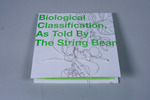
Scientific Classification, As Told by the Green Bean
Lilia true, Special Collections, and Fleet Library
Entry for the 10th Baker & Whitehill Student Artists' Book Contest. Opening Reception Thursday, February 29th, 2024 Fleet Library, Main Reading Room. Juror: Ian Cozzens BArch 05.
-
Translational Placemaking: The Diasporic Archive
Alia Varawalla
Globalization and mass migration has propelled a hybrid existence, as individuals that occupy multiple geographies we live in a constant state of translation. Our museums and cultural institutions are in opposition to this; static, preserved and de-contextualized. At the intersection of printmaking and architecture, this thesis proposes a living archive to document the collective migratory journey across sites, materials, and hybrid identities. A network of centers for knowledge sharing and production centered on India and its diaspora. As art practices and people migrate, cultural production evolves with its context, gaining new meaning as it changes hands generationally and globally.
-
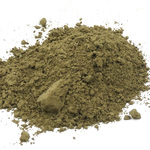
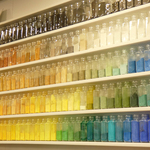
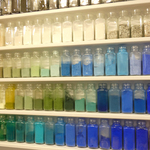
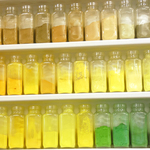
Bohemian Green Earth Imitation
Visual + Material Resources, Fleet Library, and Kremer Pigments
Mixture of natural green earth, iron oxides and chromoxide green. In Italy, many mineral deposits of green and greenish minerals were available in Tuscany during the Middle-Ages. The medieval mineralogist could easily distinguish between green earths and green copper compounds. However, the green earths were named after the place of their origin. The individual deposits of some green minerals were sometimes scarce but on a regional scale they were plentiful. Epidote, for example, can be found as veins and thin layers up to 1 cm thick, in the area around Livorno, in Italy.
-
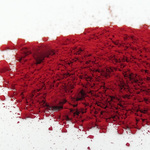
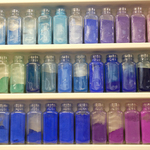
Quinacridone Red Magenta
Visual + Material Resources, Fleet Library, and Kremer Pigments
Quinacridone Red Magenta is a synthetic-organic pigment. It belongs to the group of quinacridone pigments. These compounds were discovered in 1935, but only gained greater importance from about 1960 onwards. Quinacridone pigments are based on a polycyclic compound with five rings. Depending on the exact chemical composition, crystal modification and degree of substitution, these pigments are available in different colors, which can range from bright magenta, reddish violet, purple to brown-orange and reddish brown.
-
Rebuild Relationships Between City, Agriculture and Ecosystem in the World of the Drought
Ninghao Wang
The drought is a threat to our planet and our way of life, causing serious consequences for both people and the environment. These consequences include crop failures, food shortages, water conflicts, and so on. Arizona is currently at the center of the water crisis affecting the American West. The state depends on the Colorado River for a third of its agricultural and urban water needs. However, the river is shrinking due to drought, leading to water scarcity in the region. Rebuilt Relationships Between Agriculture, Ecosystem, and City in the World of the Drought: rethinking regenerative landscape practices in the drought-prone area selects a site threatened by drought to demonstrate a proposal for a system of improving water efficiency and rebuilding relationships between agriculture, ecosystems, and the city. The drought is not the primary cause of water shortage; Rather, urban, and agricultural development’s overexploitation of water resources causes the ecosystem to lose its water-harvesting functionality. Drought simply reveals the fact that the relationship is out of balance. This thesis aims to use regenerative practices as a tool to increase urban and agricultural water cycle practices and restore the local ecosystem. The goal is to achieve a sustainable relationship between water use and recharge.
-
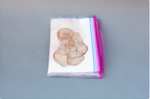
The F* Words: Food, Fermentation, and Feminism
Yimiao Wang, Special Collections, and Fleet Library
Entry for the 11th Baker & Whitehill Student Artists' Book Contest. Opening reception and award ceremony Wednesday, February 19, 2025 at 6:30pm, Fleet Library, Main Reading Room. Juror: Roger S. Williams.