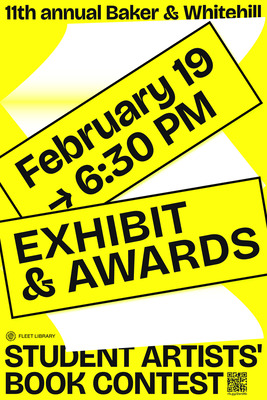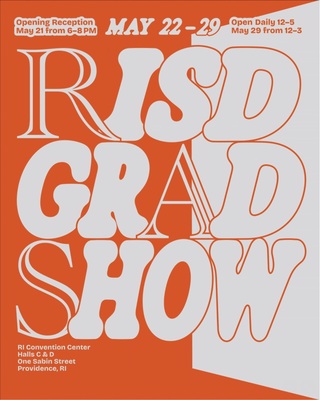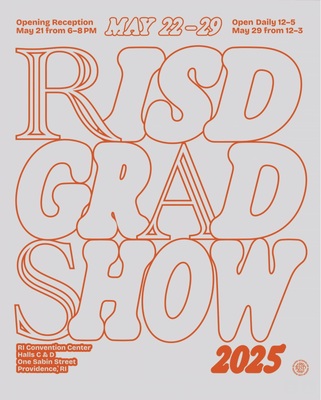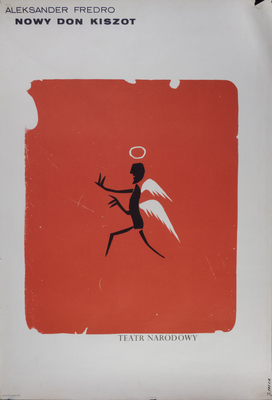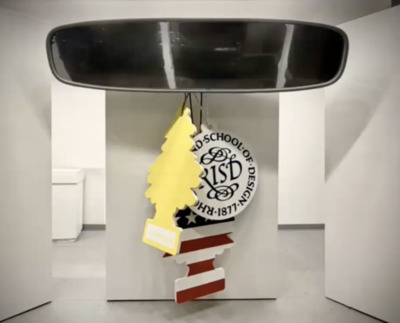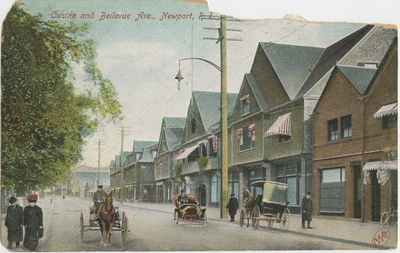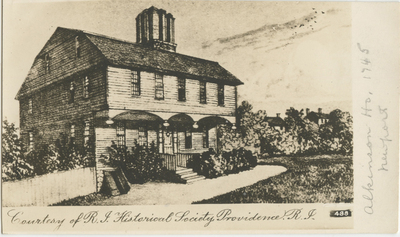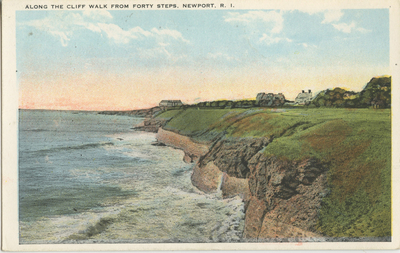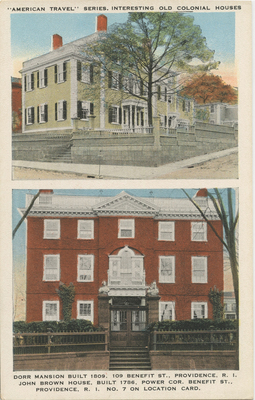
On was an interdisciplinary graduate periodical established by RISD graduate students in 2006. It featured essays and student work that related to a general issue theme. On was intended as a quarterly publication, but it is unclear if further issues beyond the first were ever published.
-

Cultural infrastructure, public space, and the contemporary library in Toronto
Zoë Ritts
Public space is an aggregate of differences, a place of exposure and adjacency to other lived social realities. The potential of public space is the confrontation or mediation of differences through interaction.
Public spaces are therefore about intersections and visual transparency between publics. Through architecture, we can create the conditions for contact with difference: with openness, transparency, density of program, and merging and splitting trajectories, we can work toward greater engagement in society.
As civic institutions, the bus station, an affordable method of transportation and movement, and the library, a crucial component of cultural infrastructure, can collide to create a space that sites this social exchange – centered around dialogue.
Busses are an inexpensive method of transportation, and are thus used by publics with little access to other means of more ‘hermetic’ travel. Similarly, libraries have evolved beyond an ‘archive’ model to a new type of node in an information network, a place where the dissolving components of knowledge and media are centrally accessible.
-
Collective consumption : a game for living
Zachary Rochman
“The time-lapse fluctuation of our societal floor plan has accelerated. Now you can almost watch the walls go up and down in real time.” -Rem Koolhaas, Elements
There is an efficient and beneficial way to collectively consume resources, but our houses and apartments do not function this way. The commons still exist, but their locations are sparse and specific. What if we established communal spaces that connect private dwellings and blur the lines between them? What new responsibilities and freedoms would arise? If we establish new commons and new abilities to share spaces and resources, we can help alleviate the pressing problems of housing today. Such as; insufficiency of income, environmental harm, and social alienation.
I will develop an architecture that will be collectively consumed for the benefit of a diverse group of users. To do this, I will create a kit of parts that challenges the assumptions of the North American dwelling.
Alexander D’hooghe of ORG for Permanent Modernity argues that the flexible and durable building types put forth by John Habraken could offer a possible shift. Habraken argued that the conventional building template consists of a tower (a steel or wood frame structured) sitting atop a podium (for parking, cultural amenities, or storage). Unlike the tower/ podium archetype of the past, “open” buildings could offer increased flexibility and adaptability for the future. This system will be deployed in Oakland CA. where there is a rich history of communalism and dissent, that is presently being challenged by safety concerns, and a rapidly inflating housing market. These factors make the area ripe for an alternative approach to the housing problem.
-
Materializing conflict and resilience
Neta Ron
As I was growing up, making objects felt like a superpower. It was, and still is enchanting to take an idea and transform it to an existing, tangible thing. I grew up in a family that encouraged self-sufficiency and creativity. Art has always been a great part of my life and it is an anchor that I rely on when I feel that I need to strengthen myself emotionally. In the last two years, I have been focused on understanding what is the role of making in my life, and why I am attracted to making jewelry. My work allows me to process traumatic memories related to my life in a conflict zone and the impact that had on my identity. The process of my work is a coping mechanism. I work with wax that is being cast into metal. The two different materials allow me to unload my mental state through different channels and result in a variety of outcomes—depending on how I feel when I am making. I am interested in the way my mental state affects my approach to the two different materials and processes. Once I started looking at other artists’ work through the lens of trauma and coping, I began to see the same quality in my work. I started seeing how the process that my work goes through is significant.
-
The Role of Imperfection in Everyday Aesthetics
Yuriko Saito
The notions of perfection and imperfection do not have the same prominent presence they once occupied in earlier aesthetics discourse. However, they still play an important role as criteria for aesthetic judgments today in our everyday life. The wide-spread and easily accepted aesthetic appeal of objects with perfection tends to overshadow the potential aesthetic value of imperfect objects that are considered to be defective or deficient. This not only impoverishes our aesthetic lives but also leads to some serious environmental and social consequences. I first argue for the need to cultivate an aesthetic sensibility to appreciate imperfection in our everyday experience. However, I also argue that such an aesthetic sensibility should not be applied indiscriminately. As newly emerging negative aesthetics indicates, in some cases it is critically important to maintain the negative assessment of imperfection, as it may indicate a need for corrective actions.
-
On the Front: Aesthetics vs. Popular Arts and Mass Culture - I
Ken-ichi Sasaki
The popular arts and mass culture represent our environment. The flood of their products reduces high art to minority status. This situation leads us to reconsider the privileged status of high art and the role of aesthetics as its theory, which is my main focus here. I take up three different cultural eras: early modern times, when the notions of art and aesthetics as a philosophical discipline were founded; our own day as the time of mass culture; and, lastly, the popular culture in the Edo period in Japan, the seventeenth to the mid-nineteenth centuries, which reflected different choices.
In early modern Europe, the popular arts were born at the same time as high art. Art for the use of the people became possible because of the increase in productivity and wealth. There was a different notion of popular art as art produced by the people, a notion associated with Herder. Popular art, in this sense, was claimed to be the true art according to the concept of creativity from below and the plant model concretizing that concept. Modern aesthetics adopted the same plant model to insist on individuality as genius, for that was the only way in the commercialized world to win the right of free creative activity backed up by the right of intellectual property. Hence, high art was consecrated thanks to popular art, which in Herder’s sense reserved its own right.
By mass culture, I mean the aesthetic and intellectual activities mediated by the systems of mass media or, broadly, those activities in “the age of mechanical reproduction.” Forms of mass culture, such as movies, TV, popular songs, comics, video games, fashion, advertisements, websites, and so on, quantitatively overwhelm high art, and, in its forms of experience, mass culture obscures the sacred border of art. The situation is similar to when art and aesthetics were about to be established. The difference is that art is now firmly recognized as high culture, and the role of aesthetics is not to claim the right of art but only to justify the privilege art is already enjoying. A new aesthetics is to be hoped for, one that looks for a new order in the nebulosity of mass culture.
Popular culture in the Edo period in Japan, including ukiyo-e, haikai and kabuki theater, offers a counter example to the Western modern period and a sense of possibility for a new aesthetics. In this period, the people were not only consumers but also producers of culture. Traditional high culture existed but popular culture was segregated from it. Creativity, however, was absolutely on the side of the popular; the three forms of art mentioned above were new inventions of the people. Literature was not separated from the sciences of ethics and still fulfilled a critical function. The Ukiyo-e edition was of a conglomerated character: its subjects or genres were taken from the erotic world, sports, theater and tourism. These suggest the possibility of a different constellation of cultural fields for a new aesthetics.
-
On the Front: Aesthetics vs. Popular Arts and Mass Culture - II
Ken-ichi Sasaki
The popular arts and mass culture represent our environment. The flood of their products reduces high art to minority status. This situation leads us to reconsider the privileged status of high art and the role of aesthetics as its theory, which is my main focus here. I take up three different cultural eras: early modern times, when the notions of art and aesthetics as a philosophical discipline were founded; our own day as the time of mass culture; and, lastly, the popular culture in the Edo period in Japan, the seventeenth to the mid-nineteenth centuries, which reflected different choices.
In early modern Europe, the popular arts were born at the same time as high art. Art for the use of the people became possible because of the increase in productivity and wealth. There was a different notion of popular art as art produced by the people, a notion associated with Herder. Popular art, in this sense, was claimed to be the true art according to the concept of creativity from below and the plant model concretizing that concept. Modern aesthetics adopted the same plant model to insist on individuality as genius, for that was the only way in the commercialized world to win the right of free creative activity backed up by the right of intellectual property. Hence, high art was consecrated thanks to popular art, which in Herder’s sense reserved its own right.
By mass culture, I mean the aesthetic and intellectual activities mediated by the systems of mass media or, broadly, those activities in “the age of mechanical reproduction.” Forms of mass culture, such as movies, TV, popular songs, comics, video games, fashion, advertisements, websites, and so on, quantitatively overwhelm high art, and, in its forms of experience, mass culture obscures the sacred border of art. The situation is similar to when art and aesthetics were about to be established. The difference is that art is now firmly recognized as high culture, and the role of aesthetics is not to claim the right of art but only to justify the privilege art is already enjoying. A new aesthetics is to be hoped for, one that looks for a new order in the nebulosity of mass culture.
Popular culture in the Edo period in Japan, including ukiyo-e, haikai and kabuki theater, offers a counter example to the Western modern period and a sense of possibility for a new aesthetics. In this period, the people were not only consumers but also producers of culture. Traditional high culture existed but popular culture was segregated from it. Creativity, however, was absolutely on the side of the popular; the three forms of art mentioned above were new inventions of the people. Literature was not separated from the sciences of ethics and still fulfilled a critical function. The Ukiyo-e edition was of a conglomerated character: its subjects or genres were taken from the erotic world, sports, theater and tourism. These suggest the possibility of a different constellation of cultural fields for a new aesthetics.
-
Living on the edge : failure by design
Odile Schlossberg
This Thesis Project starts a conversation between the coastal edge and the built environment in order to develop a new approach towards transformable architecture design.
Erosion has an inevitable impact on coastal inhabitation. Over time, the water edge erodes and the shoreline retreats, pushing back development or causing existing buildings to collapse. Raised architecture has been a proposed solution to mitigate the impact of oceanic forces on buildings, but I believe there can be a different alternative to this approach.
Erosion could be seen as a ‘transformation that takes place over a period of time’, rather than as an environmental hazard. The change in coastal shape and shift of submerged structures is rich in history. From the hourly change in tides to a collapsing mass, time is a factor that can be used to embrace the ever-changing behavior of the ocean. I welcome time and the behavior of the ocean’s dynamics as design factors in order to tell a story and is meant to be appreciated 50, 100, 500, 1000 years from now. ‘Failure By Design’ is intended to embrace the impact of the coastal environmental factors.
I plan to direct this research in two ways: first, towards the study of form, function and performance. I will test two opposite sites and study their environmental conditions in order to propose a coastal architecture that both mitigates the advanced local erosion and embraces its transformation over time. Second, I will address the following topics synergistically: the impact of coastal environmental conditions, a performative nautical design, materials and technology, and architectural case studies.
Hands on testing, Computation Fluid Dynamic modeling and theory shall lead to an understanding of water as a phenomenon and the forces interacting between the natural and built environment. The research will result in a new tectonic language as well as the development of a self-healing concrete structure to perform as the main character of the overall project.
-
Borderscape : weaving political boundaries in the Amazon through water performance
Lucila Silva-Santisteban
This research project is about how to connect political bordering urban systems through the natural structure for a coherent occupation between the built environment, ecosystems and resources following the Landscape Architecture lens that can address different scale systems simultaneously to create a holistic approach between them. And the proposition of a new type of landscape of this threshold territory as its own kind. Specifically looking at the bordering cities in the heart of the Amazon Region in South America that fall between Colombia, Brazil and Peru.
Why the Amazon?
Not only because of the usual fascination, but because of the crucial importance it has in the Earth’s well being. Being one of the most ecological diverse places in the world: holding 1 in 10 of the world’s known species1, comprehending 40% of the South American continent 2 and holding 15% of the planet’s fresh water 3. These type of landscapes have been left under the crystal-category-and-seal of “conservation”where a stance is needed by the rapid urbanization processes happening now which are accelerating each time more.
The Amazon region is composed of the watershed of the same name. This larger “water” system includes 9 countries with the Amazon River, the largest in the world, as the umbilical chord connecting and nurturing it.
-

Reason Being
Garcia Sinclair, Fleet Library, and Special Collections
Graduate student. Year of graduation: 2018. Major: Printmaking. Photographed by Mariah Bennett, MDes Interior Architecture, 2018.
-
Reason Being
Garcia Sinclair, Fleet Library, and Special Collections
Graduate student. Year of graduation: 2018. Major: Printmaking. Photographed by Mariah Bennett, MDes Interior Architecture, 2018.
-
Reason Being
Garcia Sinclair, Fleet Library, and Special Collections
Graduate student. Year of graduation: 2018. Major: Printmaking. Photographed by Mariah Bennett, MDes Interior Architecture, 2018.
-
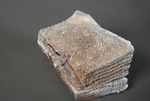
Reason Being
Garcia Sinclair, Fleet Library, and Special Collections
Graduate student. Year of graduation: 2018. Major: Printmaking. Photographed by Mariah Bennett, MDes Interior Architecture, 2018.
-
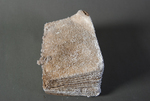
Reason Being
Garcia Sinclair, Fleet Library, and Special Collections
Graduate student. Year of graduation: 2018. Major: Printmaking. Photographed by Mariah Bennett, MDes Interior Architecture, 2018.
-
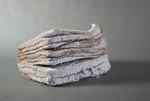
Reason Being
Garcia Sinclair, Fleet Library, and Special Collections
Graduate student. Year of graduation: 2018. Major: Printmaking. Photographed by Mariah Bennett, MDes Interior Architecture, 2018.
-
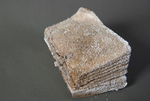
Reason Being
Garcia Sinclair, Fleet Library, and Special Collections
Graduate student. Year of graduation: 2018. Major: Printmaking. Photographed by Mariah Bennett, MDes Interior Architecture, 2018.
-
Transforme : a look at sports beyond the gender binary
Courtney Skabelund
This work explores the next wave of athletes. Using speculative design, it questions institutionalized social constructs that many take for granted but that are a daily struggle for others. It looks to broaden the expressiveness and individuality of sport. Through careful consideration, research, and testing this thesis represents my views and ideas of how sport might evolve to represent the next revolution of athletics. Because without a gender revolution, the true ideals of sport will suffer.
-
Envisioning ecological cities
Carlton Smith
Our cities are recognized as centers for jobs, entertainment and production; as icons of human innovation. However, they are also recognized as for their consumption. Being that our cities are mechanisms of consumption, they rely on imported resources such as food, water, energy and labor in order to continue to thrive. Though this relationship has fostered technological and mechanical growth, it has also been degrading the natural ecological processes that we rely on to survive. As our understanding of our relationship to the environment deepens, there is a growing push for architecture that embodies an attention to its connections to the environment.
Programs like LEED certification- the national standard for the evaluation of sustainable buildings- engage with how a building operates, its method of construction and its material properties. Tough important, these concerns are limited in aspects that do not consider an architecture as a soliday object. In his essay, “The Three Ecologies,” Felix Guattari explains that in order to property address environmental concerns, we have to dissect both the tangible and non-tangible conditions in which they have developed. He states, “The only true response to the ecological crisis is on a global scale, provided that it brings about an authentic political, social and cultural revolution, reshaping the objectives of the production of material and immaterial assets. Therefore this revolution must not be exclusively concerned with visible relations of force on a grand scale, but will also take into account molecular domains of sensibility, intelligence and desire.”(pg.28) Architecture has the capacity to embody critical issues of geographical context, social implications, historical contingencies and political agendas. Rather than considering an architecture simply as a vessel, a re-evaluation of systematic parts in which take engages with can broaden our understanding an architecture as component contributing to the systems intertwined
-

Devotion | Patti Smith
Patti Smith and RISD Museum
September 27, 2017, 7:00pm - 8:30pm, RISD Museum. Renowned artist and author Patti Smith reads from her latest book, Devotion, a detailed account of her own creative process, inspirations, and unexpected connections. Sold out event. Limited seating, pre-registration required. Limit of 4 tickets per person. All prices include a copy of Devotion and are non-refundable.
Live simulcast available at the RISD Museum’s Metcalf Auditorium, 20 North Main Street, for free on a first come, first served basis. A limited number of free student tickets available through a lottery system through RISD’s Center for Arts & Language.
Patti Smith is a writer, performer, and visual artist. Her memoir Just Kids received a National Book Award, and her recent book M Train is a critically acclaimed New York Times bestseller. Smith was awarded the prestigious title of Commandeur des Arts et des Lettres by the French Republic. Her seminal album Horses has been hailed as one of the top 100 albums of all time, and in 2007 she was inducted into the Rock and Roll Hall of Fame. Smith lives in New York City.
-
Commencement 2017 President Rosanne Somerson
Rosanne Somerson and RISD President
President Rosanne Somerson delivered a welcoming address at RISD Commencement 2017.
-
Our measured world : a poetic translation
Minryung Son
Twenty-seven years alive. Sixty-one inches tall. One hundred forty-nine days abroad. How many more units would it take to describe me? What value is derived from this quantification? What quality of understanding does it offer? As human beings, we are constantly measuring our lives and implementing systems of standardization. Throughout history, measuring systems have served as frameworks for our comprehension and navigation of an increasingly complex world. This thesis approaches measurement as a means of revealing and processing this complexity of human experience rather than one that merely simplifies and distills. Through the lens of graphic design, my translation of units of measure from raw data to accessible forms provokes questions and ideas that simultaneously inform my practice and enrich my understanding of human nature as well as the systems and conditions with which we live.
By measuring and systematizing objects, bodies, nature, space and time, abstract concepts can be shaped and made tangible in ways that expand our comprehension of what it is to be human. In my thesis investigation, I highlight the ways we reconfigure the spaces we occupy, the time we spend and the tools we use according to these systematized metrics. Through a range of design methodologies, I approach this investigation as both actor and observer, agent and critic. Inhabiting these complementary roles, I reflect upon our relationship to standardized measurements, and I consider not only what these structures obscure but also what they reveal. By transforming quantitative data into poetic narratives, I expose the personal and emotional realities behind the data and usurp our understanding of measurement as a means of simplification and reduction; I frame it instead as a technology that—when approached critically—serves to amplify and illuminate.
-
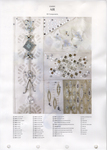
Classic Inspirations Air Components Flag 5 (description), Trend Spring / Summer 2017
Swarovski, Visual + Material Resources, and Fleet Library
-
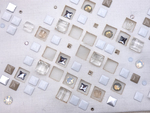
Classic Inspirations Air Components Flag 5 (detail), Trend Spring / Summer 2017
Swarovski, Visual + Material Resources, and Fleet Library
-
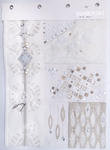
Classic Inspirations Air Components Flag 5, Trend Spring / Summer 2017
Swarovski, Visual + Material Resources, and Fleet Library