
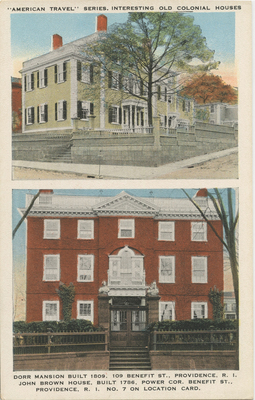
On was an interdisciplinary graduate periodical established by RISD graduate students in 2006. It featured essays and student work that related to a general issue theme. On was intended as a quarterly publication, but it is unclear if further issues beyond the first were ever published.




-
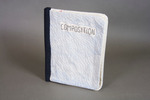
Common Threads, Volume LXXX
Candace Hicks, Special Collections, and Fleet Library
1 volume, 8 pages. Unique book, hand sewn artist's book, embroidery by Candace Hicks. "Candace Hicks 2017"--sewn into foot of page [8]. Hand-embroidered canvas soft sculpture book, with a pattern of ocean waves? embroidered in blue thread on the front and back covers. Black fabric spine. Text sewn in black thread; page lines in light blue; margin lines in red. The look of the spine and interior pages mimic a dime store composition book. "Common Threads, a series of hand-embroidered unique canvas books which copy the form and design of dime-store 'composition' books. The books themselves, self-consciously hand-made objects, are a record of coincidental occurrences generally gleaned from reading or mundane events. The use of embroidery thread allows for the production of the text and image with the same mark and material, to make the text, image and substance of the book inseparable. Artist's statement: Storytelling is key to Candace Hicks' artistic practice. There is an implied narrative in everything, even, as Hicks addresses with her work, in the seemingly pointless mental wheel spinning that is a part of daily life. Her work acknowledges the unavoidability of simulation and the impossibility of originality. Her choice of the book as a principle medium is due to the phenomenon of the book as authoritative. Books provide an arena in which fiction can be accepted as fact and observations can take on a mythic narrative quality. Her interest in books also stems from their inherent unity of text and image, which lends books continued relevance as a transmedia hybrid."--Description from Booklyn Artists Alliance website, http://booklyn.org/archive/index.php/Detail/Object/Show/object_id/668#, viewed 07/12/2017.
-
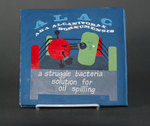
ALAC - a struggle bacteria solution for oil spilling
Chengqui Hong, Fleet Library, and Special Collections
Undergraduate student. Year of graduation: 2021. Major: Experimental and Foundation Studies. Class: Studio: Design. Faculty: Martie Holmer. Photographed by Mariah Bennett, MDes Interior Architecture, 2018.
-
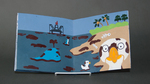
ALAC - a struggle bacteria solution for oil spilling
Chengqui Hong, Fleet Library, and Special Collections
Undergraduate student. Year of graduation: 2021. Major: Experimental and Foundation Studies. Class: Studio: Design. Faculty: Martie Holmer. Photographed by Mariah Bennett, MDes Interior Architecture, 2018.
-
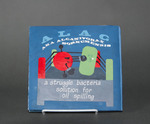
ALAC - a struggle bacteria solution for oil spilling
Chengqui Hong, Fleet Library, and Special Collections
-
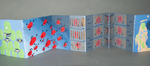
ALAC - a struggle bacteria solution for oil spilling
Chengqui Hong, Fleet Library, and Special Collections
Undergraduate student. Year of graduation: 2021. Major: Experimental and Foundation Studies. Class: Studio: Design. Faculty: Martie Holmer. Photographed by Mariah Bennett, MDes Interior Architecture, 2018.
-

Connections : a new model to customizing everything
Shao-Hsuan Hou
Mass customization has long been a dream. However, thanks to evolutions in technologies (e.g. Industry 4.0 and big data analytics), there are more and more enterprises that offer configured customization to consumers. In this business model, the customers have limited choices to customize their own goods, nevertheless, these limited choices may not be enough to satisfy all of the consumers’ physiological and psychological needs.
In order to fulfill this need in the market, I propose a new ecosystem that connects consumers, design firms, and manufacturers. Moreover, based on this business model, I have designed an on-line platform and customization services for consumers to build their personalized products.
-
Inhabit the storm : emergency evacuation route
Anastasiia Isakova
Today a lot of design research is concentrated on problems of resiliency and performance in conditions of hazardous events, such as sea level rise, hurricanes, tsunamis, cyclones, earthquakes and drought. And while designers, architects and engineers try to convince people to care about these issues, offer building higher seawalls, recreating marshlands, reinforcing shorelines and various ecosystems, they never really address evacuation, which remains a big problem for vulnerable areas prone to cyclical occurrence of natural disasters.
More people die during evacuation - escaping the disaster site, rather than from the disaster itself; more people die because of the consequences of the disaster in their own homes or vehicles. For example, in 2016 in Japan, Kumamoto prefecture 50 people were killed directly by the earthquake, while over 900 people were injured; but over 170 people were killed indirectly, 24% of whom died because they were trying to find shelter in their private vehicles (Japan Times, 04/14, 2017). However, this doesn’t seem to be an issue worth looking at from a design perspective. But building seawalls is not a solution either - it is the same mitigation of the aftereffects, rather than addressing the root of the problem. Natural disasters are impossible to control; true, therefore I believe it is necessary to first and foremost address people’s understanding of the extreme danger that their situation poses, address their safe escape and shelter.
Phase 1 will investigate my chosen site - Rockaway Peninsula, Queens, NYC. I will research the history and geography of the site, its current condition and strategies that have been employed by the authorities to recover after superstorm Sandy of 2012. Phase 2 will look into case studies in US and abroad in order to learn of various strategies that are developed to deal with the same type of disaster as Sandy and/or similar type of sandbar location and its communities. Phase 3 will look into how to create an evacuation plan in a physical form by providing people with a guiding system that would help them to get to shelter safely even during a superstorm like Sandy.
By performing this research I am trying to answer a question “How can landscape be adapted in order to improve efficiency of evacuation”, which arose after I found evidence in social media of people’s ignorance of the real danger and/or unwillingness to leave; people’s unwillingness to follow police orders and trying to perform evacuation on their own. For example, in Palm Beach, Florida local residents refused to follow orders of police and firemen and chose to evacuate on their own terms because evacuation prepared by the government officials was “ineffective and life threatening.” By investigating this topic I am trying to define what evacuation is apart from being a line on a map which officials from Town Hall had drawn, and how can evacuation become a part of a physical landscape, become something that people would intuitively understand and follow.
-
We are what we dispose : continuation of culture through recycling at Rhode Island School of Design
Xinzhou Jiang
Every year, RISD produces massive amounts of waste, from dining trash to discarded art pieces. Art educational institutions have more complex varieties of garbage compared with other educational institutions, given the variety of media used by each discipline. As an art and design school, RISD takes issues of sustainability seriously, therefore it is natural to address the problem of waste. The current recycling strategy of RISD is mainly based on the waste’s material difference, even though other processing strategies have been developed, like the Second Life Store, which is mostly based on usability; current recycling strategies remain singular and linear, ending in the same waste cycle.
Some practitioners of the theoretical framework known as Critical Regionalism introduce a new perspective on waste: they integrate waste within buildings. This strategy is mostly based on the region or culture value of the waste, like “spolia.” When viewed through the lens of Critical Regionalism, the old forms or systems, should be kept or fully learned and understood so that they can be carried into the next generation. Design in the past was site specific, born and grown from the understanding of the site and that period of time. Without respecting that unique understanding, there would be a risk of “placelessness”, and that region or culture could lose its unique characters and merge into the sea of globalization.
Even though this theory is often related to acknowledgement of entire cultures rather than just the materiality of a structure, it is not difficult to apply a recycling strategy to architecture within RISD in a way that reinforces the culture of the institution. As an educational institution woven throughout Providence, RI, RISD as a brand has a strong image in public. Due to a 140-year history, RISD forms a strong sense of community. However, it suffers from a placelessness that can be strongly felt within this university: RISD could be built anywhere. It is never a part of local communities in Providence and doesn’t seem to have a strong individual character. Part of the problem is that there is little legacy left to be learnt from the past generation of students. Does art waste, the evidence of making, define RISD? Could Abstract integrating this waste into the fiber of the school help to acknowledge RISD’s unique culture?
There should be a specific intervention or interventions that allow portions of the waste that are highly creative in character of RISD to be displayed in public at the center of the campus, easy to be accessed and visible to RISD students and visitors or local people who want to know more about RISD.
The public area surrounding the Metcalf building and museum would be the best setting as it sits at the center of the campus. In order to achieve a sculptural monumentality, the intervention is sited within the central campus circulation and within constant view of visitors. Inspired by concept of spolia, the design of recycling system respects the specificity of a particular major, including its general use of materials and sizes of works produced. It is integrated with walls and furniture of the site, parallel with circulation as much as possible. The displayed pieces, like spolia in a wall, create an environment that links to the past. It is necessary for RISD to build a place to display its legacy over time and offer all RISD students an opportunity to learn from previous generations, so that RISD as a community will be known like a university that has a unique culture, continued history and value -- not just a name or a logo.
-
Light installations for LE
Yiqi Jiang
This investigation derived from a personal childhood memory of an autistic boy, living with Autism Spectrum Disorder (ASD). His struggles to communicate and to have people understand him drives this thesis investigation in hopes of better connecting people of all abilities through accessible design. After serving a summer term working at a special needs inclusion camp, there is the exposure to the lack of awareness and communication gap between design and people living with autism. The study develops a series of strategies that strengthen communication between people with and without ASD and ultimately seeks to educate the design profession on how to create more inclusive designs. After seeing, first hand, the struggles that the families go through, financially and socially, it is the aim of this proposal to develop landscape design strategies that help facilitate more sympathetic and connected experiences for everyone.
The ideas and concepts have changed throughout the investigation. Phase 1 started with trying to design something that people with autism spectrum disorder could use as a treatment tool. Phase 2 built upon phase 1 by focusing primarily on raising awareness and connecting people through. Phase 3 is a narrative about a boy living with autism who loves bright sunlight, in order to make people know him and others who are different than us. People are so different but at the same time so similar, by realizing the differences people could know that actually everyone is equal and similar, we all have the rights to be respected and treated well.
This project does not suggest that landscape design will solve developmental disorder issues or that all social inequalities against people with disorders are erased. Instead, it is about facilitating a layering of relationships and a dialogue between people and creating spaces that are seamlessly accessible by all abilities. Through the narrative approach a story about an autistic boy is told and, more deeply, it highlights the differences in aspects that we all have, in which we all see and understand the same world. .
-
Motivated motivation : a consulting tool to find new platforms for business
Xiaoxio Jin
Consumption motivation is the drive to satisfy needs and wants. It is also a desire for a product, service, or experience. The continual raising of the consumption desire has brought us where we are today. When old needs are met, new needs emerge, then we can create the infinite desire in our modern society. As brands are in a market full of competition, they are aware that they cannot stay in the same place when others are putting effort on business expansion. Our customers are calling for new service, thus brands need to keep being energetic and innovative.
Understanding consumption motivation is the root to explain your customer’s behaviors and emotions during service or experience. After a series of consumption motivation investigations, I understand their desires, expectations, and motivation more deeply. As concluded, it can be divided into four categories, so your customers want brands to: reduce their burden, expand their options, share their experience, and accept their wisdom. Based on these, I developed a new consulting tool for companies to look for potentials as many as possible.
In the following chapters, I will introduce a new consulting tool— Consumption Motivation Design Matrix—which is built on the understanding of customer’s motivation, behaviors, and emotion. This new tool is able to help brands to evaluate their service offerings and identify future opportunities for fulfilling customers’ needs when brands intend to do a transition or looking for a new platform. Meanwhile, in order to demonstrate how to apply this tool to various businesses at different stages, I included three case studies from different industries: Grounded Local, Venmo, and Uber.
-
Developing the cartooning mind : the history, theory, benefits + practice of comic books in visual arts education
Cathy G. Johnson
This thesis by cartoonist and educator Cathy G. Johnson explains why cartooning should be taught in visual arts classrooms. The theme is supported by historical research, professional inquiry, child development research, and analyses of pedagogical approaches. Johnson traces the history of the U.S. comic book industry from its beginnings during the Great Depression, through the anti-comics movement of the ‘50s, male-dominated comic shops of the ‘70s, and the eventual Japanese import comics boom of the ‘90s. She uses the personal narrative of her engagement with comics as a child in the ’90-‘00s as a case study to explain the current flourishing graphic novel industry. The thesis then shows the importance of literature in education; literacy is necessary not only for the purposes of reading, but for understanding and being fully present in the world. Research shows that children of marginalized experience are being underserved and neglected by their schools. Educational methodologies and the content of available literature favor children whose experiences already align with the majority. The thesis then goes on to describe the benefits of intertwining the visual and verbal, and how that plays to the strengths and competencies of children of marginalized experience. Images and words together clarify communication and illuminate possibilities. To conclude, this thesis summarizes the learning outcomes of sample cartooning curriculum and how these approaches can be expanded. Future work building on the research presented here can include lesson plans that put theory into practice.
-
Living rooms we don't live in anymore
Caroline Kable
During my time at RISD, I have discovered terms and theories such as defensible space, socio physical phenomena, the Savannah Hypothesis, Christopher Alexanders Intimacy Gradient. All of these things have been amalgamating into a defensible argument to the intuitive feelings I’ve had my whole life, and have been attempting to imbue into my work. If anything, my thesis body of work is one next step in a lifelong pursuit of discovering what is it to live- how to define and manipulate the intangible bounds of human life and experience; of the millions of tiny moments and decisions that make up the every new moment that is contemporary life. A question that has always plagued me has been whether or not to practice architecture or furniture design as a medium to most effectively distort and attempt to enhance the ways we live domestically. Do I change the walls that direct our space, or do I change the filling that is bound by those wall? Is it possible to change the ways we build, or is the evolution of our construction inevitable? An important moment that marks a takeaway as I move forward was in a course where a science professor was talking about a home in Alaska where the children has wheelchairs, so they lived mostly in a large open space with plastic curtains for walls to contain the heat. He then presented the question- “why do we have walls?”, as they are mostly unnecessary and costly. This moment was so mundane yet so incredibly exciting for me- to imagine spaces completely different from those were used to today in the future… perhaps modeled after Buckminster Fullers geodesic domes. I believe that the future of our architecture is changing, and hand in hand with which our furniture will change as well. I believe I now have the courage and resources coming out of my graduate education to pursue work that isn’t condemned by our architectural condition, but liberated by it. My work responds to architecture as well as furniture archetypes; to walls, to how I’ve grown up. It asks questions of them, takes inspiration from them, and stands aside from them.
-
Lamination of reality : ever-thickening and thinning space
Leekyung Kang
Since 2014, my work has navigated question of surface and through this search in order to redefined conventional understandings of space. Often times, my imagery draws on architectural infrastructure (such as construction sites and scaffolding), exposing the underlying structural framework within these landscapes. Through the recent installation, I establish a correlation between the bone/skeleton of the location to expose a more raw and unseen space, which is present but never fully revealed.
In Google Earth, the camera eye traverses different surfaces from the urban streetscape to the underground to the cosmos. Within this virtual landscape, glitches exist that are virtual examples of this unseen space. What is usually an invisible representation of place now becomes a dazzling and speculative puzzle that extends our perception of reality. My most recent work is a video installation that uses traditional and digital media to place the viewer within a projection of an unseen hypothetical space, existing between two and three dimensions.
This virtual navigation seems more real to me, causing my understanding of place to move away from its physicality. Due to the appearances of glitches in the Google Earth system, I am able to discover temporal failures and errors that are reflected within the process of mechanical reproduction, and I am fascinated with this new aesthetic. I have become more curious about the randomness and repetition in this complex territory, as is illustrated by the glitch. This can be as a characteristic of the digital system of reproduction, but I use it as a lens for looking into our virtual and real worlds.
-
From Florine to flocking : observations of a painter - printmaker - embellisher
Elizabeth King
I am a painter-printmaker-embellisher. The hierarchy of these labels shift to best suit the needs of each piece. Making an image that encourages looking takes precedent over how it is labeled. A quickly read painting is the enemy. I weave together complex passages on the surface to function as a speed bump, to slow down the viewer’s navigation of my paintings. I value color, pattern, and texture above a narrative. Borrowing the palette of Florine Stettheimer and the repetitive touch of Edouard Vuillard, my paintings teeter dangerously between being about the idea of decoration and being decorative. Domesticity, femininity, and craft propel my material explorations to harness the power of their associations.
My paintings dwell in the shallow threads of fabric. They seem simple to make, until one attempts to unravel them. I think of my paintings as screens, allowing air to flow freely through the interlocked layers. I leave space for air to get through, as it is the only relief in otherwise claustrophobic paintings. Combinations of dyed fabric, screen printed ink and flock overcrowd my worlds. Saturated color and patterning unify the distinctive techniques.
With the help of Google, I construct imagined scenes of various tasks being performed on loop. I am using my painting’s inhabitants to create patterns. The events I depict take place in utopian environments. An idyllic paradise is not normally considered burdensome, until one is forced to relive it endlessly. The repetition of the figures functions optically first and psychologically second. First impressions are not always accurate.
-
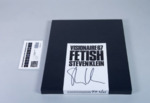
Visionaire 67: Fetish
Steven Klein, Cecilia Dean, James Kaliardos, and Greg Foley
10 photographic prints : illustrations (colour) ; 36 cm + 3 piece photo box, 1 piece of card, 1 pair of gloves Includes 10 original color archival photographic C-prints Includes 3 part photo-box (3 x 31 x 38 cm) - signed by the photographer Includes one pair of gloves Includes one piece of card with title information (36 cm) Limited edition Originally produced for the exhibition Killer Heels: the art of the high-heeled shoe, held at the Brooklyn Museum, New York, September 2014 - March 2015
"A collection of ten, 14x11 inch original photographs in 3pc archival portfolio box signed by Steven Klein. Produced in an edition of only 200 hand-numbered copies, each comes as a re-imagined, traditional 3-piece light-tight photo box, signed by the photographer and containing 10 original color archival photographic C-prints. This is the first time in VISIONAIRE’s history in which the entire edition is made of a complete and collectible series of true photographic art prints. Here, with the collaboration of the artist, the collector receives the unadulterated version of the artwork, as originally intended by Klein — never a reproduction." -- publsiher's website https://visionaireworld.com
-
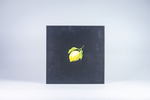
How to Make Lemonade : Collector's Edition Box Set / editor in chief and creative director Beyoncé Knowles-Carter; Foreword by Michael Eric Dyson; Poetry by Warsan Shire; Creative Directors Todd Tourso and Kwasi Fordjour; Art Director Sarah W. Lee.
Beyoncé Knowles-Carter, Special Collections, and Fleet Library
623 pages : chiefly color illustrations; 1 box; 2 audio discs vinyl rda; sound: analog 33 1/3 rpm stereo. Title from spine. A collection of plaster casts (medallions), which were based on neoclassical cameos or engraved gems, mounted within simulated book bindings. Each volume has the title "Liberotti impronte", is numbered, and has the word "musei" on the spine. In addition, each volume has a list of contents glued to the front and back covers entitled "Opere scelte." Many of the casts depict masterpieces located in Italian museums including sculpture by Canova and Thorvaldsen; and also paintings such as Leonardo's Last Supper or works by Caracci. Collections such as these were purchased during someone's Grand Tour as a souvenir of the trip. Volume 4 is missing 3 medallions ; volume 6 missing 2 medallions. Transfer from the RISD Museum, Decorative Arts and Design.
-
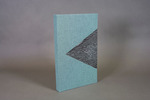
Intrusion
Ellen Knudson, Special Collections, and Fleet Library
1 volume, 18 double leaves. "Intrusion is a modern bestiary that illustrates the conjured effects of human encroachment on nature and wildlife. These contemporary beasts are the amalgamation of animal bodies and environmental abuses - the illustrated outcomes of the human excesses of plastic bottles and bags, the unrestrained consumption of goods and the inordinate amount of garbage it creates, the imprudent disposal of decor and furniture, the overuse of water and the naive assumption that water is forever guaranteed, and the evolution of disease that is the consequence of carelessness "--Artist's statement, Vamp & Tramp, bookseller's website. "Text adapted from various online sources. Other text by the artist. Letterpress printed on Okawara mulberry paper from woodcuts on Baltic birch plywood, handset types, and photopolymer plates. Poetic verses on the reverse side are wriiten by the artist's son, Gus. Accordion binding by the artist with helpful conversations from Anna Embree. Printed in Gainesville, Florida."--Colophon Issued in slipcase with foil-stamped label. Accordion fold structure "12 tri-paneled pages.. Canson Ingres endsheets and pastedown. Dubletta and Duo book cloth on all enclosures--Vamp & Tramp, bookseller's website. Awarded the Jacque Mielke Award at the Bibliophoria V exhibition at the Sebastopol Center for the Arts, 2018
-
Lighting : an atrium core to reconnect with the sun
Quan Lei
At the Rhode Island School of Design, students work so much that they treat their studio as home; the majority stay in studio past midnight, which leads to lack of sleep. How to improve students’ physical and mental health is a question demanding immediate investigation, particularly as relates to rest. According to the scientists at the Lighting Research Center (LRC) in Troy, N.Y, engagement with daylight environments increase occupant productivity and comfort, and provide the mental and visual stimulation necessary to regulate circadian rhythms, encouraging more restful sleep. Students cannot function healthily because their busy schedules remove them from the world.
The Design Center of the Rhode Island School of Design has a complex program, hosting Apparel Design, Graphic Design, the RISD Store, Photography, Liberal Arts, dining and several campus service areas. There are some classrooms without windows in the Design Center, but the Photography Department has need for a darkroom which cannot have any windows; clearly it is necessary to rearrange those rooms and utilize the existing properties of the space. In this complex environment of competing departmental needs, it is necessary to create inspiring spaces to improve those departments’ student productivity, physical and mental health. As the original structure of the Design Center blocks vast amounts of potential natural light, this thesis proposes the intervention of several large atriums supported by a new structural system. The atriums not only allow natural light to penetrate deep into this [however many stories the design center is] storey building, they alter circulation throughout. The core of the Design Center is given a sense of the passage of time and the seasons, reconnecting students to the natural world that their busy schedules do not allow them to experience firsthand.
-
The artist, the object and the meaning between : an exploration of the joys of incorporating meaningful objects into art practice and teaching pedagogy
Sarah Leis
The Artist, the Object and the Meaning Between begins by exploring the human motivation and delight in keeping physical ephemera, tokens, specimen, souvenirs, relics, etc. Material things can be tools to understand and interact with the world around us; a name for this is “Object-based Learning”. I use Qualitative and Arts-based research to make the case for object-based learning as a complement to digital resources. Though anyone may benefit from these practices, the focus of the thesis is the teaching artist and her opportunity to encourage in her students a rich experience of the three-dimensional in a world that seems increasingly two-dimensional. I found that creating, maintaining and sharing a carefully-curated materials lab enriches both my personal art practice and my teaching practice. In-the-classroom examples, ontological lists, lesson plan sparks, and drawings and photos created as part of the research are included.
-
How long can you hold your breath?
Felicia LeRoy
I began freediving, a sport in which one dives as deep as possible on single breath hold, as a way to approach the inaccessible space of the deep, to expand my understanding of the unobtainable.
This space (the deep) seemed to me to be representative of something that is totally unknown, its power existing in its inaccessibility, in its un-know-ability.
Through training/experiential data collection and using human physiology at depth as a framework, this thesis work book explores a single breath hold to the other side.
Work made in support of this exploration touches on darkness, depth, the edge, the void, and the forms, sounds, and shapes that embody these ideas.
-
Embracing traditional Chinese culture through design
Jiaxuan Li
As a designer from China I am constantly focused on my passion for design of China, This interest comes from both my commitment to deep-rooted Chinese traditions, and my concern with regards to the gradual loss of traditional cultural values within contemporary society.
As a product designer, I really like designing daily object, through exploring the relationship between consciousness and behavior. I consider this connection in order to make objects more meaningful to users.
This project discusses the current situations of Chinese traditions and cultural values, and the challenges they face to survive in the contemporary world. My mission is to arouse the resonance to traditional cultural values with modern Chinese and inspire them to carry out those values in details of everyday life.
-
Creative collisions : a RISD case study
Hannah Liongoren
Creative collisions play an important role in artistic work. These encounters broaden an artist’s perspective, exposing them to new processes, ideas, disciplines, and collaborators. The exact nature of creative collisions is difficult to pin down, as they flourish in an ever-changing mix of social interaction and creative inspiration in a setting of multidisciplinary work. A little-known example of a serendipitous collision between artists occurred between Gustav Klimt and designer Emilie Floge, whose individual medium and style influenced the others’ work, and together they dominated the Viennese Secession movement. A similar creative relationship developed between Charles and Ray Eames who met at the Cranbrook Acadamy of Art, and RISD’s very own David Byrne, Chris Frantz and Tina Weymouth of the Talking Heads, whose shared art school experience gave birth to one of the objectively coolest bands of all times. While you may never see a story of creative collision play out the same way twice, it is possible to influence collisions by design, creating spaces where collisions are more likely to occur, and giving rise to a robust artistic community that engenders creative outputs that challenge assumptions.
The Rhode Island School of Design is an ideal setting for creative collision – the school hosts a community of students and faculty from diverse backgrounds, working across a multitude of disciplines. While the atmosphere is ripe for creative exchange, the topology of the campus gets in the way of serendipitous encounter. The reason for this goes back to the very beginnings of the university. When RISD was founded, it started out with just one building purchased in the middle of Providence. As RISD expanded, it did so in an ad-hoc way, acquiring more nearby buildings to make space for a growing number of students and departments. The resulting campus is sprinkled throughout the city, with no common space for people to congregate and little casual exposure to the work going on between departments, even in neighboring buildings.
Creative collision will be orchestrated via a central transit platform corridor in the heart of the RISD campus, on the Museum Block bordered by North Main Street and Benefit Street. The intervention has three tenets: designing for circulation to bring together a high density of RISD students and staff from different disciplines housed in various buildings on the block, designing a program that facilitate and attracts serendipitous encounters, and designing the space to reveal the creative process and output of the disciplines housed in the Museum Block. It is the goal of this thesis to elevate opportunities of creative collisions on campus, advancing a culture where the free exchange of ideas broadens and refines the work done on campus and beyond.
-
Motion and architecture : transition between spatial fluidity and body language
Tong Li
Architecture is always changing. Seeing birds flapping the wings, horses running across the grassland, leaves falling down from the tip of the tree, clouds being blew away by a gust of wind, a drop of water sliding down from a flake of flower...I see architecture.