On was an interdisciplinary graduate periodical established by RISD graduate students in 2006. It featured essays and student work that related to a general issue theme. On was intended as a quarterly publication, but it is unclear if further issues beyond the first were ever published.
-

What makes a good teacher? : the artist's engagement in public art education
Wenjing Fan
This thesis is written in a language other than the author’s own, so its content as she developed an understanding of ideas in English may reveal both inaccuracies of grammar and indeed some misunderstanding of context and concept. This being said, the author uses the thesis investigation to reflect on her art education in China and also to report on encounters with teachers she has met in Providence, Rhode Island. So, the thesis has been opportunity to wonder about the significant role that various types of teacher (First Teacher to Fourth Teacher) play in cultivating students’ artistic ability. The author has come to appreciate, as a result of this investigation, that while teachers have a decisive influence on learning in art that the teacher’s personality and thoughts are as important as instructional content.
-
Super natural : hybrid strategies for urban flood protection in Coney Island NY
Georges Fischer
How will inundation change the design of city coastlines? This thesis is an investigation into strategies to mitigate urban flooding from storm surge in Coney Island NY.
In Phase 1, dynamic phenomena are identified and deconstructed, the result are properties that can be assembled to make a machine that applies forces to wet plaster, which solidified to yield insights into the sectional forms of waves. This process was used to inform a conceptual model documenting the site’s physical form, and the relative differences between land and water in terms of its density and porosity.
In Phase 2, a catalog of different coastal edges are pulled together from locally observable types of coastal edges, as well as more contemporary solutions. The outcome is an understanding of coastal engineering as ranging from hard seawalls to softer solutions involving lots of vegetation. The most contemporary solutions all begin to intentionally influence the deposition and erosion of coastal sediment in order to renourish the shoreline. These approaches are used to inform the direction of future research.
In Phase 3, this range of analyses are synthesized to form new hybridized coastal edges. This method has yielded new insights into coastal urban landscapes, specifically in order to address the crisis in New York City’s waterfront.
Coney Island was selected because it is one of the most vulnerable parts of Brooklyn - following the wake of Hurricane Sandy this neighborhood has barely been rebuilt.
As it has turned out, retrofitting hundreds of thousands of old bungalows with modern HVAC units, insulation and sprinklers - and then lifting them 10-12 feet off their foundations onto stilts, while certainly technically feasible, is not possible by Mayor De Blasio’s 2016 deadline for the rebuilding assistance program.
“In this sense, the very words “Build It Back” miss the point — unless by “back” you mean back, way back, from the water’s edge.” -
While it is technically possible to rebuild thousands of residences here, it is not a sound idea for pragmatic reasons.
-
Researching + observing + reflecting of Chinese and American Landscape Architecture pedagogy : focusing on Department of Landscape Architecture in RISD and BFU
Change Gao
This thesis focuses on the Chinese and American landscape architecture education, typically in Beijing Forestry University (China) and Rhode Island School of Design (USA). By relecting back to author’s graduate and undergraduate study in landscape architecture in these two schools, this thesis provides a view of an observer and outsider instead of an experiencer and insider to look through the teaching and learning in landscape architecture. Through the voice from students and academia in both schools, this thesis functions as a platform sharing the learning and teaching experience, providing a cross-culture access to other people’s experience and as a chatbox for the landscape architecture educators, students and the author to rethink, re-evaluate the teaching and learning in landscape architecture.
-
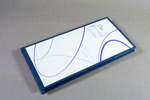
The Gravity Series: 3 Canticles of Attraction
Casey Gardner, Special Collections, and Fleet Library
3 volumes : color illustrations, maps Cover title. "Words, images, printing and binding by Casey Gardner"--Colophons. Limited edition of 39 copies, signed by the artist. Three books in an artist-made, cloth-covered portfolio with full-size title label on the front. The inside of the portfolio has letterpress-printed illustrated lining paper with astronomical images. Each book is a single signature sewn into cloth-covered boards in different colors with a letterpress-printed label on the front cover. The three books are held magnetically in place on either side of the portfolio. 1. How to fall -- 2. All there is -- 3. A star close enough. "Each book addresses the force of gravity in terms moving in space in relation to others and investigates how we navigate the universal and very personal force of gravity. Such a force is powerfully, inexorably experienced, yet unseen...like love. The interior of the case is printed to reveal the scientific aspects and equations of gravity, along with the nature of gravity in our universe." -- Artist's website, viewed Nov. 21, 2017. Process: Letterpress printed with linoleum blocks, pressure printing, monotypes, and photo-polymer plates. Hand sewn binding. Digitally printed volvelle. Materials: Rives light & Rives heavyweight, Canson vellum, Iris book cloth, linen thread, metal eyelet, magnets. Binding: Pamphlet stitch signatures, cased binding, cloth-covered board. Library has copy 33, signed by the artist.
-
Resilience on Wall Street
Rahul Ghera
On October 29th, 2019, the most substantial economic depression of the modernized world abruptly began, as the international financial market and the global GDP took a plunge. Over the course of the next decade, all that continued to rise were unemployment and suicide rates.
The Wall explores the question of what happens when the lights go out on a society that is irrevocably halted. Questions of responsibility, reparations, and conviction are all weighed as ‘Wall Street’ is revealed as ground zero, and the once-powerful bankers are uncovered as the addicts who have gone too far, gambled too much, and are in need of vital rehabilitation. The dichotomy between primary user groups, ‘the powerful’ and the ‘powerless’ - the tourist and the banker, the public and the addict, still remain heavily apparent on Wall Street.
-
Transformation through drawing and gesture
McKenzie Gibson
Drawing is a unique human invention that reveals an individual’s thoughts, knowledge, and expression of “being;” it is the manifestation of human activity and energy; it represents thought (relating to the mind) and physicality (as executed by the hand and the body) through the manipulation of materials (the world around me).
Process is the embodiment of human passion, energy, expression, conceptualization from idea to form, and the connection of hand and mind. It is a succession of verbs realized in the practice of making. I joke that every piece of work I’ve made “has my blood, sweat, and tears in it,” but there is truth in jest. That which drives my work is the combination of the body reacting to pain and damage, over-exertion of physical labor, and physical expression of human emotion.
When these elements are given physical expression in form, one can envision and feel the creation his or herself through embodied cognition, or knowledge. By deliberately leaving traces of a “drawing’s” process, I allow the viewer to imagine how it was made. My work’s representation and expression of embodied cognition allows a viewer to recall their own personal experience and bodily memory of physicality.
The two distilled subjects of my investigations – and as related to my practice – focus on “Drawing” and “The Verb” (Verb being a sum of process, gesture, and thought) and the language created when they are combined. It’s a language shared by both the maker and the viewer as understood through embodied cognition. This experience of language is both the petrification of a moment as well as an open-ended translation.
This book articulates my creative practice, process, and associative way of thinking. It is the result of self-reflection, accumulative research, struggle, and a developed self-understanding of how I work and, really, who I am as an artist.
-
Performer, Persona, and the Evaluation of Musical Performance
Theodore Gracyk
Engaging with recent ideas about the moral evaluation of art, I argue that facts about the lifestyle, attitudes, and moral character of music performers are relevant to evaluating a musical performance. When it contributes to a better understanding of the performance, this knowledge contributes to a more accurate estimation of its aesthetic merits and flaws. I explain how my view departs from those of Berys Gaut and Jeanette Bicknell.
-
Content-aware : investigating tools, character & user behavior
Llewellyn Hensley
Content—Aware serves as a platform for investigating structure, corruption, and visual interference in the context of present-day technologies. I use fragmentation, movement, repetition, and abstraction to interrogate current methods and tools for engaging with the built environment, here broadly conceived as the material, spatial, and cultural products of human labor.
Physical and graphic spaces become grounds for testing visual hypotheses. By testing images and usurping image-making technologies, I challenge the fidelity of vision and representation. Rooted in active curiosity and a willingness to fully engage, I collaborate with digital tools, play with their edges, and build perceptual portholes. Through documentation and curation of visual experience, I expose and challenge a capitalist image infrastructure.
I create, collect, and process images using smartphone cameras, screen recordings, and applications such as Shrub and Photoshop. These devices and programs, which have the capacity to produce visual smoothness and polish, also inherently engender repetition and fragmentation. The same set of tools used to perfect images is easily reoriented towards visual destabilization.
Projects presented here are not meant to serve as literal translations, but rather as symbols or variables in experimental graphic communication strategies. Employing these strategies, I reveal the frames and tools through which we view the world. By exploring and exploiting the limitations of manmade technologies, I reveal the breadth of our human relationships with them, including those of creators, directors, users, and recipients.