On was an interdisciplinary graduate periodical established by RISD graduate students in 2006. It featured essays and student work that related to a general issue theme. On was intended as a quarterly publication, but it is unclear if further issues beyond the first were ever published.
-

Bio-aesthetics: The Evolution of Sensibility through Nature
Katya Mandoki
[1] This paper gathers a few points developed in my recent book, The Indispensable Excess of the Aesthetic: Evolution of Sensibility in Nature, where I explore the processes that involve aisthesis from their most primal manifestations to their more complex. I propose the concept of bio-aesthetics as the study of all forms of sensibility in living beings, and that, given the fact that it is a function of our corporeal condition, the required starting point is the evolutionary paradigm. Another crucial tool for understanding how different types of creatures value, understand, react, and relate to their environment is provided by the recent field of bio-semiotics, the study of the dynamics of signification in different forms of life. What becomes particularly salient is the role of female discernment and evaluation through mate selection and, consequently, in the future configuration of the species, a phenomenon that can be denoted as phylo-genetic poetics.
-
Jettison all stories : experimenting with our relationship to the physical
Alyssa R. Mayo
At the start of this project I set out to explore the concept of ownership, if and how it is changing and what that meant for the work I would do in the future. In the field of industrial design, matters of ownership are important considerations we must grapple with. Things, the products of our design process, are 1. Subject to new (or maybe not so new) models of ownership, responsibility and maintenance, and 2. No longer limited to forms that are owned in a traditional, physical sense that is easily understood.
The matter of form – physical vs. digital vs. virtual – ended up playing a large role in this project. Industrial designers are accustomed to how the form evolves in step with technological advances, but today the state change feels particularly pronounced – to the point that the form could disappear completely, literally slip out of our hands. The digital and now virtual eras have brought about a dematerialization and convergence of many solutions that do not require any physicality aside from the interface (if even that). Will the physical form of products of industrial design soon be obsolete, or a luxury or nostalgia item? If so, what will we lose? If not, is there anything digital and virtual products can learn from the power of the physical?
This project approaches these questions through experimentation with sentimental objects and the memories they conjure, concrete examples where the physical form still dominates. People are still attached to physical things, often things that have negligible monetary value and no practical purpose in the physical world. By trying to understand this phenomenon through the lenses of those who are driven or required to part with things frequently or en masse, this project identifies and stress-tests a set of unique strengths belonging to the physical as a channel for interaction.
It then proposes an opportunity for how, in the case of certain sentimental objects, the meaningful information might be extracted from the material form, and leaves the reader with a suggestion of how new value might be created through new experiences powered by that metadata, in digital, virtual or hybrid spaces that have yet to become everyday.
-
Transitions : designing acceptance in a world of change
Hanna McLaughlin
As a creative discipline, design works to instigate change. Often, a design’s success hinges on effecting a change in a user’s life, whether that be prompting the user to accept a new way to communicate, provide care, or share resources. A well-designed product can be offered to a user, and even acquired by a user, yet never be integrated into their daily life. This abandonment may be due to a flaw in the product’s function; however, it can also be due to a lacking system of support for the user while they are integrating the product into their life. In the case of a new product or service, a lack of integration means that the user leaves the offered solutions behind.
With the goal of understanding how to bridge the gap from change to acceptance, I set out to learn from people who are navigating extreme moments of life transition. I looked across three examples of pivotal life changes: adolescent immigrants starting at a new high school, young parents returning to work, and older adults moving to a new community. After identifying an opportunity for impact, I focused on designing for families navigating the transition of integrating parenthood into their professional lives. I chose this transition because it is multifaceted. Changes in child care create adjustments for both care providers and children.
This thesis presents a model that designers can consider when creating tools to support people through a transition. It then demonstrates how to apply this approach by designing to support parents transitioning back into professional roles.
-
Sharing : a synergy of natural forces, existing urban conditions and human characteristics
Zhen Meng
"Sharing is a synergy which produce a combine effort greater than their separate efforts. It based on the dependency of independent material(s), object(s) or structure(s), and can generate more possibilities.
There always be one dominant, one compliant, one gives the direction, one follows the order. Sometimes the direction is selectional and compliance can be multiple. By following the characteristic of objects, with the superposition of selected orders, the result can be complex and diverse.
When design complient to the natural forces and existing urban condition, then meeting different human characteristics, taking advantage of the restrictions, carefully making small changes that can lead to big differences should lead to the future of architecture.
-
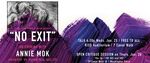
No Exit: An Evening with Annie Mok on Fear, Comics, & Magic
Annie Mok, Illustration Department, and Fine Arts Division
-
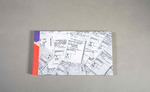
Reconfigured Families
Alexander Mouton, Special Collections, and Fleet Library
110 unnumbered pages : all color illustrations Title page and size of book designed in the format of a Southwest Airlines boarding pass. Edition of 25. Reconfigured Families follows the experience of one 21st century family, sometimes referred to as the "postmodern family" or even the "brave new family," through photographs that document the long-distance relationship I share with my two children who have been living in Bloomington, Indiana during the school year while I reside in Seattle, Washington. This sequence of images was made during our monthly travels to be together over the six-year period 2009--2015. During this time, I also learned of other parents who traverse geographies to juggle career and family, moving between Seattle and Hong Kong, Berlin and Bonn, Columbus, OH and Melbourne, Australia, Los Angeles and London, and Boston and Berkeley, CA, to name just a few configurations. In the image sequence that makes up the book, images of the kids are paired with a composition I photographed over and over again from a particular seat on the airplane looking out the window in various seasons, cities, times of day, and weather conditions. The juxtaposition of these images with images of the kids as they grow up brings to the fore the repetitive nature of the travel involved in our relationship. The experiences of this one reconfigured family shed light on the broader social, economic, and environmental reverberations felt throughout our ever-widening globalized culture. They also reveal the beauty and richness of urban culture and the surrounding natural environs and the tenderness of the siblings' evolving relationship. Illustrated cloth binding. Author, title, press name and date of 2020 on spine. Library has copy 10. Jan Baker Artists' Books Fund.
-
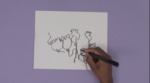
Blind Contour Drawing
RISD Museum, Priscila de Carvalho, Dana Heng, and Shirla Auguste
Choose an object and examine its outline. Slowly track the edge with your eyes while drawing what you see in a continuous line. Do not lift your pencil or look at the paper.
-
Deceptive fragility : characteristics and fabrication methods of extra thick weft-knitted spacer fabrics
Anastasia Onegina
This thesis investigates technical and performance capabilities of extra thick flat-knitted 3D spacer fabrics. Several combinations of knitted structures and fibers are suggested for thermal and impact protection, general insulation, architecture and construction. Methods of constructing three- to seven-layer spacer fabrics up to nine inches thick are explained.
-
Traversing ambiguities : rebuilding perspectives through designed visual education
Mudita Pasari
We perceive the world largely through categorizations and associations. We distill people, objects and entities into extremes. ‘Normal’ becomes a measure of acceptable. Reductionist definitions, force anything ambiguous or uncertain to be rejected. Acknowledging our biases towards these misinterpreted, shunned or ignored entities, has long been overdue. In todays world we cannot possibly continue being blind to complexity.
Can designed visual education reinterpret ambiguity and embrace multiplicity? How can a designer’s perspective help scaffold these educational systems? Can we do so by looking deep within our own practice as designers, artists, scholars and educators?
The thesis explores these various questions through the perspective of a designer and scholar. By delving into historic and current examples of association, the ideas of interpretation and representation are discussed through the analogy of a unique creature, the pangolin. These learnings are then applied to examples of designed visual education.
The thesis advocates the use of visual narratives to help preserve or rekindle a childlike worldview of acceptance and inclusion. Designed visual education helps us move beyond knowing and encourages emotional investment, building deep-rooted resilience.
Design interventions, in any form are a systemic process of responsible creation, iteration and adaptation. If paired with appropriate mediums of dissemination, we could nurture the future generations to be strategic thinkers, hopefully bringing about longterm impact.
-

Documentary Proof Which Leaves No Reason For Doubt
Pallavi Paul and Painting Department
Pallavi Paul leads a collaborative text reading and talks about her artistic practice.
The evening incorporates a participative performance: a collective reading, in morse, of the official file of a secret agent Noor Inayat Khan who worked for the SOE during WW2. The file has been reproduced on a 73-foot scroll—it hosts many provocations about the nature of history writing, story telling, time, and disappearance. The piece takes on a sculptural quality: it produces a sensation of being in a state of meditation and cacophony at once.
In her talk, Paul explores some of the philosophical ideas around formal non-fiction, cinema and the notions of truth. Drawing from a background of storytelling, filmmaking, and experimentation, her ideas push boundaries to explore new horizons and unravel new meanings and possibilities. For Pallavi, the medium of documentary becomes “resistance, possibility, a second horizon on which things can happen.”
-
Book Launch Panel Discussion
Stefanie Pender, Tavares Strachan, and Jen Bervin
A panel discussion held at Cooper Hewitt, Smithsonian Design Museum moderated by Gregory Volk, along with Jen Bervin and RISD alumni Tavares Strachan and Stefanie Pender, in conjunction with the launch of the publication Wonder, celebrating 50 years of RISD Glass
-
Intrigues and priorities : critical thinking and contemporary art in visual arts education
Connor Phillips
This thesis looks at how arts education can respond to the context of the 21st century by focusing on critical thinking and contemporary art in visual arts education. I argue that art as a subject has the potential to educate youth beyond mere aesthetic, formal art skills. Its inherent flexibility to encompass all interests, cultures, and backgrounds makes it a truly inclusive subject and the multiplicity that follows provides students with opportunities for cross-associative and critical thinking. If utilized in an education context, it can be the necessary conduit for engaging students, respecting their intrigues, and offering a space to critically understand their priorities. The research questions that guide this thesis are as follows:
1. Has the role of art education diametrically changed for the 21st century student and why? What new empowering roles can art education assume today? How is critical thinking incorporated currently in arts education?
2. How does art education promote critical thinking among students? What are the underlying challenges and changes needed in enhancing critical thinking in an arts education context?
3. What are the distinguishing features and qualities of contemporary art that enhance art education?
-
Tactile Libraries: material collections in art, architecture and design
Mark Pompelia, Fleet Library, and Rebecca Cooper Coleman
Collections of material samples to support teaching and research in art, architecture, and design disciplines are increasingly created and administered through academic libraries. Providing a unique and valuable hands-on and immersive experience, materials collections offer broad appeal across multiple disciplines and respond to curricular trends that emphasize critical and design thinking skills for students as future practitioners. Institutional collections may have a broad scope or a particular focus such as innovation or sustainability, the built environment, or textiles. Acquisition strategies, organizational approaches, and curricular programming must be adapted to the immediate needs of a particular school, offering opportunities for art and design libraries to engage deeply with research and teaching.
Material holdings can facilitate creative inspiration or research-level interrogation, enhanced through programs such as exhibits, lectures, and workshops. With contents, scope, and academic applications wildly varying among materials collections, no standardized descriptive taxonomy or physical arrangement standards yet exist, pointing to the need for collaboration both within and between institutions.This chapter is part of the book: Glassman, Paul, and Judy Dyki. 2017. The handbook of art and design librarianship.
-
The Aesthetics of Conversation: Dewey and Davidson
Kalle Puolakka
Conversation is one of the most mundane events of human life, yet the conversations we have can vary a lot. Some proceed only with great effort, while others engage us thoroughly. Drawing on Dewey’s aesthetics, this paper argues that the movement and rhythm of conversations can make them into genuine candidates for an aesthetic status. The key term of the paper is interaction. For Dewey, all experience, aesthetic experience included, is constituted by an interaction between humans and their environment. In his later philosophy of language, which is critical of conventionalist explanations of language, Davidson, in turn, offers a very rich account of the interactions conversations can involve. He cites the novels of James Joyce as an extreme example of just how intricate the forms of linguistic interaction can become. Though the notion of aesthetic experience does not figure in Davidson’s account, his analysis of the conditions for successful communication can nevertheless be seen to shed light on those features of conversations that explain Dewey’s interest in their aesthetic dimension.
-
A normal novel collection
Xiaopeng Qi
This thesis is a game novel collection.
Which is an experimental attempt that I use the playable texts as a way to document daily clues. While reading the thesis, the readers will have an experience of the game-like sense of substitution and view switching. Through the narrative of texts, I try to express that in the future, making games which under structural wraps is a living strategy way to self-expression and communicate to outside in this hyper-normal spectacular society.
-
A Conceptual Framework for the Aesthetics of Everyday Object Appreciation
Russell Quacchia
This essay takes up the topic of the aesthetics of everyday object experience. In doing so, it strings together a series of fairly complex topics as a conceptual framework. Its focus is upon the nature of certain core features that appear to be at work in giving rise to this kind of experience. It especially considers the role of such features as the aura property of phenomenal objects and the self-activation of aesthetic-interested attention. It gives a level of explanation to the crucial topic of why we tend to ignore taking an active interest in the aesthetic dimension of everyday objects. It also examines how we come to identify ordinary phenomena in contrast to extraordinary phenomena. Finally, certain issues surrounding the prospects for conceptually delimiting the scope of the field are considered.
-
Master Narratives and the Pictorial Construction of Otherness: Anti-Semitic Images in the Third Reich and Beyond
Michael Ranta
Collective identities of the Self (or Ego) vs. the Other are not only conveyed in and between cultures through verbal discourse but also through pictures. Such cultural constructions are often established and consolidated by storytelling, where, briefly put, events or situations are temporally ordered. Pictures and visual artworks may be powerful narrative resources for establishing and consolidating cultural stances and framing actions. In this paper, I shall focus upon demarcation efforts of Jews as the Other from the Middle Ages onwards, in the Third Reich’s iconography, and in modern, radicalized forms of anti-Semitic picturing in Arab media. Within overarching master stories staging a pseudo-historical struggle between various protagonists and Jewish antagonists, considerable efforts have been made to produce pictorial narratives or gists in order to demarcate the Ego from the Other. A number of concrete pictorial examples will be presented from a narratological and cultural semiotic perspective.
-
Autonomania: Music and Music Education from Mars
Thomas A. Regelski
Traditional aesthetic theory has posited an account of music, and the other arts, as autonomous of social meanings, relevance, and conditions. In the case of music, “absolute music” is sequestered from social and other roots that bring music into being in the first place. The typical claim, thus, is that classical music is music for its own sake, divorced from the many and highly evident social dimensions that it serves. It ignores all other genres of music, most of which are more appreciated than can be accounted for by the theory of autonomania. This aesthetic theory of music, one of many theories, is unconvincing in history, and discourse of the broader philosophy of music, and a praxial theory of music is offered here in contradiction. The implications for music education should be clear, that the autonomy of music and music education from society is a troublesome and misleading contention.
-
Light on : the value of art & art education
Juri Rhyu
As an international student, I have had the chance to view art education through the lenses of both the United States and Korean education systems. While Korea’s education system leans more on authoritarian institutions, rote memorization, and grades, art education in the US is equally as restrictive and teaches technical skill rather than fostering creativity. Technical skill does not an artist make. Because of my self-assumed lack of creativity, I began to go to museums and sketch masterworks in an effort to self direct creative learning. This experience ultimately led me to consider a future career as a teacher as I desired to help foster creativity in other aspiring artists. However, during my time in higher art education, I have continued encountering problems with the art education system. These problems include a lack of focus on creating future art consumers, a lack of attention paid to developing an understanding of valuing and managing art, and the same problem of over-standardization and focus on honed technical skills. Art education is important in its ability to bridge gaps and foster empathy and drive in students. Understanding art value is likewise important in that today’s students are tomorrow’s potential collectors and artists.
-
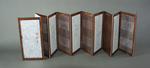
Yoon Dong Ju
Yu Jin Rim, Fleet Library, and Special Collections
Undergraduate student. Year of graduation: 2018. Major: Graphic Design. Class: Bookbinding. Faculty: Jim DiMarcantonio. Photographed by Mariah Bennett, MDes Interior Architecture, 2018.
-
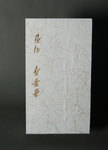
Yoon Dong Ju
Yu Jin Rim, Fleet Library, and Special Collections
Undergraduate student. Year of graduation: 2018. Major: Graphic Design. Class: Bookbinding. Faculty: Jim DiMarcantonio. Photographed by Mariah Bennett, MDes Interior Architecture, 2018.
-
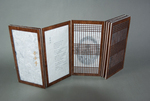
Yoon Dong Ju
Yu Jin Rim, Fleet Library, and Special Collections
Undergraduate student. Year of graduation: 2018. Major: Graphic Design. Class: Bookbinding. Faculty: Jim DiMarcantonio. Photographed by Mariah Bennett, MDes Interior Architecture, 2018.
-
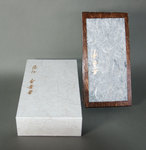
Yoon Dong Ju
Yu Jin Rim, Fleet Library, and Special Collections
Undergraduate student. Year of graduation: 2018. Major: Graphic Design. Class: Bookbinding. Faculty: Jim DiMarcantonio. Photographed by Mariah Bennett, MDes Interior Architecture, 2018.