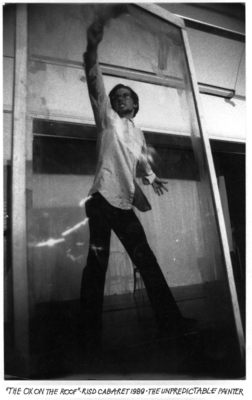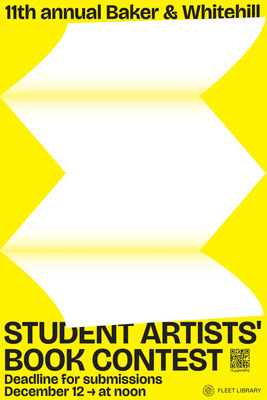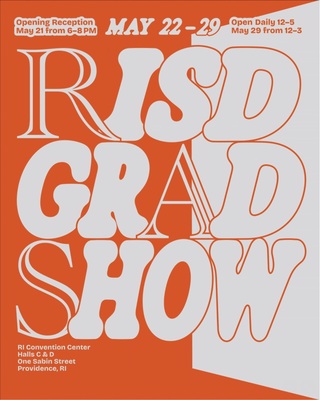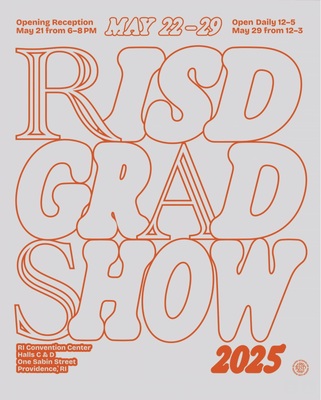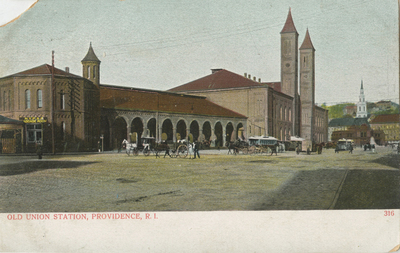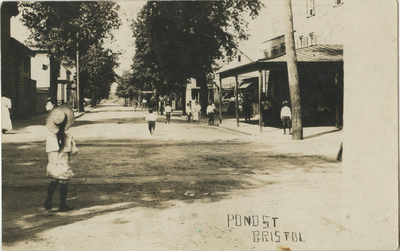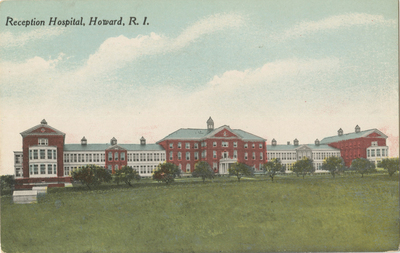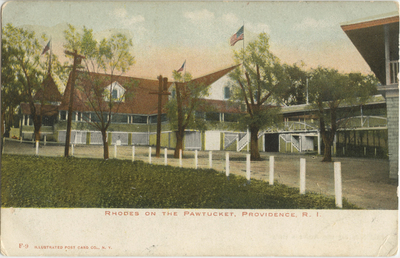
On was an interdisciplinary graduate periodical established by RISD graduate students in 2006. It featured essays and student work that related to a general issue theme. On was intended as a quarterly publication, but it is unclear if further issues beyond the first were ever published.
-
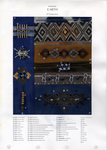
Romantic Inspirations Earth Components Flag 7(description), Trend Spring / Summer 2017
Swarovski, Visual + Material Resources, and Fleet Library
-

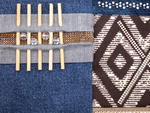
Romantic Inspirations Earth Components Flag 7 (detail), Trend Spring / Summer 2017
Swarovski, Visual + Material Resources, and Fleet Library
-
Romantic Inspirations Earth Components Flag 7 (detail), Trend Spring / Summer 2017
Swarovski, Visual + Material Resources, and Fleet Library
-
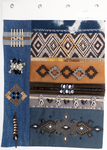
Romantic Inspirations Earth Components Flag 7, Trend Spring / Summer 2017
Swarovski, Visual + Material Resources, and Fleet Library
-
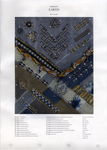
Romantic Inspirations Earth Transfers Flag 6 (description), Trend Spring / Summer 2017
Swarovski, Visual + Material Resources, and Fleet Library
-
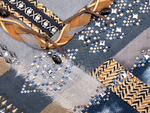
Romantic Inspirations Earth Transfers Flag 6 (detail), Trend Spring / Summer 2017
Swarovski, Visual + Material Resources, and Fleet Library
-
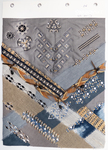
Romantic Inspirations Earth Transfers Flag 6, Trend Spring / Summer 2017
Swarovski, Visual + Material Resources, and Fleet Library
-
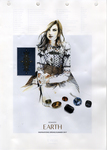
Romantic Inspirations Earth Trend Spring / Summer 2017
Swarovski, Visual + Material Resources, and Fleet Library
-
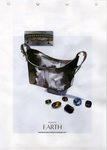
Romantic Inspirations Earth Trend Spring / Summer 2017
Swarovski, Visual + Material Resources, and Fleet Library
-
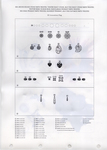
Sea Urchin Round Stone Partly Frosted, Twister Fancy Stone, Jelly Fish Fancy Stone Partly Frosted, Panther Bead, Scarab Bead, Radiolarian Pendant Partly Frosted, Sea Snail Pendant Partly Frosted, Raindrop Pendant, Jelly Fish Flat Back Partly Frosted Innovation Flag 3 (description), Trends Spring / Summer 2017
Swarovski, Visual + Material Resources, and Fleet Library
-
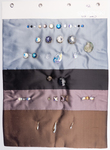
Sea Urchin Round Stone Partly Frosted, Twister Fancy Stone, Jelly Fish Fancy Stone Partly Frosted, Panther Bead, Scarab Bead, Radiolarian Pendant Partly Frosted, Sea Snail Pendant Partly Frosted, Raindrop Pendant, Jelly Fish Flat Back Partly Frosted Innovation Flag 3, Trends Spring / Summer 2017
Swarovski, Visual + Material Resources, and Fleet Library
-
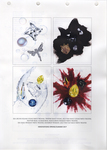
Sea Urchin Round Stone Partly Frosted, Twister Fancy Stone, Jelly Fish Fancy Stone Partly Frosted, Panther Bead, Scarab Bead, Radiolarian Pendant Partly Frosted, Sea Snail Pendant Partly Frosted, Raindrop Pendant, Jelly Fish Flat Back Partly Frosted Trends Spring / Summer 2017
Swarovski, Visual + Material Resources, and Fleet Library
-

The Aesthetic Appreciation of Animals in Zoological Parks
Marta Tafalla
Can we appreciate in a serious and deep way the aesthetic qualities of wild species in exemplars held captive for exhibition in the artificial installations of a zoo? To answer this question I invoke theories concerning the aesthetic appreciation of nature propounded by Yuriko Saito and Allen Carlson. I then argue that zoos impose their story on animals, thereby preventing us from appreciating the animals on their own terms. I claim that captivity and its effects on the health, behavior, and appearance of animals make serious and deep appreciation of the aesthetic qualities of wild species impossible.
-
Sublime and Anti-sublime: Reconsidering the Relation of the Sublime to Technology
Konstantinos Vassiliou
The aesthetic notion of the sublime has been traced in different fields in the growing spheres of technology, capitalism, and digitality. The variable character of the sublime is partly due to the fact that it is identified with specific objects or sources. It can emerge whenever there is an antithesis between the infinite extensions of reason and the limits of the representative faculty. Taking into account this variance, this article seeks to reexamine the relationship of the sublime to technology, especially in view of current digital capabilities. In doing so, I argue that the notion of the sublime involves its own peculiar traits for delimiting and even blurring the boundaries between the natural and the technical. This seems to be so because techniques and language may shift and sometimes contest the incommensurability of reason and representation that lies at the heart of the sublime. Moreover, this phenomenon is countered by an anti-sublime effect (Manovich) that is achieved through the extensive mapping and visualization abilities of digital media. In contrast to the sublime, the anti-sublime is not based on contemplation but on habitual behavior. By relating this characteristic of the anti-sublime to the work of Félix Ravaisson, it finally seems that the sublime has been significantly affected by digital culture and is likely to influence any further demarcations between the natural and the technical.
-
Between thoughts : on the interconnectivity of things
Yunzhu Wang
My furniture designs are sensory tools that offer a bridge between our mental world and the physical world. With a strong belief in systems of interconnectivity and equilibrium, I use my designs as tools to calibrate awareness to the flow of changes that occur as enduring undercurrents in our everyday lives. Using as stimuli basic mechanisms of measurement as well as sensory cues, my works are antennae to our perception, inviting finely-tuned attention to the subtleties of response between our body and the physical environment. In the process of our participation, we come to see the dynamics of action and reaction at play and anticipate for further awareness.
-
Identity production
Boyang Xia
What are we talking about when we talk about identity? People are likely to define themselves in terms of what is relevant to their time and place, in other words, context. This indicates that identity is not a fixed definition, but more of a malleable construction; it develops its attributes via context. I am constantly recalibrating the relationship between the two. Context is ubiquitous, unnoticed, coexistent and interchangeable. Identity is reflexive, fragmented, shapeable and fluid. Identity Production explores and unveils how identity is adapted and manifested in contemporary conditions, as well as its external validation which paradoxically defines this indefinable concept. This thesis asks readers to be conscious of the contexts with which we interact on a daily basis, as well as the corresponding identities that are activated by them. My role as designer shifts accordingly within each section. Substitution, subversion and superimposition are the methods allowing me to materialize the intangibles and simulate the incompatibilities.
This process has led me to wonder: Where can an identity exist? What does an identity look like? How is identity validated? The research subjects cover from standardized manufacturing and social platforms to universal surveillance and machine vision. My work orients context as the defining factor, leading to a subsidiary production of the identity. Through my thesis, I hope to offer a better understanding of our relationship with the environment, both digital and analog, as well as a better understanding of the self.
-
Poetic features beyond functions
Lu Xu
As a designer I am trying to find words to adequately describe concepts, processes, materials, contexts, characteristics and characters. The words do not come easily. I can recount the whole making process and material make-up. I can place it into a historical and cultural context. I can list the functions and features. But when a design is intuitive and inevitable, words can only give some slight whiff of the idea. A design just exists. It exists by communing with our senses; it exists by being done; it exists by somehow winding its way into our hearts and minds.
-
Twilight revelation
Shuwen Xu
The first inspiration came from the thrilling phenomenal nuance caused by the natural light, especially the diffused and cool light — that’s why I am so fascinated with the dawn. Also, the “conditional” idea proposed by Robert Irwin in his book “Being and Circumstance — Notes Toward a Conditional Art” influenced my attitude towards landscape and public art: the design could be a tool to “reveal” the phenomenal changes and make people become more aware of them, instead of changing the existing condition arbitrarily.
Then I chose “threshold” — the space between private and public condition, interior and exterior, which might be front or back yard, the street next to residential entrance, or semi-private park as my targeted sites, because they have great potential of physical, phenomenal, mental and programmatic changes.
I started my investigation from the residential zone in Providence and developed the prototypical strategy to play with dawn light, and then adapt it to New York city to achieve a wider practice. The outcomes are both a theoretical strategy and a design.
The overall objectives are to bring a new thought and attitude towards landscape design and public art, which makes people re-aware of the phenomena in the circumstance, reveal the fascination of dawn light, and create a prototypical design for residential area. During the whole process, the written article needs to be re-thought and revised along with the design.
-
Design syncopations
Mary Yang
Design Syncopations is an inquiry into space and intervention. Central to this work, is the orchestration of scenarios to prompt visual, auditory, and physical engagement. My background as a musician strongly informs this practice as I borrow from and disassemble musical structures—time, rhythm, composition, and counterpoint. Through designed prompts and invitations, I incorporate musical themes of chance and improvisation, setting up programs, altering spaces, and interrupting existing conditions. Working at the intersection of sound and design allows me to conduct audience-led musical performances, reprogram gallery spaces, and collaborate with artists and musicians. The ensemble of works adds up to a sequence of experiences and syncopation of attitudes.
-
Remnant landscapes as homo sapiens preserves : It is the dystopian utopia, the shrine for modernity, the home of everyone
Yuan Zhang
When it comes to remnant landscapes, what else can they be instead of being turned into parks, community gardens, or new architectural or urban development?
This thesis starts with a critique towards the very popular post-industrial park, the High Line, where the original materials of the site was completed removed then artificially re-fabricated. By transforming it into a publicly well accessible landscape, the design destroyed the possibility for a citizen to build his/her own intimate relationship with this piece of land because of a much visible ownership. Therefore, the goal for the thesis is to provide a powerful critique to our discipline’s standard response to urban landscape related issues.
The thesis is structured in three phases. In Phase One, by drawing timelines of related issues, conducting case studies in and outside the discipline and many other research methods, the author got a holistic understanding of how remnant landscapes are perceived in different disciplines and in different historical periods, how people verbalize or depict such kind of spaces, and what the cultural and social contexts that account for certain opinions about them are. In Phase Two, half of the effort was dedicated to finding a more precise thesis question, and the other half was dedicated to understanding the site from urban scale, local scale to site scale. In Phase Three, time was spent to establish a development guideline at an urban scale that claims the authors’ political stance as an landscape architect, as well as to test a simple design idea at the site scale.
The thesis ends with a concept of the Homo Sapiens Preserves - which is the destination for escaping from the rigid social norm. It is the place to touch the earth, the land and the ground, where there is no surveillance nor control. It is the church, the temple, the mosque, the very place for anxious city dwellers to contemplate, where challenges the notion of recreation and re-defines values. It is the dystopian utopia, the shrine for modernity, the home of everyone.
Rather than an academy publication, this thesis book is more like a personal documentation of the three-month journey full of interesting explorations and exciting experiments.
-
Expressionism in furniture
Zihan Zhang
In the first 25 years of my life, I always thought I was a free man, I followed my passion to choose art and design as my career, and strived to enter the best design school. However, until I moving to Providence, and fished on a beach over the midnight, I finally realized, actually I am the victim in dilemma who is always paralyzed by the standards we created. In that midnight, I realized time is not only a number, it can be the track of galaxy or the fluctuation of tide. And I introspected myself why my schools are the best, just because people defined they are? Did I contemplate about whether they are the most suitable for me? The answer is clear, I always follow suit which is defined by other people, and actually I don’t have my own judgment, I’m living in standards we created. But, I’m lucky, at last, I realize it. Most of time, we need to ‘See through the appearance to perceive the essence’, find the truth which belongs to ourselves. Just like Expressionism, artists create projects to express emotion through abundant color and exaggerated figure rather than depicting objective things. We need to directly rethink the essence of our world without any appearances.