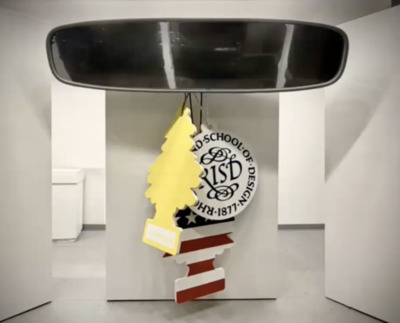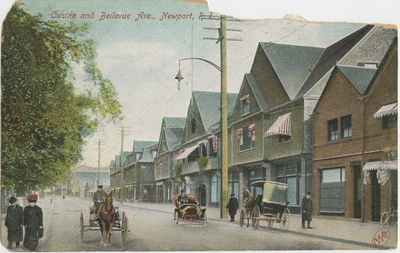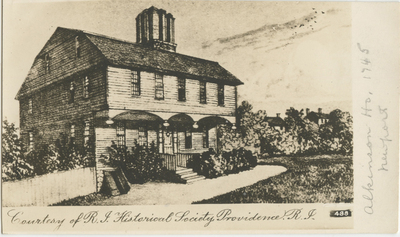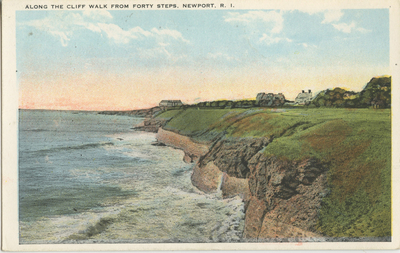
On was an interdisciplinary graduate periodical established by RISD graduate students in 2006. It featured essays and student work that related to a general issue theme. On was intended as a quarterly publication, but it is unclear if further issues beyond the first were ever published.
-
![[DE]construction and [RE]construction : a promenade theater by Jingjing Zhao](https://digitalcommons.risd.edu/assets/images/placeholder-thumbnail.jpg "[DE]construction and [RE]construction : a promenade theater by Jingjing Zhao")
[DE]construction and [RE]construction : a promenade theater
Jingjing Zhao
REFRAME THE COMMONPLACE
I see corners, ceilings, openings and steps. I see the whole through gathering the spatial fragmentations. I see the extraordinary phenomenon within the frame of domestic life. I see the potential for being anomaly from what we usually take for granted.
Spaces are entities propelled by the phenomenological, the conceptual and the physical. Built and spatial forms serves as functional and structural vessel to capture, balance and rearrange the multiple forces between the common and the abnormal, between the real and the abstract.
Capturing the domestic moments in daily life and reframe the fragmentations into certain from as a whole. Through strategic but simple maneuvers of the architectural language, simple but significant manipulations could lead to a extracted but powerful existence.
-
A tale of lights : light as the visual construct of the ephemeral space
Alice M. Zhen
Buildings are designed for a specific purpose. A library has large open rooms to accommodate bookshelves, schools have classrooms and auditoriums for groups of students, businesses have offices and conference rooms, homes have bedrooms and living rooms, and so on. In each situation, conventional architecture would start by establishing the boundaries of the site, defining the 2 dimensional floor plan, and then introduce other secondary aspects, such as circulation & light, which eventually create a coherent and cohesive 3 dimensional space.
In my thesis I wanted to explore the reverse process to emphasize the importance of light. I wanted to define the space using light as a 3 dimensional medium, which would create the volumes for my programs.
Light is not as stationary as the established boundaries of a site. It’s moves with time and changes intensity throughout the day and can be used as a tool to choreograph the user’s ephemeral experience as they navigate through the site. Just as light adapts to different surfaces, this design methodology can be adapted to different sites.
-
The emotional intelligence of machines
Lokesh Zope
Technologies today claim to be capable of detecting human emotion. When such technologies appear on our everyday objects, how will our interactions be like? Can these objects know when we are frustrated with them? Wouldn’t that radically change the field of user experience design? However, would people be scared of such capability?
Born from this curiosity, this thesis project is a speculative and an experimental approach that explores the overlap of the fields of User Experience Design, Affective Technologies, and Artificial Intelligence. This exploration is aimed at investigating its need and illustrating a newly designed adaptive nature of domestic appliances.
The purpose of this book is to showcase the range of collaborative explorations that led to the formulation the theory - “Emotional Intelligence of Objects.”
-
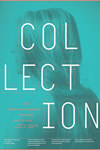
Collection 13
Poster for the 2013 student Apparel Design Department Show held at the RI Convention Center.
-
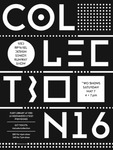
Collection 16
Poster for the 2016 student Apparel Design Department runway show held in the RISD Fleet Library. (front)
-

Collection 16
Poster for the 2016 student Apparel Design Department runway show held in the RISD Fleet Library. (back)
-
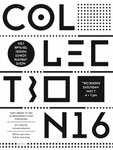
Collection 16
Poster for the 2016 student Apparel Design Department runway show held in the RISD Fleet Library. (front)
-

Collection 16
Poster for the 2016 student Apparel Design Department runway show held in the RISD Fleet Library. (back)
-
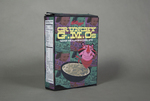
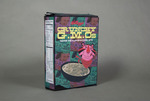
Ever Wonder What's In Your Cereal?
Gabriel Abascal, Fleet Library, and Special Collections
Undergraduate student, year of graduation: 2020. Major: Experimental and Foundation Studies. Class: Studio Design 1. Faculty: Martie Holmer.
-
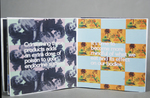
Ever Wonder What's In Your Cereal?
Gabriel Abascal, Fleet Library, and Special Collections
Undergraduate student, year of graduation: 2020. Major: Experimental and Foundation Studies. Class: Studio Design 1. Faculty: Martie Holmer.
-
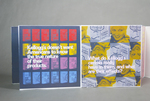
Ever Wonder What's In Your Cereal?
Gabriel Abascal, Fleet Library, and Special Collections
Undergraduate student, year of graduation: 2020. Major: Experimental and Foundation Studies. Class: Studio Design 1. Faculty: Martie Holmer.
-
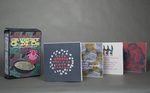
Ever Wonder What's In Your Cereal?
Gabriel Abascal, Fleet Library, and Special Collections
Undergraduate student, year of graduation: 2020. Major: Experimental and Foundation Studies. Class: Studio Design 1. Faculty: Martie Holmer.
-
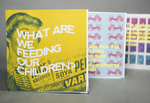
Ever Wonder What's In Your Cereal?
Gabriel Abascal, Fleet Library, and Special Collections
Undergraduate student, year of graduation: 2020. Major: Experimental and Foundation Studies. Class: Studio Design 1. Faculty: Martie Holmer.
-
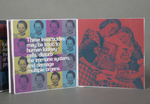
Ever Wonder What's In Your Cereal?
Gabriel Abascal, Fleet Library, and Special Collections
Undergraduate student, year of graduation: 2020. Major: Experimental and Foundation Studies. Class: Studio Design 1. Faculty: Martie Holmer.
-

Ayad Akhtar: A Conversation
Ayad Akhtar, Shahzia Sikander, and Painting Department
On October 25, Pakistani-born artist and RISD alumna Shahzia Sikander, the Painting Department's 2016 Kirloskar Fellow, organized a lecture and conversation with playwright and author–and her frequent collaborator–Ayad Akhtar, at the RISD Metcalf Auditorium.
-
Commencement 2016 Keynote Address | Hilton Als
Hilton Als and RISD President
Hilton Als, Martha Rosler and Esther Wojcicki all received Honorary degrees at Commencement 2016. Best known for his incisive theater reviews for The New Yorker, Hilton Als has been chief theater critic since 2013 and a contributor to the magazine since 1989. Through her work in photo-montage, video, installation and performance art, Martha Rosler has long focused on the public sphere and issues of everyday life. A leader in educational reform, Esther Wojcicki is passionate in her belief that young people respond best to learning from each other and through a smart use of digital resources.
-
Hyphen nation: a reconciliation
Lynn Amhaz
As a transnational living between Beirut, Lebanon, and Providence, Rhode Island, in the United States, I use my design practice to negotiate, reconcile and inform a cultural identity defined through an equation of two different nations. I am open to what comes from this reality between. Linguistically, a hyphen simultaneously binds and divides a compound term. As a designer, I view the hyphen as a shifting axis for telling stories. In the process, I approach the hyphen as an indeterminate zone — a productive site for authoring systems and suggesting narratives linking two nations — their cultures, languages, times and geographies.
-
Aesthetics and Autobiography: Emotion and Style in The Book of Disquiet by Fernando Pessoa / Bernardo Soars
Mikel Iriondo Aranguren
At the beginning of The Book of Disquiet, Bernardo Soares writes: “In these random impressions, and with no desire to be other than random, I indifferently narrate my factless autobiography, my lifeless history. These are my Confessions, and if in them I say nothing, it’s because I have nothing to say.”
Written a century ago, these words illustrate a great distance from the traditional way of writing an autobiography. They confront, however, the same paradox, which is how can any of our lives, constituted by different and unrelated events, be structured as a linear story looking for a meaning, usually justificatory and self-indulgent? If understanding who we are today depends on the relationship established between present and past, we are forced to rely on an unchanging proper name, on a sequence of selected events, and the subsequent reworking of those events by the different subject who we are now.
This characteristic process of autobiographical works has led many to consider the fuzzy boundaries between fiction and reality, the demand for sincerity from the reader (the so-called autobiographical pact), the use of narrative strategies, and the understanding of autobiography as the textual presence of an implicit narrator without a clear relation to the empirical writer. However, Fernando Pessoa, and his heteronymous narrator Bernardo Soares, give us the novelty of a deep intimate text and the testimony of a life full of experiences without reference to events, dates, or personalities that may refute or corroborate his descriptions.
-
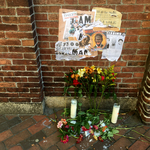
Outdoor Installation Market House October 2016
RISD Archives
Photo documentation of Student installation, North Side of Market House building. Photo by A. Martinez
-
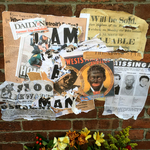
Outdoor Installation Market House October 2016
RISD Archives
Photo documentation of Student installation, North Side of Market House building. Photo by A. Martinez
-
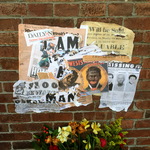
Outdoor Installation Market House October 2016
RISD Archives
Photo documentation of Student installation, North Side of Market House building. Photo by A. Martinez
-
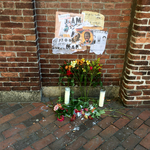
Outdoor Installation Market House October 2016
RISD Archives
Photo documentation of Student installation, North Side of Market House building. Photo by A. Martinez