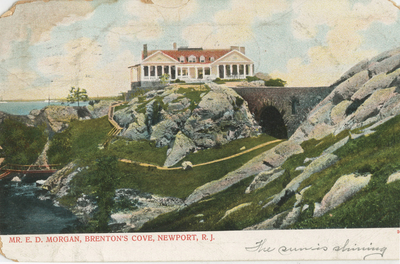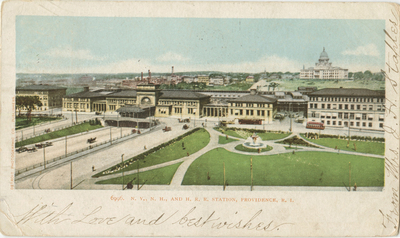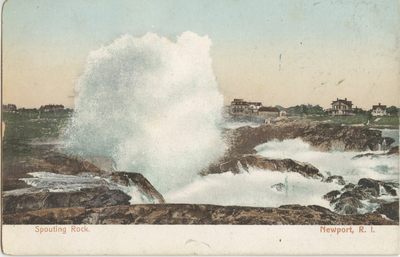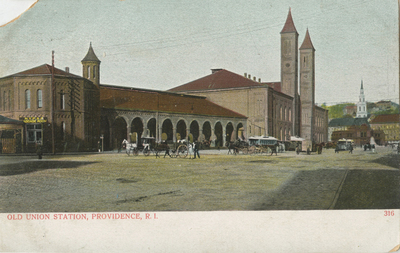
On was an interdisciplinary graduate periodical established by RISD graduate students in 2006. It featured essays and student work that related to a general issue theme. On was intended as a quarterly publication, but it is unclear if further issues beyond the first were ever published.
-

A monument thesis
Graham Rice
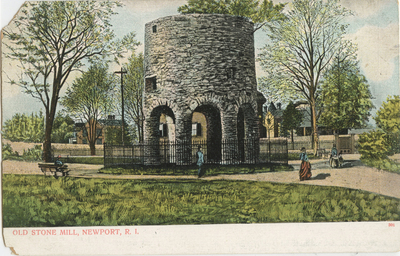
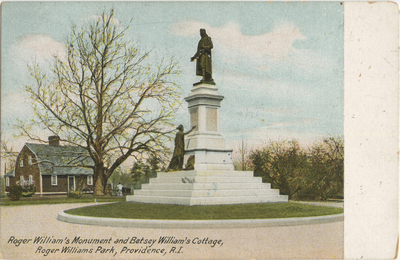
Monuments are to something; people, events, memories, achievements, or tragedies. They are meant to freeze the moment of the builder and save it for the future. Monuments are an attempted cryogenesis, but monuments that preserve the past sever themselves from the present. They are cryogenic. They can be viewed, but are frozen behind the glass of time. All but the most potent of artifacts will fade at these low temps. Their relevance diminishes until they undergo a transmutation from an intentional object into a historical artifact.
These historic monuments are worthy of our suspicion. Do they replicate or preserve what they claim to? Is the preserved pure or has it been altered without our knowledge? Is the monumentalized just a story we’ve been told.
-
Joy through layered tension : convergent fire-escapes fulfill a new community
Luca Rivelli
The initial curiosity of this thesis was the exploration of the unquantifiable aspects of architecture. How can the emotional experience of one’s design process be manifested into something that physically embodies those sensations? How can the creator and the observer have a more intimate connection through emotional solidification?
-
Constellations
Maria Rull Bescós
In this book you will find a collection of projects that both reflect and simultaneously reinvent my personal way of seeing the world, which I consider to be a space that is complex, diverse, and in continuous transformation.
Graphic design is the lens through which I examine and understand this complexity, and it is also the medium through which I translate this huge realm into navigable systems of ideas, tales, forms, and experiences.
I have been inspired to produce my own systems in response to those I discover through actively observing my environment (territory), reflecting upon my personal background (origin), and witnessing constant growth and transformation (roots). Participating in this conversation through design allows me to expand this inquiry into the nature of systems and invites me to contribute my own voice to the larger dialogue.
Systems, however, do not necessarily imply linearity. Everything converges, overlaps, builds, and reveals. As a designer, I have to trust my process and intuition, aspects that are alive and always in flux. I have to observe, locate, define, relate, tell, make, wait, question, and decide.
These decisions become behavior, and in the end this is what gives rise to new systems. It is in this spirit that this book has been designed and asks to be experienced. In its pages, I illustrate my ways of seeing by collecting component parts that invite the reader to find connections among them. In this way, these pieces gradually, and almost magically, reveal themselves to be a whole.
-
Mt.Holyoke, North Hampton MA after a Thunderstorm
Adrienne Sarasy, Special Collections, and Fleet Library
-
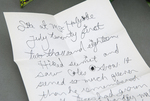
Mt.Holyoke, North Hampton MA after a Thunderstorm
Adrienne Sarasy, Special Collections, and Fleet Library
-
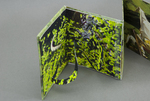
Mt.Holyoke, North Hampton MA after a Thunderstorm
Adrienne Sarasy, Special Collections, and Fleet Library
-
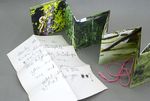
Mt.Holyoke, North Hampton MA after a Thunderstorm
Adrienne Sarasy, Special Collections, and Fleet Library
-
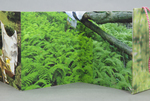
Mt.Holyoke, North Hampton MA after a Thunderstorm
Adrienne Sarasy, Special Collections, and Fleet Library
-
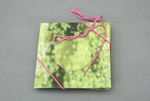
Mt.Holyoke, North Hampton MA after a Thunderstorm
Adrienne Sarasy, Special Collections, and Fleet Library
-
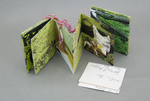
Mt.Holyoke, North Hampton MA after a Thunderstorm
Adrienne Sarasy, Special Collections, and Fleet Library
-
A third thing : an exploration of black hair in architectural design
Christina B. Schaller
“African-American architects have been unable to articulate our own truth or vision of the future except as a reflection of the very culture that marginalizes us. We are so spent by trying to get into the system that there is little time remaining to critique the historical condition that make our climb so difficult. Rather than develop a self-defined praxis of architecture that would make a real difference in the lives of our people, we mimic the values and goals that have created our oppression.” - Sharon Sutton
By looking at traditions, art and architecture in the African American community, my goal is to make a case for an African American aesthetic that embraces ambiguity and empowers the community. This thesis will manifest in a public space for activism, healing and uplift.
In the thesis, I look at the church as a site to question Black and White spaces. Does the church adequately accommodate this community that has been historically ignored in architectural design? I also use hair braiding as a muse for creative exploration in space making. The geographic site for the intervention is a suburban neighborhood in Deerfield Beach, Florida that is predominantly Black.
-
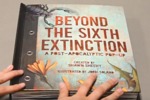
Beyond the Sixth Extinction : A Post-apocalyptic Pop-up
Shawn Sheehy, Jordi Solano, Special Collections, and Fleet Library
1 volume (unpaged) : color illustrations. Cover title. A pop-up field guide to eight fantastical creatures from a future world, along with spreads and flaps presenting details about each one.
-
Radically normal : the menstruation issue
Kathryn Smiley
Hey readers, Periods are normal. But you’d never know that by checking out the average bathroom. The only menstruation-related public restroom fixture considered remotely standard is the trash, the one used to hide the evidence. A tampon dispenser is a rare sighting –a functioning, stocked dispenser, even rarer still.
Dispensers’ exclusion from public space reveals the ways that menstruation is not treated like other natural body functions. Instead, it has long been considered a sign of imbalance and weakness, discussed mainly in hushed tones and sly euphemisms. Historically, the medical profession has greatly contributed to cultural anxieties about women and periods. Viewing male bodies as the biological norm, doctors pathologized menstruation as deviant from male health, inspiring misogynistic distrust of women’s emotions, physical autonomy, and mental competence. Early medicine saw menstruation as a way for womens’ bodies to restore balance of the four bodily humors, implying that women were always in a state of flux or imbalance. Even as medicine advanced into the 20th century, menstruation was thought of as a disease, requiring women to take mandatory rest from school and activities during their periods. This attitude towards menstruation did not shift until the 1940s, when WWII-era employers couldn’t afford for women to take sick days for periods. Not only did reductive understanding of menstruation as weakness cause women’s bodies to be politically and economically disempowered, it also created centuries of gaps in accurate knowledge about reproductive health and a lack of design innovation to improve the experience of menstruation. The history of period products has been an attempt to give women the ability to pass as non-menstruating.
But here’s the good news, society is finally beginning to acknowledge the strange ways menstruation has historically not been treated like any other body function. Its status in our cultural consciousness has been sharply on the rise since 2016. Activists are loudly challenging cultural and legal norms around periods and designers are responding with better products. The next battleground in menstruation will be access to free or low-cost period products in public spaces.
This Summer edition of Radically Normal focuses on the material culture of menstruating in public. Our goal is to shift the care of bleeding bodies from personal responsibility to public concern by advocating for public restroom design that reflects the banal, essential nature of managing menstruating in public.
Other hygienic essentials - toilet paper, tissues, paper towels - are seen as public goods; it’s time for period products to join.
As activists demand that we make the world more menstruation-friendly, we have a chance to reflect on what that vision looks like and how to make it actionable. What have our feminist forebears said on the matter? How can we operationalize this expanded service with consideration for public restroom custodians? What questions have we not considered about ensuring access to period products at scale because we’ve been too uncomfortable to ask?
Most importantly, how can this vision be more equitable, more inclusive? Menstruation activism is dominated by privileged, white, cisgender women (guilty) and is struggling to bring diverse voices to the table.
If menstrual equity is the goal, we need to focus on the needs of people for whom a box of tampons is a significant expense, and on vulnerable populations such as the homeless and imprisoned. This movement will be hobbled unless it becomes more focused on issues of public responsibility.
We’ll get into all these questions and more as we envision a new relationship to periods and a future where free pads and tampons are as banal as toilet paper in public restrooms.
-
Commencement 2018 President Rosanne Somerson
Rosanne Somerson and RISD President
RISD President Rosanne Somerson welcomed all at RISD Commencement 2018.
-
Defining contagion : examining imagination as a source of the infection in print studios
Joshua Tangen
In this thesis, I attempted to define a contagious component of art education within a community print shop. In this quest, I examine theories around imagination, creativity, and psychology through an analysis of the work of Maxine Greene, Kieran Egan, Ken Robinson, and Mihaly Csikszentmihalyi. Gathered from a variety of sources that include, books, scholarly articles, and online video, I link Greene’s concepts of what role imagination plays in critical thinking and empathy, Egan’s promotion of imagination’s ability to create personal and emotional engagement, Robinson’s ideas about creativity in learning, and Csikszentmihayli’s theory of flow. Connecting these four philosophers are elements of challenge, culture, and social change. Guided by the qualitative research method of investigation introduced by Sarah Lawrence-Lightfoot & Jessica Hoffman Davis, I create a portrait of the AS220 print shop. The thesis concludes with a definition of what, I feel, makes the community print shop an infectious place of learning. The definition was developed by linking theoretical concepts to findings that emerged from my experience as a participant observer.