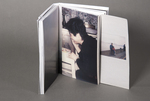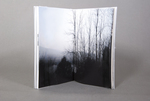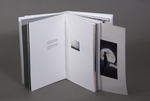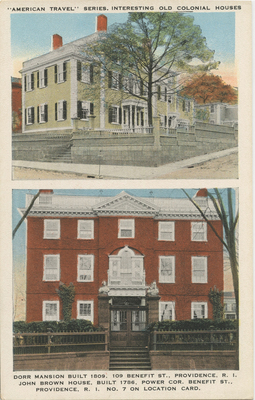
On was an interdisciplinary graduate periodical established by RISD graduate students in 2006. It featured essays and student work that related to a general issue theme. On was intended as a quarterly publication, but it is unclear if further issues beyond the first were ever published.
-

Atmospheric Design and Experience with an Exemplary Study of Olafur Eliasson's "The Weather Project"
Zhuofei Wang
In past decades, the subject of atmosphere has gone beyond the physio-meteorological scope and become a new concept of aesthetics. As the primary sensuous reality constructed by both the perceiving subject and the perceived object, atmosphere is neither a purely subjective state nor an objective thing, but essentially is a quasi-object pervaded by a specific emotional quality and a ubiquitous phenomenon forming the foundation of our life experience. In this respect, a decisive factor is not what we perceive but how we perceive. Furthermore, the quasi-objective quality of atmospheric phenomena makes it possible that atmosphere is producible. A practical dimension is thereby, from the outset, included in the consideration of this concept.
The aesthetic research into atmosphere initially resulted from the consideration of meteorological phenomena. Olafur Eliasson's “The Weather Project” is exemplary for its artistic practice in this field. With the combination of high-tech and natural elements, the focus of this installation work is not on the weather process itself but on creating a specific atmospheric space to develop viewers' immersive perception of their surroundings. The museum itself is hence transformed into a site providing an immediate, multi-sensory experience. Meanwhile, based on the criticism of the conventional museum institution that mediates or even manipulates art perception, revealing the construction behind the construction is an integral part of the atmospheric design of the Weather Project. This is characterized, on the one hand, by deliberately exposing staging strategies and, on the other hand, by creating unusual settings to enable viewers to reexamine their perceptions in addition to the surroundings shaping them.
-
Asim Waqif: Strategies for Disruption
Asim Waqif and Painting Department
Asim Waqif's projects attempt to span architecture, art and design, with a strong contextual reference to contemporary urban design and the politics of occupying/ intervening/ using public spaces. Concerns of ecology and anthropology weave through his work, and he has done extensive research on vernacular systems of ecological management, especially with respect to water, waste and architecture. His artworks employ manual processes that are deliberately painstaking and laborious while the products themselves are temporary or even designed to decay.
He has worked in sculpture, site-specific public installation, video, photography and with large-scale interactive installations that combine traditional and new media. -
Monument for feeling : Notes from the Archivist
Melissa Weiss
I’ve always loved the conjunctions unless, yet, however, although. Grammatical interventions, they subvert all things certain, rational, and indisputable, opening a series of syntactic doorways into new, undetermined possibilities.
The pieces in the Institute fo? Contempo?a?y Inqui?y’s archive function like those conjunctions. They refuse and destabilize easy categorization, pointing, like a rhizome, toward a thousand different possible pasts — and just as many futures.
To be clear, the Institute fo? Contempo?a?y Inqui?y does not have a physical site. It is a network of psychic locations materialized through its archive. It is, in other words, what I have gathered.
I have taken great care to arrange these materials in a manner that reflects the spatial, temporal, and psychic proximity in which I found them. You will find that I have preserved the original folders, including their labels — Capitalism, Climate, and Time; The Unstable Image; Resistance; Critical Optimism and Self-definition; Memory, Inheritance, and Hope; and, lastly, Conversation — but have also taken the questionable liberty of adding my own notes.
Perhaps it would have behooved the Institute to hire an archivist with more linear and obedient inclinations. But I’m thankful, for my own sake, that they did not.
-
Home · land : Olmsted's legacy and gentrification in Boston, MA
Jessica Wilson
Home • land is a master of landscape architecture thesis project encompassing an expansive body of trans-disciplinary research around the issue of gentrification and cultural displacement. The outcome is a proposal for a Community Land Trust (CLT) around Columbia Road in Boston, MA - the “missing link” of Frederick Law Olmsted’s Emerald Necklace park system. This book examines the impetus of Olmsted’s Legacy and the mayor’s promise to complete the “final jewel” of the necklace, the vectors of gentrification acting on the site, and the strategies and tactics that might aid in combating rather than catalyzing gentrification in this neighborhood. “The Community Land Trust Mosaic” is a proposal for a modular landscape system which seeks to make the resources of the land as a public common (safe shelter, abundant food, clean water) visible and accessible to all.
-
Water voyage from Quabbin to Boston
Ling Xia
This thesis focus on investigating on revealing the powerful Quabbin to Boston water system. In Boston, whenever we turn on our tap, our shower head, there is water coming out. Being driven by the curiosity of want to know the source of the water, the research eventually get to know the Quabbin Reservoir. Being fascinated by the giant body of water which provides water for people of the big Boston, in phase one the research begins with finding the hidden story of the displaced people who lost their land because of Quabbin reservoir. However, the way of the researching cannot show the sublimity of Quabbin, so in phase 2 the researcher then continues investigating the components of the whole system during which she found that the hidden part of the system-----the giant size of the infrastructures of this system are really impressive and make her feel very sublime, so she decides to show the sublime feeling of the infrastructure via design. She also does a form study based on the way water flows under the force of gravity. Finally in phase three, the researcher starts to work on identifying the issues of the site, by applying the framework on the site, she is able to come up with some strategies. Also, by extracting the size elements of the pipes and layouting them on the site, combining with the structure she got from the water flow form study, she is able to come up with a design which works mainly on the landform for revealing the system and provide space for people to use.
-
Two Types of a Doctrine of Objectivity in the Aesthetic Appreciation of Nature
Fuxing Xue
Allen Carlson develops and justifies a doctrine of objectivity in the aesthetic appreciation of nature by means of epistemology. This doctrine is quite significant for the self-knowledge of aesthetic appreciation of nature and the healthy development of the aesthetics of nature. However, for concepts in environmental ethics and the requirements of contemporary environmentalism, another kind of doctrine of objectivity for aesthetic appreciation of nature is needed, namely, a doctrine of ethical objectivity, which rests the aesthetic appreciation of nature on acknowledging the intrinsic value of nature and respect for nature. Because of this doctrine, appreciators construe the good of nature as the beauty of nature. They genuinely apperceive, understand, and experience the properties and inherent value of nature. The new doctrine of ethical objectivity for aesthetic appreciation of nature is an important development to Carlson’s scientific, cognitive theory. Meanwhile, it’s also helpful to promote the connection between environmental aesthetics and environmental ethics.
-
Understanding dwelling beyond the terrestrial
Sungkyu Yang
One of the first places humans have lived outside of Earth is the International Space Station. However, the quality of life on the station is dehumanizing because it was designed to be a laboratory, not a dwelling. The condition of the existing space is monotonous and dooms residents to a boring and tedious life. The expression of beauty inherent in human nature is missing. The operation of the ISS as a space environment research laboratory is scheduled to end in 2024. This thesis explores how to utilize the adaptive reuse potential of the International Space Station to better understand human dwelling and how to develop more ideal human-spatial element interaction on the station by manipulating existing spatial qualities.
Over millennia an appreciation for beauty has become inherent to human nature, first developing from desirable traits for sexual selection. In every place we live, we look for beauty. Beauty is an inevitable element of human habitation. As humans expand beyond the terrestrial, the ability to express beauty in our surroundings must come with us. It is a part of our being. Beauty, which makes people create more expressive artifacts, is the richness of expression and sensorial expe- Abstract riences made visible. Dwelling includes various human actions such as sleeping, eating and moving. Of those, moving in microgravity functions in a completely different way compared to moving on Earth. This thesis will explore how interiority can impact special moments involving movement in microgravity for more diverse spatial experiences. In microgravity, people experience a dislocation from ordinal directions — there is no up and down, no reliable left and right. Every centimeter is accessible when you remove the limitation that is gravity. On the basis of these special experiences, adding structures creates diverse spatial experiences for different activities and enriches the space where movement occurs. These diverse spatial experiences also help solve muscle atrophy, a major challenge in microgravity. This study can be used as a reference for future studies on human dwelling in space and long-term missions in space.
-
Contemporary Chinese Living Aesthetics and Contemporary Chinese Art History
Liu Yuedi
Living aesthetics was understood by most Chinese scholars as a way to bridge the living world and aesthetic activity today. This article discusses contemporary Chinese art from the perspective of the new thinking of living aesthetics. We shall diachronically describe the historical relationship between aesthetics and art and also try to synchronically examine the theory connecting living aesthetics and contemporary Chinese art with each other.
-
The Arctic Commons
A. Gavin Zeitz
The Arctic Commons envisions a world where geopolitical cooperation and transnational friendship generate an ethos of planetary collectivism promoting the future stability in the Arctic and rest of the world. This book will be a guide to understanding the Arctic at a range of scales, from governmental to regional, and finally the experiential and phenomenal that engages the unique ground conditions. The Arctic Commons encourages political action to create a new network of infrastructure that operates as a model for retrofiting global systems which currently fail to represent the common interests of the everyday citizen. Humankind’s current standards for social and environmental politics are underachieving at a moral and ethical level, but also failing at the spatial scale that operates in the realm of landscape architecture. Landscape architects have the power to envision futures at multiple scales and from a range of perspectives. This project seeks to traverse these scales and propose a collective perspective for the Arctic.
-
Threading puddles : stormwater management as a way to address the impact of Miami's future fresh water shortage due to increasing water demand and saltwater intrusion
Jing Zeng
The city of Miami will face significant challenges in the future of changing climate. Compared with other cities in Florida, Miami is lucky to have the abundant groundwater resource from its surficial aquifer —Biscayne aquifer, which provides potable water for 3 million people of the region. But, as climate change progresses, Florida is expected to experience warmer temperature, more prolong drought, higher precipitation events and more intense storms. All these factors will influence the hydrologic system and current water management due to the uncertainty.
Climate variability will dictate the amount of water available to replenish the suificial aquifer. The low-lying land of the region limits the capacity of water storage. Thus, the Everglades fresh wetland and water conservation area are extremely important for storing water and meeting the needs of continuous development of the city, which will likely be compromised because of sea level rise.
Saltwater Intrusion has been the result of historical water management and will keep threatening to the fresh water aquifer and wetlands. Increasing sea level rise will complicate the problem. The thesis began to use the lens of landscape architecture to understand the water management historically and nowadays, the mechanism of the aquifer and proposed adaptation strategies of aquifer recharging through stormwater management and increasing public awareness of the water issues.
-
Guide the flood : Miami vulnerable neighborhoods flood adaptation design
Zhe Zhao
When it comes to the future of Miami, what else could be instead of waiting to be swallowed by the sea?
This thesis starts with a group pre-research on different aspects related to the rising up sea-level in Miami. By analyzing the existed urban fabric and typologies, the author tries to use the current segregated open space in every block to create a new open space system to reduce the sea-level-rise influence. Therefore, the goal for the thesis is to provide a powerful and gynamic open space system to the rising sea-level.
The thesis is structured in three phases. In Phase one, by analyzing the flood-related issues including where the water come from, the failed urban infrastructure system and the influence to the ecology and people, the author get a holistic understanding of how terrible the climate is in Miami, where and how the water comes to Miami, what people have done to reduce the impacts and who has already been attacked by the water. In Phase two, half of the effort is dedicated to knowing a detail information about the vulnerable neighborhoods through the field trip to Miami. And the other half is dedicated to understanding the site by analyzing the neighborhood typologies to get to know the potential of the existing vulnerable neighborhoods condition. In Phase three, time is spent on identifying and establishing typical blocks design under a series of resilient strategies in neighborhood scale. Through the analysis in phase two, three typical blocks are identified to cover all the blocks in Miami, “mid-tree”, unpermeable and the affordable apartments. With every typical block redesign, a water collect area is created as a contemporary collection basin, with the other area are designed to drain and slow the draining process.
The thesis ends with a design stage zooming out from single block scale to the whole neighborhood scale. It will create several green corridors which not only serves as a flood resilient areas but also offers recreational places for the vulnerable neighborhoods which only have some concentrating spots around some street corners now.
-
Architecture as an adapter : a revolution in high-rise corporate architecture
Nan Zou
“It is not the strongest of the species that survive, but the one most responsive to change” is the core of Charles Darwin’s Natural Selection theory. This relates not only to biology, but architectural typologies over time.
Office design has gone through many periods of evolution to reflect changes in industry and the workforce: from Ford’s assembly line to office cubicles to the open plan workplace and today’s anti-office. Designers have been mediating between workers and space for better performance for over 100 years -- though none of these anticipated the need for complete flexibility.
Through the development of automated technology in the 21st century, working modes are shifting dramatically. The popularity of working remotely revealed the conflicts between collective and individual working modes, as well as varying needs for work and rest. As it becomes more difficult to find tenants for conventional workplaces, like high-rise corporate office buildings, a new adaptive scheme of reversing people’s associations towards corporate architecture and responding to the new workforce is required.
This thesis will focus on improving the way workspace relates to its users. A column grid structure is selected as the module to create an adjustable system, due to its’ universal dimensions. The proposed system can be changed manually and automatically to provide different spatial qualities. Offering 4 levels of adaptation (Influence - Involvement – Interaction – Interconnection), this system will work as an adaptor to mediate the conflict between individualism and collectivism, work and break, private and public, social and solitude.
High-rise corporate architecture presents the perfect host structure to experiment with adaptability and the capability of supporting human comfort in the workplace. Benefiting from the standard type and simple structure of high-rise corporate architecture, the data collected by this experiment can be applied universally to promote social interaction and human comfort in the workplace.