
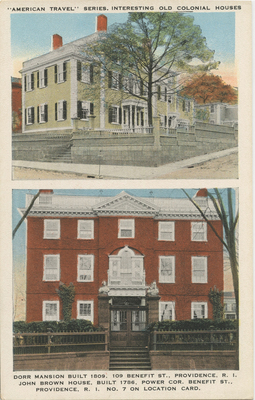
On was an interdisciplinary graduate periodical established by RISD graduate students in 2006. It featured essays and student work that related to a general issue theme. On was intended as a quarterly publication, but it is unclear if further issues beyond the first were ever published.





-
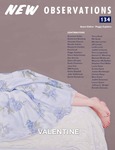
New Observations #134 | Valentine
Mia Feroleto and Peggy Cyphers
New Observations is a non-profit, contemporary arts journal written, edited, and published by the arts community. For more information visit newobservations.org.
-
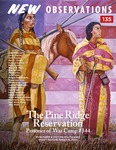
New Observations #135 | The Pine Ridge Reservation Prisoner of War Camp #344
Mia Feroleto and Robert Felix
New Observations is a non-profit, contemporary arts journal written, edited, and published by the arts community. For more information visit newobservations.org. "This issue of New Observations is meant to explore the American Indian Movement, the imprisonment of Leonard Peltier and the fact that in any other country, Leonard and John Red Cloud would be released [from prison]..." - Mia Feroleto, Publisher & Editor
-

Counter formation
Fabian Fohrer
Counter-formation establishes a foundation to envision a more accurate shape and field of inter-relations across disciplines and contexts that are not only receptive but appropriative and elaborative.
By approaching the space of the counter-form, my ambition is to generate a responsive structure and an archive of fragments to build upon - a blank canvas with a variable format to recast vision and action.
Counter-formation places emphasis on the transformative, liminal space that allows one to encounter contexts from within, between, and around to organize or break them in a different fashion.
-
The kitchen table: relationships with the people, food and land that sustain us
Chelsey Frost
The purpose of this paper is to examine the ways in which interactions with food and around food affect an individual’s sense of self, connection to community as well as to friends and family, and sense of place. Short, personal narrative gives way to discussion of such themes and ideas as home, homemade food and terroir. It becomes clear that acts of celebration of and gratitude for food, particularly in connection with a specific place or line of heritage, play necessary roles in the development of our personal identities and in our search for belonging. These stories are based on personal experiences of the author’s, and are therefore contextualized with references to her hometown in the state of Rhode Island and its cultural and gastronomical history and demographics.
-
Mobility justice and social capital in Strawberry Mansion and Kensington, Philadelphia PA
Rebecca Fruehwald
This thesis explores the theoretical and practical relationship between mobility justice and social capital. A literature review establishes the theoretical relationship through an overview of history and policy. The relationship is then explored through a case study of Strawberry Mansion and Kensington neighborhoods in Philadelphia. These sections are then connected by considering how they are both impacted by the larger system of capitalism. The real-world example of gentrification is given for how all these elements interact and affect each other, and the practical relationship between mobility justice and social capital is established. Finally, policy implementations and paths for possible future research are recommended.
-
A material cooperation over time
Diana Marcela Gallo
The use of materials like clay, concrete and biomaterials have given a meaning and identity to the outcomes we produce through time. Materials absorb and release energy that passes through them. Transformation processes in materials can be revealed when they get in touch with a phenomenon like infiltration of water. Changing stages in materials and weathering, should not be considered as a negative condition but as a new opportunity to feel and perceive the same surface differently.
The illusion of permanence should be replaced by a more fluid idea that nothing lasts or keeps the same condition forever. Since all materials come from living resources, this work explores the use of clay as part of the geologic composition in New England; concrete that is the result of clay and other minerals exposed to high temperatures and finally, mycelium that is a fungus based material as an invitation to incorporate nature in a different way to stop producing pristine and timelessness objects but instead producing livable materials that transform themselves and are more adaptable to the external conditions. In the need of sustainable and local alternatives, this thesis is also an invitation for industries to consider the option of going back to rescue and explore the unique resources from each place.
-
Flowing garments: textile waste reutilization in landscape design
Fengjiao Ge
This thesis has focused on creating a localized response to a global problem related to globalization and fast fashion. Both our amount of post-production waste and the carbon footprint left by the garment industry’s response to a global desire for novelty and affordability, and their dependence on cheap labor, loose environmental regulations, distributed raw materials and production, and markets far from places of manufacturing has created an unethical and unsustainable supply chain model.
The strategy proposed here began with one of the places that receives much of the world’s garment waste. As a country that both produces these garments and is paid to receive other countries’ waste, and as a country with a serious lack of raw materials needed for erosion control and construction. The thesis aims to revitalize the garment waste, and transform them into a new framework( a new supply chain model, substitution of traditional construction material, ecological mitigation and revitalization of rural villages) for future landscape development which would potentially motivate the perception of sustainability on economy, ecology and culture.
-
The Common Thread with Fengjiao Ge, Chris Riley, and Annie Keating
Fengjiao Ge, Chris Riley, Anne Keating, and Edna W. Lawrence Nature Lab
The second live session of The Common Thread virtual series features Landscape Architecture graduate Fengjiao Ge (RISD MLA '20), New England Alpaca Fiber Pool Founder + Executive Director Chris Riley, and Textile Artist + Former Fabscrap Community Coordinator, Annie Keating (RISD BFA TX '17).
This conversation focuses on WASTE as a NEW HARVEST. How can we reframe the conversation around waste as a useful material that benefits surrounding communities and environments? -
Voran Test Lab : An exploration of teaching collaborative problem solving and critical thinking through emergent gameplay
Taber Gifford
This book explores emergent gameplay as a methodology for teaching collaborative problem solving and critical thinking. These are both key 21st Century Skills and are important in educating and building future professionals and leaders. I explored the precedent analysis of game design in this category before conducting my own design research activities and experiments. Ultimately, my work culminated in the design and development of a game called Voran Test Lab. The game is designed to engage early middle school students and ask them to critically evaluate problems and collaboratively solve them.
-
Reconstructing Heritage: Places, Values, Attachment
Lisa Giombini
As natural catastrophes alter the environment, historical towns and other sites of heritage significance are at risk of being damaged, if not disrupted altogether. How should we confront the prospect of these disasters? And how are we to cope with the reconstructions that will be needed as these phenomena occur?
In this paper, I explore philosophical tools for thinking more deeply about the choices surrounding heritage conservation. Recent work in environmental psychology has investigated people’s emotional bond to places and how changes in a place’s structure may pose a threat to individual and social cohesion. Similarly, everyday aestheticians emphasize the role played by quotidian intercourse, relationship, and attachment for the ascription of aesthetic qualities to a site and the environment.
Drawing on these researches, I argue that strategies for a sustainable reconstruction must consider the affected community of people, and then the affected artefacts. The leading question is thus whether reconstructions are able to keep the values alive for the people for whom the site is perceived as significant.
-
On Japanese Minimalism
Paul Haimes
Shibumi, a Japanese term referring to a subtle elegance, but at times suggestive of austerity or even bitterness, captures a certain sense of restraint that is reflected in much traditional Japanese design. Although concepts derived from Japanese Zen Buddhism, such as ma, wabi-sabi, and iki, may be more commonly known to English-speaking audiences, this article proposes that shibumi is the more appropriate concept to apply when considering the minimalist nature inherent in much Japanese design. Moreover, this article suggests that shibumi and modernist design tastes may be compatible, despite past suggestions to the contrary. To support this viewpoint, I point to evidence in the ongoing design trends in Japanese design that continue to embrace several of the ideals of twentieth-century modernist design.
-
Tolerance : material conversations on life & architecture
Keyan Hansen
Tolerance is an investigation of the phenomenological aspects and latency of material in architecture through physical manipulation and sensory interaction. It is an investigation into the space between society and material, in which one can find new insight and appreciation for architecture at all scales. The word tolerance holds multiple definitions that wonderfully encapsulate the elements of this work:
• The ability or willingness to tolerate something, in particular, the existence of opinions or behavior that one does not necessarily agree with.
• An allowable amount of variation of a specified quantity, especially in the dimensions of a machine or part.
• The capacity to endure continued subjection to something... ...without adverse reaction.
The method for this investigation was a process of learning, as much if not more so than the products themselves. The term conversation is used when referring to these interactions with material due an approach where, as much as possible, preconceived notions of form were avoided and new forms were developed based on sensory feedback derived from those interactions. The architect Louis Kahn is famously known for asking a brick what it wants to be. This process was an attempt to find not only that kind of answer, but to hear the questions asked of the designer by the material.
The process resulted in recognizable and not-so-recognizable forms, in tandem with poetry that evolved with them. This allowed the concept of memory and human life to enter into the work, creating pieces that were unique and meditative. Topics such as gender, religion, death, and family arose, creating a charged space between the works and the writing.
A key realization in this work is the student as the product of education. Referred to as a “reversal” there appear a triad of discoveries in which communication is much more apparent than is traditionally recognized. These conversations occur between artist/designer and material, between student and education, and between architecture and inhabitant.
If given the time and attention, it is concluded that architecture can be much more than simply shelter from the elements or a container for humans. Humans experience architecture as different and as unique as they are themselves. It can hold messages from nature itself, as well as from the depths of our own memories, inspiring us to be better stewards of our environments, more equitable citizens and neighbors, and reminding us of the power and mysteries of life as conscious beings.
-
+ one : a new companionship
Vivien Mengjiao Han
+ one is a service that will make pets and their senior owners’ companionship better. By using the home surveillance camera that users already had and machine learning technology to create a matching system that will match with other owners and pets who have similar characteristics in the community, and recommended the appropriate design or products to the user. Our products not only have a series of multifunction daily necessities for both pets and their senior owners but also have a DIY section. The users can download design patterns, and create it at home, experience it before actually buy our product. The community allows users to upload their designs for this new companionship based on their pet’s personality and preferences. In the future, +one will further develop the community. By using the same technology to record how pets being cared. Also, develop a matching system that can found the most suitable person if the owner has anything happened and won’t be able to take care of the pets to make sure pets are not abandoned.
-
Contextualize
Jiaai He
Museums, as a continuation of the urban environment, enrich people's recreational life and also carry the mission of education. Museums protect culture outside a textbook and make history closer to people’s lives. However, the present museum has not reached an ideal state for the expression and embodiment of cultural objects.
Time and history shape the objects, and the objects inside a museum record and memorialize the period of their creation. Stories and contest behind cultural objects’ creation are integral to knowledge and understanding. What do we remember after a museum visit? Displaying the full range of historical content to the audience pays respect to the cultural object and to the culture. The task of museums is to communicate and generate an intimate connection of information to the public in order to have the exhibition engage viewers in new conversations about the meanings of objects.
Audiences will be able to deepen their understanding of the object from different perspectives without prejudice. In view of the relationship between museums and cultural objects, my thesis questions existing display methodology and how museum could reveal complexities of history in order to bring honor to even the smallest cultural object for audiences to see the layer by layer social context behind it.
This thesis will emphasize the relationship between the audiences and the displayed object, allowing people to pause for a moment in front of the object to experience it within historical context. To balance the value of the cultural object and the stories behind it, the exhibition will work on the display system to connect the information with the exhibits thus enable audience to apply the stories onto the object. The thesis proposes a special museum for the double-sided wooden comb from my hometown Changzhou, China, as a prototype for cultural objects. Settled in a two-story building along the Grant Canal, the museum will take advantage of the natural light and the existing building. Distracting and transforming the light, a large string installation will direct people’s attention to the displayed combs. Creating a spatial experience for the viewing public, the strings will connect the objects with the content on the wall to guide people to have an integrated understanding of the social context hidden by the little wooden comb.
Combining with other regions and their cultural history, this mode of presentation can be extended to any region to contextualize the cultures and help people better understand the larger stories by providing people with a kind of autonomous way to explore.
-
Climate resilience for a neighborhood without privilege: East Boston
Peter Niels Heller
This architecture thesis is about climate change and unprivileged populations – sea-level rise in particular, and the neighborhood of East Boston. Across recorded human history, the burdens of climate stress have fallen disproportionately on marginal populations, and today is no different. We don’t have to travel to a South Pacific island to see the risk posed by sea-level rise – that risk can be found right here along the New England coastline. Neighborhoods with a minimum of privilege face challenges to their existence – and those residents want to stay in their homes and preserve their communities just like anybody else. This project examines a series of tactical design interventions to help the community of East Boston stay in place but adapt to a future that includes periodic and sustained flooding. How will homeowners respond, individually and collectively? Substantial public assets – health centers, boys-and-girls clubs, schools and churches – knit together the community. How can we modify those structures in place to be resilient toward rising sea levels? With a grounding in prior architectural responses to traumatic changes in the built environment (sea-level rise among them), we propose specific steps for sites in the neighborhoods of Maverick Square and Jeffries Point.
-
The Common Thread with Brece Honeycutt and Laurie Brewer
Brece Honeycutt, Laurie Brewer, and Edna W. Lawrence Nature Lab
The fourth and final live session of The Common Thread virtual series features Natural Dyer + Textile Artist + Hancock Shaker Museum Artist-in-Residence Brece Honeycutt and RISD Museum Costume & Textiles Associate Curator + RISD Apparel Faculty Member, Laurie Brewer.
This conversation will focus on COLOR and ECOLOGY from history to present day. How does color's relationship to regional ecology and history impact the curation of how colors are represented in fashion and textiles? -
Generative landscapes: successional and equitable plant propagation on Rhode Island's public lands
Elizabeth Hunt
This project is about participating in the life cycles of plants in order to generate more resilient and equitable landscapes. This project proposes fun, inclusive ways for a cultural shift toward taking care of our landscapes and expanding, diversifying and deepening them. From educational programming, to seed bomb tosses, invasive scavenger hunts, named tree posts, hell strip garden beds, and more, the intent is to make land management shared, productive, and scaled to the emergency of climate change and environmental inequity.
-
Project fusion
Tianbao Hu
This thesis shows how architecture can arise the reflection on dialectically perceiving the relationship between artificial and natural.
-
Community pop-up galleries : the instruction manual
Mary Iorio
The art world has historically been controlled by the wealthy and privileged. The institutions that have benefited the most have received criticism in recent years over the lack of diversity amongst their audience and artists represented on their walls. Community galleries can make up for the deficiencies of major art institutions and give voice to those who will not be noticed in traditional spaces (i.e. museums, galleries, auctions). This book details the process of creating a pop-up gallery that will serve the community through displaying, publicizing, and selling artwork. The process begins with organizing a committee to oversee the space, select artists, and offer support and guidance. Next, the ideal minimal spatial qualifications for the gallery are addressed along with promotional techniques. Finally, detailed instructions are provided to set up the exhibition system with illustrated potential uses and configurations.
To contextualize the system, a community building in Woonsocket, RI is used as the example site. The central location, positive reputation, and previous association with art aids to create an advantageous space for a community gallery. While Woonsocket is an ideal art setting, it does not define the characteristics necessary for success.
-
Loneliness, Art, and the City
David Jenkins
Recognition of the costs of loneliness, in terms of public coffers and people’s health, is a relatively new phenomenon. That cities can be experienced as lonely places is nothing new. Responding to this, urban design focuses primarily on designing parks, housing, and plazas that bring people together in public space. However, these designs tend to encourage sociability amongst the already connected and do not address the social needs of lonely people who often feel daunted by the presence of others in public space. In this paper, I compare and contrast David Foster Wallace’s novels and Edward Hopper’s painting as different artistic treatments of loneliness, in order to argue for the memorializing of everyday urban experiences in public space capable of increasing public awareness regarding the profound harms of loneliness.
-
Urban memory : Beijing City wall ruins reconstruction & exhibition
Yuan Jin
The question of how to renovate the Beijing City Wall Ruins Park raises issues that engage exhibition, architectural, landscape, and urban design, not to mention cultural relics protection. It demands that we consider our attitude towards history. The walls and towers that used to surround the city have disappeared over years of changes and demolition. Except for the Zhengyangmen Tower and Deshengmen Tower, only a fragment exists: a section of Ming Dynasty wall in the southeast corner of the inner city.
The length of the project site is about 1.5km, which includes the wall fragment. By using the tools of exhibition design, I reactivate the old city wall and the spirit of the place. In my opinion, such a project is of great cultural significance in the process of Beijing's urban transformation. The area surrounding the wall is the threshold for the transformation of Beijing's old city and the outside world. The corner building of Dongbianmen is a landmark even before you enter Beijing station by train. From the perspective of history, it is the key area that can reflect the past development of Beijing city, as well as the development at present and in the future.