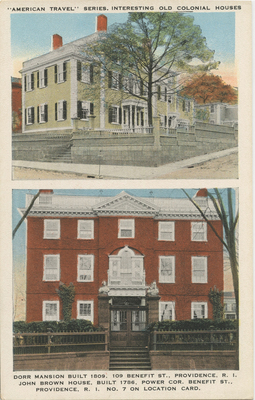
On was an interdisciplinary graduate periodical established by RISD graduate students in 2006. It featured essays and student work that related to a general issue theme. On was intended as a quarterly publication, but it is unclear if further issues beyond the first were ever published.
-
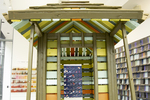
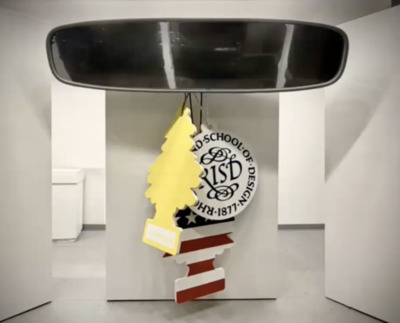
unoriginal palette: color citation by clearer means | An Installation by Andy Law
Andy Law, Industrial Design Department, and RISD Color Lab
RISD associate professor of Industrial Design Andy Law has copied many people to bring you unoriginal pieces installed in the Color Lab in an attempt to convince you that this is how we all create. Opening reception March 5, 2020 at 6:30pm. Exhibition March 5 - 30, 2020. Purchase book: unoriginal palettes. Visit artist website: inbetwitxt.com.
-
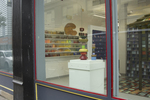
unoriginal palette: color citation by clearer means | An Installation by Andy Law
Andy Law, Industrial Design Department, and RISD Color Lab
RISD associate professor of Industrial Design Andy Law has copied many people to bring you unoriginal pieces installed in the Color Lab in an attempt to convince you that this is how we all create. Opening reception March 5, 2020 at 6:30pm. Exhibition March 5 - 30, 2020. Purchase book: unoriginal palettes. Visit artist website: inbetwitxt.com.
-

unoriginal palette: color citation by clearer means | An Installation by Andy Law
Andy Law, Industrial Design Department, and RISD Color Lab
RISD associate professor of Industrial Design Andy Law has copied many people to bring you unoriginal pieces installed in the Color Lab in an attempt to convince you that this is how we all create. Opening reception March 5, 2020 at 6:30pm. Exhibition March 5 - 30, 2020. Purchase book: unoriginal palettes. Visit artist website: inbetwitxt.com.
-
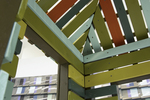
unoriginal palette: color citation by clearer means | An Installation by Andy Law
Andy Law, Industrial Design Department, and RISD Color Lab
RISD associate professor of Industrial Design Andy Law has copied many people to bring you unoriginal pieces installed in the Color Lab in an attempt to convince you that this is how we all create. Opening reception March 5, 2020 at 6:30pm. Exhibition March 5 - 30, 2020. Purchase book: unoriginal palettes. Visit artist website: inbetwitxt.com.
-
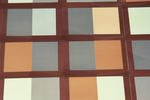
unoriginal palette: color citation by clearer means | An Installation by Andy Law
Andy Law, Industrial Design Department, and RISD Color Lab
RISD associate professor of Industrial Design Andy Law has copied many people to bring you unoriginal pieces installed in the Color Lab in an attempt to convince you that this is how we all create. Opening reception March 5, 2020 at 6:30pm. Exhibition March 5 - 30, 2020. Purchase book: unoriginal palettes. Visit artist website: inbetwitxt.com.
-
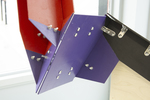
unoriginal palette: color citation by clearer means | An Installation by Andy Law
Andy Law, Industrial Design Department, and RISD Color Lab
RISD associate professor of Industrial Design Andy Law has copied many people to bring you unoriginal pieces installed in the Color Lab in an attempt to convince you that this is how we all create. Opening reception March 5, 2020 at 6:30pm. Exhibition March 5 - 30, 2020. Purchase book: unoriginal palettes. Visit artist website: inbetwitxt.com.
-
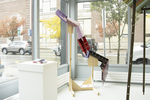
unoriginal palette: color citation by clearer means | An Installation by Andy Law
Andy Law, Industrial Design Department, and RISD Color Lab
RISD associate professor of Industrial Design Andy Law has copied many people to bring you unoriginal pieces installed in the Color Lab in an attempt to convince you that this is how we all create. Opening reception March 5, 2020 at 6:30pm. Exhibition March 5 - 30, 2020. Purchase book: unoriginal palettes. Visit artist website: inbetwitxt.com.
-
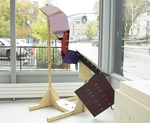
unoriginal palette: color citation by clearer means | An Installation by Andy Law
Andy Law, Industrial Design Department, and RISD Color Lab
RISD associate professor of Industrial Design Andy Law has copied many people to bring you unoriginal pieces installed in the Color Lab in an attempt to convince you that this is how we all create. Opening reception March 5, 2020 at 6:30pm. Exhibition March 5 - 30, 2020. Purchase book: unoriginal palettes. Visit artist website: inbetwitxt.com.
-
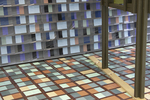
unoriginal palette: color citation by clearer means | An Installation by Andy Law
Andy Law, Industrial Design Department, and RISD Color Lab
RISD associate professor of Industrial Design Andy Law has copied many people to bring you unoriginal pieces installed in the Color Lab in an attempt to convince you that this is how we all create. Opening reception March 5, 2020 at 6:30pm. Exhibition March 5 - 30, 2020. Purchase book: unoriginal palettes. Visit artist website: inbetwitxt.com.
-
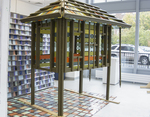
unoriginal palette: color citation by clearer means | An Installation by Andy Law
Andy Law, Industrial Design Department, and RISD Color Lab
RISD associate professor of Industrial Design Andy Law has copied many people to bring you unoriginal pieces installed in the Color Lab in an attempt to convince you that this is how we all create. Opening reception March 5, 2020 at 6:30pm. Exhibition March 5 - 30, 2020. Purchase book: unoriginal palettes. Visit artist website: inbetwitxt.com.
-

New media art: curating social justice in contemporary art museums and arts organizations
Kyung Eun Lee
My research project includes case studies in which I interviewed nine new media art curators and directors whose curatorial practices offer historical analyses and theoretical perspectives that address the dynamics of social justice by using new media art. I investigate the ways in which social justice is presented in museums and arts organizations. Central to this project is an examination of museum practices where the use of new media art becomes a central platform to showcase issues of social justice.
-
Encouraging creative behavior through art education
Elaine Li
In this thesis, I discuss different strategies that encourage creative behavior through high school art education that I argue would have benefits beyond the limits of art. By examining theories around creativity and creative behavior through particular published sources including Ken Robinson’s (2011) Learning to be Creative, Theories of Flow by Mihaly Csikszentmihalyi (2008), and the Handbook of Creativity by Robert J. Sternberg (1999), I analyze how creativity functions on a psychological level. Additionally, in order to provide practical examples, I examine a number of art programs designed specifically for high school students where the focus is on the development of teens’ creative behavior. Guided by the principles of qualitative research methods and in particular those of participant observation, I document through description and analysis my own teaching strategies designed to enhance creative behavior of high school students participating in a series of after-school art classes. This thesis concludes with a critical analysis and discussion of the characteristics of the art studio as an active learning space that encourages students’ creative behavior, which I argue would also benefit students in areas other than art.
-
3D simulation in flooding Providence
Qing Liu
This thesis use 3d data visualization to provide the scenarios of how global climate changes will influence people’s life if we don’t take actions as soon as possible, which provide non-professional people an easy way to understand the urban issues and engage them into the environmental protection. My proposal is to visualize the flooding issues in Providence by using kinds of simulation tools, including 3d model, augmented reality(AR), animation in order arise the awareness of climate change and the significance of human’s actions to protect the living environments. These simulations also provide the support for the designers and policy-makers to adjust management strategies when they are thinking about the long-term urban planning.
-
A space for reconciliation
Xiaoran Liu
The environment where I grew up retains some characteristics from The Chinese Cultural Revolution, and still influences my thinking and behavior close to the mainstream and following the rules unconsciously. Contemporary jewelry has affected me to be more critical in a positive way. I want to share this transformative experience with people who have never had contact with contemporary art, which is an alien concept for most Chinese people.
I use jewelry as the medium to express my ideas. But the typical response to my work is “I appreciate your concepts, but I can’t accept your pieces.” So, how can I find a jewelry form that is both conceptual and acceptable? I will explore this in my thesis
-
Exploration and autonomy : wild children in the city
Xiaojie Li
From 1980 to 2000, China adopted a teacher-centered kindergarten model with the main purpose of imparting knowledge, leaving children in a passive learning environment. Since 2001, this system’s adverse impact on child development has become clear to preschool educators. As a result, teachers have begun to consider kid friendly environments and games. However, even these games were arranged with a top-down, teacher-centered structure.
An education revolution has emerged that aims to release the freedom of children by prioritizing their needs, paying respect and trust to exploration, as well as giving children choice. One pioneering philosophy applying this principle is Anji Play, an internationally recognized early childhood curriculum developed and tested over the past 15 years. Through open-ended and self-determined play in a natural, open, variable, and diverse environment, Anji Play has proven to evoke children’s exploration spirit, encouraging autonomy and bringing children a sense of belonging. Yet, its development has been hindered in high-density cities because the system relies upon outdoor space.
Child development is impacted by the architectural environment. This thesis argues that it is possible to radically shift the perception of scale in urban sites such that they approximate the potential for exploration and autonomy in natural areas. The main architectural strategy is to increase the spatial perception of the activity area by blurring the boundary between indoor and outdoor with natural elements, such as vegetation, wind, and sunlight. The spatial experience is further enhanced by big loops circulating through each floor, with staggered stairs and small loops connecting each room with variable partitions. A sense of belonging can be created by an integrated open scheme that encourages users to keep contact with their surroundings and feel free to shape their environment. Ferns sway and the wind pulls a raucous group of wild children into a gallop from room to room, but they don’t know if they are outside or in.
-
Wrinkle architecture : the public relaxation pavilions for geriatric community in cities of Zhejiang after 1980's
Yi Lu
Wrinkles of the city just like the wrinkles of human. They are symbles of aging as well as the carriers of story. They are existing in unexpecting places in the city or in human faces. The wrinkle of the city is the texture of city during its urbanization process. They are small and chopped. They are between temporary and permanent.
This thesis integrates the “wrinkle architectures” of Hangzhou to improve the relaxation space and provide a better environment for in the elderly community of Hangzhou.
-
Professorial Presentation | Leora Maltz-Leca
Leora Maltz-Leca, Patricia Barbeito, and Academic Affairs
-
Urban ecotone: restoring the water-land balance as a strategy for social equity
Yuzhe Ma
This thesis focuses on Dhaka, Bangladesh, and the urban interface between the more formal developed parts of the city and the less-formal and more economically-vulnerable urban neighborhoods.
It seeks to reframe this interface as an ‘ecotone’ versus a hard boundary. By reframing this area along ecological lines, this interface is positioned as a place with a great diversity of ‘species’ and fertile conditions and collisions, which allow it to act as a generator of new opportunities benefitting both of the communities (biomes) which transition into it.
This ecotone is seen as being further fed by the presence of urban ecology and open space. Together, in their dynamic state of interactions, these three conditions or communities are understood as a new starting point – a catalyst – for the city of the future, one where each community has a place but where vitality, sustainability, and opportunity lie in the zone of overlap and integration.
The purpose of this thesis is to make the public aware that each community, even the informal one, has its uniqueness and is valuable to be defended and to find a manageable balance on shared resources among all these communities. At the same time, benefits could be received by all relevant communities in contemporary and future urbanization.
-
He Makes the Figs Our Mouths to Meet and Throws the Melons at Our Feet
Josh Meier
He Makes the Figs Our Mouths to Meet and Throws the Melons at Our Feet investigates the relationship between the painted image and the cast subject. By compressing the visual contradictions of pictorial and physical space, my work argues for a simultaneity of conditions and emotions. I am interested in how two material realities can hybridize to produce a new, unanticipated, re-imagined self-portraiture. This thesis contextualizes my recent works within historical frameworks and discourses including other artists’ writings and artworks, philosophies of abjection, feminist and queer theories of embodiment, poetry, film, and stream-of-consciousness memoir.
-
EVERYBODY'S HOUSE THE ROSA PARKS HOUSE PROJECT
Ryan Mendoza, Fabia Mendoza, Diogo Vale, and João José Santos
-
Night Knights: reminding children that their nighttime fear isn't something they have to face alone
Ji Hyung Moon
Night Knights are shining toy guardians that children bring to life through play. They engage children’s imagination that inevitably fuels their nighttime fear, and provide a chance to create stories of bravely confronting their fears through their Night Knights.
-
Don't Cut Your Hair It's Beautiful
Kellee Morgado, Special Collections, and Fleet Library
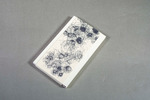
3 volumes : color illustrations Edition of 50. Each volume has 24 unnumbered pages, bound so that the reader can lift the center illustration to reveal a larger illustration within. The gatherings are unopened throughout, obscuring text and illustrations. In a cloth-covered portfolio, held closed with a printed paper band. "The work questions personal rituals surrounding hair, constructs associated with hair in Western culture, and the shift in value when hair is unattached to bodies. In this ongoing inquiry I explore my own experience with femininity, womanhood, my relationship with my own hair, and how it conforms to or disrupts constructed norms"--Paper band. "The third artist book of the biennial Parley Project"--Portfolio. "Offset printing on Ultra Green Film (text pages), Bugra Antique Rose (paste downs), hand set lead type (News Gothic Bold & Century Bold Italic), Hollanders starched linen book cloth (Natural/Kennett), photopolymer plates, Rising Museum board, monofilament, Arches Cream (belly band)."--Artist's website. "Don't Cut Your Hair It's Beautiful began as an exhibition in which I explored hair as both a material and a concept through experimental printing processes. The work questions personal rituals surrounding hair, constructs associated with hair in Western culture, and the shift in value when hair is unattached to bodies. In this ongoing inquiry I explore my own experience with femininity, womanhood, my relationship with my own hair and how it conforms to or disrupts constructed norms.... This work is continued by Don't Cut Your Hair It's Beautiful in an effort to disrupt and explore the relationship between hair that is considered valuable and hair that must be hidden, removed, and made invisible. The book includes contributions from twelve creatives in particular, but not limited to, those working with hair as a subject or material. These individuals were invited to respond to one of several prompts or to generate their own response about hair on the body. They could also choose to include an image, either found or made. These twelve writings provide thoughts and experiences surrounding hair, multiple points of access, and themes connected to hair on the body including: shame, resistance, and identity...."--inside belly band. Three pamphlet stitch booklets in portfolio with paper belly band. Library has copy no. 22. Jan Baker Fund.
-
Regeneration with Esme Murdock
Esme Murdock and Edna W. Lawrence Nature Lab
November 19 hosted the second conversation in the Regeneration series with Esme Murdock, a philosopher focused on African American, Afrodiasporic, and Indigenous philosophies and environmental ethics. Make sure to take a look at this document with resources to further your learning, plus several answers to questions that were not answered during the live event.
How can we unlearn dominant western teachings in order to build a better and more inclusive environmental movement? And how do we relearn in the most thoughtful way? Esme’s work strives to deconstruct the monolithic, Eurocentric narrative of the environmental movement. During the talk, she says, “when we center one type of story and repeat it over and over again, we are actually compounding our harms and compounding our errors over time.” Esme encourages the exploration of “Black and Indigenous philosophies and ways of knowing,” while stressing the importance of acknowledging the origins of these philosophies.
She implores us to focus on “unlearning” by actively questioning the ways in which we have been taught to think and make, and critically apply non-dominant ways of thinking to our own creative practices and the larger environmental movement. We can start by building daily practices of land and water acknowledgements, choosing to disrupt tendencies for control and mastery, reading texts from scholars outside of the mainstream discourse, and speaking with people who challenge our embedded modes of thought. As a community, we can relearn histories, re-center Indigenous and Afrodiasporic narratives, and build a more equitable future of environmental ethics.
In thinking about the growing need for artists/designers to be ecologically responsible and leaders in sustainability, how does the history of ecological citizenship and the assimilating notion behind the word "citizenship" impact who participates in the environmental movement? How does this impact our ability to find kinship and relation between one another as humans and more-than-humans? How does this disrupt our ability to regenerate for a better present and future? How can makers help build a stronger, more inclusive obligation of care and respect toward the natural world and its resources?