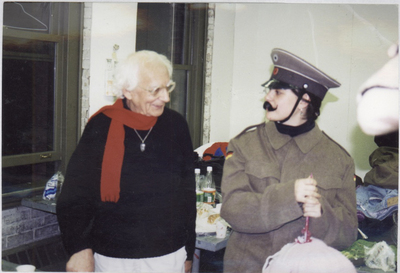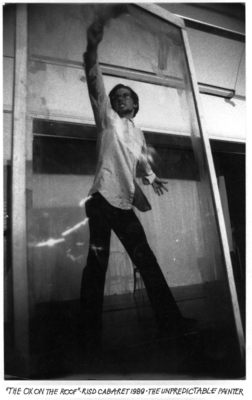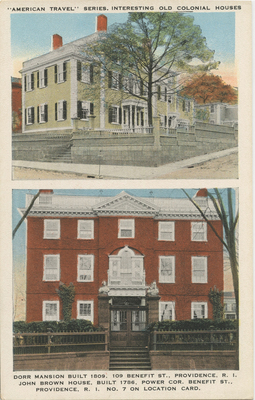
On was an interdisciplinary graduate periodical established by RISD graduate students in 2006. It featured essays and student work that related to a general issue theme. On was intended as a quarterly publication, but it is unclear if further issues beyond the first were ever published.
-

Landscapes of exposure: reframing the connection between body + environment
Kayla Murgo
This project explores new relationships of the body to the landscape through understanding how the environment imprints, molecularly, on the body and how that information is stored and inherited. In this age of postgenomics, a time that is defined by big-data and technology driven approaches to medicine and public health, it is imperative that we work interdisciplinarily to address mounting health and ecological concerns.
As shapers of natural and social systems, I believe that landscape architects can bridge scales, from the molecular to the ecological, to draw new conclusions about how humans impact ecological systems and how these impacts are taken back up by humans.
This thesis seeks to develop new ways of visualizing complex chemical exposures in our everyday lives in hopes of creating greater awareness and advocacy around issues of environmental health and justice.
-
Getting closer : exploring re-contextualization in exhibition
Yiran Mu
Due to the rise of globalization, the circulation of exhibits born in different cultural backgrounds to alien places all over the world has dramatically increased. Cultural contents are re-contextualized and shaped in a way to adapt to new environments where they lose their essence of place and risk stereotypes of distant cultures. The looming question over every exhibition is how, and to what extent, the original context of the objects on display will be acknowledged or reproduced. Should an effort be made to place pieces in a convincing approximation of their culture of origin? Or should objects be returned to their original setting altogether, rather than displayed in a completely foreign place? In exhibition design, the decision whether to reconstruct the context in the new environment or to return the exhibits to the original context has become central. However, an even greater challenge: if an exhibit inherently contains a complete context, how do you guide the audience to walk into it, understand it and remember it by taking advantage of the original context? The process of curating and displaying culture cannot be disconnected from its site of creation, especially if the object of display is Architecture which by definition embodies the site.
The Baiwanzhuang, a 1950s historical community housing in Beijing which remains within its own context and spatial environment, will be considered as a case study for dealing with the issue of de-contextualization of culture in architectural terms. The goal is to design a "diffuse museum" in situ to exhibit the urban fabric, the historical architecture, the social framework over time, the contemporary cultural environment, the genius loci of place. Visitors will be guided through a new navigation system in the residential area to explore the highlights of the exhibits in the whole community from the outside, in dialogue with the larger urban fabric, to the inside, revealing private apartments. The contents of the exhibition will also discuss the design and history of the residential area and the residents' lives and livelihood changes over time.
In this thesis, the audience is not only given certain guidance in the process of visiting, but also has the freedom to move through the complex at will. In the process of exploring the site, the audience will slowly encounter this fragmented exhibition. They will interact with the residents in an unpredictable way, and even live in the participatory exhibits. Utilizing the residential area as an urban scale “exhibit,” creates a situation where all visitors, residents and stories that happen here become part of one context. Among the whole exhibition, the relationship between visitors and locals will also be a concern. Communication will happen in between through multi aspects for sure, and the intention of creating opportunities of communicating is also a key point in this thesis.
-
Tension in the curve
S.K. O'Brien
This artist’s book is a meditative narrative on my making and exploration of materiality.
It’s the best way to allow you entry and understanding into how I see.
Finding the tension in the curve and the lines and shadow and light that are created,
These new forms that appear when stress occurs help me understand…
-
Generating tension : memorial of sexual slavery
Mary Park
War crimes, such as slavery and rape can lead to hatred between countries of perpetrators and victims, souring political relationships for generations. Memorials of these atrocities are the physical indication of an effort, however nascent, to continue the dialogue and keep questioning the tragic history. The memorial as a reminder of a specific incident, not only changes the relationship of surrounding spaces within the site but also between different groups that are engaged in that specific history.
In South Korea, the history of sexual slavery by the Japanese Imperial Army during World War II has been a major cause of anti- Japanese sentiment, leading to international conflict. Since 2011, memorials to the victims of sexual slavery, called Statues of Peace, have been erected throughout South Korea as a call for apology and remembrance of the victims. The first of these statues, which sits in front of the former Japanese Embassy in Seoul, is where weekly demonstrations have taken place for 29 years.
Such statues commemorating a sensitive memory that involve specific countries can create a site of confrontation. In fact, the presence of the statue and the weekly demonstration halted the reconstruction of the Japanese embassy in 2019. Acknowledging the state of tension, rather than avoiding it, is the first step in improving the political relationship; and these spaces of confrontation hold real potential. The tension created in the site is not negative energy, but is the fuel that will always facilitate a dialogue.
Today, the statue gazes toward a construction fence built around the empty Japanese Embassy plot, provoking critical questions. How should one proceed with sensitive dialogue without being so delicate that no progress is made? As a response, the intervention begins by reconstructing the lost memory, a recreation of the past Embassy building, through re-using the construction fence, and existing political tension as a building material. The gaze of the statue, from the other side of the curb, then penetrates through the new volume of the Japanese Embassy. This creates a corridor that invites visitors into the memorial, which itself grows out of ongoing tension. The intervention that creates a monumental space that starts with the acknowledgment and utilization of the existing political tension as material to build a different relationship.
-
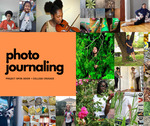
POD + Onward We Learn (College Crusade) Photo Journaling 2020
Project Open Door
Participating artists: Jaylyn B., Jeremy R., Karlim T., Kelssy B., Kenneth B., Maria L., Maria-Camila M., Maria R., Sanilda V., Andrea G., Astrid C., Christiana V., Edgar N., Fredy G., Genesis M., Ilanis R., Jeffri P., Larissa P., and Toluwani A.
POD partnered with Onward We Learn (formerly known as College Crusade) to provide unique and engaging virtual summer workshop experiences during the COVID-19 pandemic. In this online workshop, students were given daily photo challenges to create portraits and still life photographs. They found textures, shapes, colors, numbers, and letters through photographic explorations of their familiar surroundings. In doing so, students created an individual photo journal over the week.
Photography is a tool that can help us to “SEE.” What does this mean? If we are not visually impaired, we can, of course, physically see. But how much do we miss seeing? How much do we take for granted unless we take the time to look? With assignments that hope to inspire careful observation, we can use the camera to observe things in our familiar surroundings in quite extraordinary ways. Photography can help us become more observant and help us have a fulfilling visual life. During this time of limited mobility due to the Covid-19 pandemic, finding creativity close to home is an essential part of a healthy balanced life.
-
Fall Session Exhibition 2020
Project Open Door and Teaching + Learning in Art + Design Department
Our Fall Session Saturday Portfolio Program Exhibition features artwork from our three classes offered this semester, How to Draw Comics, Photos on Your Phone, and Visual Mixtapes 2.0.
-
The milky way : agritourism on a Chinese dairy farm
Wanyue Qiao
We can easily buy fresh milk in the supermarket nowadays, but have you ever thought about how milk comes from the cow's udder to the bottle in your hand? Today, highly mechanized dairy production facilities are constantly growing in scale with the increasing demand for milk, leading to the changes and decline within smaller farms and surrounding rural communities. Even as these smaller-scale farms struggle, agritourism is gaining popularity as city dwellers swarm into the countryside with a desire to understand the food they eat and reconnect to rural roots.
This proposal explores introducing tourism into a productive medium sized cattle farm on the outskirts of Beijing. While maintaining active production, the farm transitions this active operation into an educational site for urban families, while properly coordinating the daily dairy production process with the tourism facilities and activities. How do you safely bring visitors into a space entirely designed for efficiency and production? Starting from the new visitor center, an interpretive path travels through the production facilities, branches to the satellite buildings scattered in the farm while smoothly linking each specific visitor perspective and stopping point. The new structures are shaped by the inserted circulation between selected experiences and views. A series of activities conducted in different places explain the farm in an immersive way. Visitors see the cattle from a human perspective and build empathy, not only looking and observing remotely but being involved.
The farm transitions into research and education alongside production, while it also opening up new possibilities for small-scale farms seeking new additional opportunities other than production. The public is invited into the fascinating dairy world to rebuild the connection between consumers and food production, humans and animals, nature and industry. A series of hands-on workshops, tours to the cowsheds and milking robots, and other activities, allow visitors to experience and understand the origin and production of milk. With raising awareness of the value and respect of domestic animal life, tourism brings new vitality to the farm and surrounding rural community.
-
Reactivating street life : fostering more communal interaction in Longtang
Ziyang Qiu
The public life that develops between buildings in neighborhoods is undergoing a significant change in the process of growth and modernization, which reflects shifts in residents’ social behaviors and community structure. Traditionally, the presence of people, activities and events define the life of neighborhoods, constituting one of the essential qualities of public space; the mix of outdoor activities is influenced by many conditions, including the architectural framework. When those activities are missing, is it an inevitable result of the reliance on electronic products for entertainment, or unreasonable urban planning under insufficient public policy?
The Longtang, as a unique community form in Shanghai, was once inseparable from thousands of Shanghai residents’ lives. It recorded the cities’ history and culture in a tough time. Life within the Longtang gradually encourages a certain relationship to the public street. However, the original Longtang life is currently missing due to industrialization, reliance automobiles and electronic devices. These have caused abstract life in the Longtang to become dull and monotonous. The Longtang streets are occupied by private cars and bikes, and residents are immersed in the world of television, video and film. As a result, social activities are missing from the streetscape.
The purpose of this thesis is to reactivate the Longtang’s life and improve it to a higher quality by providing various programs and an enticing environment. By analyzing the neighborhood culture, historical value, and residents within the Longtang, it is clear that contact between neighbors is what made these streets special. As a result, the design strategy is to generate a pleasant environment to attract people to stay outside for as much of the day as possible, which dramatically increases the probability of contact at various levels. A system is designed including old and new activities to cover the whole street and take advantage of variable weather conditions, which rearranges the position of programs to establish contact between people that engages sound, smell and sight.
-
Growing Quelites in the city: exploration on memory and food sovereignty in Mexico City
Paola Valeria Ramirez Ensastiga
In Mexico, as in the world, the number of people living in urban areas is increasing. In addition, urbanization directly generates a fragmentation of the natural habitat and causes the loss of biodiversity. Native edible crops are also being threatened by a constant decline in biodiversity, causing negative ecological, economic and even cultural impact. Until now, the main guardians of the edible biodiversity have been indigenous peoples. Several authors agree that the way in which indigeous people relate to nature may shed some light on how to face the ecological and climate crisis that we are experiencing today. I argue that in Mexico another possibility is for urbanites to become an active participant in the process of preserving native edible species by reactivating their indigenous edible memory. To explore the extent to which the edible memory of the urbanites of Mexico City still has an indigenous weight, although not recognized as such, I use the participatory research methodology based on 'sentipensar' [feeling-thinking] the context. Based on my field observations and due to their noble properties, I propose "quelites" as the starting point of a movement that can empower urban gardeners to become active participants in the preservation of the diversity of edible native species.
-
Envisioning work : an autism friendly and anxiety free office
Naixin Ren
Autism spectrum disorder (ASD) refers to a broad range of conditions characterized by challenges with social skills, repetitive behaviors, speech and nonverbal communication. It is estimated that worldwide 1 in 160 children has ASD, and in China, about 1 in 69 children has ASD.
There are many successful educational environments specially designed for people on the spectrum to support learning, understanding, and behaving. However, after graduating, it is usually very hard for people on the spectrum to move toward independence because there is a huge difference between school environments and office environments.
Most office environments are designed to meet the majority workers’ needs, but they are not supportive for people on the spectrum. There are very few innovative companies that recognize the unique skills that people on the spectrum and design their office carefully to support them. Most companies don’t consider the special needs of people on the spectrum while designing their office, which makes people with ASD struggle to find jobs because of the anxiety that might be caused by unsupportive workspaces.
An office’s interior configurations has a great impact on employees’ performance. It is important to create a supportive office environment for both people on the spectrum and those who have other forms of anxiety at work. The key to an autism friendly and anxiety free office is balance. The space will be divided in a way to create a balance between working and relaxing, private and open, as well as light and shade. Focusing on productivity, privacy, and flexibility, I will create a system that can be applied to any type of building to make an office ASD friendly. The system provides employees the personal space they need, ABSTRACT and at the same time it encourages employees to communicate. The proposed site is located in Laodaowai District, Harbin, China, and the existing site conditions are not ideal for people on the spectrum for their work performance. The site will be an example of how the autism friendly system can be applied to any type of building, even one in a problematic setting.
Most people on the spectrum have sensory problems. According to Autism Speaks, In 2013, the American Psychiatric Association added sensory sensitivities to the symptoms that help diagnose autism. Autism’s sensory issues can involve both hyper-sensitivities (over-responsiveness) and hypo-sensitivities (under-responsiveness) to a wide range of stimuli. It is important to balance the environment through the five senses to make sure that they are not experiencing sensory overload or sensory deprivation. The ideal autism friendly environment should take care of the special needs of people on the spectrum. People on the spectrum need a lot of personal space, and it is important to make sure that they have enough room to be alone. In addition, people on the spectrum do not like unpredictable moments, sharp corners, long corridors, and irregular shapes that make them feel insecure and puzzled. Complicated circulation should also be avoided because they are easy to get lost. Way-finding is a very important element in an autism friendly office. It is important to use colors, patterns, textures, signs..., to navigate people through the office. Not only people on the spectrum are invited to the office. General population, people who have anxiety problems and people who desire a relaxing working environment are all welcomed to work in the office. The employees will get the comfort of working from home, as well as the productivity of working at a formal office.
-
Re-connect
Xin Ren
We live in an era of contradiction: the order of the external world always stands in an ambiguous relationship to individual autonomy. In this time of high industrialization and fast paced efficiency, the development of technology has not only greatly reduced the distance between space and time, but also causes the over-coupling effect in social division: institutions are formed with a dangerously strong and stable dependence on each other. This excessive reliance on one another weakens their independence and resilience. Meanwhile, in this hyper-connected society, access to instant satisfaction through consumption and fragmented entertainment is the norm. Similar to the second law of thermodynamics, entropy increases and only increases: In an age of addiction to instant gratification, people’s lives suspend through this dynamic and constantly accelerating world.
City dwellers used to adapt to this liquid and flexible world: drawn to identity-makers and to groups that help them define “self,” - using others to fill out our identities too much, rather than relying on something internal. People should be able to survive in moments that feel meaningless, without external support. Life is defined by ephemerality, and interpersonal bonds are fragile; all of us experience feelings of fear, confusion and aimlessness due to lack of belonging. On the other hand, along with the uprising of meditation therapy and retreat journeys in recent years, people seem to be more interested in exploring ways to concentrate on the self more fully. Apart from much discussed visits to “nature”, the true possibility of having solitary moments in urban life is offered by public spaces such as galleries, libraries and chapels. All these programs, which have the benefit of maintaining collective order and enabling personal exploration, help individuals to create a bubble of anonymity surrounding themselves.
With a clearheaded view on human life’s limitation and purposelessness, while most designs are aimed against isolation and create communal or shared space, this thesis seeks to have a conversation about how best to solve people’s loneliness. By adapting and reusing the abandoned Brooklyn Bridge’s Anchorage, this intervention will offer different degrees and quality of solitude while making peace with our own psyche. In this age of pandemic, it will be a chance to escape the noise and bustle of the city and be alone for some time. The footings of the bridge will stand as a tool for both reconnecting and improving the resilience of the built environments, and supporting autonomy in public urban life.
-

Performing Collective Identity: Bodies and Objects of Early-Modern Processions
Pascale Rihouet and Theory & History of Art & Design Department
"At the intersection of art and ritual, processional paraphernalia endorse crucial roles for collective identity: creating and maintaining group unity, building solidarity in the face of crises, and possibly offering disruptions of law and order or signaling outcasts. The aesthetic appeal of carefully-crafted artefacts (from candles to flags, canopies, reliquaries, etc) is essential but must be studied together with performativity, objects being the material essence of ritual.
The conditions of their display, the precise modes of their manipulation, and their staged fixity or mobility enable them to turn into symbolic, powerful agents. External signs of identity like uniforms, badges, banners, or statues belong to this phenomenon. In this seminar, I will present how consensual behavior and shared body language affect the power of objects and images for collective identity, with examples from Perugia, Venice, and Rome. I will address questions on research methods for a cross-disciplinary approach to (art) history and discuss visual representations while critically evaluating different types of evidence." Pascale Rihouet
Speaker: Pascale Rihouet (Rhode Island School of Design) Respondents: Lilla Mátyók-Engel, Carlotta Paltrinieri (Bibliotheca Hertziana). Pascale Rihouet (PhD Brown University / EHESS) is senior lecturer in art history at the Rhode Island School of Design. She has widely published on Renaissance art and ritual, early-modern material culture and group identity in English, French and Italian. Her first book, Art Moves: The Material Culture of Processions in Renaissance Perugia (Brepols, 2019) was followed by Eternal Ephemera: The Papal Possesso and its Legacies in Early Modern Rome (Toronto University Press, 2020) that she co-edited and co-authored. She is currently working on the whole production of possesso prints (1589–1846), images of the newly-elected pope’s parade through Rome.
-
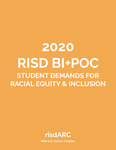
2020 RISD BI+POC Student Demands for Racial Equity & Inclusion
RISD Anti-Racism Coalition (risdARC) and RISD Archives
RISD Anti-Racism Coalition (risdARC) demands document presented to the RISD Community, July, 2020.