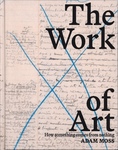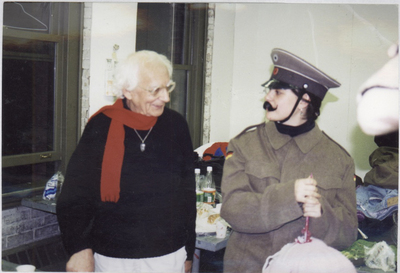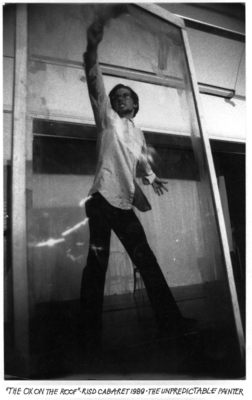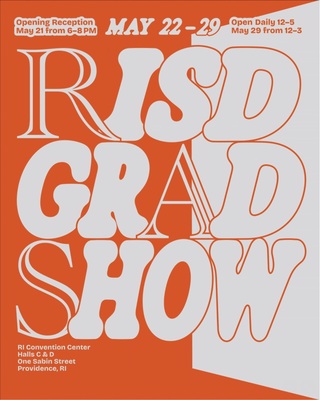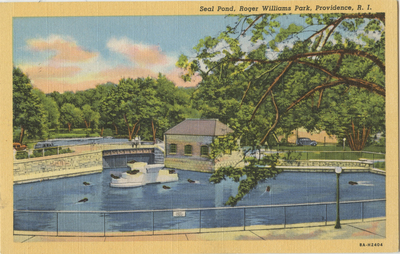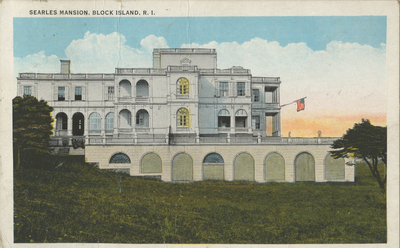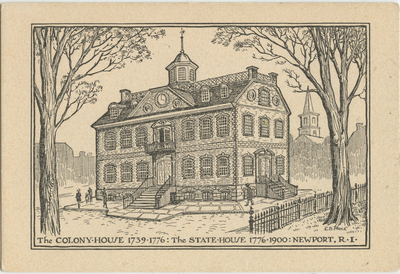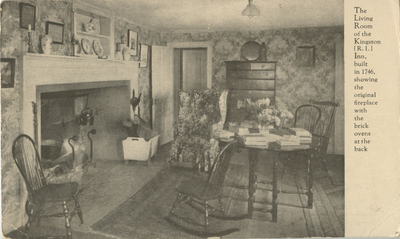
On was an interdisciplinary graduate periodical established by RISD graduate students in 2006. It featured essays and student work that related to a general issue theme. On was intended as a quarterly publication, but it is unclear if further issues beyond the first were ever published.
-

Growing Together: Cultivating the Social-Emotional Effects of Art Education through Trauma-Informed Pedagogy
kaitlyn lawrence
In many societies, the process of art is recognized as a healing and transformative practice. In recent years, it has been emerging in tandem with social emotional practices and procedures in American education. However, it is also a fact that social emotional learning (SEL) does not account for all students due to its inability to account for the needs of all students in the classroom. SEL alone aims to teach healthy development and emotional management skills, but fails to account for students with varying experiences. While there are those who can and do integrate the skills from the Social Emotional curriculum, students who do not can be labeled as troubled, which begins a vicious cycle of shame, isolation, and/or marginalization of certain groups of students.
SEL, for instance, is not trauma informed despite the prevalence of trauma in American society. It is entirely possible that a large number of children who are exposed to social emotional learning, are not able to reap the benefits of SEL due to institutional failures to account for their needs.
Assuming that all students will respond to the same approaches, is an assumption that erases the identities of marginalized children. This not only perpetuates a harmful cycle of systemic oppression, not just for the students, but for everyone. While art educators and educators in general are not therapists, I believe that we should have an understanding of how trauma works not only in the mind but through the ways trauma is ingrained in societal systems and institutions. While it is not necessary for educators to know every detail of a student’s life, it is within our capability to be compassionate and supportive of the students who come into our learning spaces. But in order to do this, we must have support from other staff and the institution itself. In this thesis, I will engage in a qualitative research project employing a narrative ethnography approach along with elements of emergent pedagogy to analyze effectiveness of my teaching in an art classroom, exploring what hinges on activating the social emotional experiences for students within art educational experiences. I will also demonstrate why incorporating trauma informed pedagogy into educational environments, for both the students and educators, deserves institutional support.
-

Holy Family Church, Woonsocket, RI
Leighton and Valentine Co., NY; Visual + Material Resources; and Fleet Library
-
Things I've Learned From Doing Cosplay: An Investigation On Incorporating “Atypical” Creative Practices Into Art Education
Yvonne Liang
This thesis explores the pedagogical value of cosplay through a focused case study and autoethnography, highlighting its influence on identity formation and community engagement among youth. The autoethnographic component provides a personal perspective, enriching the empirical data collected from participants in a cosplay workshop. The case study delves into how cosplay encourages skill development, creativity, and emotional resilience, facilitating a supportive and dynamic learning environment for young adults. Insights from this research demonstrate the significant benefits of integrating cosplay into art education, suggesting it can greatly enhance student engagement and promote diverse educational experiences. This study contributes to the understanding of non-traditional learning methods in fostering personal and communal growth in educational settings.
-
City Sonatas
Duoduo Lin
Countries like the UK and France, as shown in Statista's 2023 report, benefit from significant national cultural attractions and monuments that boost museum attendance by attracting tourists. The data suggests a positive correlation between museum attendance and the historical significance, as well as the suitability for tourism, of the institutions2. However, faced with rapid societal advancements, most museums' responses to these challenges have been varied and slow. Contemporary museums, as crucial conduits for the dissemination and exchange of artistic culture, continue to face persistent challenges of low engagement and levels of attention in many countries. Furthermore, a series of remarkably similar and uniform patterns can be observed across museums globally, ranging from spatial design to exhibition methods.
This thesis posits that contemporary museums throughout the world must adapt to these evolving dynamics by grounding themselves in an understanding of regional characteristics and contexts, including but not limited to local historical culture and the corresponding demographics of the community. The objective is to further adapt to and embrace the uniqueness of the context surrounding an institution, with the aim of spreading museums into the fabric of neighborhoods rather than drawing people towards a single institution. These new “museums” serve as a medium, bridging the gap between individuals and cultures.
Shenzhen, once a fishing village in the 1980s, transformed into a highly industrialized, economically vibrant and internationally renowned city within four decades, serves as the focal point of this study. This thesis focuses on developing a new form of museum within the urban villages
of Shenzhen, utilizing three common urban patterns found in this unique typology: linear alleys, traditional public spaces, and micro-plazas between buildings.
The exhibition content for this project will explore sound. Sounds collected from the city will be transformed into a sonic map, integrated into the urban environment. A unique journey through the city that reflects local culture will demonstrate a new form of experiential museum, perfectly calibrated to its surroundings. Through the exploration of the three patterns found in urban villages, visitors can experience various hierarchies of sound, both artificial and natural. Different from the traditional form of museums, this immersive approach seeks to redefine the museum experience by fostering a deeper connection between visitors and the city's sonic landscape. By intertwining the rich tapestry of local history, culture, and the evolving urban fabric, this innovative museum model strives to resonate with contemporary audiences, encouraging active participation and foster a renewed appreciation for the intricate layers of urban life.
-
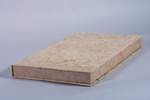
Beyond the Eyes
Yuqi Liu, Special Collections, and Fleet Library
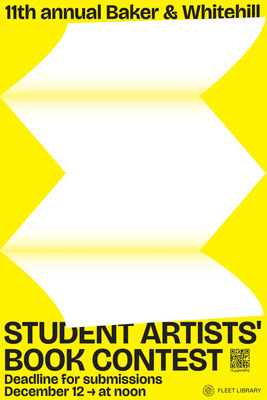
HONORABLE MENTION | $100 Entry for the 11th Baker & Whitehill Student Artists' Book Contest. Opening reception and award ceremony Wednesday, February 19, 2025 at 6:30pm, Fleet Library, Main Reading Room. Juror: Roger S. Williams.
-
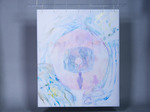
One's Life
Airien Ludin, Special Collections, and Fleet Library
Entry for the 11th Baker & Whitehill Student Artists' Book Contest. Opening reception and award ceremony Wednesday, February 19, 2025 at 6:30pm, Fleet Library, Main Reading Room. Juror: Roger S. Williams.
-
From One Nature to Another
Sarah Mann
Lichen, fungi, and soil each represent a microcosm of nature. They are all quintessential examples of complex symbiosis, yet they are often treated as lifeless materials. But what if we took a moment to connect with each one on a daily basis - would that impact the way we envision the future?
For most of us, our homes won’t be radically changing any time soon; therefore, From One Nature to Another invites us to bring these entities inside and reflect on their possibilities as collaborators. Each piece was carefully researched and designed to provide the correct atmospheric conditions for the entities as they reside within our indoor climate, initiate acts of mutual care, and function without electricity.
-
Entre Manos Y Barro: Innovando Con Tradición
Jose Mata
"Entre Manos y Barro: Innovando con Tradicion'' (Between Hands and Clay: Traditional Innovation) dives into sustainable and ethical innovations of traditional Zapotec ceramics. It discusses how introducing thoughtfully designed tools, like a specialized caja humeda (wet box), can enhance artisans' workspaces while preserving the cultural essence of their craft. This initiative emphasizes innovations that honor traditional methods and focus on community involvement.
The thesis is grounded in the principles of ethical innovation, which emphasize respect for traditional techniques, community participation in the innovation process, and the sustainability of both the craft and the environment. These principles shape the development of innovations aimed at improving the functionality of artisans' workspaces, in alignment with their cultural practices and community needs.
This work is deeply personal, reflecting my connection to Mexican cultural heritage. It underscores a respectful and informed approach to supporting traditional crafts, aiming to ensure the relevance and sustainability of Oaxacan ceramics for future generations, and fostering an environment where tradition and innovation thrive together.
-
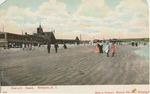
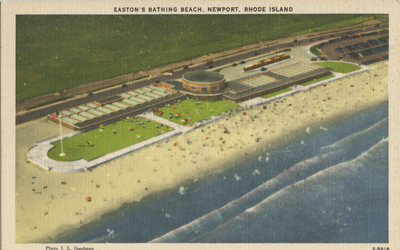
Easton's Bathing Beach, Newport
Mercury Publishing Co., Newport; Visual + Material Resources; and Fleet Library
-
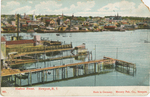
Harbor Front, Newport
Mercury Publishing Co., Newport; Visual + Material Resources; and Fleet Library
-
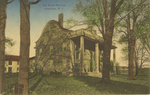
Old Stone Mansion, Pawtucket, RI
Metropolitan News and Publishing Co., Boston, MA; Visual + Material Resources; and Fleet Library
-
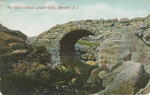
The Arch on Cliff Walk, Newport
Metropolitan News and Publishing Co., Boston, MA; Visual + Material Resources; and Fleet Library
-
Milpa: Cultivating Community Through Grid Remediation in México
Marianna Pasaret Molinar
In México, the proliferation of monotonous affordable housing developments on the outskirts of urban centers stems from a profit- driven approach that prioritizes rapid construction over livability and community well-being. These housing developments, stark rows of barren husks, reflect a system that depletes both land and human connection. Abandoned units — consequences of a patchwork (or non existent) infrastructure —now stand as silent critiques of this broken system.
Drawing inspiration from the cycical strategies of ancestral agricultural traditions, that recognize the full spectrum from barren stalk to abundance, this project proposes a cyclical model for community growth. Current housing practices, akin to the industrialized profit-driven corn industry, siphon resources and degrade the environment, leading to subpar living conditions. Through the repurposing of abandoned housing units, the strategy introduces architectural environments that weave in adaptability and programmatic duality into these mono-zoned housing developments.
The neighborhood becomes a living organism, adaptable and ever-evolving to meet the needs of its inhabitants. Abandoned units become fertile ground, not just for crops, but for a new self-sufficient way of life by encouraging user agency, diversifying commercial opportunities, and reintroducing traditional community resource distribution methods. As a disruptive approach, this thesis embodies a seed sown in defiance, fostering a future where resilience and community thrive on the forgotten borders of Mexico’s urban centers.
-
Conspicuous Repair: Drawing Attention to Brokenness in Public Landscapes
Ashley Pedersen
Repair, as a design provocation, encourages material conservation, hands-on engagement with materiality, and evaluation of maintenance routines all of which contribute to a model of sustainability that values a circular economy and degrowth. Through visible repairs that focus our ongoing attention on brokenness, repair has the potential to illuminate, and start to address the systemic causes of brokenness. In this way, repair can be a catalyst for increased stewardship of a place.
Conspicuous Repair: Drawing Attention to Brokenness in Public Landscapes investigates clay as a suitable material for the repair of masonry in urban landscapes which has the potential, through visible and tactile engagement, to draw attention to and reactivate forgotten or fallow spaces. Landscapes fall into disrepair for innumerable reasons and we tend to respond by restoring places to a previous condition or by redesigning them. Conspicuous Repair considers a middle road, one that recognizes the impermanence of materials, even durable masonry materials, and takes small, deliberate steps to highlight and address brokenness. Repair can slowly and intentionally shift spaces to better fit the ever-changing political and ecological conditions of a place, and, for this reason, should be designed.
Using Cathedral Square—an underutilized and decaying public plaza in Providence, RI—as a case study, I investigated methods for repairing the battered paving with locally-sourced and salvaged clay materials. Ultimately, the resulting repair designs are meant to functionally repair the paving whilst conserving existing materials and reducing the carbon footprint of added materials as well as provoke interest in the space with aesthetic strategies that are not only visible, but also comment on the causes of brokenness. It is my hope that this type of visible repair will both signal and reproduce ongoing care of landscapes.
-
Material Order: A Discovery Group and Shared Catalogue for Materials Collections
Mark Pompelia and Margot McIlwain Nishimura
Material Order is an academic consortium of material sample collections for art, architecture, and design disciplines. Founded by the Graduate School of Design at Harvard University and Fleet Library at Rhode Island School of Design and since comprising several more institutions in the US, it provides a community-based approach to management and open access utilizing and developing standards and best practices. Now in its twelfth year and reaching a level of maturation, Material Order offers research and pedagogical value to current and potential members and the larger design communities.
-
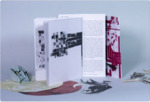
Notes on Iterating
Daniella Pozo, Special Collections, and Fleet Library
Entry for the 11th Baker & Whitehill Student Artists' Book Contest. Opening reception and award ceremony Wednesday, February 19, 2025 at 6:30pm, Fleet Library, Main Reading Room. Juror: Roger S. Williams.
-
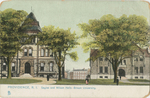
Sayles and Wilson Halls, Brown University, Providence, RI
Raphael Tuck & Sons, Providence, RI: publisher; Visual + Material Resources; and Fleet Library
-
Wild Joy: An Exploration in Queer Spatial Dynamics
Kipper Thomas Reinsmith
What does it mean to feel represented in a space?
What does a trans space look like?
How can we queer our interior spaces?
Our world is crafted by the many designers that have come before us. These systems, products, and spaces are built upon assumptions of the bodies that will use and occupy them—namely cisgender, able-bodied, straight folks.
Designing and creating objects as a trans person is an act of radical nature. To take up space, to design for trans luxury, for the sake of beauty, for joy itself, feels counterintuitive to the narratives we’ve been served: that of mere survival. And this is why it must exist, why we must celebrate, interrogate, & own our design language.
This body of work is an investigation in challenging standard notions of spatial dynamics. By redefining the possibilities of how spaces can and should perform, I hope to offer alternatives for how to live in a changing world that must keep up with the needs of our changing identities.
-
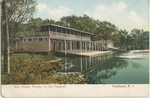
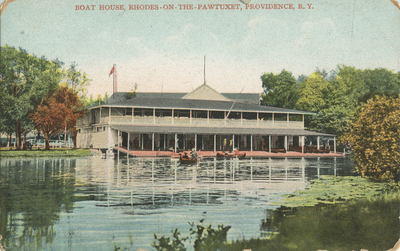
Boat House, Rhodes on the Pawtuxet, Pawtuxet, RI
Rhode Island News Company, Providence, RI: publisher; Visual + Material Resources; and Fleet Library
-
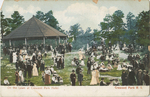
On the Lawn at Crescent Park Hotel, Crescent Park, RI
Rhode Island News Company, Providence, RI: publisher; Visual + Material Resources; and Fleet Library
-
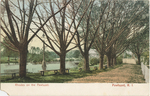
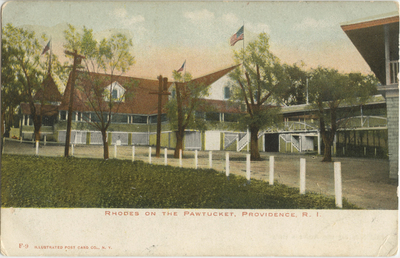
Rhodes on the Pawtuxet, Pawtuxet, RI
Rhode Island News Company, Providence, RI: publisher; Visual + Material Resources; and Fleet Library