On was an interdisciplinary graduate periodical established by RISD graduate students in 2006. It featured essays and student work that related to a general issue theme. On was intended as a quarterly publication, but it is unclear if further issues beyond the first were ever published.
-
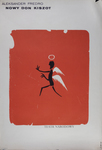
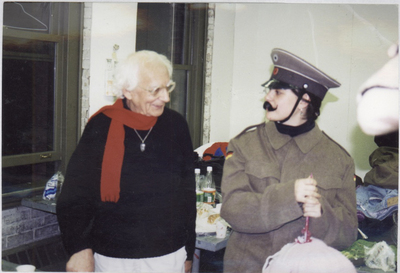
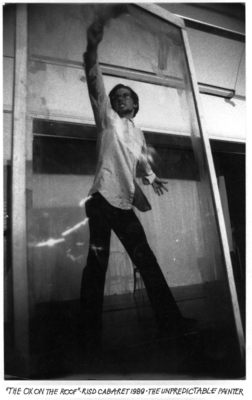
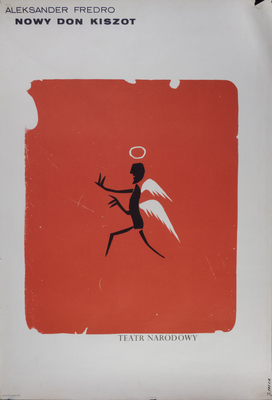
Nowy Don Kiszot / Teatr Narodowy (The New Don Quixote / National Theater)
Fleet Library, Visual + Material Resources, and J. Patka
-

Belonging in Memory
Yilin Li
This book is a visual and textual exploration of belonging, memory, and the sublime found in the mundane. Through a combination of written reflections and curated artworks, it traces my artistic journey, showcasing how I search for belonging through memory, everyday life, personal witness, family dynamics, and cultural memory.
The first part delves into the intimate connections between everyday life and artistic inspiration, weaving together personal experiences, observations, and memories into imaginative narratives. The second part presents a chronological selection of my artworks, illustrating my artistic evolution. Initially, my work responded to China’s rapid urbanization, exploring fading personal and collective memories. Over time, I began experimenting with new materials and mediums to investigate different forms of belonging, such as through familial ties, cultural rituals, and the experiences of the Asian diaspora. These works transform personal reflections into visual and textual narratives, inviting readers to reflect on the fluid and evolving nature of belonging, as well as broader themes of nature, society, life, death, and the sublime.
-
Folding Horizons: Knitted Textiles for a Mobile World
Yutong Li
We have grown accustomed to living in flux—moving between cities, countries, languages, and digital spaces. Life no longer unfolds in a straight line, but in fragments and transitions, never quite settling. In this restless rhythm—shaped by fast trains, shifting skies, and the invisible current of the internet—we find ourselves suspended in a vast, woven network. Connection is constant, yet motion is unrelenting.
This project begins with a question: how can textiles reflect this state of in-between? I imagine textiles not as fixed surfaces, but as responsive skins—adaptive, expressive, and attuned to change. Inspired by the tensions of contemporary life—surveillance, shrinking privacy, the demand to move and transform—I create foldable textile structures that shift form and appearance in response to their environment.
These textiles do not stay still. Their patterns shimmer; their folds breathe. Their surfaces disguise or reveal, depending on how they are worn or seen. Some distort the body’s outline; others reflect light to confuse recognition. They offer not only protection, but a quiet camouflage—tools for navigating a world in motion, where softness and flexibility are forms of strength, and transformation a quiet act of resistance.
The project draws inspiration from the natural world and examines the mechanisms behind natural pattern formation, integrating bio-inspired structures that can transform and adapt. These elements are then reinterpreted in the context of contemporary urban environments, offering dynamic visual and tactile experiences through folding and transformation.
By integrating material experimentation, innovative folding structures, and abstract cityscape-inspired patterns, this project offers a fresh approach to how textiles engage with space and the human body with innovative materials and structures.
-
FROM INDUSTRIAL BUILDING TO AFFORDABLE SENIOR HOUSING: AN IDEA BOOK BEYOND CODE
Weiyi Ma
This thesis envisions a proposal to adaptively re-purpose Rhode Island’s extant industrial building stock into affordable housing tailored to the needs of its older and more vulnerable citizens. Architectural dignity, in terms of older citizens amidst this housing crisis, is the creation of living environments that honor their autonomy, comfort, and identity through design interventions that provide accessible, luminous, breathable, and socially enriching spaces, reaffirming their rightful place within the community. With humanistic care and logical rigor, it establishes a mathematical framework for assessment and execution, anchored in five criteria: light, air, space, accessibility, and livability, and presents itself in the form of an idea book. A collection of design interventions is derived from the five criteria to visualize what architectural dignity means for older adults and to encourage designers and developers to assess and retrofit existing housing with thinking beyond regulations and codes.
-
Highlighting The Benefits of Community-Based Public Art Practices: Narrating a Year of Living and Working Amongst the Creative Communities of Providence, Rhode Island.
Keara McHaffie
This thesis investigation explores the benefits of publicly
accessible arts programming and considers the significance of art
education experiences outside the traditional classroom setting.
The social and emotional benefits of these spaces are specifically
considered as a means to build confidence, and foster meaningful,
supportive connections beyond traditional academic measures.
Embracing a qualitative, mini-case study approach, the study
details hands-on experiences collaborating with different
organizations across Providence, Rhode Island during a year-long
graduate program. The data highlights how access to public
programs in community-based settings, such as libraries, play a
pivotal role in strengthening creative ideologies and community
relations.
-
Echoes of Longing
Mahalexmi Mohan
Loss lingers like a shadow, a weight no time can lift. Longing becomes a silent scream, echoing within, unanswered. Internal pain festers in the quiet, where unhealed wounds weave themselves into the fabric of being. Each breath is both survival and surrender, a fragile balance between hope and the hollow ache of what was, what will never be, yet could be.
Abstract
My work is deeply influenced by my experiences within a dysfunctional family structure and is explored through the relationship of emotional vulnerability and its effect on self-worth. Layered into the work is a confrontation with the scars, conflict and neglect, along with the reckoning with these wounds - not for resolution, but for coexistence and catharsis. Through lived experiences, I navigate the unseen imprints of generational trauma, delving into the intricate landscapes of absence, longing, loneliness, intimacy, desire, love, shame, guilt and insecurity. My practice examines the complex interplay between inherited pain and personal identity, tracing how these somatic imprints manifest in the body, memory, and materiality.
Working primarily with clay, metal, wax and watercolor drawings, I engage with figurative abstraction, where the body exists as both a vessel and a site of memory with tenderness and fracture coexist. I see clay as a living medium, paralleling human experience, quietly capturing and preserving the mental and physical traces of life. The soft, fragile nature of clay becomes a metaphor for vulnerability, while its resilience speaks to the profound capacity for strength and transformation. This duality forms a continuum that binds narratives, memories, and questions, a space where time dissolves and possibility unfolds. Its ability to be shaped, broken, and reformed mirrors the cyclical nature of healing and evokes a ritualistic practice of repetition in my work, where each gesture is both an offering and an act of becoming.
The juxtaposition of organic and geometric elements in my work reflects the psychological extremes of human nature. Resonating with the serenity of rawness, I embrace muted hues and delicate textures to emphasize the underlying nakedness of being. By embracing the fluidity of material and meaning, my work becomes a threshold for introspection. I am drawn to the search for belonging and the quest to understand the human psyche through the act of making.
-
Restoring Qi in Urbanism: Restoring Spatial Connectivity and Energy Dynamics Through Landscape Intervention
Jiaqi Pan
This thesis explores how Taoist “Qi”, a dynamic energy flow, can provide a productive lens for approaching contemporary landscape architecture.
Taking the ancient city of Tai’an in China as a case study, I analyze the historical changes made to its Qi network at the urban scale. This draws a carrier theory that Qi could be examined by water connectivity and spatial porosity. Thereby, I further establish the dynamic network relationship between landscape factors and Qi.
Blending ancient philosophy with modern ecological thinking, I proposed Qi carrier theory for healing Qi ruptures in urban landscapes. Through design in White Horse Village, I map patterns of Qi retention, dispersal, and disconnection. By reorganizing water and space to restore Qi flow and revitalize both the land and its energy
-
Faculty Exhibition Post-Ocean | Max Pratt
Max Pratt, RISD Color Lab, and Industrial Design Department
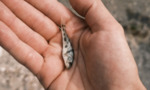
In an effort to evaluate the Rhode Island area’s fishery as it currently exists and highlight innovative approaches to the future of our interaction with the ocean, Post-Ocean details coastal New England’s unique approach to sustainable aquaculture and wild fishery management. This archive and body of work aims to build a model for others to follow as we look to create global stability in our food systems and human-ocean interactions. For the March 2025 installation at the RISD Color Lab, we are highlighting the unique approach of this work in its engagement with research through the use of color photography. Leveraging highly accurate color analysis, we create photographic data sets, document the quality of seafood through color, and attempt to instill in the viewer a curiosity and deepened desire to learn about the ocean and its inhabitants. The content of this show is supplementally showcased via a web-based document, allowing viewers to be guided through our vision for the future of food.
View the Post-Ocean exhibition here.
-
Wetland rehabilitation through interspecies co-design
Charanya Rajan Ms.
This thesis challenges the notion of Human Exceptionalism by examining the agency of the North American Beaver (Castor canadensis) in rehabilitating a 50 acre parcel of land on the Woonasquatucket River watershed, Rhode Island, USA. By reimagining the site without its current commercial and industrial land uses, the project aims to contribute to the nationwide effort of creating and restoring wetlands degraded and damaged over the centuries by human activity. Finally, a pathway running through the site along the river connects to the Woonasquatucket Greenway further down south, with strategically placed look-out points, allowing humans to witness and, therefore, acknowledge the agency of non-human animals in making landscapes, checking the third, didactic goal of the project.
Beginning by positioning the project within a larger philosophical context, I move into site selection and investigation through multiple visits, sketching, map-making, and reviews of various literature and precedents, primarily through visual representations. All of these then inform the research's outcome, which is an iterative design proposal for rehabilitating the wetland site. Finally, I speculate on how the site changes through the cycles of beaver occupation and abandonment. Although the unpredictability of working with non-human organisms poses challenges and a high risk of damage, it can be a cost-effective solution to wetland restoration, dramatically enhancing biodiversity if humans co-manage the site with beavers.
-
The Ruminating Shell : A Reparative Experiment in Dialogic Writing and Sensory Resonance
Crystal Jiayin Ren
This thesis unfolds as a first-person memoir, an incomplete record of remembered dialogues, and a structural experiment that aims to get closer to what I perceive as emotional and philosophical truth. Prompted by a conversation with my father-in-law, writer and thinker Shen Hao, I began to reflect on how informal, everyday exchanges with mentors, family, and friends have continually shaped how I translate internal echoes—ruminations, confusions, emotional residues—into writing, spatial, material, and experience.
Rather than adhering to the conventions of academic analysis or formal documentation, I adopt a dialogic form—one rooted in memory, shaped by subjectivity, and open to contradiction. In these reconstructed dialogues, the “inaccuracies” of recollection become part of the expression itself. They reveal not only what was said, but what stayed with me—what mattered.
-
Material Values Black Locust Exploration
Benjamin N. Riley
As individuals many facets of our lives do not offer us significant control over our impact on the environment around us. We are limited by access, time, and information- funneled into making less than sustainable choices. To live sustainably we must have opportunities to strike a balance between what we extract and what we produce. Through our consumption of resources this balance is achieved when we take only what we need and can replace while fostering a cultural appreciation of the extracted materials that we utilize.
Material Values Investigates how we can approach utilizing materials in landscape construction that are non-traditional and have the ability to subvert existing highly extractive supply chains. The material I investigate in my thesis is black locust, a tree with an aggressive growth rate, the ability to thrive in disturbed conditions, dense rot resistant lumber, and otherworldly fluorescence. By utilizing this material in a way informed by its attributes and understanding it’s potential as a part of our rapidly changing ecology and economical system I hope to express the range of possibilities material alternatives could bring to our built environment.
-
Graphic Gestures on the Digital Surface; In Defense of the Observational
Soyoung Ro
This thesis offers a subjective and process-based exploration of digital tools, challenging the dominant function-driven mindset that often defines digital design today. Rather than prioritizing speed, efficiency, or usability metrics, this work is a shift in focus toward experience, spatial awareness, and the subtle dynamics of interaction.
Rooted in acts of attention—looking inwards, looking outwards—this approach begins by setting aside assumptions about what tools are for, in order to ask how they shape our behaviors and ways of thinking. In doing so, it proposes a design methodology grounded in presence over productivity, process over execution, and agency over automation.
The body of work developed through this methodology spans a variety of graphic experiments, spatial arrangements, and interface reimaginings. While each project stands on its own, together they form a procedural narrative—offering methods, gestures, and scores for rethinking how we interact with digital systems. These are not definitive answers, but open-ended invitations to see design differently.
By resisting the standardized logic of contemporary UI/UX frameworks, this thesis seeks to uncover what lies just outside their bounds. It encourages a return to design as a reflective and relational practice—one that opens space for curiosity, presence, movements, and the subtle dynamics between ourselves and the systems we touch.
-
Resonance
Jess D. Skyleson
Resonance is a digital media installation intended to facilitate a deeper understanding of inter-connection within and between ourselves and others, and to depict how our voices live both within and beyond us. The exhibit is divided into two intertwining halves:
Externally, the piece involves creative communication between people, art mediums, and life experiences. This aspect includes the contributions of thirty patients, doctors, and caregivers who responded to one another’s artwork in a series of workshops led by the artist. Starting with the creative writing of patients, this was provided to a group of unrelated medical providers, who responded with visual artwork, and these pieces (sans the writing) were then provided to a group of unrelated caregivers, who responded with sound. The artist then combined these works into ten collaborative videos.
The interior aspect explores the artist’s personal resonance with the cancer within them. They wrote letters to their cancer and then fed these into a custom Python program which remixed the words to create the cancer's responses (just as cancer remixes one’s own cells). This was then utilized in a sculptural piece: a plaster cast of the artist’s body with sixteen holes in places where cancer was present. Within each hole is a speaker, and each speaker is playing the artist’s voice at different pitches, reading the cancer's responses. Hanging above the sculpture is a divinatory pendulum made of yew wood on a platinum wire, as their chemotherapy consisted of taxol (derived from yew trees) and cisplatin (derived from platinum). -
THE SIXTH INTERFACE: The Integration of Drone Infrastructure with Low-Altitude Landscape
Shicheng Tang
This project focuses on the design of outdoor vertical space in Hong Kong in response to the development of China’s Low-Altitude Economy. It explores the integration of these spaces with drones. Through site design and planning, the project uses existing rooftops, parks, and public plazas to create multi-functional drone infrastructure. These spaces enable low-altitude logistics while providing additional social benefits such as public recreation facilities. These landscape enhancements create a harmonious synergy between technology and ecology.
Central to this work is the concept of “The Sixth Interface”, a new spatial layer between the ground and the sky where drone-driven flows of information, ecology, and energy intersect. This is a dynamic urban layer defined by vertical mobility, human-technology interaction, and ecological coexistence. The project re-frames drone infrastructure not merely as technical facilities, but as interactive and socially meaningful components of the urban environment. -
Faculty Fellow Timothy Veske-McMahon | Fugitive Color: Sensing the Fade
Timothy Veske-McMahon, RISD Color Lab, and Jewelry + Metalsmithing Department
January 22, 2025 virtual presentation accompanying the exhibtiion, Fugitive Color: Sensing the Fade, on view November 25, 2024–January 31, 2025.
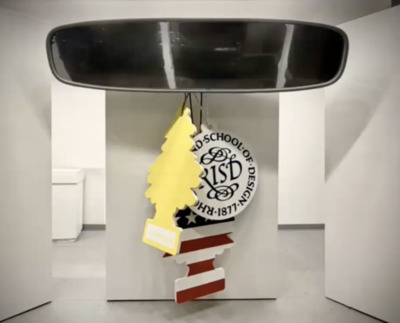
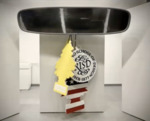
As a Color Lab Faculty Fellow in Fall 2022, Timothy Veske-McMahon (Associate Professor, Jewelry + Metalsmithing) explored fugitive pigments and dyes—colors that fade or transform over time. His work, featuring large-scale automotive air fresheners, evokes a desire for renewal while signaling lingering effects—whether stale, rotten, or mysterious. Through hues that shift and lighten under UV exposure, these pieces highlight the impermanence of histories, identities, and environmental connections as they fade and transform. Placed within the academic space, the installation invites viewers to reflect on the role of institutions in preserving—or neglecting—cultural memory. It challenges us to reconsider how we engage with and acknowledge our histories, suggesting that fading color, like a dissipating scent, becomes a metaphor for loss, distance, recognition, and the call for renewal. -
Low Carbon Adaptation through Community Composting
Junrong Wang
This project utilizes landscape architecture to reduce the carbon emission of restaurants by employing carbon sequestration techniques. By using compost gardens that shorten the transportation route of compost, new local food sources are created which replace food shipped from afar. The gardens are placed on roofs and at ground-level. The gardens also provide materials to produce organic pesticides that replace traditional pesticides, thereby reducing the release of carbon intensive VOCs. The compost gardens are implemented in existing parking lots and vacant lots and are connected in a community garden network. The proposed renovation of streets increases carbon sequestration through street-side vegetation. These interventions help alleviate the urban heat island effect, improve the micro-climate, and consequently, reduce the energy consumption associated with air-conditioning use in buildings.
-
A Personal Manual of Escapism
Qing Wen
In this fast-paced, information-saturated era, avoidance has become a common mechanism of self-preservation. Confronted with global crises and structural instability, the current generation increasingly adopt a pessimistic stance toward the future: some retreat into virtual worlds, others find themselves unable to bear the weight of real-life responsibilities, and many turn to art as a private sanctuary. But is avoidance only a pejorative term?
It wasn’t until recently that I realized, nearly all of my creative work has stemmed from a place, or an action of escape. The imagined worlds I’ve built, the spaces I created to flee from reality—without knowing it, they became a symbolic language of my own. The human tendency to escape is not merely a response to psychological stress—it has, in subtle ways, fueled both material progress and the evolution of spiritual and cultural life.
If avoidance is, at first, an emotional defense mechanism, what happens when it is transformed into an initiative, a strategy of survival—a form of escapism? Might such a shift, paradoxically, open a path toward new meaning?
This thesis does not seek to offer definitive answers but rather arises from ongoing self-inquiry: perhaps when we choose to flee dominant narratives and assigned identities, we are already walking the path of reconstruction. In the journey of flight, individuals may quietly weave together a symbolic system of their own—one that, from a marginal position, gestures toward a renewed possibility of being.
-
I Don't Want to Talk About It
Margaryta Winkler
This thesis is a contradiction. It is an attempt to verbalize what words can’t capture. It asks what is lost, what is gained and what can only be said when nothing is said at all. It is a love letter to wordless visual narratives. Drawing on the work of animators and illustrators like Gints Zilbalodis, Don Herzfeldt, Shaun Tan and Sophie Burrows, as well as the author’s own explorations, it looks at the risks and rewards of wordless storytelling. It is about silence, but not absence. It is about images that refuse to be reduced to captions and stories that resist being told any other way.
-
Eco-Posthumanism — A Utopian Transformation of Modernist Residence
Shuli Wu
The Eco-Posthuman Manifesto, in this thesis, serves as a framework for spatial transformation within the context of the Anthropocene. As of 2020, the weight of human-made matter has surpassed all living biomass. This shift is both material and symbolic. It exposes the consequences of human-centered development and calls for a rethinking of architecture’s relationship with life, time, and ecology. Taking the Barbican Estate as a case study, the thesis proposes a 100-year transformation, shifting the site from a concrete, human-optimized housing complex to a living biome shared by humans, non-humans, and embedded technologies. Through design strategies such as Miyawaki afforestation, decentralized composting, vertical irrigation, and spatial adaptation, the thesis envisions biomass gradually superseding human mass within the estate. Architecture moves away from enclosure and toward the hosting of ecological processes. Maintenance becomes spontaneous. Cohabitation emerges naturally. This vision introduces a shift in architectural values. Ownership is replaced by participation. Identity becomes relational and shaped by ecological alignments. Buildings act as adaptive interfaces between species and environments. Private units become smaller. Shared, mobile, and seasonal structures take their place. Technology no longer dominates. Instead, it mediates communication between human and non-human systems. Rather than preserving the Barbican as a static monument, this thesis reframes it as a testbed for posthuman revitalization—offering a design methodology that can extend to other modernist housing estates facing ecological and cultural obsolescence.
-
Unnatural Nature: A Visual Artist’s Reflection on Myth, Medium, and Feminine Being
Rong Xu
My artistic journey has been guided by a childhood fascination with mythology and how our ancestors interpreted the natural world. As my practice evolved toward digital media, I began questioning what "nature" truly means—is it an objective reality or a construct filtered through cultural lenses and personal experience?
The transition from traditional to digital tools—from physical brushes to Apple Pencil and Wacom stylus—removed much of the spontaneous dialogue with materials that once mirrored nature's own randomness. While I initially celebrated my ability to simulate traditional techniques digitally, I now recognize this transformation demands a fundamental reconsideration of how artists connect with nature in the digital age—the connection may no longer be within the material.
This thesis examines how my understanding of nature has evolved through my work, reflecting on how inherited cultural narratives and social constructs have unconsciously shaped my artistic decisions. Rather than seeking definitive answers, I document a process of questioning and redefining my artistic language—creating a living dialogue between myself, nature, and the cultural forces that frame our perception of the world.
-
Chasing The Sacred: A Personal Archive
Yiko Yang
The relationship between humans and nature is like that of a child to a mother, or consciousness to the unconscious. The former arises from the latter, which always holds and shapes it. As human consciousness evolves, the desire to return to the unconscious remains—we are always looking back, searching for that first glimpse of the world.
Thinking back to my childhood, certain fundamental images—archetypes—come to mind. Rooted in the research of Carl Jung and Erich Neumann, this concept also stems from my family’s cultural heritage and my deep, lasting connection with nature as a child. These archetypes reflect the natural world’s inherent rhythm—the interplay of containment and transformation. This mirrors the fluid and ever-changing nature of glass, where the process of making awakens my unconscious, allowing these archetypes to emerge in my work.
These works embody a return to the primordial archetype—the Great Mother. Through personal experience and the practice of glassmaking, this thesis explores how we inherit these archetypes from nature and reimagine them through creation, expressing a longing to return to the source of life.
-
Cohabitation at Threshold: Carpenter House Reimagined for Multispecies Living
Zhixiao Yang
With the rapid growth of the human population, we are encroaching further into wildlife habitats, particularly those surrounding urban environments. This accelerating urbanization leads to biodiversity loss, the degradation of ecological services essential to human health and well-being, and a diminishing connection between city dwellers and the natural world.
Today, urban planners, architects, economists, and other advocates for the future of humanity and the health of the planet are actively questioning how we might build greener, more resilient cities. While much of the focus has been on large-scale interventions — such as the use of sustainable materials, the creation of public green spaces, and the increase of urban gardens — this thesis turns the question toward a smaller, more specific scale: the adaptive reuse of individual existing structures.
How can the integration of ecological principles into the readaptation of buildings promote healthier cohabitation between humans and wildlife? How might design not only accommodate nature, but also invite the active participation of human inhabitants in nurturing and sustaining ecological relationships? This thesis seeks to create environments that sustain both human and non-human life, while also fostering a deeper awareness of -- and engagement with -- the need for coexistence.
To explore these questions, Carpenter House — a 19th-century second-empire style dormitory at the Rhode Island School of Design — is reimagined. Through the redivision and regrouping of functions, the project interweaves human life with the lives of plants and animals, enabling them to live side by side and influence one another. Just as importantly, it encourages residents to participate in the stewardship of this shared environment, making their daily activities part of the larger ecological system. The goal is to create an ecosystem within and around the building that not only serves its inhabitants, but also extends to the broader RISD community, offering a gathering place for people who value nature, a refuge for wildlife, and an experimental space where the boundaries between human life and animal life begin to blur.
-
To Reflect & to be Reflective: Student Experiences of Critique in Art & Design Higher Education
Jade Seobin Yun
This thesis investigated the critique process in art and design higher education, focusing specifically on student experiences at the Rhode Island School of Design (RISD). Through a combination of autoethnographic reflection and a campus-wide student survey, the study explored how critique was perceived, practiced, and internalized by students across disciplines. Central to this inquiry was the emotional and pedagogical complexity of critique, which was often treated as an assumed skill rather than a learned process. Drawing from personal narrative, pedagogical literature, and qualitative data, the research proposed a framework of Trust (Barrett, 2019), Courage (Brown, 2022), and Responsiveness (hooks, 1994) as essential conditions for effective and meaningful critique. These findings revealed the need for institutions to move beyond critique as a ritualized performance and toward a more intentional, inclusive, and relational model that supports student growth, voice, and learning.