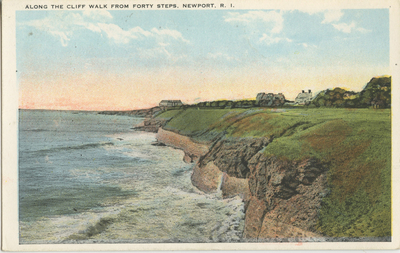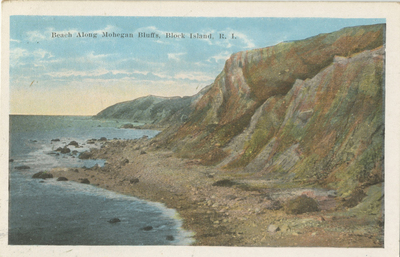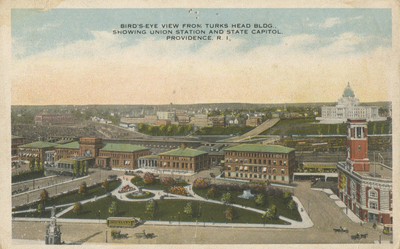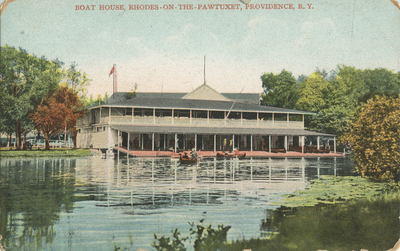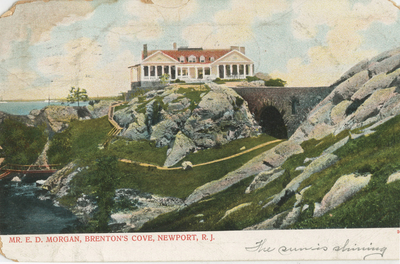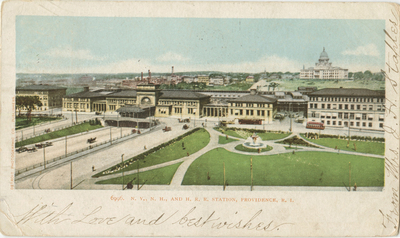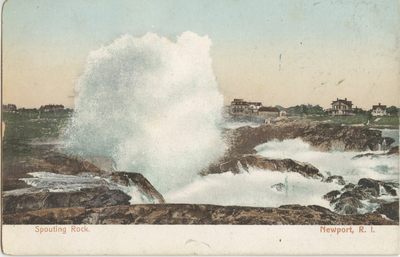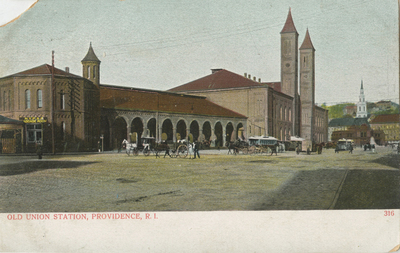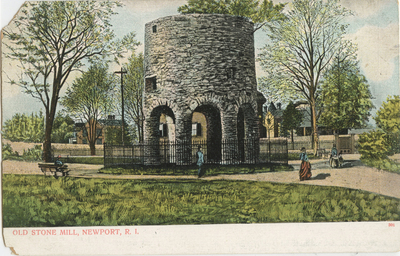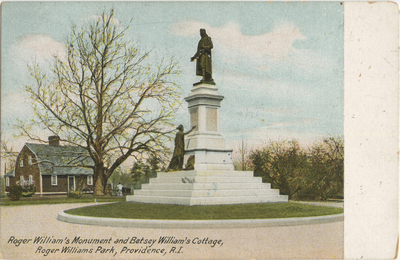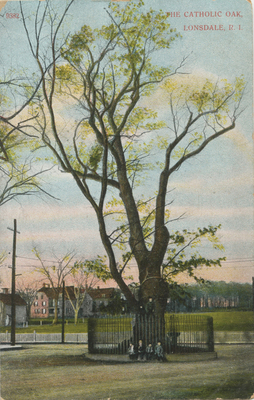
On was an interdisciplinary graduate periodical established by RISD graduate students in 2006. It featured essays and student work that related to a general issue theme. On was intended as a quarterly publication, but it is unclear if further issues beyond the first were ever published.
-

Elsewhere: impressions of sense & nonsense
Madeline Woods
I’m not going to give it all away up front, but here are a few things you’ll find inside: a flower that tastes like peppermint, a book that smells like sunscreen, a silver orb that purrs, a woman becoming a tree, a shy rainbow, and a hat that is also a disguise. There are lists, letters, dreams, and notes. I hope there aren’t typos, but I’m only human, after all. There is sense, and there is also nonsense.
If you decide to join me here, we will wander elsewhere — across different kinds of terrain, into sensory experiences, between mediums, and towards collective imagination. I will point out the ways we interact with these spaces & places: how we use our bodies to access them, our senses to interpret them, and our stories to give them meaning. I’ll talk about how much I like videogames, colors, forests, and friends. Occasionally, I’ll use big words, like “phenomenological,” to impress you. But you are smart, and I might not teach you anything new!
I would like for you to think about this as the start of a journey. Did you bring everything you need? You have my permission to meander — drift in any order, direction, or logic that suits you — but I hope you won’t leave without considering the urgent work of thinking about and caring for our deep entanglement with a damaged world.
-
Arnold Berleant’s Environmental Aesthetics and Chinese Ecological Aesthetics
Cheng Xiangzhan
Professor Arnold Berleant has visited China academically several times since the early 1990s, becoming more and more popular in Chinese academia. Almost all of his books have been translated into Chinese, which produced a significant impact on Chinese scholars, especially on the development of Chinese ecological aesthetics, or ecoaesthetics. They generated a hot topic on the similarities and differences between Western environmental aesthetics and Chinese ecological aesthetics, in view of which this paper first outlines Berleant’s academic activities in China, then focuses on the impact of his environmental aesthetics on the ecological aesthetics mainly advanced by the Chinese scholars Zeng Fanren and Cheng Xiangzhan. With these discussions, the paper primarily aims at analyzing the relationship between Western environmental aesthetics and Chinese ecological aesthetics, determining that Berleant’s environmental aesthetics is viewed generally as a part of the whole picture of ecological aesthetics because it fits so well with the definition of ecology.
-
Uncertainty wanted: deconstructing gender gap in parenting mentality
Zimeng Xiang
Gender stereotypes propagate through generations like a loop without a clear start or end, constantly reinforcing and being reinforced by the constructed, gendered system of information around us. For this project, I take the start of parenthood - the moment when new parents begin to learn everything about newborn care - as a critical point to encourage gender-neutral parenthood and eventually, to fill the gender gap in parents’ mental load.
-
Optics / perception / experience: regenerating agricultural landscape through railways
Tianyi Xie
This thesis examines the relationship between two large infrastructure systems: the railway and agriculture. It’s becoming increasingly important as unhealthy nation-wide industrial agriculture is destroying people’s health and decreasing the long-term capacity of sustainable production of food. In the discipline of landscape architecture, there is a necessity to reform our thinking to match the modern-day development in population growth, transportation and mass production. There exists vast farmlands outside our city, which support our city life with energy and food sources. How could we get people to understand its significance? In chapter I and II, the history of agriculture and railway in America is narrated to prove the possibilities of bringing people back to the farm.
Chapter III and IV talks about how the picturesque landscape has been neglected and falls to catch people’s attention and argues that the extreme, distorted, moving scenery will focus our attention. landscape design could sit between the scenic landscape and our eye to shape our relationship with the productive landscape. Using the experience of riding trains passing by farmlands as a testing ground, the experimentations prove that the construction of lenses can help shift people’s experience and focal-point. In the final chapter, the proposals are made based on the personal experience of travelling from Albany to Pittsfield. Building stops along the railway could reconnect people to the local farm and build respect and understanding through participatory experiences. The stops could also work as a regional activation point for agriculture as it connects customers and farmers. By bringing people back to the agricultural land, the trip system built on top of the existing railway structures will bring prosperity to sustainable agriculture.
-
Futuristic communication
Haotian Yang
In today's world we can no longer separate our lives from technology. It is that fluidity between the human world and the technological world that my work explores. Technological development has brought us great convenience in communication. The existence of programs like Zoom allows people to work and socialize remotely. Instagram, Twitter and other social networks allow people to share their lives anytime and anywhere with a simple snap of a picture and push of a button. The emergence of mobile phones allows people to communicate at any time. Science and technology continue to develop and these developments provide many possibilities for people to communicate in the future. I am interested in using the possibility of future technology to inspire my work. My work is meant to bring forth questions: As to how will ever evolving technology better our daily lives in the future? What types of communication will exist when we have the technological means to bridge gaps? What new problems will arise due to these advances? At this moment, our awareness of how convenient technology is in our current lives is as strong as ever. It causes questions like:What will our future life be like with technology? How much can innovative technology change our lives? Can we communicate with creatures or objects other than humans? What other forms of communication tools will appear in the future? Will the emergence of new communication tools in the future lead to new problems? Through this series of questions, I explore and imagine of new ways of communication in our future world, to create and feel the unprecedented experience that future communication devices will bring to us.
-
Remembering Chinatown: a fusion of food, identity, & memory
Robert Yang
In 2016, the Chinese American Restaurant Association recorded a total of 50,000 Chinese restaurants operating in the United States, far exceeding the number of McDonalds, Burger Kings, KFCs, and Wendy’s combined. In the near two centuries that Chinese people have been a part of the American fabric, our food has become one of the country’s most popular ethnic cuisines. While these restaurants stand as testaments to the tenacity and entrepreneurship of the Chinese immigrant, they are also reminders of the centuries of adversity Chinese Americans have endured. The racial divisions triggered by the Chinese Exclusion Act of 1882 have resulted in fluctuating attitudes towards Chinese American culture and cuisine, influenced by factors having nothing to do with the food itself. Now more than ever, with the rise in Asian American and Pacific Islander related harassment and attacks, a reckoning with this troubled past is imperative.
Downtown Providence was once home to a small, yet prominent, Chinatown. In 1914, Chinatown was razed as part of an urban renewal effort rooted in discriminatory immigration policies and racial biases. While this Chinatown’s presence lived on through a revolving network of Chinese restaurants, suburban flight and economic decline forced many of them to close in the 1980s. Most traces of this cultural enclave have disappeared and with them the loss of a communal identity for Chinese Americans in Providence. The Art Deco Kresge Building on Westminster Street sits on the former site of one of these bygone restaurants, the Chin Lee Corporation. Using digital projection as an ephemeral intervention, a series of illuminated images scattered throughout the downtown area and superimposed onto the Kresge Building's facades will enliven Downtown Providence and transform it into an urban canvas. Each provocative image tells a narrative that recalls the cultural memory of this forgotten community and moment in time and encourages the public to question notions of identity and history.
By converting the abandoned interior of the Kresge into a hub for the Chinese culinary arts, the intervention will demystify the ingredients and techniques used in Chinese cooking, while functioning as a cultural amenity for communities of all backgrounds. A vibrant social staircase cuts through the existing floor structure, establishing a bright and dynamic public atrium for visitors to enjoy. Serving multiple functions, the staircase becomes a common meeting ground where visitors can congregate, dine, and cultivate ingredients. Beyond each flight of stairs is an environment that celebrates Chinese cuisine; a food market, a demonstration kitchen, a taste lab, and a kitchen garden. Each space taps into food's potential to bring people together and allow them to understand one another. The adaptive reuse of the Kresge Building reinstates a place for cultural expression within the urban fabric of Providence that honors the memory of this forgotten Chinatown, while challenging stereotypes and shedding light on the complicated history of Chinese immigration.
-
Eco-corridor for wildlife: reclamation of wildlife habitat in Rhode Island
Xiaodong Yang
This thesis aims to reclaim the fragmented habitats of wildlife and natural environments under the current human-dominating world. Through a series of landscape interventions, an ecological wildlife corridor will be proposed to not only help wildlife migrate without being impacted by the constructed infrastructure but also arouse humans to rethink and revalue the relationship between humans and wildlife.
The researches focus on the infrastructure’s negative impacts on wildlife, Interstate 95, and coyotes in specific in Rhode Island and ecological approaches that could potentially remedy this issue. Human infrastructure, like highway systems, has caused great fragmentation in the original wildlife habitat and poses threats to wildlife that cross it during migration as well. This thesis utilizes the Moshassuck River that runs through culverts underneath the I-95 as a primary passage and integrates existing isolated green patches to expand the ecological corridor. This study aims to discover creative approaches that could form ecological corridors and potentially apply to other urban areas that have similar issues.
-
Cognitive development & art education: relationship, suitability, and future implications
Zheng Yao
In this thesis the author sought to discover linkages between Art, Philosophy, Aesthetics, and Cognitive Science through a review of scholarship surrounding the integration of cognitive theories, art, and education. There have been numerous studies that claim that art education in elementary and secondary schools improves students' academic performance, interpersonal skills and improves attitudes to life. Nations meanwhile constantly modify standards and frameworks for teaching and learning in the visual arts. However, despite these changes, the author wondered to what extent, if at all, new standards-based visual arts curriculum frameworks were responsive to concepts within cognitive theory. This qualitative study analyzes the National Visual Arts Standards through a cognitive lens in order to detect the level of their connection to developmental theory. The author's interviews with practicing K-12 art teachers reveal the extent to which their curriculum design and teaching and importantly their students benefit from close alignment to cognitive science. The thesis concludes with thoughts for educators and policymakers that emerged as a result of this investigation and which may be transferable to diverse educational locations and in particular the author's home - China. This thesis does not claim to be exhaustive in the depth of its investigation, but the author hopes it provides valuable insights into the benefits of greater integration of cognitive science into art education. Further, it is the author's hope that the thesis provides a platform for her own further study at the doctoral level.
-
Control theory
Colin Yoon
When people feel that everything is out of control, their natural response would be to turn to a designated space to manipulate anything within it, whether a physical environment or a digital platform. This book expresses the comforts of order and predictability in response to the chaos and confusion that emerged from the train wreck known as 2020. After everything that has happened, it’s understandable that people want to have some semblance of control over something in their lives, as predictability makes them feel safe, intelligent, and powerful.
-
Overflowing boundaries: competition and mutualism in urban villages
Chen Zhang
Villages besieged by urban sprawl have been isolated and forgotten, broken from urban texture and social relationships. However, this kind of encirclement has no clear boundary and is entirely permeable. Infiltration and overflowing occur on various scales. On the urban scale, the old villages gradually abandoned the agricultural lifestyle and connected with the new industrial city. On the architectural scale, urban villages attempt to integrate with cities by imitating the urban façade wherever they come into contact along the fluid boundary. Some warehouses, small plants, and small workshops have appeared in urban villages. On the human scale, people's lives overflow from indoors to outdoors, into public space.
The village in the city and the amorphous culture it supports are negative in the eyes of the government, standing in the way of urban construction. It is the goal of local authorities to purge these communities in order to achieve unified management in urban governance. However, the bottom-up structures and installations overflowing in the public realm within the urban villages are a manifestation of pragmatism-oriented anarchy. In this 被遗忘的城市飞地 "forgotten urban enclave,” it is precise because of this "forgetting" that a community ecology full of life wisdom and vitality has been born: this is what a standardized city lacks. Is the current model of erasing the urban village and replacing it with a standardized urban fabric the optimal solution? Can a new urban model be proposed in a ruralized way based on retaining the original village texture and memory through adaptive reuse?
This thesis uses an ordinary urban village, Hongxin Village in Ningbo, an ordinary city in southeastern China, as a research sample and explores this question. In this typical urban village, the buildings, materials, and furniture in the space show the spontaneous appropriation, tampering, and renewal of the area since the city subsumed the village’s original mode of being. New spatial intervention methods respect the mutual ownership principles of the village and create a framework for the growth of neighborhood life; the framework will continue to use appropriation, tampering, and renewal of working methods to improve local life while preserving traditions of the village and creating more collective memories.
-
Negative carbon growth in the atmosphere: to reverse the growth of carbon in the atmosphere through urban reforestation
Hanchao Zhang
Since the industrial revolution, with the expansion of cities, the global climate problem has become increasingly serious. The world is paying more and more attention to carbon emissions, and many landscape projects also take emission reduction and carbon sequestration as concepts. But there seems to be a lack of quantitative research in the field of landscape architecture. According to the global goal of net-zero by 2050 and emission reduction plan of Providence, RI, this project started with calculating how much carbon dioxide needed to be removed by biomass in order to achieve net-zero. It puts forward the requirement for urban reforestation in the city. As considering the calculation results and potentials of Providence, this thesis explores the variations of urban structure in the scenario of negative carbon growth happening.
The project further focuses on a site where the saline water and fresh water of the Woonasquatucket River meet. The purpose is to explore how to establish different plant communities according to different conditions of topography, soil, salinity, and flooding in order to maximize the capacity of biomass for carbon dioxide removal in the reforestation network. At the same time, the integration of reforestation with the urban history, urban life and urban future is considered.
-
Eco-concrete: reimaging Nantucket infrastructure system
Huaiwen Zhang
This thesis examines how issues related to the increasing erosion and inundation of coastal wetlands across New England due to sea-level rise and more frequent storms threaten public and private property as well as valuable natural resources in these important coastal ecosystems. Current coastal barrier solutions are often constructed with concrete hard revetments, which have limited effectiveness, and may exacerbate erosion. Furthermore, these solutions are also not able to support cradle-to-cradle design approaches.
In studying these issues and how they affect marine and coastal life, including human and non-human coastal communities, this thesis investigates alternatives to conventional concrete solutions. Material studies were conducted systematically to replace sand with other aggregates in the making of concrete, such as locally sourced seashells and other available coastal debris. The resulting eco-concrete mixes, developed with low-tech methods and techniques, may offer complimentary alternatives to the existing barrier protection systems by introducing flexibility, porosity, and weathering as fundamental qualities to host diversity, while still allowing for the barriers to offering protection to land from erosion. The thesis’ main argument, therefore, is that encouraging more flexible ways of building protection in highly dynamic coastal environments is not only essential to the preservation of coastal landscapes and their communities, but they may also suggest more democratic ways of constructing those protections collectively.
-
Driftscape: maximize urban space uses in the context of densification
Sida Zhang
This study aims to explore a systematic method to stimulate and maximize the use of the urban space in the context of urban densification, expanding urban space usage in the dimension of time and space. In this context, urban space is reclaimed as the notion of overlap between public and private space in urban figure-ground.
The research focuses on Providence as a study area that encompasses different transects of the urbanized American city and faces typical densification issues. It has strategically turned the issue of densification into opportunities for improving social interactions and space utilization. The “Driftscape” principle with its three dimensions: boundary, temporality, and connectivity has been proposed as a flexible strategy that rethinks the potential dimension behind existing areas and doubling their uses, which questions the power of the conventional “right of way,” provides a new understanding of the utilization of urban space.
-
The second identity: the human-otters ha-ha - utopia for urban animals
Yuxin Zhang
The question of proportion between humans and urban animals is always existed but had been ignored for a while. Through COVID19,the early balance, which human as a dominant sign in the urban area seems been slightly broken and many “invisible” animals start to show up. This makes me think that is there another living mode between humans and animals.
The thesis project locates in Singapore. Asa country around by water, Singapore has countless river canal, with some of the rivers are more residential and quieter, some are famous hot tourism point. However, some of the rivers are similar, which because the otters once been recorded existing in these rivers.As omnivorous animals, the otters in Singapore are transporting freely between rivers, get used to finding different food resources, also they learned how to use the artificial cover, like the stair sand ladders as well.
As a sign of clean water, Singapore’s management of the water and otters are quite successful, but I’m still questioning that if there could be more human-otter interactions by landscape design. I tested these ideas by either create structures and create more habitat for otters.
-
Let us for once try to not be right
Merrick Adams
Through a series of letters, the author discusses memory, representation, and the process and meaning of printmaking.
-
Regeneration with Billy Almon
Billy Almon and Edna W. Lawrence Nature Lab
October 22nd hosted the kickoff conversation of the Regeneration series with Astrobiofuturist and biomimicry expert Billy Almon, who shared how biomimicry can create restorative futures for black and brown communities. This line of thought began while he worked in the field and learned that a man had been shot in his grandmother's backyard; the police thought that the man had a gun when he actually had a cellphone. This changed the direction of Billy’s research, where he asked himself, “if biomimicry can't help my community, then what's the point?” During his talk, he emphasized the importance of exploring the narrative and how this investigative process can help change the monolithic story of police violence. This led him to study different animals’ reactions to perceived threats and where similar responses occur in the human body.
“What’s the actual biology taking place in these instances of police shootings?” Billy asked. He challenged us to look at this violence through a broader lens and understand the “historical, socioeconomic, and biological history of these occurrences.” What is the officer and the person at the other end of the barrel experiencing physiologically in this heightened state of stress and perceived threat? How can understanding this, together with knowing the historical existence of the police and the propagandized fear of "other", lead to biomimetic solutions that can help reduce violence against communities of color?
In thinking about regeneration, Billy encouraged designers and artists to observe patterns in both nature and human behavior in order to “discover new narratives that will help realize our ideal future.” He explained that in order to bring humanity closer to a better tomorrow, we need to focus on “restorative futures,” which he defines as “rehumanizing people, places, and systems through empathetic designs informed by biology and nature.”
-
Water ceremony
Adriana Alva
My thesis uses water – a medium – : as a way to follow an intuitive force to create space, as a tool to visualize larger systemic problems (climate crisis + water mismanagement) and for cultural expressions of healing ceremony.
-
Aesthetic Appreciation of Silence
Erik Anderson
We enjoy sounds. What about silence: the absence of sound? Certainly not all, but surely many of us seek out, attend to, and appreciate silence. But, if nothing is there, then there is nothing to possess aesthetic qualities that might engage aesthetic interest or reward aesthetic attention. This is at least puzzling, perhaps even paradoxical. In this paper, I attempt to dispel the sense of paradox and provide a way to understand aesthetic appreciation of silence. I argue that silence can have an aesthetic character and can sustain the kinds of rich experiences apt for aesthetic assessment and appraisal.
-
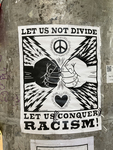
Conquer Racism, Elijah McCain Last Words Street Poster September 28, 2020
RISD Archives
Anti-racism and Police Brutality poster describing the last words of 23 year old Elijah McClain, victim of excessive force by Aurora, CO police in 2019 photographed on RISD campus. Creator unknown.
-
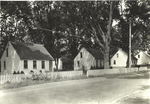
Mill Village, Fiskville, Cranston
RISD Archives
neighborhood view of mill houses; Photograph exhibited in Rhode Island Architecture Exhibition, 1939, RISD Museum. Curated by RISD Museum Director Alexander Dorner (tenure 1938-1941) and architectural historian Henry-Russell Hitchcock.
-
Mill Village, Fiskville, Cranston (verso)
RISD Archives
verso of photograph; Photograph exhibited in Rhode Island Architecture Exhibition, 1939, RISD Museum. Curated by RISD Museum Director Alexander Dorner (tenure 1938-1941) and architectural historian Henry-Russell Hitchcock.
-
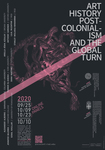
Art History, Postcolonialism, and the Global Turn
RISD Archives, Liberal Arts Division, Golrokh Fazl, and Foad Torshizi
Poster for the virtual symposium Post-colonialism, Art History and the Global Turn sponsored by RISD Liberal Arts Division, GAC, NCSS, RISD Global and Brown University Center for Contemporary South Asia, Brown Art History from the South, Brown Arts Initiative, Brown Department of History, Brown Department of the History of Art and Architecture, Brown Center for Latin American and Caribbean Studies, and Brown Decolonial Collective on the Migration of Objects and People. More information and registration at conference website.Poster Designed by Golrokh Fazl and Foad Torshizi.
-

Art History, Postcolonialism, and the Global Turn
RISD Archives, Liberal Arts Division, Golrokh Fazl, and Foad Torshizi
Poster for the virtual symposium Post-colonialism, Art History and the Global Turn sponsored by RISD Liberal Arts Division, GAC, NCSS, RISD Global and Brown University Center for Contemporary South Asia, Brown Art History from the South, Brown Arts Initiative, Brown Department of History, Brown Department of the History of Art and Architecture, Brown Center for Latin American and Caribbean Studies, and Brown Decolonial Collective on the Migration of Objects and People. More information and registration at conference website.Poster Designed by Golrokh Fazl and Foad Torshizi.