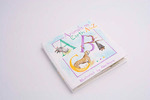
On was an interdisciplinary graduate periodical established by RISD graduate students in 2006. It featured essays and student work that related to a general issue theme. On was intended as a quarterly publication, but it is unclear if further issues beyond the first were ever published.
-

Architecture of aging care: a field through architectural innovation
Eve Huining Guo
A thesis is original.
A thesis for me is the process of finding my hidden voice toward society and making it stands in my own language. Not saying the first or second language I speak, but the unique language that I have created after years of learning and experiences in both the Architecture field and across the other disciplines. A thesis then introduces it to the world.
A thesis is living in the present, it reveals the current stage of my perception of big concerns towards the world-scale phenomenon and my focus towards how it relates to the individuals like me or who I might know.
As we were restricted to stay in our own homes due t o the COVID-19 pandemic, the spaces where we once spent a few waking hours now encapsulate most of our existence. Our relationship with dwelling and the community has unconsciously changed as a result.
My thesis considers the life of the elderly during the pandemic within the dwelling and community as experienced in an aging neighborhood located in Beijing, China.
-
Rewilding Seattle: a green network for both humans and non-humans
Zhouqian Guo
More than three hundred years ago, Seattle City was a place of wilderness, occupied by non-humans and the Duwamish Tibe and Suquamish. After the continuous human habitation of the village site, the dominance of Seattle has eventually shifted from non-humans to humans. While non-humans have been lived in the city all the time and seek a better living space.
The project proposes a multi-functional green network operating at different scales to cohabitate and reconnect between humans and non-humans. It restores natural habitat patches in existing locations of urban green spaces in Seattle City and connects them with co-habitation corridors in public lands. With continuous access to humans and non-humans, different types of habitats, and distinct types of public space, it seeks to integrate ecological and social values with cultural manifestations.
-
Building empathy at the intersection of art, nature, & culture: a field guide for art educators
Jasmine Gutbrod
This thesis is an offering for those compelled to use art and design learning as a way to strengthen the resiliency of our collective cultures. By integrating intersectional place-based pedagogy into art and design learning, art educators can resist the idea that humans exist on a hierarchy with each other and other species. A deeper understanding of place can build empathy for both nature and culture, and can help educators imagine alternative classroom models that focus on building empathy within a learning environment. The importance of place is examined through a literature review, contemporary artist analysis, case studies, and interviews with art educators. Intersectional place-based pedagogy calls for art educators to recognize not only the physical land of a site, but also the non-dominant cultural narratives that are embedded within a place.
-
An invitation
Ashley Harris
I am currently navigating between the concepts of body, material, space, and surface. I’m exploring ways to document and understand the full extent of my physical body in relation to the boundary and extent of my personal space. Each of my works displays strategies to understand my body and personal space. My intention is to confidently advocate for myself, particularly when my presence is questioned. At a time in which my body and presence are inherently political, I’m finding an urgency in how I articulate what my body is, the spaces my body navigates, and the surfaces to which my body corresponds. My work and ideas are contending with the notion that my body will always extend beyond itself. I will always deal with outward perceptions based on initial reactions to how I look. I’m navigating the relationship between my body, the perceptions of my body that I can’t control, and the response to my body in relation to surface and space beyond myself. This is a navigation of self. A navigation that becomes a negotiation once an invitation extends beyond myself.
Personal space: My body is inhabiting space all the time, every day, all day. My body collides with others, changes over time and leaves traces. My personal space is occupied by my body, by the built environment around me, and by the presence of others. My personal space extends beyond my physical body. It is the ethereal boundary which is unseen but noticed as a means of protection. It is private extension of myself, ever changing with each encounter.
I am in the process of understanding my personal space and realizing my needs to obtain a comfortable and sustainable way of occupying space. This includes questioning what an invitation into my personal space looks like. My work explores different methods to extend invitations, which, by design, are small or intimate encounters. In doing so, I’m investigating the transition from private to public. I am using these encounters to understand personal space. Personal space is more than a means to set boundaries, it is a way in which self-empowerment occurs beyond the physical body once acknowledgement and respect has been understood and placed within a space.
-
Beyond pasta: understanding Italian American culinary culture in Federal Hill
Chufan He
Nuances of culture are lost from an outside perspective. This one–sidedness perception brings confusion and can lead to stereotypes. As a “Country of immigrants’” it is crucial to break stereotypes born in America to understand the complexity and uniqueness of every immigrant's culture. As for stereotypes of Italian culture in America, these are always related to food. As an Italian American neighbourhood with many layers of history, Federal Hill has experienced several transitions. At the beginning of the 20th century, the Fabre Line offered the only transatlantic route which brought a large number of Italian immigrants to New England. Providence was one of the most popular ports, and many immigrants settled in the area from 1900 onwards. The majority of these immigrants were escaping poverty, lack of access to education and food scarcity in Southern Italy. These new Italian Americans earned a livelihood by running restaurant businesses or working in the garment industries. After a hundred years, the Italian-American story can be read as a successful, difficult, mutual cultural assimilation: Italian immigrants adjusted to American culture, and American culture adjusted to Italian Americans. Some restaurants in historically Italian neighborhoods maintain a traditional appearance and menu that tell the story of their immigrant roots, though few Italian Americans remain. Federal Hill, in Providence, RI, is one such neighborhood with few remaining Italian Americans, but many Italian restaurants. This thesis will start from Federal Hill, taking food as a tool to tell the Italian immigrants’ stories and break lingering stereotypes. By creating a sensory experience through street installations centered in Depasquale Square, visitors are able to engage with the stories of those immigrants as they walk along the historic street. Some of their stories speak to larger historical moments; some of them are personal memories, which would relate to the restaurant business they owned. All of the existing Italian restaurants would be part of this exhibition. Visitors can navigate the 18 Italian restaurants by the graphic that runs through the exhibition. The reorganization of Depasquale Square would bring a new center garden and create more space for the visitors to walk through at the same time. An archive of Italian American cuisine will anchor around the garden, with videos of the chefs from different Italian restaurants in the neighborhood cooking dishes. Color, sound, smell, all these sensory experiences will lead the visitors to the most important part in this neighborhood – taste.
-
Prepositions
Alexis Hill
My work is a conscious engagement with traditions of process art that emphasize making over outcome and the desire to create art that cannot be predetermined. The art objects are primarily a by-product of engagement with my material reality. This is hard to pin down and harder to talk about. Historian Kim Grant’s introduction to the circular and sometimes impenetrable creative process is a good summation of one of the essential problems of my art [school] experience: “The artist’s hard work often takes place without a clearly denied goal, thereby rendering the artist’s labors endless, and any results resistant to external evaluation.”** One kind of evaluation, however, comes out of ideas of endurance and how my body interacts with material. Have I repeated the individual mark to the point of muscle memory? Can my hand work by itself? If my hand isn’t making active decisions, will another internal logic reveal itself? The inverse is to manipulate the whole to ind the granular. Both are correct. Printmaking allows for this multidirectional.
-
Refiguring relations
Daphne Hsu
Refiguring Relations sets conditions for interdependence and visualizes the affective relationships that people have with one another. Through scripts and participatory experiences, my work explores, challenges, and formulates expressions of collaboration. I extend spaces of overlap between individuals to encourage connection and alliance building, however temporary, slow, or small. In reading experiences, both print and digital, models of circulation and accessibility allow the audience to see and affect each others’ interactions. This thesis assembles methodologies and blueprints for reciprocal engagement, between designer and collaborators, designer and participants, and among participants themselves.
-
Commencement 2021 Amy Huang Presentation of Student Awards
Amy Huang
RISD Student Alliance President Amy Huang 21 ID presents the Warren Family Social Engagement Award to Aya Alghanmeh 21 IL and Namrata Dhore BArch 21, and the Steven Mendelson Award for Community Service to Kaanchi Chopra 21 ID.
-
Inter - : design for fostering action-oriented awareness towards sustainable transition
Elena Danlei Huang
In order to meet the need for sustainable transition, it is vital for the general public to be aware of the social and ecological interconnectedness within existential climate crisis, local sustainable development, and urban individual’s behavioral patterns. As a method to rebuild interconnectedness, this thesis explores design interventions for fostering action-oriented awareness towards sustainable transition. Jumping out from the current paradigm, it tries to connect the audience to alternative conceptual representations. An integrated theoretical model built around a local contextualized issue is proposed in the thesis, followed by a practice-based case project focusing on Rhode Island Squid Fishery as a proof-of-concept. The model consists of three layers of design interventions: Design as narrative, catalyst and engagement. As the designer and first case practitioner, I have been creating: The visual mapping of the RI squid network; Invisible Skin, a garment made from squid fish waste; and Gladius, the kitchen utensil for at-home squid processing. Through this holistic approach, I want to provide an alternative perspective from the field of art and design, reversing negative, disempowered public impression on the environmental crisis.
-
Contemporary art warfare
Zongxian Huang
Being an artist represents a lifelong commitment to nonstop development, despite life circumstances. I fully utilized my two years at graduate school to develop a sustainable way of living an artist’s life by creating a standard operating procedure (SOP), guiding my research and practice. An SOP is a strategic method designed to reach an objective in a systemic manner. Mine shows it is possible for an artist to stay productive, creative, and healthy under high pressure, even during unexpected contingencies like the COVID-19 pandemic. My personal experience completing graduate school during a pandemic presents a possibility to other artists of how to live an artist’s life effectively and healthily. It could show the possibility of art practice to enhance and give meaning to life.
-
The art of microbe maintenance: value and applications in design
Yujin Hwang
My thesis centers around designing microbial systems and objects for a sustainable future. I propose ideas to bring microbes into the home in order to make people understand them as a part of the environment. Through deep consideration of how my microbe based material could change across national and social contexts, I create accessible, attractive and friendly-looking design objects with microbes that address people’s fear of microbial life. I strive to facilitate the intersection and interaction between people and technologies in ways that are ultimately harmonious for the well being of both.
My ultimate goal for my thesis is not only making this material useful, but also finding design processes that could contribute to the environment by returning the design to nature. Furthermore, I would like to implement technologies into this sustainable material so I can suggest ways that designers can use it for various purposes and mass production.
-
RISD Research Perspectives | Mellon Faculty Fellowship, RISD Museum
Kate Irvin, Laurie Brewer, Matthew Bird, RISD Research, and Holly Gaboriault
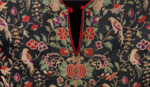
Costume & Textiles Department curators Kate Irvin and Laurie Brewer join Industrial Design Senior critic Matthew Bird ID'81 to discuss the Museum's current Andrew W. Mellon Faculty Fellowship. The two-year appointments are designed to engage faculty members from across disciplines in research, teaching, and public engagement within a curatorial department of the Museum’s collection. In 2020, the RISD Museum was awarded a CARES grant from the National Endowment for the Humanities to access, photograph and restore 900 costumes and objects in the Lucy Truman Aldrich Collection of Asian Art Masterworks. Bird speaks about his research methods during pandemic times and the items he has rediscovered through the lens of the Fellowship. This series highlights the intersections of art, design, theory, social justice and research in interviews and conversations within the RISD community, its faculty and students.
Written | Directed | Edited by Holly Gaboriault [MA Global Arts + Cultures '21]
Original Music by Tony Kenner
Music performances by Reed McLaren and Johnny Merrinick \ Mastered by Skylar Batz -

RISD Research Perspectives | Jonathan Mark Jackson
Johnathan Mark Jackson, RISD Research, and Holly Gaboriault
As a lens-based artist "investigating the nature of embodied knowledge", Jonathan Mark Jackson, MFA PH 21 investigates worlds of recovery and history in his studies as a student in the MFA Photography program. Expanding on his knowledge of archives, biographical research, visual language, and landscapes, his current work gives voice to the unseen realities of black lives connected to historical museums and their objects throughout New England. “I cannot think of freedom without considering the legacies of chattel American slavery... This history is also ultimately tied to the essential functions of democracy.” Merging contemporary and historic scholarship, Jackson combines text and image into a dynamic relationship encouraging reinvigorated perspectives and vocalizations. This series highlights the intersections of art, design, theory, social justice and research in interviewed conversations within the RISD community, its faculty and students.
Written | Directed | Filmed | Edited by Holly Gaboriault [MA Global Arts + Cultures '21] Original Music provided by the RI Art Archive Project
-
The TEK-way: traditional ecological knowledge: a catalyst to building resilient communities
Smera Rose Jacob
“In an era of both utopian high tech and unprecedented climate extremes, we are drowning in information while starving for wisdom." The TEK-Way is a challenge to the long arm of globalization by looking into multi-generational wisdom, the hidden strength of every community but forgotten in the endless race for “modernization”. It inspires a new relationship of justice and coexistence by exploring and rebuilding an understanding of traditional ecological knowledge and spreading awareness of its importance and role in this era of climate change.
This thesis questions the band-aid recovery strategies of disaster mitigation through an exploration of long-term adaptation scenarios by hybridizing indigenous nature-based technologies into contemporary systems to create resilient models for disaster preparedness. Situated in India, this research explores the tribal communities of the country, the Adivasis, who are considered the most threatened by climate change to develop an understanding of their values, practices, and the power dynamics and injustices around land tenure.
Cultures have existed and respected their landscapes for thousands of years. The idea of ownership of land needs to have a paradigm shift. We, as a species, need to come to terms with the fact that the environment is not a commodity to possess by one. “Environmental degradation, increasing social conflicts, and the loss of harmonious human-nature relationships, local identity, and historical context become significant topics of concern for the future.” Landscape Architects have the ability to develop and envision a more inclusive response for the future and nurture resilient communities. The TEK-Way unshackles and empowers the Adivasi communities by acknowledging their rights over land, spreading awareness, and respecting their practices and skills, which could be the future of climate-resilient infrastructures.
-
Feral devices : an additive fabrication
Kat Jarvinen
This collection of stories takes place in a nearby dimension, in which objects and entities that are obsolete, mundane, discarded, or overlooked, define alternative rules for value and purpose. Here, a broken machine suffers an existential crisis while a hungry spider explores its interior; a dog imagines life as a moth; a feral creature escapes from a woman’s mind; and a worker suffers spam email induced headaches. United by the destructive capitalist logic of planned obsolescence and an attraction to blue light, these characters traverse mind, matter, metaphor, and technology to find their way into new forms, reinventing themselves and/as one another. This project seeks to disrupt cycles of waste and create space for alternatives to technological decay. Through exploring, confusing, and subverting the ways we are conditioned to engage with media and technology—what is considered safe, dangerous, desirable, valuable, meaningful, functional, or possible—this project proposes an alternative reality for those things we throw away.
-
Reimagining the damage: an exploration on urban brownfield regeneration strategies
Jun Jiang
Residents of the Olneyville neighborhood in Providence, RI are at the cusp of being gentrified and forced to relocate. Revitalization of the Woonasquatucket River Greenway and the redevelopment of adjacent neighborhoods such as the West End and Federal Hill are attracting investors' attention on undeveloped post-industrial properties in Olneyville. This study aims to determine how gentrification can be reduced to minimize the impacts on the inhabitants of Olneyville Specifically, it investigates the social and physical conditions and designs potential solutions that can regenerate the urban brownfields in a way that fortifies the neighborhood from gentrification. In this context, "Regenerate" is defined as to repurpose a piece of undeveloped post-industrial mill property critical to the health and welfare of the community.
In developing the comprehensive regeneration strategies appropriate to this specific neighborhood and environment, the thesis studies the relationship between brownfields and gentrification. The work analyzes the neighborhood from different perspectives and research methods conducted on both urban and site scales. The strategies are divided into three parts: landscape frameworks, cultural programming, and economic indicators. The major focus of the design investigation lies on the landscape frameworks as primary vehicles for the regeneration of the post-industrial brownfield sites.
-
Living · Sharing · Connecting : rebirth of Longchang Apartments Heritage Community
Linhong Jiang
The Longchang Apartments, which the British designed during the Shanghai Concession Period, is considered a building of great historical importance. However, the disconnected relationship between this historic building and the ever-developing modern society surrounding it becomes more and more evident over time. The backward living conditions of residents and management fail to meet contemporary needs, which intensifies various conflicts between different user groups within the historic site.
This thesis proposes a different way of living in high density within historic structures and explores a new program focusing on user groups’ behavior and interaction to activate the site. The adaptive reuse of Longchang Apartments re-organizes the interior according to programmatic requirements for privacy, and the inner courtyard is opened to the urban context as a public space that enhances a relaxing atmosphere and brings residents and visitors together through the outdoor cinema with a community cafe zone and a historical overview of the site.
As a response to the conditions required for the survival of historical buildings in contemporary society, integrating this historical building and heritage community with contemporary life helps the residents maintain an effective co-living environment. Simultaneously, the new openness provides visitors with more intuitive guidance through the building's new urban space to create a more harmonious open community environment.
-
Re-foresting: cohabitation of human and trees
Chengyu Ke
This thesis starts with the ideological thinking of the interconnected and interdependent relationship between humans and non-humans. Taking the tree as an example, this research focuses on rethinking our urban built environment, and dynamic urban ecotones where humans and trees cohabitate.
It reframes the city from the bottom up with the consideration of root ecology and canopy ecology, focusing on this important metaphor for the infrastructure of the city. The goal is to develop healthy, productive co-dependencies between natural and man-built environments.
It proposes a utopian point of view for our cities and imagines a forest city with an asymmetrical street, shared spaces for the tree, cars in parking lots, new green networks, and a new community understanding of the importance of trees in our lives. It hopes to awaken people’s awareness and interests in trees then expand and build empathy with non-human elements of our world.
-
A house on a street: a proposal for the multi-generational house in America
Ian Johnson Kienbaum
The American Dream of the past would have a “bread-winner,” no need for affordable child care, and guaranteed retirement. While those concepts are still prevalent in some capacities, the rise of dual-income families, lack of child care, and delayed or foregone retirement creates an opportunity for the multigenerational home to reemerge as a critical housing typology in America.
To set the stage for this investigation, the house's life cycle is broken into five acts. Each act plays out a different configuration of space to the changing lifestyle of a family of six. The characters are two grandparents, two parents, and two children. By subverting the typical consumerist real estate cycle, first-time buyer, mover-upper, and down-sizer, this house considers the values gained by creating longer-lasting housing.
-
The second home: breaking the cycle of lonely death
Woohee Kim
Lonely Death Syndrome is a phenomenon in which an isolated person suffers a lack of social relationships and dies alone. This is a serious problem in modern South Korea, particularly among poor elderly people living in Seoul. Though the government has tried to help, there is an obvious bureaucratic limit in resolving the sense of loneliness. In Seoul, Nowon-gu is one of the districts that has the highest concentration of poor seniors, and high-rise rental housing built for this population. These apartments are uniform in design in order to house as many people as possible economically in a limited space, furthering isolation through vertical and horizontal disconnection. This typology worsens alienation not only within the same buildings but also from the people in the surrounding city. It is crucial to break physical and social walls between lonely seniors and other members of the surrounding community by making a new communal design template for existing rental housings in Nowon-gu.
This proposal is situated in Junggye Jugong Complex 9, a permanent rental apartment complex located in the center of Nowon-gu, and intervenes within two residential towers and a town hall. This apartment complex is typical of other apartment clusters in Seoul. The design intervention weaves together the existing structures from the outside, allowing residents to remain in their homes while creating common area that join previously divided units and floors. Elderly residents will enjoy renewed and diverse public networks based on their location. The proposal also provides another public zone for people from those three buildings, making a further link to the town hall for residents and younger students from a school nearby. This place is for daily casual gathering and, at the same time, producing educational content for the younger generation by gathering collective memories alongside the elders. Seniors can contribute to this community archive by providing their own remembrances and histories. As a result, through the creation of a varied infrastructure for connecting individuals, this intervention will stimulate multi-generational social interactions, broaden boundaries for seniors' daily activities, and counteract the circumstances responsible for Lonely Death Syndrome.
-
Commencement 2021 Kent Klienman Provost's Address and John R. Frazier Awaards Presentation
Kent Klienman, Laura Briggs, Paul Sproll, and RISD President
RISD Provost Kent Kleinman commends the Class of 2021’s talent and perseverance before presenting the John R. Frazier Award for Excellence in Teaching to Architecture faculty member Laura Briggs BArch 82 and Teaching + Learning in Art + Design Department Head Paul Sproll.