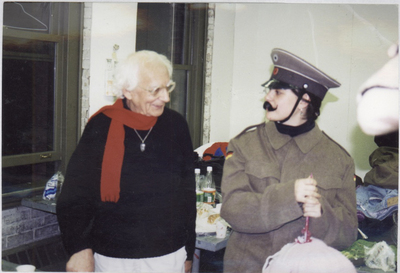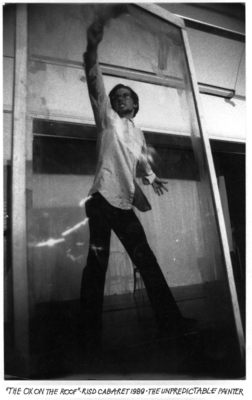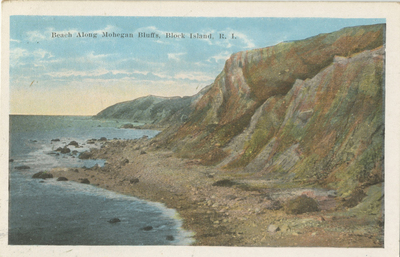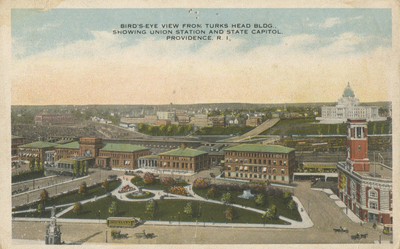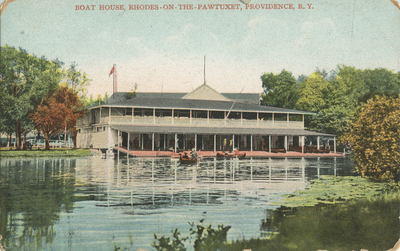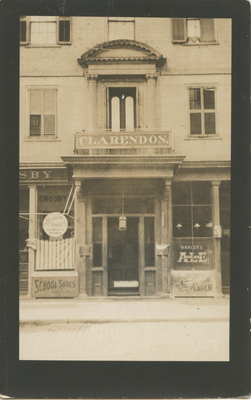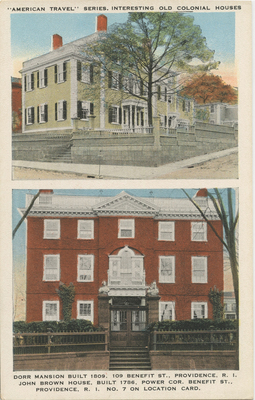
On was an interdisciplinary graduate periodical established by RISD graduate students in 2006. It featured essays and student work that related to a general issue theme. On was intended as a quarterly publication, but it is unclear if further issues beyond the first were ever published.
-
Big Box Vernacular |Graduate Thesis Exhibition 2021
Campus Exhibitions, Graduate Studies, and John Dixon
-
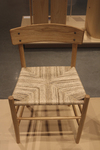
Kentucky Danish | Graduate Thesis Exhibition 2021
Campus Exhibitions, Graduate Studies, and John Dixon
-

A Flock of Sheep | Graduate Thesis Exhibition 2021
Campus Exhibitions, Graduate Studies, and Youtian Duan
-
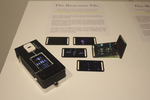
#1: Reaction Tile | Graduate Thesis Exhibition 2021
Campus Exhibitions, Graduate Studies, and Majed Bou Ghanem
Campus
-
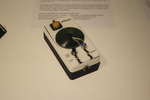
#2: Monofilter | Graduate Thesis Exhibition 2021
Campus Exhibitions, Graduate Studies, and Majed Bou Ghanem
-
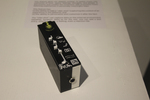
#3: Vibelist | Graduate Thesis Exhibition 2021
Campus Exhibitions, Graduate Studies, and Majed Bou Ghanem
-
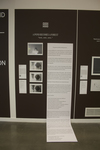
A Pond Becomes a Forest | Graduate Thesis Exhibition 2021
Campus Exhibitions, Graduate Studies, and Alexandra Ionescu
-
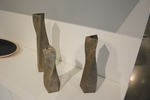
523 Candle Sticks | Graduate Thesis Exhibition 2021
Campus Exhibitions, Graduate Studies, and Eric Loucks
-
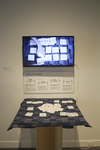
A Family Game: Tell Stories That Shaped Us | Graduate Thesis Exhibition 2021
Campus Exhibitions, Graduate Studies, and Zhuoyan Xie
-
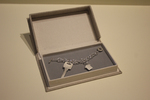
435000 (Please Return to 4350000) | Graduate Thesis Exhibition 2021
Campus Exhibitions, Graduate Studies, and Danni Xu
-

Commencement 2021 Shepard Fairey | Honorary Degree Recipient
Shepard Fairey and RISD President
RISD alum Shepard Fairey 92 IL talks about the problem-solving toolkit he acquired at RISD and asks the Class of 2021 to consider how they want the work they’ll do to both thrive in and shape the world.
-
Blur the boundaries: an aerial coexisting system for birds and humans on rooftops
Yu Fang
This project takes the relationship between birds and humans in the city as a starting point and raises questions about the characteristics of the ideal relationship between humans and non-humans in the city. After analyzing Manhattan as an example of typical grid cities, an aerial ecosystem on the rooftops is proposed to answer this question and it forms the beginning of future research. As a toolkit project, I propose design strategies that can be applied to many cities by classifying and analyzing the building types and their suitability for avian habitat. Humans are a part of nature, and cities are a part of ecology. Technology is still advancing, and cities are constantly expanding. Our influence on our surroundings will never be eliminated. As a consequence, we must face them directly and respond to the issues of urban density actively. The design proposals developed in this work aim to awaken the wild in our hearts yearning for nature in cities. Although our lives are overwhelmed by information, when bonds can be built with birds and other non-human creatures, city living is improved by these precious interactions.
-
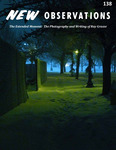
New Observations #138 | The Extended Moment: The Photography and Writing of Ray Grasse
Mia Feroleto
New Observations is a non-profit, contemporary arts journal written, edited, and published by the arts community. For more information visit newobservations.org. This issue is dedicated to the many talents of Ray Grasse. https://www.raygrassephotography.com.
-
New Observations #139 | A Fresh Look at What the 1938 to 1945 Economy can Tell Us About the Future of America
Mia Feroleto and Stephen Paul Miller
New Observations is a non-profit, contemporary arts journal written, edited, and published by the arts community. For more information visit newobservations.org. A Taboo Overview. "The Good War" and the Late New Deal.
-
New Observations #137 | Caught in the Dark Net of Our Own Past, Breaking Free of What Holds Americans Hostage
Mia Feroleto and The New Observations Community and Beyond
New Observations is a non-profit, contemporary arts journal written, edited, and published by the arts community. For more information visit newobservations.org.
-
Disinterestedness, Disdain and the Reception of Berleant’s Major Idea
Cheryl Foster
Arnold Berleant’s philosophical theories have proven to be prescient in their identification of an aesthetic interface between human beings and the natural world – the interface he calls “engagement,” a form of participatory aesthetics. This essay presents the context out of which Berleant’s theory of engagement has evolved and then touches upon the application of engagement first to cases of aesthetic appreciation and then to a very recent case in coastal ecology and management. It is suggested that Berleant’s elaboration of a “participatory aesthetics” both mirrors and informs the scientific model of “participatory research,” which in turn has implications for how philosophers might understand the relative roles of objectivity and engagement in aesthetic practice.
-
RISD Graduate Exhibition 2021
Holly Gaboriault, Graduate Studies, Mark Moscone, and Campus Exhibitions
During the pandemic, the importance of documenting what the students were going through upon graduation with their thesis show coupled with the show's installation taking place between two locations for the first time in its history in such unprecedented times, the RISD Museum of Art and the Waterfire Arts Center. Aside from being the first time the show's installation has been documented on video, it highlighted the tireless efforts of the Director of Campus Exhibitions, Mark Moscone and the gallery installation team navigating this annual show in such precarious times.
Commissioned by the RISD Graduate Studies Office at Rhode Island School of Design to accompany the 2021 RISD Grad Summer Conversation Series.
Producer | Director | Writer | Camera: Holly Gaboriault, MA GAC '21
Original Soundtrack: Rafael Attias, BFA GD '91 -
Adaptive reuse as evidence of scientific progress: recontextualizing a space for growing knowledge
Kayci Gallagher
With the constantly evolving initiatives of astronomical exploration comes the obsolescence of instruments conceived to support research; a sure sign of the scientific process. However, architecture constructed to shelter these constantly shifting tools often remains fixed, growing incapable of supporting advancing technology. Typically, these shelters are sidelined in favor of new infrastructure. Many optical observatories around the world face this issue and must choose between preserving the past or abandoning the site altogether. That these buildings are no longer needed for revolutionary research shouldn’t be disappointing: it is a signal of human achievement, and the scientific process requires a more deliberate model for architectural response that celebrates the need for adaptive reuse as a direct result of new knowledge.
Paradigm shifts in scientific thought can result in obsolete built infrastructure, which is often discarded and replaced — one form of adaptation. Some architects anticipate this need for change and design deliberate frameworks that are flexible enough to accommodate both permanence and transience — another form of adaptation. However, optical observatories are usually driven by a specific need to shelter massive telescopes, a type of instrument so large it is married to the architecture itself, creating a mixed circumstance between permanence and flexibility.
One such site, the Yerkes Observatory, has been referred to as “the birthplace of modern astrophysics” since its establishment in 1897. However, as of 2018, the University of Chicago no longer has a need for its once revolutionary technology. The transformation of the Yerkes Observatory contributes to the growing field of adaptive reuse, but the implications of this intervention stretch far beyond a single project, providing a model for how other iconic structures can evolve. The intervention design is organized into three main components. First, celebrating the site’s revolutionary past through archival storytelling. Second, connecting to the present by mediating between the local community context and scientific literacy. Third, preparing for the future by assembling architecture as a flexible educational tool.
-
Holding: speculative infrastructure for fire mitigation
Ian George
This thesis proposes permanent and deployable infrastructure and devices for wildfire mitigation at different scales. Designed with consideration to the conditions in the western United States, but primarily Oregon.The primary approach to infrastructure is designing water retention systems for fire suppression and prevention. Some strategies are familiar and proven, while other proposals are new, but build off of existing practices. Interventions need to be site specific, so the types of proposals will vary in scale, location and timeline.The infrastructure should be adjustable, because the needs of a region may change periodically. Landscape systems take time to establish. Speculated infrastructure is meant for future stakeholders to modulate and adjust.
-
This trash is someone else's problem
Lauren Goodman
This Trash is Someone Else’s Problem reimagines object design practices through a decolonial lens that embraces responsive approaches to the local environment and the communities that steward it. It advocates for design justice and social equality. The physical work was developed from discarded scraps of industrial waste harvested from the Providence area, such as wire fencing, oil drums, rebar and steel tubing. It was created without the use of expensive tools, machinery and materials in favour of a less extractive approach to design. In conjunction with the studio work is a series of community gatherings focused on low-fi ceramic pit firing and salon style discussions. The event series was developed to share the core ideas of the thesis with the larger community and establish a deliberately informal learning environment centered in the principles of listening and gratitude.