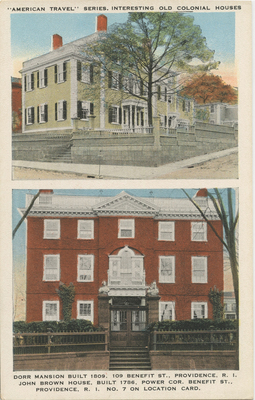
On was an interdisciplinary graduate periodical established by RISD graduate students in 2006. It featured essays and student work that related to a general issue theme. On was intended as a quarterly publication, but it is unclear if further issues beyond the first were ever published.
-

Last sunset : design to alleviate social isolation for Chinese elderly
Linghui Li
China has one of the fastest aging populations in the world. The country’s rapid economic development and urbanization have separated millions of older adults from their children, leading to empty nest families where the elderly must fend for themselves without assistance. Design in the modern era caters to the younger generation with more consumption power while neglecting the needs of these older adults.
In China, from the moment a child is born, confinement centers, preschools, and tutoring institutions, those venues are common throughout the urban fabric. Which spaces are mainly designed for the Chinese elderly? Besides meeting necessary physical needs such as medical treatment, what is lacking to meet the needs of this swiftly growing demographic?
Jilin Grocery Worker Housing is a microcosm of the overall situation in China, with 60 percent of senior adult residents who are in retirement. Most live alone or with their spouses on a limited economic income. This thesis proposes to understand and categorize elderly leisure activities to create a functional public space that fosters the connection between people. Architecture has the power to prevent or eliminate potential loneliness by promoting internal interaction between residents and encouraging spontaneous socializing among senior adults. The design also demonstrated that the space designed with the elderly as its main user group will also integrate people voluntarily to enrich daily lives and bring happiness to participants.
-
I don't quite remember it that way
Margaret Lindon
In the fall of 2020, during the first week of graduate school, I crashed on my road bike and suffered a big-time concussion. Like, lost-consciousness-and-forgot-the-whole-day kinda big. I became obsessed with this permanent memory deletion. Trying to remember the event was like trying to remember the first time I saw the color blue. Impossible without supplementary data or second-person observation.
Memory recall can operate like a game of telephone. When we remember something, we’re really just remembering the last time we remembered it. We accrue subtle adjustments to our memories that result in gradual omissions and distillations.
This process lost a comparison between human and machine. Each transference of data or memory results in a loss: of quality, of clarity, of precision. The more we redistribute data, the more bits we lose. The further we move away from a memory, the less we can remember. The compression of an image results in imperceptible losses and drop frames. The compression of the brain results in imperceptible losses and drop frames.
If our memory acts data – eroding with time, wiping unexpectedly at a moment’s notice, how do we immortalize it, beyond the capability of deletion?
Here’s a few pages of memories that have remained.
-
Objects in transformation
Caroline Coxe Lippincott
Traces and marks left behind tell the stories of buildings and their materials. Remnants of the past remain, while new construction is layered on top, creating a kind of palimpsest. Artifacts of material time - rust, erosion, growth - are inevitable, yet often feared. Typically in search of longevity, architects gravitate toward materials and finishes that promise durability. My work questions some of the assumptions we have about material quality as a function of time. Through experimental artifacts, this thesis reorients our perceptions of time’s effects on the built and natural environments, and introduces a new and expanded time scale.
-
Anti-gentrification: reconnect Chinatown through culture practice
Xianzhongge (Allen) Liu
This thesis focuses on the study of Chinatown in North America. Similar to the migration of other ethnic groups or cultures to North America, Chinatown originated as Chinese and East Asian migrants were excluded from mainstream American culture. Chinatowns became urban enclaves for Chinese people who speak the same language as well as share the same culture and food. However, in many cities in North America, development pressures have led to the gentrification of Chinatowns, resulting in a decrease in the number of Asian residents in Chinatown and a homogenization of the community. After understanding the historical development and gentrification of Chinatown in North America, this study aims to explore the potential for Chinatowns to become historical and cultural centers and a bridge connecting North American society and Chinese culture showcased through a series of landscape designs.
This thesis will rethink the lived experience in Chinatowns and strengthen the potential of Chinatowns to connect Chinese culture and American society. By using the ancient Chinese environmental construction theory, such as Shan-shui and Feng Shui This thesis aims to reimagine Chinatown open space and surrounding areas in a Chinese Feng Shui way. For example, make the Chinatown community in grading and hierarchy, create artificial water bodies for refreshing ‘Qi’. Ultimately, this investigation seeks to preserve and show the valuable and historical significance of Chinese culture in American culture.
-
Aquatic assemblages: improving dragonfly habitat and water quality in an urban park
Yan Liu
Many scientists have claimed that we are entering into the sixth mass extinction. According to IUCN, about 16% of the 6,016 species of dragonflies and damselflies are at risk of extinction. Dragonfly occupies an essential link in the food chain. Fluctuations in dragonfly numbers can affect the numbers of other species, such as mosquitoes and birds. Dragonflies are also closely related to the health of the water environment. Healthy water bodies can attract more and different species of dragonflies and other aquatic animals. Dragonflies’ decline is a symptom of widespread loss of the marshes, swamps, and free-flowing rivers they breed in, driven mainly by the expansion of unsustainable agriculture and urbanization around the globe. In addition to impacting habitat, urbanization has led to severe stormwater issues that impair the health of our rivers and oceans. My thesis aims to address three interrelated issues: restoration of aquatic insect habitat in urban areas, stormwater runoff , and education about species decline. To explore these issues, I focus on Roger Williams park, which has the potential to be high-quality habitat for dragonflies and other animals. However, currently the ponds in the park lack ecological diversity and have serious water quality issues due to stormwater runoff . To address these issues, I propose a series of rock berms in the ponds that change the direction of the water fl ow. Wetland plants along the berms will help clean the water as it flows through them. In addition, the berms will allow people to walk out into the pond to experience the wetlands and an educational installation that lists species of dragonflies that have gone extinct to help raise awareness about biodiversity loss. Ultimately, rock berms could be developed into a solution to urban stormwater and provide habitats for insects and other aquatic animals in different places.
-
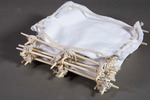
The Progressive Regression
Yifan Liu, Special Collections, and Fleet Library
Entry for the 9th Annual Baker & Whitehill Student Artists' Book Contest. Opening Reception Thursday, March 02, 2023, Fleet Library, Main Reading Room. Juror: Andre Lee Bassuet.
-
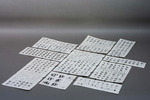
Concrete Poetry: a manifesto
Yining Li, Special Collections, and Fleet Library
Entry for the 9th Annual Baker & Whitehill Student Artists' Book Contest. Opening Reception Thursday, March 02, 2023, Fleet Library, Main Reading Room. Juror: Andre Lee Bassuet.
-
Trash matters: material strategies for prolonging the life of single-use plastic
Zixin Li
Plastic pollution has become one of the most pressing environmental issues. Communities worldwide have addressed the importance of facing the problem of plastic pollution control and issues relevant policies to effectively reduce the use of plastic products. The sudden outbreak of Covid-19 has made the urgency of the problem less significant. Nevertheless, the use of disposable plastics to comply with public health protocols has hugely increased making plastic pollution all the more severe.
Through material experimentation, this thesis reappraises different types of single-use plastic waste and attempts to transform them into longer-lasting reused solutions. It focuses on finding alternative materials while, at the same time, proposing find more efficient methods of decomposition.
-

RISD Research Perspectives | Rey Londres
Rey Londres, RISD Research, and Holly Gaboriault
Rey Londres is a Cuban-born photographer who challenges the stereotypes and boundaries for accessibility in professional portraiture. Throughout his time at RISD, curatorial agency and activism have been the cornerstones for both their studio projects and community engagement, including an artist residency with the Providence-based Haus of Glitter. Their work with risdARC (Anti-Racism Coalition) provided a platform for co-organizing the 2022 Black Biennial, the first exhibition of its kind at RISD highlighting voices of local BIPOC communities. Promoting community care and documenting the undocumented are what Rey fluidly interweaves into a practice centered around visibility, challenging power systems, and embracing the multiplicitous identities in us all. This series highlights the intersections of art, design, theory, social justice and research in interviewed conversations within the RISD community, its faculty and students.
Written | Directed | Filmed | Edited by Holly Gaboriault [MA Global Arts + Cultures '21] Original Music by Mike Delick Music Supervision by Elementary Music
-
Infection-free landscape: adaptable urban open space design during and after the COVID-19 pandemic
Weirong Luo
The ongoing COVID-19 pandemic has profoundly impacted the public perception, usage, and behaviors of urban open spaces. During the past three years, spatial measures to reduce the transmission of infection such as quarantine and social distancing have resulted in people’s isolation and reduction of daily physical interaction with others. Urban open spaces, including streets, squares, and parks, are outdoor urban spaces open for public access and recreation. From Frederick Law Olmsted’s design of New York’s Central Park to Daniel Burnham’s 1909 Plan of Chicago, the United States has a long history of planning and designing the urban environment for better public health in cities. Under these circumstances, urban open spaces are generally considered to have a significant positive effect on public health and human well-being, especially in high-density urban built environments.
This thesis explores the ways to optimize urban open spaces in response to the challenge of public health and create a healthier city with greater resilience. Based in New York City, this thesis studies the long-term impact of the COVID-19 pandemic on urban open spaces on different scales and types. By studying the new public demand for urban open spaces and the corresponding spatial features, this thesis aims to develop a design guideline for urban open spaces to provide a safe and comfortable experience to city residents for both the COVID-19 pandemic and post-pandemic period.
-
Houston, TX Walkable Circuit interventions to aid Houston’s safe/accessible walk-ability
Isabel Manahl
This thesis started out as an investigation to my hometown, Houston Texas. With that inquisition, comes the underlying historic infrastructure developments coming to light. After extensive research, I concurred that Houston’s lack of safe walk-ability and car-centric mentality within the urban context segregates many communities within the metro expanse.
Despite Houston’s reputation for ever-widening roads and an unwavering devotion to the vehicle, many of the city’s neighborhoods have considerable populations without access to a car.
I plan to institute a cheaper alternative of a change over time interventions being implemented within the context to aid the cyclist/pedestrian/metro rider in a safe, quicker manner to combat the use of a vehicle.
My proposal focuses on making designed street improvements and circuit connections in existing infrastructure as a way to allow residents to access amenities via walkable modes, foster a new culture of street life, and jump start community interactions.
-
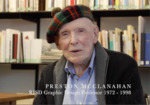
Oral History Interview with Preston McClanahan, November 8, 2022
Preston McClanahan, Holly Gaboriault, and RISD Archives
Interview of Preston McClanahan, conducted by Holly Gaboriault for the RISD Oral History Project in the Dale Reading Room for Archives and Special Collections, Fleet Library, Rhode Island School of Design on November 8, 2022. McClanahan speaks of his earlier experiences with design before teaching at RISD, including working on an exhibition at the Museum of Natural History with Dr. Margaret Mead and Alan Lomax. McClanahan also recalls strikes at RISD under Lee Hall and his relationships with Paul Rand, Malcolm Grear, and Noel Martin.
Production and videography by Holly Gaboriault.
Photo credits: RISD Archives, Fleet Library, Rhode Island School of Design; Katherine Small Gallery, Somerville, MA; American Museum of Natural History, New York, NY; Science Photo Library, Library of Congress, Washington, D.C.
-
Oral History Transcript | Interview with Preston McClanahan, November 8, 2022
Preston McClanahan, Holly Gaboriault, and RISD Archives
-
Contemporary Eco Theory in Art Education: field notes and desire paths
Margaret K. McCullough
This thesis is an investigation into patterns and overlaps of three critical elements in our world, art, nature, and education. Integral to this investigation and the contributions to humanity of these three are the accurate depiction of specific realities, upon which Science and the majority of global citizens agree, aesthetic sensibility, as well as beneficent solutions (i.e. those which do no harm.) Together we will examine the intersection of subjects, what they combine to achieve. We will consider how, taught and learned in unison, they may take on a position of greater prominence in efforts to solve real world problems. We will also consider whether, they combine to improve human and ecological well being by virtue of connection, to produce positive future outcomes.
This work examines and collects common threads within existing research, pedagogy, activism, and prescribed curricula (and/or the marked absence of the same.) In the process of this research, I attempted to identify what Art + Nature education is, what is at stake, when the connections of these disciplines are lost, and how we may shape ideas into powerful tools of ingenuity. These are tools that build resilience at a crucial juncture for teachers, students, communities, and the natural world.
-
How do you define the watershed? Individual representations of the Blackstone River watershed and their roles in collaborative watershed governance
Casey Merkle
Key leaders of civic environmental stewardship organizations shape collaborative watershed governance. Individuals perceive and construct the watershed through past experiences, feeling, emotion, values, and practices. It is not well known how these individuals perceive and construct their own representations of the watershed and environmental stewardship practices. This thesis explored individuals past experiences, feelings, emotions, values, and practices in the Blackstone River watershed to a) examine the ways in which key leaders of civic environmental stewardship organizations represent the watershed b) understand how individuals think, feel, and engage in environmental stewardship practices and, c) reveal the congruences and incongruencies of individual stewards’ representations within a collaborative watershed governance context. Interviews were with individuals representing organizations involved with the Blackstone Watershed Collaborative. The interviews focused on human perception, meaning and identity in the context of post-industrial riverine landscapes. The outcomes of this project revealed that key leaders generally emphasize the watershed as a place of work, use, and home underpinned by scientific standards in watershed stewardship. My work provides insights to the shared knowledge and gaps that may exist within a collaborative watershed governance context and can inform participants, practitioners, and watershed managers in similar settings to promote diverse perspectives and practices related to watershed stewardship.
-
Material Illumination
Lauren Mikaela Glenn
Design exists as a field within the domain of material, accompanied by art, engineering, and craft. Working in material allows the designer to develop material fluency, a language that is composed of matter in space. Material can be used to communicate - it can also be used to think. By engaging the body and its senses in the act of making one can connect the space around the body to the space of the mind, allowing ideas to exist in objects and thinking to happen through interaction with material. Through the documentation of a process of making in wood, glass, and light, I explore how the ways we think are inextricably tied to our sensory experiences of, within, and as a part of the material world.
-
Offshore speculation: generative ethics for submerged lands
Leigh Miller
Where is the line between land and sea? As the United States begins to extend renewable energy infrastructures offshore, it will fundamentally blur the boundary between submerged and visible lands. In communities unfamiliar with landscapes of extraction and generation, the realities of this emerging industry will challenge notions of ownership, aesthetic values, and environmental ethics.
Offshore Speculation opens a dialogue between the discipline of landscape architecture and the spatial politics that support the nation’s transition away from fossil fuels. Reimagining the sea as a new urban territory on submerged land allows honest interrogation of the land-sea binary. Because landscape architects are adept at visualizing temporal, spatial, and scalar change, they can reveal generative tensions and facilitate advocacy toward truly just transitions. This thesis plunges into the nuanced dynamics of power, energy, and perception of space on, near, and offshore. By offering a common vocabulary and vision for submerged lands and the infrastructures that occupy them, ‘Offshore Speculation’ demonstrates how it may be possible to imagine hybrid and multifunctional futures within and among them.
-

Mamas Bank Konto
Moritz, Fleet Library, and Visual + Material Resources
book by Katherine Forbes (Mama's Bank Account).