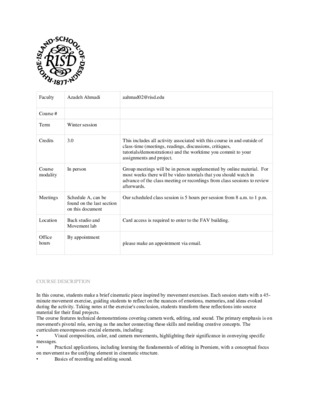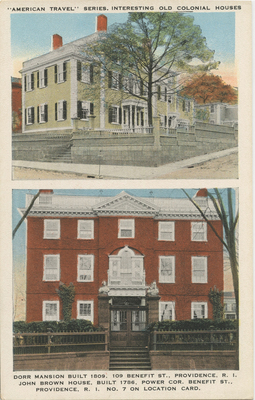
On was an interdisciplinary graduate periodical established by RISD graduate students in 2006. It featured essays and student work that related to a general issue theme. On was intended as a quarterly publication, but it is unclear if further issues beyond the first were ever published.
-

Intensifying the Experience of Contemporary Art
Wanjin Feng
Contemporary Art museums, emphasizing visual experience- es, struggle to accommodate multi-sensory art forms. This thesis introduces a groundbreaking exhibition design mod- el focused on creating immersive, multi-sensory experiences for visitors. The model transitions from a passive observation paradigm to an interactive perception approach, fostering a deeper understanding and emotional connection to art.
Applied to the Institute of Contemporary Art (ICA), the model introduces strategies such as narrative sculptures, interactive drawing spaces, integrated reading within exhibitions, and emotionally-driven spatial design. These strategies aim to make art more accessible, promoting personal connections with artworks.
In conclusion, the proposed model transforms contemporary art museums into engaging spaces offering rich multi-sensory experiences. This innovative approach not only enhances the visitor experience but also broadens our understanding of what a museum can offer, challenging conventional notions of museum design.
-
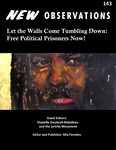
New Observations #143 | Let the Walls Come Tumbling Down: Free Political Prisoners Now!
Mia Feroleto, Paulette Dauteuil-Robideau, and The Jericho Movement
New Observations is a non-profit, contemporary arts journal written, edited, and published by the arts community. For more information visit newobservations.org.
-
Making time: Gentle invitations for radical slowness
Lian Fumerton-Liu
Year after year, we place more value on efficiency and productivity; underestimating smaller gestures of craft, care and wonder. This emphasis directly affects the tools and structures that determine how, and what, we make.
Making time is a practice that counters the urgency of now by unearthing approaches to break down, reimagine, and remake existing systems. Through personal reflection and experimental collaboration, it acts as a series of ever-evolving invitations—openings and pauses for others to begin to radically invert expectations; to wander; to grow artifacts; to write letters to the birds; to multiply oceans; to extend connections; to plant proposals; to create ecosystems; where weeds flourish; where poetry is unearthed; where streams merge; where clocks walk with the wind; where small is all.
Amongst these explorations, new pathways emerge—processes that demonstrate alternate ways to create and redefine what we consider precious time.
-
Home. Objects. Transitions.
Fei Gao
As migratory life challenges traditional understandings of "home," can domestic objects, materials, or substitutes transformed into portable art forms soothe migratory anxiety, navigate connections to home, and become alternatives to the ideal home?
This thesis is an investigation of the value of domestic objects as transitional markers of "home" and their ability to foster positive emotional connection among those whose lives are in flux migrating people. Based on British psychiatrist Donald W. Winnicott's research on "Transitional Objects" or "Transitional Phenomena" such objects not only represent "comfort objects" for infants but also foreshadow the many roles assigned by individuals throughout their lifelong journey.
-
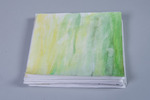
Direction
Haimeng Ge, Special Collections, and Fleet Library
Entry for the 10th Baker & Whitehill Student Artists' Book Contest. Opening Reception Thursday, February 29th, 2024 Fleet Library, Main Reading Room. Juror: Ian Cozzens BArch 05.
-
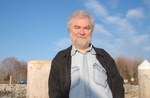
A Celebration of the Life of Marcin Giżycki
Marcin Gizycki, Agnieszka Taborska, and Liberal Arts Division
On Saturday March 4, at the Providence Athenaeum, 251 Benefit Street, Providence, collegues, family, and friends gathered to recognize and celebrate the life of Marcin Giżycki (1951-2022). This event took place from 3:00 to 5:00 pm. The program included music, images, and talk at 3:00, followed by snacks and drinks. Several people prepared talks and guests were invited to add to this number with an "open mike" encouraged by Agnieszka. The event was recorded for Agnieszka, for the RISD Archives, and for those who could not attend. Harmonica music: Chris Turner, vocals: Chris Turner, Rachel Maloney, Ted Porter.
-
Mini Makers: Designing Curriculum for Community-Based Arts Education
Hayden Goldberg
This work serves as documentation of my experience planning and teaching classes for a Rhode Island based after school visual arts pro- gram. Through arts-based action research, I explore methods of documentation and material exploration in order to create an adaptive, emergent curriculum that is responsive to a community-oriented arts education setting.
-
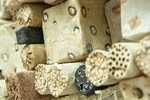
Collection #6
Joyce Gold, RISD Color Lab, and North American Hand Papermakers
Collection #6 2022, Handmade Paper, 20"X 18"X 6.5". Paper artist Joyce Gold pushes the boundaries of traditional papermaking to create works that are new and innovative. Her work has been described, “...it punctuates the depth and breath of papermaking.” Joyce uses various plant fibers with assorted papermaking techniques and markings to accentuate the profound layers and complexity of her work. Her work has been selected in many exhibitions across the nation and is also the recipient of awards from Arnold Grummer, Morgan Art of Papermaking Conservatory, and Fiber Art Now magazine. Joyce creates her paper works in her studio in Denver, CO.
Shared Obessions | NAHP Members' 2023 Annual Showcase exhibit on view at the RISD Color Lab, 30 North Main St., Providence, RI in conjunction with the opening reception ceremony held on the 2nd floor of the RISD Fleet Library, 15 Westminster St. Providence, RI. Additional work displayed at the RISD Fleet Library.
-
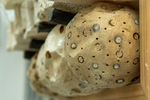
Collection #6
Joyce Gold, RISD Color Lab, and North American Hand Papermakers
Collection #6 2022, Handmade Paper, 20"X 18"X 6.5". Paper artist Joyce Gold pushes the boundaries of traditional papermaking to create works that are new and innovative. Her work has been described, “...it punctuates the depth and breath of papermaking.” Joyce uses various plant fibers with assorted papermaking techniques and markings to accentuate the profound layers and complexity of her work. Her work has been selected in many exhibitions across the nation and is also the recipient of awards from Arnold Grummer, Morgan Art of Papermaking Conservatory, and Fiber Art Now magazine. Joyce creates her paper works in her studio in Denver, CO.
Shared Obessions | NAHP Members' 2023 Annual Showcase exhibit on view at the RISD Color Lab, 30 North Main St., Providence, RI in conjunction with the opening reception ceremony held on the 2nd floor of the RISD Fleet Library, 15 Westminster St. Providence, RI. Additional work displayed at the RISD Fleet Library.
-
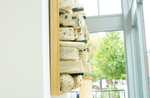
Collection #6
Joyce Gold, RISD Color Lab, and North American Hand Papermakers
Collection #6 2022, Handmade Paper, 20"X 18"X 6.5". Paper artist Joyce Gold pushes the boundaries of traditional papermaking to create works that are new and innovative. Her work has been described, “...it punctuates the depth and breath of papermaking.” Joyce uses various plant fibers with assorted papermaking techniques and markings to accentuate the profound layers and complexity of her work. Her work has been selected in many exhibitions across the nation and is also the recipient of awards from Arnold Grummer, Morgan Art of Papermaking Conservatory, and Fiber Art Now magazine. Joyce creates her paper works in her studio in Denver, CO.
Shared Obessions | NAHP Members' 2023 Annual Showcase exhibit on view at the RISD Color Lab, 30 North Main St., Providence, RI in conjunction with the opening reception ceremony held on the 2nd floor of the RISD Fleet Library, 15 Westminster St. Providence, RI. Additional work displayed at the RISD Fleet Library.
-
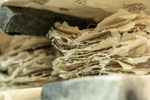
Collection #6
Joyce Gold, RISD Color Lab, and North American Hand Papermakers
Collection #6 2022, Handmade Paper, 20"X 18"X 6.5". Paper artist Joyce Gold pushes the boundaries of traditional papermaking to create works that are new and innovative. Her work has been described, “...it punctuates the depth and breath of papermaking.” Joyce uses various plant fibers with assorted papermaking techniques and markings to accentuate the profound layers and complexity of her work. Her work has been selected in many exhibitions across the nation and is also the recipient of awards from Arnold Grummer, Morgan Art of Papermaking Conservatory, and Fiber Art Now magazine. Joyce creates her paper works in her studio in Denver, CO.
Shared Obessions | NAHP Members' 2023 Annual Showcase exhibit on view at the RISD Color Lab, 30 North Main St., Providence, RI in conjunction with the opening reception ceremony held on the 2nd floor of the RISD Fleet Library, 15 Westminster St. Providence, RI. Additional work displayed at the RISD Fleet Library.
-
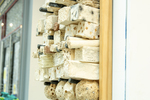
Collection #6
Joyce Gold, RISD Color Lab, and North American Hand Papermakers
Collection #6 2022, Handmade Paper, 20"X 18"X 6.5". Paper artist Joyce Gold pushes the boundaries of traditional papermaking to create works that are new and innovative. Her work has been described, “...it punctuates the depth and breath of papermaking.” Joyce uses various plant fibers with assorted papermaking techniques and markings to accentuate the profound layers and complexity of her work. Her work has been selected in many exhibitions across the nation and is also the recipient of awards from Arnold Grummer, Morgan Art of Papermaking Conservatory, and Fiber Art Now magazine. Joyce creates her paper works in her studio in Denver, CO.
Shared Obessions | NAHP Members' 2023 Annual Showcase exhibit on view at the RISD Color Lab, 30 North Main St., Providence, RI in conjunction with the opening reception ceremony held on the 2nd floor of the RISD Fleet Library, 15 Westminster St. Providence, RI. Additional work displayed at the RISD Fleet Library.
-
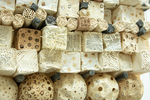
Collection #6
Joyce Gold, RISD Color Lab, and North American Hand Papermakers
Collection #6 2022, Handmade Paper, 20"X 18"X 6.5". Paper artist Joyce Gold pushes the boundaries of traditional papermaking to create works that are new and innovative. Her work has been described, “...it punctuates the depth and breath of papermaking.” Joyce uses various plant fibers with assorted papermaking techniques and markings to accentuate the profound layers and complexity of her work. Her work has been selected in many exhibitions across the nation and is also the recipient of awards from Arnold Grummer, Morgan Art of Papermaking Conservatory, and Fiber Art Now magazine. Joyce creates her paper works in her studio in Denver, CO.
Shared Obessions | NAHP Members' 2023 Annual Showcase exhibit on view at the RISD Color Lab, 30 North Main St., Providence, RI in conjunction with the opening reception ceremony held on the 2nd floor of the RISD Fleet Library, 15 Westminster St. Providence, RI. Additional work displayed at the RISD Fleet Library.
-
Landscape De/Re-Construction through Art
Manuel Gonzalez
Contemporary landscape architecture practice and education primarily focus on ecological and technical interventions. The climate crisis we find ourselves in demands scientifically informed decisions and well-engineered execution of projects, but, more importantly, creativity and innovation.
The fine arts, which were once integral and foundational to design, are today largely unappreciated and appropriated. The spiritual power of Art, Aesthetics, and Beauty, explored at length through art history and theory, are often viewed as indulgent or secondary to execution. The gap between Art & Design has widened. As a result, designers face challenges in fostering in individuals the kind of care and respect for the environment that is critical for cultivating harmonious systems that would ensure life not only survives but thrives on earth.
Artistic practices within the context of contemporary landscape design have the power to help us better understand the ethereal dimensions of existing in space. Through a multitude of approaches, Art as Design and Design as Art can offer valuable lenses that lead to deeper questioning and understanding of individual and collective relationships to the external.
By modeling alternative methods and approaches, this thesis acts as a bridge and expansion of the field that draws on traditions while looking forward–fostering empathy, unity, and curiosity. Altogether, I hope this can lead to greater respect and excitement for the possibilities of what our world could be and how we make them happen.
-
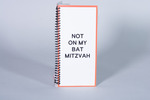
Not On My Bat Mitzvah
Ella Goodman, Special Collections, and Fleet Library
Entry for the 10th Baker & Whitehill Student Artists' Book Contest. Opening Reception Thursday, February 29th, 2024 Fleet Library, Main Reading Room. Juror: Ian Cozzens BArch 05.
-
The Common Destiny of Living Creatures
Xiaodai Huang
This thesis explores the transformation of recycled materials and trash, into materials for jewelry making, and investigates the effects of human consumption on the environment. It is also concerned with ecological damage and biological harm by combining physical research methods with literature and data review. It also calls for consumers to reflect on their behavior and actively participate in the collective action of protecting the environment.
In this thesis, I collected and analyzed studies and information related to consumptive behavior, environmental pollution, and ecological damage. This includes academic papers, reports, statistics, and perspectives from professional organizations on consumption patterns, waste statistics, biological impacts of waste, examples of environmental pollution, waste management, etc.
The findings show that uncontrolled human consumption behavior leads to a generational pattern of large amounts of garbage and waste, which in turn leads to environmental pollution and the destruction of ecosystems. Extensive research reveals the challenges of over-consumption in terms of overexploitation of natural resources, increased energy consumption, and failed waste management. These problems seriously affect the ecological balance and pose a threat to the habitat and survival of animals everywhere.
Based on these findings, this thesis proposes a call for people to reflect on consumptive behavior and participate in environmental protection through artistic creation. Using materials such as found garbage as materials for jewelry making, and the installation of a large collection of feather brooches and necklaces of bird skeleton remains, this project conveys the harm caused by consumer behavior. It seeks to make an impact by evoking emotional resonance and action awareness in the audience. At the same time, this study also emphasizes the importance of promoting sustainable consumption and lifestyles, which requires the joint efforts of all sectors of society and the participation of every individual.
-
Little book on fish and other animals
Larisa Kachko, Special Collections, and Fleet Library
Entry for the 10th Baker & Whitehill Student Artists' Book Contest. Opening Reception Thursday, February 29th, 2024 Fleet Library, Main Reading Room. Juror: Ian Cozzens BArch 05.
-
Distance: A collection of studies of Human-Computer interaction to explore human emotions and relationships
Jinha Kang
In today's society, technology has become an indispensable part of our lives, permeating our daily routines to the point where it feels as essential as the air we breathe. The COVID-19 pandemic further highlighted the profound impact of technology, revealing its dual nature. While video conferencing bridged distances and connected people, the excessive use of social media drove wedges between them. As a multimedia artist, this thesis focuses on harnessing the positive potential of technology. Specifically, the objective is to employ technology as a medium to create art that fosters meaningful connections among individuals and conveys intricate emotions and complex relationships.
Interactive art serves as a perfect conduit for achieving these objectives as it captures attention and cultivates awareness through direct input and output mechanisms. Despite emotions and relationships being fundamental aspects of our lives, we often underestimate the struggles associated with them. Society tends to prioritize rationality and non-emotional behavior, mistakenly perceiving them as superior and more desirable traits. However, human interactions, including those involving technology, awaken individuals to their feelings and nonverbal responses, prompting a deeper understanding of themselves and their connections with others.
Through the exploration of human-computer interaction and physical computing, this thesis endeavors to facilitate social and relational awareness. A series of experiments and studies are conducted, focusing on the varying physical distances ranging from intimate proximity of 0cm to distances exceeding 18cm between individuals. By showcasing my creative works, I aspire to inspire individuals to embrace and cherish their special moments and emotions, fostering a greater sense of self-awareness and empathy.
-
Old and New: Intervention in Space and Material
Yoonji Kang
Hanok is a traditional Korean architecture built with Korea’s unique technology and style. Most Korean people have a positive impression of the Hanok but Hanok is acknowledged as an obsolete form of living these days. The reasons why the Hanok is not widely used are an inconvenience in living due to facilities, difficulty in maintenance, the high cost required for renovation, and its prone to coldness. Therefore, it is essential to modernize the design and construction of the Hanok by reflecting modern needs in a new Hanok. This study investigates the characteristics of the Hanok, the typologies, and how it developed in relation to the environment of the region, the distribution of Hanoks in Korea, and Seoul city’s remodeling ordinances/regulations for Hanoks. This thesis will examine formal, material, and operational strategies for remodeling Hanoks to meet the needs of modern lifestyles. Also, I am going to question the spatial composition of the Hanok and what a modern space should look like. I will be looking into various case studies of adaptive reuse with interventions such as insertion, juxtaposition, and wrapping. This thesis will propose a theory of Hanok reuse in an urban context by investigating operations in building and material dimensions.
Francoise Astorg Bollack, the author of Old Buildings New Forms takes five strategies when approaching the subject of restoring and reusing old fabric. Insertions: the new piece of pace or a building is inserted into the older volume, using the existing structure as protection and nestling in it. In general, the inserted piece has its own identity. Parasites: the new piece attaches itself to the side or the top of the original building and becomes one with it as it depends on the original structure. The original building provides key functions: structural support, access, ready-made integration in an existing historical and cultural fabric, and existing infrastructure. The addition cannot function without the support of the original building. Wraps: the addition wraps the older structure in a new mantle, it may spread an overhead umbrella to provide protection to a building that has become fragile, or it may encapsulate an older, smaller structure in an all-around enclosure. Juxtaposition: The addition stands next to the original building and does not engage with the older structure in an obvious dialogue. The visual separation is established: different textures, colors, materials, and styles. Weavings: The new work is weaved in and out of the original building fabric. The old and the new become inseparable.
By looking into case studies of each intervention, the objective is to discuss what is an ideal intervention in formal and material scale that is applicable to a traditional Hanok. My work questions what is acceptable and what is not acceptable, and what is a criterion of a good or bad change in an old building.
-
Connective Movements
Ian Keliher
Connective Movements describes the winding, associative thoughts gathered from long conversations with colleagues and internal dialogue with writers, philosophers, and filmmakers. Using the visual essay, I follow points of interest through labyrinthine and idiosyncratic logics. Collage and montage results in an assemblage of visual ideas both analytic and personal. Although the outputs vary, my body of work has been informed by a sustained inquiry into moving image with a focus on small moments and subjectivity: cloudwatching can spin into thoughts on communication, or simple, everyday words burrow into experience and memory. With this aim, I use the constituent parts of image, sequence, and narrative to cultivate spaces for extended interiority.
-
Urban Succession: an ecocentric urbanism
Anthony Kershaw
Through the development of canals and parks along with the denigration of the unmaintained, humans have worked to curate a natural environment designed by and for themselves. These urban typologies have defined boundaries, suppressed resources, and fragmented habitats. This thesis will work in opposition to current notions of the canal, park, and unmaintained to develop a new model for multi-species green infrastructure that embraces succession and views maintenance as a facilitation of natural processes rather than preservation of a singular condition.
The green infrastructure in question will more specifically be referred to as an ecological corridor: an ecocentric habitat connecting wildlife populations separated by human development/activity. This project will address the issue of habitat connection from a sustainability and ideological vantage point. By developing a green corridor catered to ecological services and connections in the heart of Hartford, Connecticut, we may shift the paradigm around urban green spaces and what it means to live sustainably in an urban context.
In order to re-frame the relationship between human development and local ecologies, we must first define what a sustainable urban environment looks like. In opposition to modernist myths of progress, a sustainable urban environment should acknowledge and leave room for existing ecological frameworks rather than seeking to conquer them. Humans should be seen as a part of the food chain, not omnipotent beings removed from environmental systems.
We should 1. celebrate, and design with, natural processes rather than suppress and displace them, i.e. Hartford, Connecticut’s canalization of the Park River following floods / industrial pollution and environmental succession patterns.
2.Deconcretize and embrace natural options for flood mitigation. The lack of permeable surfaces degenerates soil health while increasing the devastation of flooding events. By incorporating more permeable surfaces and vegetation zones, water run-off can be managed without the excessive use of underground water displacement infrastructure.
To create more resilient ecosystems, we must 3. acknowledge architecture’s role in fragmenting environments. Recovering systems of ecological infrastructure can reinstate natural through-ways lost to 20th century urban development.