On was an interdisciplinary graduate periodical established by RISD graduate students in 2006. It featured essays and student work that related to a general issue theme. On was intended as a quarterly publication, but it is unclear if further issues beyond the first were ever published.
-

Stage Lights Components Flag 18 (description), Trend Fall / Winter 2006/07
Swarovski, Visual + Material Resources, and Fleet Library
-

Stage Lights Components Flag 18 (detail), Trend Fall / Winter 2006/07
Swarovski, Visual + Material Resources, and Fleet Library
-

Stage Lights Components Flag 18 (detail), Trend Fall / Winter 2006/07
Swarovski, Visual + Material Resources, and Fleet Library
-

Stage Lights Components Flag 18, Trend Fall / Winter 2006/07
Swarovski, Visual + Material Resources, and Fleet Library
-

Stage Lights Components Flag 19, Trend Fall / Winter 2006/07
Swarovski, Visual + Material Resources, and Fleet Library
-

Stage Lights Components Flag 20, Trend Fall / Winter 2006/07
Swarovski, Visual + Material Resources, and Fleet Library
-

Gesture, Pulsion, Grain: Barthes' Musical Semiology
Michael Szekely
Although Barthes is perhaps best known as a semiotician, he is paradoxically always in search of precisely that which defies the constraints of language, whether art, signs or, in fact, language itself. Enter the relevance of music for Barthesian aesthetics. Barthes called for a "second semiology," in contrast to the classical semiology, which would explore "the body in a state of music." In this essay, I explore Barthes' musical semiology in terms of key concepts, including gesture, pulsion, grain, and jouissance. I extend the relevancy of Barthes' concepts, often articulated within the context of the Western classical musical tradition, to more contemporary examples from popular music and jazz. Here, free jazz drumming shows the way to the pulsion so integral to Barthes' emphasis on the bodily in music, and Tom Waits and Bjork demonstrate the gritty materiality of geno-song.
-
A Plea for a Cognitive Iconology within Visual Culture
Ian Verstegen
A place is needed for a 'cognitive iconology' within "visual culture." Like Logical Positivism before it, visual culture must reexamine its tacit assumption that conflation of psycho-sociological contributions to visual meaning is an adequate methodology, and that sociologism is a worthwhile overriding philosophy. Cognitive iconology isolates the psychological contribution to the study of images and does not monopolize it but isolates the foundational basis for it on which narrower interpretations must be built. With examples from the work of Titian, it is shown how the cognitive and 'cultural' contributions must work together to make meaning. Using the philosophy of Maurice Mandelbaum, and the example of Rudolf Arnheim and his analysis of visual art, a foundational approach of cognitive iconology to visual culture is sketched.
-
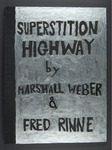
Superstition Highway
Marshall Weber, Special Collections, and Fleet Library
case bound with cloth spine, paper covered boards, hand painted; cover; interior spreads. Reading almost like a drug-induced trip, Marshall Weber writes of a tough patch of road somewhere in the desert West where strange folk appear. Images and text all hand painted by Fred Rinne.
-

A Dictionary Story
Sam Winston, Special Collections, and Fleet Library
accordion fold with hard cover, housed in cloth covered slipcase. Slipcase cover; title page; interior pages; colophon. A dictionary longs to be a book of stories, not just a list of words and definitions. She gets into trouble when she lets her words run about, creating meaningless havoc. The alphabet comes to the rescue and restores order.
-
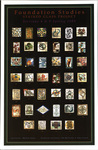
Foundation Studies: Stained Glass Project
RISD Archives
Display of work accomplished by Section 4 and 9 of the 2005 Foundation students. Index to student work filed with the poster.
-

Film Animation Video Senior Show
RISD Archives and Film, Animation & Video Department
The poster documents the 2005 Film Animation Video Senior Show held in the RISD Auditorium during the 2005 spring semester.
-
Agriculture, Aesthetic Appreciation and the Worlds of Nature
Pauline von Bonsdorff
Agriculture has received relatively little attention in environmental aesthetics, given its importance culturally for the physical sustenance of societies and from an eco-system perspective. In this article I take some steps towards developing a life-world approach to the agricultural landscape, where the intimate and long-term relationship between farmer and land is understood as having the potential for being a norm rather than the opposite of an aesthetic appreciation of landscape. This requires a narrative understanding of landscape, where culture and nature are seen as plural and relative to each other. I claim that the aesthetic competence of the farmer is inseparable from personal interest, which makes appreciation more acute and vivid both in perceiving nuances and in realising the existential drama of landscape. Finally I suggest that practicing agriculture is a genuine way of knowing nature and that some familiarity with agriculture should be included in all environmental education.
-
The Aesthetic Dissonance of Industrial Wind Machines
Jon Boone
Yuriko Saito recently published an essay in this journal, "Machines in the Ocean: The Aesthetics of Wind Farms" (Contemporary Aesthetics, 2 (2004)). The bulk of her essay is a search for the right aesthetic justification for wind plants sited in the ocean as well as for those onshore. Because wind power does not emit toxins into the air and its source of energy is recurrent, it offers the promise of a clean, renewable alternative to fossil fuels. The central problem with harnessing any form of energy is that enormous energies are wasted in the process of producing and channeling a relatively small amount. Wind power has this inherent difficulty; there are significant losses in the process of producing wind energy at industrial scales.
-
Art and Embodiment: Biological and Phenomenological Contributions to Understanding Beauty and the Aesthetic
Adrienne Dengerink Chaplin
Increasing awareness of the crucial and complex role of the body in making and experiencing art has led to a diverse range of biological and phenomenological philosophies of art. The shared emphasis on the role of the body re-connects these contemporary theories of art to aesthetics' pre-Kantian origin as a science of sense-perception (aesthesis) and feeling. Tracing some of the current positions in such diverse thinkers as Dissanayake, Langer, and Merleau-Ponty, this paper will examine their shared interest in art as a pre-reflective, non-discursive mode of knowing, symbolizing, and being-in-the-world. This paper argues that while some biologically based theories have drawn legitimate attention to the potential role of art in human evolution, their reductive tendencies need to be corrected and complemented by both a phenomenological and a 'symbolic' approach, which situates art in a web of culturally mediated affective encounters with the world in the context of a broader horizon that lends it its meaning.
-
From Mobile Ontologies to Mobile Aesthetics
Jos de Mul
We are living in a globalizing world, characterized by constant and rapid innovation. As we are inclined to go with this flow and its accompanying discourse of mobility, there is a danger that we overlook the persistence of cultural traditions. However, this paper argues that important differences exist between pre-modern, modern and post-modern traditions with regard to the form mobility takes. After a short discussion of the role information and communication technologies play in post-modern traditions, it is argued that these technologies transform our world, and not only our electronic files, into a global database and, as a consequence, generate a mobile stream of post-historic phenomena. In the conclusion some implications of the presented "database ontology" for the arts and aesthetic theory are discussed.
-
Production Theories and Artistic Value
David E.W. Fenner
In this paper, I want to argue that what I call "production theories" - theories that purport to account for the value of a work of art instrumentally and in terms of something experienced by audience members in attending to the work - are insufficient to account for artistic value. The production theories I will discuss include those of Monroe Beardsley, Nelson Goodman, Leo Tolstoy (for lack of a more current pure affective theory), and Alan Goldman (whose account may be seen as an amalgam of the first three). The first three of these theorists represent the most popular and central production theories, those focused, in the case of Beardsley, on the value of a work of art grounded in its ability to produce in an audience member an aesthetic experience; in the case of Goodman, to produce in an audience member a certain cognitive experience; and, third, in the case of Tolstoy, to produce in an audience member a certain emotional state. I think that none of these theories entirely accounts for artistic value. Though with others, I reject intrinsic accounts of artistic value, I think that if instrumental accounts which turn on producing something in attenders are not entirely sufficient, there may be another extrinsic value account worth considering. This paper will make use, in addition to that of the above named theorists, of the work of George Dickie and of a recent paper of mine simply entitled "Artistic Value,"[1] which suffered from an absence of the case I want to try to make here.
-
Movement and Participation: Journeys within Everyday Environments
Johanna Hällsten
Motion is an elementary part of our everyday life; it determines our perception and appropriation of environmental features. We are immersed in the world while on foot, grounding awareness of the three-dimensionality of the world and ourselves through movement. As a site-specific installation artist, movement is a crucial aspect of my practice in the sense that it makes the work occur. I argue that the installation comprises the experience of the participant through his or her interaction with the space and the intervention that has occurred through movement. The experience is one which unfolds and changes as the participant walks through the installation and its location. How does the encounter through movement of the work of art affect our experience of it, in particular, location- (site-) specific art work outside of the gallery? Together with this, how does the sense of narrative develop through the movements within the installation and location?
-

Hunkering : the last gaebberjabb number eight and IX/XVIths or aleatory annexations or odd bondings or fortuitous encounters with incompatible realities or love, anguish, wonder ... / largely by Walter Samuel Haatoum Hamady ; augmented by Henrik Drescher, Patrick Flynn, David McLimans, Peter Sis, and William Stafford.
Walter Samuel Haatoum Hamady, Special Collections, and Fleet Library
[160] pages : illustrations (some color), portraits. Hamady, Walter. Interminable gabberjabb ; 8. The eighth book in Hamady's "series" known as Interminable gabberjabbs. Edition of 108 copies. Mounted, signed collage on page [24]. Includes handprinting, marbled endpapers, collage, rubber stamping, maps, envelopes, postage stamps, special papers and mounted elements. "Here is the fade-out volume of an unforseen series begun in 1976. It was printed on our single-owner, all-manual, Vandercook SP-15 in more than 285 press-runs utilizing a numerosity of colors, typefaces and papers--hand, mould and machine made. In addition to the usual lay-ons of languid letterpressing, there is an affluence of unorthodox applications. This volume has been collaged, perforated, notched, rubberstamped, drilled, ticket-punched, numbered, signed, grommeted, scribed, ear-tattooed, ponce-wheeled, time-clocked, dog-eared, embossed, shorthanded, corner-rounded, elliptically trimmed and three genuine stubs. In addition, there are 79 illustrations. Fully footnoted, this first and only edition has been kept to a tightly snaffled 108 uniquely variegated copies. Handsewn/boud in Chicago by Scott Kellar in Italian burnt Umbrian cloth over boards with a rondelle/cameo (of the printer) over the spine in a dark Delft blue."--Publisher's prospectus. Includes an original Perishable Press invoice, dated 1 July 2006. Typed in black with two characters in red to Elspeth Pope, Shelton WA 98584. Library has copy no. 35.
-
Aesthetic Functionalism
Sven Ove Hansson
According to the strongest version of aesthetic functionalism, aesthetic value is completely determined by and therefore reducible to practical function. According to the opposite view, function and aesthetic value are completely independent of each other. Both these views are shown to be untenable, and instead aesthetic dualism is defended. By this, I mean that some aesthetic judgments that can legitimately be made about an object refer to it under descriptions of its practical function, whereas others refer to it, for instance, under descriptions of its physical appearance. Since valuations of the former type are in most cases positively correlated with satisfaction of functional requirements, this amounts to a defense of a radically weakened version of aesthetic functionalism.