On was an interdisciplinary graduate periodical established by RISD graduate students in 2006. It featured essays and student work that related to a general issue theme. On was intended as a quarterly publication, but it is unclear if further issues beyond the first were ever published.
-

On 'Shock:' The Artistic Imagination of Benjamin and Brecht
Mara Polgovsky Ezcurra
“Shock” is perhaps the central concept of modernist aesthetics and Walter Benjamin its best known theorist. It has been well documented that Benjamin’s long-lasting friendship with Bertolt Brecht and the latter’s dramatic theory had a profound influence on his thinking about this notion. Brecht's techniques of interruption and juxtaposition in the practice of epic theater were in close relationship with Benjamin’s use of montage as a mechanism to “liberate” meaning. Despite Theodor Adorno’s and Gershom Scholem’s attempt to situate Benjamin’s thought in a different aesthetic tradition, Brecht’s understanding of Verfremdung (estrangement) and Benjamin’s idea of “shock” are often deemed identical. In this paper I compare both concepts, looking at their points of coincidence and tension. I also relate their development to one of the most telling friendships in the history of twentieth-century philosophy.
-
Beauty or Bane: Advancing an Aesthetic Appreciation of Wind Turbine Farms
Tyson-Lord J. Gray
I begin this paper by looking at declining wind turbine sales during the years 2007 to 2010. In an attempt to locate a reason for this decline, I evaluate two claims by wind farm opponents: 1) that wind farms reduce property value, and 2) that wind farms ruin the beauty of nature. The first claim I respond to by looking at three studies conducted on residential property sales located near wind farms. For the second claim, I engage in a comparison of Immanuel Kant’s and John Dewey’s aesthetics. I ultimately advance an aesthetic appreciation of wind farms that seeks to view beauty as an integration of both emotional and cognitive perceptions.
-
Flesh as Communication -- Body Art and Body Theory
Falk Heinrich
On the last pages of The Visible and the Invisible, Merleau-Ponty investigates “the bond between flesh and idea, and the internal armature which [it] manifests and which it conceals.” Flesh and idea are intertwined in that the body reflects on itself in the act of perception and, one could add, action. A correlative bond lies in communication theory as the operational difference between ego and alter-ego. This article investigates the non-semiotic intertwinement of ‘flesh’ in art perception and theory based on communication theory in performance art (body art). The thesis is that ‘flesh’ in performance art is presented as absolute presence, but flesh can only be perceived through a reflective bearing.
-
Artification and the Drawing of Distinctions: an Analysis of Categories and Their Uses
Kari Korolainen
The aim of the article is to examine how we distinguish between art, decoration, and furnishing within a research interview. The interview specimens here are examined by adapting the ethnomethodologically oriented method of Membership Categorization Analysis. The results indicate that the speakers rely, for example, on the context of the interview situation and also use flexible logical means, such as conditioning and comparison, to make the discussed issues more comprehensive. The results of the analysis are interpreted in the context of artification, emphasizing in particular the notion of the situated process of categorical resiliency.
-
Aesthetization, Artification, and Aquariums
Thomas Leddy
‘Artification’ is a term recently coined and developed in Finnish aesthetic theory and proposed by Ossi Naukkarinen in this volume as the process of treating non-art objects as art. In this paper, I distinguish between a superficial sort of artification and a deep sort. The superficial sort is the one we need to worry about. In Part I, I consider various issues surrounding the definition of artification. In the process, I situate artification within the larger question of aestheticization. I understand aestheticization in terms of recent psychological work on supernormal stimuli and Virginia Postrel’s defense of style and surface in the commercial world. I conclude the first part with remarks on how the debate goes back to Plato’s rejection of arts in the Republic. Part II addresses the issues of artification and aestheticization within aquariums. I argue against scientific cognitivism and in favor of aesthetic pluralism in relation to appreciating natural environments. This pluralism allows for valuing artification and aestheticization, and hence for aquarium displays that show marine animals alongside works of art. However, I reject the shallow form of artification that can be found in the kitsch products sold in aquarium museum stores. I conclude with a reflection on ideals of artification and the role of the professional philosopher of art and aesthetics in contemporary life.
-
Defending Everyday Aesthetics and the Concept of 'Pretty'
Thomas Leddy
The paper defends everyday aesthetics against critiques inspired by Kant’s distinction between the agreeable and the beautiful, such as that of Christopher Dowling. It does this by focusing on analysis of the concept of the pretty. Following Carolyn Korsmeyer and A. C. Bradley, I posit a continuum for the aesthetic, from the pretty to the beautiful and finally to the sublime. After giving a history of the concept of 'pretty,' I consider its largely gendered nature and the feminist issues this raises. I conclude by arguing that limiting aesthetics to art or to art plus nature ignores the continuity between everyday life and the arts first emphasized by John Dewey, and ignores the importance of aesthetic value in the parts of our lives not devoted to art.
-
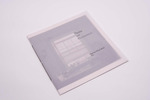
Theme and Permutation
Marlene MacCallum, Special Collections, and Fleet Library
24 unnumbered pages : illustrations. Limited edition of 100 copies, signed and numbered by the artist. Cover title. "The images were printed on the Heidelberg GTO offset lithographic press at Columbia College Chicago Center for Book and Paper Art by Clifton Meador with the assistance of Marlene MacCallum, Hannah King and Kate Morgan. The text was printed by Marlene on a Canon digital inkjet printer at the sillis lab in Corner Brook, NL. The book was bound by Marlene with assistance from Megan Musseau ... research team consists of Marlene MacCallum, Clifton Meador, Pierre LeBlanc and David Morrish"--Colophon. "[O]ne of four book works inspired by the experience of living in Corner Brook's Townsite area on the west coast of the island of Newfoundland. I photographed in six homes--all the same model as the one I live in ... Theme and Permutation uses digital tools to translate the film sources and prepare the image files. The sixteen plates are then printed to explore the permutational possibilities of offset printing ... Each method of generating images and producing multiples results in a reconsideration of the content and offers varying formats for interaction by the reader"--Page preceding colophon. "Hand sewn pamphlet, images custom-printed in offset lithography on Mohawk Superfine, text printed in inkjet, covers are inkjet printed on translucent Glama"--Artist's website, viewed on November 10, 2011. Cover wrapper consists of two layers of translucent paper, each printed with a portion of the title. Library has copy number 58.
-
Artification in Natural History Museums
Kaisa Mäki-Petäjä
Natural history exhibitions have changed considerably over recent decades concurring with a rise of a general movement of aestheticization in the Western culture. This usually results from an attempt to make the exhibitions more appealing to provide the public numerous ways of enjoying themselves, but they are also used to communicate information, especially of an ethical and affective kind. In this paper I will consider the effects of a particular kind of aestheticization, namely artification, of these kinds of exhibitions. Artification, i.e, the process of regarding non-art objects as art, appears to be in conflict with the science-based purposes of these exhibitions. Is this truly so? Does science and the viewer's understanding of scientific knowledge change when science is presented and experienced as art or as art-like or as something aesthetic? I will approach this question phenomenologically by pondering my own experience in the Natural Bistoury Museum in Helsinki and the relation of aesthetics, science and art on that basis. Instead of trying to define how art-like the exhibit in question as a whole is, I will concentrate on certain characters the exhibit has that are perhaps more readily associated with the artistic: uniqueness and presence, and how through these concepts we may gain a look into the interrelation between art and science.