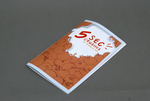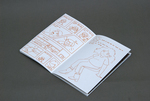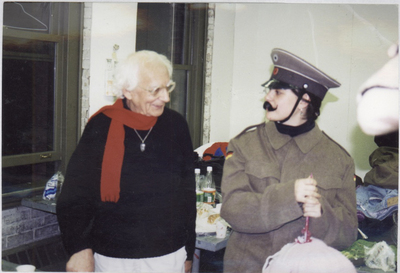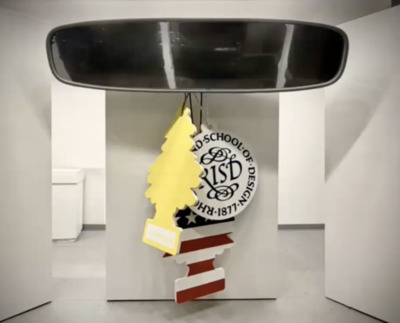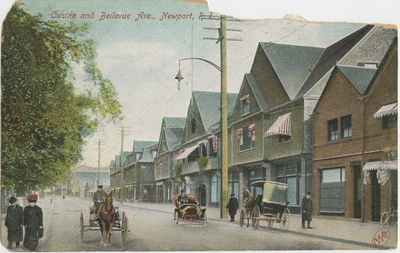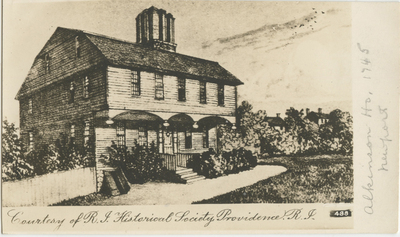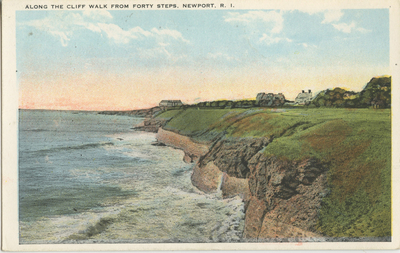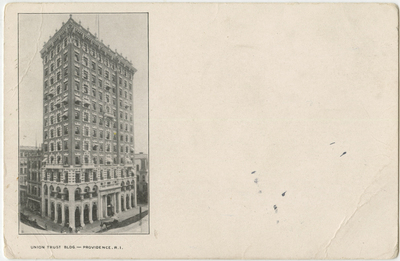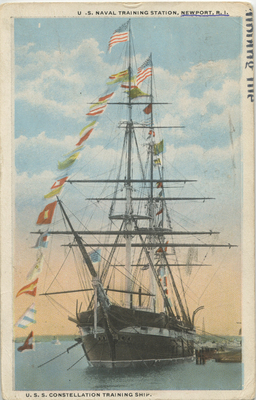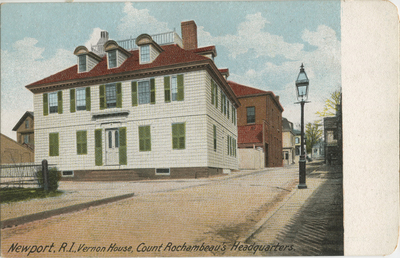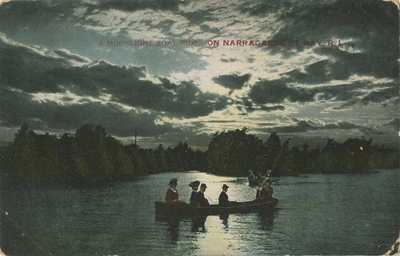
On was an interdisciplinary graduate periodical established by RISD graduate students in 2006. It featured essays and student work that related to a general issue theme. On was intended as a quarterly publication, but it is unclear if further issues beyond the first were ever published.
-

Reveal the aura : RISD contemplative atrium
Shuyi Guo
The built environment affects us on an emotional and psychological level; architecture can be as calming as meditation. Architecturally-induced contemplative states allow inhabitants to experience the benefits of meditation through space. Emotional well-being is essential to personal development and integral to the creative process. The Rhode Island School of Design campus currently offers counseling and psychological services for student and faculty. What is not offered is a space for students and faculty to seek inner peace in a relaxed way. In order to support the RISD community by creating a place for people to promote mental health in a consistent daily way, Memorial Hall, positioned in the central campus core, will become a contemplative atrium supporting architecturally-induced contemplative states by revealing aspects of the building’s aura.
Aura is a special characteristic held by some architecture that can strengthen personal connections between space and visitors and encourage a spiritual experience. Aura, or the being of a place, can be revealed via respect for aspects of a site’s past, through layering of physical changes to the structure over time, or palimpsest. The unique aspects of the place create a nuanced impression, shifting with each visit, even if the architecture remains unchanged.
Memorial Hall, former a place of worship, holds the spirituality of inner peace and already has a strong hidden aura. Currently used as a painting studio, this thesis proposes to reveal the hidden aura of Memorial Hall. Just as aura is something that brings human emotion into close contact with architecture, contemplative space is somewhere for people to understand how they fit in the universe. The intervention programs will be based on 3 types of meditation that provide spaces of focused attention, open monitoring and loving-kindness to embody a new approach: addressing mental health issues before they arise through exposure to architecture design to calm and focus the mind.
-

The Tragicomic Self: Amy Sillman and Philip Guston
Rachel Haidu, Academic Affairs, Graduate Studies, Liberal Arts, Fine Arts Division, and Theory & History of Art & Design Department
Both Amy Sillman and Philip Guston make painting, in their different historical moments (respectively, the present and the 1960s-70s), into a tragicomic enterprise. This talk examines the role that shape plays in that enterprise, when it is seen not as a formal or compositional element but as key to both the tragic aspect of a painting’s historical reflection and its comic operations—its funniness. Tragicomic shape is the means that painting has at its disposal for exploring selfhood, a concept that Haidu develops in relation to not only painting but also video and dance in her new book.
Rachel Haidu is Associate Professor in the Department of Art and Art History and the Graduate Program in Visual and Cultural Studies at the University of Rochester. She is the author of The Absence of Work: Marcel Broodthaers, 1964-1976 (October Books: MIT Press, 2013).
-
Commencement 2018 Keynote Address | David Hanson via robotic proxy Sophia
David Hanson and RISD President
Alumni Award for Artistic Achievement honoree David Hanson 96 FAV delivered the Keynote Address at RISD's Commencement 2018 via his newly created AI robot Sophia.
-
The contested landscapes of Mnemosyne : constructing maps of memory
Valeria Rachel Herrera
This is an unbound portfolio UV printed on plexiglass containing fragments and scenes from my master’s thesis The Contested Landscapes of Mnemosyne - Constructing Maps of Memory.
-
Moments of rotary motion : temporary use in vacant industrial heritage architecture
Xuecheng He
The vacant industrial historic building at 145 Globe Street within the Jewelry District in Providence, Rhode Island is designated one of the ten most endangered historic properties in the city. After surviving many stalled plans for renovation there are no efforts underway to save it, and deterioration from natural elements and vandalism continues. Many Industrial heritage buildings wait in a similar limbo. When there are no definite plans for renewal, often these buildings are left vacant for years without routine maintenance, causing severe damage and posing a threat to public safety. These buildings should be used as a resource in urban planning, rather than a problem, as they adjust well to swiftly changing occupancy.
Contemporary society is in constant flux. Architecture should break the traditional fixed pattern toward a perpetual malleability to adapt to the transition of functions quickly. Compared with other architectural typologies, industrial historical buildings generally have more open and organized spatial conditions. It is necessary to develop a system of flexible architecture within historic industry structures to support temporary use, which provides an active transitional construction by adaptive reuse of industry landmark buildings in the urban regeneration.
By applying reversible materials, temporary-use spaces will be quickly built and moveable to suit different programs and functions. The flexibility in the reuse of industrial heritage buildings will make more public the architectural heritage in the city, to accommodate different purposes of use and promote the city’s positive development.
At the host building at 145 Globe Street, temporary use will promote a creative art therapy community center, by applying a flexible spatial transformation system based on multifunction, with the intention of changing the original severe manufacturing spatial pattern into one of accessibility, healing & community. Its flexible presentation will bring new vitality and development opportunities to the historic district and city as a whole.
-
Throwing architecture to the sea : discipline out of context
Andrea Kelly
Architecture as a discipline has the ability to absorb and become other disciplines, often blurring its own boundary. Architecture as a practice is a response to dynamic forces of our world and is embedded in everyday entanglements. Yachts present a unique opportunity to explore these characteristics of architecture.
As a floating vessel meant to travel and spend a significant amount of time out at sea, the project is site-less and out of context to our physical built environment, allowing for opportunities to explore autonomy in the discipline. At the same time, it is entangled in human activity, engaging discourse of politics, economy, social status, climate change, and the future of our cities. Being able to work between autonomy and embedded-ness is a unique opportunity of building on the sea.
The line between architect and naval architect is the shore line. This is clearly manifested in maps, where the water is often drawn as a flat plane. However, the tide and waters fluctuate constantly and in reality that line is not clear cut at all. This can also describe the line between architecture and naval architecture and that it fluctuates in a similar manner to the shore line in reality. I have focused my thesis on the exploration of this fluctuating and blurry line.
-
Tightrope walking on the red lines
Arghavan Khosravi
My work is deeply connected to my own personal experience of the culture and politics of my homeland of Iran. I was born and raised in Iran in a nonreligious family. I experienced the first decade after the 1979 Islamic Revolution as a child. The hardliners had taken power, society suffered tremendous suppression, and Iran was at war with Iraq. My memories are filled with so many occasions in which the dominance of the oppressive regime affected my daily life, from being forced to wear a headscarf in elementary school, to being required to pray and recite the Quran at a public middle school. As a young woman, I was arrested while walking down the street in Tehran, simply because, according to the government’s definition, the hijab I was wearing didn’t cover enough of my body.
When I am in my studio here in the United States, considering what to paint next and what inspires me most, my mind fills with the rush of my memories of living in Iran. The distance I’ve gained from those repressions, both geographically and in terms of time, have allowed space for reflection. As I look at Iran’s culture from the outside, I have a strong visceral reaction to the unrighteousness of such a repressive regime. Being born and living most of your life under such circumstances makes you feel that it’s an unfair ordinary situation, but being distant from it makes you realize how extraordinarily unfair it is to have so many personal aspects of your life dictated and controlled by state power.
It is not my intention to portray myself, or people from my country, as victims, nor is it to draw sympathy form a Western audience. I am simply telling my story. For me, art is a meditative agent. The creative process fuels my imagination and helps me cope with my life traumas, alleviate their cumulative affects, and find positive aspects in them. When I pick up the brush, I feel the weight of my life experiences on my shoulders. When I put the brush to the canvas, the weight is still there, but it is lighter. My paintings represent unconscious attempts to reenact traumatic memories with the hope of achieving alternative positive outcomes—both at a personal level, and more collectively, at national and global level.
-
Learning environments of our stories
Grace M. Kim
This thesis reframes the traditional classroom as a “learning environment” in order to broaden the perspective of the causes and effects of learning in the context of today’s culture and technology. Learning environments are examined through the lens of three key learning theories: Lev Vygotsky’s Zone of Proximal Development, the Montessori Method of Education , and the Reggio Emilia Approach. The learning environments are further dissected into the three dimensions of: (1) the physical space, (2) the psychological space, and (3) the virtual space, and these dimensions are examined through the various interactions, which happen within each space. Through qualitative analysis and observations, this thesis speculates that the psychological space and its particular interactions provide significant opportunities to evolve as dynamic conditions for future generations’ learning. The author heavily references Lee S. Shulman’s concept of Signature Pedagogies, in parallel to the assessments of the learning environments, as Shulman’s particularly resonate with the author’s personal educational experiences and the observation of classrooms made during this thesis research investigation. The inferences made in this work contribute to a reassessment of art & design education’s potential in the transformation of traditional pedagogies in the context of the evolving landscape of learning environments.
-
The long forgotten city element
Yun Chu King
No cities should escape from their history and original features.
Taoyuan, also be called as a city of thousand of ponds, which has an unique landscape in Taiwan. This uniqueness is a victim of the city expansions. Instead of let this uniqueness undeveloped and being a part of victim by filled with soil as the land for the high-rise and high density developments, I would like to purpose a model water friendly community idea and a new living style to Taoyuan city.
This community consist with the one family houses which is the typical living style in this surrounding area, this project defines the public realm of this community, combining the micro urban farming culture and enhance the relationship between the water and this community.
-
Preventing lonely death
Hyun Kyu Lee and Menghan Zhou
Loneliness is part of a constellation of social, emotional and health outcomes for the elderly which collectively form one of the greatest public health issue worldwide. Various factors, such as losing connections with family and friends, and economic issues contribute to social isolation for the elderly, leading directly into the growing problem of “lonely death.” Lonely death describes the phenomenon of bodies discovered days, weeks, even months after death. It is possible to address this social problem almost entirely via architectural means, working within existing infrastructure of cities.
This thesis proposes a scattered elderly community within selected Boston MBTA Orange Line stations. The target group is made up of elderly Bostonians who live by themselves and have relative low income levels compared to the state poverty line, who have lived their entire lives in the city and do not wish to move into conventional elderly communities. These elderly live within 1000 meters of select Orange Line Metro stations and would like to continue using the metro line in their daily lives. Using existing infrastructure, a network is created to either connect stations to surrounded context by offering help from the elderly to assist other generations in various ways, for example, in Assembly station, a babysitting program is provided by the elderly to help parents who come shopping, based on the distinct shopping network around; or bring the surrounded communities into the station to enable communications among mixed generations, for example, a clinic workshop is proposed in Forest Hill Station to make up the lack of healthcare in that area at the same time, bring more people in. To propose hybrid architecture for each station, and flexible boundaries and buffer zones in-between the interior and the adjacent urban area, which enables the indoor space to merge into outdoors; this elderly community will engender a feeling of inclusivity and a sense of belonging between elder participants and community members by providing each with an incentive to spend time with the other; also between elder participants and the society by providing a space with connectivity instead of isolation. Thus, eventually, help the elderly fulfill their later lives and reconnect back to society.
-
The Universal Validity of the Conceptions of Artistic Creativity and the Perception of Beauty in Pre-modern China: A Comparative Examination
Junghwan Lee
In contemporary aesthetics, artistic creativity and the perception of beauty are the key concepts in explaining aesthetic consciousness. From the birth of modern aesthetics, an underlying assumption has been that artistic creativity and the perception of beauty are each genuinely universal in human experience, which is worthy of particular attention. To examine the universal validity of Western aesthetic claims on these two distinctive subjects, this paper presents a very brief outline of pre-modern Chinese interpretations of both concepts. Specifically, in comparison to Kant’s concept of genius and aesthetic judgment, I draw two conclusions. First, although there was no concept equivalent to art as an umbrella term to embrace diverse artistic activities, pre-modern Chinese intellectuals paid particular attention to originality, naturalness, and ineffability as common and essential features of artistic creativity, which show a high degree of similitude with the Western accounts. The similitude, along with its spontaneous emergence, attests, to a large extent, to the universality in experiencing, characterizing, and interpreting artistic creativity. Second, although there were many words in Chinese vocabulary similar to beauty, pre-modern Chinese intellectuals did not give particular conceptual significance to the perception of beauty. More specifically, in relation to Kant’s conception of aesthetic judgment and Stolnitz’s definition of aesthetic attitude, despite its long tradition of a disinterested attitude towards objects, pre-modern Chinese intellectuals did not relate this attitude to aesthetic experience. These tentative conclusions also lead us to question the universal validity of the association between art and beauty that was created by modern aesthetics and which contemporary aesthetics still claims as its legitimate field of research.
-
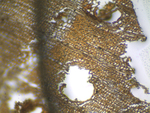
Honduras Mahogany, end grain, x 100
Fleet Library and Furniture Department
dimensionally stable, rot resistant, tone wood
-
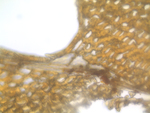
Honduras Mahogany, end grain, x 400
Fleet Library and Furniture Department
dimensionally stable, rot resistant, tone wood
-
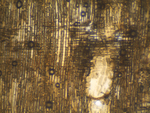
Honduras Mahogany, radial, x 100
Fleet Library and Furniture Department
dimensionally stable, rot resistant, tone wood
-
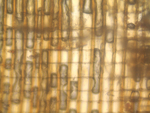
Honduras Mahogany, radial, x 400
Fleet Library and Furniture Department
dimensionally stable, rot resistant, tone wood
-
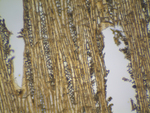
Honduras Mahogany, tangent, x 100
Fleet Library and Furniture Department
dimensionally stable, rot resistant, tone wood
-
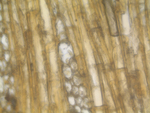
Honduras Mahogany, tangent, x 400
Fleet Library and Furniture Department
dimensionally stable, rot resistant, tone wood