
On was an interdisciplinary graduate periodical established by RISD graduate students in 2006. It featured essays and student work that related to a general issue theme. On was intended as a quarterly publication, but it is unclear if further issues beyond the first were ever published.



-
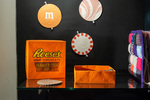
Handmade | selections from Jan Baker's Student Artists' Books Collection
Apr Baker, Special Collections, and Fleet Library
-
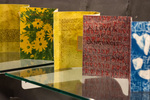
Handmade | selections from Jan Baker's Student Artists' Books Collection
Apr Baker, Special Collections, and Fleet Library
-
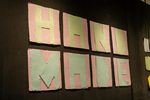
Handmade | selections from Jan Baker's Student Artists' Books Collection
Aug Baker, Special Collections, and Fleet Library
-
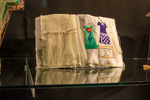
Handmade | selections from Jan Baker's Student Artists' Books Collection
Dec Baker, Special Collections, and Fleet Library
-
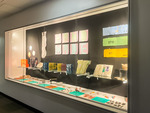
Handmade | selections from Jan Baker's Student Artists' Books Collection
Feb Baker, Special Collections, and Fleet Library
-
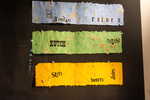
Handmade | selections from Jan Baker's Student Artists' Books Collection
Feb Baker, Special Collections, and Fleet Library
-
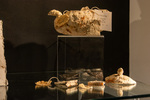
Handmade | selections from Jan Baker's Student Artists' Books Collection
Jan Baker, Special Collections, and Fleet Library
-
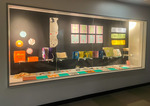
Handmade | selections from Jan Baker's Student Artists' Books Collection
Jan Baker, Special Collections, and Fleet Library
-
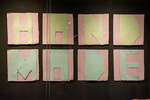
Handmade | selections from Jan Baker's Student Artists' Books Collection
Jul Baker, Special Collections, and Fleet Library
-
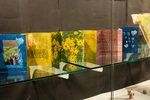
Handmade | selections from Jan Baker's Student Artists' Books Collection
Jul Baker, Special Collections, and Fleet Library
-
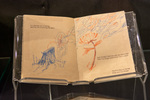
Handmade | selections from Jan Baker's Student Artists' Books Collection
Jun Baker, Special Collections, and Fleet Library
-
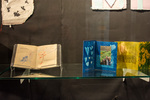
Handmade | selections from Jan Baker's Student Artists' Books Collection
Jun Baker, Special Collections, and Fleet Library
-
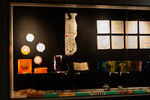
Handmade | selections from Jan Baker's Student Artists' Books Collection
Mar Baker, Special Collections, and Fleet Library
-
Handmade | selections from Jan Baker's Student Artists' Books Collection
Mar Baker, Special Collections, and Fleet Library
-
Handmade | selections from Jan Baker's Student Artists' Books Collection
May Baker, Special Collections, and Fleet Library
-
Handmade | selections from Jan Baker's Student Artists' Books Collection
May Baker, Special Collections, and Fleet Library
-
Handmade | selections from Jan Baker's Student Artists' Books Collection
Nov Baker, Special Collections, and Fleet Library
-
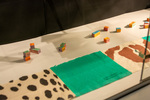
Handmade | selections from Jan Baker's Student Artists' Books Collection
Oct Baker, Special Collections, and Fleet Library
-
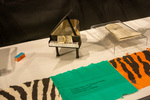
Handmade | selections from Jan Baker's Student Artists' Books Collection
Sep Baker, Special Collections, and Fleet Library
-

Decolonial Perspective on Fashion and Sustainability
Haisum Basharat
The fashion industry has long been criticized for its exploitative practices, cultural appropriation, and detrimental impact on the environment. To address these challenges, there is a growing need to adopt a decolonial approach that acknowledges the historical injustices perpetuated by colonial systems and centers the voices, practices, and traditions of marginalized communities. This abstract presents a model that integrates decolonial principles into the fashion industry while incorporating traditional textile practices to promote local autonomy, cultural sustainability, and mitigate climate change.
-
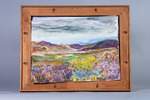
Buffalo Migration
Kaelin Behlmer, Special Collections, and Fleet Library
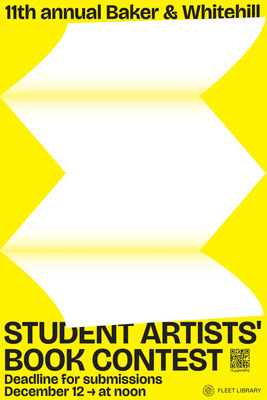
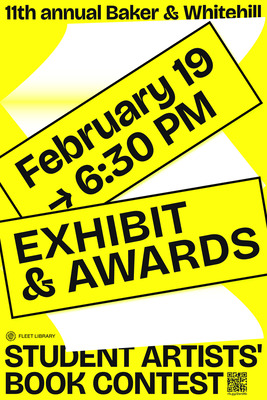
Entry for the 10th Baker & Whitehill Student Artists' Book Contest. Opening Reception Thursday, February 29th, 2024 Fleet Library, Main Reading Room. Juror: Ian Cozzens BArch 05.
-
Starting From Ecotone Reconnecting Fragmented Mission Hill
Xinyi Cai
This thesis aims to address the spatial fragmentation of Mission Hill. As an old, crowded and chaotic neighborhood in Boston, Mission Hill is a microcosm of Boston's history. Four hundred years ago, Mission Hill was an ecological ecotone which consisted of a series of transitional landscapes, located on the border of a peninsula surrounded by salt marshes. Today, the history of ecotone has been hidden. Landfill, segregation, gentrification, and climate change have caused fragmented spaces, weak connections, and poor accessibility. Meanwhile, the fragmentation of public open areas has also disrupted people's interaction with one another, and the spatial spirit of the community is lost as a result.
This thesis explores the new possibility of Mission Hill community development based on ecotone research and develops a full-scale spatial framework. Incorporating evidence from historical documents and field observations, Mission Hill's existing public open space exists as a reminder of its history as an ecotone. Research on ecotones demonstrates that different species and substances can co-exist and will be transferred efficiently because of the excellent connectivity inside the ecotone. Mission Hill's past as an ecotone creates the possibility of its future as the renewed ecotone. Through reconnecting fragmented open spaces, we can reactivate the history of Mission Hill and rewild Mission Hill to be a new ecotone. Inclusion, integrality and efficiency of ecotones can also be applied to the open areas of Mission Hill to enhance this new spatial system. By returning to the ecotone, Mission Hill can reorganize fragmented spaces, enhance connectivity and accessibility between spaces, activate hidden histories, evoke distant shared memories, and ultimately alleviate the emotional and physical trauma experienced by entire communities since segregation, gentrification, and climate change.
-
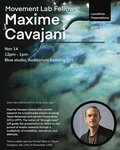
Movement Lab Fellows Lunchtime Presentations: Maxime Cavajani
Maxime Cavajani and Movement Lab
FAV will be holding lunchtime presentations of work by the Movement Lab Fellows throughout November. Mark your calendars for Movement Lab Fellow 23/24 Maxime Cavajani's presentation on November 14th, 2023 @ 12pm in the Blue Studio (AUD 125). Maxime shares their current research for a multimedia project invoking Texan fisherman and painter Forrest Bess (1911-1977). The notion of "through-ness" will guide this presentation to reflect on the pursuit of artistic research through a multiplicity of modalities, operations, and attempts.
-
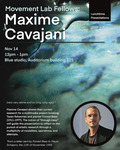
Movement Lab Fellows Lunchtime Presentations: Maxime Cavajani Poster
Maxime Cavajani and Movement Lab
-
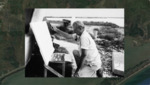
Movement Lab Fellows Lunchtime Presentations: Maxime Cavajani Short Film: Very Very Alone and So Long, Long Ago
Maxime Cavajani and Movement Lab
November 14th 2023, Movement Lab Very Very Alone and So Long, Long Ago* short film screened during presentation. *From a letter sent by Forrest Bess to Meyer Schapiro, November 11th, 1955.