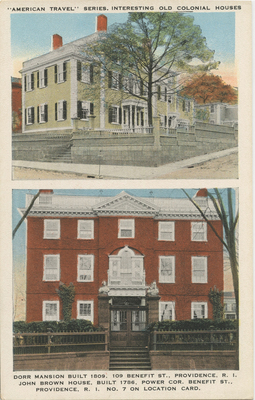
On was an interdisciplinary graduate periodical established by RISD graduate students in 2006. It featured essays and student work that related to a general issue theme. On was intended as a quarterly publication, but it is unclear if further issues beyond the first were ever published.
-
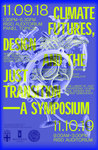
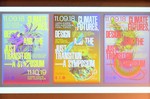
Climate Futures, Design, and the Just Transition
Liberal Arts Division
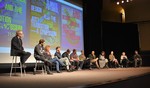
Symposium, November 9-10, 2018. Friday | 1:30-6:30pm. Saturday | 9:00 am - 3:00 pm. RISD Auditorium.
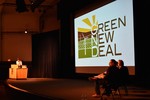
At a time when climate politics would seem to be stuck between a state of “melancholic paralysis” (Wark, 2015) and “passive nihilism” (Connolly, 2016), mobilizations occurring around just transitions stand as one of the few bright spots on the horizon. Discussions of just transitions are at different stages of development. They come with the usual bundle of issues, problems, controversies and setbacks. But they also come with potential and promise. In a bleak intellectual context, where the converging forces of climate destabilization and authoritarian populism would seem to be shrinking the ecopolitical imaginary to the propositions that we must either prepare for the worst or embrace a technocratic ecomodernist project to decarbonize the status quo, discussions circulating around just transitions are marked by a refreshing level of pragmatic concreteness and even a degree of hope.
Building on two previous meetings held at Brown and Northeastern by the Just Transitions Research Network in 2016 and 2017, this symposium will bring together a range of scholars and activists to map some of the different ways in which the search for just and rapid post carbon transitions now animates all manner of interventions--on the part of labor and climate justice activists, designers, architects, academics and artists--and is opening up intersectional spaces across movements fighting for racial and gender justice. We will explore the political, ideological, aesthetic, cultural and socio-technological barriers that stand in the way of just transitions in both the Global North and Global South. We will consider who is visible and who is rendered invisible in different kinds of transition discourses. This symposium will explore the potential material, political and ecological impacts of a renewables roll-out. Finally, we will debate the merits of just transitions premised on frameworks such as green growth, plenitude, degrowth, design futuring, decoloniality and beyond.
-
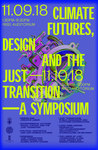
Climate Futures, Design, and the Just Transition
Liberal Arts Division
Symposium, November 9-10, 2018. Friday | 1:30-6:30pm. Saturday | 9:00 am - 3:00 pm. RISD Auditorium.
At a time when climate politics would seem to be stuck between a state of “melancholic paralysis” (Wark, 2015) and “passive nihilism” (Connolly, 2016), mobilizations occurring around just transitions stand as one of the few bright spots on the horizon. Discussions of just transitions are at different stages of development. They come with the usual bundle of issues, problems, controversies and setbacks. But they also come with potential and promise. In a bleak intellectual context, where the converging forces of climate destabilization and authoritarian populism would seem to be shrinking the ecopolitical imaginary to the propositions that we must either prepare for the worst or embrace a technocratic ecomodernist project to decarbonize the status quo, discussions circulating around just transitions are marked by a refreshing level of pragmatic concreteness and even a degree of hope.
Building on two previous meetings held at Brown and Northeastern by the Just Transitions Research Network in 2016 and 2017, this symposium will bring together a range of scholars and activists to map some of the different ways in which the search for just and rapid post carbon transitions now animates all manner of interventions--on the part of labor and climate justice activists, designers, architects, academics and artists--and is opening up intersectional spaces across movements fighting for racial and gender justice. We will explore the political, ideological, aesthetic, cultural and socio-technological barriers that stand in the way of just transitions in both the Global North and Global South. We will consider who is visible and who is rendered invisible in different kinds of transition discourses. This symposium will explore the potential material, political and ecological impacts of a renewables roll-out. Finally, we will debate the merits of just transitions premised on frameworks such as green growth, plenitude, degrowth, design futuring, decoloniality and beyond.
-

Displacement: People, Culture, and Design Practice | A presentation and response to life lived in an age of reconfigurations | Tony Fry
Liberal Arts Division
Lecture, September 5, 2018. 1:30 pm, Room 412 College Building, 2 College Street, Providence, RI 02903. In this talk Tony Fry will discuss the importance of design and the liberal arts. He will go on to suggest ways in which design understood as a form of politics will be central for building sustainable futures in radically changing times.
This event is sponsored by the Division of Liberal Arts graduate programs in Global Arts and Cultures and Nature-Culture-Sustainability Studies.
Tony Fry is one of the world’s leading scholars in the philosophy of design. He is the author of over 12 books on design, social theory and cultural critique including: Design Futuring: Sustainability, Ethics and New Practice, (2009), Design as Politics (2011), Becoming Human by Design (2012), City Futures (2014) and Remaking Cities: An Introduction to Metrofitting (2017). Fry has taught design and cultural theory in Britain, the United States, Hong Kong and Australia and holds a PhD in Cultural Studies from the University of Birmingham. He is a founder of the EcoDesign Foundation, former Professor and Convenor, Master of Design Futures Program, Griffith University, Queensland College of Art, and a contributing editor of the journal Design Philosophy Papers. He currently directs The Studio at the Edge of the World at the University of Tasmania.
-

Getting to Zero: What it will take to decarbonize electricity | Jesse Jenkins
Liberal Arts Division
Lecture, September 26, 2018. 1:10 pm Metcalf Auditorium, RISD Museum/Chace Center.
Jesse D. Jenkins is one of the leading contemporary figures thinking about energy futures and the project of deep decarbonization. He is currently an Environmental Fellow at the Harvard Kennedy School. His research focuses on the rapidly evolving electricity sector, including the transition to zero-carbon power systems and the proliferation of distributed energy resources. Jesse earned a PhD in Engineering Systems ('18) and MS in Technology & Policy ('14) from the Massachusetts Institute of Technology. He worked previously as a researcher at the MIT Energy Initiative, the Director of Energy and Climate Policy at the Breakthrough Institute, and a Policy and Research Associate at the Renewable Northwest Project.
-
Wartime Mobilization and Rapid Climate Change | Laurence Delina
Liberal Arts Division
Lecture, November 14, 2018. 1:15 pm Metcalf Auditorium, RISD Museum/Chace Center. Laurence Delina’s work explores governance and institutional arrangements in the politics and policy of sustainability, focusing on sustainable energy transitions and rapid climate mitigation. His book, Strategies for Rapid Climate Mitigation (Routledge 2016), investigates what can be learned from wartime mobilization to achieve rapid deployment of sustainable energy technologies. As a Pardee Center Post-Doc, he is leading a research project on sustainable energy transitions in developing countries. This project led to his most recent book, Accelerating Sustainable Energy Transition(s) in Developing Countries: The challenges of climate change and sustainable development(Routledge 2017), which explores how transitions away from carbon-based fuel sources to renewables occur in fourteen developing countries.
Laurence Delina, a Filipino scholar and author, is a Postdoctoral Associate at the Frederick S. Pardee Center for the Study of the Longer-Range Future at Boston University. He is the author of Strategies for Rapid Climate Mitigation: Wartime mobilization as policy model?, Accelerating Sustainable Energy Transition(s) in Developing Countries: The challenges of climate change and sustainable development, and Climate Actions: Strategies for social mobilization.
-
Victor Papanek: Design, Ecology, and Global Activism | Alison Clarke
Liberal Arts Division, Theory & History of Art & Design Department, RISD Museum, and RISD Global
Lecture, October 4, 2018. 6:00 pm Metcalf Auditorium, RISD Museum/Chace Center. The division of Liberal Arts, THAD department and RISD Museum welcome author and design historian Alison Clarke to RISD to give a lecture titled “Victor Papanek: Design, Ecology and Global Activism. "In 1968, Papanek described the design profession as a mode of “do-it-yourself murder” that generates waste, wreaks ecological havoc and excludes the most socially disadvantaged. Design, he warned, had become preoccupied with “the concocting of such inane trivia as mink-covered toilet-seats, electronic fingernail polish dryers and baroque fly-swatters,” rather than solving “real world” needs.
Based on the forthcoming book Victor Papanek: Designer for the Real World (MIT Press) and research for a recent co-curated exhibition with the Vitra Design Museum, Germany, the lecture will explore how Papanek’s iconoclastic designs, provocative journalism and unique global pedagogic initiatives upended the complacency of the 1960s and ’70s design establishment. Clarke will examine how this shift in the perception of design as a political tool was part of a broader challenge to commodity culture that drew on feminist and counter-culture ideas of non-capitalist production, African-American civil rights and global post-colonial activism, and a burgeoning ecological movement. She will conclude by examining the legacy of Papanek’s ideas in contemporary design discourse. This event is sponsored by the Division of Liberal Arts graduate programs in Global Arts and Cultures and Nature-Culture-Sustainability Studies in conjunction with the RISD Museum’s Repair and Design Futures Exhibition and RISD Global.
Alison J. Clarke is a design historian and trained social anthropologist. She is chair of Design History and Theory and Director of the Victor J. Papanek Foundation, University of Applied Arts Vienna, and taught previously at the Royal College of Art, London. Professor Clarke’s publications include Tupperware: The Promise of Plastic in 1950s America, which became the basis of an Emmy Award nominated PBS documentary, Design Anthropology: Object Culture in the 21st Century (2017), and Émigré Cultures in Design and Architecture (with Elana Shapira, 2017). She is currently completing a monograph for MIT Press titled Victor Papanek: Designer for the Real World, as well as co-curating a related exhibition at the Vitra Design Museum, Germany.
-
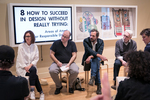
Victor Papanek: Design, Ecology, and Global Activism | Alison Clarke
Liberal Arts Division, Theory & History of Art & Design Department, RISD Museum, and RISD Global
-

Victor Papanek: Design, Ecology, and Global Activism | Alison Clarke
Liberal Arts Division, Theory & History of Art & Design Department, RISD Museum, and RISD Global
-

Victor Papanek: Design, Ecology, and Global Activism | Alison Clarke
Liberal Arts Division, Theory & History of Art & Design Department, RISD Museum, and RISD Global
-

Victor Papanek: Design, Ecology, and Global Activism | Alison Clarke
Liberal Arts Division, Theory & History of Art & Design Department, RISD Museum, and RISD Global
-
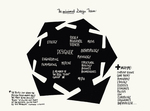
Victor Papanek: Design, Ecology, and Global Activism | Alison Clarke: Minimal Design Team Flowchart
Liberal Arts Division, Theory & History of Art & Design Department, RISD Museum, and RISD Global
Lecture, October 4, 2018. 6:00 pm Metcalf Auditorium, RISD Museum/Chace Center. The division of Liberal Arts, THAD department and RISD Museum welcome author and design historian Alison Clarke to RISD to give a lecture titled “Victor Papanek: Design, Ecology and Global Activism. "In 1968, Papanek described the design profession as a mode of “do-it-yourself murder” that generates waste, wreaks ecological havoc and excludes the most socially disadvantaged. Design, he warned, had become preoccupied with “the concocting of such inane trivia as mink-covered toilet-seats, electronic fingernail polish dryers and baroque fly-swatters,” rather than solving “real world” needs.
Based on the forthcoming book Victor Papanek: Designer for the Real World (MIT Press) and research for a recent co-curated exhibition with the Vitra Design Museum, Germany, the lecture will explore how Papanek’s iconoclastic designs, provocative journalism and unique global pedagogic initiatives upended the complacency of the 1960s and ’70s design establishment. Clarke will examine how this shift in the perception of design as a political tool was part of a broader challenge to commodity culture that drew on feminist and counter-culture ideas of non-capitalist production, African-American civil rights and global post-colonial activism, and a burgeoning ecological movement. She will conclude by examining the legacy of Papanek’s ideas in contemporary design discourse. This event is sponsored by the Division of Liberal Arts graduate programs in Global Arts and Cultures and Nature-Culture-Sustainability Studies in conjunction with the RISD Museum’s Repair and Design Futures Exhibition and RISD Global.
Alison J. Clarke is a design historian and trained social anthropologist. She is chair of Design History and Theory and Director of the Victor J. Papanek Foundation, University of Applied Arts Vienna, and taught previously at the Royal College of Art, London. Professor Clarke’s publications include Tupperware: The Promise of Plastic in 1950s America, which became the basis of an Emmy Award nominated PBS documentary, Design Anthropology: Object Culture in the 21st Century (2017), and Émigré Cultures in Design and Architecture (with Elana Shapira, 2017). She is currently completing a monograph for MIT Press titled Victor Papanek: Designer for the Real World, as well as co-curating a related exhibition at the Vitra Design Museum, Germany.
-

Victor Papanek: Design, Ecology, and Global Activism | Alison Clarke
Liberal Arts Division, Theory & History of Art & Design Department, RISD Museum, RISD Global, and NCSS Graduate Program
Lecture, October 4, 2018. 6:00 pm Metcalf Auditorium, RISD Museum/Chace Center. The division of Liberal Arts, THAD department and RISD Museum welcome author and design historian Alison Clarke to RISD to give a lecture titled “Victor Papanek: Design, Ecology and Global Activism. "In 1968, Papanek described the design profession as a mode of “do-it-yourself murder” that generates waste, wreaks ecological havoc and excludes the most socially disadvantaged. Design, he warned, had become preoccupied with “the concocting of such inane trivia as mink-covered toilet-seats, electronic fingernail polish dryers and baroque fly-swatters,” rather than solving “real world” needs.
Based on the forthcoming book Victor Papanek: Designer for the Real World (MIT Press) and research for a recent co-curated exhibition with the Vitra Design Museum, Germany, the lecture will explore how Papanek’s iconoclastic designs, provocative journalism and unique global pedagogic initiatives upended the complacency of the 1960s and ’70s design establishment. Clarke will examine how this shift in the perception of design as a political tool was part of a broader challenge to commodity culture that drew on feminist and counter-culture ideas of non-capitalist production, African-American civil rights and global post-colonial activism, and a burgeoning ecological movement. She will conclude by examining the legacy of Papanek’s ideas in contemporary design discourse. This event is sponsored by the Division of Liberal Arts graduate programs in Global Arts and Cultures and Nature-Culture-Sustainability Studies in conjunction with the RISD Museum’s Repair and Design Futures Exhibition and RISD Global.
Alison J. Clarke is a design historian and trained social anthropologist. She is chair of Design History and Theory and Director of the Victor J. Papanek Foundation, University of Applied Arts Vienna, and taught previously at the Royal College of Art, London. Professor Clarke’s publications include Tupperware: The Promise of Plastic in 1950s America, which became the basis of an Emmy Award nominated PBS documentary, Design Anthropology: Object Culture in the 21st Century (2017), and Émigré Cultures in Design and Architecture (with Elana Shapira, 2017). She is currently completing a monograph for MIT Press titled Victor Papanek: Designer for the Real World, as well as co-curating a related exhibition at the Vitra Design Museum, Germany.