
On was an interdisciplinary graduate periodical established by RISD graduate students in 2006. It featured essays and student work that related to a general issue theme. On was intended as a quarterly publication, but it is unclear if further issues beyond the first were ever published.



-

To mine or not to mine? Epistemological development of the Pebble Mine landscape in Lake Iliamna area as a resilient commons system
Chenfang (Vincent) Gang
People of the Yupik Eskimo nation have been inhabiting the area of Lake Iliamna in Alaska for hundreds of years. Their traditional subsistence living practice established a balanced system with the most abundant salmon fishery resource in the world. However, with the discovery of mine resources in the area, mining has threatened local practices. The mine has been identified as one of the most considerable gold-copper mineral resources globally, which can provide significant economic income to the locals and the United States. But with the mining project development, severe damage to the local environment is inevitable. The salmon fisheries are facing a serious loss of habitat and pollution. The native villages are also facing the loss of their traditional subsistence living resources and their territories are being intruded on by development. While a mine is only active for a short term to maximize economic gain, the damage can stay almost forever.
This thesis project looks in detail at the tension and development of the Pebble Mine project. By exploring the relationship between land, people, environment, and development, the goal is to state a collective ethical critique of short-term mining. This project used a series of water cleaning and pollution mitigation system to reduce the negative impacts of mining construction and contaminations. The restoration of this area requires an enormous amount of money, time, and other resources, yet, it still cannot stop the severe damage to the habitat and the local living conditions. This project exposes the price we are paying for the Pebble Mine, the damage the mine will cause to the land and to the Yupik people, and the timescales that are needed to restore the damage caused by the mine.
-
COPPER AFTERLIVES: Memory, Image, and Waste in the Postindustrial Landscape of Butte, Montana
Sierra Gideon
This thesis studies the rhetorics and semiotics of open-pit copper mining in Butte, Montana, United States from the mid-twentieth century through the present day within an environmental historical and visual culture studies framework. In examining various spatial reconfigurations—including mass mineral extraction, industrial discard, historic preservation, and landscape remediation—this thesis decenters extractivist paradigms that have normalized physical, bureaucratic, and representational acts of violence against communities and more-than-human ecosystems. While copper has materially symbolized progress and technological innovation in the United States, the extraction of the mineral from rural peripheries has been achieved at a great cost—as White settlers forcibly removed Indigenous people including the Séliš and Qlispé from mineral-abundant regions; as the Anaconda Company and ARCO sought to offset their debts through off-shore operations; and as ever-larger industrial technologies wrest ore from the earth at an ever-intensifying speed and scale. In the context of the public-private management of extractive zones, neither critical representation nor ethical remediation of abandoned mines are guaranteed. This reality presents an imperative to critically unravel dominant narratives and extractive visual cultures of open-pit copper mining in Butte, Montana so that stories of care, reciprocity, and multispecies agency can emerge.
-
Rising to the occasion : a resiliency strategy for Brickell, Miami
Stephanie Gottlieb
As a result of climate change, there has been an increase in flooding all over the world, especially in coastal areas. The coastal city of Miami, Florida is about seventeen feet above sea level at its highest point, with much of the city at five feet or less above sea level. This study is focused in the neighborhood of Brickell. The neighborhood is on the coast and thus acts as a barrier between the Atlantic and other neighborhoods in Miami. The neighborhood has also been the center of a lot of recent growth and development and has become a cultural center. Brickell already experiences flooding when there are large storms, which are becoming more frequent. With a two foot sea level rise, which is projected to happen before the year 2060, about half of the Brickell neighborhood will experience 70 days or more of flooding per year. Despite knowing this, the population of the neighborhood is growing, and it has become the most densely populated neighborhood in Miami. This project proposes a harm reduction strategy for those choosing to live in this, and other areas, where there will be inevitable flooding.
This project looks at both vernacular and contemporary precedents of stilted buildings to determine the best structure to support high density buildings in this context. The proposal works with Miami-Dade county’s current resiliency strategies to integrate stilted building into the urban fabric. The buildings function as apartments or office space during dry conditions, but are outfitted for emergency situations as well.
This proposal is not a solution to flooding, nor is it a plan for living with water. It is a harm reduction strategy.
-
Food for an island : on the relationships between agriculture, architecture and land
Melinda Groenewegen
Hawai‘i is in a food crisis relying on 85-90% of food to be imported to the islands while 41% of its agricultural lands are unfarmed. My thesis focuses on O‘ahu's broken food system and restoring the community’s identity and relationship to their food and land. On an urban scale, the project maps out the agricultural lands of O‘ahu that are being underutilized and owned by large corporations. Then, the project zooms into a town as an example of how to reinterpret the land. The chosen site was a sugar plantation and is still currently owned by Castle and Cooke. Next, the site is reimagined through the lens of agroforestry and indigenous farming techniques to reconnect the community to the roots of Hawaiian culture and create sustainable farming practices. On site, an agricultural learning center is proposed as an extension to the local elementary school to promote a farm-to-school initiative and food security. The design blurs the boundaries between landscape and architecture and looks to a staple of indigenous Hawaiian structures that uses local building materials: the "hale." Ultimately, the systems of land, food, and building work together to support self sufficiency and sustainable methods, allowing the town to relate to the common saying aloha ‘ānia (love of the land).
-
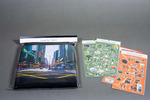
“Saved by T-shirt! - Mong Kok”
Oi Ying Valerie Ho, Special Collections, and Fleet Library
Entry for the 9th Annual Baker & Whitehill Student Artists' Book Contest. Opening Reception Thursday, March 02, 2023, Fleet Library, Main Reading Room. Juror: Andre Lee Bassuet.
-
Scalability system: A tool for bioregional navigation
Lulu Hou
The thesis studies methods for bioregional navigation based on raising awareness and creating an understanding of the existing landscape across scale – from global to local. It examines how the concept of the bioregion can be incorporated into a lifestyle and its daily experiences by allowing a more meaningful recontextualization of daily-used products through the natural resources that sustain them. The thesis takes native bogs for cranberry production in South-Eastern Massachusetts as an example and provides a field guide for different types of users – consumers, workers, and constituents – to experience, test and explore the landscape. In tracing the cranberry production supply chain to its source, the work translates ways of thinking about and noticing the landscape to explore how it can add value to products with local characteristics.
-
Towards a new immersion
Kaijie Huang
The rapid development of informational technologies and computational technologies in the past few decades had made previously expensive computational devices affordable for the general public. Personal computers in the 1990s and 2000s, Smartphones in the 2010s, and Virtual Reality (VR) headsets especially in recent years(2020s). The extraordinary immersive qualities of VR had sparked a new wave of exploration of this newly developed media.
The immersive medium has a long history in human society even before the invention of computers. It can take as many forms as literature, drama, painting, sculpture, photography, film, digital media and so much more. Depending on the different levels of immersion qualities of those mediums, human perception of realness toward those mediums can vary. Among all the human perceptions visual perception is the richest and was given large weight in the development of immersive mediums. From painting to photography, from photography to filmmaking, A clear trend of moving to more immersive media unfolds as we examine these histories.
This trend of moving to a more immersive visual also generates new possibilities of expressions. Photography and film were initially used majorly as recording visual media but were given more weight of artistic expression as it developed. Computational and VR headsets devices were born to fulfill simulation, training, and calculation needs, but then entertainment and artistic elements came into play.
All these ever-evolving forms of immersive media were only made affordable for the general public by multiple technological and production improvements--which had been proved possible during the past few decades and were expected to continue in the next few decades. Although VR headsets a decade ago were expensive and low in performance, current commercialized VR headsets at an affordable price like Oculus Quest can provide a pretty good immersive experience already.
As VR content getting more prevalent and easier to access, applications of VR content are becoming more diverse as well. However, most of the content today are focusing on recreating or simulating 3-dimensional experiences. But what if we reimagine the VR experience? Are there other possibilities other than spatial representation and simulation? What can be possible with some of the limitations removed as continuous tech improvements in the foreseeable future? What social construct and possibilities can this new immersive technology bring us?
-
We walk, we live: reclaiming the rights of female and other gender minorities to the urban commons
Wenxi (Hillary) Huang
Urban street environments are often described as not being beneficial for persons who identify as female and other gender minorities. This thesis responds to the urgent call for further transformation of the public realm through a reimagination of walking environments in the city. It examines gender biases prevalent in realities within the female’s experience in urban settings, and more specifically on the streets, and explores intersectionality as a form of reclamation of the female and other gender minorities’ rights to the urban commons.
The inquiry is divided into two parts - research inquiry and design implementation. The study investigates and identifies effective methods and design elements through case studies of former social movements, pre-existing city models, and urban street design. It examines gender inclusivity through an intersectional lens to generate design guidelines and examples that could improve the efficiency of urban street design and offer more pleasant walking experiences for often marginalized groups. The results help envision design changes on the street level and further explore connectivity within the border of urban commons.
With a focus on downtown Providence, the goal of this thesis is to increase the effectiveness of the street design and provide a vision for the urban realm that gestures toward inclusivity and equality within the urban commons.
-
Darkness matters: understanding the ecological effects and human sensory perception of night lighting
Zitong (Shirley) Hui
Night is 50% of the planetary experience. Nighttime visible illumination is strongly tied to progress, human activities and urban structure. As our cities become brighter, they bring huge impacts on ecology and human perception.
Darkness is still something worth pursuing in urban nightscapes. This thesis explores the potential of using darkness as the starting point for designing public spaces for use at night, and focuses on the restoration of the ideal habitat for fireflies in the Jamaica bay area, in New York City. The study of the dynamic relationship between light, culture and wildlife can produce a flexible strategy that provides suitable habitats, public realm and cultural programs.
Fireflies were chosen as a representation species in this study. First because of its sensitivity to light; the species can sustain a pilot study. Second, they carry emotional links across different cultures; they are ingrained in childhood memories and nocturnal wandering. Third, they are bioluminescent; working as part of complex landscape light installations can make them a unique component of natural nightscapes on a global scale.
-
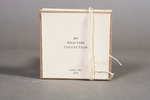
My Wild Type Collection
Xinyu Hu, Special Collections, and Fleet Library
Entry for the 9th Annual Baker & Whitehill Student Artists' Book Contest. Opening Reception Thursday, March 02, 2023, Fleet Library, Main Reading Room. Juror: Andre Lee Bassuet.
-
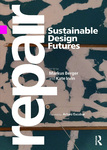
Repair: Sustainable Design Futures Book Launch and Celebration
Kate Irvin, Markus Berger, and Fleet Library
Repair: Sustainable Design Futures Book Launch and Celebration. A celebration of reparative words and worlds. Thursday, November 10, 5-7 pm. Fleet Library, first floor, Roger Mandle Building (15 Westminster). Edited by Markus Berger and Kate Irvin, Repair: Sustainable Design Futures (Routledge 2023) is a collection of timely new scholarship that investigates repair as a contemporary expression of empowerment, agency, and resistance to our unmaking of the world and the environment.
To celebrate the book’s publication, Fleet Library hosts a festive and dynamic conversation with several of the book’s 25 local contributors and to expand and build on the volume’s chapter “Lexicon of Repair.” Guests brought their own words, thoughts, and cheer as all engaged with repair as a transdisciplinary and transcultural act that opens up possibilities for radically different social, environmental, and economic futures.
-
Transnationals; or, the modern Frankenstein
Kai Ji
“Learn from me, if not by my precepts, at least by my example, how dangerous is the acquirement of knowledge and how much happier that man is who believes his native town to be the world, than he who aspires to become greater than his nature will allow.”
The title of this thesis is adapted from the title of Mary Shelley's 1818 novel Frankenstein; or, The Modern Prometheus, and the quote above is said by the scientist in the novel. To associate the word “Frankenstein” with “transnationals” is not to refer to the transnational as the monster, but to explore the duality of the identity of Frankenstein: Dr. Victor Frankenstein, a privileged scientist who studies abroad and achieves a scientific breakthrough; and the Creature, a subject who experiences discrimination and oppression as the other in his assimilation into the world.
Kai Ji’s written portion of his thesis is a short adaptation of Shelley’s original novel. The intention is to use the original characters of the novel to explore the identity of border-crossing transnationals and their relationship with nation states. Different from the original story, in the adaptation, the Creature’s body is submissive to Victor Frankenstein’s ambition, which demonstrates the interdependence between the maker and his creation.
Based on this adaptation, two short experimental films are done on 16mm clear leader, with pigment on the film surface developed from the coating of M&Ms. The material choice of M&Ms speaks to Ji’s professional background as a former marketer of the brand.
-
The great delusion
Beth Johnston
The climate crisis is a wicked problem that poses many obstacles for action and understanding. This thesis is a non-linear accumulation of academic essays, interpolated with lists, anecdotal observations, data, and artwork that together explore the entanglements and complications of the climate crisis and my journey in making artwork as a response to those complications. The thesis surveys six bodies of artwork created over the course of graduate school, which use photography, sculptural installation, performance, and video to illustrate various topics and methodologies. Grounded in research on environmental justice, this essay explores temporal disjunctures, climate data encounters, the decolonization of nature, and how to visualize the imperceptible.
-
Unfolding embodied experience: a process-driven immersive exhibition design model
Mooa Seongah Kang
The collections of most museums are comprised of two-dimensional artworks—paintings, drawings, prints, and photography—and are generally presented within a white cube gallery platform. Within this restricted static view, displays rarely consider multisensory engagement and immersion that reveals the accumulated time and effort of creation. Yet for many artists, the process is as important as the finished product.
My impetus for this design initiative began by questioning traditional methods of display. Is it possible to reveal the hidden depth embodied in two-dimensional artworks, allowing audiences to participate with all their senses in the journey of an artist’s experience? In other words, is it possible to make two-dimensional artworks more immersive where the hierarchy between the process and the output is reframed?
Every artist has unique habits of making and for many, the process is neither linear nor even sequential. Assuming an approach based on Wallas’ four-stage model of the creative process, this thesis proposes an exhibition that will allow visitors to experience the artistic process as if they are inside of the artist’s brain and soul, acknowledging the steps Wallas identifies, but not a specific order. Thereby, visitors will become active participants rather than passive observers by navigating four different pavilions comprised of the four keywords: Preparation, Incubation, Illumination, and Verification.
At its core, this thesis proposes a new exhibition design model, called the ‘process-driven immersive exhibition design model’ in connection with Gardener’s Multiple Intelligence Theory. These ideas are directly applicable and adaptable to current art museum practices. I am using my painting as a case study to showcase how this system will be applied to the real world. This system will benefit both art administrators and museum visitors. Specifically, it will be a guideline for artists, exhibition designers, and curators to collaborate and communicate, and thus make for an engaging exhibition and it will encompass a wider range of audiences by facilitating multiple senses, learning styles, and embodied experiences.
-
Healing the Black Butterfly: reparation through resources
Danasha Kelly
This Baltimore-based project works to end mass incarceration in Black communities by reconstructing existing infrastructures in the criminal justice system that fail to address poverty, racism, and unequal access to resources through the untold stories of Black Baltimoreans prior to incarceration. In doing so, this thesis will strive to counter the lack of social and political justice around architecture as it pertains to black people by creating reparations in the form of resources for restorative justice and community before incarceration. Through exploring restorative justice through community-engaged design, the reformer Baltimore City Jail Complex will be used as both a site and starting point to healing the trauma of surrounding black neighborhoods to create a place that is for the people, by people. By placing the untold truths at the forefront of the process, the intention is to serve as a model for engaging the local stories and experiences of Black Baltimoreans to help develop programs of change within their community as a form of practice and justice. Not only will this process include the people of these neighborhoods in every step, but will rekindle a level of care, community, and restore the prominent culture that exists within the heart of Baltimore City.
-
New revelations
Ineke Lynne Knudsen
This project imagines a not-so-distant American future where Christians and conservatives have triggered the Apocalypse. In my paintings of the Apocalypse, all the desires of conservative Christians have come to pass: the eradication of people of color and queer folks, a revitalization of the American frontier and wilderness, and the return of Jesus Christ in the form of the Rapture. I’m specifically painting White conservative Christian girls, and I’m interested in their unique intersectionality of being a White conservative (an identity rife with racist social implications), being female (an identity deeply abused within the Christian subculture), and being a child (an identity subject to dramatic ideological change over time). In my paintings, these girls are removed from their churches and homes and moored, alone, in unpopulated American landscapes. Somehow, despite their religious and political devotion, the young women have been left behind, boxed out of the conservative utopia they helped create, and relegated to wandering empty landscapes, searching for their promised land that will never come to fruition. To help navigate this convoluted subject matter, I lean on the scholarship of historians Heather Cox Richardson, Roxanne Dunbar-Ortiz, and Kristin Kobes du Mez, in order to digest conservative and Christian ideologies through an American history reconceptualized via feminist, queer, and race theory. With this work, I aim not to decontextualize or neutralize conservative Christian politics and beliefs; I instead aim to enmesh myself within their specific, often dangerous, contexts, locating a horror and a hope within it.
-
Field guide to gendered public life : balancing the preservation of the existing vibrant public life with the improvement of the female experience
Christina Koutsoukou
This thesis examines urban design practices in cities with long history, vibrant social cultures and complex cultural dynamics. Using Thessaloniki as a case study, it focuses on negative gendered experiences caused by some of these local cultural norms.
The study aims to understand and reveal to what extent these elements have shaped and reinforced experiences in the public realm, in order to propose more gender-inclusive approaches that can sustainably coexist with the city’s features forming its vibrant public life.
The research involves an analysis of the city’s built environment followed by a close investigation of the ways the city operates that offer an insight into the character of urban life and the social dynamics. Additionally, it includes documentation of the findings from research and observation, that was synthesized into a field guide providing ways for people to read the city, as well as proposing design typologies that address the issue.
-
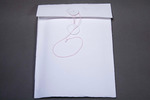
Every Shade of Pink On Me
Roy Larmour, Special Collections, and Fleet Library
Entry for the 9th Annual Baker & Whitehill Student Artists' Book Contest. Opening Reception Thursday, March 02, 2023, Fleet Library, Main Reading Room. Juror: Andre Lee Bassuet.