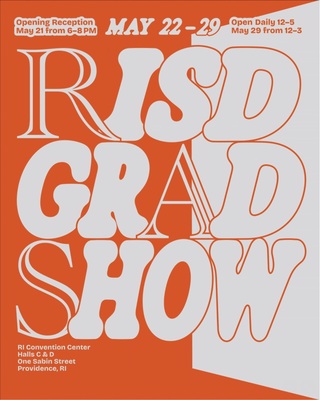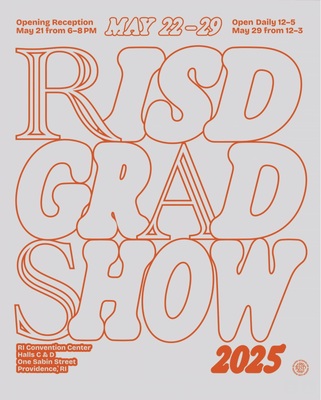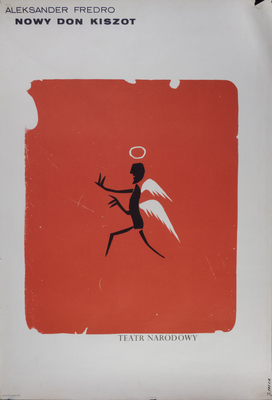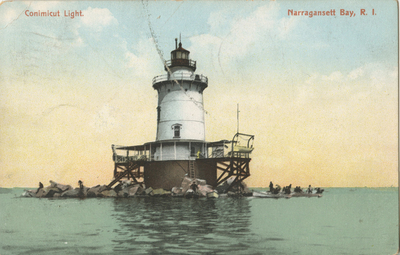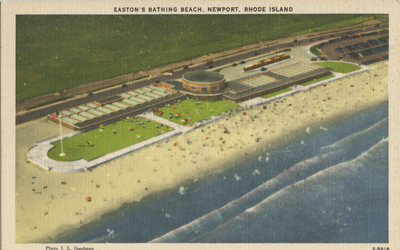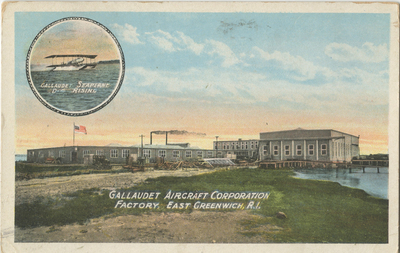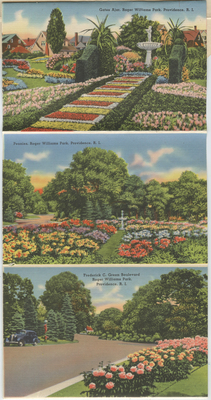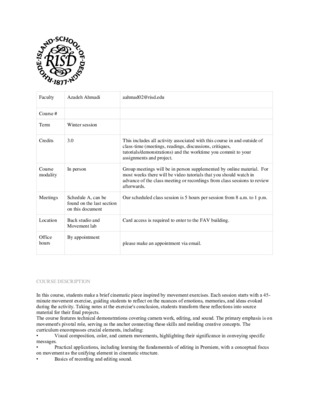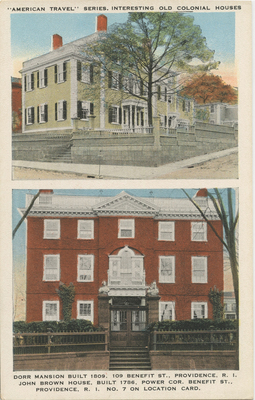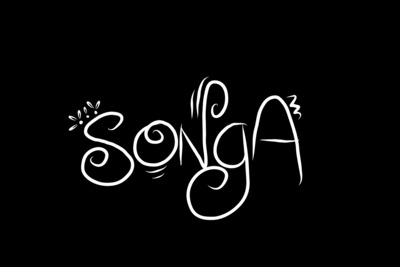
On was an interdisciplinary graduate periodical established by RISD graduate students in 2006. It featured essays and student work that related to a general issue theme. On was intended as a quarterly publication, but it is unclear if further issues beyond the first were ever published.
-
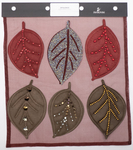
Opulence, Components Flag 20, Trend Fall / Winter 2004/05
Swarovski, Visual + Material Resources, and Fleet Library
-

Island Nations | Islas Naciones: New Art from Cuba, the Dominican Republic, Puerto Rico and the Diaspora
Judith Tannenbaum and René Morales
In the 1960s, the Museum of Art, Rhode Island School of Design (The RISD Museum), established an early and deep connection with the art of Latin America. In a sweeping attempt to create a broader context for our strong North American collections, money and energy were committed to the purchase of the work of contemporary artists from all over South and Central America and the Caribbean. For this pioneering foresight, we continue to be grateful to former Director Daniel Robbins (1932-95; director at The RISD Museum, 1965-71) and the family of Nancy Sayles Day, who established the Nancy Sayles Day Collection of Modern Latin American Art in her memory.
Over the years these holdings have grown into an impressive body of works that are regularly seen in special exhibitions as well as within the Museum’s twentieth century galleries. For Island Nations, our curators have chosen to look beyond the Museum’s collections in order to focus on art made in Cuba, the Dominican Republic, and Puerto Rico, and also by émigrés from these countries. In part, narrowing the view has allowed us to zero in on important contemporary issues — tropical paradise countered by economic isolation, sometimes desperate poverty, and emigration — that are common to this one area of the extremely broad region defined as Latin America. Judith Tannenbaum, Richard Brown Baker Curator of Contemporary Art, and René Morales, Curatorial Assistant, traveled to the area to visit artists’ studios and homes, following the trail of work that defies stereotype.
-

Colorization Revisited
Julie C. Van Camp
This article is both philosophical and practical in its intent. It endeavours to bring into focus an idea with an Ancient Greek lineage, poiesis, and determine whether it may revitalise our thinking about the 'making' of art. The art-making considered in this paper will concentrate exclusively on Western art and its historical and contemporary manifestations. I suggest that poiesis - that which "pro-duces or leads (a thing) into being'" - may enable practitioners in the varying art forms, and aestheticians who reflect upon them, to come to a deeper sense of how artworks work: that they realize themselves inter-dependently of the formative conditions of their inception. One question I raise, among others, is: What is the relation between poiesis and the sensory embodiments of art making? Here I evoke the notion of the poietic act, something which has the potential to reinvigorate the artist's creative energies in and for our times. At a philosophical level I argue that poiesismay be seen as a liberating force which seeks to engage the multiple conditions of contemporary aesthetic reflection, and at a practical level I argue that the poietic act may be seen in those undercurrents of artistic activity that impel us toward a space of 'unitary multiplicity,' wherein the artist, the artwork, and the receiver of such a work are brought forward in all the features of their self-presentation.
-
Ethical Autonomism: The Work of Art as a Moral Agent
Rob van Gerwen
Much contemporary art seems morally out of control. Yet, philosophers seem to have trouble finding the right way to morally evaluate works of art. The debate between autonomists and moralists, I argue, has turned into a stalemate due to two mistaken assumptions. Against these assumptions, I argue that the moral nature of a work's contents does not transfer to the work and that, if we are to morally evaluate works we should try to conceive of them as moral agents. Ethical autonomism holds that art's autonomy consists in its demand that art appreciators take up an artistic attitude. A work's agency then is in how it merits their audiences' attitudinal switch. Ethical autonomism allows for the moral assessment of art works without giving up their autonomy, by viewing artistic merit as a moral category and art-relevant moral evaluation as having the form of art criticism.
-
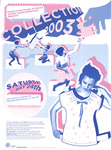
Collection 2003
RISD Archives
Poster for the 2003 student Apparel Design Show at the Veterans Memorial Auditorium. "Selections from the collections and other garments will go on sale to the public Sunday May 25 at noon in the lobby of the RISD Auditorium..."
-
Illustration Senior Show
RISD Archives
Poster for a student senior illustration show at Woods - Gerry
-
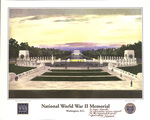
National World War II Memorial
RISD Archives
This poster is an image of a painting created by Joe McKendry of an architectural war memorial designed by Friedrich St. Florian that was given to RISD President Roger Mandle. The memorial is located in Wahington, D.C.
-
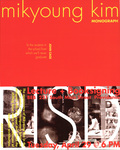
Mikyoung Kim: Monograph / Mikyoung Kim and Raphael Justewicz
RISD Archives, Mikyoung Kim, and Raphael Justewicz
Poster for a lecture and booksigning by Mikyoung Kim in the Bayard Ewing Building. Quotes from John Cage and John Beardsley printed onto poster.
-
Melancholy as an Aesthetic Emotion
Emily Brady and Arto Haapala
In this article, we want to show the relevance and importance of melancholy as an aesthetic emotion. Melancholy often plays a role in our encounters with art works, and it is also present in some of our aesthetic responses to the natural environment. Melancholy invites aesthetic considerations to come into play not only in well-defined aesthetic contexts but also in everyday situations that give reason for melancholy to arise. But the complexity of melancholy, the fact that it is fascinating in itself, suggests the further thought that it may be considered as an aesthetic emotion per se. To this end, we argue that it is the distinctive character of melancholy, its dual character and its differences from sadness and depression, which distinguishes it as an aesthetic emotion.
-
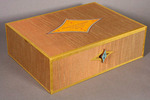
Personal Paradigms: a game of human experience
Julie Chen, Special Collections, and Fleet Library
1 game : illustrations ; in container+ 1 ledger book; 1 user's guide; 1 folded game board. Cover title. "This game was designed and produced by Julie Chen ... All elements were letterpress printed except for the pages of the ledger book ... an edition of 100 copies"--Colophon inside bottom of box. "The object of this game is ... to have the player create a meaningful abstract composition on the game board based on the examination of one area of his or her life ... and to have the player participate in an ongoing collaborative documentary book project by recording his or her composition in the ledger book"--Rules of Play. Contains in four front drawers: 1 die, 1 self-marker, 8 life markers, 18 marker shapes, 36 text strips, 2 plastic templates, 3 colored pencils, 1 pencil sharpener ; 15 metal arrows ; In folders on inside of lid: 1 Spinner and Rules of Play user's guide. Issued in box with hinged lid, covered with gold/brown-tinged fabric lined with light golden satin. Library has copy no. 23, signed by the author. Curated title for Fleet Library Special Collections exhibition By Hand: Women & Books Exhibit fall, 2021.
-
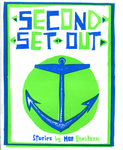
Second Set Out : Stories
Special Collections, Fleet Library, and Moe Bowstern
Cover for Second Set Out : Stories, from the RISD Library Zine Collection.
-
An Exchange on Disinterestedness
Ronald Hepburn
The idea of aesthetic disinterestedness has been a central concept in aesthetics since the late eighteenth century. This exchange offers a contemporary reconsideration of disinterestedness from different sides of the question.
-
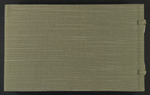
Monas (Unity): Notes on Time and Seasons
Louise Kohrman, Special Collections, and Fleet Library
4 stab bound booklets, enclosed in an Asian wrapped portfolio, held with bone clasps; portfolio cover; first opening; title page; interior spreads; four volumes; two volumes open; portfolio closed, with four volumes fanned out. Each booklet, through abstract images and poetry, offers personal musings on nature and life, creativity, and time, within the changing seasons. RISD Alumna
-
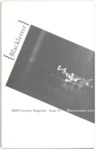
Blackletter Wintersession 2003
Students of RISD and RISD Archives
Blackletter was a literary journal established by RISD students in Wintersession of 2003 as a forum for artistic expression through writing. The Wintersession 2003 issue is the debut issue and features poetry, creative writing, and visual art.
-
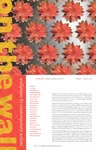
On the Wall: Wallpaper by Contemporary Artists
Judith Tannenbaum and Marion Boulton Stroud
Wallpaper was once ubiquitous and is still common in domestic settings, but it has rarely been given the same kind of attention bestowed on fine-art objects or other applied arts. Nonetheless, many artists– from Albrecht Dürer (1471-1528) to William Morris (1834-96) and Andy Warhol (1928-87) — have created wallpaper and considered this activity to be a significant endeavor.
-
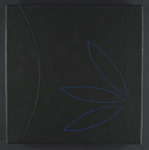
Night Vision
Anne West, Special Collections, and Fleet Library
French fold pages, perfect bound in hard cover, enclosed in slipcase with magnetic flap closure. Box cover; cover; title page; interior pages and spreads. Anne West's poetry is lushly illustrated with images of night blooming flowers drawn by Deborah Wieder. The rich, fertile, earthy feminine side of life is embodied in the night garden.
-
Two Monsters in Search of a Concept
Robert Yanal
What is a monster? At least three concepts have been proposed: Aristotle thinks a monster to be a "mistake of purpose" in nature; Noël Carroll thinks a monster to be a scientifically impossible being that arouses disgust and fear; Cynthia Freeland thinks a monster to be an evil being. Thus a two-headed calf is an Aristotelian monster; a werewolf a monster on Carroll's definition; and Norman Bates of Hitchcock's Psycho a monster on Freeland's concept. These have no interesting overlaps. My project is to discuss Norman Bates and Mark Lewis (of Michael Powell's Peeping Tom). Bates and Lewis are monsters, but only on Aristotle's concept.
-
All on The Same Page
Abxchange, Sara Durkacs, Ann E. Gregory, Ed Hutchins, Roberta Lavadour, Sibyl Rubottom, Robyn Sassen, Alice Simpson, Shu-ju Wang, Special Collections, and Fleet Library
8 folded & cut sheets : ill. (some color) + 7 folded sheets in pocket. Title from container. "Part of the 'Once in a while' series of artists' book portfolios created by the gang at Abxchange"--portfolio box. Fall 2002. Limited edition of 35 copies. "Eight artists approach the book form within the limits of one standard sheet of 8 1/2 by 11" paper, printed just on the front, or front and back and folded, cut, glued, sewn and/or fastened into a small work of art." Includes 7 pages of templates which outline the construction of seven of the 8 books. Was [cross] / Sara Durkacs -- Paths to peace / Ann E. Gregory -- Wanted posters / Ed Hutchins -- Perspective / Roberta Lavadour -- Why is that? / Sibyl Rubottom -- A book of wardrobe / Robyn Sassen -- Come to the marathon / Alice Simpson -- More than plenty / Shu-Ju Wang. Library has copy no. 4.
-
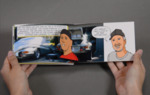
Saturday Afternoons
Susan Angebranndt, Special Collections, and Fleet Library
accordion with pop-ups; cover wrap; book cover; page spreads. Edition of 25 copies. Cover title. In slipcase with mounted color illustration. "Photos: Susan Angebranndt, Harold Williams ; Illustration, story & construction: Susan Angebranndt ; Ink jet printed"--Colophon. Accordion fold book with pop-up illustrations. Library has copy 7.
-

Saturday Afternoons
Susan Angebranndt, Harold Williams, Special Collections, and Fleet Library
accordion with pop-ups; cover wrap; book cover; page spreads. Edition of 25 copies. Cover title. In slipcase with mounted color illustration. "Photos: Susan Angebranndt, Harold Williams ; Illustration, story & construction: Susan Angebranndt ; Ink jet printed"--Colophon. Accordion fold book with pop-up illustrations. Library has copy 7.
-
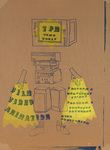
7 PM Come Early: Film Animation Video
RISD Archives
Poster for a Film, Animation & Video Dept. show.