On was an interdisciplinary graduate periodical established by RISD graduate students in 2006. It featured essays and student work that related to a general issue theme. On was intended as a quarterly publication, but it is unclear if further issues beyond the first were ever published.
-
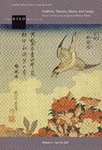
Feathers, Flowers, Talons and Fangs: Power and Serenity in Japanese Nature Prints
Deborah Del Gais and Judith A. Singsen
Exhibition Notes, Number 26, Winter 2007. Fierce tigers and awe-inspiring dragons—these subjects hardly seem to fit into the same category as delicate songbirds like the nightingale and blossoms as ephemeral as the cherry. Even so, a wide array of flora and fauna and bugs and beasts appears in Japanese prints of the genre traditionally called “birds and flowers” (kachō). These Edo-period prints (1608-1867) reflect the profound Japanese appreciation for the natural world.
-

Aesthetics and the Environment: Repatriating Humanity
Nikolaos Gkogkas
If aesthetics is to claim its place among the fundamental philosophical disciplines, it must adequately deal with the ecological challenge, that is, the need to explain the continuity-relation between human and non-human environments. To that effect, Arnold Berleant's aesthetics of engagement constitutes an attractive proposal. Its critics (Allen Carlson and others) seem to miss its point and attack it on the basis of a particular understanding of Kantian aesthetics (mainly the disinterestedness thesis). But not only can Berleant's aesthetics meet the ecological challenge; it is also possible that it encourages a re-evaluation of traditional aesthetic categories (like disinterestedness) without necessarily precipitating a need to jettison their deeply entrenched significance.
-
Words and Worlds: Irony Makes Literary Creations
Alastair Goff
In this paper I take up anew the suggestion recurrent in the work of Kierkegaard and Lukács, among others, that literature is fundamentally ironic. Literary creations, I argue, are ironic because they convey the real world, even though the worldhood of this world is ineffable. In creating a world from words in a novel or poem, the author confronts his or her own skepticism about the possibilities of written expression. Literary creations are only completed when the reader is able to engage with the world of words that is constituted in the work, and to realize that what is said in the writing does not exhaust the literary creation as a whole.
-
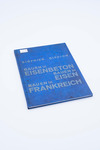
Drawings On A Bus
Ellsworth Kelly, Special Collections, and Fleet Library
[44] pages : chiefly illus. Facsimile edition of a 1954 sketchbook. Sketchbook 23, 1954 Bauen in Eisenbeton, bauen in Eisen, bauen in Frankreich At head of cover title: Sigfried Giedion : bauen in Eisenbeton, bauen in Eisen, bauen in Frankreich. Title on p. [4] of cover: Giedion : bauen in Eisen und Eisenbeton.
-
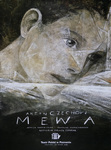
MEWA / Anton Czechow ( The Seagull, Anton Czekhov)
Fleet Library, Visual + Material Resources, and Wiktor Sadowski
-
Film and the Public Memory: The Phenomena of Nonfiction Film Fragments
James F. Moyer
Film theory and philosophy have in recent decades rightly critiqued earlier theorists' claims for the fundamentally realist nature of the cinema, and of photography generally. While cognizant of the problematic status of "realist" representation-of photography being somehow purely or naively representative-this essay nevertheless deliberately recuperates a realist discourse with which to value some forms of nonfiction film. The essay sees "nonfiction film fragments" as a form of witnessing, and tries to articulate our experience of such film in terms of memorializing the people and events it bears witness to. The essay goes even further in its claims on behalf of a realist cinematic memory, suggesting that nonfiction fragments constitute a mode of perception that affords trustworthy historical witnessing. That is, the fragmentary status of some film is what paradoxically restores "wholeness" to the person or place of which it is a glimpse. In a Bazinian and Cavellian mode of writing, this introductory essay to the phenomena of nonfiction film fragments aims as much to be evocative of our experience of film as public memory, as critical of it.
-
Art, Perception and Indeterminacy
Robert Pepperell
This article considers the phenomenon of visual indeterminacy, which occurs when the sensory data gathered from the visual system cannot be integrated with semantic knowledge. A number of examples are given, including from the author's own art work, and some results presented from a scientific study based on them. The implications for the operation of the mind and, in particular, the nature of aesthetic experience are addressed, and the distinction between the perception of visual forms and their cognitive interpretation is discussed. Arguments about the nature of aesthetic experience are then considered from some historical sources and interpreted in light of the distinctions between perception-cognition and form-content. The paper concludes by summarizing the links between aesthetic experience, the operation of visual perception, and visual indeterminacy.
-
Implied World Views in Pictures: Reflections from a Cognitive Psychological and Anthropological Point of View
Michael Ranta
In traditional art history, iconological attempts to analyze visual works of art by treating their formal and semantic features as symptoms of more general, implied world views or cultures have occurred rather frequently. Still, such attempts have been criticized for permitting subjective and non-verifiable interpretations. In this paper, however, I will argue that (i) pictorial works of art indeed imply wider world views or schemata, and (ii) that our comprehension of these schemata can be explained by taking into account recent research within cognitive psychology. More specifically, I will argue that intelligence partly consists of the storage and retrieval of action scripts or schemata which may occur on various levels of abstraction. I will claim that the possession of high-level narrative structures, shared by a relatively large group of beholders, is actually a necessary presupposition for understanding pictorial works of art as part of a wider context, that is, as implying world views.