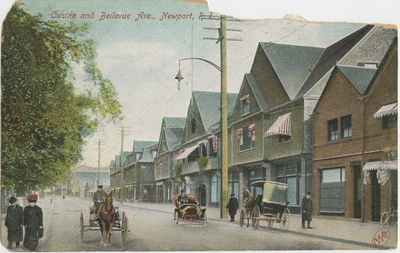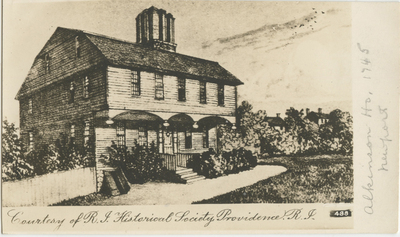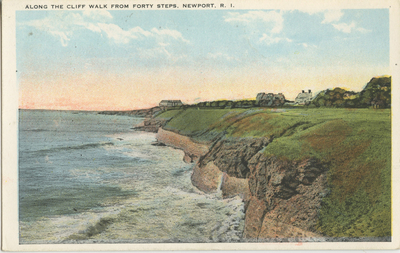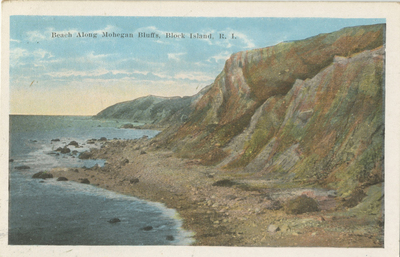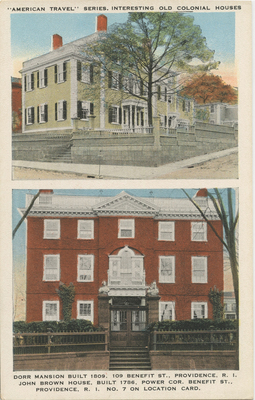
On was an interdisciplinary graduate periodical established by RISD graduate students in 2006. It featured essays and student work that related to a general issue theme. On was intended as a quarterly publication, but it is unclear if further issues beyond the first were ever published.
-
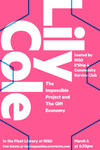
Lily Cole | The Impossible Project and the Gift Economy
Fleet Library, RISD Provost, Pradeep Sharma, Academic Affairs, Steven Subotnick, Damian White, and Ryan Murphy
Academic Affairs in conjunction with E'Ship & Community Service Club are pleased to welcome Lily Cole, fashion model, actress and social entrepreneur to campus for a talk at 6:30pm at the RISD Fleet Library. An advocate for socio-political and environmental issues, Lily has employed technology, writing, filmmaking and public speaking as means to build awareness and encourage dialogue. Two years ago, she began developing impossible.com, a social network that encourages users to exchange skills and services for free in the hope of encouraging a peer-to-peer gift economy.
-

Fitness for Function and Dance Aesthetics
Eric C. Mullis
This essay discusses the manner in which the appreciation of fitness for function can be applied to dance aesthetics. Drawing on Allen Carlson and Glenn Parsons’ work, the essay considers the problems of indeterminacy, translation, and dysfunction as they pertain to the appreciation of dance movement. It then argues that fitness for function can be used to critically assess post-modern task dances and contemporary dance works that do not rely on the execution of codified dance technique.
-
Contemporary Aesthetics: Perspectives on Times, Space and Content
Ossi Naukkarinen
What is contemporary aesthetics? The answer to this question is often simply stated rather than carefully elaborated, even if the current nature and scope of the discipline is far from self-evident. To examine how both the concept and the field of contemporary aesthetics can be understood, I suggest that it is useful to consider three themes: the time, space, and content of aesthetics, i.e., the questions of when, where, and what contemporary aesthetics is. Through this, it is possible to construe a conceptual space of contemporary aesthetics and to compare different instantiations of it with each other.
-
Musical Ontology: Critical, not Metaphysical
Jonathan A. Neufeld
The ontology of musical works often sets the boundaries within which evaluation of musical works and performances takes place. Questions of ontology are therefore often taken to be prior to and apart from the evaluative questions considered by either performers as they present works to audiences or an audience’s critical reflection on a performance. In this paper I argue that, while the ontology of musical works may well set the boundaries of legitimate evaluation, ontological questions should not be considered as prior to or apart from critical evaluation. Rather, ontological claims are a type of critical evaluation made within musical practices. I argue that philosophers of music might learn from the debate in political philosophy about the difficulty of setting the limits of public reason in a way that remains open to a plurality of legitimate evaluative perspectives. Just as pre-political or metaphysical identification of the boundaries of public reason fail to accommodate the fact of pluralism in contemporary democratic politics, so too does a metaphysical identification of the boundaries of legitimate evaluation of musical works and performances fail to accommodate the fact of pluralism in contemporary musical practices. I apply John Rawls’s formulation of political liberalism, arguing that musical ontology should be critical, not metaphysical
-
Experiences at the Intersection of Design Thinking and Contemplative Study
Khipra Nichols
Khipra Nichols, Associate Professor, Industrial Design, was among six ACP Davis Fellows, who each spent eight months in AY 2013–14 developing a research question, designing inquiries, applying them in their spring courses, and assessing student learning outcomes. Khipra’s project had two intersecting layers. He researched the effects of contemplative practice on his own students’ work and design process, and his students researched the effects of contemplative practice on the learning experience and creativity of middle-school students.
-
Reflections on Music and Propaganda
Luis Velasco Pufleau
In general, the concept of propaganda refers to a method as well as the symbolic object mobilized by it. Propaganda equally constitutes a particular type of communication that involves not only the mobilization of objects, but also of discourse, places, acts, and rituals. This essay employs the writings of Max Weber, Paul Ricœur, Jacques Ellul, and Jacques Rancière to analyze propaganda as a particular type of symbolic political dispositif linked to a specific performance and utterance context. I examine humanitarian songs as a propaganda tool in democracy, and show the conditions and the limits of their mobilization through their contextualization. I argue that the link between music and propaganda could be defined as the willingness of a particular power or organized opposition to control the symbolic and emotional dimension of musical works. Through giving the music a meaning in this way, they try to impose a certain social order or to invalidate other possible political configurations of reality. I discuss the contradiction between the specific polysemy of musical works and the fictional construction of reality produced by propaganda, and conclude that the political dimension of music should not necessarily be reduced to the propaganda dispositif. These musical works require consideration of the possibilities offered through fiction in contexts of specific representation, as well as the political dimension of collaborative musical practices.
-
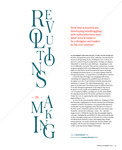
Revolutions in Making
David Rejeski and RISD XYZ
With bio- and nanotech breakthroughs radically changing how things are made, David Rejeski 73 ID asks what it means to be a designer in the 21st century.
-
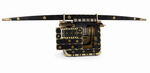
Palanquin (norimono) with Tokugawa and Ichijo Crests
RISD Museum and Melissa Carr
This elaborate palanquin, or onna norimono (“ride for a woman”), transported a bride of high social standing to the groom’s residence on their wedding day. The exterior is constructed in wood and embellished with black lacquer, gold paint, and metal fittings. Two repeated crests serve as decoration and signify that the groom descended from Tokugawa Ieyasu (1543–1616), the first military ruler, or shogun, of the Edo Period. The compact interior is embellished with an armrest and scenes from The Tale of Genji, an 11th-century masterpiece of Japanese literature, written by a noblewoman about court life. On the back wall is a celebratory depiction of a pine tree, crane, tortoise, and bamboo, all of which are auspicious symbols related to Hōraisan, the island of immortality. The wisteria crest of the Ichijō family, of which the bride was a member, appears on the coffered ceiling, alternating with the three-lobed crest of the Tokugawa family. The slatted windows, covered with silk gauze, allowed the bride to look out without being seen. The long pole threaded through the top brasses was she means by which two or more strong men lifted and carried the palanquin. One of only a few palanquins in the United States, this example was perhaps the first to enter the country. In 1878 it was presented to Brown University’s museum of natural history by Philadelphia minister Elias R. Beadle. When Brown dissolved the museum in 1915, the university lent the palanquin to the RISD Museum, eventually gifting it in 2004. The interior paintings as well as the exterior lacquer and brasses were conserved by a team of specialists in 2010 with the assistance of the Sumitomo Foundation of Japan. ca. 18th-19th Century
-
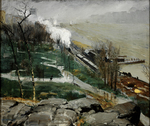
Rain on the River
RISD Museum and Fritz Drury
George Bellows was critically acclaimed for the frank, even brutal manner of the urban landscapes he painted in the early years of the twentieth century. His view from a rockly ledge above Riverside Park surveys a freight train making its way along the New York Central’s famous Water Level Route. The string of railcars echoes the rushing diagonal that marks the near bank of the Hudson River. Aggressive brushstrokes indicate reflective surfaces that are animated by graphic observations: a lone pedestrian scurries acros a rain-slicked path, and a horse-drawn cart awaits a delivery of scavenged coal. Bellows called Rain on the River “one of my most beautiful things” in a letter he wrote to RISD president Eliza Radeke during 1915, the year the painting was acquired for the Museum’s collection. 1908
-
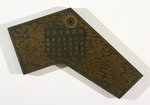
Lithophone
RISD Museum and Shawn Greenlee
This inverted L-shaped stone, gold accenting its design and calligraphy, was meant to be struck with a wooden mallet during imperial musical rituals at the Temple of Agriculture in the Chinese capital. Originally one in a set of 12 chimes—for the 12 lunar months—each stone had a distinct pitch, tuned to reflect a mathematical relationship with the celestial world. 18th Century
-
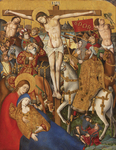
Crucifixion
RISD Museum and Susan Ashbrook Harvey
In this depiction of the Crucifixion, the Roman centurion Longinus is shown lancing Christ’s side as Mary faints in the arms of John the Evangelist. Beside Christ hang two thieves, one repentant, the other offering his soul to a demon. The gilded and punched surface and lavishly costumed figures reflect a late International Gothic style, here dominated by Flemish realism. Although this altar panel once hung in the parish church of El Cubo de Don Sancho in Salamanca, it likely was commissioned by a wealthy donor for a more important setting. Unpainted upper corners indicate that its original frame had a curved inner edge. The panel may once have been located at the center or top of a more elaborate altarpiece. ca. 1490
-
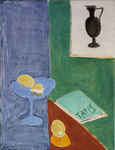
Still Life with Lemons (whose forms correspond to a drawing of a black vase upon the wall)
RISD Museum and Ellen McBreen
Matisse used solid, vivid colors to render the simple forms and geometric background segments of this still life. Roughly outlined and intentionally flattened, each element shows evidence of the artist’s brushstrokes and his manipulation of pigment. An extended title, Still life with lemons whose forms correspond to a drawing of a black vase upon the wall, points to intentional relationships between shapes. The ovoid form of the pitcher echoes the curves of the plump lemons below; those of its neck and base are repeated in the foot of the blue glass compote at lower left. A book entitled “Tapis” (Carpet) lies neatly aligned with the brilliant red wedge beneath the single lemon. The familiar forms seem to float on the surface, unburdened by mass or by placement in space, but joyfully interrelated through color and shape. 1914
-
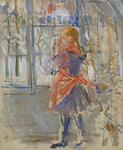
Child in a Red Apron (L’Enfant au tablier rouge)
RISD Museum and Maureen O'Brien
This painting depicts Julie Manet, the seven-year-old daughter of the artist Berthe Morisot and her husband, Eugène Manet. She peers at a wintry landscape outside the family’s home in Paris, perhaps holding a prism to her eyes. The setting was Morisot’s bedroom, distinguished by a window whose small panes function as a compositional device that connects interior to exterior space. Across the canvas, a fluid net of slashing and spiraling marks rush through the room and animate Julie’s costume and pose. The vertical glint of a brass knob suggests that the window is ajar, introducing a breeze that lifts the ties of the child’s red apron and causes the curtains to flutter behind her. Owned by the artist’s descendants for more than a century, this is the first painting by Morisot to enter the RISD Museum’s collection. It represents the work of one of the primary members of the group of Impressionist painters, whose technical and representational inventions transformed the appearance of painting in the late 19th century. Morisot was a close friend of Edgar Degas and Pierre-Auguste Renoir and the sister-in-law of Édouard Manet, whose portrayal of her in a painting titled Repose is on view in the adjacent gallery. Individual in their styles, each of the Impressionists explored the use of broken brushstrokes and flattened spatial relationships and all were preoccupied with themes of modern life. Morisot built her images slowly and preferred to begin directly on a white surface, frequently leaving parts of the background bare. She often skipped the stages of preliminary drawing and instead used color to deliver the effect of line. Whether working in pastel, watercolor, or oil, she sought the same effects of gesture, transparency, and blur. In this seemingly sketch-like impression, what appear to be hastily placed marks are elements of a selective process intended to capture movement and light. A domestic space, a mesmerized child, and a snowy Parisian landscape all emerge from Morisot’s strategic web of animated and abbreviated strokes. 1886
-
Working with Words: Writing Pedagogy in Art and Design Education
Phoebe Stubbs and Miriam Cabell
For their ACP project, Mimi Cabell, now Assistant Professor in Foundation Studies, and Phoebe Stubbs, MFA Glass 2011, surveyed, analyzed, and evaluated how writing is taught in art and design schools, including RISD. They conducted interviews with faculty, students, and alumni at RISD, Brown, CalArts, SAIC, and The New School in the US, and faculty, students, alumni, scholars, and editors at Goldsmiths, Writing Purposefully in Art and Design (Writing PAD; writing-pad.org), and the journal FR David, among other European institutions. Their goal was to examine the various pedagogical roles of writing and the sites and structures of writing instruction in art schools and to assess them based on faculty and student experience and outcomes.
-
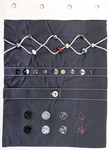
Becharmed Pavé Rivoli Crystal Buttons Crystal Fine Rocks Flag 3, Trends Spring / Summer 2014
Swarovski, Visual + Material Resources, and Fleet Library
-
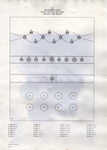
Becharmed Pavé Rivoli Crystal Buttons Crystal Fine Rocks Innovation Flag, Trends Spring / Summer 2014
Swarovski, Visual + Material Resources, and Fleet Library
-
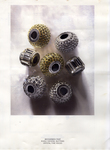
Becharmed Pavé Rivoli Crystal Buttons Crystal Fine Rocks, Trends Spring / Summer 2014
Swarovski, Visual + Material Resources, and Fleet Library
-
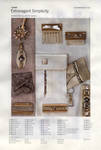
Classic Inspirations Extravagent Simplicity Components Flag 5 (description), Trend Fall / Winter 2014/15
Swarovski, Visual + Material Resources, and Fleet Library
-
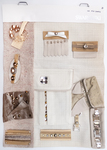
Classic Inspirations Extravagent Simplicity Components Flag 5, Trend Fall / Winter 2014/15
Swarovski, Visual + Material Resources, and Fleet Library