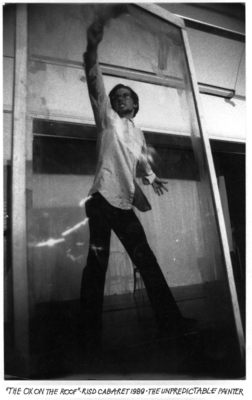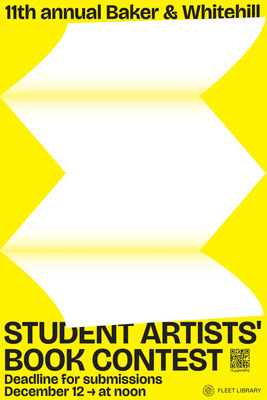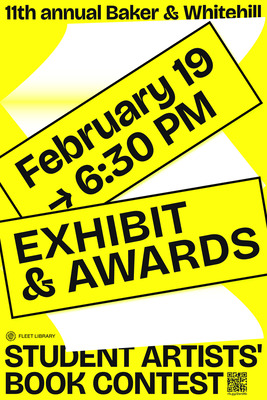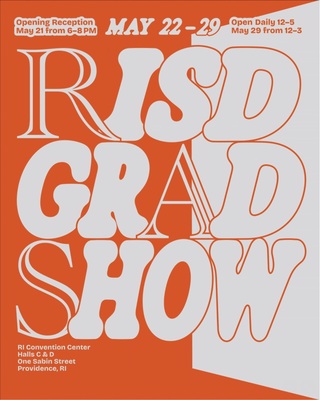
On was an interdisciplinary graduate periodical established by RISD graduate students in 2006. It featured essays and student work that related to a general issue theme. On was intended as a quarterly publication, but it is unclear if further issues beyond the first were ever published.
-

F(r)iction
Rami Hammour
Architecture is a space for stories; stories of the inhabitants, the designers, and the builders...
In my thesis I’m using architecture to tell stories, and criticize ideologies. Stories become the program, the structure, and “building material”, my site is any place where the criticized ideology dominates.
Architecture becomes a question and discussion. It is my question about life, and it is the question of the characters of the story about life. Eventually it’s the question of every inhabitant of it. It’s also an armature for different conditions of interaction of private and public.
In my architecture, spaces are constructed from specific vantage points of different characters of the story, from both literal and ideological vantage points. The inhabitants of it have the chance to see “live” the story from someone else’s eyes, and maybe the world, through different point of views... Inhabitants can also live and create their own stories both in the physical and in the story space.
-
Yelitsa Jean-Charles | RISD Inauguration
Yelitsa Jean-Charles
Yelitsa Jean-Charles presents greetings from the undergraduate community. The Inauguration of Rosanne Somerson, RISD’s 17th President. October 9, 2015 | Providence, Rhode Island
-
Tony Johnson Sings | RISD Inauguration
Anthony Johnson
Tony Johnson sings “Lean on Me” to close the ceremony. The Inauguration of Rosanne Somerson, RISD’s 17th President. October 9, 2015 | Providence, Rhode Island
-
Power shift: a catalyst for architectural transformation : rapid transit, Cincinnati
Dachamont Kaewket
Large-scale architectural projects rely on political stability, and take considerable time to realize. The survival of an architectural development depends on outliving the governing bodies that initiate these improvements. With a change in power, often these large-scale projects are halted, demolished, or left unfinished.
The adaptation of these unfinished structures can reconcile the difference in a power shift, providing an important sense of continuum that is not only a record of the shift in power but also a source of connection through time with this fragmentation. For these reasons, Cincinnati’s subway system is a good example of a public project that was left unfinished due to changes in power through time. The subway system is not only a symbol of the cost of a regime change influencing public policy, but also creating an active campaign to hide the achievements of a past administration. Mark Mallory, a previous mayor of Cincinnati, said, “ Now more than forty percent of people who live in Cincinnati do not know there is a subway system existing underneath Central Parkway Boulevard.”
Completing the subway system in Cincinnati will provide a connection between the different neighborhoods and downtown area. The underground structure will be reused as a large-scale public transportation system that will extend the reach of the old transportation network to connect different forms of public transportation while revealing a hidden history to new generations of the city. To re-stitch the abandoned subway system throughout the urban fabric will pull different parts of the city together, while the subway will become a destination on its own, with areas of the underground system relating to neighborhood need aboveground. The new system will become a node of connection that can be a new destination while providing an easier travel route for people to travel through the city. 3 Abstract
-
Someone Else
Yi Bin Liang, Fleet Library, and Special Collections
Year of graduation 2017. Major: Illustration. Class: The Artists' Book. Faculty: Judy Sue Goodwin Sturges.
-
Someone Else
Yi Bin Liang, Fleet Library, and Special Collections
Year of graduation 2017. Major: Illustration. Class: The Artists' Book. Faculty: Judy Sue Goodwin Sturges.
-
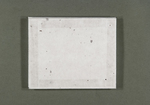
Someone Else
Yi Bin Liang, Fleet Library, and Special Collections
Year of graduation 2017. Major: Illustration. Class: The Artists' Book. Faculty: Judy Sue Goodwin Sturges.
-
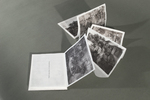
Someone Else
Yi Bin Liang, Fleet Library, and Special Collections
Year of graduation 2017. Major: Illustration. Class: The Artists' Book. Faculty: Judy Sue Goodwin Sturges.
-
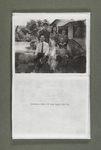
Someone Else
Yi Bin Liang, Fleet Library, and Special Collections
Year of graduation 2017. Major: Illustration. Class: The Artists' Book. Faculty: Judy Sue Goodwin Sturges.
-
Artists’ and Designers’ Writings in Context
Jennifer Liese, Amanda Reeser Lawrence, Brian Wallis, and Marisa Mariza Katz
-
Speculative politics -fictionalized spectacle
Prin Limphongpand
Speculative Politics—Fictionalized Spectacle posits an alternate model for design practice. Borrowing from the genre of science fiction, this design approach activates consideration of possible realities and cultural forms. It raises questions and invents problems instead of solving them. By imagining technologies, policies, laws, and conditions that do not yet exist, design becomes an agent of investigation to highlight current and future social, cultural, and political conditions.
The projects within this thesis reconsider our present situations through methods of speculative documentation. The act of documentation becomes a process of manipulating notions of truth to render fictions from reality. Using subversion, instigation, satire, and a “What If” methodology, elements from traditional graphic design media are reframed as plausible and possible narratives. Some projects begin as self-reflexive investigations of a particular medium. Others propose possible futures of political organizations through fake collateral, creating documentation out of the unreal. What if the flags of America represented fragment iterations of our sub-nationalities, or if the United Nations was untied from its present, and contradictory, identity. It’s all open to questioning and up for debate.
-
The Void, The Mystery, The Vast Array, The Infinity of Unities, The Otherworld, The Absolute, The Hidden Order, The Randomness, The Infraworld, The Nothing, The Zone of Immaterial Sensibility, The Silence, The Hollow of Space, The Ineffable, The Emptiness, The Wild
Drew Ludwig
This thesis presents the culmination of two years of excursions into and longing for the void: the sense of absolute presence and connectivity that I have always found in the desert of the Colorado Plateau. Away from the desert, I use my artistic practice as a means of approaching this kinship with the wild, the void.
My work may be understood as a series of experiments, striving to locate and access the void through different language, logic and media. My process speaks to a deep respect for the external wild of landscape (the desert), and a growing recognition of the coextensive wild within us all. Through my personal biocentric ethos I forge a communion with the universal wild of the void that operates on all scales at all times. This reflective connection between the internal wild and the external wild of landscape roots my practice in a radial contemplative action: a continual, affirmation and dissolution of my sense of self.
My echoic renewal of self is cultivated in tandem with an exploration of the work of Rene Daumal, Richard Long, Jack Turner, John Divola, Francis Alys, Yves Klein, Katie Paterson and other artists, philosophers and naturalists whose work similarly illuminates the void. As a regionalist, artist, and aspiring absurdist, my work aims to reflect a confluence of place and action that generates an empathic embrace of the wild of landscape through a shared recognition of the wild within us all.
-
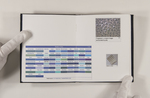
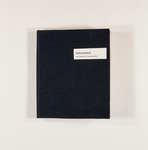
Information
Edward Meade, Fleet Library, and Special Collections
Undergraduate student. Year of Graduation: 2017. Major: Printmaking. Class: Image Bank. Faculty: Lisa Young.
-
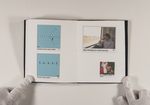
Information
Edward Meade, Fleet Library, and Special Collections
Undergraduate student. Year of Graduation: 2017. Major: Printmaking. Class: Image Bank. Faculty: Lisa Young.
-
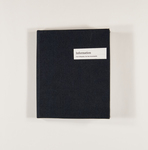
Information
Edward Meade, Fleet Library, and Special Collections
Undergraduate student. Year of Graduation: 2017. Major: Printmaking. Class: Image Bank. Faculty: Lisa Young.
-
Norms of Cultivation
Kevin Melchionne
In this paper I identify a new group of aesthetic norms, which I call norms of cultivation. Judgments of taste are often accompanied by forecasts or expectations about future aesthetic satisfaction. When we find something beautiful, we expect to find it beautiful in the future. Forecasting is at play in all sorts of aesthetically motivated behavior. Yet psychologists have observed an unreliability in such forecasts. As a result of forecasting error, what we take as our taste can be an unreliable guide in our aesthetic lives. Compensating for the unreliability of taste are norms of cultivation, implicit rules for engaging objects, such as avoiding overexposure to favored objects or exposure under unfavorable conditions. Norms of cultivation help to regularize aesthetic experience, mitigating unreliability in forecasts, and fostering the ongoing stability and coherence of taste.
-
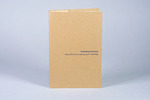
Unfolding Practice : Reflections on Learning and Teaching
Arzu Mistry, Todd Elkin, Women's Studio Workshop, Special Collections, and Fleet Library
56 unnumbered pages : color illustrations. Issued in an edition of 50 copies. "Unfolding Practice: Reflections on Learning and Teaching is a conversation between two artist-educators. Flowing across five chapters, the double sided accordion book has been curated from ten years of recorded conversations, field notes, planning, sketches, reflection, and teaching. The front of the book weaves text, illustration, cutouts, and screen prints, journeying through artistic process and educational practice. The back of the book is a guide, expanding on the practice of using accordion books as a tool for capturing, visualizing, and building upon reflective thinking. The brown paper alludes to the craft paper that is ubiquitous in schools and captures process more than the preciousness of a final product. Throw out accordion in hard covers."--Publisher's website, http://www.wsworkshop.org/artists-books/new-artists-books-from-wsw/, visited on July 29, 2016. "The book was hand and laser cut, and silkscreen and digitally printed on Construction Cement Green and Brown Kraft French paper. The type is Helvetica Neue 9 point."--colophon. RISD Libraries' copy is no. 31, signed by both artists.
-
Obfuscation / Decontextualization: The Limits of Critical Design
Ijlal Muzaffar, Yuriko Saito, Daniel Peltz, and Bhrigupati Singh
Is current design pedagogy - through its obsessions with styling, the façade, the tyranny of fashion and "the cult of cool" - complicit in hiding suffering that is embedded in designed goods? Is design deeply implicated in rendering whole categories of people and places invisible? Should art and design aesthetics be concerned with justice? Are there ways of making existing social relations and forms of human different more visible? How can we think about the creation of meaning, value and the creation of culture in ways that allow design to be more directly engaged with questions of social and environmental justice? The roundtable will grapple with some of these issues.
-
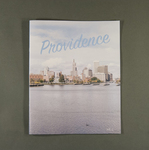
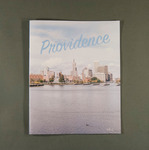
Peter Nicholson's Providence
Peter Nicholson, Fleet Library, and Special Collections
Graduate student, year of graduation 2017. Major: Photography. Class: not part of a class project.
-
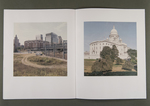
Peter Nicholson's Providence
Peter Nicholson, Fleet Library, and Special Collections
Graduate student, year of graduation 2017. Major: Photography. Class: not part of a class project.
-
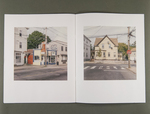
Peter Nicholson's Providence
Peter Nicholson, Fleet Library, and Special Collections
Graduate student, year of graduation 2017. Major: Photography. Class: not part of a class project.