
-
A Bear in the Woods
Clarisse Angkasa, Fleet Library, and Special Collections
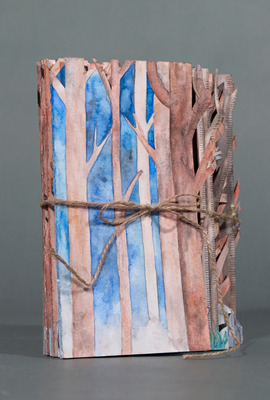
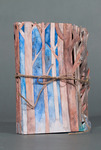
This artist book explores the motion of a bear through the narrative of a bear being hunted through the woods. It's divided into two parts, the front and the back .The front pages depict the bear running through the woods and being shot down by arrows. The back is a continuation that portrays the bear waking up and the arrows on it morphing into trees until it becomes part of the woods, alluding to how things that die return to nature.
-
STEAM Futures, A Study
Eli Block, Fleet Library, and Special Collections
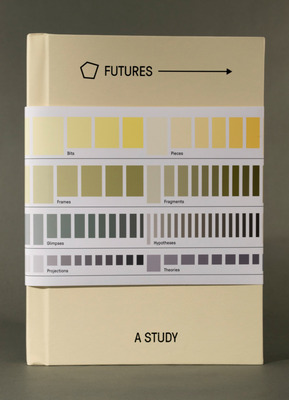
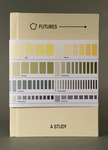
This book explores tools, ideologies and methodologies associated with scientific and humanitarian imaginings of the future. The book contains a series of charts and diagrams - in addition to a brief introductory essay - that seek to visualize complex patterns of thought and extrapolation. Ultimately, the book focuses on a wholistic view of remembering and forecasting, insinuation action is derived from interdisciplinary thought and seeking to prove it through a reflexive creation.
-
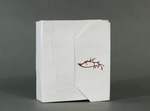
Oh Deer
Hillary Brame, Fleet Library, and Special Collections
The pages map the movement of a white-tailed deer through the hills of the Blue Ridge Mountains of North Carolina. The barren winter landscape draws warmth from the subtle brown of the trees and the deer.
-
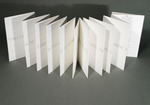
1999 -
Maddie Brewer, Fleet Library, and Special Collections
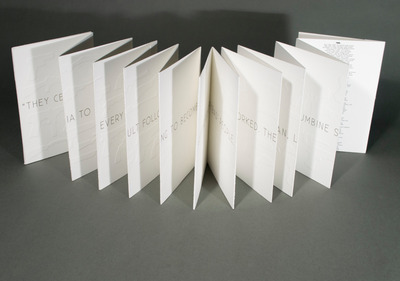
1999 - is an exploration of the manner in which the Columbine school shooting changed the cultural landscape of the U.S., turning attacks on schools from random sparse events to increasingly frequent terrorist attacks. Each gun embossed on the book is a specific gun used in a school shooting listed in chronological order, starting with the Columbine attack.
-
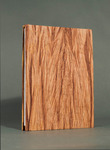
The Effects of Cordycecps on Bullet Ants
Tiffany Bushka, Fleet Library, and Special Collections
This book illustrates the effects of the cordyceps fungus on bullet ants. It traces the ants movement under the influence of this fungus and the result of infection. The images are based on a BBC Planet Earth video titled "Cordyceps: Attack of the Killer Fungi" and the text is adapted from the same video.
-
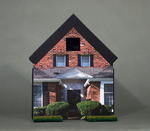
Our Home, Their Home
Jenna Carlie, Fleet Library, and Special Collections
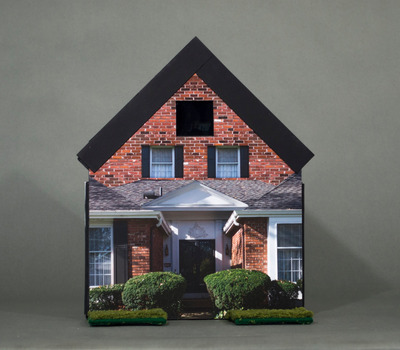
This book is one of a kind, 100% hand made. It is about my home and my grandparents home. Our house is reflective of a home that has deteriorated and fallen apart in the absence of our father who left us because we could never live up to his standards. He wanted our house to look as perfect as his parents home, my grandparents. that wasn't possible because we actually live in it, my grandparents house was like a museum and you weren't allowed to touch anything. My mother never understood why he would want us to live like that. They fought all the time about it. Until eventually he gave up and left as for another family who was perfect. Since he left my siblings and mother have fallen apart and so has the house. The house is becoming worse and worse, the opposite of what he would want but what does he expect, he left us. The book shows a house split in two, one side our home, through the windows you see to the other side, my grandparents house of perfection. Windows symbolize the longing and hope and desire to have what they have. The white backs can be slid up and down, just like shutters in a real home can be used to shut out the others and outside world. We still wonder if our house could be like theirs, then maybe our dad would have stayed, but now I suppose it doesn't matter. This book is a journey through the halls, rooms, spaces, windows, doors and so much more.
-
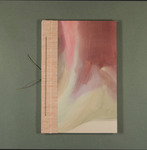
Inside Out
Zashary Caro, Fleet Library, and Special Collections
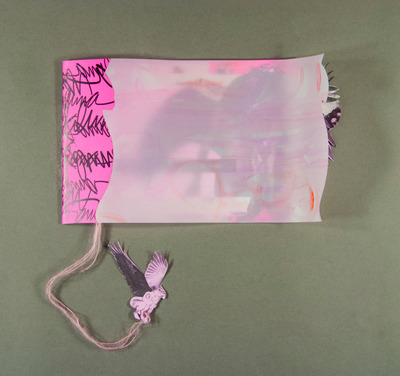
In this book I wanted to make something that would capture my paintings and would extend the work that I created in my final year of high school. I first painted on the frosted mylar and then binded it together also using an original painting of mine as the cover. This book continues to inspire my textile work.
-
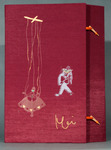
Lost and Found
Mei Fung Elizabeth Chan, Fleet Library, and Special Collections
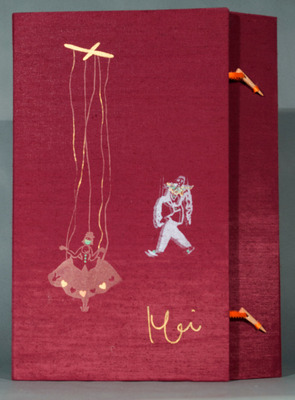
Lost and Found depicts my memory and imagination in New York City. It captures the moment when I was lost on the way to find true beauty in my heart. At the end I found angels in the church and it healed my soul. I felt peace with them and found the glory moment.
-
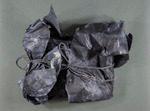
I Am Sorry
Vincent Chen, Fleet Library, and Special Collections
This piece is an exploration of the relationship between me and childhood friend.
-
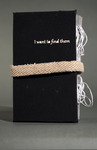
I want to find them
Emilee Chun, Fleet Library, and Special Collections
My book was developed and inspired by the reunification of families in South Korea in 1963. The Japanese occupation and the Korean War separated more than a 100,000 families, and it wasn't 30 years later until a campaign began to find those who are missing. My flag book makes a statement that when the country comes together, so do the unbreakable ties of family blood that affects every Korean person.
-
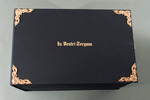
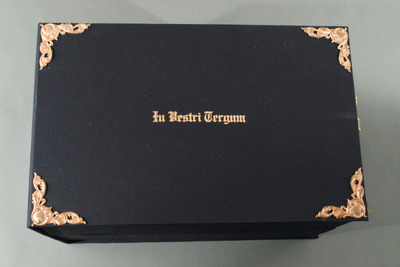
In Vestri Tengum
Valerie Desautel, Fleet Library, and Special Collections
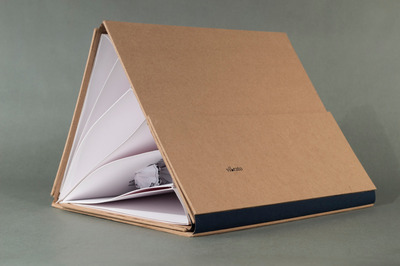
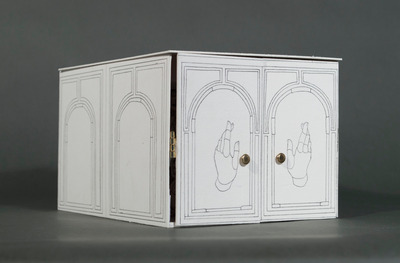
I used the synthetic skin used in creating tattoo apprenticeships to showcase my personal style of tattooing. The first book is bound with body jewelry and the second is accordion bound with images tattooed as pages. I built it in the box to showcase these books and installed a tattooed fake hand into the spine to add to the effect of opening the box.
-
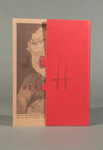
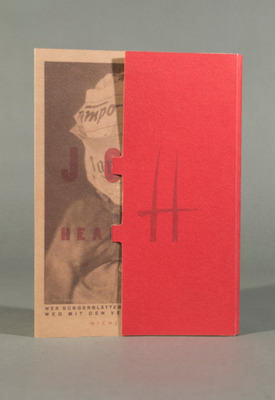
John Heartfield: Life and Work
Michelle Devlin, Fleet Library, and Special Collections
An accordion book based on the life and work of political artist, John Heartfield, and how his photomontages combatted the social climate in Nazi Germany during the early 20th century.
-
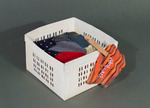
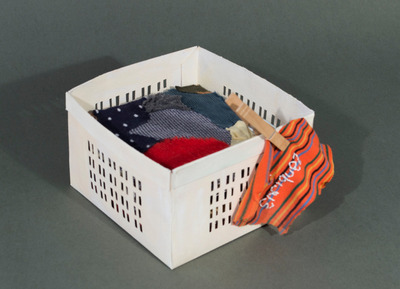
Laundry Pup
Erica Enriquez, Fleet Library, and Special Collections
This book follows the narrative of a dog who likes to rest in laundry baskets. This type of behavior is common with dogs because they are attracted to the scent found on their owner's clothes. Inspired by/based on the behavior of Paco, a havanese dog in my family. This book is made of gouache and colored pencil on watercolor paper, and fabric from old clothes in my laundry basket.
-
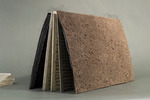
23 años de silencio
Nabil Gonzalez, Fleet Library, and Special Collections
In 1993 the lifeless body of a 12 year old Gladys Janet Fierro was found on the outskirts of Cd. Juarez Chih. MX, Gladys was raped and strangled. Nobody knew that this case would only mark the beginning of what would become a wave of violence and femicides in the border area of Cd. Jaurez and El Paso TX. From 1993 to 2015, more than a thousand cases of disappeared and murdered women have been reported. Less than 20% of the reported cases have been solved, the rest remain unsolved and forgotten in some file in a police office. In Mexico every day 6 to 10 women disappear from the streets, most of them are victims of the organize crime and government corruption. From 1988 until today, Mexico has gone through five corrupt presidents that have done nothing to stop the violence in Mexico, the violence continues, the number of dead victims keeps increasing and the cases remain unpunished. 23 Años de Silencio (23 Years of Silence) is a timeline that documents the violence and suffering Mexican families have gone through for the past 23 years. In the images you will find portraits of the victims, portraits of the victims families, city landscapes, the last 5 presidents of Mexico and 2 of the most powerful cartel leaders in Mexico. The charcoal tallies on the back side of the pages represent the victims and as people handle the book the tallies will start to disappear just like these women did.
-
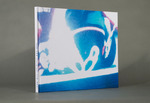
VAR-LEN (Terminal IIIS_HEX)
Daniel Hewson, Fleet Library, and Special Collections
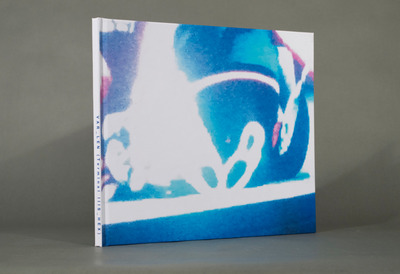
This book is composed entirely of images taken with an iphone 3 that were subsequently blown up to the maximum dimensions offered by the industrialized print on demand services offered by Blurb. They were printed on the premium matte paper and bound with a hardcover image wrap (the most expensive options offered by Blurb) Although this book's images are intended to function on a formal, textural level, there is certainly a latent commentary about the over-saturation of images in the modern digital landscape and a mourning over the death of "traditional" notions of craft in the postmodern art world within this landscape. Paradoxically, I hope this book also functions as a celebration of the inherent speed and texture of the already antiquated iphone 3 technology, and, furthermore, the freedom and playfulness these utilitarian technologies and postmodern ideologies can provide.
-
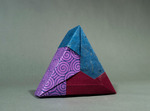
Chimera
Angela Hsieh, Fleet Library, and Special Collections
Just as the work "chimera" implies a combination of disparate parts, it has also come to symbolize many different things, often with conflicting meanings. This book reflects the multifaceted nature of chimera myths, and examines the range of symbolism: from the benevolent protector of Chinese tradition, to the deadly monster of Greek mythology, to the complex relationships brought forth by the discovery of genetic chimeras. Genetic chimerism in particular raises a whole slew of ethical questions. It can and has led to cases where parentage comes into question because the DNA of the parent does not match that of the child. The creation of chimeras in the laboratory, especially when human cells are involved, adds yet another layer to an already highly debated topic. This book contains three different aspects of a chimera: the fierce guardian, the monster, and the ambiguities brought on by genetic chimerism. Each part will fold out to reveal its own story, then come back in the center to create a unified being, but one still made of distinctly separate parts. The modular and flexible construction of the book recalls the pieced-together of the chimera. Different folds and orientations can create new connections and break prior ones. I hope to tease out many of the meanings embodied in one creature, which I see as a result of its multifarious nature, as well as metaphorically appropriate for a composite being.
-
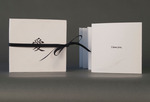
LOVE
Kenni Huang, Fleet Library, and Special Collections
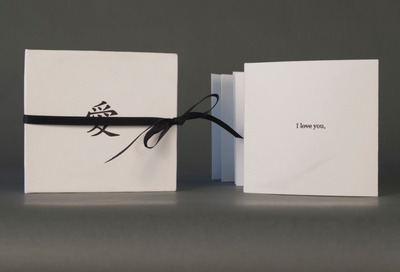
Everyone has a truth, my truth roots from an anxiety I have with the relationships I forge. To be specific, the relationship with my family. Love is an abstract subject that I have yet to fully comprehend. 'Love' in this artist book conveys the complications I have with the word. Love and hate are binaries that live in polar opposites. In my mind, you can never fully love someone, but there's always room for hatred. That explains the 'Love' for my mother.
-
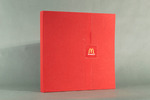
I'm Lovin' It: A Memoir
Denise Hurtado, Fleet Library, and Special Collections
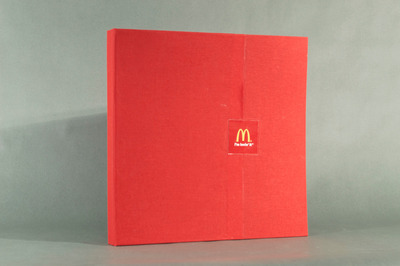
I'm Lovin' It: A Memoir is an exploration of the impact of branding on personal experiences. The narrative is made up of 4 interwoven voices: McDonald factoids, personal stories, supporting commentary, and design elements. Together, they open a discussion on social class, perception, and corporate control. This book is not a commentary on McDonalds or their practices, but rather a showcase of untold stories that ask readers to think twice bout making assumptions. There is always more than one truth.
-
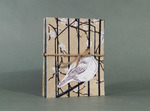
Bird
Laura Tamara Jaramillo, Fleet Library, and Special Collections
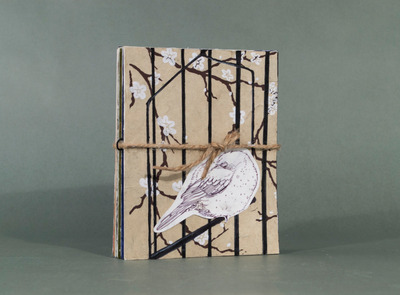
My book, Bird, is about a small domestic bird that wakes up one evening to see his cage door opened. The allure of freedom leads the bird out of the window and into the wild. The outside world, however, is a frightening and cold place and so he returns to his home; his cage.
-
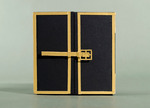
The Golden Shield Project/ The Great Firewall of China
Xiner (Sophie) Jiang, Fleet Library, and Special Collections
It is about the "Golden Shield Project", the official name given to Internet censorship in mainland China. It is also nicknamed by citizens as "the Great Firewall of China", referring to the ancient physical greatwall used to "protect" people from invaders.
-
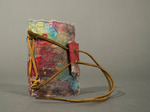
Dropcloth Dialogue
Holly (Hool) Johnson, Fleet Library, and Special Collections
This sketchbook was made in collaboration with over 300 people! The cover: the drop cloth is from the art studio where I taught-it was used as a "table cloth" and collected media of all sorts throughout the year it even was at a community mural project. I then created a mini-book that I have been taking with me wherever I go for the past 6 months: Denver, Providence, NYC, Ghana, Washington. I pull out the book and add lines and colors and soon everyone wants to join--so a dialogue is created as people from all over have added marks, lines, doodles, etc.
-
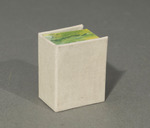
Providence Plants
Arnon Karnkaeng, Fleet Library, and Special Collections
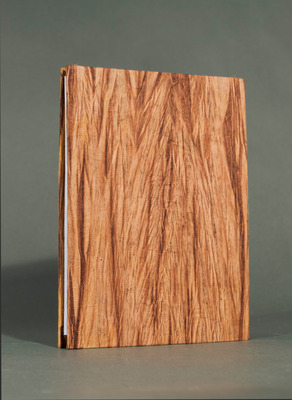
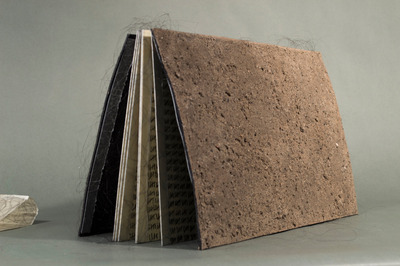
The piece is meant to be seen as a sculptural profile of the plants found in Providence. When closed, the pages mimic the texture of bark. The book was made by pressing flowers and plants and cropping them to create different compositions.
-
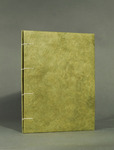
Recipe Book
Karen Ko, Fleet Library, and Special Collections
In this book, I explored my memories of my home and how my mom and I use cooking as a form of communication. For me, preparing meals and eating good means more than just satisfying a base need for nourishment; these activities have a lot of significance and contain a lot of history. By making this book I tried to capture the feelings I have towards the act of making and eating food at home.
-
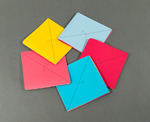
Kaleido-gami
Bon Hae Koo, Fleet Library, and Special Collections
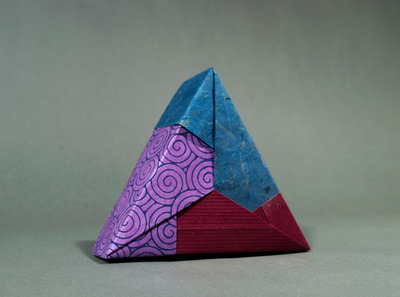
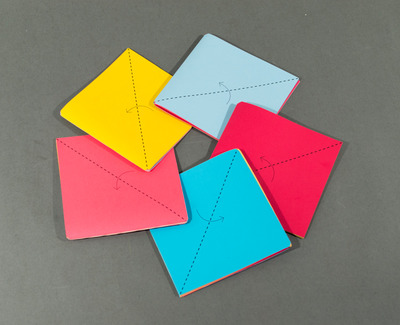
Kaleido-gami is an interpretation of the kaleidoscope into the book form. When people follow the instructions of it, by folding the pages, they constantly turn the book like the action of turning the body of the kaleidoscope. These books are made of colored papers with different sequences, that indicate no specific beginning or ending, like the properties of a kaleidoscope.
-
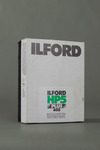
MOTHER, MOTHER
Paige Kooyenga, Fleet Library, and Special Collections
I process through process, using my darkroom time as meditation. In there, I aim to slow my momentum and try to more closely examine that which may go beyond my understanding and bring it instead to a point of comprehension. In Mother, Mother, I apply this process to examine my relationships between myself, my biological mother, and my "surrogate" or "art mom": Here, I wanted to parse out the differences in these two relationships and see if I appeared any different depending on my company and level of ease. To me, the difference in my face (in two photographs taken days apart) is enormous, and I think that's what I expected.
-
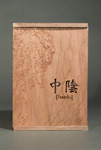
Bardo
Mary Kuan, Fleet Library, and Special Collections
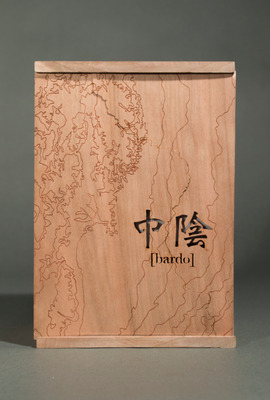
On March 11th, 2011, a tectonic plate slip precipitated the chain of disasters within the Tohoku region of Japan. The slip resulted in a 9.0 magnitude earthquake that caused the Earth's axis to shift ten inches, altering time and shortening days. The cherry wood box of the book slides and splits through the epicenter of the earthquake to reveal the book. This earthquake triggered the Tohoku Tsunami, which began with the trough that exposed the floor of the ocean - shown by the space created in pulling the bottom and top page apart using the tabs. The description opens in a small book at the end the opening of this creates a wave as it pushes down the other pages: more specifically, it's the tsunami that began with a white crest that turned to black - a black that inundated the coast and took 15,893 lives. Opening the book in a traditional way reveals ink spots in the pages that leak and bleed as the pages progress, illustrating the four nuclear meltdowns and three hydrogen explosions at the Fukushima Daiichi Nuclear Power Plant. Japan was in a state in between death and rebirth, known as bardo to Buddhists - an intermediate, transitional state of existence. The book handles this recent subject very delicately and is delicate itself. The interaction requires the viewer to intimately participate in the victim and survivor experiences that are portrayed throughout the book. Above all, my deepest condolences go to the victims.
-
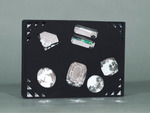
Treasuring
Yi Ning Ku, Fleet Library, and Special Collections
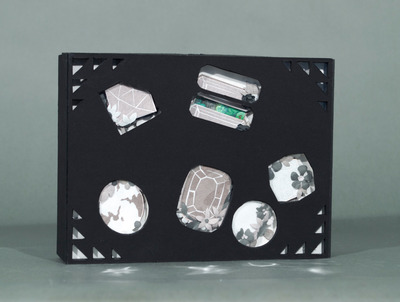
The most valuable things are the environment which provides everything we live on. There are many catastrophic issues happening if the balance is destroyed, and that is the current condition we face. By using the jewelry with dull color outside, the bright colors inside are intensified and showing the related issues associated with different colors of gems, including ruby, sapphire, pearl, citrine, amber, and emerald. By the contrast of color, the ideas are emphasized that each element in the system is important and is the reason why the world is so vibrant. Through different types of booklets, people could have various reading experiences and interact with the books, evoking the awareness of critical environmental issues in interesting way. The set of books is fun for reading, but also meaningful and educational, making people understand what we need to treasure and remember.
-
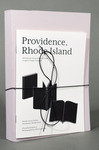
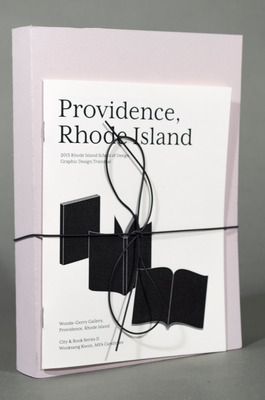
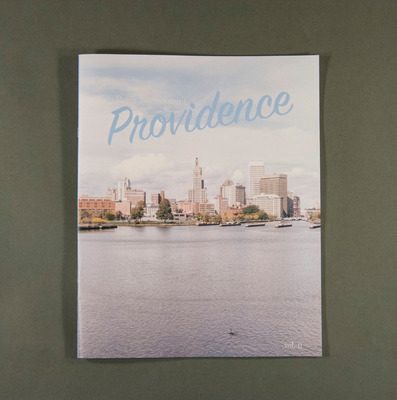
Providence
Wooksang Kwong, Fleet Library, and Special Collections
This project began when I was taking pictures of my books to prepare my portfolio book. This book is made up of 288 pictures of another book's spread, which changed for 24 hours according to he movement of the sun.
-
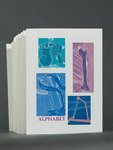
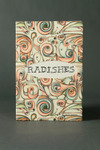
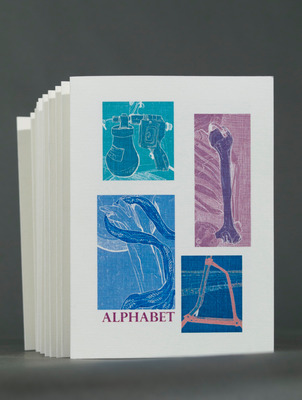
RISD ALPHABET
Hwarim Lee, Fleet Library, and Special Collections
I got inspired by the book "Alphabet City" and made my own version of alphabet book of RISD. Turning ordinary objects into extra ordinary illustration was a big part of my work. Alphabets were found around the campus
-
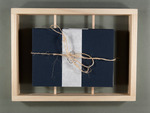
楮紙と桃太郎 (Kozogami to Momotarou)
Wei-Ming Leong, Fleet Library, and Special Collections
Japanese papermaking is a lengthy, tedious process, however the result of the long hours is rewarding as strong paper, despite its fragile appearance is produced. As the three part Japanese tale of Momotarou resonated with the process of the papermaking, I wanted to have these two together to show the rewards of what perseverance can bring.
-
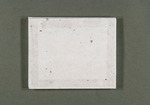
Someone Else
Yi Bin Liang, Fleet Library, and Special Collections
Our assignment was to make a book about "Farewell". I chose to make mine about leaving my family.
-
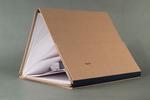
Vibrato
Chenhao (Lobbin) Liu, Fleet Library, and Special Collections
This book is the visualization of vibrato, a typical music technique, from the perspective of a listener who never play music before.
-
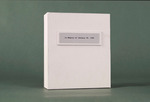
In Memory of January 28, 1986
Lanxuan (Florence) Liu, Fleet Library, and Special Collections
My artist book focuses on the Space Shuttle Challenger Disaster that happened on January 28, 1986. The Challenger exploded 73 second into its flight and caused the death of 7 astronauts. Even though this mission failed, people haven't given up to discover the universe, and we will always remember the astronauts and learn from their mission.
-
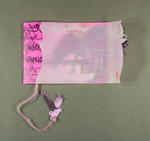
to thine own self be true
Aly Maderson Quinlog, Fleet Library, and Special Collections
This is somewhere between a handmade Artist's Book & a zine (a zook?). It is inhabited by Pussy Angels and Fae Ladies created with collages of original photographs & found imagery. The "zook" is designed with intentionally delicate materials to create tension with each interaction. The poetry, lyrics, and quotes are autobiographical and meant to be a catalyst for the viewer.
-
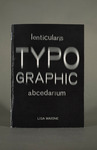
Lenticularis Typographic Abecedarium
Lisa J. Maione, Fleet Library, and Special Collections
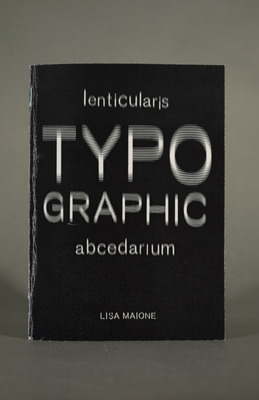
This small volume is one of a series of type specimen books featuring a new typeface family (working title: Lenticularis). This typeface is an exploration in resolution & visual distance/ proximity with forms based on the distortion of the lenticular lens.
-
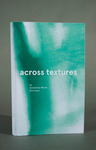
across textures
Genevieve Marsh, Elio Icaza, Fleet Library, and Special Collections
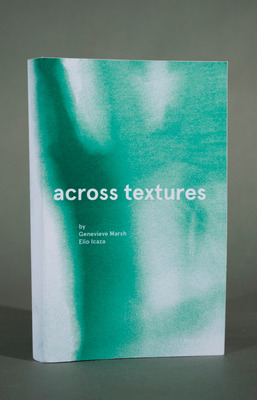
In this true story (to the letter) two artists find friendship through digital interlingua. Over the course of a year, word games mix with love letters and text message convention gives way to gesture and space between words. The result is a complex study of how we relate to space between us all.
-
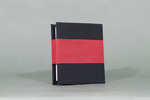
In the Midst of
Reishan McIntosh, Fleet Library, and Special Collections
This piece tells a visual story of a cat and its movement throughout the cold war. A cat is a smart intelligent creature who I believe embodies someone who has the mental capabilities to understand the complexities and length of the events taken place in the cold war. Using strong red to contrast the black and white gives the book tension, while slowly shifting to colors to signify a change in the mood.
-
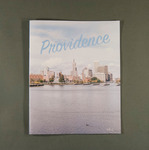
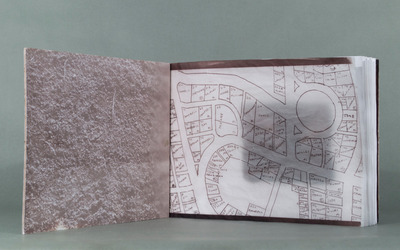
Peter Nicholson's Providence
Peter Nicholson, Fleet Library, and Special Collections
Peter Nicholson's Providence is a photographic cross-section of Providence, Rhode Island.
-
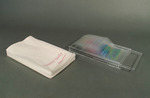
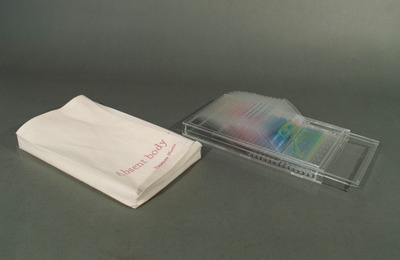
Absent Body
Vanessa Nieto Romero, Fleet Library, and Special Collections
This piece is focused on a reflection about the act of leaving marks throughout the everyday life and how it relates to the language of printmaking. For 14 days the artist documented her bed right after she got up. In this sense, this book works as a translucent diary that shows the evidence of time overlapped and the relation between absence and presence o the artist's body.
-
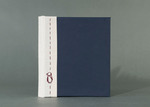
A Day in the Life of a Puffin
Lauren Oh, Fleet Library, and Special Collections
The artist books assignment prompt is to use the movement of an animal as a point of reference for this project. Through this prompt I wanted to illustrate the daily habits of the puffin.
-
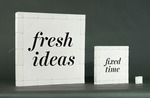
Non Books
Desmond Pang, Fleet Library, and Special Collections
A project inspired by the works of Yoko Ono and the Fluxus movement. Self-explanatory and open for interpretation. A series of three non-books.
-
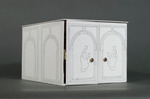
El Armario Familiar de Colecciónes
Michelle Perez, Fleet Library, and Special Collections
This piece was created as a personal narrative about my family, in particular about the collections that have accumulated over various generations, to be passed down to the next. Within these collections are memories of the past: places of meaning in Venezuela where these collections reside, of of those collectors who have passed on, leaving behind these tangible legacies.
-
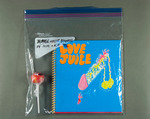
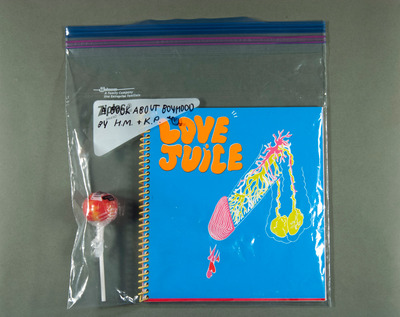
LOVE JUICE
Katrina Pisetti, Henry McClellan, Fleet Library, and Special Collections
A collection of works by K. Pisetti and Henry McClellan. This object explores the intimacy of relationships, the whimsy of boyhood, and the mysterious nature of change.
-
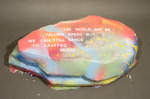
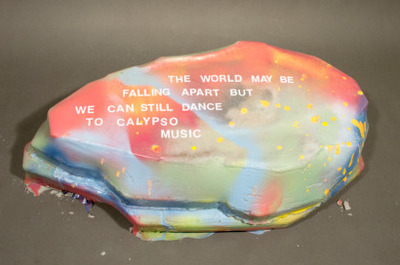
The World May Be Falling Apart But We Can Still Dance to Calypso Music
Lee Pivnik, Fleet Library, and Special Collections
The Year is 8,205 – You stumble upon a painted rock split down the middle. I don't know if you read my language, I don't know if anyone does. The rock slides apart, like a tomb of some sort, and inside rests a document. 11 insights into what life was like, at least for me, all those years ago as I tried to cope with everything sour in the world. Hey, I've found some answers but I doubt they'd work for you. Either way, you and your friend can drag this back to your dwelling now and try to sell it to a natural history museum. Or hide it under your bed and take it out some nights and just flip through the pages. May it bring you the peace of mind that it gave me to make.
-
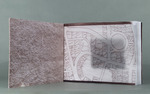
Rim Road
Thalassa Raasch, Fleet Library, and Special Collections
Rim Road evokes the liminal space and physical profession of Everard Hall. Everard, 71, has been hand digging and filling graves since he was 19. He is meticulous and takes pride in his craft. He even has plans to dig his own grave. For more than three years, I have been returning to rural Maine to live and work alongside Everard. Our time together--digging, making photographs, and talking--explores my ongoing interest in tombstones as a visual relief across the landscape to mark relationships we cannot access, and his work gathering stories, or really the end of stories of everyone in the small towns where he digs. The manual tradition of grave digging in the United States will disappear with him and, with it, a consideration of death that is open and personal. In this book, I use the rich browns of the van dyke process to locate these images within the colors of dirt. The photographs move us through Everard's personal environment, a place where death is an accepted part of everyday life.
-
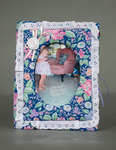
Our Family Album
Jessica Renzelman, Fleet Library, and Special Collections
What happens when we try to reconstruct a family history and memory from our childhood, but only scraps and damaged photographs remain? Our Family Album is a collaged, pseudo-scrapbook and photo album of a wide array of images, both from my own family, as well as found photographs, negatives and scraps. The photos were printed through various antique and alternative processes including cyanotype, van dyke, and gum bichromate on a variety of papers, to distort these memories. Images, text, scraps, cards, printed collage/hand-made collage, negatives, and a wide variety of found materials were arranged into the intentionally distorted and "broken" scrapbook, reflecting on the loss of my own family's photographs and mementos to a house fire. I attempt to reconstruct these memories through other families' home photographs, though they remain disjointed "scraps" arranged into a found album. Through Our Family Album I hope to convey a sense of broken (but collected) remnants of family memory and home.
-
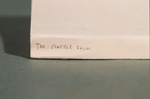
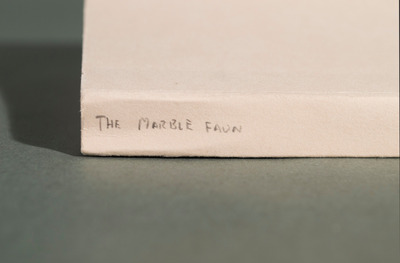
The Marble Faun
Ivan Rios-Fetchko, Fleet Library, and Special Collections
I have read a lot in my life, but I have oftentimes wondered what one "gets" from a text. What becomes significant? What does one remember? What does one, without realizing it, put into the art one makes? Thinking of these questions, the "shape" of a text, accessibility to knowledge and notations as drawings, I began to "translate" (copy out) the notations I had made in various books, of which "The Marble Faun" is just one. After extracting the notations I bound them in the same way my books were bound and made them into my own. Rather than attempting to specifically answer the questions that I set out, these books hope to ask them again.
-
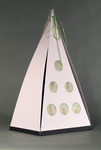
Movement of a Tardigrade
Rebecca Schena, Fleet Library, and Special Collections
This piece aims to illustrate the mechanisms of movement of the tiny tardigrade animalcule through artistic and scientific means.
-
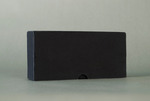
Untitled
Elizabeth Schweizer, Fleet Library, and Special Collections
My book is about the contemporary issues on Native American reservations and how the United States government has produced these conditions. I used imagery and research from the Cheyenne River Sioux Reservation in South Dakota, a reservation that has third world living conditions. The images in the book reflect the housing crisis, substance abuse, neglect, and suicide rates on the reservation. I chose a landscape format in order to force the viewer into the scene and educate them about these issues, something the American public has failed to do. The text in the book comes from a treaty with the Sioux Indians. It is hard to read in order to emphasize the fact that it was not followed through. It is divided 25 times with the panels of the book because the US government made 25 treaties with the Sioux Indians. I chose this topic because I have been to and worked on the Cheyenne River Sioux Reservation, It is a place that has had a huge impact on me, as I hope this book will on others.
-
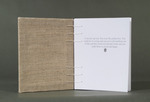
Ghost
Roxanna Shadmehr, Fleet Library, and Special Collections
"Ghost" is an artist book explaining my relationship with my brother. In it I explore the reasons behind my distance from him as a child and why I remember very little about him before I was in high school.
-
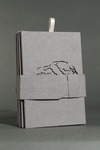
A Boy
Cassandra Sheedy, Fleet Library, and Special Collections
Presented in the form of a child's toy, my book presents the event of young Howard Dully's lobotomy at age 12. The youthful and playful format references how young Howard was, while the content shows how dark his childhood truly was. The format also allowed me to convey both Howard's and the doctor's p.o.v.
-
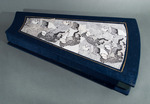
The Travel
Kathia St. Hilaire, Fleet Library, and Special Collections
This book is experimentation in creating a new way to experience a book. I wanted to create a continuous narrative that the viewer could piece together visually, physically, and mentally.
-
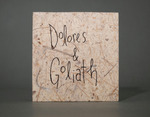
Dolores & Goliath
Lauren Wiener, Fleet Library, and Special Collections
A short story about a grasshopper and a dragonfly who find that they're better together than on their own.
-
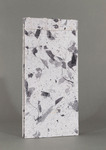
Antique Instagram
Hyo Bin Yang, Fleet Library, and Special Collections
Combination of an antique style and modern/digital Instagram.
-
The Dyatlov Pass Incident
Leah Yao, Fleet Library, and Special Collections
In February 1959, nine young and experienced hikers vanished in the Ural Mountains while on an ambitious expedition to conquer the icy Russian wilderness. Weeks later, their frozen remains were found on the slopes of Holatchahl, meaning "Dead Mountain" in the indigenous language of Mansi. Found within a one-mile radius of their campsite, the hikers were buried under several meters of snow and under a myriad of mysterious conditions: insufficient clothing for sub-zero temperatures, a tent ripped apart from the inside, remnants of radioactivity, a missing tongue. Medical examiners ruled their deaths as a result of hypothermia and violent injuries; the official investigator concluded cause of death a result of an "unknown compelling force." Despite the group's own documentation of journal entries and photos, the exact happenings of their demise between the first and tenth day of their supposedly 23 day trip remain unknown. The only certainty surrounding the incident of the hikers' deaths is the tragic end of nine lives in the midst of a confusing and harrowing journey on the slopes of Dead Mountain. Holatchahl is now known as "Dyatlov Pass", named after the group's leader Igor Dyatlov. The book is designed to convey the distressing, perplexing, and tragic journey of the Dyatlov group. Each panel represents an elevation of Holatchahl, with evidence of the hikers hidden within the pages.