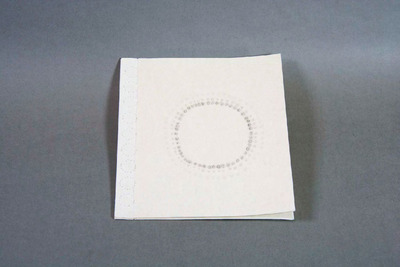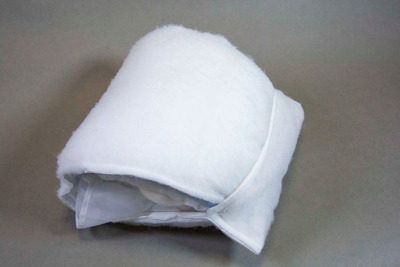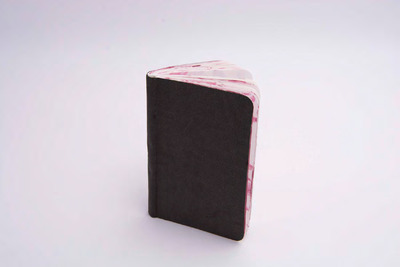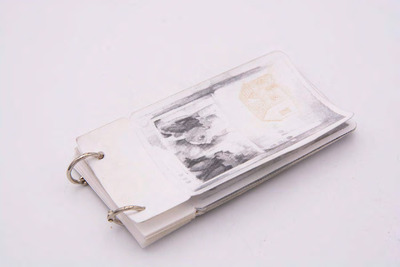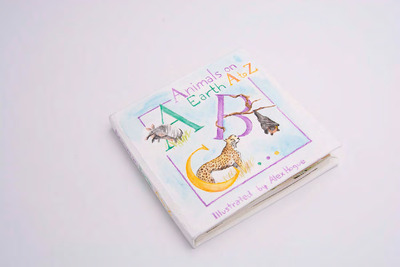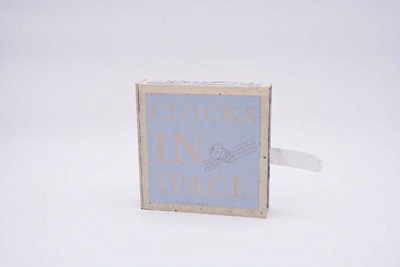

AWARDS Grand Purchase Prize | $500 My Grandmother by Jinghong Chen 2023 Illustration Laurie Whitehill Purchase Prize | $375 Clocks in Space by Pei-Jung Hsieh 2025 EFS American Printing History Association - New England Chapter Purchase Prize | $375 Ghost Bikes by Elizabeth Long 2024 Illustration Librarian's Choice | $250 A Modern Retelling of Little Red Riding Hood by Robbie Li MADE 2022 + Kennice Pan 2023 Illustration
HONORABLE MENTIONS | $100 How does it feel to have clouds swoop in your face by Zimu Fang 2025 EFS Zone: Apollinaire, Simpson, Chang by Naya Lee Chang BRDD 2024 Furniture, History February 14, 2018 by Yadelis Gomez 2025 EFS.
JUROR
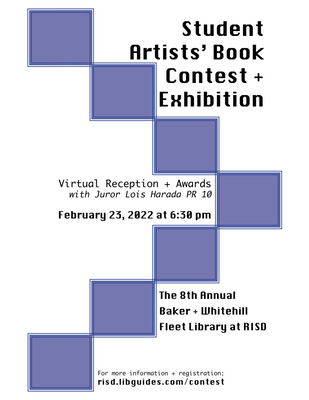
We are very happy to announce that Lois Harada is this year's juror. Lois Harada is an artist and printmaker working in Providence. She studied traditional printmaking at the Rhode Island School of Design (RISD) and settled in Rhode Island after graduating with a Bachelor of Fine Arts in 2010. She works at DWRI Letterpress, a commercial letterpress printshop where she also prints her own work. Harada utilizes text and the medium of the poster to tell her family’s story of incarceration — her paternal grandmother was interned in Poston, Arizona from 1942 -1945. She takes inspiration from propaganda printed and distributed by the United States government and prints with type and equipment similar to that which would have created the original works.
Harada has exhibited her work across the United States and internationally. Her work is included in private collections as well as the RISD Museum. Her practice is bolstered by residencies and she is preparing for a five-week residency at Anderson Ranch in Colorado in the spring of 2022. She recently finished a seven year term on the board of New Urban Arts, a nationally recognized free, arts drop-in program and a term as a city commissioner on the Art in City Life Commission serving the city of Providence.
-
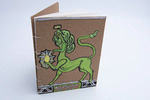
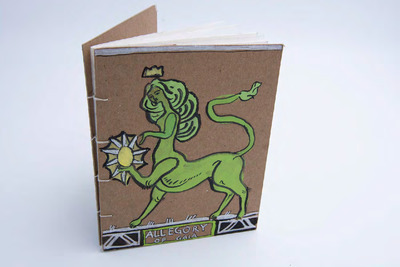
Allegory of Gaia
Matteo Mastrangelo, Special Collections, and Fleet Library
An allegorical tale of the earth, as told through the discovery of a decorative egg given as offering to Gaia -- a creature who every year nourishes the people of an imaginary island. The book is told through the designs on the eggs, and the possible story they tell.
-
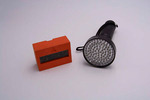
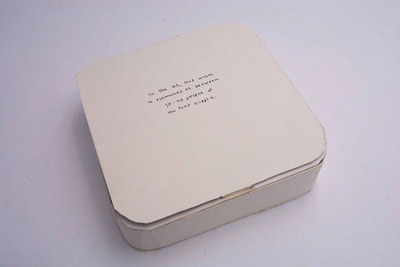
Virochip Book
Ani Menkov, Special Collections, and Fleet Library
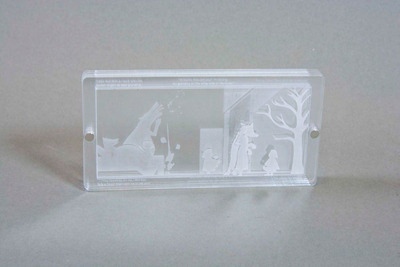
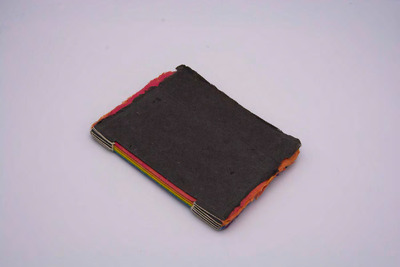
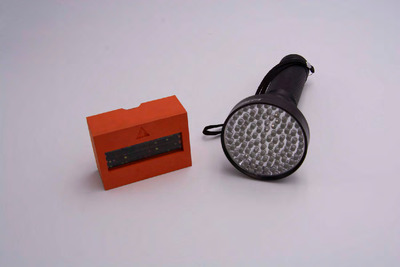
This book discusses some of the technologies developed and discoveries made at the DeRisi Lab. The original Virochip was a slide with DNA sequences from all 22,000 known viruses printed on its surface. It functioned by dying a sample (often spinal fluid) with fluorescent dyes and washing it over the slide. Dyed DNA from the sample would bind to the corresponding printed sequences. (Virus DNA will also bind to its relatives or ancestors, meaning that the virus didn't have to be previously known to be described.) When the chip was scanned with lasers, the slide would "light up" where the DNA had stuck, allowing the virus to be identified. My book is packaged in a box styled after microscope slide storage boxes, with an engraved microscope slide set in the top representing the original Virochip. I have stylized the data output from the machines used in each case discussed and rendered them in fluorescent ink on the back of each paper "slide", and they glow under UV light.
-
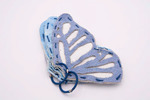
The Butterfly Effect
Viva Motwani, Special Collections, and Fleet Library
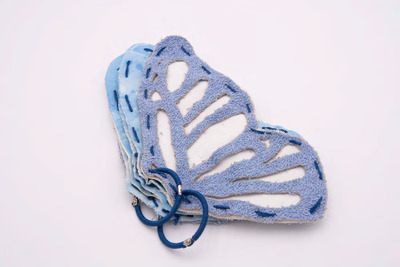
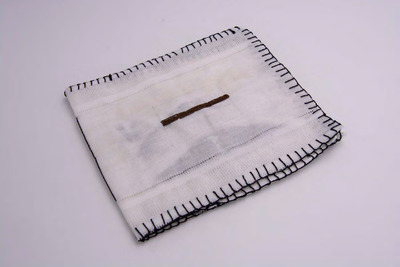
My book was created over the course of design studio, with many changes from the initial draft. I was inspired by the fragile form of the butterfly and wanted my narrative to enhance the exterior. The cloth and sun prints help enhance the nature of the insect and carry on this organic ‘thread’.
-
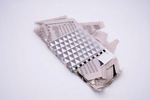
Trapped in Thought
Ana Melida Olivo, Special Collections, and Fleet Library
This is a visual representation of my mind. The hard cover—a small, 6x6” cover with a repeated black-and-white triangle pattern is covered in vellum to represent the orderly demeanor as a front, covered by a thin layer of fogginess. The newspaper clippings spill out, the content of repeated and nonsensical stock numbers representing my thoughts, the gold leaf on the sparse magazine pages of women’s legs and bodies as a representation of my insecurities. The interior booklet, if one had the patience to actually find it, were some words I thought of on my way back home for the weekend. They were sprouted from a mix of anger, confusion, fear, dread, and bordering on acceptance of being diagnosed with fibromyalgia just a few weeks before my work’s completion. The words and images, both written and drawn entirely by me, are of the innermost part of my brain, the most vulnerable part of me.
-
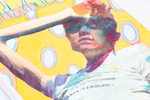
CitraSoul
Luke Osborn, Special Collections, and Fleet Library
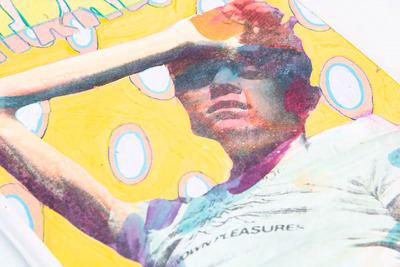
CitraSoul explores the technique of Citra Solv photo transferring to combine quick colorful gestures with monochrome photographs. Under-paintings are done intuitively with a loose hand, to show the energy and personalities of my friends back home that exist beyond the photographs. By quickly summarizing the monochrome photographs, the photo and its underpainting, or “soul”, become intrinsically connected. Intuitive gestures infuse the photograph to create a full color image. An image that does more than describe features, but plays into the forces that are acting just below the skin.
-
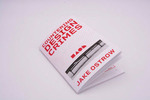
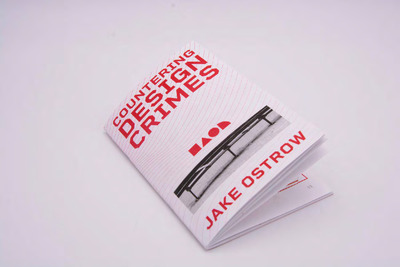
Countering Design Crimes
Jake Ostrow, Special Collections, and Fleet Library
Countering Design Crimes is a guide for identifying and thwarting hostile design. It breaks down what hostile design is and why it's harmful, and provides a few possible solutions. While many of these solutions are generally impractical. The goal of this guide is to inspire the reader to think more deeply about the choices designers make when creating our environments.
-
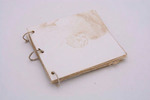
Untitled
Ashna Reddy, Special Collections, and Fleet Library
An exploration of the uncanny body, both in imagery and the readers' experience of affecting that body.
-
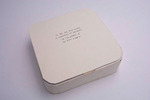
OZZI Box
Jessica Ruan, Special Collections, and Fleet Library
This artist's book, resembling an lunch box with food items in it, explores the processes and energy spent to get the food onto our plates. The piece aims to bring attention to food waste and encourage thinking before wasting food in the cafeteria.
-
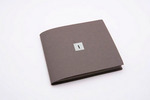
Does a thorn mean it?
Olivia Schroder, Special Collections, and Fleet Library
"Does a thorn mean it?" attempts to locate the familiar in the unfamiliar. For the project, photographs taken in rural New England are paired with short poems and prose that explore memory of home. They are collected in a photo-album format, as the photographs become elegiac. Place, mythology, pastness, and memory are explored in this photo text.
-
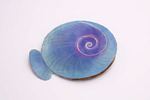
Story of The Sea
Kate Tsai, Special Collections, and Fleet Library
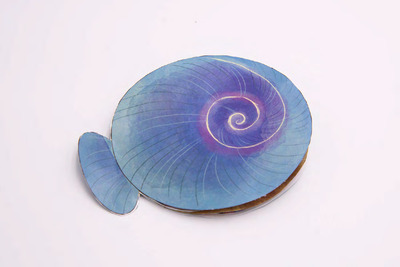
The burning sun that shines above me before I enter the water is a cause of the dying fish population and my fear of my home town (Taiwan) getting flooded.
-
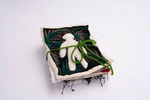
Strings attached
Dhirey Vivar, Special Collections, and Fleet Library
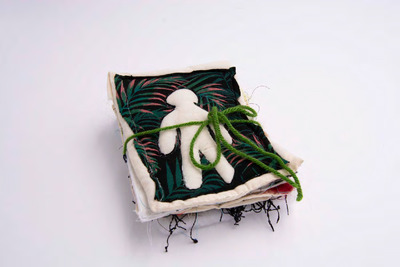
A tactile experience about the stages of what a fast fashion article goes through when being purchased
-
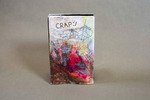
Crap
Phillip Walker, Special Collections, and Fleet Library
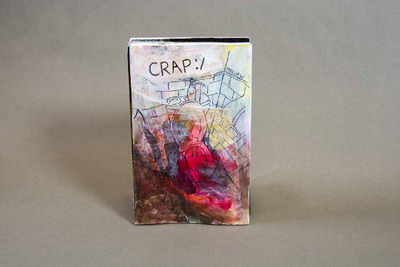
This book is a manifestation of the unhygienic state my neighbor’s left our shared bathroom in. From underwear in the trash to unnatural amounts of pubic hair in the drain, the book details two responses to the bathroom conflict: written disdain and enraged lunacy.
-

untitled (musings on the textiles industry)
Anna Winters, Special Collections, and Fleet Library
This book is a narrative on measures currently being taken within the textiles industry to counter this industry's environmental impacts. Although progress is being made, there is still much to do; the industry needs to continue to move towards operating in a cycle rather than a straight line.
-
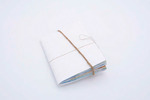
5 extreme weather
Chunti Yang, Special Collections, and Fleet Library
it's five different extreme weather, I use three layer to make it 3 dimensional.
-
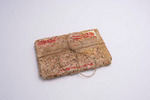
The Distance Between Us -- Things I Never Said
Joel Yong, Special Collections, and Fleet Library
"The Distance Between Us -- Things I Never Said" is a series of poems in the form of love letters, following the themes of heartache, distance, and loss of love. It is designed to be a deeply intimate experience, representing the thoughts and grieving process that may follow after heartbreak.
-
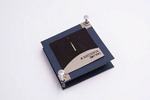
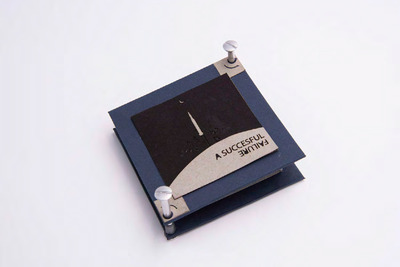
Apollo13: a successful failure
Haoxi Zhang, Special Collections, and Fleet Library
This book is about Apollo 13, a cursed mission with 13. Behind this longest rescue ever made from earth and space, people on the ground and in the air demonstrated great values with unconditional trust and faith. Something seems forgotten when the world is filled with conflict of race, nations, and space.
-
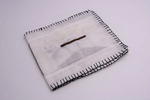
Untitled (Water)
Hazel Zhang, Special Collections, and Fleet Library
Calling awareness to the Indigenous water crisis in North America using the idea of "two sides of the same coin", comparing access to clean water in Native reserves and the city.
-
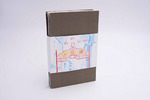
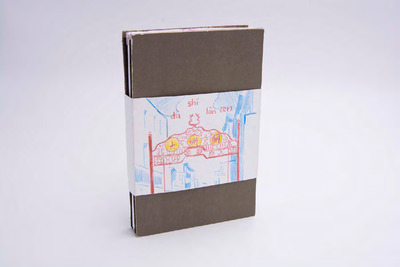
大栅栏/ DaShiLar
Jiayun Zhang, Special Collections, and Fleet Library
This book is a reportage of a historically significant commercial street, DaShiLar and its street foods. The book features an interactive format that allows the reader to flip up different parts of the busy street to explore traditional snacks in Beijing.
-
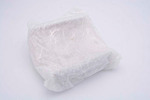
funeral: shadows walking into a thin slumber of sea
Susie Zhu, Special Collections, and Fleet Library
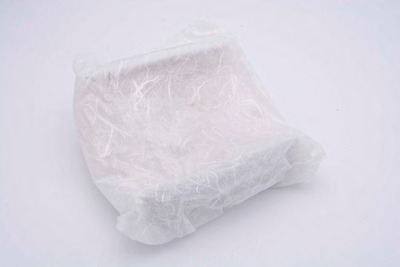
This book is a [relic] of an ephemeral performance-installation with the same title: . The installation consists of 15 pieces of ice sculptures with “shadow drawings” printed onto them, poetry & sound composition and a video projection of a footage of night sea; in the performance, the ice would [decease]—i.e. melt—into water gradually and at the same time, the shadows contained in the ice would be liberated, along with intermittent words of poetry that also emerge from the ambient music (also composed by Xu.) Both the book and the performance are contemplation of the idea of in relation to Zen & Buddhist concept of life & death, and how one could embody rather than opposing the other. When the ice melt into water, it does not disappear but enters a new life—believing this ephemeral performance defies a traditional way of documentation (that strives to replicate the process/or “to make a mummy” out of the documented work so as to prevent the decease from taking place—such as filming,) Xu decided to make a “resting place“ instead, for theses “deceased performers”—this book is not a reproduction of the poems/chants, the shadow prints nor the ices forms, but a “shadow” of all of them—a small tomb, a relic they reside, a soft bed to sleep and dream its next life into.