
Awards
Announced February 24, 2021 Grand Purchase Prize If We Could Make It Out Alive by Jonathan Dewanto, BFA, EFS 2024 Laurie Whitehill Purchase Prize Waiting for Democracy by Naya Lee Chang, BRDD, Furniture Design 2024 American Printing History Association - New England Chapter Purchase Prize A Book of Happiness by Shuyan Chen, BFA, Illustration 2023 Librarian's Choice The Woman's Way by Yukti Vishal Agarwal, BRDD, Textiles 2024Honorable Mentions
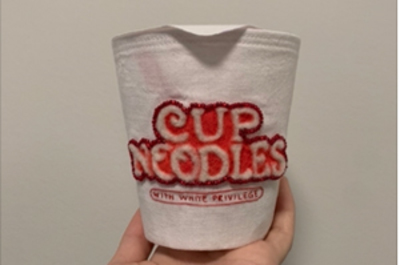
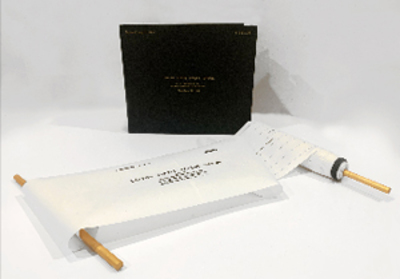
It's all "now" by Mario Fernandez-Moreno, BFA, Apparel Design 2022, How to be a CaNniBal in the 21st Century? by Vidhi Nayyar, BFA, EFS 2024, Ramen with White Privilege by Sarah Park, BFA, Apparel Design 2022, Secret Communication System by Jocelyn Salim, BFA, Illustration 2023.JUROR We are very happy to announce that Nafis White is this year's juror. Nafis White works in sculpture, photography, video, collage, sound and performance exploring issues of identity, equality, politics and landscape, using personal narratives to facilitate and build conversations with the viewer. Her approach is one that is heavily influenced by conceptualism, aesthetics and climate, both political and social, with much of her work inspired by the current Civil Rights Movement in the United States. Nafis employs many different strategies in the way that she visualizes and creates work, utilizing a multidisciplinary approach to her art making. White received her BFA in Sculpture with a Concentration in Art History from the Rhode Island School of Design before embarking on a year-long program at the University of London, Goldsmiths in the UK. Nafis returned to RISD in 2016 to study Digital Media and Printmaking and graduated with her MFA in 2018. You can see more of Nafis White's artwork at nafiswhite.com.
-
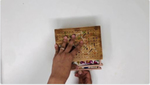
The Woman's Way
Yukti Vishal Agarwal, Special Collections, and Fleet Library
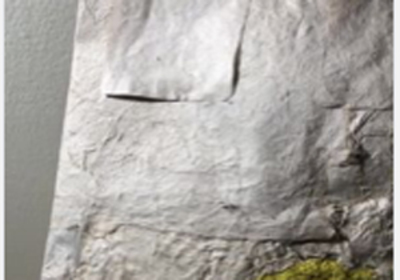
Stories are the most fragile and ephemeral of historical archives. I have always been enticed by the beauty of these generational documents. Some of my favourite passed on stories come embroidered delicately on the silk 12-inch squares of Chamba Rumals: they chronicle the mythological stories of Gods such as Vishnu in his many forms and even the stories which come passed down in the royal courts of the Mughals and Rajputs in India. However, these stories tend to leave the women, who are instrumental in catalyzing change and revolution, in the background of historical documentation. These recreated Chamba Rumals are a re-telling of stories which bring to the foreground female voices and elucidate the intrinsic role that women played, and continue to play, in the Indian landscape. Chamba Rumals from ancient India are small hand-embroidered handkerchiefs that were made in the village of Chamba, Himachal Pradesh. They are adorned with dophar embroidery, which can be viewed from two perspectives; thus, the back of the rumal has the same embroidery form as the front. They illustrate stories and epics of the time. Reminiscent of the dophar technique, these handkerchiefs draw a parallel with the way we see our history as well: from more than one perspective.
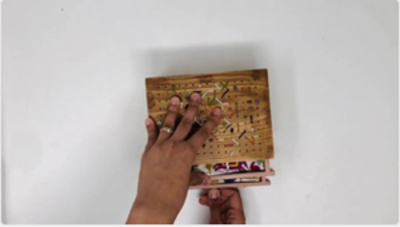
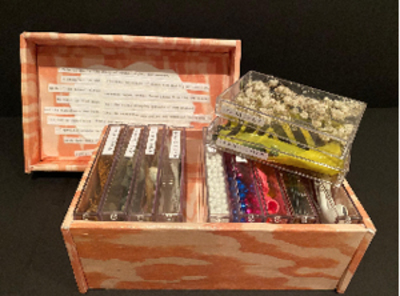
I - the women we domesticate The first rumal: a modern-day shikargah (hunting scene) shows women mounted atop horses and catching their prey, instead of the valiant man (for whom hunting as a sport was exclusively reserved). One of the most enjoyed sports of the Mughal era, hunting was a leisure reserved for men. However, Nur Jahan, one of the most iconic women of the Mughal Dynasty in India—who was known for her keenness with politics and court matters; her love for architecture, poetry and botany; and her mighty fierceness on the battlefield—was one of the best hunters of the time. She was called the “tiger-slayer.” In a period when women were concealed behind the veil of submission, Nur Jahan was an idol who defied the confines of societal expectations and rose above the roles of domesticity and piety that were given to women. This shikargah shows Nur Jahan, the sole female hunter, in the midst of an ocean of male hunters, catching her prey with ease and grace—as is the nature of women in all fields of existence. II - the women we rescue The second rumal: a recreation of the epic Ramayana, while a triumphant tale of emancipation, talks about the way a man saves his wife, and considers her impure after. In my iteration, the women in this scene are in fact saving the men, who, here, play the ‘damsel’ in distress. After Sita was kidnapped by Ravana and kept in the sanctuary of his vast gardens in Sri Lanka, Rama (Sita’s husband) embarked on the valiant journey to cross the strip of water that separated the island of Sri Lanka from the mainland. The only way to do so was to fill the ocean with enchanted rocks which, instead of sinking, floated and created a path for Lord Rama to save his wife. However, why is it that Sita needed her husband to save her? In this iteration of the famous epic Ramayana, Sita is not being saved by the mighty Rama, but rather there is a role reversal which gives Sita agency and authority over herself. III - the women we worship The third rumal: a mobile shrine of the eight Mahavidyas (the ten Mahavidyas, or Wisdom Goddesses, represent distinct aspects of divinity intent on guiding the spiritual seeker toward liberation) proudly exemplifies the manner in which women were worshipped, yet treated as objects of the patriarchy for the better part of Indian history. This rumal provides the paradox that is evident in our society: a society where women are forced to fit into the molds of piety, purity and submissiveness, and are disrespected and considered mere objects of the patriarchy, but at the same time, these very women are worshipped and revered in temples dedicated to them for their qualities of power and strength. For example, Kali is the first of the eight Mahavidyas exemplifies the might and fury of a woman. She is known as the “Dark Goddess.” But, she is also an occult symbol of Mother Nature. The multiplicity of a woman character is exhibited here: a woman can be as fierce as she is nurturing. Kali is one of the eight reminders for us as a society that a woman can be—and are—beautiful, strong individuals, who deserve respect and celebration. The wood box is made in the local teak wood and the embroidery into the wood is in the colours of the Indian flag to reiterate the locality of this issue, but the embroidery pattern itself is derived from Sanskrit but contemporized to bring to light to the universality of this pertinent issue. The embroidery is based off a Sanskrit saying from old times which reveres and celebrates women to remind us that our scriptures and our past celebrated and respected women, and question why we are not continuing those traditions even today. The work that I am doing with the Chamba Rumals is connected to an NGO (Non-governmental organization) that I started with my grandmother a few years ago. The money received from the sale of these (whether to Special Collections or otherwise elsewhere after the exhibit) will be entirely donated to the daughters of the original Chamba Rumals artists in Chamba, Himachal Pradesh for their education. Read more about this initiative here: https://handmakinghope.org/chamba-rumal
-
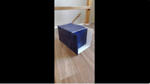
Across the Stars
Azure Brooks, Special Collections, and Fleet Library
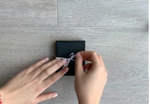
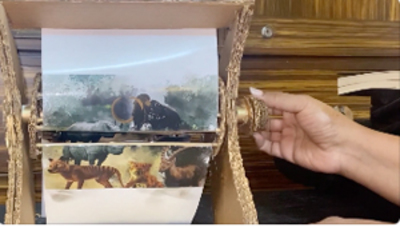
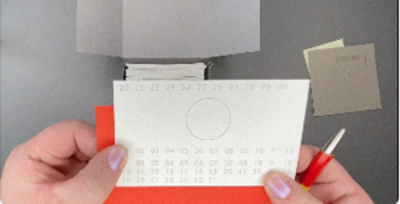
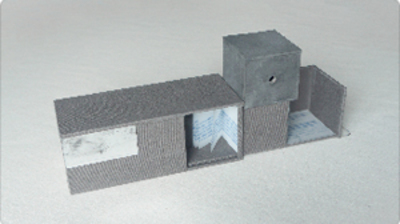
My artist book is a camera obscura, which I used to reflect drawings of my astrological birth chart and a transit chart for the current time period. I wanted it to be reminiscent of the celestial heavens being reflected onto Earth, and how astrology can depict the personal growth, development, and story of each person. I also wrote small interpretations of my transits, explaining how the energy might affect me; I did this in the familiar style of horoscopic astrology.
-
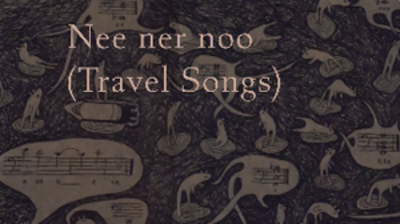
Nee ner noo (Travel Sounds)
Sophia Brown, Special Collections, and Fleet Library
These creatures often sing. This book is about simple creatures who live in the suburbs, city, and float high up in space. Their voices are most easily understood through western musical notation. The bound accordion arrangement is a one off.
-
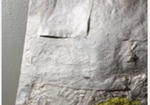
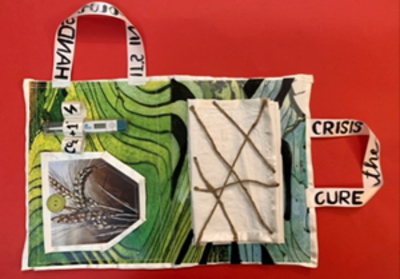
My kinda 2020
Ray Cao, Special Collections, and Fleet Library
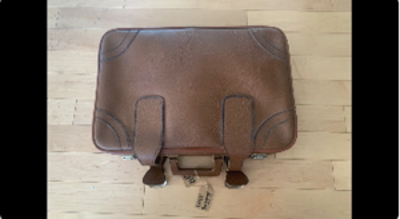
When the pandemic began, I was stuck in my dorm, and I started to order food from my favorite restaurant. Each different piece that are patched on the bag represent a piece of 2020, and I wanted to commemorate this difficult year by making this piece.
-
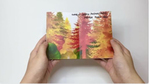
When Snow Melts
Xinyu Cao, Special Collections, and Fleet Library
This book is about the changing of snowlike in the Jade Dragon Snow Mountains. One side of it is the list of endangered animals, and the other side is the comparison between now and the future.
-
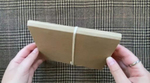
Fall
Christine Chang, Special Collections, and Fleet Library
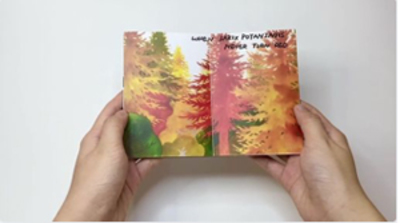
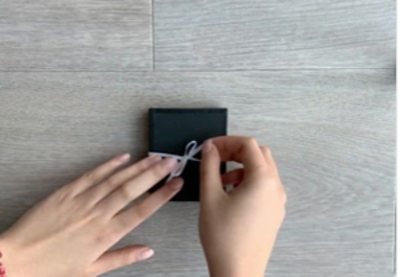
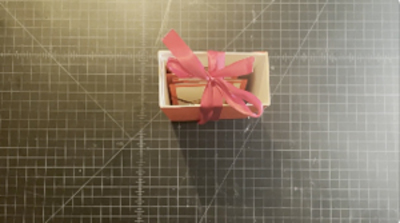
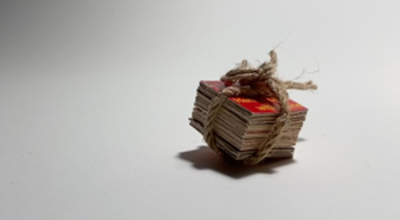
This pocket box holds the imprints of found leaves gathered around Rhode Island. Usually overlooked and left to decay, these prints act as memories to be viewed, shared, gifted, and remembered. They are each moments in time rendered permanent for others to experience. Each leaf holds its own narrative of its history, relatives, environment, and life. This contains 25 prints and is 4.5" x 6" x 0.5" in size.
-
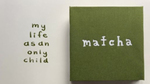
matcha
Hannah Chang, Special Collections, and Fleet Library
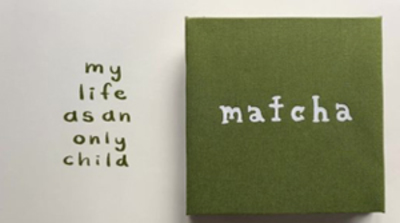
This book is about my experiences as an only child. I titled this book "matcha" because not only do I love the unique taste but that it's also something that I have grown up with. Matcha is bittersweet, and that is why I have illustrated my life as an only child in both sweet and bitter moments that are equally cherished, remembered, and times that have shaped me for who I am.
-
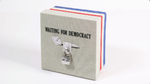
Waiting for Democracy
Naya Lee Chang, Special Collections, and Fleet Library
The election day failure in Georgia foreshadowed the chaos and systematic disenfranchisement that accompanied the high-stakes November elections in all parts of the country. Bureaucratic problems with high levels of voting by mail also occurred. Republicans in office routinely implement and uphold voter suppression tactics, so it was contemptible but expected that adequate time and resources were not put toward ensuring ease of voting. Is this what democracy looks like?
A few notes on the form of the book: I chose an accordion fold form to emulate the snaking lines that many voters faced on election days in both June and November. All the silhouettes were drawn by me in Adobe Illustrator and cut out using a die-cut machine. The artist box takes the form of a stuffed up and locked ballet box. I recreated an empty ballot to put on the inside of the box, which is where the voters are trying to reach.
-
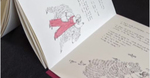
A Book of Happiness
Shuyan Chen, Special Collections, and Fleet Library
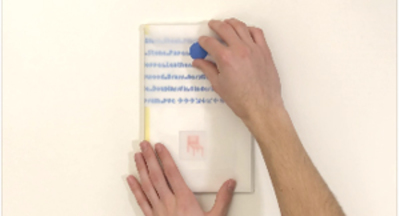
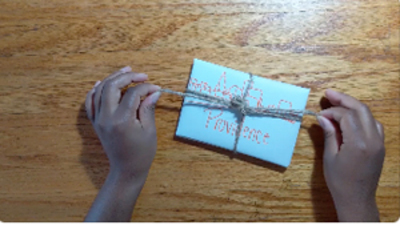
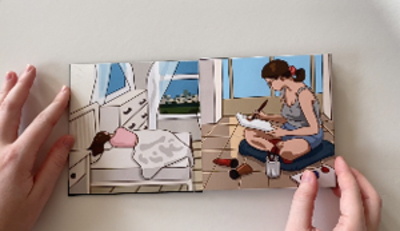
I pulled out heart-warming and nostalgic fragments from letters and postcards I have received over the years and collected them into this small volume. The illustrations on each page build up a separate narration which tells the little adventure of a girl and a bear and lots of letters and postcards they found on the way. It's not easy to show the text of the book in a video format, so I’ll talk a bit more about it here: There’s something special about physically received words that I carefully stored in my treasure chest. For this project, I picked out some favorite sentences of mine from the stack and arranged them into chapters according to their topic. Now out of context, these fragments become little glimpses into the lives of those who have written to me or the connection they have shared with me. Much of the original text I translated from Chinese, so perhaps now they bear the tone of my writing, too. Samples here: “After a long and hard journey, my second letter has finally arrived at your letterbox! I wonder what your letterbox looks like.” (from Chapter 1 Letters and Postcards) “About that bread giraffe...because his neck is too long to fit into the oven, my intelligent mum folded his neck. We discovered only after baking that we CANNOT unfold the neck!!!!!” (from Chapter 3 Food) “Do you see stars on your little island?” (from Chapter 4 Questions) “I couldn’t find a box to fit the doll. It’s too big. Hope you don’t mind.” (from Chapter 6 Gifts) “(My handwriting is actually not this ugly) let me write you a few verses then: You are not the burning, / blooming fireworks that fill the sky with splendor / But a far better view - / You are / the bracing, tender wind that touches the face / of one running wild in the country fields.” (from Chapter 8 Poetry) “And remember to take care, drink lots of milk, eat lots of vegetables, don’t just eat meat all the time.” (from Chapter 11 Remember) “Happy Chestnut Day!” (from Chapter 12 Wishes)
-
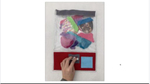
Growing Up
Christianna Choe, Special Collections, and Fleet Library
This artist book was created to showcase this years collection development. This book was created as a promotional packaging which includes concept narrative, swatches, inspiration images, and lineup. included is a look book laminated the size of baseball cards that showcase the final made garment out of the collection lineup.
-
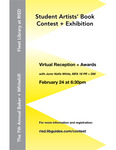
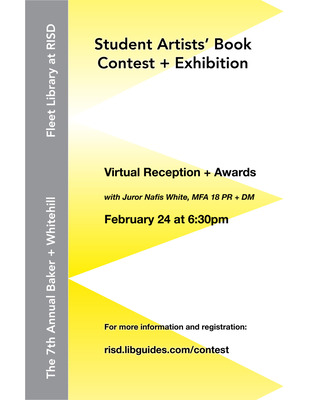
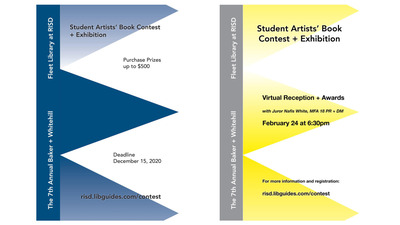
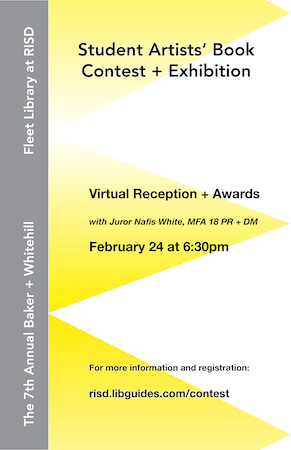
7th Annual Baker & Whitehill Student Artists' Book Contest 2021 Poster
Special Collections and Fleet Library
-
7th Annual Baker & Whitehill Student Artists' Book Contest 2021 Virtual Reception
Special Collections and Fleet Library
-
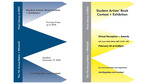
7th Annual Baker & Whitehill Student Artists' Book Contest 2021 Virtual Reception Presentation
Special Collections and Fleet Library
-
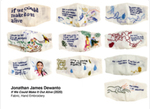
If We Could Make It Out Alive
Jonathan Dewanto, Special Collections, and Fleet Library
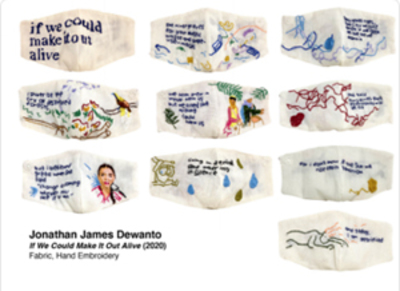
If We Could Make It Out Alive: the pandemic and climate change. Inspired by the increasing single-use-mask waste and other COVID-related debris that were not disposed correctly, If We Could Make It Out Alive is a hand-embroidered poem book in the form of face masks. The set of five masks are detachable, and each can be worn separately. It is an expression of the bitter realities of climate change, specifically from the point of view of someone living in the tropical country of Indonesia. It is a visual representation of fright, sorrow, and being in a state of flux.
-
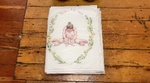
Barbie's First Steps
Sarah Dunn, Special Collections, and Fleet Library
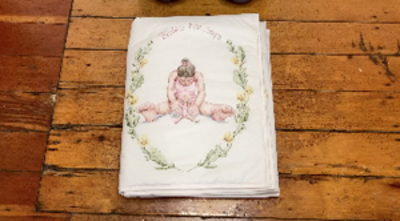
A quilted book about my experience with ballet. How it served as a comforting and freeing act while simultaneously existing to control and manipulate my mind and body. Comparing this to when I was a child playing with Barbies. Although the barbie was under my control, it offered me freedom and comfort in the form of play. However at the same time, the Barbie influenced my body image and feminine ideals in the same way ballet did.
-
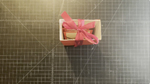
It’s all “now”
Mario Fernandez-Moreno, Special Collections, and Fleet Library
This piece is made as a form of escape. Using the concept of block universe theory in which the past and future and current are all happing simultaneously and therefore can influence each other.
-
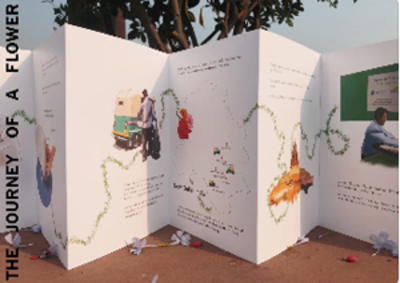
The Journey of a Flower
Pavanee Giroti, Special Collections, and Fleet Library
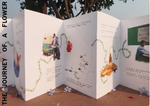
This book is a meaningful, visual representation of my sister's 'Project Nishtha' in the form of an accordion which tells the story of her project’s ability to extend a flower's life by converting it into compost. Guided by illustrations and text, each page depicts a stage of the life that a flower undergoes through her project. The cover is handmade, with the cloth from Goddess Saraswati's garment, with connotations of spiritual protection and rejuvenation.
This book promotes sustainability both physically and in deeper meaning: it was made out of waste materials - recycled paper and packaging, and ink that is 100% organic and eco-friendly, and the story tells us about ecology and environmental sustainability through converting flowers into organic compost used to grow gardens.
Text by Suhanee Giroti More on Project Nishtha: https://www.suhaneegiroti.com/1
-
r E d
Regina Gutierrez, Special Collections, and Fleet Library
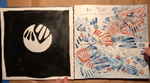
Red is to break down how you break down. It is to instruct feeling; a manual on how to navigate your own dilapidated existence. I am okay and you will be alright, so cry just because.
-
It's In Our Hands
Himangi Kanoi, Special Collections, and Fleet Library
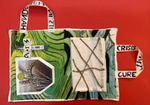
My project aims to highlight the plight of local farmers in East India. Climate change causes them a lot of disturbance in their livelihood, homes, families, and even the food they eat. Eg. draught, flooding, rise in temperatures. Based on true research and evidence.
-
Flowers Fall
Nicole Kim, Special Collections, and Fleet Library
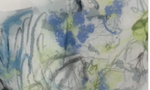
My artist book is about my growth process after my breakup with my first love. Series of events caused the end of the relationship and it took time for me to recover from the heartbreak. I believe that time itself did not heal the pain, but I grew in order to overcome it. My growth started with the breakup, and it became my turning point to work on myself. I was able to fully focus on myself and improve myself in different aspects, including work, morals, and emotional stability. Now, looking back to the breakup, I am truly thankful. I am thankful that I was able to let go and find my passion. I was able to grow not only as an artist, but as a person. Thank You.
-
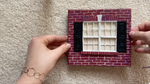
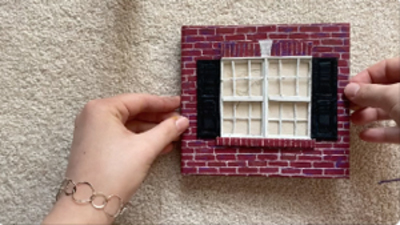
through my window; between my walls; under my roof
Nicole Klein, Special Collections, and Fleet Library
A small handheld size book about existing during the second half of spring semester 2020, the worldwide covid quarantine period. Commenting on the things that I would do and see everyday, my work space, my mind space.
-
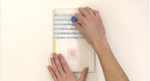
Inanimate Intimacy
Cameron Lasson, Special Collections, and Fleet Library
Quarantine has forced us to be with only our immediate surroundings. Filled with inanimate objects to keep us company. What is our relationship with these inanimate objects? What do they reflect about ourselves?
-
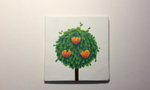
Cycle
Perri Litke, Special Collections, and Fleet Library
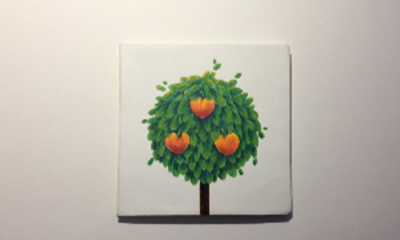
A book showing the process of death sustaining life through the consumption of a peach. The text is “i ate a peach whole. the pit buries in my gut. when i die, fruit grows.” Also, it is an accordion book.