
AWARDS
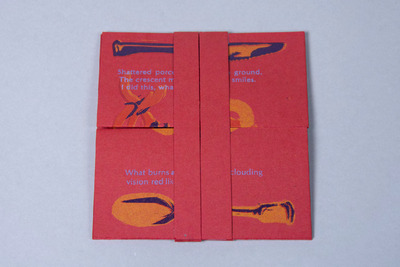
Grand Purchase Prize | $500 A Return to Nature Sadie Levine MFA 25 IL Laurie Whitehill Purchase Prize | $375 Part of Me Maria Hahne 24 IL Laurie Whitehill Purchase Prize | $375 A Destructive Friend Natalie Ho 26 GD Librarian's Choice Purchase Prize | $375 Decay Ellie Lin 27 EFS American Printing History Association - New England Chapter Purchase Prize | $375 Hands That Held Them Anik Levcovici 24 PR American Printing History Association - New England Chapter Purchase Prize | $375 The Abrupt Life of Grass/草草一生 Ziqi Zhang 24 PRHONORABLE MENTIONS | $100 Belly of the Beast Olivia Bartsch 26 IL Limbo Sofia Schreiber 26 IL What are you Jyot Thind 25 GD
OPENING RECEPTION
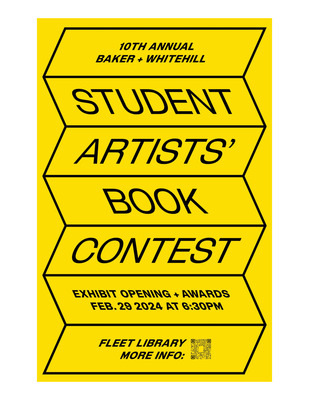
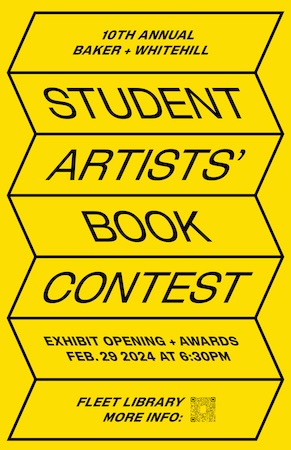
The opening reception and award ceremony was held Thursday, February 29, 2024 at 6:30pm. Visit 10th Baker & Whitehill Student Artists' Book Contest to read more.EXHIBIT
View exhibit installation shots here: 2024 10th Annual Baker & Whitehill Student Artists' Book Contest ExhibitJUROR
We are very happy to announce that this years Juror is Ian Cozzens BArch 05.-
DO NOT READ
Eden Andrulaitis, Special Collections, and Fleet Library
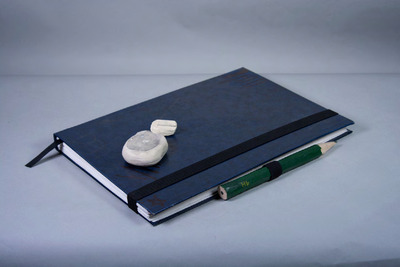
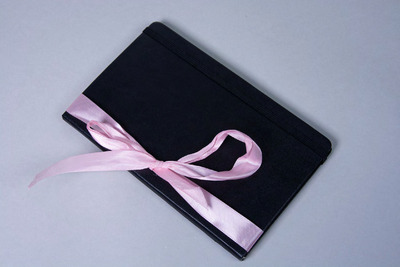
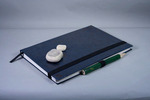
Showcasing a journal, something commonly affiliated as an object of personal and private nature, and displaying in a manner of public consumption. Highlighting an invasion of privacy and the value of solitude and privateness of thoughts and ideas.
-
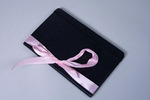
The Aesthetics of Decay
Ophelia Arc, Special Collections, and Fleet Library
Book depicting the process of my body of work investigating physical and mental decay.
-
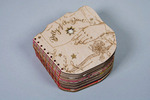
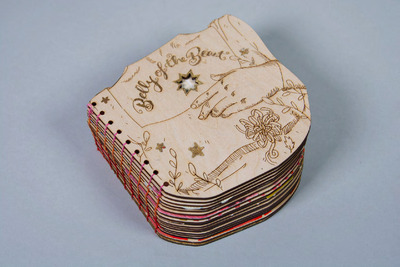
Belly of the Beast
Olivia Bartsch, Special Collections, and Fleet Library
This book is both a literal and conceptual piece that goes into what’s inside the human body.
-
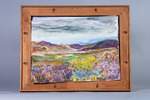
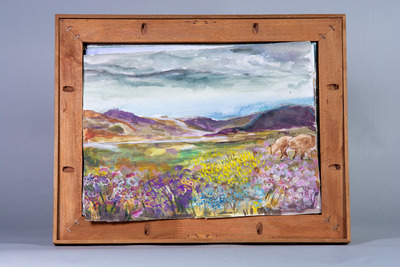
Buffalo Migration
Kaelin Behlmer, Special Collections, and Fleet Library
This book details buffalo as they migrate through various landscapes.
-
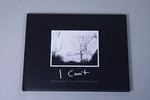
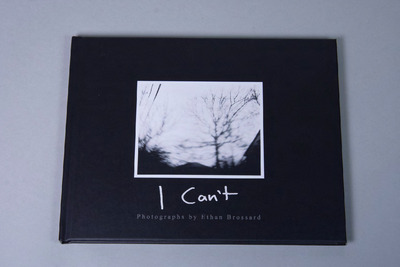
I Can't
Ethan Brossard, Special Collections, and Fleet Library
This is a photo book about my struggles with mental illness. It's about my personal experiences, but also about how are society treats mental illness and broader trends I've seen in our community.
-
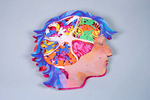
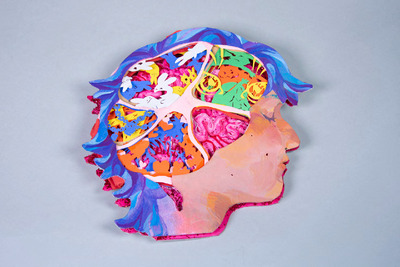
Smooth Brain
Carin Carrion, Special Collections, and Fleet Library
This was for a tunnel book project. I decided to take inspiration from the brain pie charts memes I would see online, but I also wanted to have a bottom 3D layer of a brain like sculpture. The bunny corner in my brain are like the tiny silly worms of my thoughts.
-
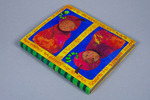
Archiving Affected Feelings
Eujean Cha, Special Collections, and Fleet Library
I didn't know why I was making art. Throughout life, it has always been lovely to pick up a pencil and draw, but, now that it's looking like a job prospect, I wanted to know what my values were. Personally, when we blindly follow something, I think we're at risks for reinforcing messages that we had not intended. Of course, that being said, just because I attempt to sort out my current values, it does not mean I have magically escaped from being accountable. This book was the beginning of a life long journey of questioning, seeing if there are answers to that question, and revising them.
-
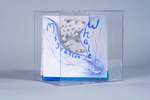
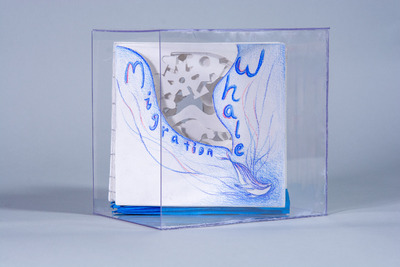
Whale Migration
Cathy Chen, Special Collections, and Fleet Library
In response to ocean contamination, whale will alter their migration routes in search of more suitable and les contaminated environments. The scenes in the flip book transition from polluted factories contaminating the ocean to a clean ocean floor, showing the change of pathway that is more suitable for whales to migrate.
-
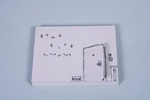
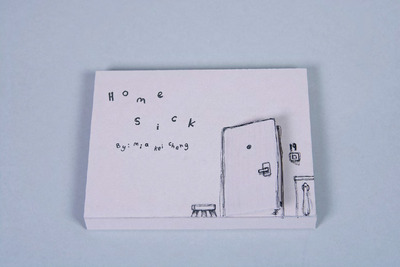
Home Sick
Mia Kei Cheng, Special Collections, and Fleet Library
A book about the odd teetering feelings of being back home after being away for a long time.
-
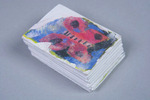
Book of Haikus
Julia Cheng, Special Collections, and Fleet Library
A small modular book composed of three haikus the reader can pull apart and recompose.
-
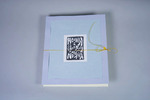
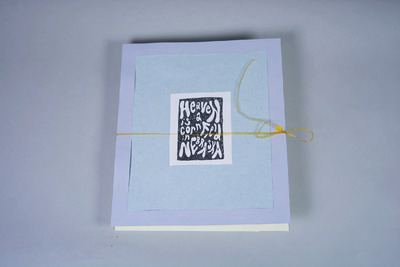
Heaven Is a Corn Field in Nebraska
Maren Curtis, Special Collections, and Fleet Library
This book encapsulates the last four years of my life from the moment I left California at 18 to the moment I crossed the state line out of Colorado and into Nebraska. With 47 drawings, 88 pages and 62 feet in length, the story follows my experience with sexual assault and the four chronic illnesses that followed, the claustrophobia of avoiding a rapist and the joy of finally leaving. For anyone struggling with PTSD or residual impacts from any kind of trauma, this book is for you. I make this work in hopes of it reaching people who need it, I know it would have benefited me when I was a freshman in college.
-
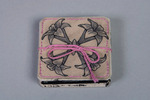
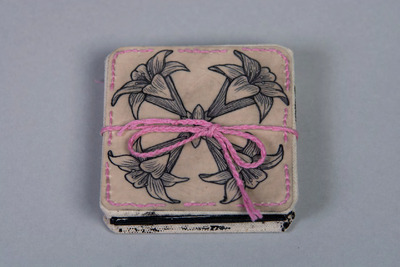
Naked Lady Lily
Sophie deJesus, Special Collections, and Fleet Library
In my process of learning how to tattoo I became drawn to the materiality of fake skin, and thought it would make for a good book cover. I’ve also been interested in ideas of ephemerality, and wanted to convey them through illustrations of the naked lady lily flower.
-
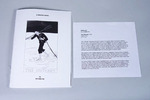
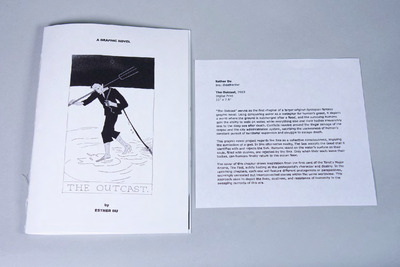
The Outcast
Esther Du, Special Collections, and Fleet Library
"The Outcast" serves as the first chapter of a larger original dystopian fantasy graphic novel. Using conquering water as a metaphor for human’s greed, it depicts a world where the ground is submerged after a flood, and the surviving humans gain the ability to walk on water, while everything else and their bodies irreversibly sink to the deep sea after death. Conflicts revolve around the illegal salvage of the corpse and the city administration system, satirizing the uselessness of human’s constant pursuit of territorial expansion and struggle to escape death.
This graphic novel project regards the Sea as a collective consciousness, implying the symbolism of a god. In this alternative reality, The Sea accepts the Good that it identifies with and rejects the Evil. Humans stand on the water's surface as their souls, filled with desires, are rejected by the Sea. Only when their souls leave their bodies, can humans finally return to the ocean floor.
The cover of this chapter draws inspiration from the first card of the Tarot's Major Arcana, The Fool, subtly hinting at the protagonist's character and destiny. In the upcoming chapters, each one will feature different protagonists or perspectives, seemingly unrelated but interconnected stories within the same worldview. This approach aims to depict the lives, destinies, and resistance of humanity in the sweeping currents of this era.
-
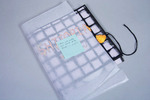
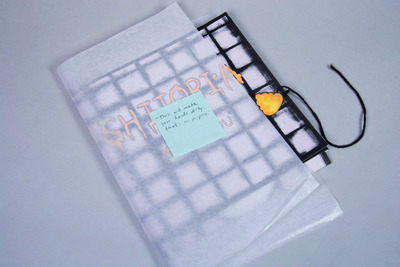
Shitopia
Minglu Du, Special Collections, and Fleet Library
The comic book Shitopia presents a concept in which excrement inherits the characteristics and memories of its human creators. The narrative of the comic's first issue begins with a unique main character - a poop - who embarks on a surreal journey through an underground utopia, a realm designed specifically for these poop residents. The artist’s vision, inspired by abject art principles, transforms this poop world into a vibrant landscape with a warm and bright palette that contrasts sharply with the inherent nature of excrement.
This project is more than an exploration of an imaginative utopian world; it's a commentary on critical social issues such as patriarchy, persecution of gender and sexual minorities, and class struggles. By juxtaposing the ugliness in humanity with the innocence and vibrancy of this excremental utopia, the artist aims to provoke thought and introspection. Readers are invited to journey with the main character, not only through a fantastical realm, but through layers of satirical representation and emotional resonance.
Shitopia is an artistic endeavor that challenges perceptions and encourages readers to contemplate the elusive nature of a utopian society while confronting their personal traumas. It's a journey to inner peace, set in a world that mirrors the absurdity and complexity of our own, motivating a deeper understanding of what it means to seek and perhaps find one's own utopia amidst the chaos.
-
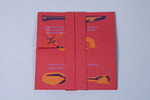
Enter the Sphinx's Lair
Pamina Falk, Special Collections, and Fleet Library
This piece is a 3 layer reduction print with two layers of handset type. There are 3 riddles and 2 answers for each riddle hidden in the pages. The answers are divided into more innocent and playful answers a child might give and more grim, 'correct', answers that are the sphinx's expected replies.
-
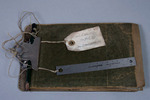
Records of Traversal
James Farrington, Special Collections, and Fleet Library
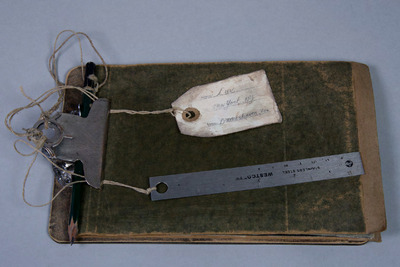
This book is in the form of immigration documents on a clipboard. It is a retrospective glimpse into the experience of my grandmother during her immigration to America from Germany in 1957. I aimed to emulate the long inspection and documenting process she endured during her journey.
-
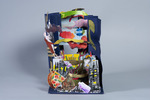
Queen Reine and her Mortal soup
Deanne Fernandes, Special Collections, and Fleet Library
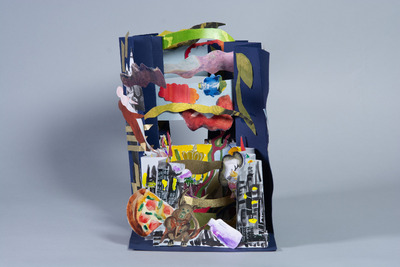
This tale originated from an imaginative narrative called "Queen Reine and Her Mortal Soup," inspired by the inhabitants of the small mammal house at the Washington D.C. Smithsonian Zoo. These mammals, categorised as critically endangered, became the foundation of my story. It revolves around Queen Reine, an emperor tamarin, who gathers endangered mammals and shelters them in the underground sewage system of New York City. However, a twist emerges when Queen Reine expresses a desire to savour the human cuisine of New York.
The narrative unfolds in a non-linear fashion, exploring the intricate relationship between form of the book and the narrative structure. Queen Reine's journey, from the underground sanctuary to the bustling streets of New York, is portrayed through a unique narrative structure that adds depth and complexity to the tale. The story delves into the challenges faced by endangered mammals, the curious interactions between different species, and the unexpected desires that can arise in the most unlikely places. Through this non-linear approach, the story takes on a dynamic and thought-provoking quality, inviting readers to consider the interconnectedness of all living beings in an ever-evolving urban landscape.
-
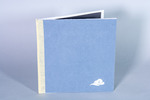
Tend
Meya Gao, Special Collections, and Fleet Library
This pop-up book narrates my journey of faith and the joys of becoming a Christian. With one single spread, the landscape-esque view is layered from the conversations between two worlds in my consciousness: a matured abstraction of convictions and a tangible, pure-hearted curiosity.
-
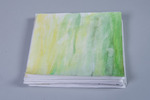
Direction
Haimeng Ge, Special Collections, and Fleet Library
This wordless book is a collection of images that relate to direction. All four edges are used as hinges. The direction that each image points to is where the next image will appear. When opened it creates an overlapping, self-generating maze.
-
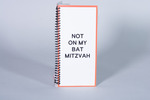
Not On My Bat Mitzvah
Ella Goodman, Special Collections, and Fleet Library
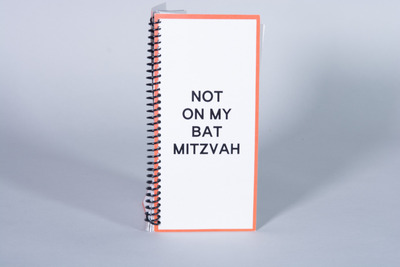
"Not On My Bat Mitzvah" explores personal Jewish identity by using physical attributes of "irrationality" to create a unique experience for readers to learn about the Enneagram personality test.
-
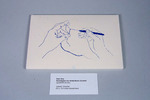
'Liberty' Crochet
Xiao Guo, Special Collections, and Fleet Library
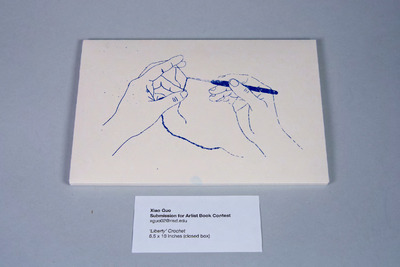
This artists’ book is a package that holds a crochet fabric and a silkscreen printed booklet. The crochet fabric is made with the technique of filet crochet, where the grids of the pattern form the Chinese characters of “Liberty” (自由). Illustrations of the tools and processes used in the act of crocheting are silkscreen-printed onto the box. Two real-size pattern and notation charts encourage people to understand how the fabric is made and/or make their own version.
Packaged as a gift/tutorial book, this book object is the culmination of the Liberty crochet project I started last year. I posted a self-produced tutorial online, demonstrating the steps of making crochet with gridded texts. “Liberty” was a good hope in the face of mass control of civilian freedom under the Chinese government. Many people made, shared and traded their own versions following the tutorial. The booklet showcases multiple versions of fabrics that people made; some reversed the pattern, some adapted it into a bag. This project bridges craft and activism, digital and real spaces, good hope and tangible objects. This artist book serves an archive of this collective effort of keeping and spreading hope.
-
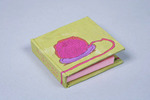
Part of Me
Maria Hahne, Special Collections, and Fleet Library
A four-direction meandering accordion book. Features include a list of confessions (regarding shame, internalized homophobia, and introspection) and a full-size riso-printed poster.
-
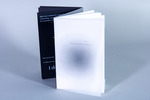
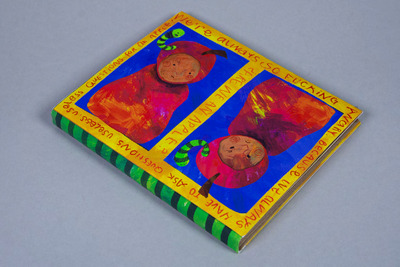
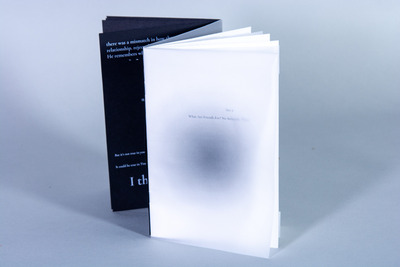
A Destructive Friend
Natalie Ho, Special Collections, and Fleet Library
A dos-a-dos book on Gabe desperately clinging onto their past friendship and Tim not reciprocating that sentiment. The text is taken from “Ep 810: Say It to My Face” from the podcast This American Life.
-
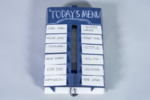
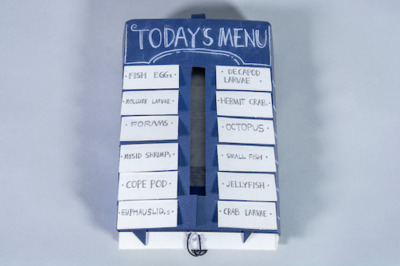
Manta Ray
Die Hu, Special Collections, and Fleet Library
Manta rays are filter-feeding creatures that migrate to seek for currents with the most abundant food sources. Therefore, I made a folder that shaped like a manta ray, and allowed it to swallow its preys resembled by the 12 drawings (which matched with the Today's Menu part of the folder/recipe).
-
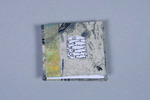
Little book on fish and other animals
Larisa Kachko, Special Collections, and Fleet Library
This book is a little love letter to a friend.
-
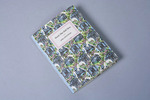
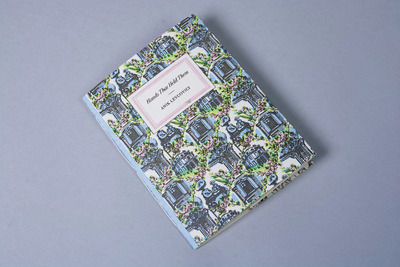
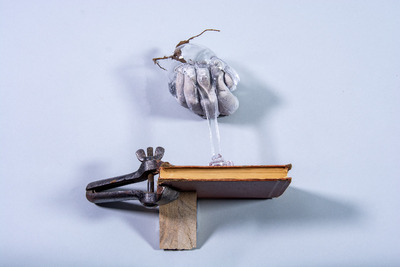
Hands That Held Them
Anik Levcovici, Special Collections, and Fleet Library
Hands That Held Them contains a series of 5 poems, written about objects and furniture that I have collected overtime. I began to purchase items off of online marketplaces and would ask the sellers for the history of the objects. Some individuals knew nothing of the provenance of the object whereas some could tell me details down to the day they purchased it when they were a child. I document all these stories and complied a handful of poems about these objects and what I know about them, accompanied by illustrations of the objects.
-
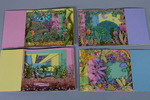
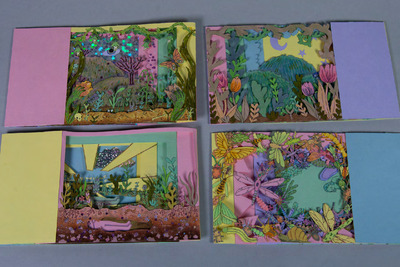
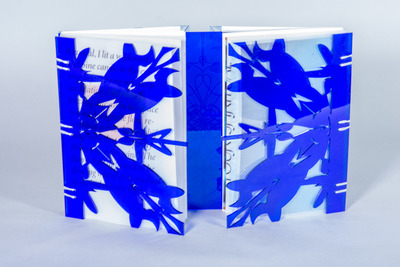
A Return to Nature
Sadie Levine, Special Collections, and Fleet Library
This series of tunnel books explores death and the process of decomposition. I believe human's disconnect from nature contributes to anxiety surrounding death, and using these tunnel books, I illustrate decomposition as a return to nature.
-
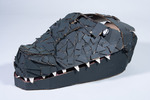
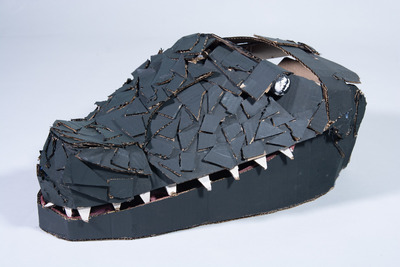
Caiman
Hahmini Lewis, Special Collections, and Fleet Library
The book takes about the life of a Black caiman crocodile and how their eggs are used for fashion purposes. The mouth is movable with the back handle.
-
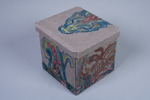
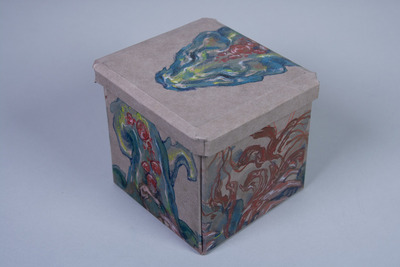
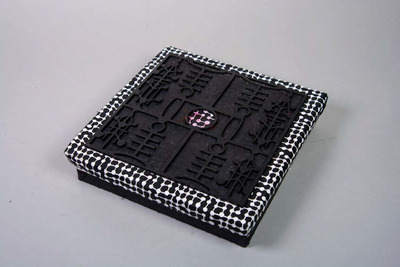
Decay
Ellie Lin, Special Collections, and Fleet Library
This book explores evolution, decay, and decomposition of animals in a world infected by fungus. Laid out, the box structure can be played with like a board game. As players progress, they discover different tetrapod animals and different kinds of fungus. Some discoveries have been logged, but the world leaves more to explore through free-form gameplay.
-
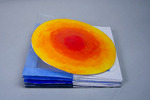
Dive
Liam Lin, Special Collections, and Fleet Library
It’s about how zooplankton do their vertical migration. The normal pattern of thief migration involves a descent within the water columns of oceans and lakes during the day and an ascent to near surface waters at night
-
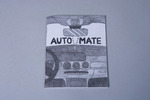
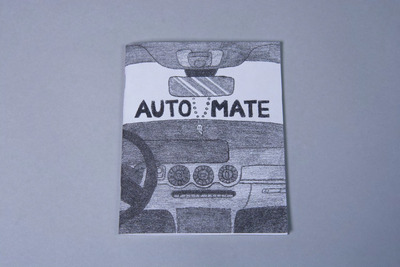
AUTOMATE
Nat Luo, Special Collections, and Fleet Library
I was going to say that the inspiration for AUTOMATE came to me after I busted one of my tail lights by accident backing out of a parking lot one day. It did... but really, I had been thinking about cars for a very long time before then. Thanks for reading.
-
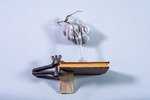
Rules of Order
Julia Murray, Special Collections, and Fleet Library
we are here to break the rules, politely.
-
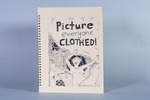
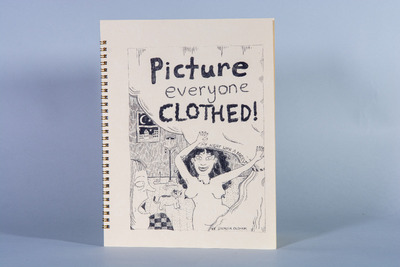
Picture Everyone Clothed!
Georgia Oldham, Special Collections, and Fleet Library
Picture Everyone Clothed! is the tale of a young woman's encounter with a nudist. Unsure how to feel at first, she is quickly swept into the nudist's lifestyle on a night out in the city. This hyperbolic satire explores the tension between passing fads and personal beliefs, ill-fated romance, and modern urban life.
-
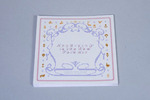
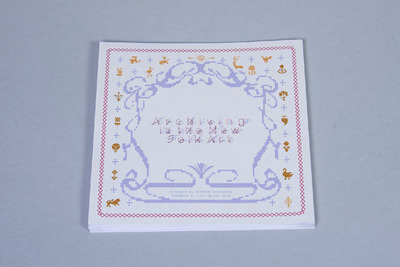
Archiving is the New Folk Art: A Sampler
Lucy Pham, Special Collections, and Fleet Library
"Archiving is the New Folk Art: A Sampler" contains excerpts of an essay/chapter in "Wasting Time on the Internet" by Kenneth Goldsmith (a graduate of RISD). In it, he discusses the ways in which bookmarking, saving things on Pinterest, and organizing digital files has become an impulse integrated into our everyday lives.
The zine, which features a few excerpts of the essay split into a handful of sections, is folded into 16 pages which can open up into horizontal or vertical spreads. When open as a spread, they are typically symmetrical in design. The images reference Pinterest, the Gees Bend quilters, an example of a “casual” archive, and a related essay about the use of screenshots as an archiving and curatorial method.
It also opens completely flat which resembles a cross between a quilt (common in American folk art) and American folk art samplers which feature cross stitching and embroidery. The "frames" on each page were originally made up of letterforms before they were pixelated. The pixelation of all the illustrative elements relates to the idea of cross stitched embroidery, as well as digital pixel art used as icons on early low-res computers or early blogs and websites.
Note: This was a final assignment for "Graduate Type I" taught by Nancy Skolos. Each student picks a body of text of their choosing (or writes their own) to turn into a zine.
-
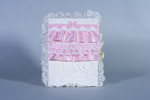
Spoiled
Alina Pringle, Special Collections, and Fleet Library
Spoiled: To diminish or destroy the value or quality of: Purity? One’s body? Female sexuality from its budding adolescence through adulthood is viewed and perpetuated through a lens of purity and condemnation.
-
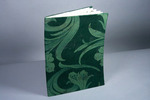
The Gay Plague
Andrew Pumpelly, Special Collections, and Fleet Library
This collection of medieval manuscript inspired paintings tells a tale of the origins of the HIV/AIDS epidemic and how it developed and spread alongside the stigma surrounding it as a “gay disease”
-
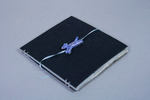
Dog (as big as the) Sea
Kira Saks, Special Collections, and Fleet Library
We are all animals trying to navigate through the world, we are all this dog.
-
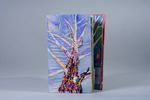
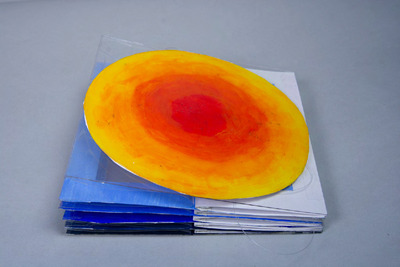
Limbo
Sofia Schreiber, Special Collections, and Fleet Library
I was inspired to create this artist's book for a poem I wrote called "Limbo". In this poem I am reflecting on the changing landscape in the backyard of the house I grew up in. Over the years the invasive emerald ash borer has killed all of the ash trees that lived there. Now empty patches of sky replace the lush greenery that canopied the environment I spent so much time in as a kid. This shift underscores the uncanny feeling of returning home for a visit after a semester at school and feeling out of place. With this book I am coming to terms with how everything, from the people to the community to the nature, continues to move, grow, or even die when I'm away. I used the transparency of the Mylar to tell the narrative of the ash borer simultaneously with illustrations of growing up and leaving home behind. In this way I become the tree infected by the invasive insect.
-
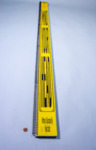
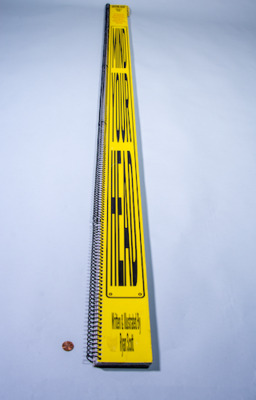
Surviving Height: A Short Guide for Tall People
Ryan Scott, Special Collections, and Fleet Library
This book was born from the concept of creating a survival guide that would either be accessible only to those tall enough to understand the pains of height, or be so unwieldy and awkward to use that it could translate this annoyance to those who don’t meet the height requirement.
Standing at around 77 inches tall, the book is as tall as me and features several pages with lines of text that slowly stretch as they are placed further down the page. This effect makes it that you would have to be standing above the book and looking down its pages in order to comfortably read it. The guide features sections on problems and inconveniences found at home, while traveling, shopping for new clothes, and socializing with those of differing heights. The sections are tabbed, making it easy to quickly access them by just flipping a few six and a half foot tall pages.
In ‘short’, I wanted to make something that gave each reader a unique experience and way of interacting with the book, as well as something to make you laugh when you see a book a lot taller than the rest.
-
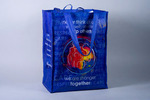
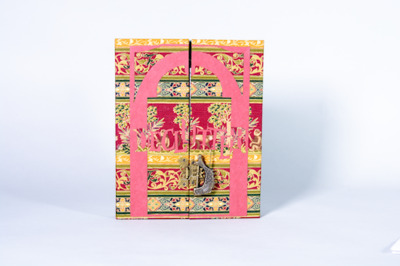
Curious Childhood
Ashley Simpson, Special Collections, and Fleet Library
Curious Childhood is a Sculptural Artist's book of a handmade curiosity cabinet depicting the collection of objects from my childhood. These found objects I've had since I was a little girl. A hidden bookshelf contains small handmade books with handwritten stories correlating to the objects on the shelves. Stories go back to my childhood; some books have written stories about fun experiences, but the stories get more severe if you look further.
-
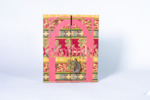
Declutter
Lara Tekindur, Special Collections, and Fleet Library
The book itself is about collecting, and the mechanism and operating principle imitates desires to strip people from these traits. The included instruction manual details the significance of individual pieces and the tab in the back ensures that there is a way to replace batteries if needed.
-
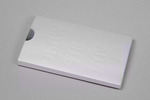
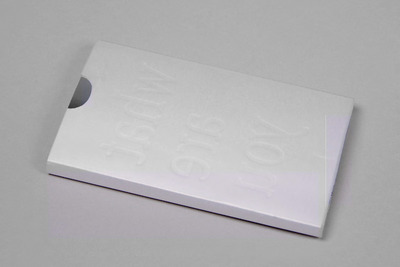
What are you
Jyot Thind, Special Collections, and Fleet Library
This publication is a typographical translation of the essay film 'What are you' by Tejal Shah. As stated by the director, the film 'proposes an ironic, subversive vision of Utopia: A Utopia of perversion that is articulated through various modes and strategies of fantasy.'
What are you?' amplifies the voices of the Hijra community in India, often called the 'third gender', shedding light on their existence at the societal periphery despite current legal frameworks. Expanding on the film's political dialogue and artistic direction, this book means to recontextualize India's discourse around gender politics. Providing a kaleidoscopic view of what is presented as irreversible facts, it celebrates a community's identity while subverting its external perception. What are you?- is a question that carries such specificity, a specificity that this book channels through pervasion. It channels an ever-expanding identity that has no limits and exists in worlds beyond the physical and tangible. In this non-linear, multidimensional space, these two books display the tension between living separately while depending on the other for clarity.
-
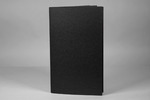
Portrait Series
Mina Troise, Special Collections, and Fleet Library
Simultaneously pitiful, darling, and frightening, these pop-up portraits become ambiguous encounters for the viewer.
-
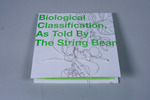
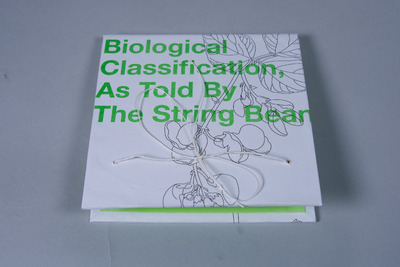
Scientific Classification, As Told by the Green Bean
Lilia true, Special Collections, and Fleet Library
This accordion-style book was made as an interactive model for an example of scientific classification, using the green bean as an example. It was made during the research phase of my degree project, which focused on the ecoregions and native plants and forests of New England. This book is one out of an edition of fourteen identical art books.
-
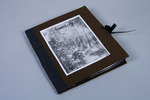
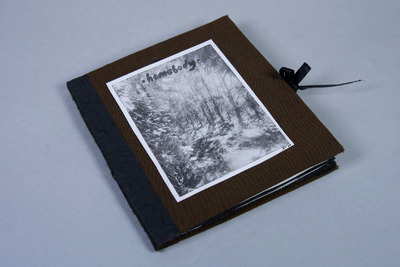
Homebody
Ayca Tuzer, Special Collections, and Fleet Library
A star book exploring a decaying, overgrown home.
-
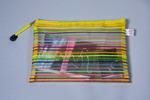
Karmic Creditor
Yimiao Wang, Special Collections, and Fleet Library
This zine borrows a Chinese Buddhist concept of the mother-child relationship: there is a debt the child owes to its mother for childbirth. In the context of Chinese society, the rhetoric of kinship is often used as a strategy to maintain the hegemony of patriarchy by arbitrarily categorizing the child as property under the name of a hetero-patriarchal monogamous family.
-
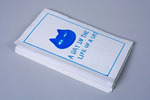
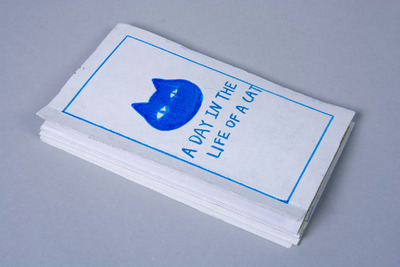
A day of a cat
Haimo Wei, Special Collections, and Fleet Library
It is a class assignment. We need to depict a thing of the day, it can be a person, animal or object. I love cats, so I chose to draw what I imagined a cat would look like on a day.
-
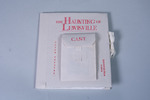
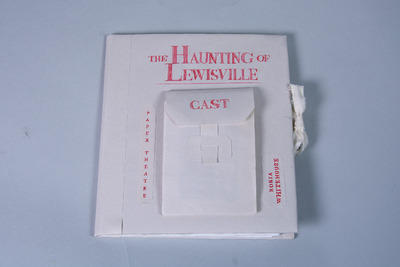
The Haunting of Lewisville
Rokia Whitehouse, Special Collections, and Fleet Library
The Haunting of Lewisville is an interactive paper theatre that stages a supernatural mystery in a rural New England town. I drew on my childhood fascination with vintage paper dolls and dollhouses to create it. The book unfolds into four acts and features a cast of characters and costume changes. The audience is invited to bring the scenes to life by imagining the cast's personalities and circumstances and then acting out the narrative in childlike play.
-
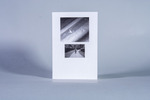
Saturn’s Rings
Rebecca Wilkinson, Special Collections, and Fleet Library
This softcover book is a visual translation of W.G. Sebald’s 1995 literary work, The Rings of Saturn. Designed as a 1:1 translation of the 2016 English paperback edition, Saturn’s Rings features the same margin size, typography, and page count as its antecedent. Reconstructed page-by-page, this artist book replaces 296 pages of the original text with images found in archives.
Saturn’s Rings features 683 archival images of objects, archeological artifacts, people, geological phenomena, astronomy, war, art and nature, and aims to reinterpret the original book’s textual content with visual symbolism, poetry, and metaphor. Using an intuitive and rhizomatic approach to collection, the process of unearthing material from archives also echoed the author’s meandering literary style.
-
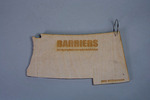
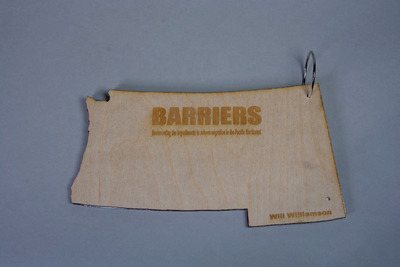
Barriers
Will Williamson, Special Collections, and Fleet Library
“Borders” explores the many obstacles salmon face on their migration within river ways in the Pacific Northwest.
-
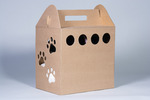
Adopting a Cat
Ashley Woo, Special Collections, and Fleet Library
Adopting a Cat is a needle felted book that explores what it might be like adopting a cat. Although each of the pages are not exactly true to life, it's meant to be an interactive piece where you are able to explore the inner workings of your cat.
-
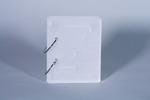
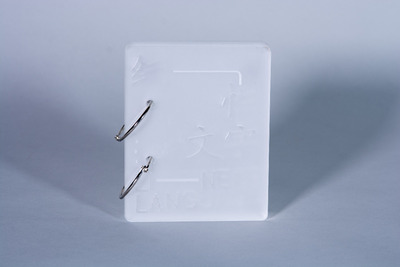
Linear Language
Selina Kehuan Wu, Special Collections, and Fleet Library
This book delves into the linearity of the Chinese language. Unlike English words, where construction and reading occur letter by letter, Chinese characters are perceived hierographically as a unified whole. The linearity of Chinese becomes evident in the writing process, where each character follows a predetermined sequence of strokes, written one after another.
The book offers a depth and dimension by deconstructing characters into strokes, providing a static demonstration of the writing process. The frosted acrylic blurs visibility, encouraging readers to go through the pages step by step to experience the entire writing process. Each page serves as a stencil writing tool, as the acrylic is laser-cut. The book is ring-bound, allowing it to be reversed or rearranged in a circular fashion to showcase strokes being added to or removed from the characters.
-
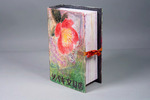
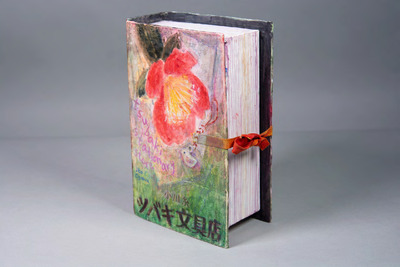
Seasons at the Tsubaki Stationary Store
Huiyun Yang, Special Collections, and Fleet Library
Tsubaki Stationary Stories a Japanese book telling the story of a young girl, Hatoko, who runs her family stationary store. The book's language beautifully captures the charm of the mundane and how the same house and the same small town looks different as seasons change.
-
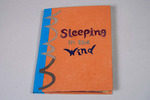
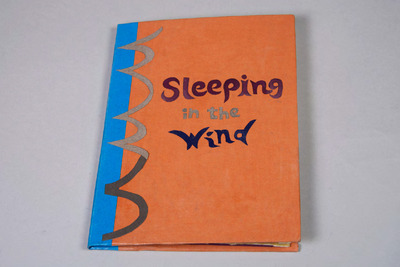
Sleeping in the Wind
Guangzhao Zha, Special Collections, and Fleet Library
Common Swifts( Apus apus Pekinensis) migrate from China to southern Africa every year in the fall and will return in the spring. They nest in the ancient wooden buildings in Beijing and coexist with the city. Not only an important cultural symbol, they are also natural beings that need to be protected urgently.
-
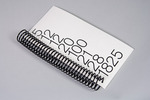
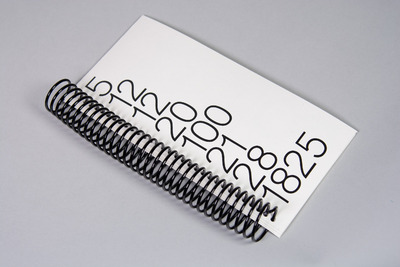
5 12 12 20 100 21 28 1825
Tonia Zhang, Special Collections, and Fleet Library
"5 12 12 20 100 21 28 1825" is a whimsical annual report presented as a zine, chronicling noteworthy events and experiences from the perspective of Tonia Zhang in 2023. The sum of these events and items equals 2023, offering a playful glimpse into the daily life and challenges of a graduate design student. The narrative unfolds in a light-hearted and humorous manner, capturing the quantified essence of Tonia's journey throughout the year.
-
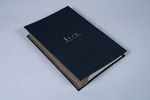
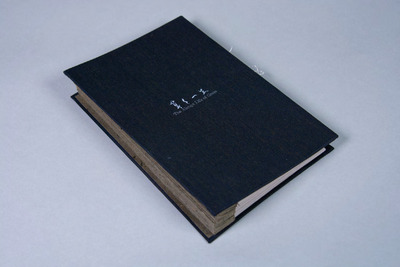
The Abrupt Life of Grass/草草一生
Ziqi Zhang, Special Collections, and Fleet Library
The narration in book is about the demise of ordinary people in a collective environment. Its core, both in Chinese content and imagery, remains devoid of color, inviting readers to "read" not only through a visual experience but also through a physical experience of touching textured paper's nuances, and tracing the knots along the threads.
-
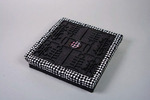
Memory
Fuyuan Zhou, Special Collections, and Fleet Library
This is a book representing memory. Each layer is like a chip that stores memory. The biggest one is the most recent memory. The smaller ones represent the farther memories which are gradually blurred.
-
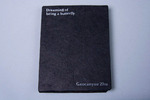
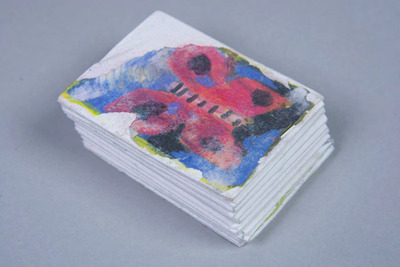
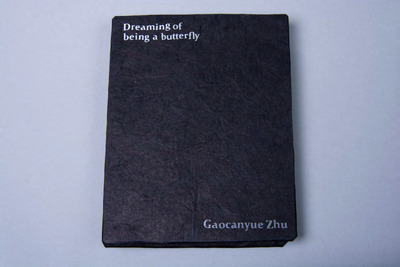
Dreaming of being a butterfly
Gaocanyue Zhu, Special Collections, and Fleet Library
Dreaming of being a butterfly is the first chapter of artist’s book installation series, inspired by eastern ancient mythology and philosophy.
Gaocanyue Zhu is a multidisciplinary visual artist working across photography, text, drawing, video and installation. Using images as vocabularies, Zhu unfolds stories with non-linear narrative, excavating unseeable aspects of different subjects.
www.zhugaocanyue.com IG@zglifeonline
-
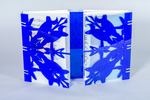
A Symphony of Contemplation
Shiyan Zhu, Special Collections, and Fleet Library
The genesis of this book is deeply intertwined with a profound moment of inspiration that unfolded within the tranquility of a meditation session. As I delved into the serenity of contemplation, a vivid and evocative image sprouted in my mind. They are ethereal, symmetrical, illusory yet gorgeous. Through the use of visual forms, I strive to encapsulate these elusive and abstract meditative moments, which serve as the gateway to my spiritual world. Each stroke and image aims to unlock the door to the depths of introspection and offer a glimpse into my inner world.
-
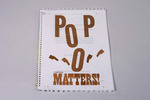
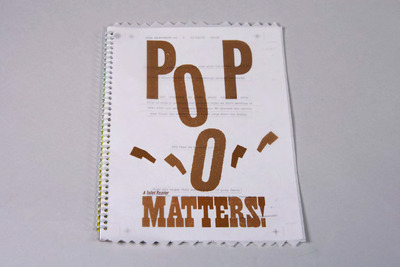
POOP MATTERS! Vol. 1: A Toilet Reader
Jo Zixuan, Special Collections, and Fleet Library
Minding your own business on the throne? Give the toilet reader a flip to remind you just how much it matters in everyone’s life.