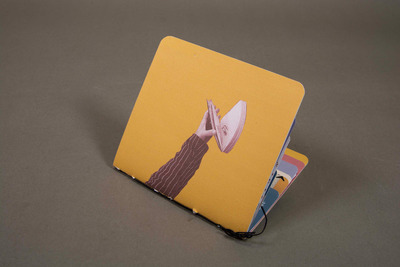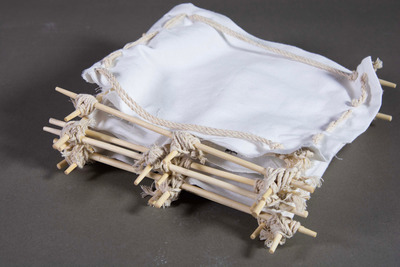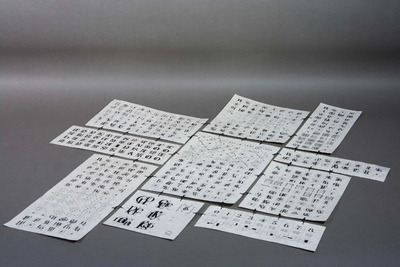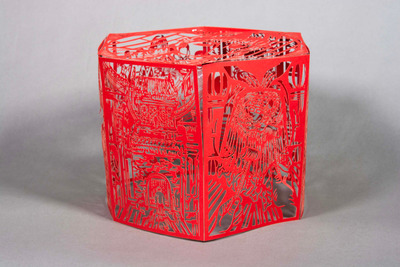

AWARDS Grand Purchase Prize | $500 How to Tame a Jaguar by Ashley Castañeda 23 IL Laurie Whitehill Purchase Prize | $375 100 days for birth by by Danielle Kim 27 EFS American Printing History Association - New England Chapter Purchase Prize | $375 Confession by Sihan Zhu MFA 23 PR American Printing History Association - New England Chapter Purchase Prize | $375 Wolves by Jacob Davidson 23 IL
HONORABLE MENTIONS | $100 Snorkeling by Jinghong Chen 23 IL The Sea of Tears by Jingjing Yang MFA 23 PR Recorded in Fabric by Zoe Maxwell 26 EFS The Chronicles of Sameri by Sun Ho Lee MFA 23 GD
JURORWe are very happy to announce that Andre Lee Bassuet is this year's juror. Andre Lee Bassuet is an artist, designer and educator based in Rhode Island. She studied printmaking and papermaking in Japan and got her MFA at Osaka University of Arts on a Monbusho scholarship and a Bachelors from New York University in Graphic Communications. Originally from Brooklyn, New York but raised in both South Korea and the USA, she’s lived between two cultures and seeks her roots by exploring work on the body, nature and memory. She has participated in artist residencies at AS220 and Manhattan Graphics Center and exhibited in New York, Providence, Michigan, Florida, Seattle, Red Lodge, Kyoto, Osaka, and Shanghai. Her bookarts are in the Columbia University Libraries, Harvard Fine Art Library, MassArt Libraries, RISD Fleet Library collection, Western Michigan University's Special Collections as well as private collections. She is currently teaching bookbinding and printmaking at AS220 in Providence and will be teaching the Art of the Book at Brown University.
-
Back When Tigers Used to Smoke
Gina Bae, Special Collections, and Fleet Library
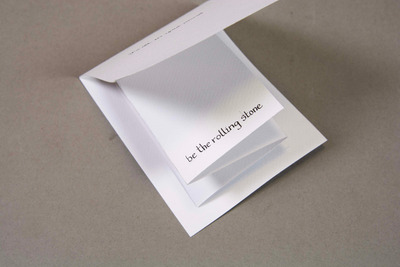
When I first started learning English in preschool, my mother began stocking our bookshelves with Korean folktale children’s books to keep four-year-old me connected to our homeland’s culture. Years after nearly losing my mother tongue to tuna sandwiches and episodes of Arthur, I found myself gravitating back towards these old picture books. In an attempt to portray the second generation experience of reconnecting with one’s cultural identity after a lifetime away from the homeland, these prints illustrate and narrate nine of my favorite folktales and explore Korean iconography in its elements, including the structure itself, which is modeled after traditional Korean folding screens.
-
An Ode to My Aunties: Melted Into the Pot
Ava Buccino, Special Collections, and Fleet Library
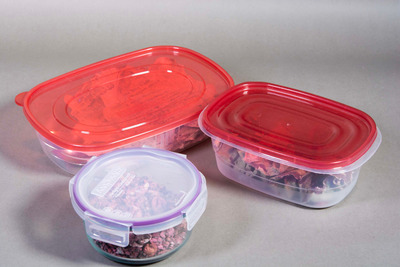
My project is a dive into assimilation in my family. I am half Syrian but sometimes I do not feel like I am because of the effort by my ancestors to assimilate. Its hard to try to reconnect with my culture too because of 911 which my father was in, and the civil war taking place in there. I feel like the only part of my culture left is the food.
-
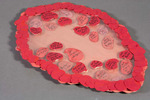
Only Shades of Red
Ally Casa, Special Collections, and Fleet Library
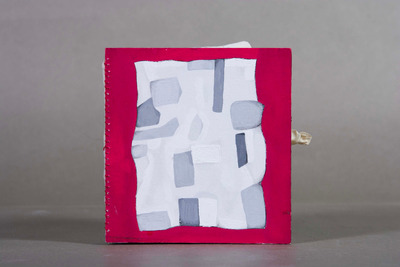
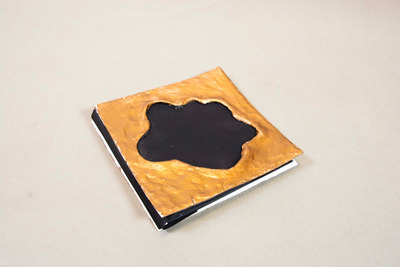
Inspired by personal struggles with image due to my acne, I wanted to write a poem that changes in meaning the more phrases you take away, while still reading as a cohesive narrative - just like a real face going through a similar process. Each line is written on a blotch and, as you flip, removing clusters of them, self-affirming verses turn to self-deprecation, disgust, and then, finally, shallow echoes of popular beauty standards. Adding to the central themes are the appearances of the oily vinyl and leaking Gorilla Glue, imperfections mimicking skin coexisting with the art.
-
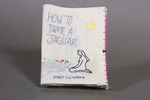
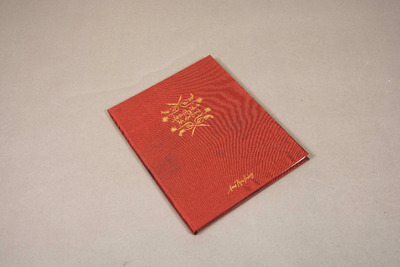
How to Tame a Jaguar
Ashley Castañeda, Special Collections, and Fleet Library
How to Tame a Jaguar investigates my ongoing research on my cultural background of Peru. In Incan mythology, a dual-gendered Jaguar deity by the name of Chuqui Chinchay is attended to by shamans called quariwarmi. Quariwarmi were androgynous, cross-dressing people; they navigated a necessary non-binary gender in pre-Columbian Peru. In my embroidered book, I made a poem to reflect the process of transforming into a Jaguar—by doing so, I explore my own queerness in reconnecting with my cultural past. The concept of “bodies” is assessed in my work as a thing of change, of transformation. By taming and controlling this transformation, I seize power over my own body away from colonized gender constructs.
-
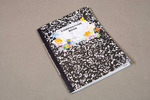
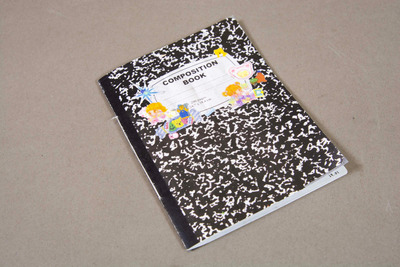
composition diary
Shuo Yun (Julia) Cheng, Special Collections, and Fleet Library
A diary of the future, this book is made of art and objects I’ve collected throughout 2022. As both a journal in retrospect and future planner, I wanted to create a physical representation of the passing of time. Each page is dedicated to a month, and the goal is to continuously add to it year by year, marking different timelines in my life.
-
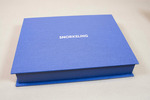
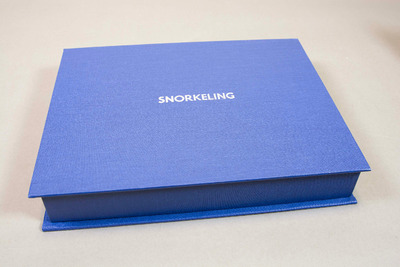
Snorkeling
Jinghong Chen, Special Collections, and Fleet Library
This tunnel book depicted the beautiful underwater landscape I saw in Kona, Hawaii. I want to share this immersive experience with people around me, as well as to raise awareness on the ongoing protection of global coral reef.
-
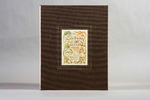
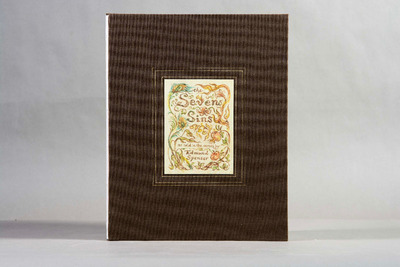
The Seven Sins as told in verses by Edmund Spencer
Shuyan Chen, Special Collections, and Fleet Library
This is a collection of illustrated poems. The text is selected from Edmund Spencer's The Faeries Queene, Book I Canto IV. The format is inspired by the works of William Blake.
-
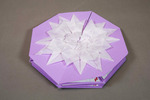
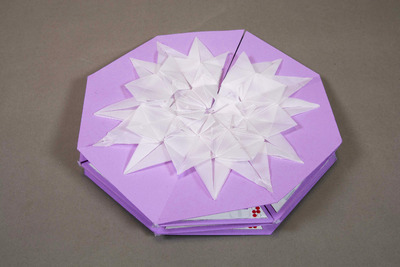
A-Z of Art and Design Education
Santrupthy Das, Special Collections, and Fleet Library
Like flowers contain the potential of growing into fruits, trees, forests and subsequently almost all of the living world, letters of the alphabet hold within them all the words, sentences, and a majority of all expressions - verbal and written. Here’s a flower that blossoms or opens up into an Art and Design Education Lexicon! The idea of this form was that the alphabet need not always be read in A-Z order. Since it opens up with all the alphabets together, one can continue to read in any direction they prefer. The words relate to my understanding of Art and Design Education and the ideas important to me in my journey ahead.
-
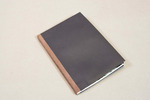
Wolves
Jacob Davidson, Special Collections, and Fleet Library
This is a short story I wrote while thinking of the cultural story of my ancestors and the struggles they faced. I wrote, illustrated, and created the artist book in an edition of 9.
-
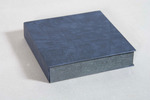
Turnspit
Aimee Deng, Special Collections, and Fleet Library
The turnspit dog was bred by man to run on a wheel near a flame, which would turn the meat on a spit roast. There are none left, for they were quickly replaced by the machine, and their notably bad temperaments did not make them good pets.
-
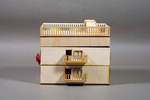
Building memories
Mariam Devadze, Special Collections, and Fleet Library
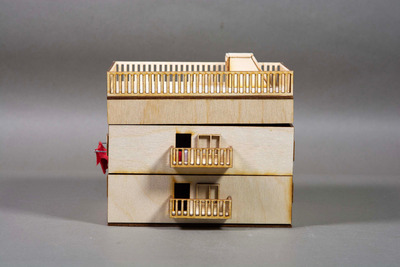
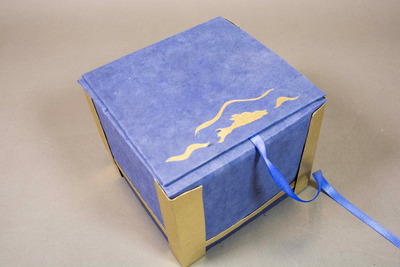
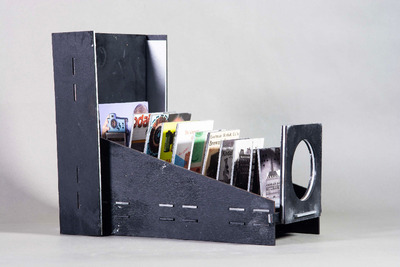
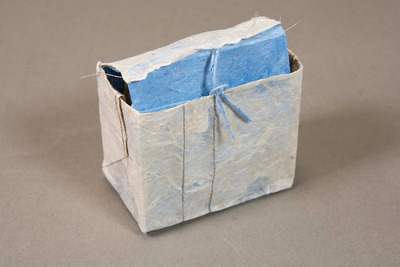
I wanted to create a unit that would encapsulate the memories of the past and the future. The book contains images of my culture, and the cultures that I was exposed to as a child growing up in a post-soviet country. The container is the shape of an average apartment building in Georgia, and it acts as a functional drawer to put pictures in, continuing the future.
-
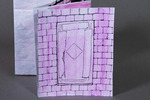
Best Wishes
Helen Fan, Special Collections, and Fleet Library
This is inspired by the color of faded dyed decorations of the Chinese Spring Festival. The spring's best wishes spread out and fade temporally and spatially.
-
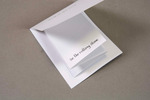
It’s All in Your Mind
Deanne Fernandes, Special Collections, and Fleet Library
A multi-media immersive exhibition of the journey through the mountain with the artist book at the summit
-
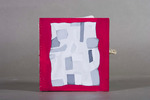
She Saw Red All Around Her
Clare Hawkinson, Special Collections, and Fleet Library
A girl turns an old quilt into something new and treasured by adding on found red materials.
-
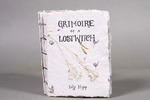
Grimoire of a Lost Witch
Lily Hipp, Special Collections, and Fleet Library
My project is a collection of original research poetry and illustrations examining the history of the witch craze throughout Europe and the US, and the creation of the witch as a literary character. I used the poems to look at the complexities of the attitudes towards women during witch accusations, and how the witch character has evolved throughout time to represent society's views towards women. Beginning as a stereotype to show the "monstrous" nature of women living outside of gender norms, the character has shifted to represent a reclamation of power.
-
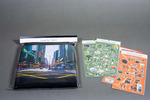
“Saved by T-shirt! - Mong Kok”
Oi Ying Valerie Ho, Special Collections, and Fleet Library
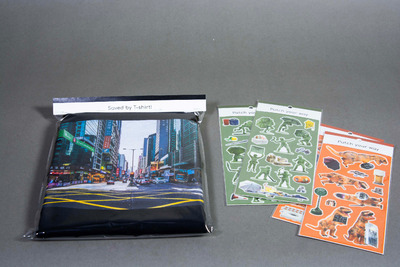
I am Valerie, a MFA from Jewelry and Metalsmithing Department, also I am from Hong Kong. My research is based on the 2019 and beyond Protests in Hong Kong. The current political situation in Hong Kong is unfortunate. Freedom of speech has been violable. Police brutality can not be blamed, and protests or marches can not be gathered because they may be read as endangering national security. Under these circumstances, I begin to consider how can I integrate resistance into my life or people with similar backgrounds, to help protesters navigate in an untroubled and barrier-free way to express themselves daily under the imposed restrictions and suppression of Hong Kong. “Mong Kok” is one of the pieces from my project “Saved by T-shirt!”, it is a series of 5 souvenir t-shirts with images of certain locations in Hong Kong printed on them. But if you are a protester in Hong Kong, you will easily identify those photo locations are actually the battlefield of the 2019 Hong Kong Protest. When the wearer is wearing it out, it can be read as a kind of memorial or remembrance. Each of the location's backgrounds were printed on the washing label of each of the t-shirts, a statement of what happened at a particular location on a particular day. It is a piece of small printed information presented to those who do not know it, while the history is also printed in an informal way on the other hand to serve as a historical testimony. The t-shirt is also able to function together with a series of 4 stickers. With the green army man representing the protesters and the t-rex representing the Special Tactical Contingent of the police. The wearer is able to patch their own scenery and represent their stand on the apparel as a form of 'non-verbal resistance'. In addition to the sticker's flexibility, removability, and impermanence. It is also collectible but not expensive to make, and when the user needs to discard them in an emergency, the loss is relatively small. Even if it is lost, fallen, cramped and dirty, it is still doing an advertising job as long as it still facing up. The relative adaptability and tenacity of spirit are consistent with the protesters on some levels.
-
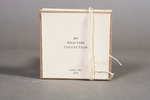
My Wild Type Collection
Xinyu Hu, Special Collections, and Fleet Library
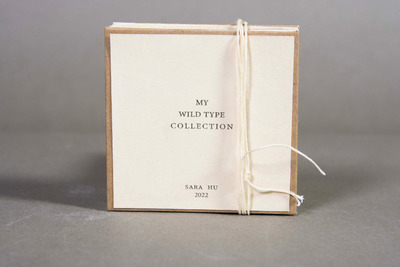
Collecting things always require you to have a curious heart and an ability to see unexpected beauty. I have never realize how omnipresent graphic design is in life! I saw interesting letterforms when I was on the street, in the library, or even during a field trip to New Hampshire. They appeared unexpectedly like Pokémon creatures, which made me want to collect all of them into my pockets. Therefore, once I saw letterforms that I found inspirational, I took photos and recorded down the miscellaneous information and thoughts. I designed a set of system for 26 letters into the form of a stamp. I chose to do a stamp collection because my grandfather used to have a huge book with all the stamps he collected when he was young. Each of his stamp had a unique story. I also wanted to create my own stamp book, so I used specialty papers to give a texture, and I poured coffee on the paper to imitate the yellowing of the papers. When I completed the collection, it not only became a collection of types but also a collection of my inspirations and memories.
-
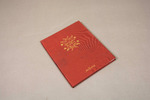
All This By Which We Are Bound
Anne Irving, Special Collections, and Fleet Library
All This By Which We Are Bound contains a collection of images and poetry exploring all that is required to remain grounded amidst the pursuit of expansion.
-
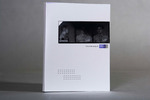
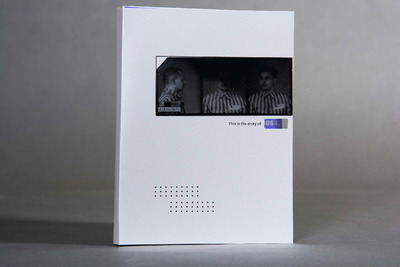
80064
hyeonsoo jeong, Special Collections, and Fleet Library
This book is a publication made based on a essay film "80064" by Artur Zmijewski. This book is based on the story of the Auschwitz survivor, Jozef Tarnawa. The content is consisted of historical context about Auschwitz concentration camp, transcription/dialogue from video "80064", and stories of other survivors.
-
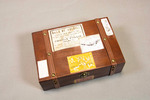
100 days for birth
Danielle Kim, Special Collections, and Fleet Library
Humpback whales move around the pacific ocean starting from Hawaii, Alaska, to California. The book shows their journey all the way to Hawaii to California. Normally, they go to Alaska, where they can get abundant food source - creel shrimp. Then they go to California Bay to give a birth for their child. The book documents and follows the birth of humpback whales and their life underwater.
-
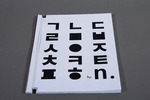
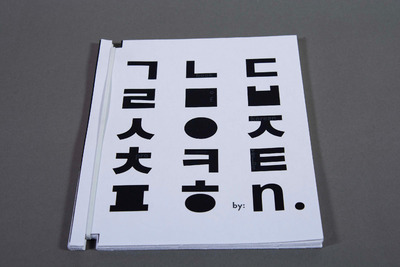
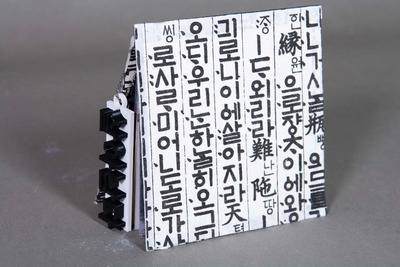
The Book of Korean Proverbs
Narin Kim, Special Collections, and Fleet Library
Inspired by the wise words of the Korean proverbs, l wanted to create an unconventional "dictionary" of the Korean proverbs. I wished the readers to be constantly engaged with each proverb, and I aimed to achieve this through filling each page of the Hangeul characters in chronological order with a playful twist. The ILs that make up the form of Hangeul depict what is mentioned in the proverb, playfully breaking the linguistic barrier between the reader and the narrative. In the end is a glossary of all the listed proverbs, where a simple definition and explanation is included. Everyone has a moment in their life where they feel as though they are facing a wall; flip through the pages of this book and you might be able to find just what you needed to break that barrier.
-
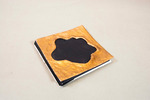
When I’m sad
Emelie Kropp, Special Collections, and Fleet Library
The story is about humanizing sadness. Instead of hiding the sadness or being afraid of it, I want to show that being sad sometimes is a part of daily life. I made this book a collaborative piece by letting the viewer discover the hidden meanings and messages in each page using a paper based flashlight tool.
-
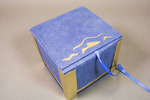
I Went Fishing, and Caught a Shooting Star
Leah Lara, Special Collections, and Fleet Library
The concept of ‘I Went Fishing and Caught a Shooting Star’, was borne out of an attempt to combine bookmaking with my affinity for creating night lights. This book functions as an accordion book, a tunnel book, and a movable night light. The ‘cover’ contains a light inside, and the sides fold out to create a tunnel for viewing. Once you take out the book from its cover, place the box on its side, push the center to turn on the light, and arrange it to your preference. The 5 pages depict a descent into an ocean roaring with shooting stars born out of sea foam, whirling with fish and lost wishes. This process allowed me to explore the book as a loved, reusable object and expand my definition of what a book is, and what it could be.
-
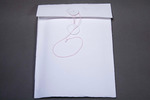
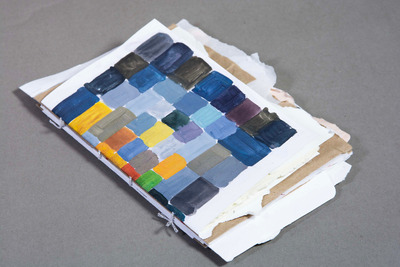
Every Shade of Pink On Me
Roy Larmour, Special Collections, and Fleet Library
In the beginning of 2022, I contracted Stevens Johnson Syndrome. With a death rate of 10 - 30%, this severe illness has caused large areas of my skin and mucous glands to wound and regrow. The aftermath of this condition is hyperpigmentation and discoloration all over my body. These areas of skin are still a sensitive part of me, both physically and emotionally. But I am gradually learning to appreciate this array of pink on my body, that formed who I am today. So here are the swatches of every shade of pink on me.
-
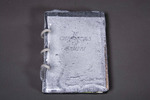
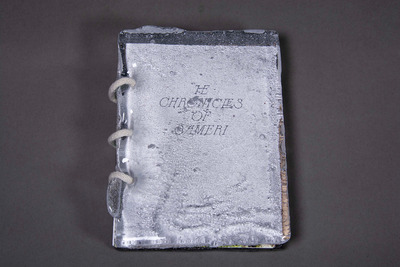
The Chronicles of Sameri
Sun Ho Lee, Special Collections, and Fleet Library
The war divided my family. In hopes of reuniting with their babies trapped in North Korea, my grandparents had more children, cultivated a barren land, and built houses on it for the following generations to live together. The Chronicles of Sameri collects the memories on the land from all family members.
-
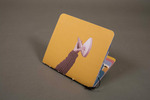
Between Book and People
Youjin (Amy) Lim, Special Collections, and Fleet Library
Designed and stitch bound a book based on experience at Printed Matter Book Fair 2022, capturing the moments of interaction between people and the books.
-
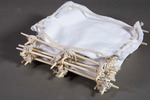
The Progressive Regression
Yifan Liu, Special Collections, and Fleet Library
The history of drum notation progressed as it defunctionalized here in contemporariness. The mistaken notes regressed in the rigidity of structure to form a rhythm I can or can’t read.
-
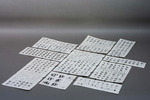
Concrete Poetry: a manifesto
Yining Li, Special Collections, and Fleet Library
As an art form, the Concrete Poetry structure serves to unite various kinds of language and liberates them from linguistic postulates that are fixed, imposed, and imprisoned. By introducing the text/concepts from Augusto De Campos’ Concrete poetry: a manifesto, this book explores the possibilities of manipulating form to set the content free from the medium of the book in a multilingual perspective.
-
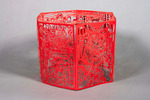
Raise the Red Lantern
Yuxuan Li, Special Collections, and Fleet Library
Inspired by the Yi-mou Zhang’s 1991 movie, Raise the Red Lantern depicts the deterioration of humanity under the persecutive feudal traditions in contemporary China. Embodying the style of traditional Chinese paper cut, the artist book forms the shape of a red lantern, which symbolizes rules and power that inevitably corrupt all. Starting from the forced marriage to a wealthy man as the third concubine, the protagonist — a young girl student, discovered that to survive in the household, she had to turn against her fellow concubines in the struggle of the master’s affection, wealth, and power. The situation inevitably leads to deception, jealous rages and the revelation of the monstrous and inhumane nature of patriarchy.
-
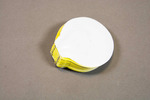
Call Me by My Name
Shitong Lyu, Special Collections, and Fleet Library
This shell book is a part of Shitong Lyu's Degree Project. In this project, Shitong collected Chinese international students' names and stories. More info could be found at here
-
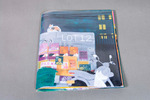
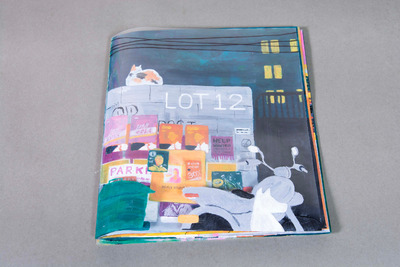
LOT 12
Nina Martinez, Special Collections, and Fleet Library
A comic book made out of acrylic PT on acetate sheet. In a crowded pocket of city in the Philippines, a woman searches for her younger sister.
-
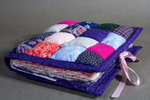
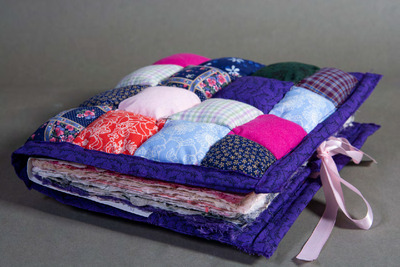
Recorded in Fabric
Zoe Maxwell, Special Collections, and Fleet Library
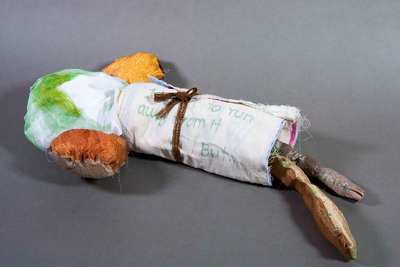
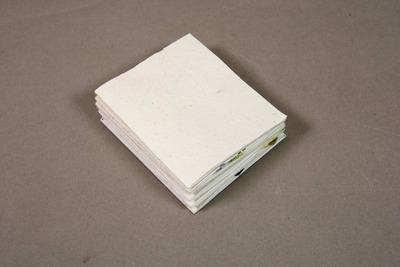
This piece is a reflection of childhood nostalgia through fabric. It includes hand-made sheets of paper made from blended and cut fabric from both of my Grandma's and older sister, bound together to create pages of a book, and safely encased in a quilted cover. Each sheet of paper reminds me of a memory tied to sewing and various family members. Included in this book is the fabric of curtains made by my Grandmother, scrap fabric from my Grandfather's hand-made shirts, pieces of denim from my sister's clothing alterations, as well as fabric scraps from my own projects. When I was young, my Grandmother taught my older sister and me how to sew, I attended sewing classes with friends and learned from my sister as she designed and sewed her own clothing. I have seen sewing cultivate creativity for many women throughout my life. Each person that has been included in my journey with sewing is represented by a piece of fabric. The delicate paper is kept safe with a quilted book cover to represent comfort, love, and protection. Through this book, I hope to express the love and appreciation I have for my memories tied to fabrics, quilts, and sewing.
-
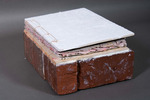
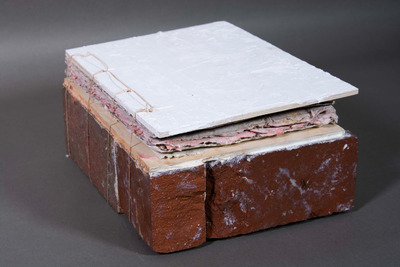
“Wall Book”
Cole Messinger, Special Collections, and Fleet Library
"Wall Book" explores walls, and the space between them in book form. Engaging this book forces the "reader" to confront the liminal space between walls–a space that maintains our experience of reality, yet remains hidden from us. The book covers comprise materials frequently used in walls, bricks and plywood; the pages reference the interior space, alluding to insulation, wiring, and other found components.
-
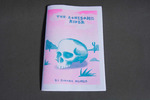
The Lonesome Rider
Simone Nemes, Special Collections, and Fleet Library
The Lonesome Rider is an experimental comic about a lonely skeleton in the desert. Piecing together her life through building a motorcycle, she encounters a portal where everything changes.
-
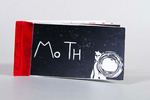
Mo(u)TH
Louis Nishimura, Special Collections, and Fleet Library
The strange creatures of Rhode island described in the journal of an amateur lepidopterist
-
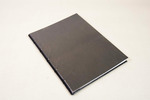
Black Gold
Jenni Oughton, Special Collections, and Fleet Library
Black gold is an alchemical text and compilation of essays, readings and images exploring the commodification of black bodies through art history. Starting with Rembrandts Africans and moving through time to the present rise of blackface in digital avatars, the book compresses time and style as a form of commentary on the ubiquity of the practice of black commodification. In a nod to its alchemical references, the book contains hand mix gold pigments, applied to pages in the form of illuminations.
-
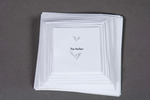
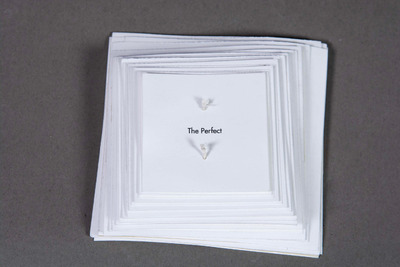
The Perfect
Qiyang Peng, Special Collections, and Fleet Library
The Perfect is a pyramid-shaped experimental book inspired by Jørgen Leth’s The Perfect Human. The transcription came up with a new binding form to demonstrate the imaginary perfect with the contrast that the top view presents a white space with only the words - the perfect - while the messiness and disorder keep developing on the other side.
-
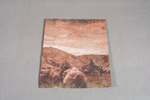
"They'd Kill Us If They Knew": Transgression and the Western
Jessica Perkins, Special Collections, and Fleet Library
A small scale, riso printed zine that reimagines Sue Brower’s essay “They’d Kill Us if They Knew”: Transgression and the Western (Journal of Film and Video , Vol. 62, No. 4 (Winter 2010), pp. 47-57). The body is set in Rockwell by Monotype Studio, and headings and captions are set in Job Clarendon by David Jonathan Ross. The page size (6 ½ by 4 ¼ inches) is a reference to old western dime novels, and the wide, horizontal format brings to mind the broad expanse of the cinematic western landscape.
-
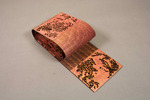
Caught in the Canopy
Daniella Pozo, Special Collections, and Fleet Library
The form is not stagnate and can unravel or change as the viewer moves and interacts with the book. I drew inspiration from my interpretation of the inner mechanics of a tree as it grows with the seasons. As the viewer interacts with the book I hope they will create new shapes and possibilities to understand how we are connected to nature.
-
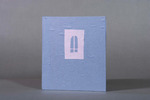
Melancholy Nights
Alina Pringle, Special Collections, and Fleet Library
This book was created during a period of painful separation from my partner where I allowed my feelings of longing for togetherness to envelop me and manifest itself into a narrative about two people in a quiet but cluttered city. Within the absence of people, the wind carries their thoughts, through letters. Melancholy dreams of the others presence, which they could not bare the other to read, they scurry throughout the town and into the world but are never to truly be seen.
-
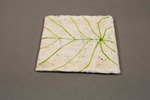
Mamo Na Haloa
Jocelyn Salim, Special Collections, and Fleet Library
This is an artist book that I created for a travel course to Hawaii about the art and science of conservation. It tells the story of the Kalo plant as the origin of the Hawaiian people. Throughout the trip, I have been very interested in the stories that were told about the different plants and animals and how they connect people to the environment. I think that these stories are important aspects of conservation as I notice that they play an important role in cultivating a sense of reverence and respect towards the natural world in Hawaiian culture.
-
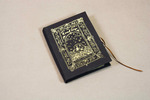
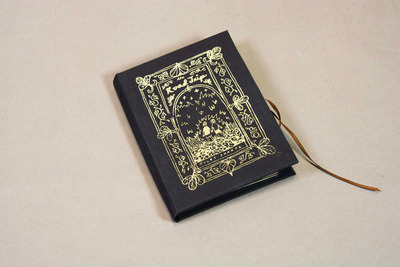
The Road Trip
Jules Sharpe, Special Collections, and Fleet Library
The Road Trip follows two people as they drive across the Midwest and camp in the woods. The story is based on a road trip I took last summer from Rhode Island to Missouri.
-
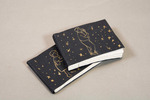
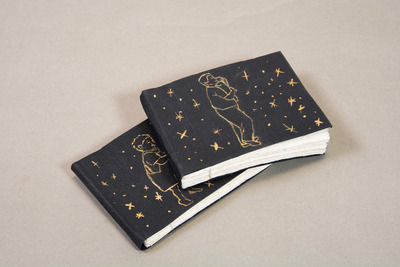
ריקודים (dances)
Hili Slav, Special Collections, and Fleet Library
These are a pair of flip-books that depict dancing scenes from my childhood home videos. They deal with issues of memory, nostalgia, and ephemerality. I wanted to convey a sense of longing for a fleeting moment, and although we can flip through the pages and play it again, and again, it will never actually return.
-
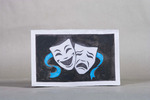
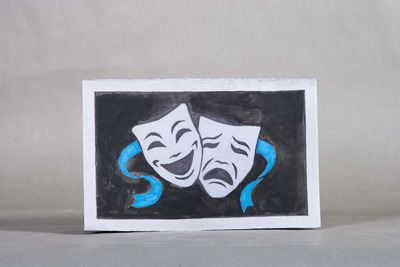
Masquerade
William Tian, Special Collections, and Fleet Library
Everyone has two faces and we choose to present one to the world and one we keep to ourselves. The book starts with two face masks - one happy face mask and one sad face mask. The second page shows the happy face in front of the silhouette of a man's face. The third page shows a person wearing his "happy face" when hanging around friends. He is not happy, but still wears the "happy face. The fourth page shows the person feeling anxiety in his private time. In the fifth page, the person is in his room, where he does most of his thinking. On top a drawer, there is a scale that holds a heart on the left side and the brain on the right side. The brain has more weight, so the scale on the brain side is down. This shows that the brain or logic has predominance compared to the heart. Sometimes, we are told to make decisions with our heart, but the logic of the brain is predominant. On the fifth page, it shows a zoom-in of the scale. The seventh page shows a hand that has strings to controls the person in the room. The last or eighth page shows that the scene was a puppet show to provide relief.
-
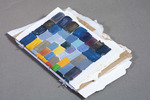
Category: Teenage Lesbians
Luna Tobar, Special Collections, and Fleet Library
A book that expresses the ways sexual trauma influences how one thinks about sex. Many of the prints are based on popular lesbian porn that dominates X rated sites. Porn that was not made for queer women. The images are printed on discarded paper; including mail, handmade paper, and shopping bags. The writing complicates the explicit images with my real life experiences. When combined the book becomes a knot of shame, desire, love, and disgust.
-
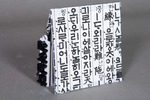
Survive
Haeun Um, Special Collections, and Fleet Library
This Illustrative book was for my Asian American Lit class, on the narrative based prompt. In this book, one side highlights my great grandmother's experience of going through WWII when Japan invaded Korea and the other side highlights my own personal experience of dealing with discrimination and inequalities for being a minority in America. In the middle, the character that represent my great grandmother and other character that represent myself, hold on to the banner called "just trying to survive." Through this, I wanted to emphasize the point that at the end, my great grandmother and I survived all the sufferings we had to face due to our lack of strength as Korean identity. My great grandmother is now about 100 years old. She was born in 1924, and has been through all those years of WWII including Japan’s occupation of Korea. I remember back when I was still in Korea, attending elementary school, and she would often tell me the story of Korean life in her early years. Even though I didn’t really know a lot about history in general, those stories really frightened me. Back then, my great grandmother was too young to understand what was happening in the world. One day, she woke up to realize her Korean school principal had been replaced by a Japanese principal. Then, the whole school began to force the Korean students to learn Japanese. They also forced them to get rid of their legal Korean name, the one they were born with. My great grandmother had a beautiful name. Her real name is Yeon Hee Pyo (표연희), but the Japanese changed her name to にしむら まさい which can be pronounced as Nishimura Masi. Hearing that story just made me tear up. It felt like they were taking her real identity away. Then she told me how those Japanese teachers and Principals would threaten the students if they spoke any Korean language at school. They would even often call them バカ which means “Stupid” in English. Those young Koreans were psychologically lost at that point; even worse, they had to follow the new rules, cutting their hair, changing the style of their clothes, and learning lessons in an unfamiliar language. Instead of being told how to act, they were repeatedly told what not to do. They were punished even if they did not know what they had done wrong. Then slowly girls around her started to disappear. At first, she didn’t know what caused that to occur. But now, as she looks back at it, she understands and she thanks God that she was able to remain safe in her family’s arms. Hearing her story about her past really hurt me and I was able to feel the pain while she was speaking to me. Even though I didn’t have a drastic tragedy in my life, I still suffer from the way I was treated when I lived outside of Korea. To explain, I have to go back to when my family lived in China. That time I was only five, but I truly had so much trauma that until this day, I am frightened to go back to China. Back then I didn’t have much of a memory about Korea. Yet, I remember that I was always homesick, wanting to go back to Korea where my grandparents lived and where my friends and cousins and I had fun playing together. While I was in China, I suffered due to language barriers and culture differences. I remember the moment I walked into a Chinese preschool. I remember the eyes that stared at me because I couldn’t understand a single word that had been spoken to me. The food, the lessons, the activities, all the things that my classmates did in that preschool just did not make sense to me. After a few months, I just couldn’t deal with it any longer and decided to move to a Korean international school. Being in Korean school made a big difference for me. I was able to talk to people who spoke the same language, eat the food that I was used to eating and play games that I used to play. After a few years, my family decided to move back to Korea and those few years in Korea were the best years of my entire life. Just being able to connect with your teachers, your classmates, store owners, friends and family made a huge difference in my life. However, pleasant moments don't seem to last forever. During my middle school years, I came to America due to my father’s job. I had no choice but to follow my parents to America. Not even once did my parents ask my opinion about moving. Once again, getting used to the new environment, new people, new culture and new language was really disorienting for me. It was hard for me to understand what was going on around me. I was always nervous, on edge, afraid that I would be punished for something, even if I didn’t understand why. I was even made to change my name from Haeun (하은) to Angela due to my teacher’s inability to pronounce my Korean name. During my entire middle and high school years, I always repented that I followed my parents to America. I would always blame my parents for the situation I had to deal with here. I really had no one to lean onto and talk about my feelings, thoughts and situation. Slowly, as I became older, I started to find my own ways to protect myself from all the little digs, subtle acts of discrimination, and racism I get just because I look, act, eat, and talk differently from others. I started to pace myself on learning. I started to work harder by staying up a few nights reading books and taking various after school classes. After a few years, the hard work I have done really paid off. Yet it wasn't enough for me to protect myself as a minority living in America. Looking back at my personal story and my great grandmother’s experiences, I came to realize how even though we weren’t enjoying life, we had to go through those difficulties in order to survive. My great grandmother had to suffer through those times of losing her real name, learning Japanese and getting used to the Japanese lifestyle; I too, was trying my best to fit in as I lived in different countries. The idea of Survival for minorities is everything. Because in order to continue living, to keep breathing is to find ways to continue with the difficulties. Therefore if we can not run away from those difficulties, the only way is to subordinate ourselves. Subordination in this sense is the idea of trying to lean on something that suppresses an individual. Even though it might seems Contradictory, in order to bear those oppressions that have been pressured toward minorities is to work with pleasure and sense that makes individuals forget the violence. For my great grandmother and I, language was something that had similar meaning to it. Even though language prevents us from being equality treated, language was only the way for us to communicate with those who were not like us. We had to learn those other languages in order to speak for ourselves. Therefore it can bring pleasure to our living yet makes us remember the continuation between the Japanese empire and U.S. empire. It might be hard to understand what it means for all the minorities to endure and hold back on the feelings. None of the words can truly describe what it means to live as a minority with lack of power. It truly brings confusion toward our identity, making us think in more complex ways. Yet all of those experiences that have been gone through by individual minorities was the desire to live. The desire to survive.
-
Grandpa and Fishing Village
Cara Wang, Special Collections, and Fleet Library
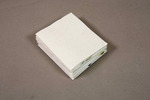
My grandpa comes from a small fishing village on the southern coast of Cantone, China. I want to make an object about my grandpa and his memory of that fishing village. The story that my grandfather told me and the impression of southern China from his childhood is something I cherish and hold dear to my heart, so I hope to use my creative voice to learn about this old memory and to gain the power of healing and warmth. In this book, I start this exploration with mapping and seeing the community and environment with love and respect.
-
A Cat's Busy Day
Lana Wang, Special Collections, and Fleet Library
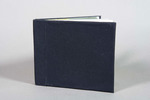
This book follows the busy day of cats, combining 180 and 90 degree pop-up mechanisms to tell their story! The cats' actions seem to continue after the book is closed; as you close the spreads, the black cat "moves" closer to the window, the calico "reaches" its paw into the fish basin, and the grey tabbies "duck" further under the bushes.
-
Maybe We Are Eachother's Replica
Yirui Rita Wang, Special Collections, and Fleet Library
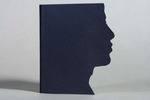
Collecting things always require you to have a curious heart and an ability to see unexpected beauty. I have never realize how omnipresent GD is in life! I saw interesting letterforms when I was on the street, in the library, or even during a field trip t
-
Memotone Musicassette
Maggie Weng, Special Collections, and Fleet Library
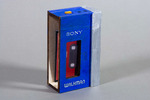
Memory, and the songs tied to those memories, in the shape of a cassette tape.
-
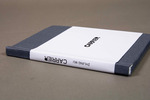
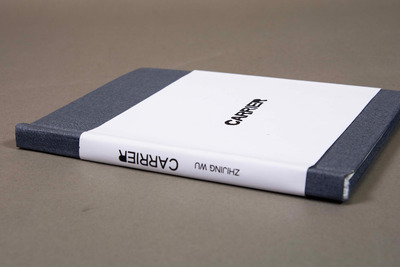
Carrier
Zhijing Wu, Special Collections, and Fleet Library
“And that is my reason of sitting idly in a cafe somewhere far from home, trying to make my life into a carrier.”
-
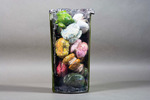
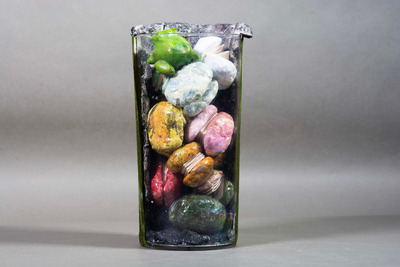
To See Blue Skies
Arete Xu, Special Collections, and Fleet Library
The frog in the well is a fable about short-sightedness and ignorance from lack of understanding. Within the depth of the well, the frog cannot see the true blue color of the sky. With each rock placed in the well, the frog will come closer to seeing the endless blue sky. The four series of poems within the stones are arranged based on the twenty-four Chinese solar terms (twenty-four seasons) as the frog's knowledge of the world grows with each season's passing.
-

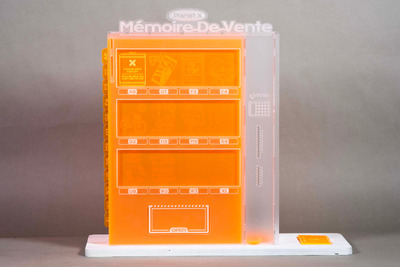
Memoire De Vente
Weicheng Xu, Special Collections, and Fleet Library
Memoire De Vente is an artist book built in the form of a vending machine. This artist book records 16 meaningful moments that shaped the artist. These moments are presented as products in the vending machine where you can select and pull out from the book. The artist book is designed with complementary credit cards and coins. Interact with the book to mimic the vending process.
-

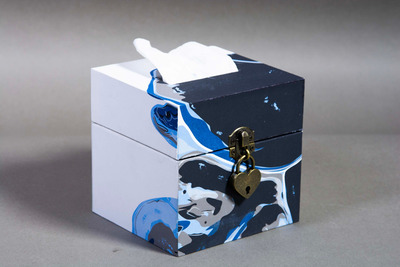
The Sea of Tears
Jingjing Yang, Special Collections, and Fleet Library
Western legends believe tears are a byproduct of the material that becomes water when the heart is damaged. In Oriental Myth, the different tears people shed throughout their lives are the ingredients of Mengpo soup. Mengpo soup was a soup to the death served by the 'Old Lady Meng', the goddess of forgetfulness. This soup wipes the person's memory so they can reincarnate into the next life without the burdens of the previous life. This bowl of soup, or a collection of tears, is a gathering of obsessions and the most important memories of a person's life. I print my thoughts about tears and the human life on the tissue to give a sense of soft, fragile, and pliability to everyone's memories of crying. When we cry and wipe our tears with tissues, our memories of tears will transfer on tissue paper, then dry out and become invisible energy, an imprint of our existence in the world.
-
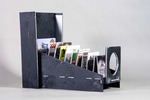
Book of Kodak
Haoxi Zhang, Special Collections, and Fleet Library
This is an artist book exploration trying to understand the pathway of Kodak. I tried to convey narrative through the transformation between 2D, 3D, and something in between.
-
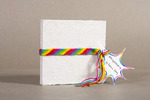
nothing/everything
Sabrina Zhang, Special Collections, and Fleet Library
"nothing/everything" explore the concepts of 'nothing' and 'everything' in connection with the color white. Specifically, the book follows the narrative of a white dwarf, and its connection to both everything and nothing. Although we perceive the color white to be lacking, it is scientifically composed of every color and the book explores this duality.
-
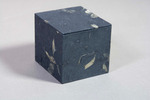
Confession
Sihan Zhu, Special Collections, and Fleet Library
This book demonstrates a sensual experience of how language can fill the void. This poem I wrote reveals a private part of my heart that creates a silent and untouchable flow. I consider the glass piece that I made as the case for the book with is the breath of the space. It holds the book, like a piece of solid ice that never gonna melt. All the intaglio images were printed on gampi paper, and chin-colled to kozo paper. The poem was printed by using hand set metal types.
-
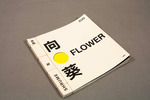
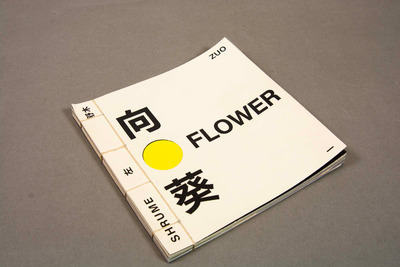
Sunflower 向日葵
Shrume Zuo, Special Collections, and Fleet Library
This book documents the growth of a sunflower through various styles that is unfamiliar to me. The sunflower is a personal object that inspired me through some of my toughest times. I wanted this book to be an experimental piece incorporating both Chinese and American influences on me. I utilized traditional Chinese binding method as well as traditional Chinese characters alongside English as my attempt to integrate the two cultures.
-
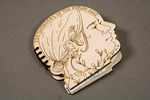
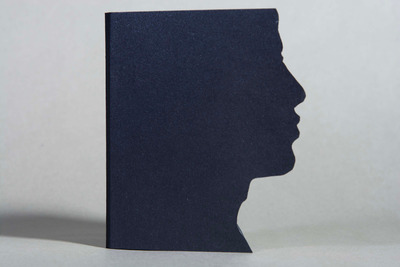
The Wonders of the Human Head
Olivia Bartsch, Special Collections, and Fleet Library
This book explores the literal and the more conceptual and imagined layers of the human head and all it’s wonder.
-
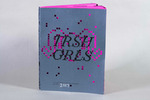
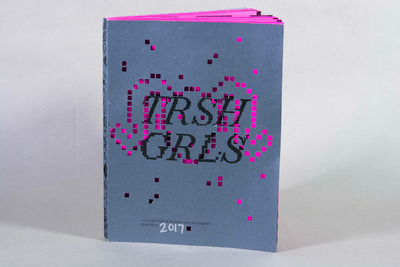
TRSH GRLS ARCHIVE
Sharlene Deng, Special Collections, and Fleet Library
Approximately, 1 in 3 American women, 42 million women, and 28 million children, are living in poverty. Given the current events of the United States surrounding issues of women's rights, equality and abortion rights as well as the restrictive censorship laws in East Asia, we wanted to focus our project on how women are often mistreated, abused by society and tossed to the side with no regard when we are not of convenience. For Pouya Ahmadi’s Typographic Multiverse class this fall, we have been working on a semester-long collaborative project that explores complex issues through layered narratives, voices, cultures and histories. Our project is heavily rooted in the concepts of cyberfeminism and third wave feminism and how these ideas can be used as a foundation for a dystopic world. TRSH GRLS are a new group of feminists who are heavily influenced by the previous groups that came before them, such as the Riot grrrls and Guerrilla Girls. They were an anonymous group of feminists, devoted to fighting sexism, inequality and violence against women. While these groups were very real in our own world, our project explores how we can begin to work through these same issues in a world that does not exist, but does not seem like it’s that far off. We are working on constructing a dystopic world that not only portrays these complex issues but also tells the story, history and importance of TRSH GRLS based on their qualities and our knowledge on them. By incorporating technology, science and language into our worldbuilding, we want to create a realistic environment and a timeline of events that captures the essence of TRSH GRLS. For the final piece, we plan to present a series of artifacts that will be presented in ‘gallery space’ in the GD Commons, set in the year 3050. This book is a collective archive exploring who the TRSH GRLS were, are and who they might be.
-
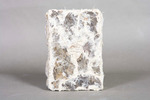
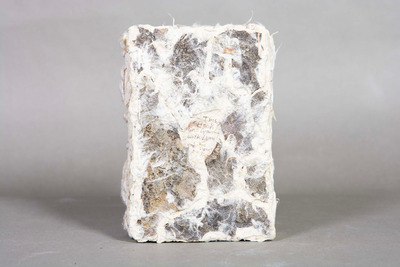
Grown With Love
Julia Hames, Special Collections, and Fleet Library
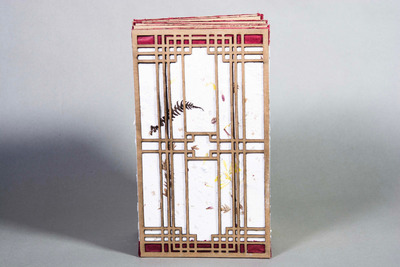
This book was grown with love, variable edition of four books made entirely from plants in my garden. Featuring mulberry, milkweed, flax, and cotton, as well as poems I wrote as an ode to each one. The thread used to bind the books was hand spun out of cotton, and the ink used for the prints was tinted with pigment I created from each respective plant. This is the accumulation of months of experimenting with the process of making different plants into paper. Truly a labor of love, it was so gratifying to nurture these plants from seed over the summer, and get to know them in such an intimate way by paying attention to how each plant reacts to the seasons and processes of papermaking.
-
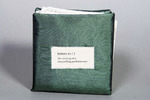
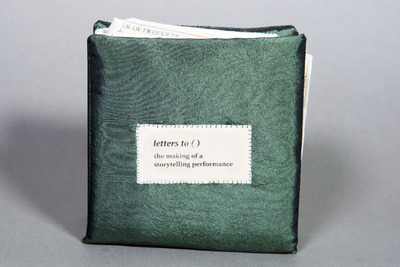
letters to ()
Yanru He, Special Collections, and Fleet Library
This artist’s book is a poetic recount of the process of creating a storytelling performance, focusing on the mutual influences between the artist and the surrounding environment during the creation process. In utilizing sewing techniques, and the photo and poetry transferred onto fabric, this book presents an exploration of storytelling traditions and the intertwining roles of authorship, viewership, performance, and stage.
-
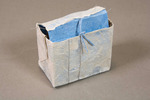
Polytechnique: 17:10, 17:20, and 17:30
Adeline Tousignant, Special Collections, and Fleet Library
This small series of accordion books follow the biggest Feminicide (a term used for a massacre based on sexist ideologies) in Canadian history— the one which my mother is a survivor of. The whole shooting happened in a period of twenty minutes (from 17:10 to 17:30) but the aftermath left the entire community in shock. In these books, I follow the weapon, the movement around the school, and the trauma my mother lives with as well as the intergenerational trauma that arises from it.
![|=[[[]]]=| by Linlin Yu, Special Collections, and Fleet Library](https://digitalcommons.risd.edu/specialcollections_bookcontest9th2023/1023/thumbnail.jpg "|=[[[]]]=| by Linlin Yu, Special Collections, and Fleet Library")