

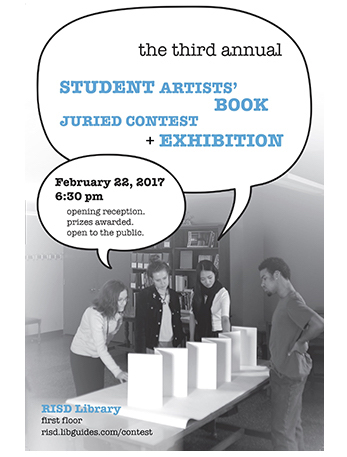
purchase prizes awarded
1st Prize - $500: Stephanie Winarto
When Astronomy Grew Ears2nd Prize - $375: Niya Sun
Murmurs of Earth$300 Memorial Award: Aaron Teves
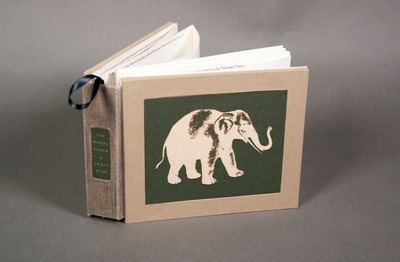
The House Under a Crazy Star$250 Laurie Whitehill Award: Charity Appell McNabb
Gathering for Meaningspecial recognition
Gift Membership to the American Printing History Association: Maisie Wills
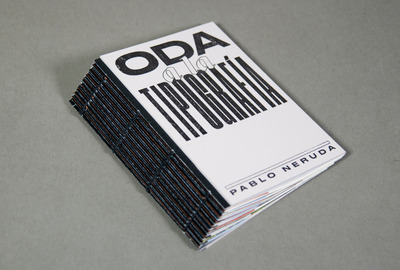
Oda a la Tipografía



-
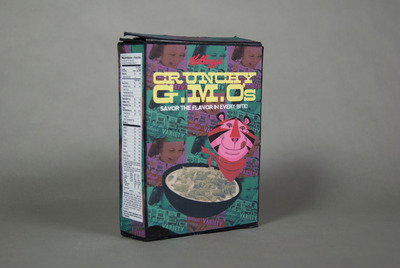
Ever Wonder What's In Your Cereal?
Gabriel Abascal, Fleet Library, and Special Collections
The book explains the use of genetically modified organisms (G.M.O.s) in Kellogg's cereals, taking a stylistic approach that calls to mind former advertisements used by the company as though as to entice children to consume their products. A reliance on patterns, color, and typography envelops the project as though as to produce a work that is suggestive of the themes used by Kellogg's in their advertising campaigns with a satirical and sensationalist tone.
-
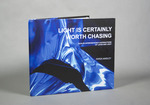
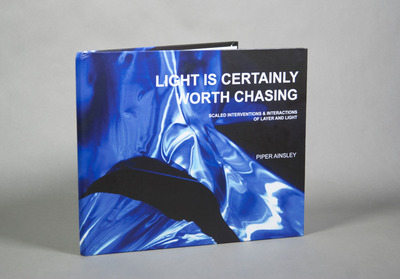
Light is Certainly Worth Chasing
Piper Ainsley, Fleet Library, and Special Collections
Interactions of light with physical and cognitive layers fill this book. These investigated relationships, dynamic and static, natural and electric, intervene in space, structure, and society. They are architectural, architectonic and art-based: light illuminates disciplinary intersections.
-
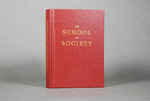
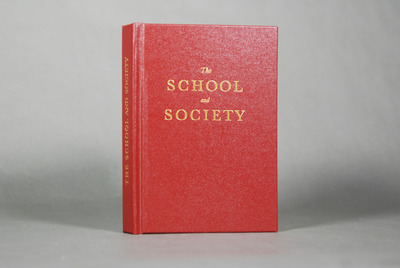
The School and Society
Benjamin Aron, Fleet Library, and Special Collections
The School and Society, is an algorithmically revised version of a pedagogical text authored by 20th Century American philosopher, John Dewey. An intellectual leader of the school of thought now recognized as Pragmatism, Dewey was a highly influential philosopher, educator, and psychologist. The algorithm, developed for the purpose of this book, has incrementally translated the original text into language excerpted from higher education marketing and strategic planning materials. Dewey’s writing is slowly clouded, ending in sentences that are entirely unintelligible. A collaboration with designer Maria Matveeva.
-
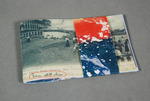
I am still alive
Stephanie Benenson, Fleet Library, and Special Collections
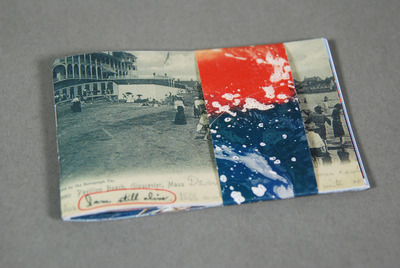
This book was a visual exploration of ways in which a contemporary artist’s personal and social investigation of place might lead to the generation of culture, historical exchange, and socio-economic development in a specific locality. As Lucy Lippard stated in “Lure of the Local: A Sense of Place in a Multicentered Society”: As envisionaries, artists should be able to provide a way to work against the dominant cultures’ rapacious view of nature, reinstate the mythical and cultural dimensions of public experience, and at the same time become conscious of the ideological relationships and historical constructions of place. The dialectic between space and change can provide the kind of no-man’s-land where artists thrive. The book is a proposition for future social sculpture. It is a flip book of ideas and precedent meant to impart a sense of urgency. It includes work from my personal collection of postcards of Cape Ann, Massachusetts. As regulation increases, the fishing tradition in Gloucester, MA (the oldest seaport in America) has shifted and a culture of artists and fishermen fight to keep their traditions alive in the face of gentrification. This book takes the form and shape of a postcard epistolary, citing works that play with the notion of gentrification and ocean from contemporary artists like Daniel Bozhkov and Constance Hockaday, while also referencing the tradition of Cape Ann Painting with etchings from Winslow Homer. Historical exchange is crucial to the survival of tradition; contemporary reverence coupled with artist understanding could provide hope for the future.
-
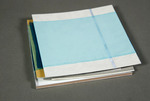
The Journey
Feiyi Bie, Fleet Library, and Special Collections
Have you ever experienced the situation when you are doing something while witnessing your mind wandering somewhere else? It’s not an absence of mind that I’m talking about. When I was working on a recent hand drawing, I was so concentrating on controlling the pen that I sensed something novel- I ‘saw’ my mind traveling in a 'place', which was a totally different space from where my body was, while it was an absolute synchronizing journey with me completing the drawing. The experience was so crystal clear for myself at the time yet too vague to be depicted in language. I hoped that I could find a way to store it physically. And that’s where this book was coming from. It’s about The Journey my mind went through when I was doing that one drawing. It doesn’t matter when or where the journey started from, then it ended some time before the drawing was completed. It’s a documentation for the one that lives inside of me.
-
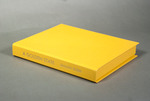
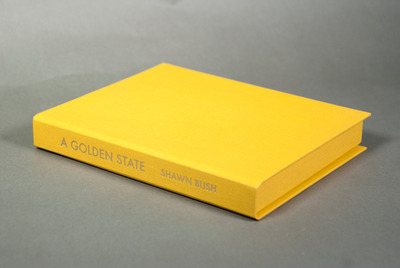
A Golden State
Shawn Bush, Fleet Library, and Special Collections
The Western landscape has captivated the hearts of Americans and others over time. The expansive topography that dominates the territory encapsulates much of the allure that defines American ideology. Cinema and commercial industries use the seduction of the Western landscape to sell, define and project a merit of social status onto the credulous populous. In the name if progress, the topography is constantly changing and shedding its layers to suit the provisional needs of humanity. Employing some of the tactics of cinema that have helped define the landscape, A Golden State hopes to free the mythology of the West, specifically California, as a utopia within the larger utopia of Western culture.
-
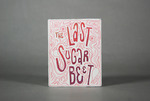
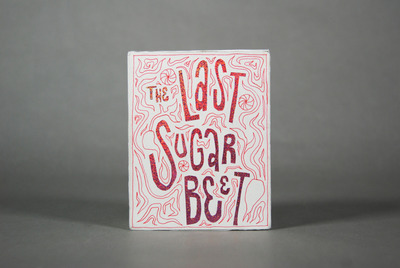
The Last Sugar Beet
Bella Carlos, Fleet Library, and Special Collections
The book is a metaphor for current events concerning the United States sugar beet industry. The Hershey Candy Company has recently nixed sugar produced from genetically modified sugar beets, in order to sate anxious and misinformed consumers. 54% of domestic sugar is produced from sugar beets so this has been detrimental to American industry. Sugar produced from GMO sugar beets is cheaper, better for the environment, and better for the Country. Please save the dying sugar beet industry.
-
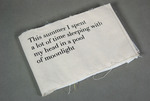
This summer I spent a lot of time sleeping with my head in a pool of moonlight
Allyson Church, Fleet Library, and Special Collections
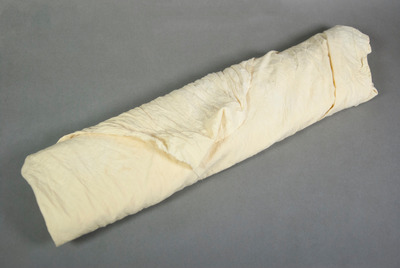
A soft book about the past summer that I made at the beginning of this semester. The pages are printed on canvas, muslin, linen and cotton bed sheets and are silkscreened, printed with photo intaglio processes, drawn on, and embroidered.
-
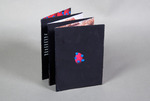
To Eat or Not To Eat
Ellisa Cox, Fleet Library, and Special Collections
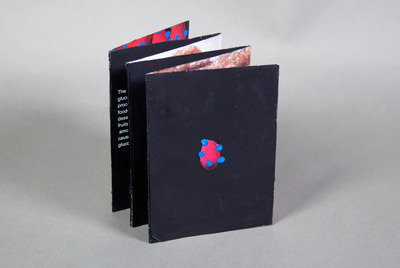
This book depicts different foods that cause or react terribly with diabetes. The plethora of foods eventually transforming into diabetes cells, literally showing readers what could happen inside of their bodies.
-
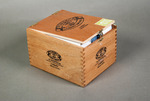
Exodo
Karen Darias, Fleet Library, and Special Collections
Discussed the mass migration of Cubans from the Port of Mariel to Miami over the course of four months.
-
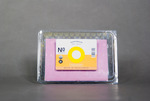
Yummy Gmos
Xiomara Espana, Fleet Library, and Special Collections
I wanted to create a book about labeling gmos inspired by an aesthetic primarily seen in children's books. The book entails six food groups that are known to have gmos and it is up to the reader to look at the nutritional fact stickers in the back of the book and label the food with gmos since our government has not yet made it a law to do so. The stickers are part of the book more as decoration but the act of sticking the labels should still be in mind.
-
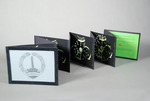
Chernobyl
Zoe Grinfeld, Fleet Library, and Special Collections
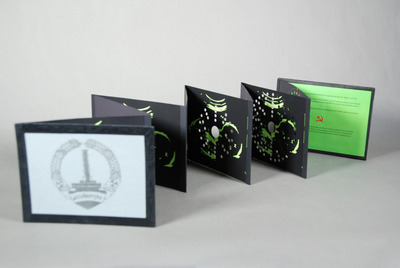
The topic of this artist's book is how ionizing radiation from the Chernobyl Nuclear Power Plant explosion of 1986 affected women's reproduction. On one side of the accordion, a photo of an ultrasound becomes overcome with holes, becoming only a fraction of what it once was. On the other side of the accordion, the viewer finds those holes are forming the uranium-235 atom, which is the highly radioactive atom contained in many nuclear power plants.
-
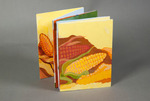
Cornarchy
Hannah Kim, Fleet Library, and Special Collections
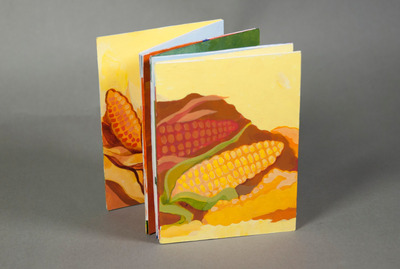
My book, Cornarchy, tells how corn has been dominating over the agriculture and food industries in the United States today. It specifically depicts the downside of using excessive corn in the food & agriculture sector. Because of constant improvement in the agriculture industry and application of GMO (genetically modified organism), corn has become as one of the most highly productive crops in the U.S. It is essential to note that both genetically modified corn and organic corn are used in animal feeds, which has been recognized as unhealthy, unbalanced fatty acid animal food. They contain a high content of omega-6 and significantly low omega-3 to humans and animals. According to the health professionals, we eat too much food that contains omega-6 rich corn products. In other words, we consume too much of omega-6 that causes people to have diabetes and increase risks of having a heart attack. Some researchers have indicated that people who eat corn products regularly have corn substance even in their hair. Therefore, I have created a hyperbole of people who are literally turning into corn itself because of excessive corn intake.
-
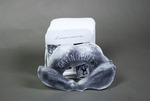
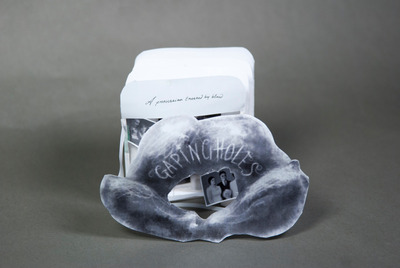
Gaping Holes
Jordan Liptak, Fleet Library, and Special Collections
Narrative tunnel book, a satire of a family Thanksgiving
-
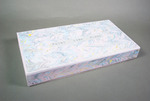
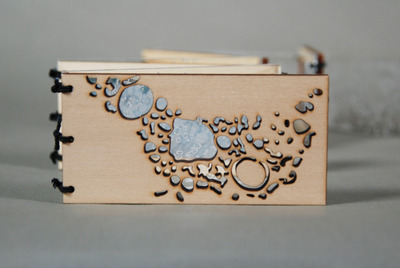
Point / Line / Plane
Lanxuan (Florence) Liu, Fleet Library, and Special Collections
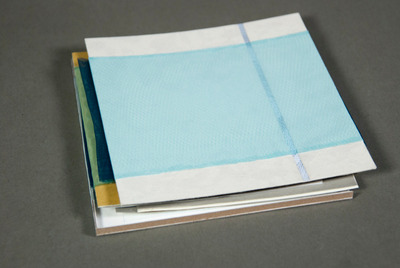
Point / Line / Plane is a pure exploration of colors, texture, shapes and materials. Through interacting, every part of the piece is considered to reinforce the basic theme of design elements. By experimenting with a variety of unfamiliar materials, Point / Line / Plane is a returning to the fundamental idea of what forms an artist book.
-
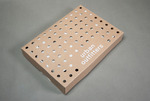
As the City Watched
Leah Marchant, Fleet Library, and Special Collections
"As The City Watched" is a carousel book depicting the sequence of events of the 1897 Bradley-Martin Ball, the most expensive and extravagant party held at the original Waldorf-Astoria Hotel. As the 20th century neared, the Waldorf-Astoria hotel became Manhattan's "theatre in the round" for the wealthiest of celebrities and their wild parties.
-
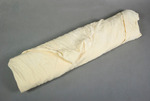
Gathering for Meaning
Charity Appell McNabb, Fleet Library, and Special Collections
This unbound book is an attempt to illustrate how the creative process in general, and the gathering, sorting, associating, and finding meaning that takes place in the preliminary part of the creative practice, can be used to inform a wider audience. The contents of this book are designed to illustrate how associations and relationships lead to insights. The form allows the user to participate in the authorship of the book, in a dynamic, personal, and explorative way, so that every interaction becomes a collaboration or co-authorship with the writer.
-
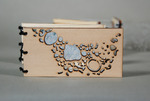
Contemplation
Ann Motonaga, Fleet Library, and Special Collections
My book was inspired by a contemplative exploration of wood cells observed at different magnification levels. The combination of materials provide a multi-sensory experience of wood - allowing one to touch, see, and smell, while witnessing with the naked eye its patterns at the cellular level.
-
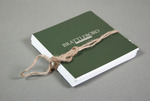
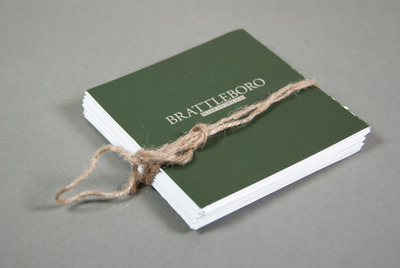
BRATTLEBORO
Peter Nicholson, Fleet Library, and Special Collections
Brattleboro is a small body of work culled from a weekend trip with my partner to Brattleboro, Vermont. These photographs are meant to strike a balance between personal narrative and the documentation of the feeling of the place. My usual method of making photographs is to act like a pane of glass, or as a mirror; I record in a non-linear way the life of the place through form and structure, with little to no emotive context. These photographs are different from that, they are recordings of my experience of life and place, with subtle threads of personal narrative and context, expressed in a loosely chronological way.
-
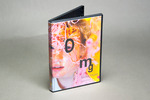
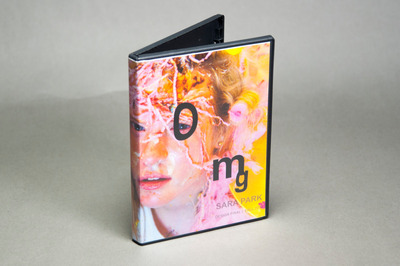
OMG
Sara Park, Fleet Library, and Special Collections
This book, "OMG," takes a contemporary turn in expressing views on GMO's while presenting it as a commentary that can be taken both ways (both positive and negative). The idea of the book is to portray the book as a product, much like how the food industry sells products to its consumers. Inside shows a mock-up dvd as well as an accordion-style "book" that consists of a theatrical series of photographs in which the models both enjoy the foods and also are repulsed by them. The photographs focus on the color, brands of the foods, and creative expression, just like food corps do in order to successfully sell their products to consumers.
-
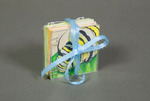
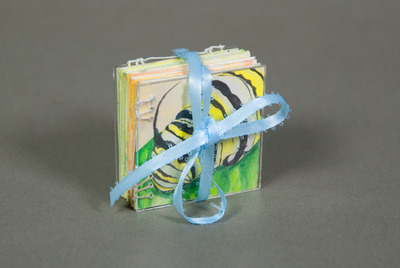
Transformation
Weixinyue Peng, Fleet Library, and Special Collections
The two ways of looking into Monarch Butterfly's life Cycle.
-
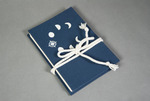
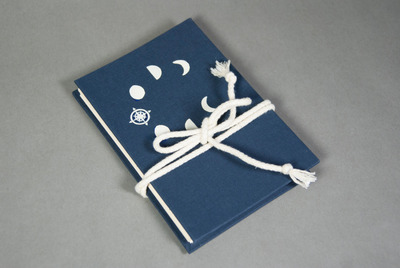
Afloat
Shivani, Fleet Library, and Special Collections
My book is based on Joshua Slocum, who is the first person to circumnavigate the world solo from 1895-1898. He is known as one of the greatest sailors in history and also had a passion for writing. Through this book I wanted to convey his obsession with the sea, his mental state through out the voyage and give a glimpse of the route of his ship Spray. I also wanted to suggest that Joshua used only a compass and lunar sightings to navigate around the world.
-
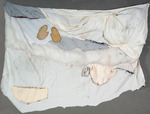
I Can't Leave
Jacqueline Silva, Fleet Library, and Special Collections
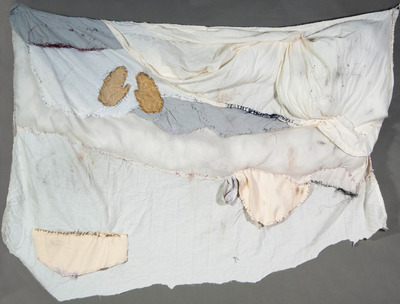
This piece is a representation of my relationship with my bed as a person struggling with depression. I wanted to evoke the stale, messy, and rotting feeling that I get after a prolonged period in my bed. It is meant to be hung on the wall and interacted with. Viewers may feel the material and explore the fabric to reveal the hidden silkscreen printed messages.
-
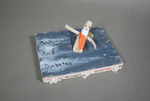
Archimedes And Diabetes
Eric Steinberg, Fleet Library, and Special Collections
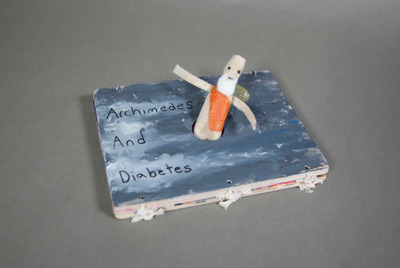
Archimedes and Diabetes is an educational children's book in which the effects of type two diabetes is explained by the famous Greek philosopher and mathematician Archimedes. Along with the fun and engaging rhymes and illustrations, readers get to experience controlling Archimedes as a puppet as he pokes his head out of various hilarious images!
-
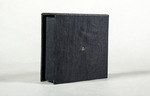
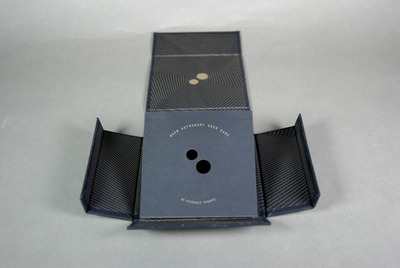
Murmurs of Earth
Niya Sun, Fleet Library, and Special Collections
In 1977, two spacecraft called Voyager were launched to the stars. Affixed to each Voyager is a golden record that contains spoken greetings from Earth-people in 55 different languages. This record is a message to possible extraterrestrial civilizations that might encounter the spacecraft in some distant space and time. This artist's book intends to show human's ambition and tentativeness to reach out, and how this small record symbolizes hope and human spirit. In this book, the sound wave pattern of each greeting is created using computer software, and then drawn onto the acetate paper. As reader turn the pages, each greeting would be sent into the dark and unknown universe.
-
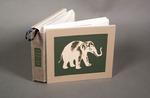
The House Under a Crazy Star
Aaron Teves, Fleet Library, and Special Collections
This artist book is inspired by the non-fiction book "The Zookeeper's Wife" by Diane Ackerman. It is the story of Jan Żabiński, a Zookeeper of the Warsaw Zoo in Poland through the second World War. Following Warsaw’s bombing and the destruction of much of the zoo, Jan, and his wife, Antonina Żabińska, saved the lives of over 300 Jews by smuggling them out of the Warsaw Ghetto and hiding them in places throughout remaining parts of the zoo and in their the villa. The Jews were kept safe in the zoo until they were given fake identities, and escaped out of Poland. One of the unique aspects of this story is how the Jewish refugees were given animal code names as they were hidden in the zoo, and they lived along side the remaining animals from the zoo, who had human names. Made as the final assignment for my Foundations Design class, this artist book portrays the stories of the people and animals who lived together and found safety in the Warsaw Zoo, or as the Żabiński’s called it “The House Under a Crazy Star”.
-
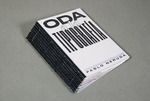
Oda a la Tipografía
Maisie Wills, Fleet Library, and Special Collections
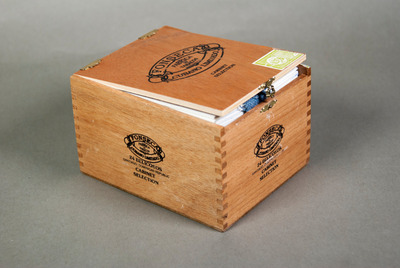
This book is an exploration of Pablo Neruda's poem Oda a la Tipografía (Ode to Typography). Experimental type treatments are paired with imagery inspired by Neruda's many metaphors to create a cinematic experience for the viewer. An English translation of the poem accompanies each stanza, though it is typeset traditionally to represent aspects of the poem that are lost in translation.
-
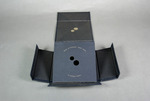
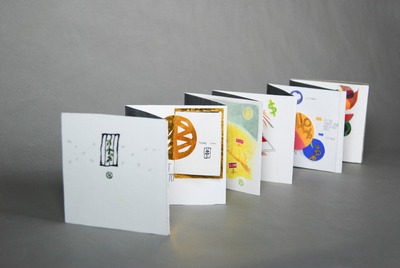
When Astronomy Grew Ears
Stephanie Winarto, Fleet Library, and Special Collections
An artist's book based on the first-ever detection of gravitational waves in 2015, where the physicists of LIGO heard and recorded two black holes that collided one billion light-years away.
-
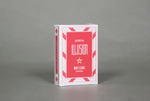
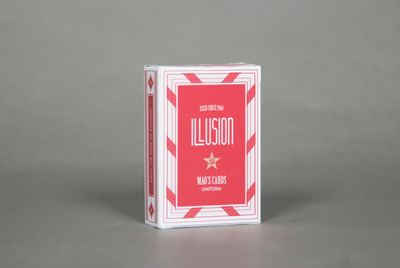
Illusion
Samantha Wong, Fleet Library, and Special Collections
For this piece, I recommend to experience it without any input of the designer first. If you are not familiar with any of the history of the Cultural Revolution in China, please continue reading the text below. However, I do still highly suggest that you take your time investigate it without any prior knowledge. Discussions and theories that occur when trying to understand the piece with others is what I have personally found more intriguing. Nevertheless, this is just my opinion. There is also an information card inside. If you would like, you can take the challenge to not read it. I hope that you will find as much joy and curiosity as I have with those I have shared Illusion with too. Thank you. In 1966, Mao Zedong announced the beginning of the Cultural Revolution in China. He believed that China was falling back to its capitalist ideas and wanted to purge the country from any of these thoughts. Mao wanted to bring the people together and allow everyone to live in a country where there was equal status. He declared that it was necessary for China to be cleansed of the four olds: culture, customs, habits, and ideas. Any who follow the crowd and denounced the olds were praised and those who did not were considered traitors to the nation. Intellectuals, landlords, and citizens of the bourgeoisie class were publicly humiliated. Relics in temples and museums were destroyed. Mao believed that the young adults of the country would change China and by following the demands of ridding the old, they were considered the ‘golden children’. These ‘golden children’ sought to became Red Guards who went to fulfill Mao’s wishes. They wore a red band and a simple military uniform that once belonged to their family who participated in the Chinese Civil War. Extravagant hairstyles were considered bourgeoisie and cropped short hair for men and short or tied pigtails for women were what became the standard. This look became the typical style for all during this time in China. Doing something for one’s own benefit was never considered because it was naturally believed that you and everyone else are the same. No one stood out because of the idea that they were all born to work together and show the world the power of their country. Nevertheless, there is an extent to how much human nature can be molded. Mao was easily able to bring the peoples’ pride, determination, and bravery out to the surface. However, those who suppressed their opinions due to his demands either felt helpless or had a need to find an outlet. The revolution brought in a wave of different human emotions and interactions that brought people together and also tore them apart. Until his death, Mao had always stood strongly in his people’s heart as the one that supported them through their hard times. He was a leader that appeared to be of equal status with them and understood their struggles and pain of poverty. Mao made sure that the most educated citizens knew that he would forever be the one who uplifted their life, minds, and hearts.
-
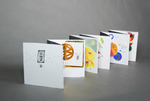
Monsanto
Daimei Wu, Fleet Library, and Special Collections
In my artist book I investigated the reasons why millions of people against the Monsanto company. Is it because of its massive production of GMO foods? Besides the GMO technology, what else have they done that irritate people? The artist book reveals rationally The Monsanto's deception and domination of the world's food market, especially in America.
-
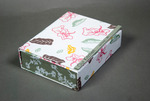
Our Kitchen
Jessica Young, Fleet Library, and Special Collections
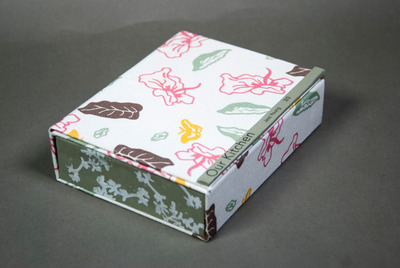
I’ve always been fascinated with the kitchen in my childhood home. It is the place where my family sat down together every night for dinner and conversation, the place I did my homework, where I baked everyone’s birthday cakes, painted and drew pictures, played with my dogs, laughed and argued with my sister, watched the daily news, checked off important dates on the calendar, gulped down my medicine when I was sick, and made Christmas breakfast with my mom, babci and sister. If I needed something from the kitchen, I would know where to find it. There are seventeen cabinet doors and seven drawers that together take up two walls. Recently, I have scrummaged through the objects that reside in the worlds behind the many doors and draws, that sit on the counter, and live on the shelf above the cabinets, and rediscovered things that hold many different memories. This book is a reflection of my childhood through objects found in our kitchen.