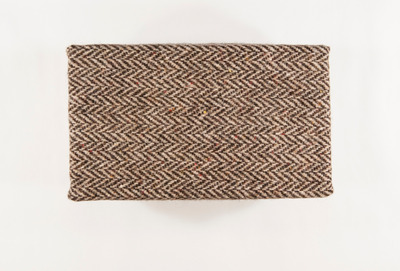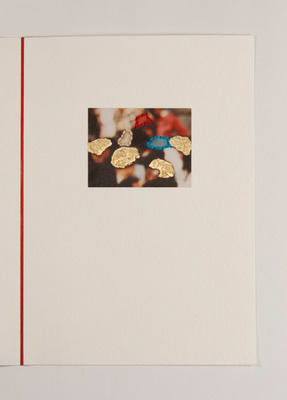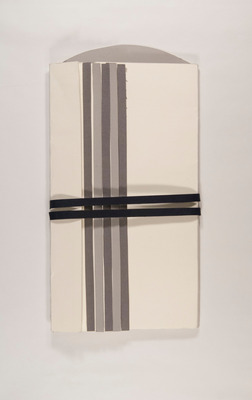

purchase prizes awarded
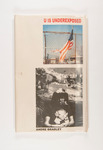
1st Prize - $250: Nabil Gonzalez
19942nd Prize - $200: Scarlett Xin Meng
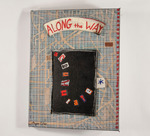
Modern Day Sisyphus3rd Prize - $150: Sakura Kelley
OMIYAGE
honorable mention
$100 Award: Sophie Crowley
Jeanette Walls Artist BookEach winning entry also recieved a $50 gift certificate to this year's sponsor Paper Connection
-
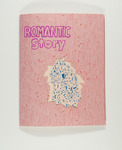
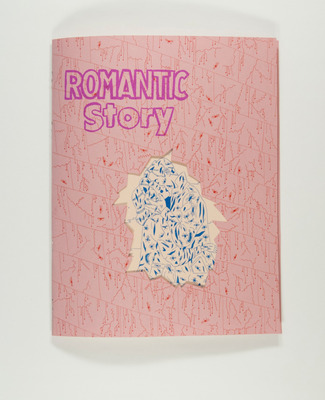
Romantic Story
Heather Benjamin, Fleet Library, and Special Collections
This is a collection of my thesis drawings, inspired by 1950s/60s romance comics. The book design is inspired by them also. I combine the aesthetic of those comics with my explorations of themes of female sexuality and emotion.
-
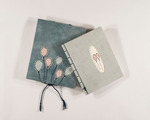
Balloons
Sarah Brenneman, Fleet Library, and Special Collections
Balloons is a short visual narrative, telling a story about a young girl who is swept away by balloons only to find herself in a new place upon landing. Whimsical and slightly strange, the piece is letterpress printed with individual watercolor details. A hand-made box accompanies it.
-
Through Magic Glasses
Catherine Bullock, Fleet Library, and Special Collections
Selection of various parts to create a whole consisting of interconnectedness.
-
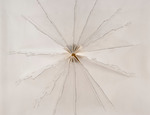
Jeanette Walls Artist Book
Sophie Crowley, Fleet Library, and Special Collections
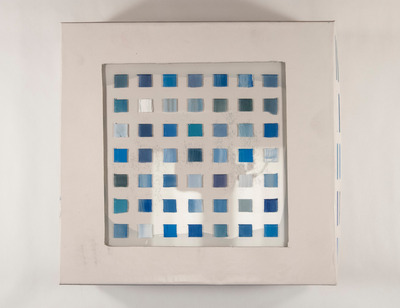
I have dedicated this project to Jeannette Walls and her memoir, "The Glass Castle." This circle book is composed of glass castles constructed out of acetate; representing Jeannette's childhood dream of escaping her dysfunctional family to live in a glass castle. At the core of the book is a spine with words used to describe Jeannette's childhood experiences. The case has the words, "He promised me..."; representing Rex Wall's promise to his daughter to build her a glass castle. This promise is a delusion and her father's way of trying to cover up the family problems.
-
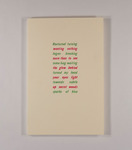
NOCTURNAL TURNING/ BEGAN BREAKING/ SOME LONG WAITING/ TURNED MY HEAD/ TOWARDS SUBTLE SPARKS OF BLUE/ WANTING NOTHING/ MORE THAN TO SEE/ THE GLOW BEHIND YOUR EYES/ LIGHT UP SECRET WOODS
Carter Davis, Fleet Library, and Special Collections
-
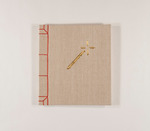
Fairytales
Layla May Ehsan, Fleet Library, and Special Collections
This artists book urges readers to take a closer look at fairytales made ubiquitous by children's media. A story hundreds of years old is scrubbed and sanitized to fit neatly into our modern perceptions of what is and is not appropriate. The little mermaid, for us, ends with marriage, not with suicide; Rapunzel begins with long golden hair, not with rape. This book seeks to expose what's lost when literature is so thoroughly cleansed, opening the potential for their possibilities- of magic, of sexuality, of female complexity and agency - to be reclaimed. The reader may move through the book seeing only snippets of heavily censored story and Disney-princess kisses; or, they can pull out tabs and manipulate pages, revealing the hearts of these stories in all their weird and provocative glory.
-
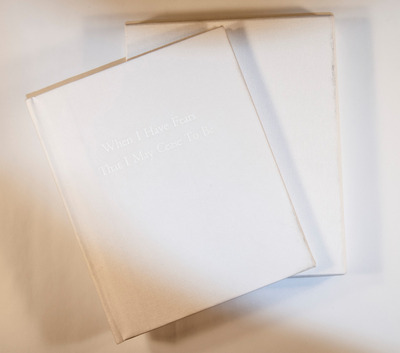
When I have Fears That I May Cease to Be
Jae Hee Han, Fleet Library, and Special Collections
I made the series of plates last year. Seven etchings each responding to a couplet of the John Keats sonnet. This was an act of admiration after encountering something so perfect, an attempt to reproduce that perfection in another version, and ambitiously, to make the texts more available to a wider body of audience. The image is a single frame that is much more instinctive, not superior but the visual anchor is powerful in ways words cannot be.
-
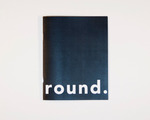
Ring Around
Mary Ellen Hawkins, Fleet Library, and Special Collections
Ring around is a miniature examination of fear & anxiety. The images are collected from public archives, all portraits of carousel horses. I was struck by their expressions of terror, and began to compile them together as a book. Ring Around is about feeling, about the ceaseless worries we inflict upon ourselves.
-
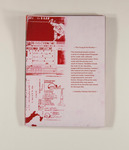
The Young & the Risoless
Llewellyn Hensley, Fleet Library, and Special Collections
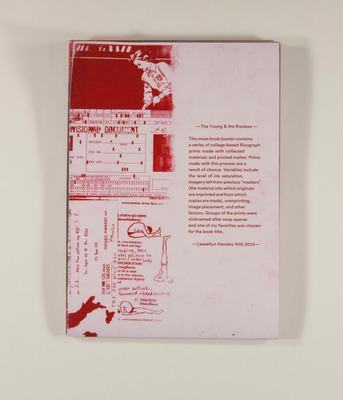
This maze book/poster contains a series of collage-based Risograph prints made with collected materials and printed matter. The products of this process are a result of chance. Variables include the level of ink saturation, imagery left from previous "masters" (the material into which originals are imprinted and from which copies are made), overprinting, image placement, and other factors. Groups of prints were nicknamed after soap operas. One of my favorites was chosen for the book title.
-
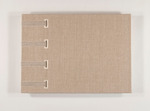
Elements
M. Benjamin Herndon, Juli Anna Janis, Fleet Library, and Special Collections
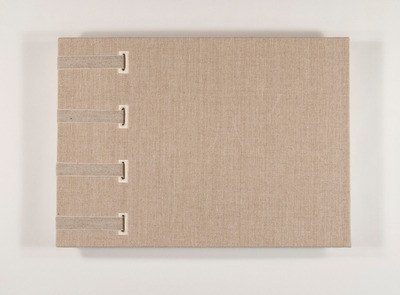
Elements is a collaborative project between M. Benjamin Herndon and Juli Anna Herndon, inspired by a 1975 portfolio of four untitled lithographs by Vija Celmins that can be understood as representing four elements. Each of the four poems addresses on elements as its subject, with special care give to how each is perceived emotionally. Each of the four aquatints were made with one dominant element in the formation of each image-for instance, a puff of air displaced the acid-resistant rosin for the "air" plate; "Water" was made in a bath of water into which the mordant was slowly added, etc. Echoing Celmin's prints being on hand-made paper, the papers in the book are hand-made (the Japanese paper was made by M. B. Herndon). Care was given to the material and aesthetic choices of the binding- four linen tapes for the four elements, and a sewn-detail references each element, in the center-most joints between pages.
-
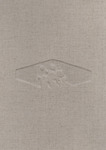
OMIYAGE
Sakura Kelley, Fleet Library, and Special Collections
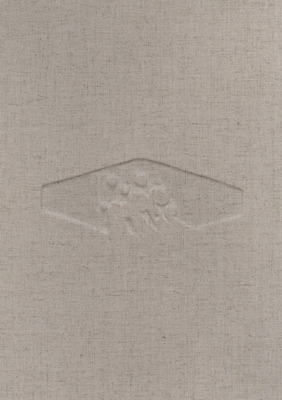
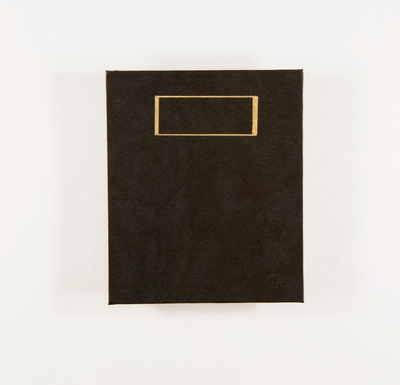
Dedicated to Sako Masuko and Sako Harumi When my grandfather died in 2011, I went with my mother to Japan to help move my grandmother to a nursing home and to clean out their apartment. The images depicted in this book are photographs I took of boxes my grandmother had used to organize keepsakes, family photos, and odds and ends. I was moved by the time capsules these boxes had become. They contained objects from my mother's childhood, from a time when my grandmother still sewed, and photographs of people and family I never knew in a Japan I did not recognize. Having grown up in America, I am concerned about my own distant, at times cryptic, relationship to my cultural heritage. The Japan found in these boxes is rapidly disappearing in contemporary Japan. After the war, Japan experienced radical change and modernization, and is now a very different country from what was depicted in some of the photographs in my grandmother's archive. Sako Masuko, now 86, witnessed these changes both on historical and familial levels, and now lives with dementia and struggles with memory. These boxes no longer exist and their contents were dispersed among my family. My intention is to honor the intention of my grandmother, who organized and held onto these objects for decades. The photographs here serve as a document of a small archive while remaining inaccessible, much like the books of negatives stored for decades. There may be a desire to look more deeply, but the efforts are met with surfaces that layer upon each other and obscure the content, echoing the several layers of loss.
-
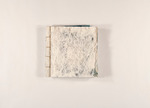
Bear Book
Min Jeong Kim, Fleet Library, and Special Collections
The contrast between a real bear and a teddy bear.
-
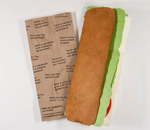
Signature Sandwiches
Drew Litowitz, Cem Eskinazi, Fleet Library, and Special Collections
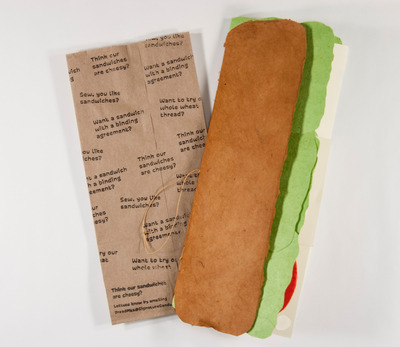
Our signature sandwiches are made to order with a wide variety of meats, toppings, and even bread types. We take pride in crafting the most page-turning sandwiches on the Deli market. You'll be licking your fingers at each turn.
-
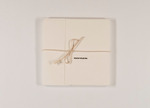
Winter Windows
Chenhao Liu, Fleet Library, and Special Collections
The book is about the windows in different winter dates. Each single square (page) represents a single day. When you fully open it, the overall pattern shows snowflakes.
-
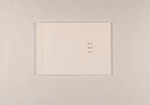
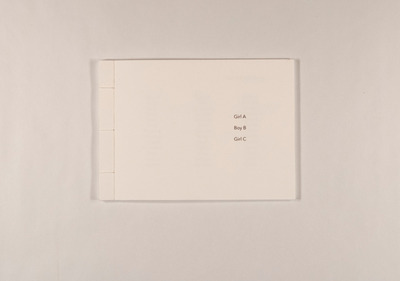
Girl A Boy B Girl C
Frances Logan, Fleet Library, and Special Collections
This is a series of books created to explore the ideas I have about my identity. I am a triplet, two girls and a boy. Sometimes I struggle to understand why people react the way that they do when being a triplet comes up in conversation. But it is special, I am special. My ability to be an individual and to always have two people inextricably connected to me is transformative. I feel like a stronger individual because of the bond I share with these two other people. My person is more developed because I've always developed with two others. These books explore this narrative of the group and he individual. They use the collection and the archive as art tools to develop this concept. These are explorations of me above all else. I am a triplet and that is quite strange. This series is not meant to be serious, it is light, it is questioning.
-
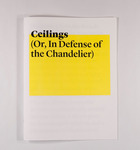
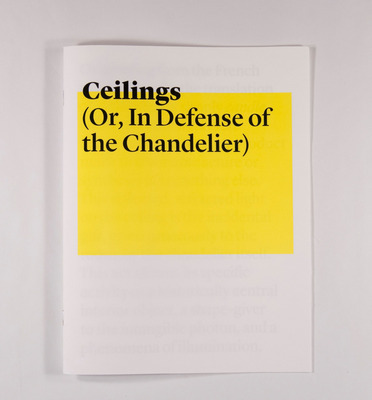
Ceilings (Or in Defense of the Chandelier)
Lisa J. Maione, Fleet Library, and Special Collections
Originating from the French word chandelle, the translation of chandelier is simple candle holder. A byproduct is an incidental or secondary product made in the manufacture or synthesis of something else. This reflected, refracted light on the ceiling is the secondary gift, given generously to the room, by the chandelier itself. This act affirms the chandelier's specific activity as a historical interior design object, a shape-giver to the intangible photon, and a mesmerizing byproduct of electronic illumination. This artist's book makes the case for an often overlooked aspect of chandeliers. With particular focus on the Pendleton House at the RISD Museum, the interior room ceilings are often filled with reflected light patterns caused by the design, materials and specific placement of the 18 & 19 century chandeliers.
-
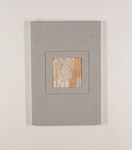
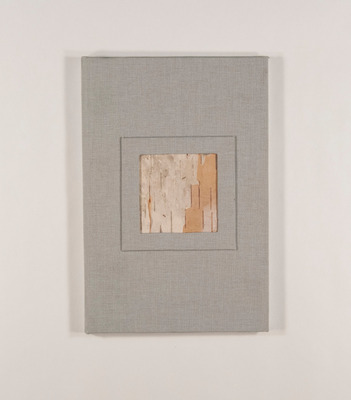
Betula Papyrifera
Abby Martell, Fleet Library, and Special Collections
A study of the texture and language found in paper birch bark and a typology of these surfaces documented throughout winter in Northern Vermont. As an artist, I'm specifically interested in human/nature interaction and where these two forces overlap. The paper birch for me is symbol of that interaction for a couple of reasons. First, when forest is cleared or land is disturbed by humans, the birch is a pioneer species; it's one of the first to begin the transition of he land from the human hand back to nature. The bark itself mimics writing and human mark-making, speaking with a language and rhythm that is familiar to us; like looking at human handwriting, each surface is its own individual personality.
-
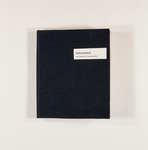
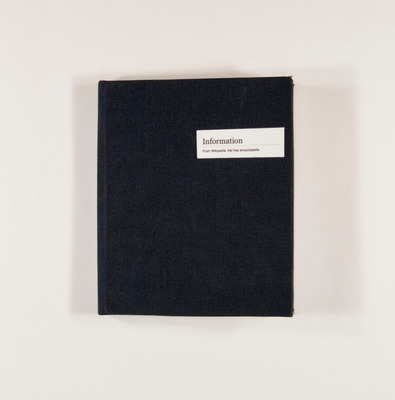
Information
Edward Meade, Fleet Library, and Special Collections
This project is a means of examining the trust we place in information found online and the ways that ideas implant themselves in the mind. Wikipedia info boxes tell a loose narrative centered on themes of anxiety, growth, maladjustment & self-discovery through the lens of the internet. Hand Bound & Covered.
-
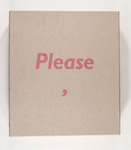
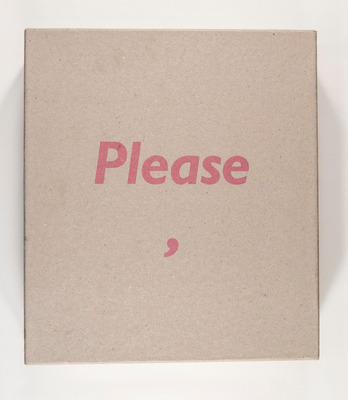
Please,
Thalassa Raasch, Fleet Library, and Special Collections
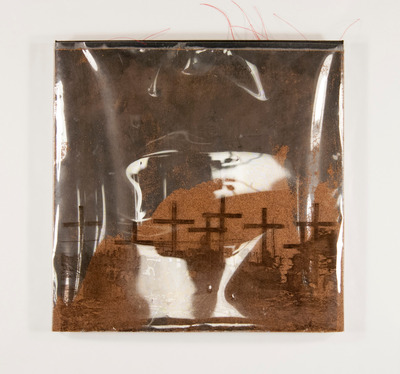
The book, "Please," is a second experiment in an ongoing series in which the artist asks the viewer to take part in a performed interaction. Inside, underneath dirt lies the imperative "take one and bury it in your backyard" on the outside of a box filled with the artist's ignored 4 by 5 exposures. These contact prints, packaged in foggy sleeves, evoke questions of failure -whether aesthetic, technical, circumstantial, or personal - photographic longing, and personal grief. However, the careful treatment of each photograph celebrates the discarded and draws attention to the inability to let comfortably let go. This chore I pass on to the viewer and leave open-will the burial take place? Is it a funeral for a missed opportunity? Or a poetic trace to be planted?
-
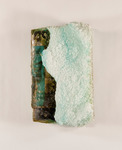
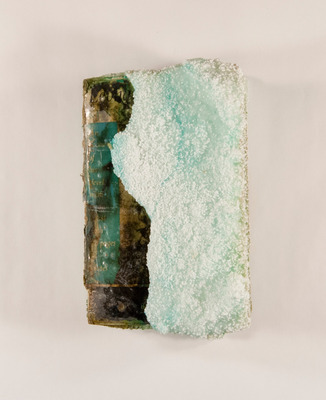
Strange Beginnings
Garcia Sinclair, Fleet Library, and Special Collections
Books in the face of technology have become aestheticized a objects vs. the mediums they fundamentally started out as, more than ever before. As an artist, art books have a special place in the archeology of my practice. This book preserved in salt will evolve and fragment as it also deteriorates.
-
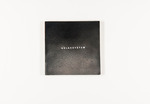
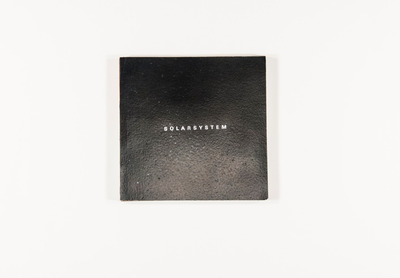
Solar System
Hyemi Song, Fleet Library, and Special Collections
This is a CD jacket design of my data music, named Solar System which is made of a side-reel period data of eight planets in the solar system. The most apparent part of the book is a QR card that comprises two sides, including a project description and QR code which allows readers to listen to music by accessing the project website. Meanwhile, this accordion book represents the color spectrum of eight planets by being painted with eight colors. What is more all pages have different size of holes that come from the diameters of eight planets, which allows readers not only to compare to relative size of planets, but also to enjoy aesthetic color combinations between different pages. In the end, the book provides a new way to experience music using digital and analogue media.
-
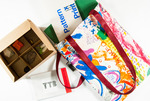
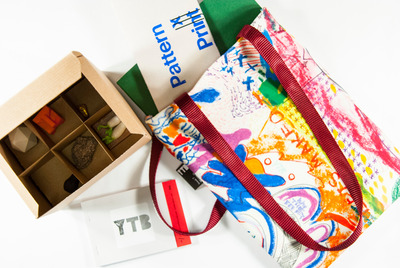
YTB, issue 6:TINY & YTB, issue 7: PATTERN
Alice Taranto, Fleet Library, and Special Collections
YTB, a modified acronym for Why the Beef?, is a multi-format zine in biannual editions. The publication is a collaboration between art schools MICA (Maryland Institute College of Art) and RISD (Rhode Island School of Design). Founded in 2011 by twin sisters Alice and Daphne Tarranto, TYB now engages dozens of previously unconnected students on each campus. Presented here are YTB 6: TINY and TYB 7: PATTERN.
-
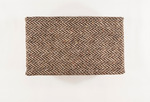
The Resemblance is...Well...
Lucas Vasilko, Fleet Library, and Special Collections
Prompted by the goal of using a family archive to create narrative, I created an unbound codex of what I found to be the most genuine moments from a collection of family negatives. As if pulling this box off the closet shelf an peaking inside, there lies timeless 4x6 Kodak prints along with swatches of various fabrics. Drawing photo with swatch, pair by pair out of the box, a tactile connection is brought out of the photo by the fabric that matches a garment pictured. But something doesn't feel quite right. The moments are so authentic and the fabric feels honest to moment, but is it too good to be true that these are genuine? In reality, these are not photos of my family. My family archive is slim pickings at best; too little and too disjointed to have amassed an archive of moments like these. I was drawn to family in these photos for the love they see, to share an the sense of unity that fabrics they clothed themselves in elicit. My fascination grew into a longing that this could be my family history. Feeling these fabrics that I hunted and scavenged to match each photo brings a closer sense of reality. The lie, however, is all I truly have. I store this codex on my closet shelf, just like any family member would do.
-
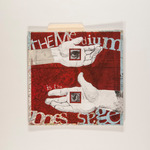
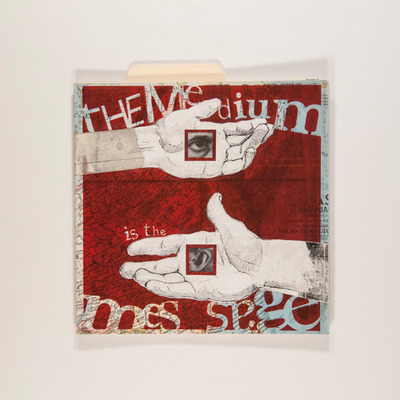
The Medium is the Message
Polina Volfovich, Fleet Library, and Special Collections
This book reinterprets Marshall McLuhan's seminal text, "The Medium is the Message." In this book I'm focusing on the tipping point at which society went from aural to visual interpretation, how our own medium of mass dissemination got away from under us, all the while implementing constructivist ideals to comment on censorship & religion.
-
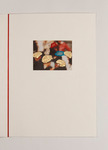
Past is Prologue
Nafis White, Fleet Library, and Special Collections
I began the Past is Prologue series as news of Michael Brown's murder by police officer D. Wilson became public. I have family in Ferguson and have spent all my childhood and young adulthood in this place. Seeing this even unfold in a town so familiar felt like the murder of a family member. As a person of color, this public killing and aftermath made it all too clear that this can happen to any one of us no matter how safe we think we are. It is an open season on female and male black and brown bodies here in the U.S. and much of my work discusses this is public forum. Creating Past is Prologue became a meditative process and practice for me, which resulted in an ever-growing number of pieces. I continue the work as I learn of more casualties in the community. The process by which I lovingly gold leaf the hair of black and brown men and embroider the works speaks to my desire to add more value to lives that are so casually snuffed out. Black people are worthy of love, respect and adoration. This process juxtaposed with the images of people who are commodified on the court and celebrated as kings, yet profiled and slaughtered in the streets seeks to investigate how black men are both revered and feared.
-
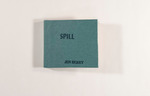
Spill
Jen Berry, Fleet Library, and Special Collections
SPILL is a series of short pictorial narratives all centered around the possible associations/symbolic meaning of a repeated symbol, that is, the image of the teardrop/raindrop/water droplet.
-
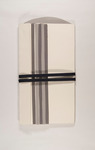
Under the Willow Tree
Talia Connelly, Fleet Library, and Special Collections
Written by a Chinese-American adoptee and told through the perspective of a birth mother, the words that weave in and out of this book's seemingly spare surface serve to humanize the narrative shared by millions of mothers who surrendered their daughters out of cultural pressure and economic hardship.
-
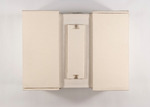
The Reveal
Michelle Dunbar, Fleet Library, and Special Collections
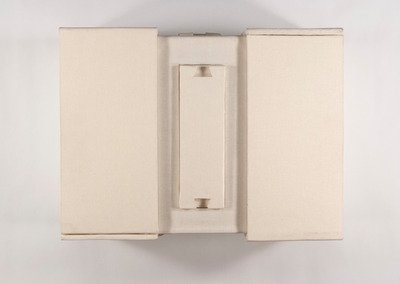
This project is meant to illustrate the creation process for me. The white and almost intimidating box doesn't give many clues as to what is inside of it, or even how to open it. With a little curiosity, the viewer discovers a network of openings, secret doors, and a delightful surprise. As an artist, I can be intimidated by a blank, white page at the start of a project because there are so many possibilities. Once I open my mind and allow myself to explore my own creativity, wonderful possibilities open up before me. This artists book takes the viewer on a trip through my mind as they discover new possibilities and wonder what more can be found. The ultimate discovery reveals two knit samples I developed as a textiles designer. These swatches also explore interaction with the viewer and the idea of the reveal on the back of the fabric. It is my hope that this playful and unique object can be accessible to a wide audience so others can enjoy the discovery process as much as I have. Although this artists' book is meant to be explored, there is an ideal order of discovery: 1) remove the bow-shaped joint at the front of the box 2) pull out the drawer 3) look at the sample and notice the marks on the outside of the box 4) realize is it upside-down writing and turn it around 5) remove the lid and look at the yarn that made the sample 6) put the lid back on and the drawer back inside the box 7) remove the 3 side panels on the outside of the box using the joints 8) Notice the upside-down writing and wonder if the box can be flipped 9) turn the box upside down and find the secret drawer! 10) pull out the new drawer, play with the knit sample, and find the secret compartment like the previous drawer 11) play with the box! 12) When it is time to be put back together and the joint is back in place, notice how the box cannot be flipped while the book joint is locking everything together 13) repeat!
-
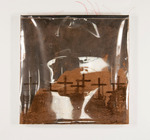
1994
Nabil Gonzalez, Fleet Library, and Special Collections
Since 1994, the women of Ciudad Juarez, Chihuahua, Mexico live in fear, especially women from the Anapora area. In January of 1994 the body of the first murdered young woman was found in the Desert of Ciudad Juarez. This marked the beginning of one of the most serious problems the city has faced. It is unsettling that so many innocent women have fallen victim of the horrible crimes. Over time investigations have concluded that many of the women have been victims of the organized crime and drug cartels. Most cases of reported women and of found bodies have not been solved yet and they probably will never be solved.
-
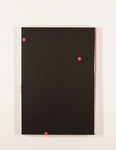
Coccinellidae
Nahyeon Juliette Kim, Fleet Library, and Special Collections
This accordion book was created for Thomas Ockerse's Design Studio class at RISD. This project was done in 3 weeks. Initially, we were asked to choose a specific place around graphic design building at RISD. I chose the alleyway between the graphic design building (Design Center) and Illustration Studies Building (ISB). Upon closer observation, I noticed that there were countless ladybugs that live on the walls of these buildings and I was fascinated by this. I tried to portray the movement of these ladybugs crawling from one building to the other, creating an invisible connection between graphic design and illustration. Hence, this book is a combination of graphic design and illustration. The illustrations were done in watercolor and colored pencil.
-
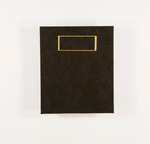
Cultural Assimilation
Janice King, Fleet Library, and Special Collections
1879-1996, the Canada Indian Residential school system prevailed in Canada, in order to integrate young aboriginals into the mainstream Canadian culture. Due to the substandard environment and abuses, however, many children suffered and died in the schools. Thus, this book is visually conveying the process and devastating consequences of the cultural assimilation.
-
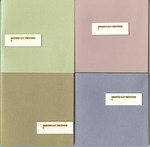
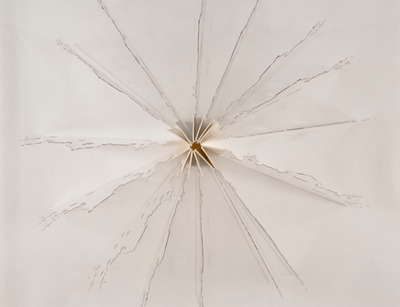
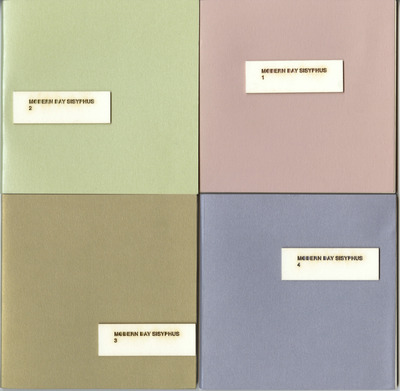
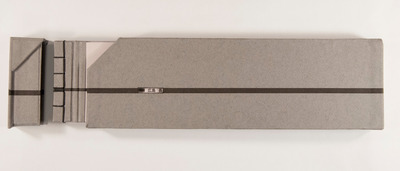
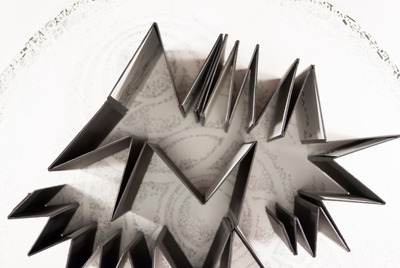
Modern Day Sisyphus
Scarlett Xin Meng, Fleet Library, and Special Collections
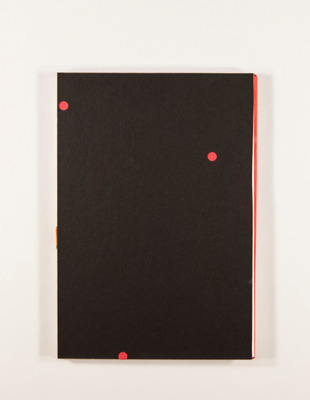
This series of artist's book are in response to the movie, "Fast, Cheap and Out of Control" by Errol Morris, in which four leading roles demonstrate an intense commitment to each of their off-beat career paths. I appropriate the implication of the mythology about Sisyphus and suggest in the work that the repetition of a determined action leads to the pleasure of the process rather than that of achieving a prescribed end result. The unfolding of the paper sculptures within each book mimics the unfolding gesture of book pages yet in a more dynamic and playful manner. The structures of the cover add more complexity to perceive and interact with the sculptures inside.
-
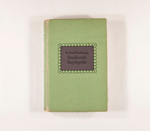
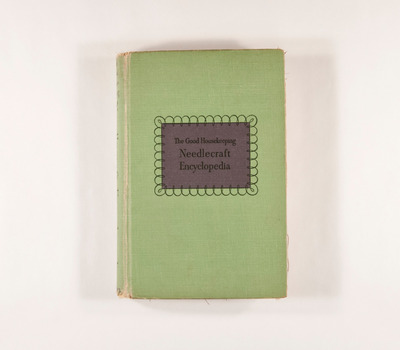
Needlecraft Encyclopedia
Kyung Won Moon, Fleet Library, and Special Collections
What is "Good Housekeeping"?Thegestures of housekeeping are dynamic yet gentle, violent yet graceful, stiff yet smooth choreography. The re-constructed version of "Needlecraft Encyclopedia" is a dance score, realistic representation, and the true definition of "good housekeeping".
-
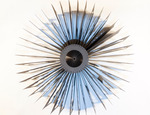
Circle of Life
Jhoon Oh, Fleet Library, and Special Collections
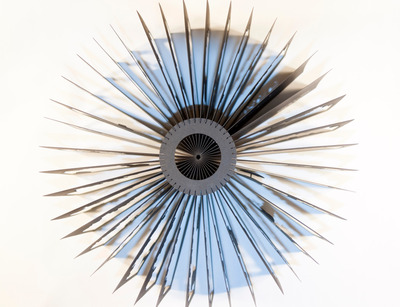
When the book is fully opened, it stands up by itself and a rectangular shape of a book transforms into a circle. The book opens 360 degrees and half of a tree on each page revolves to become a whole tree that us placed in the center of the circle. Its circular boundary with the tree at the center describes the continuity of human life that coexists with nature. The book is a visualization of the circle of life. Art reflects society and history. By interspersing masterpieces from both the western and eastern cultures, it shows the universal relationship beings of all cultures have with nature. This is my attempt to explore the long and complex relationships between human, nature and art. "Adam and Eve", apple tree to "Life of Tree" by Gustav Klimt and "Cats and Sparrows" by Pyon Sang Byog. These paintings that represent the coexistence of humans, nature and animals from the beginning of human history. Just like the tree that grows up after centuries, the circle of humanity will continue through art.
-
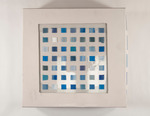
Color System for Eagles
Lee Pivnik, Fleet Library, and Special Collections
Design Prompt- create a color system for an animal, assigned by your teacher. I was given an eagle, and created for different species of eagles around the world, using color patterns of their plumage and environment.
-
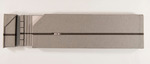
The Atomic Bombings of Hiroshima and Nagasaki
Jacob Poindexter, Fleet Library, and Special Collections
The Atomic Bombings of Hiroshima and Nagasaki artist book commemorates the victims of the two cities at the close of WWII. As the final project for Judy Maloney's Design Class, the piece response to the prompt of representing a historical event, actin as a memorialization of the true human toll in the bombings ad the war in general. The piece also explores the United States government's initial concealment of the human causalities through poems, written by survivors, half-hidden behind the sterile descriptions of architectural damage inflected by the bombings. "to present materials of the atomic bombings of the two cities to the children and to all the world." - Arahi Tuheshi, Lord Mayor of Hiroshima.
-
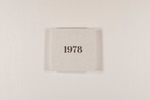
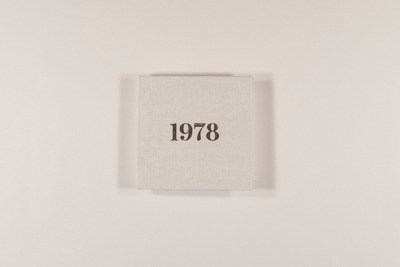
1978
Gerta Skagerlind, Fleet Library, and Special Collections
This book is a tribute to the public speaking skills of Harvey Milk, openly gay city supervisor of San Francisco, California. In 1978, he was able to swing the voting public's opinion of anti-gay Proposition 6 which attempted to ban gay teachers from teaching in schools. While it was an initially popular proposition, Milk was able to raise enough opposition against it and it was overturned.
-
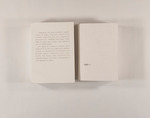
1931-
Nayeon Michelle Woo, Fleet Library, and Special Collections
My piece is about Japanese Comfort Women during 1931-1945, specifically a lady called Kim Haksuu that [gave her] first testimony [in 1991] (before she came out to [the] world that story of sex slaves was unrevealed.) I wanted to talk about their tragedy and lives.
-
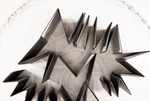
The Cycle of Life - Circle
Zehua Wu, Fleet Library, and Special Collections
This artist book combines realistic illustrations of life with their corresponding symbols observed from daily life. The whole book starts and ends with a circle symbolizing the cycle of life, while the shape of the book is an imperfect circle representing the variety of life. It illustrates the lowest levels of life in the world to more complex organisms like the plants, the animals and the human beings. Not only is each character connected naturally by the food chain but also by the eternal continuity of life. This artist book has a simple arrangement with various ways of presentation. It has no end and no beginning.
-
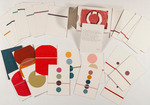
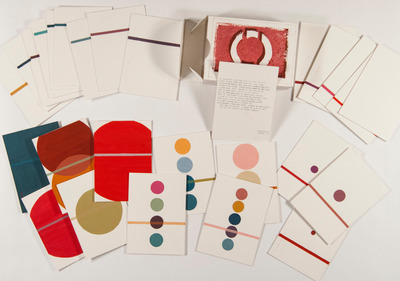
Sonnet 130
Ran Zheng, Fleet Library, and Special Collections
Over the course of a 25 day period, I documented how many times I said I love you to my boyfriend each day. This book is a visual analysis of the data I collected. Each page has a colored strip, which tells the page number through position. The color on the strips appear again on the circles indicating an order. So the circle with the color of first page's strip represents the first day of my documentation. Number of circles on each page means there were that many days in which I said I love you a certain times. For example, on page eight, there are 5 circles. Then there were 5 days in which I said I love you 8 times.