

Loading...
Presentation Type
Presentation
Location
Metcalf Auditorium, Chace Center, 20 North Main Street, Providence RI 02903
Event Website
https://designscience.risd.edu
Start Date
September 2025
End Date
September 2025
Description
Beatrice Steinert is a developmental biologist, science and technology studies (STS) scholar, artist, and educator. Her research looks at the processes that shape cells and tissues (morphogenesis) and the visual culture of studying these microscopic phenomena since the end of the nineteenth century. Through her work she seeks to demonstrate ways of embracing complexity in the life sciences as well as making engaging scientific stories. She is a co-founder of the collaborative project Unfiguring, which explores how the arts can transform contemporary STEM. Steinert received a PhD in Organismic and Evolutionary Biology and History of Science from Harvard University. She is currently a Provost’s STEM Postdoctoral Fellow at Brown University.
File Type
mp4
Speakers
Beatrice Steinert, STEM Postdoctoral Fellow, Brown University
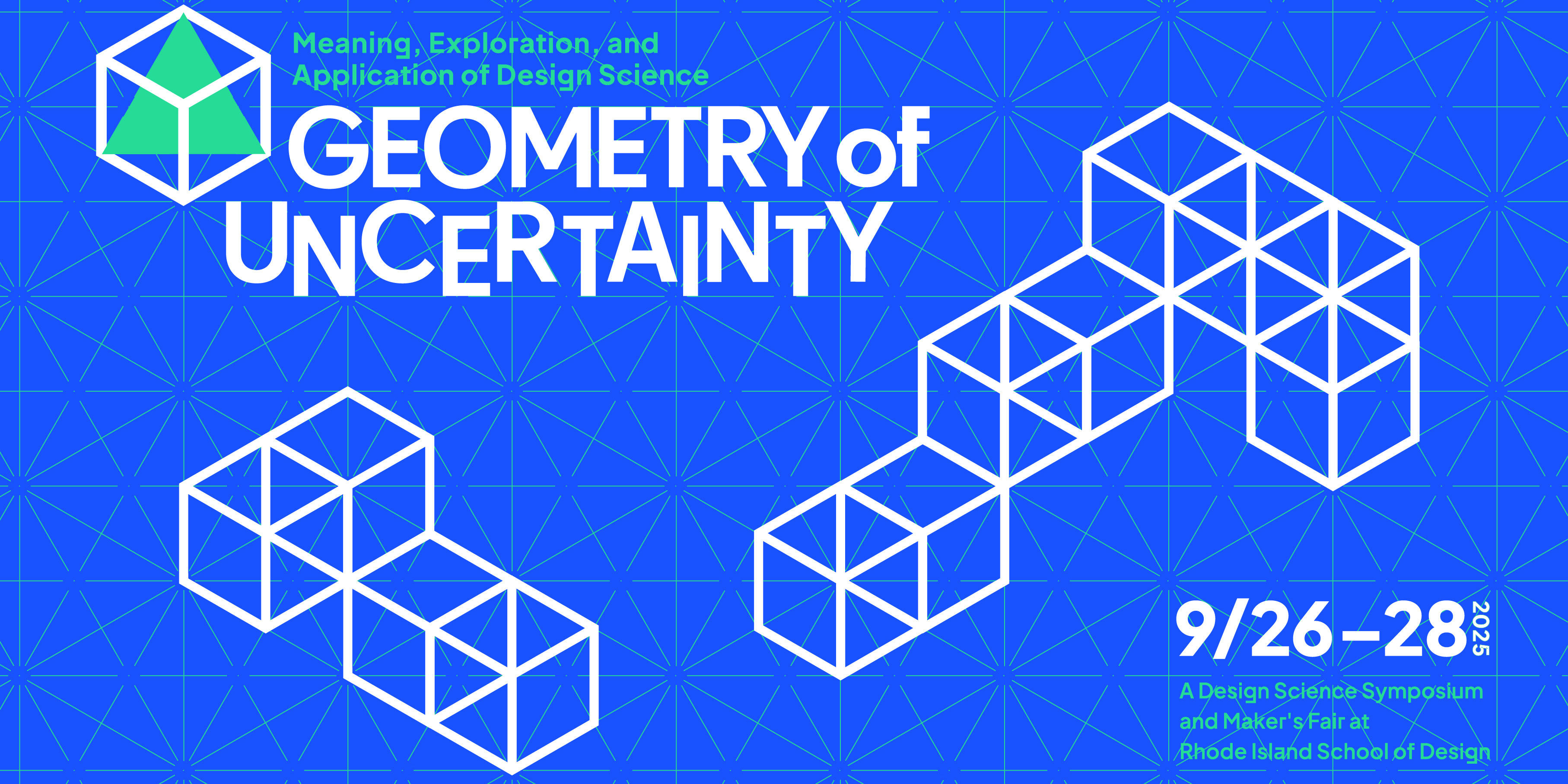
Design Science 2025 | Geometry of Uncertainty, Presentation: Beatrice Steinert
Metcalf Auditorium, Chace Center, 20 North Main Street, Providence RI 02903
Beatrice Steinert is a developmental biologist, science and technology studies (STS) scholar, artist, and educator. Her research looks at the processes that shape cells and tissues (morphogenesis) and the visual culture of studying these microscopic phenomena since the end of the nineteenth century. Through her work she seeks to demonstrate ways of embracing complexity in the life sciences as well as making engaging scientific stories. She is a co-founder of the collaborative project Unfiguring, which explores how the arts can transform contemporary STEM. Steinert received a PhD in Organismic and Evolutionary Biology and History of Science from Harvard University. She is currently a Provost’s STEM Postdoctoral Fellow at Brown University.
https://digitalcommons.risd.edu/naturelab_designscience/designscience2025/designscience2025symposium/4