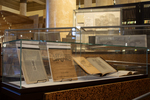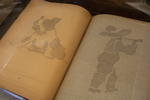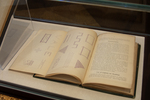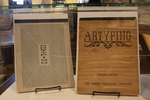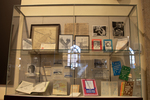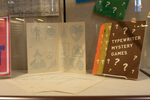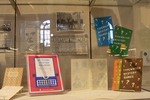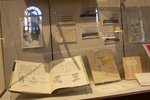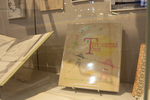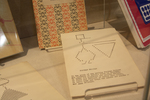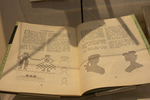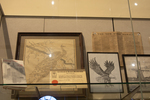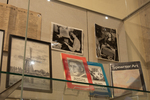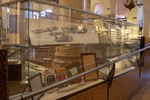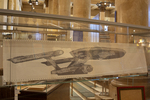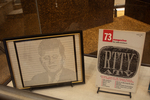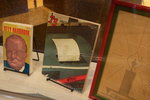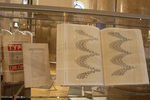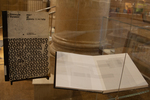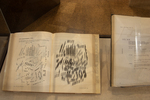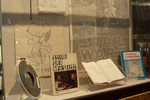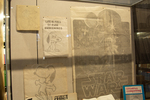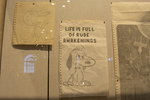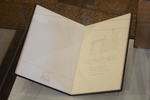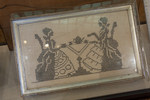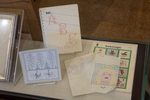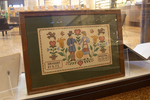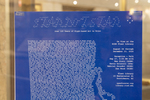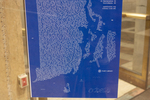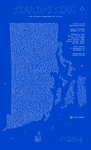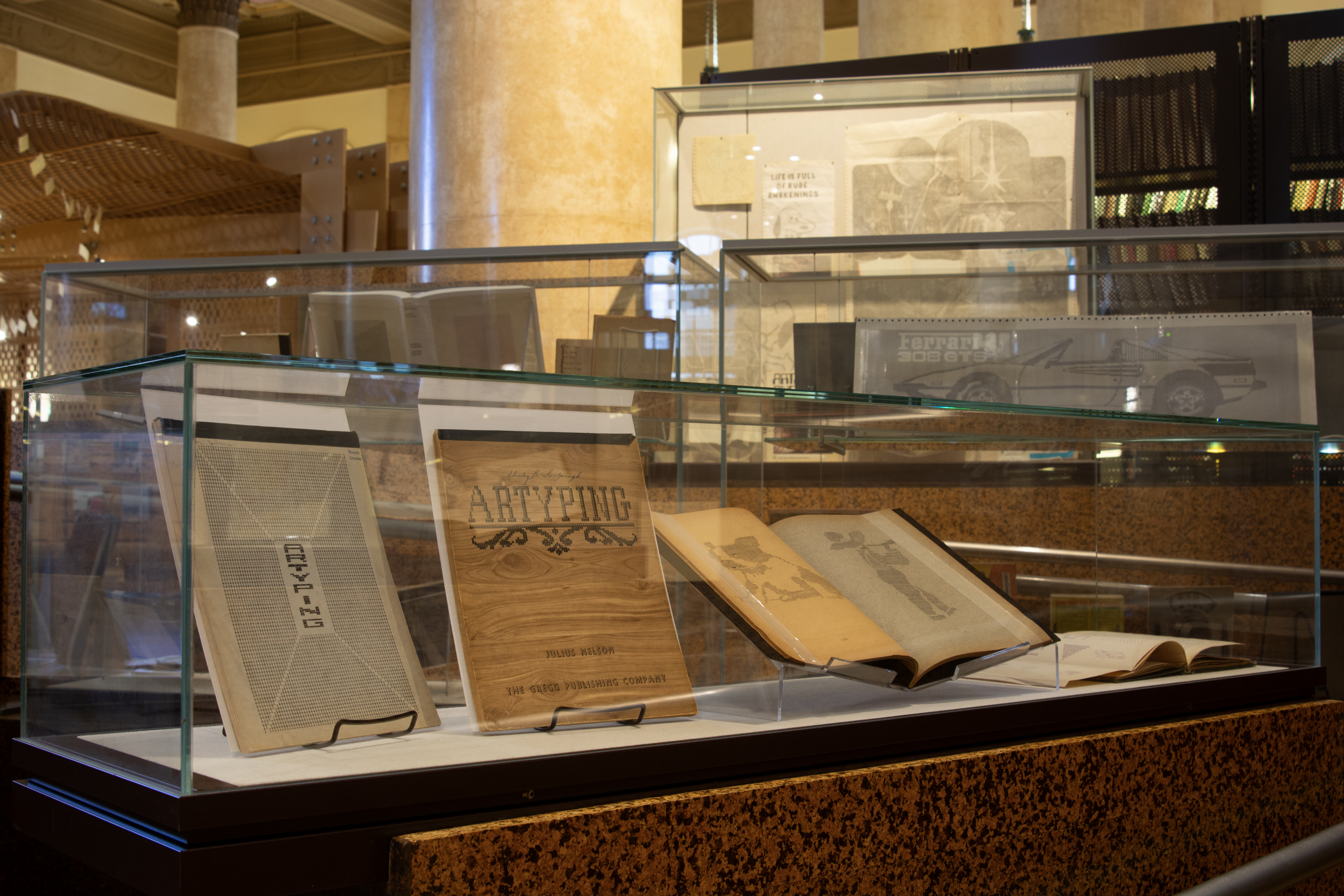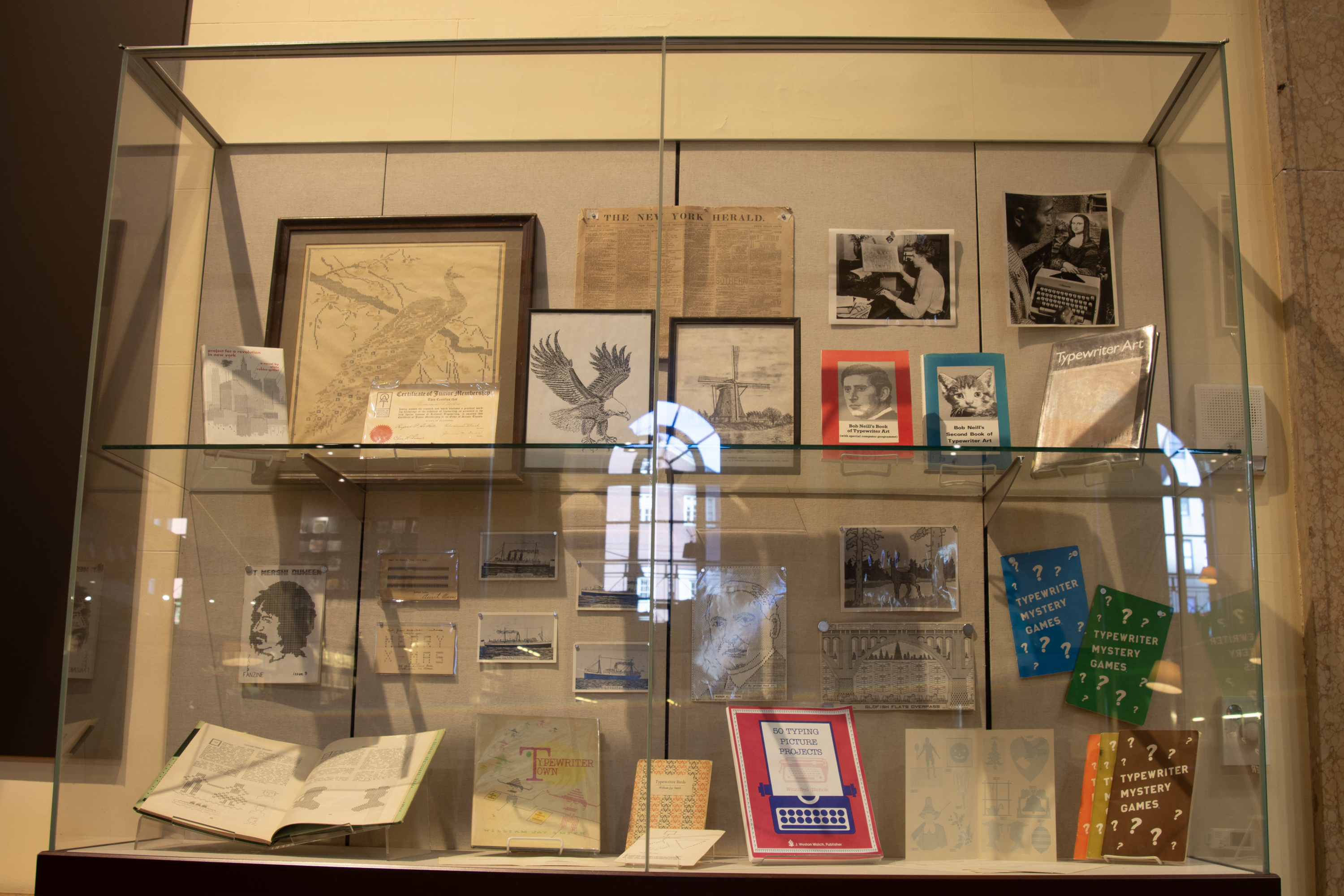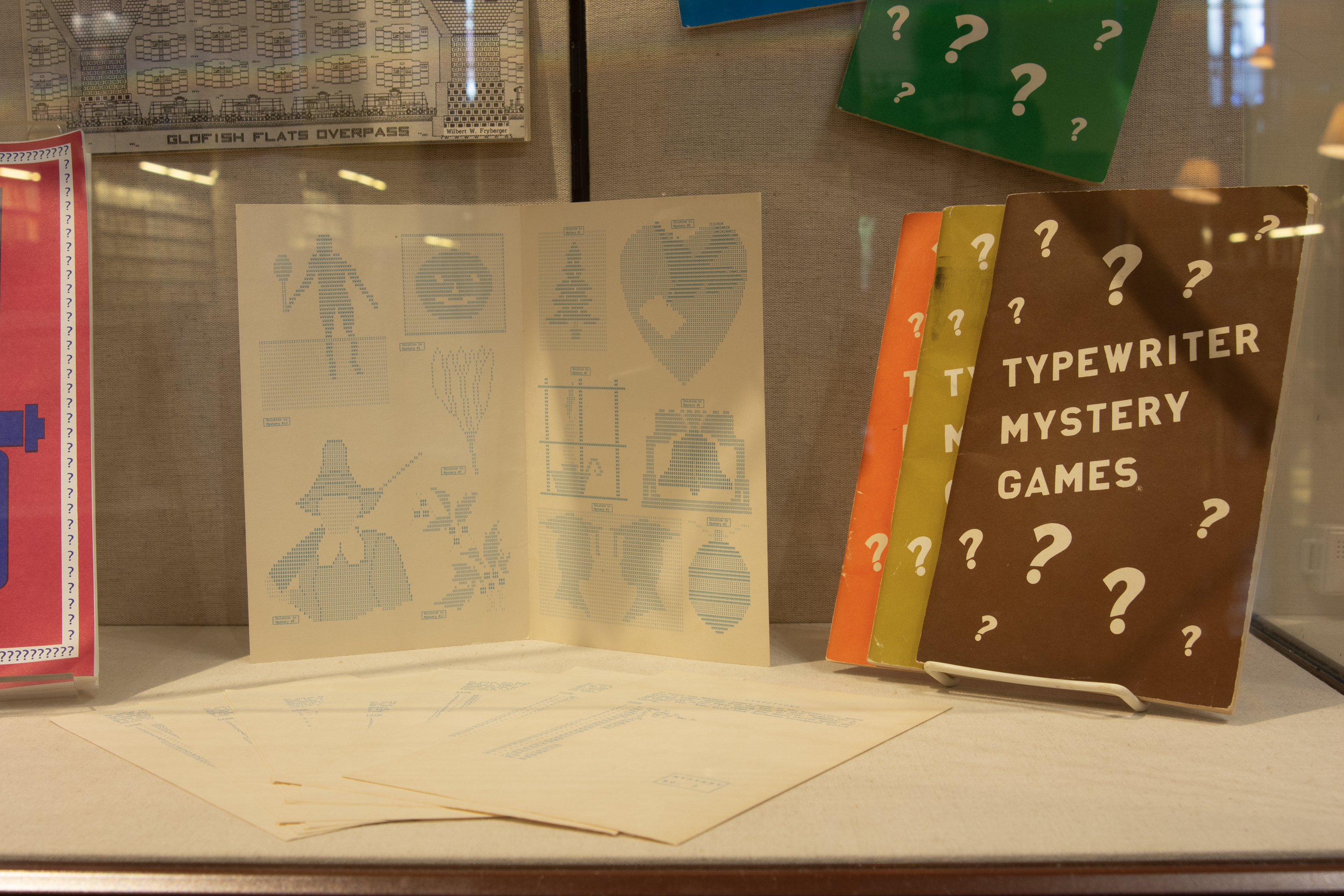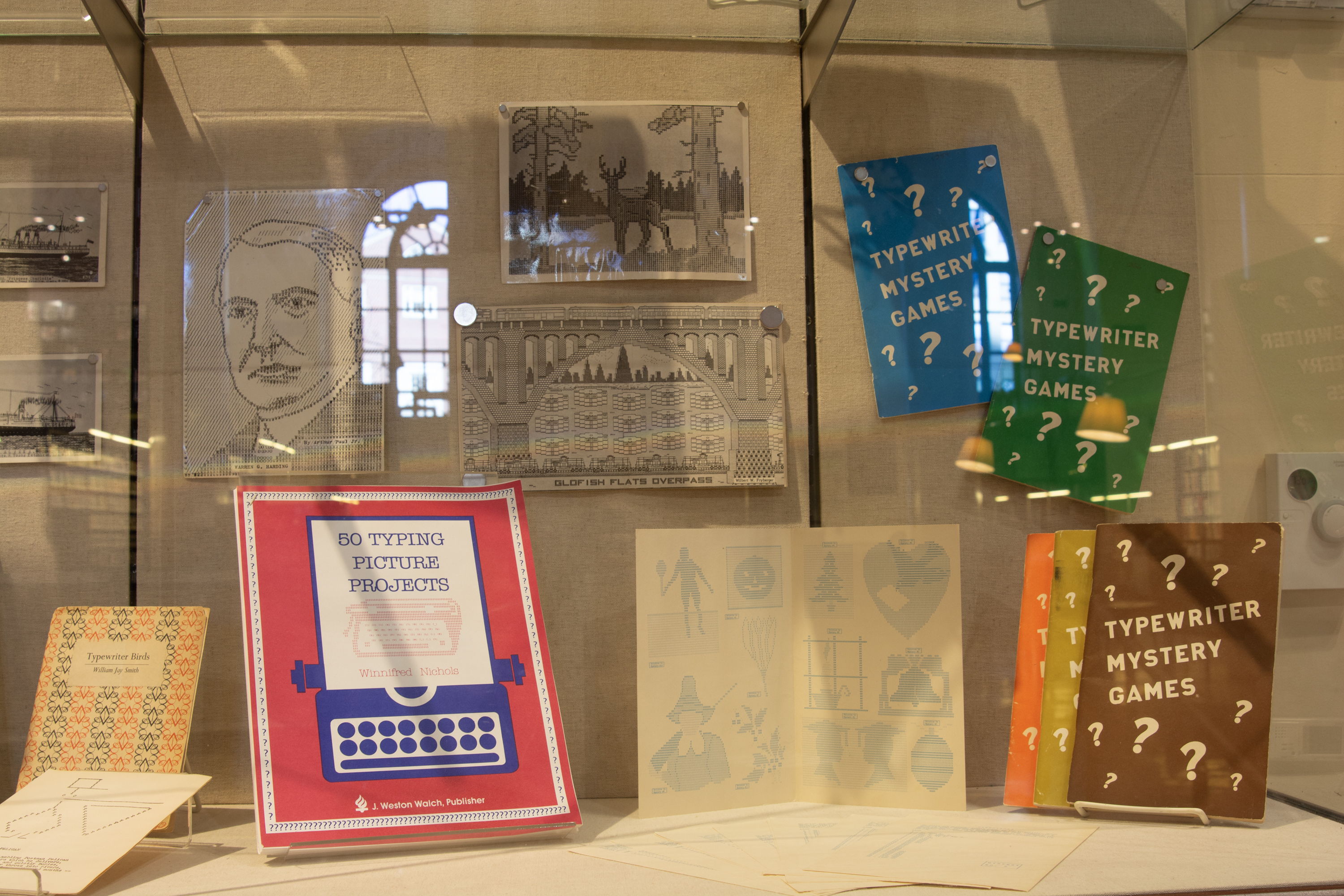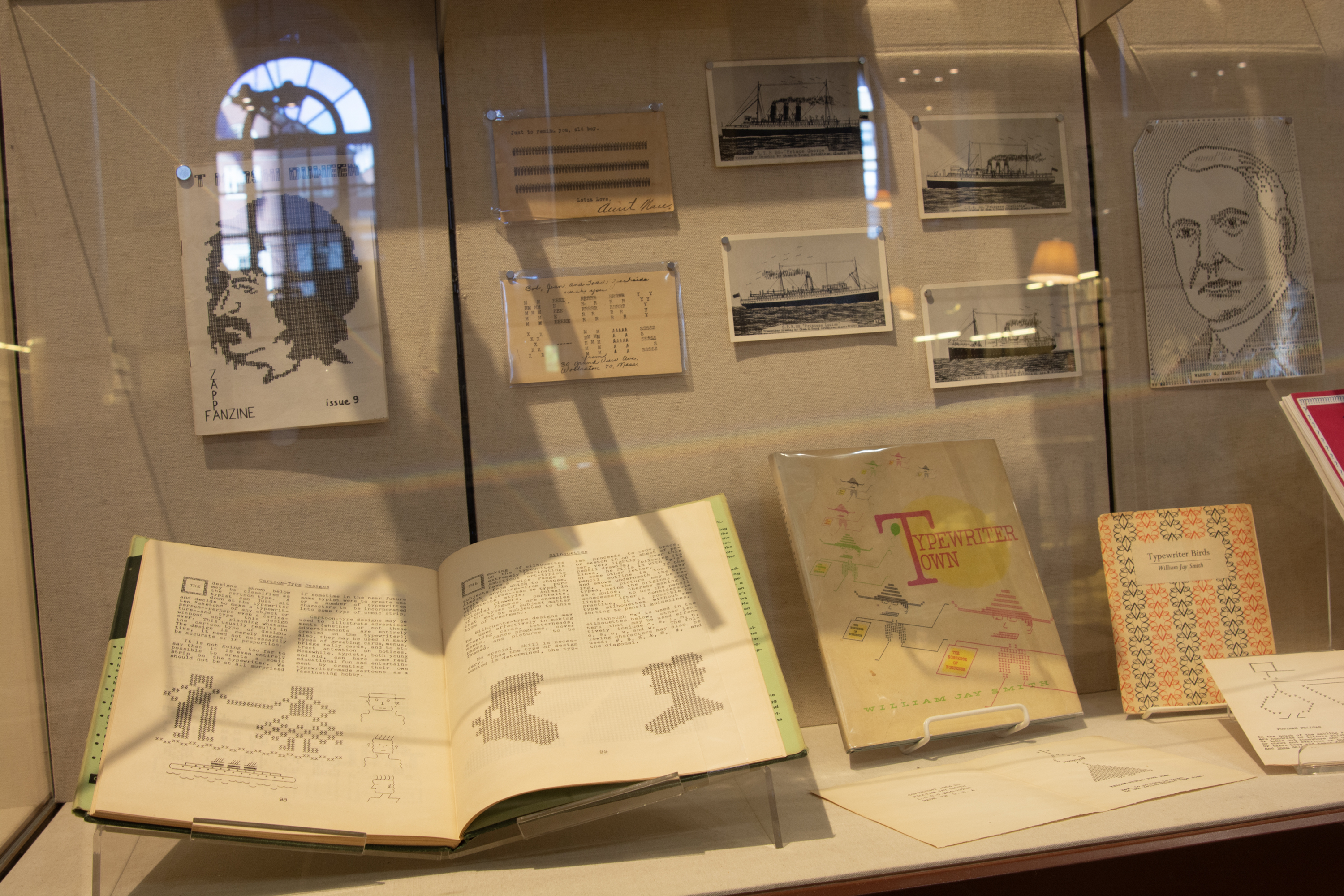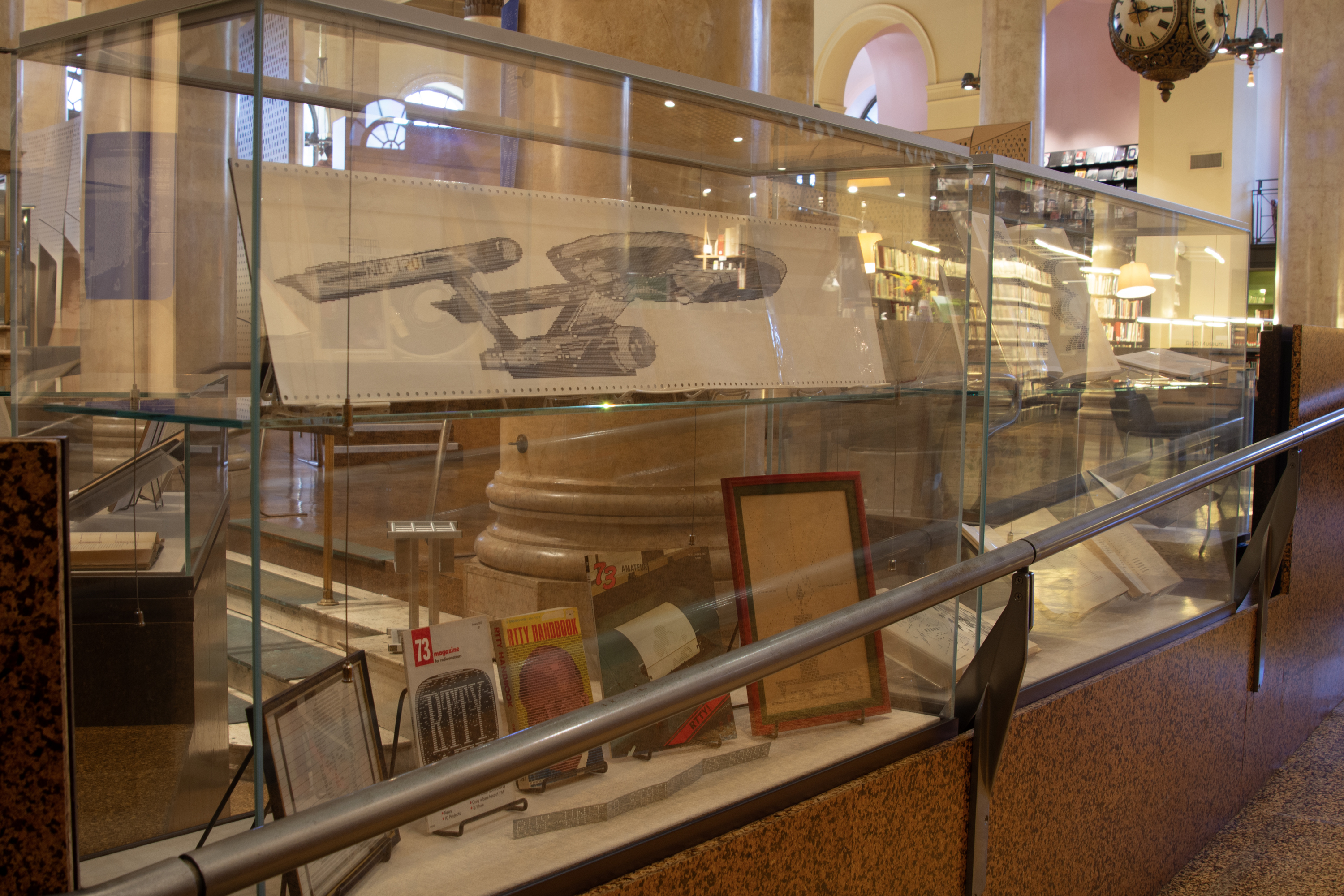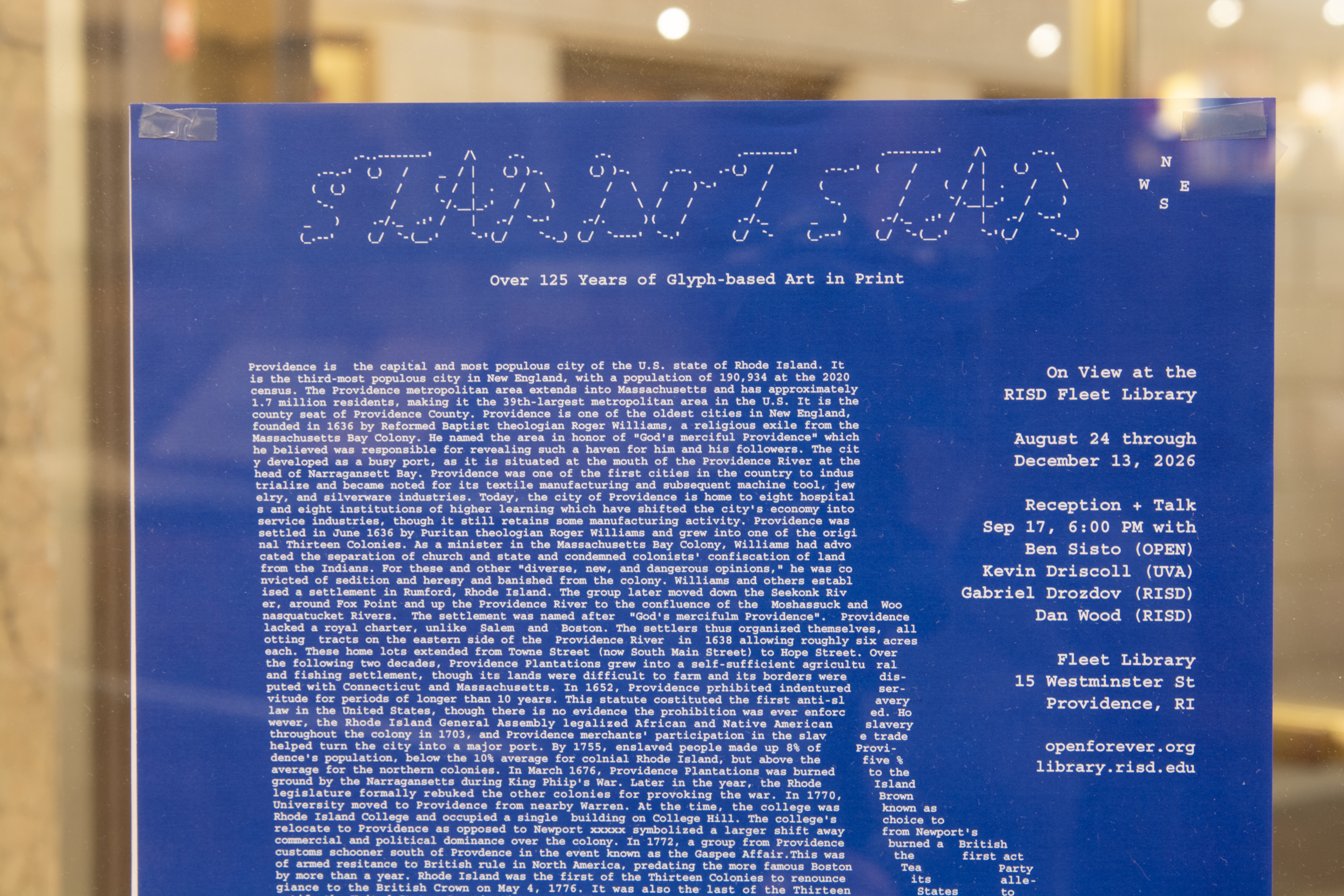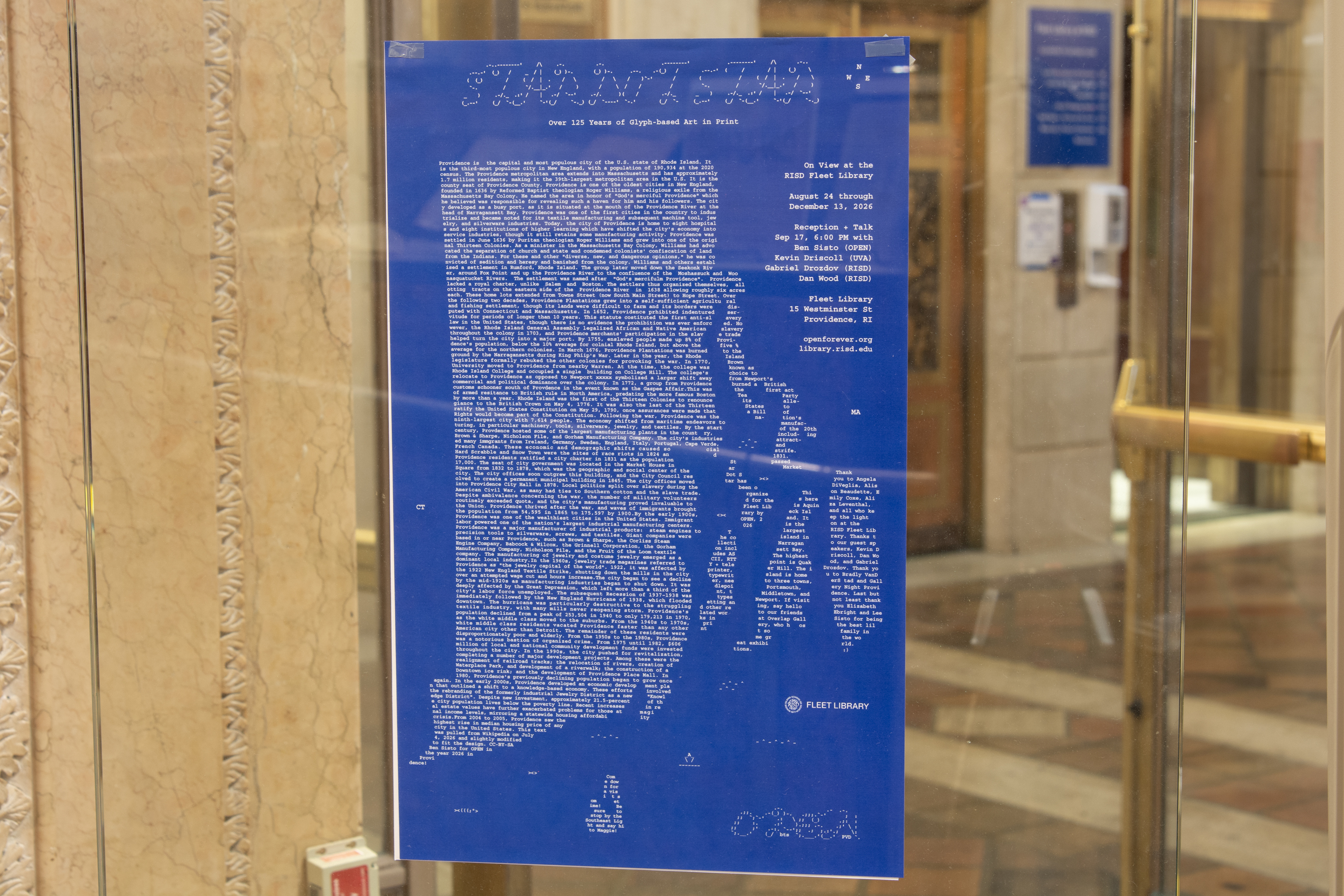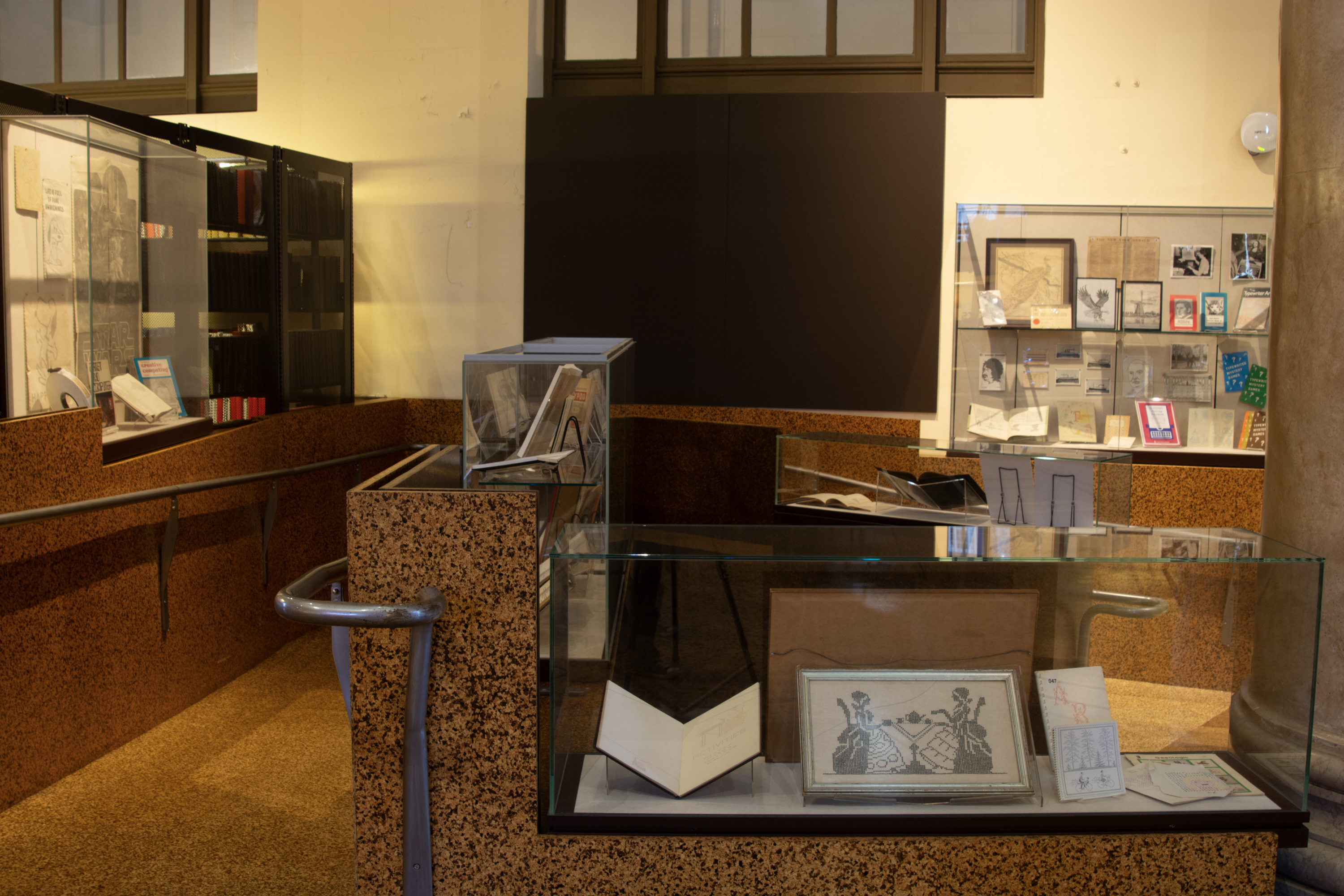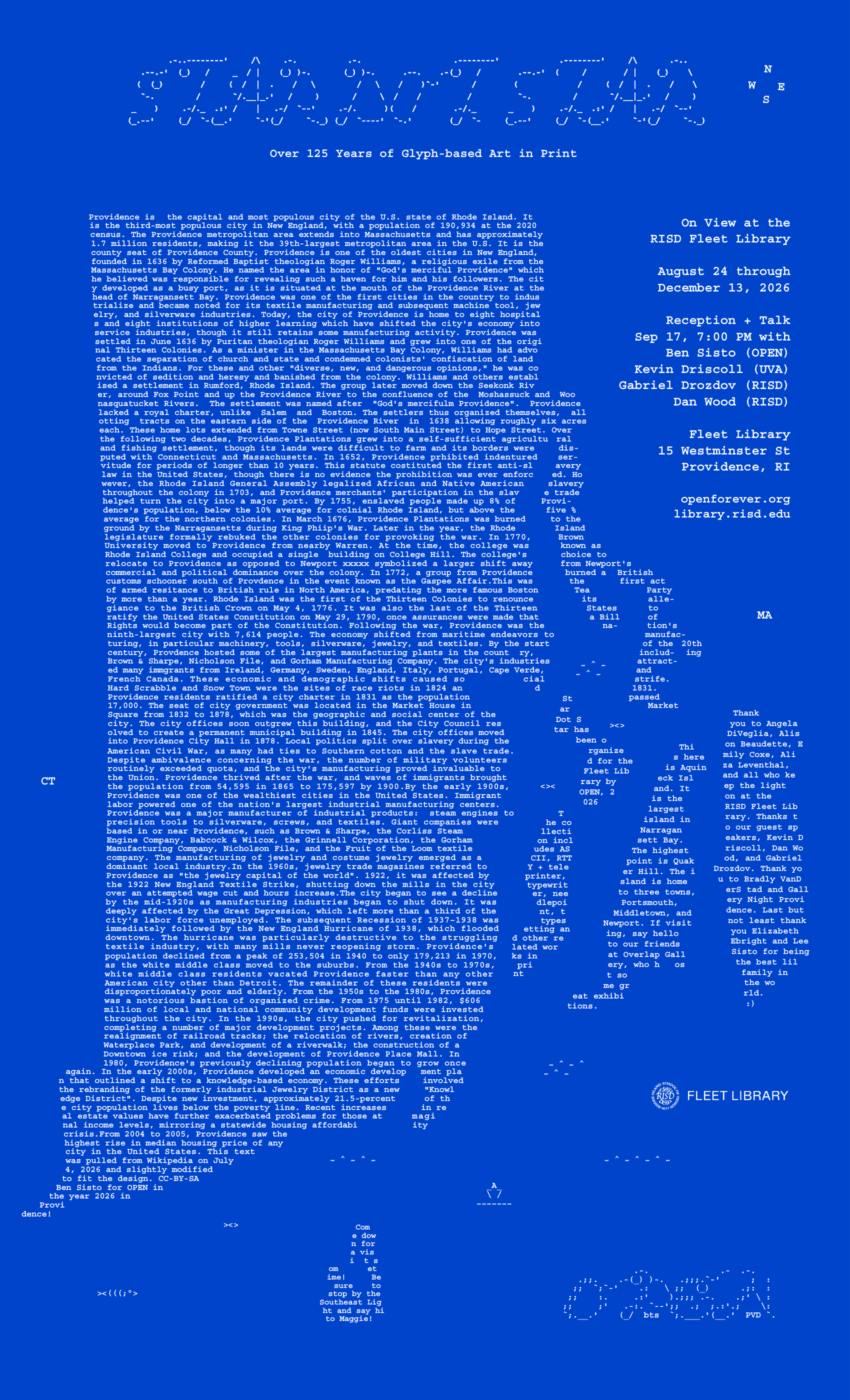

Organized by OPEN; guest curated by Ben Sisto with materials from Fleet Library and from his personal collection. On view August 24 - December 13, 2026, Fleet Library, 1st floor
What is it about images made from text? Take any system built for encoding language, and eventually someone will make visual art from it. It happens independently, over and over, whenever a technology gives people a grid of marks to arrange, or a poetic rule set to explore.
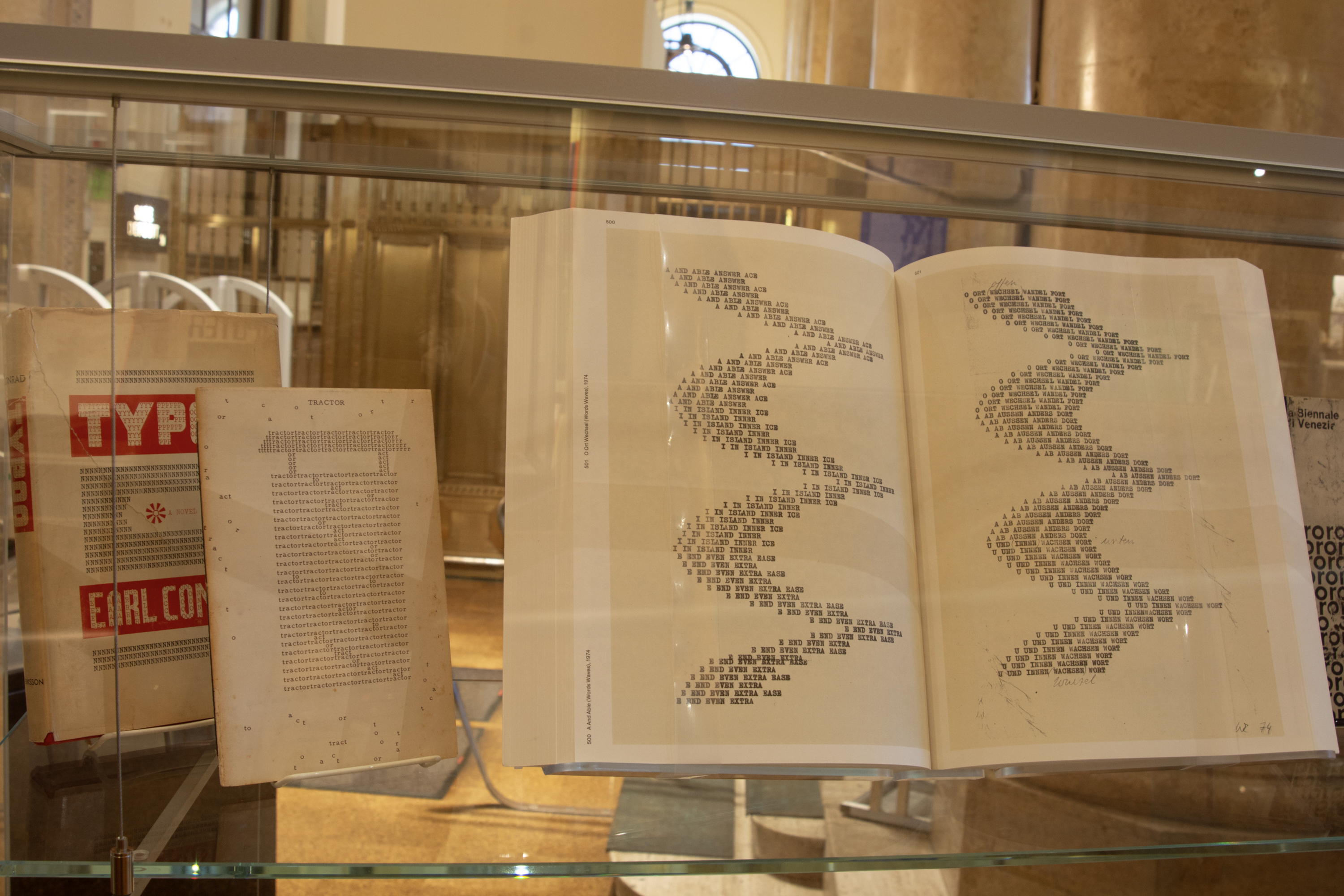
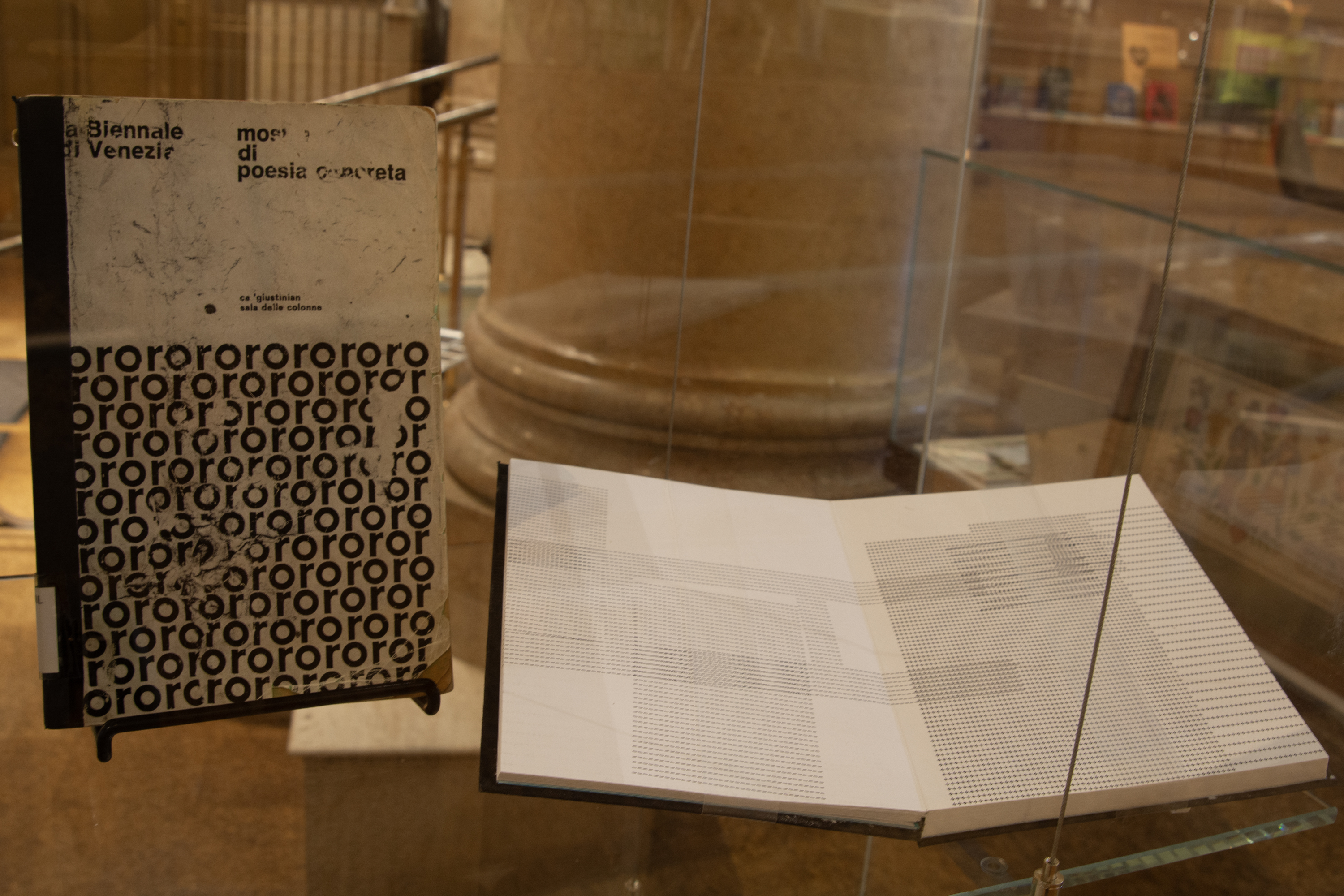
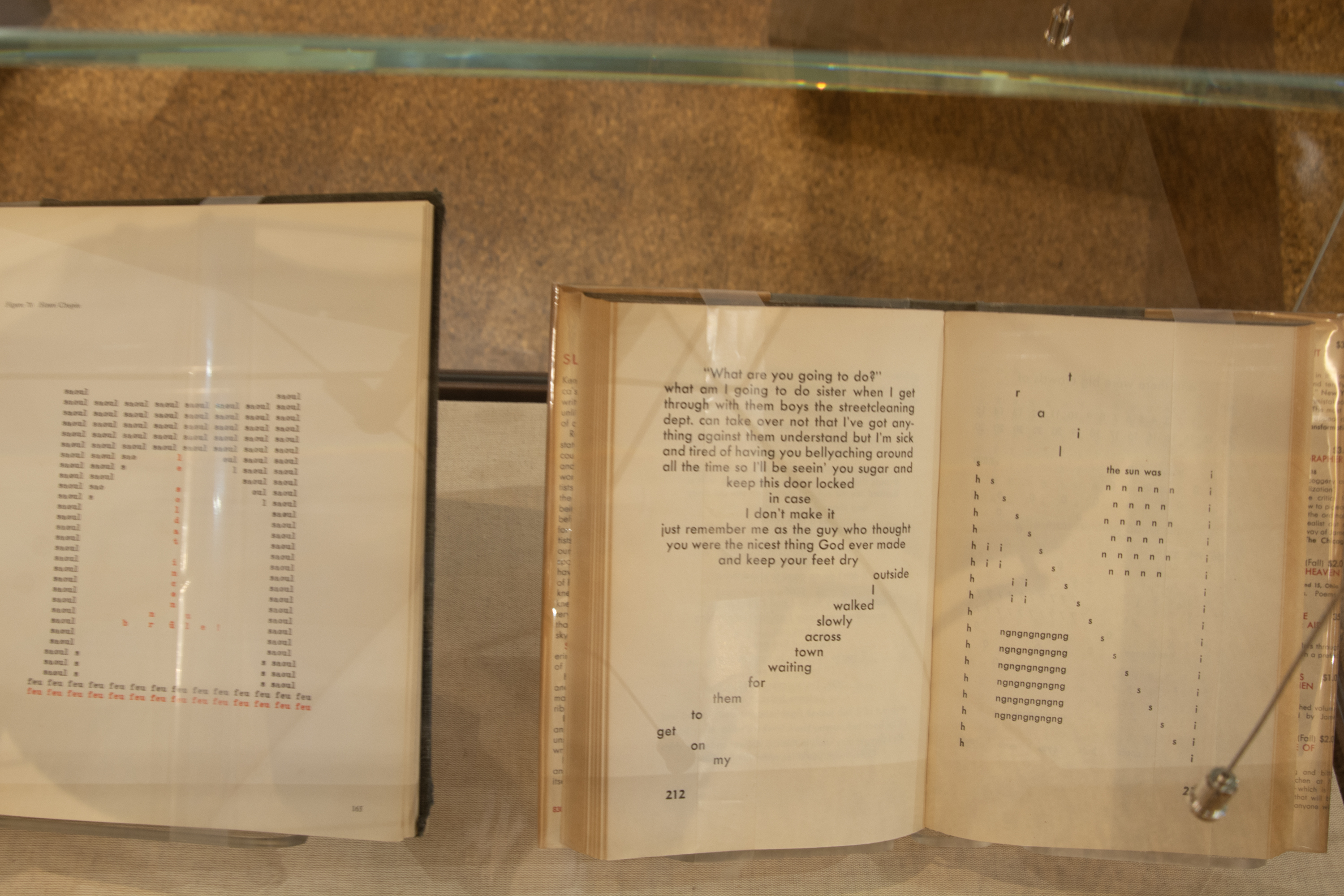
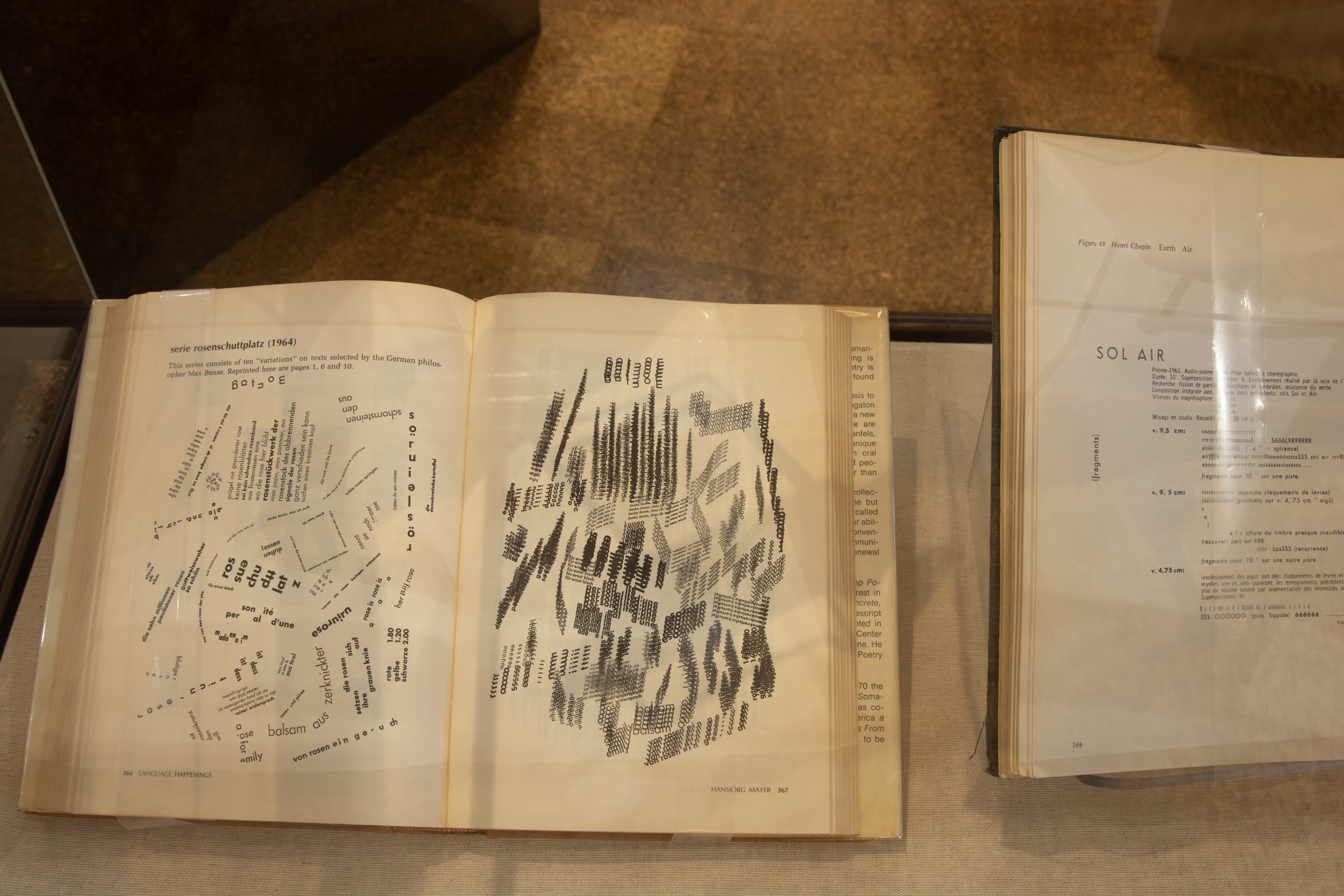
In the 3rd century BCE, Greek poets explored Technopaegnia (loosely, “art games”), in which poems were shaped to form pictures. From here, we can draw a line to George Herbert's pattern poem Easter Wings (1633) and the formal naming of Concrete Poetry by Eugen Gomringer and The Brazilian Noigandres group in the 1950s. Today, the aesthetic persists across literature, design, and folk and fine arts.
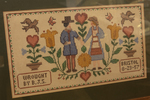
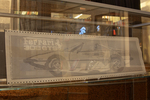
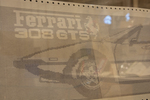
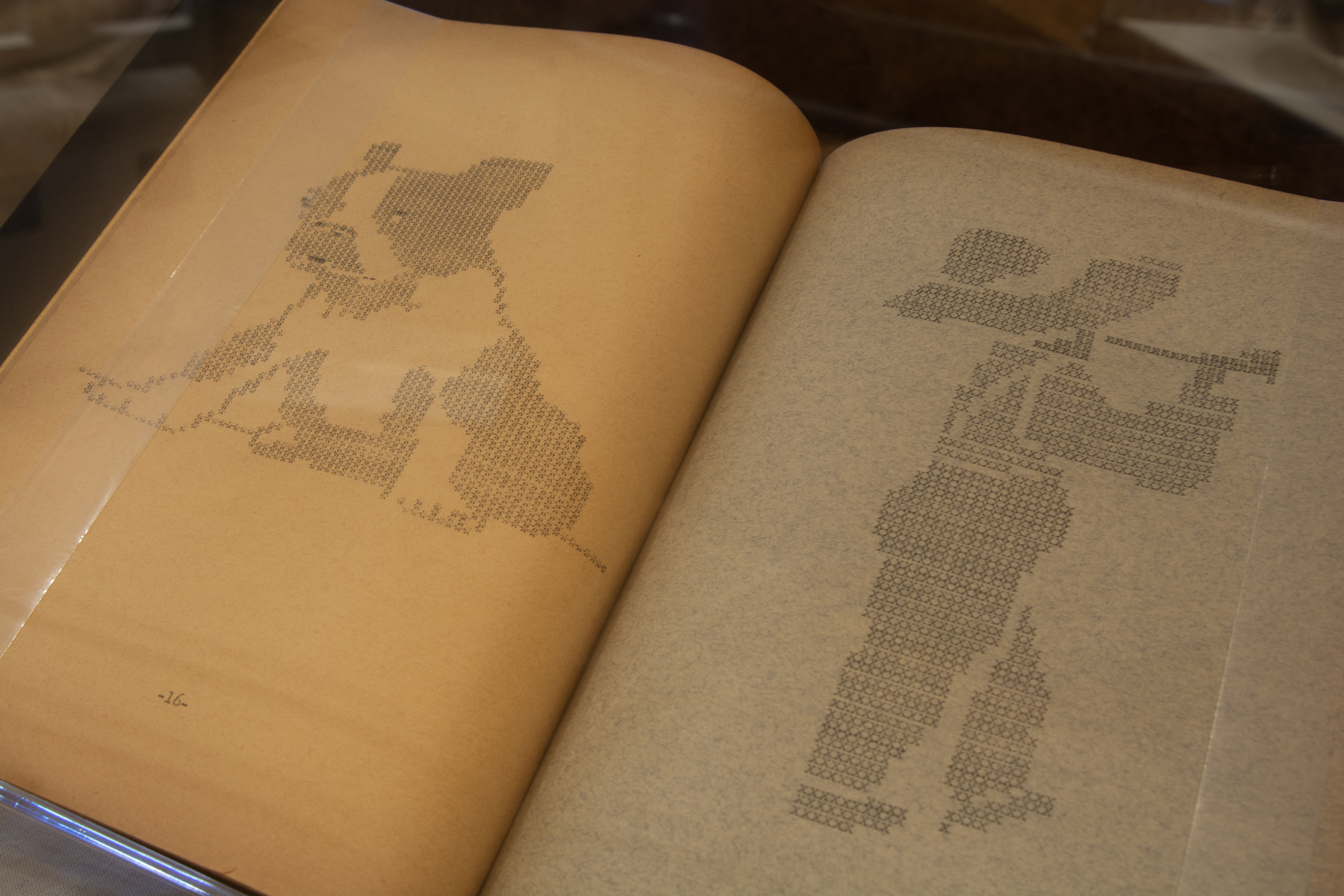
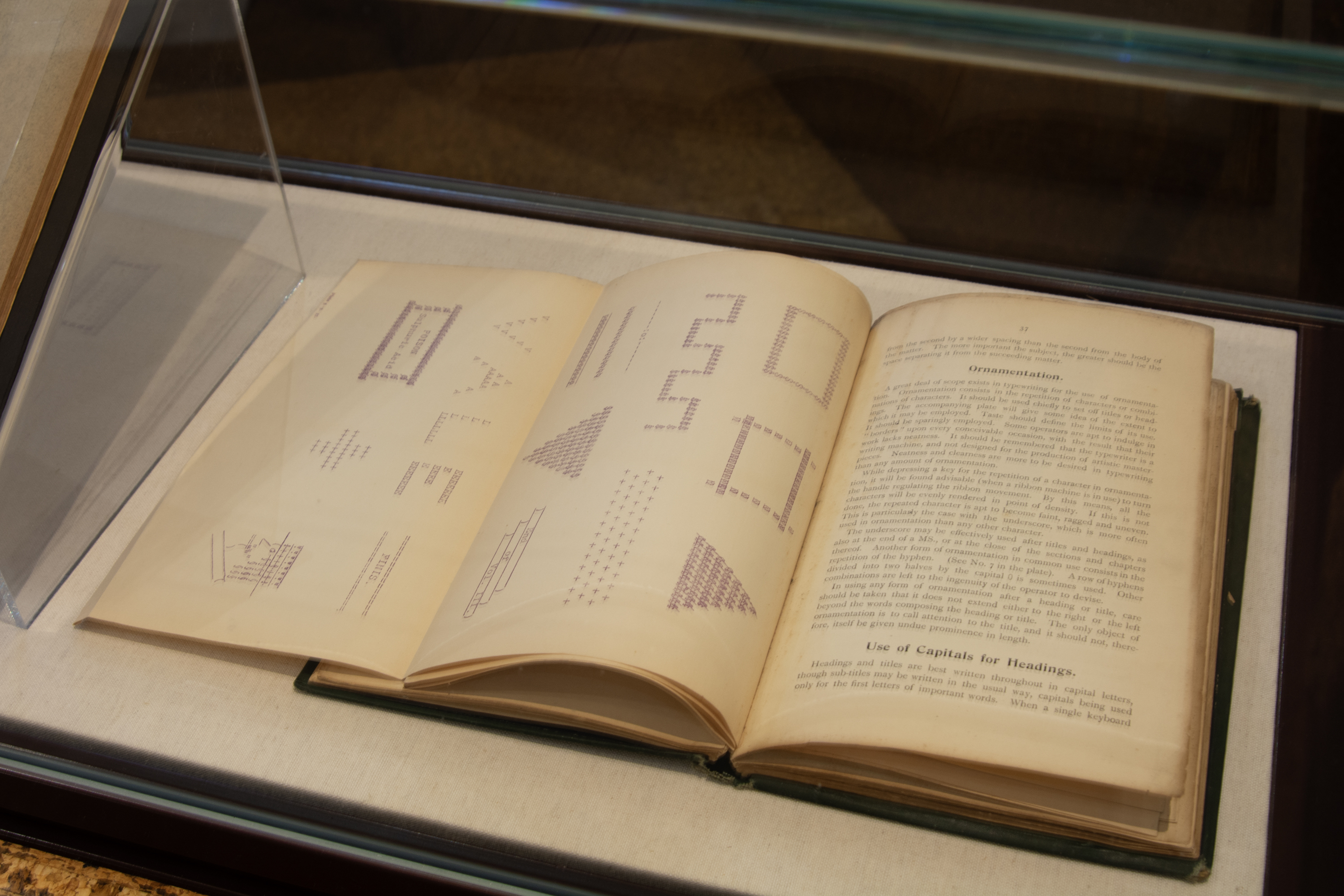
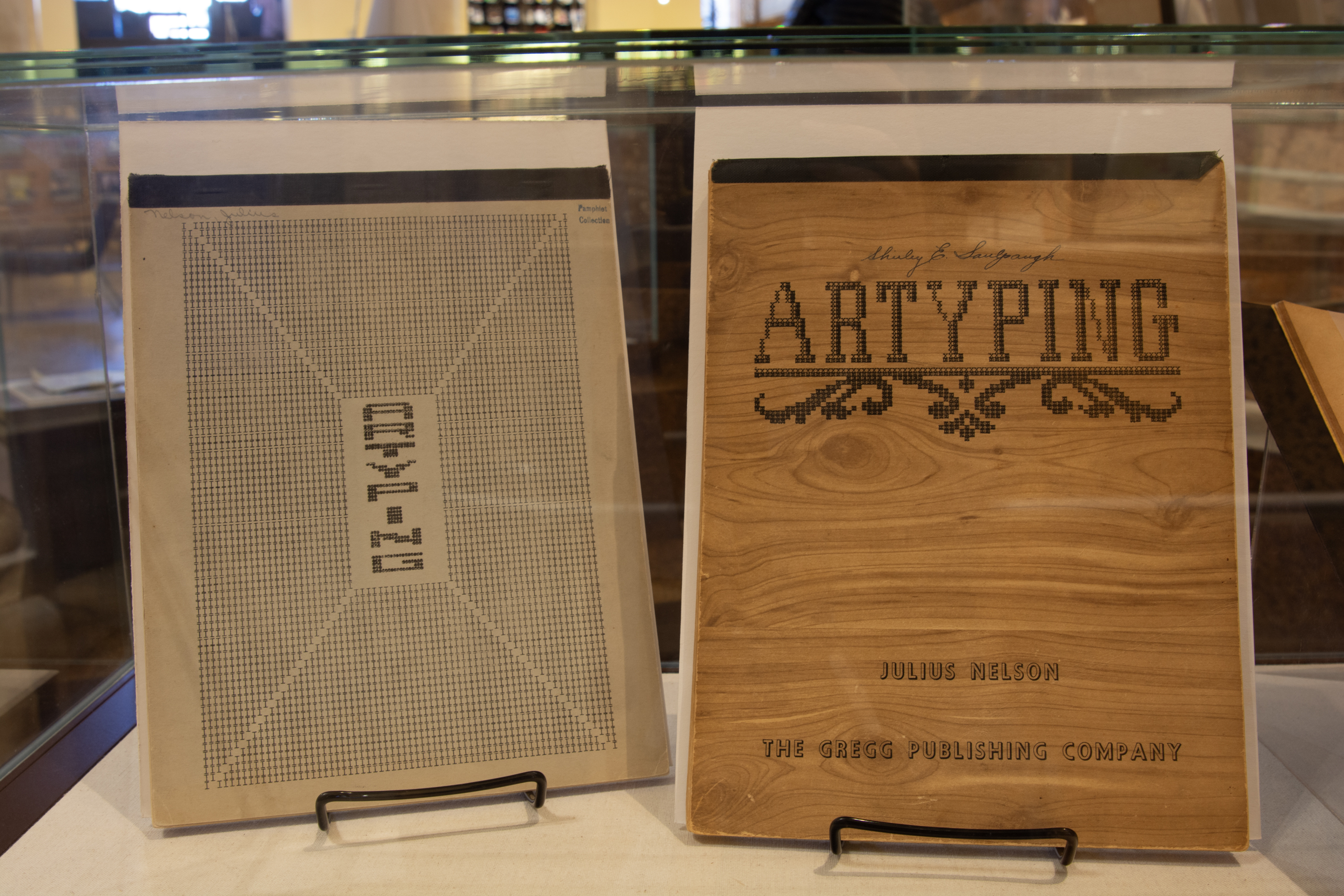
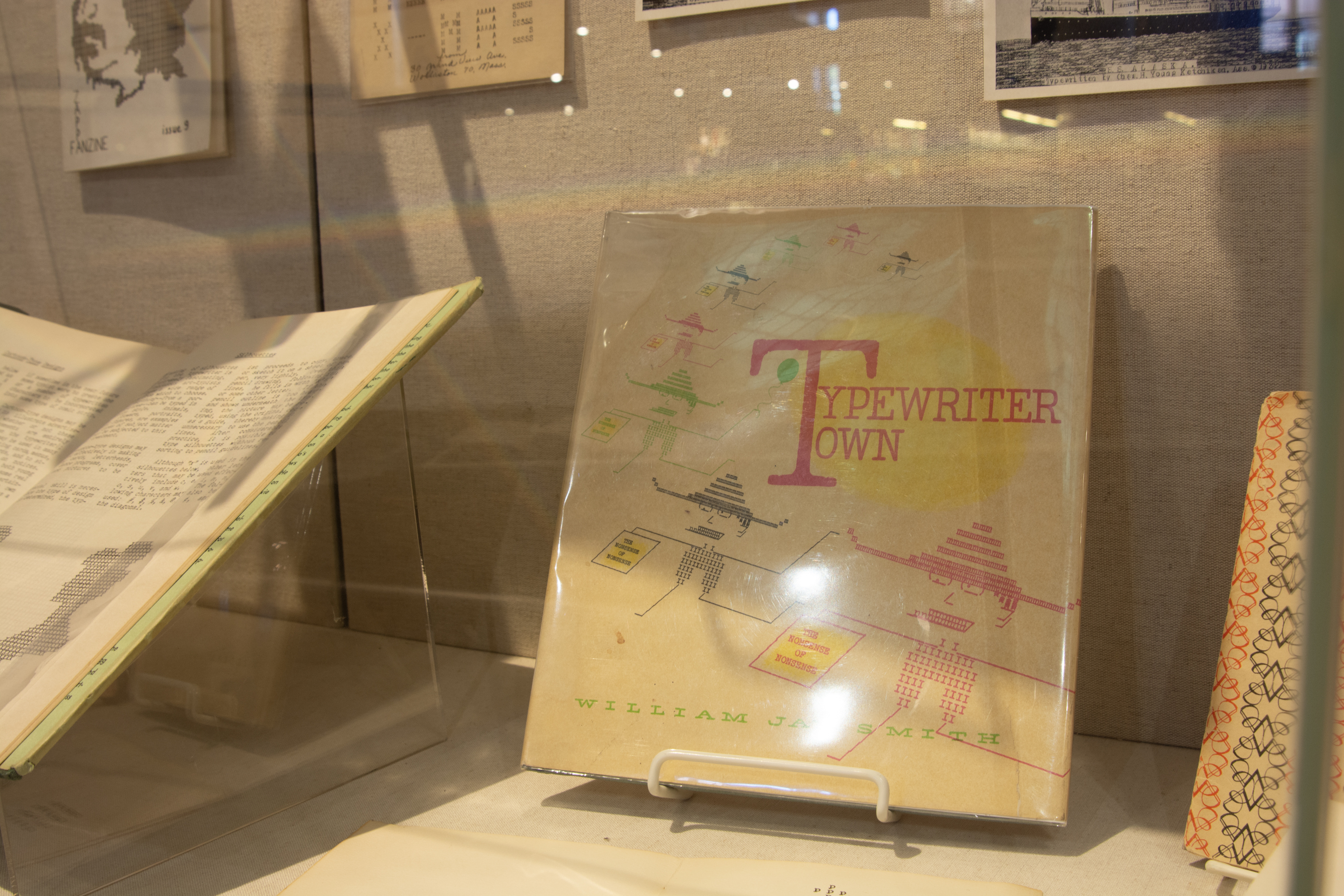
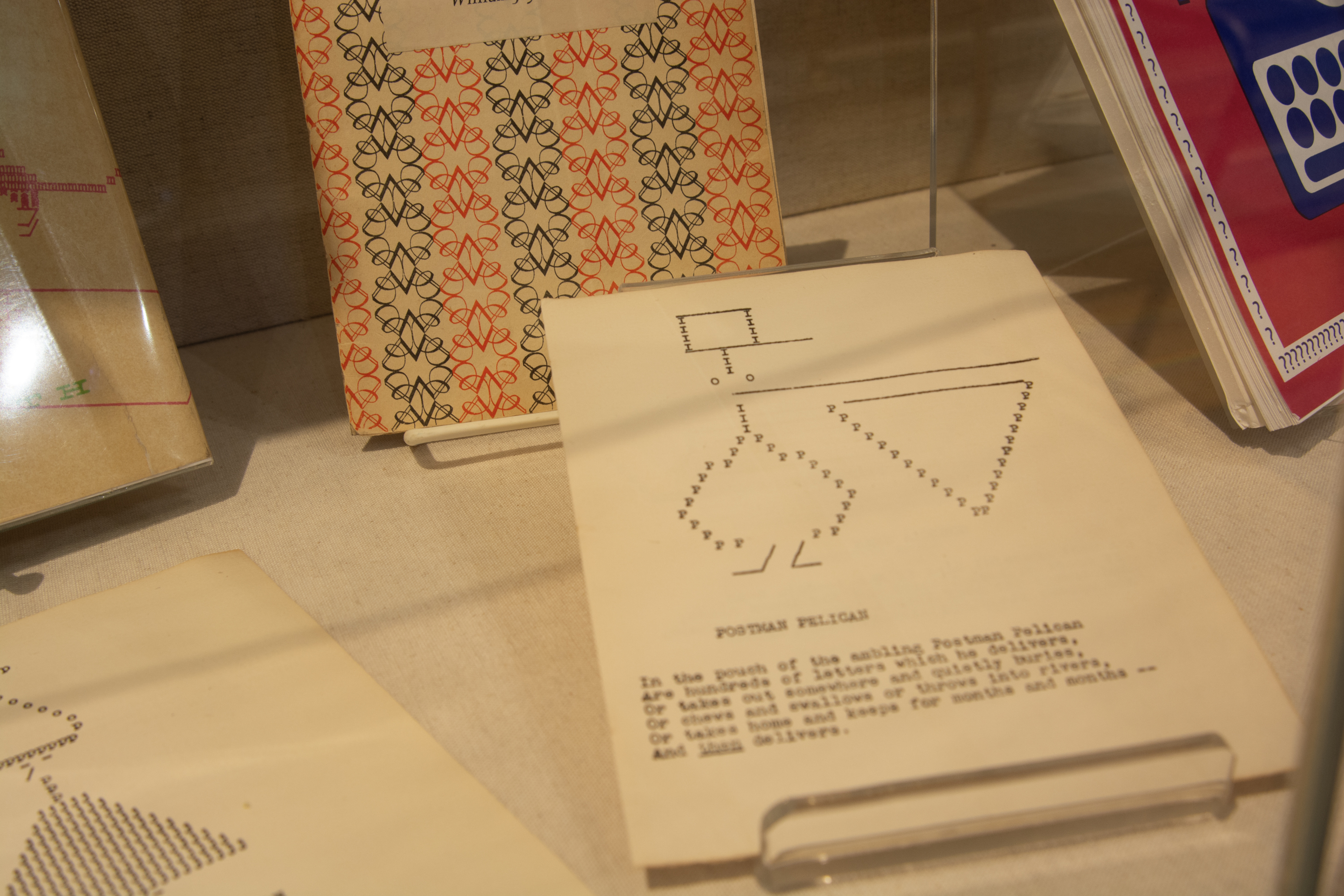
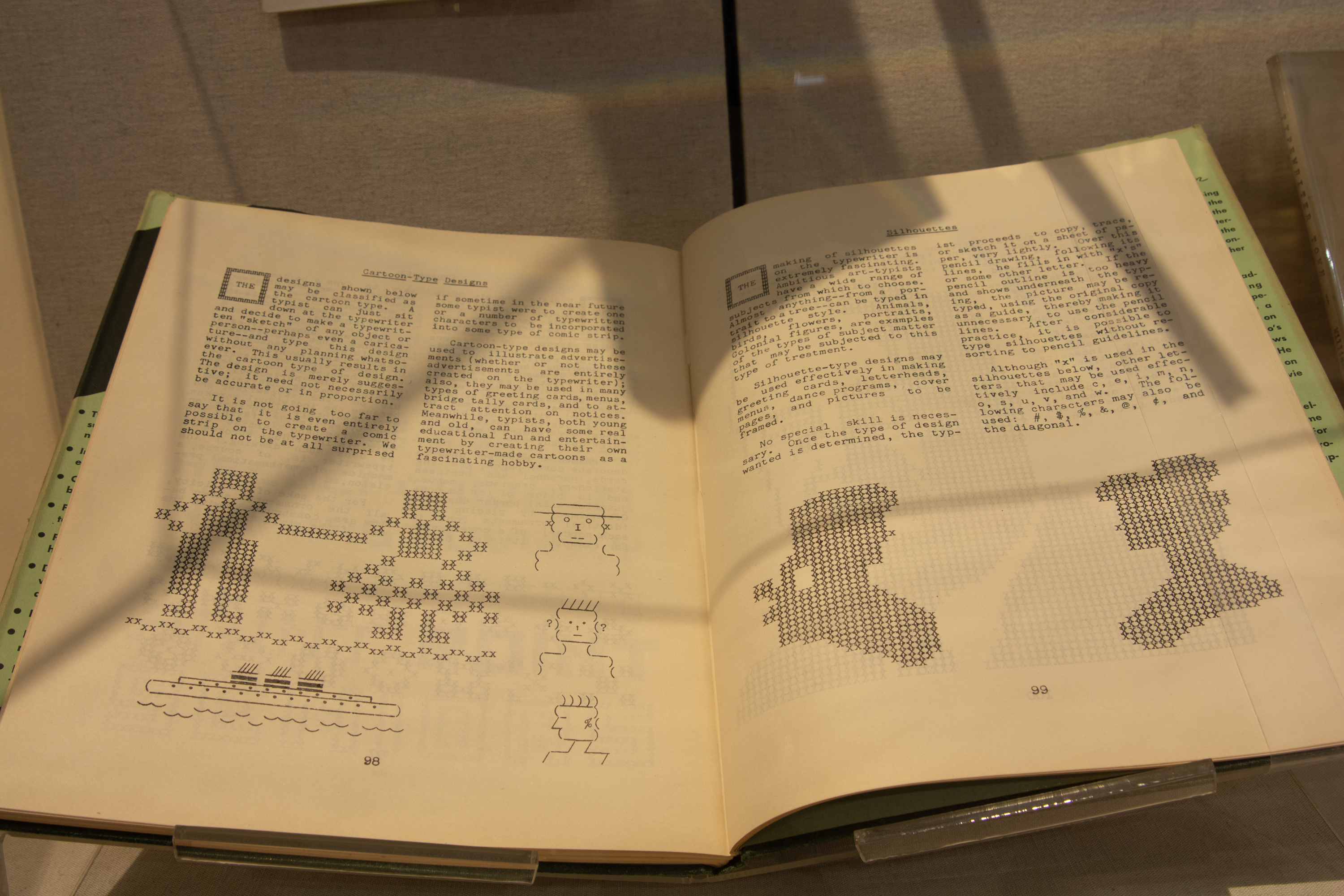
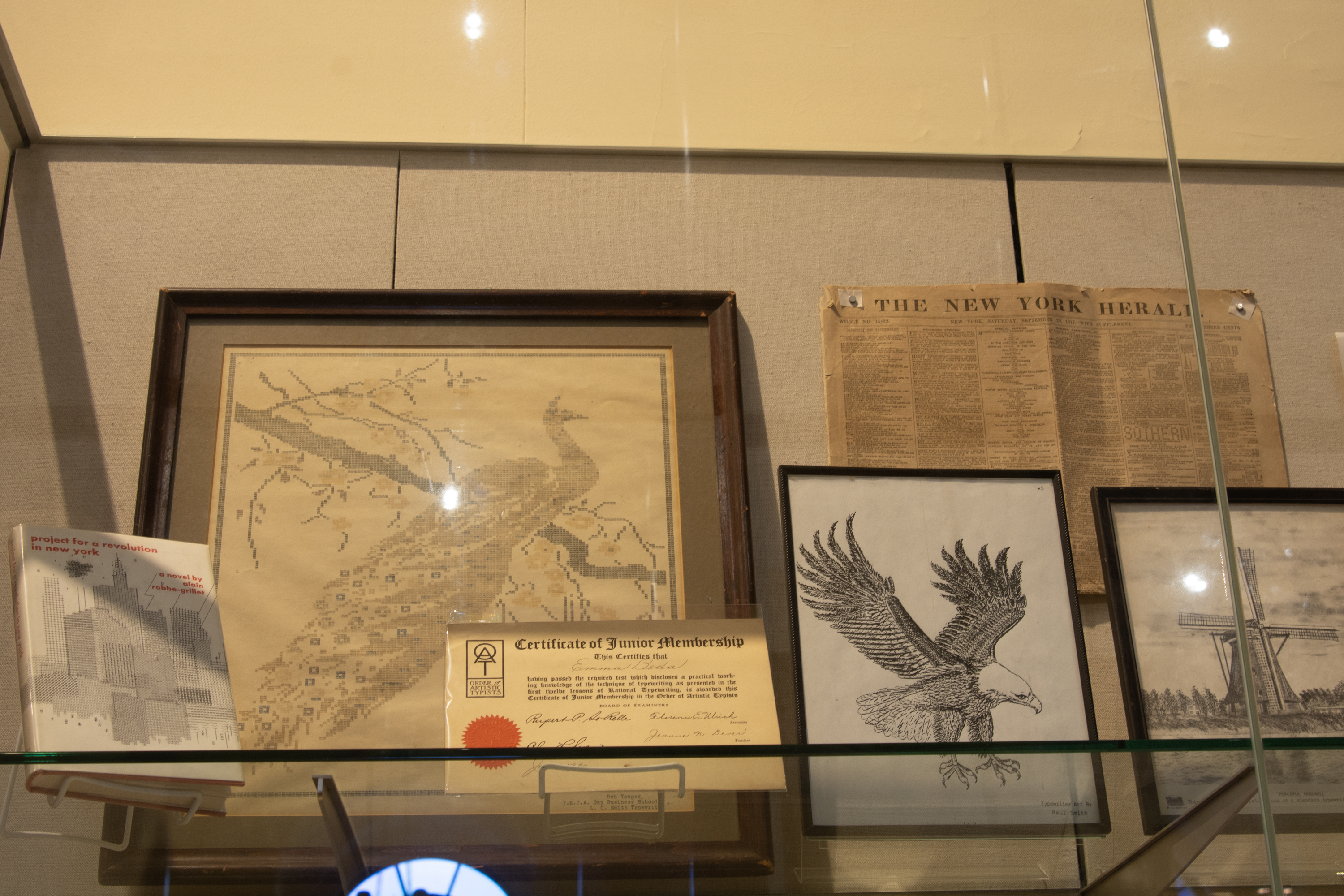
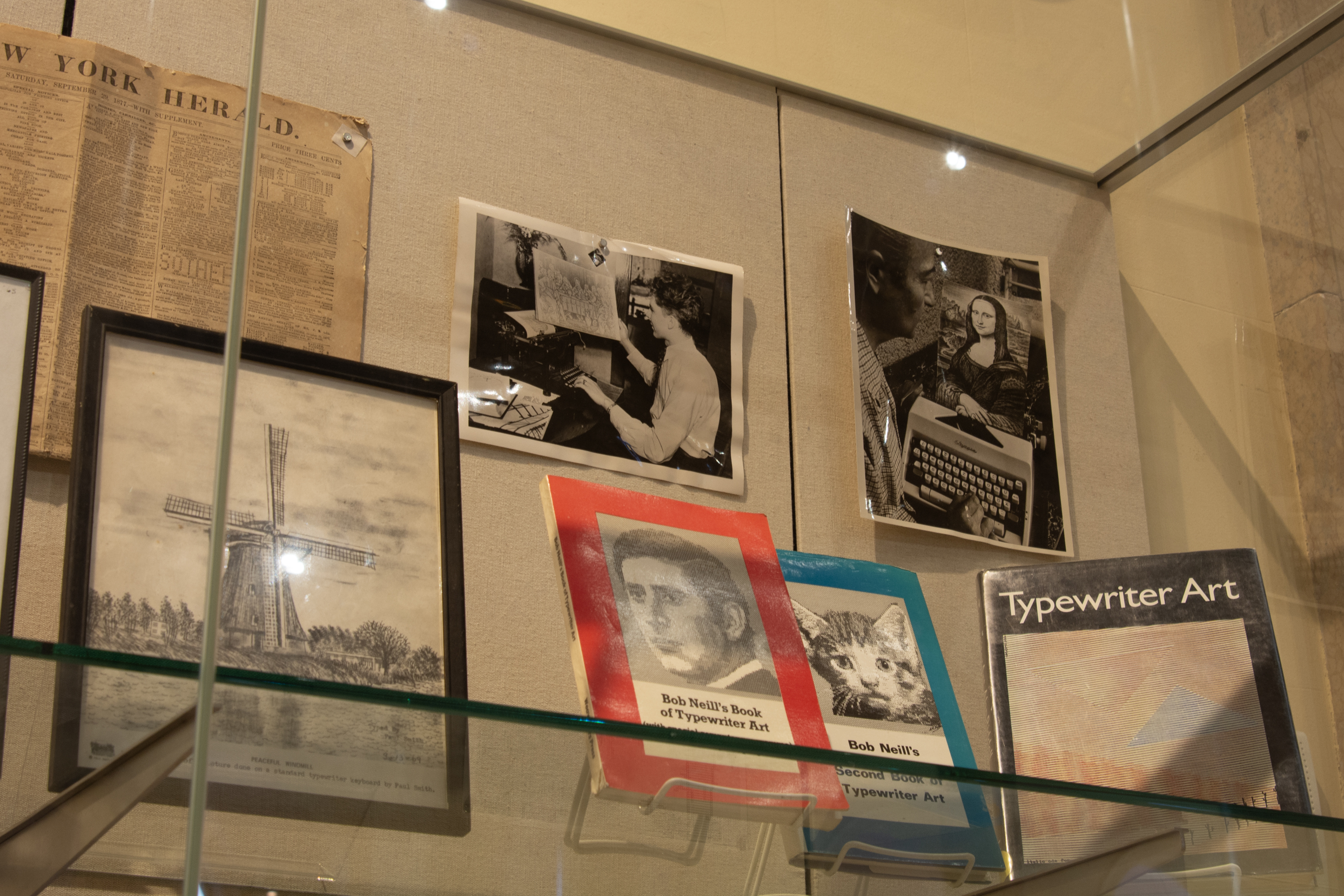
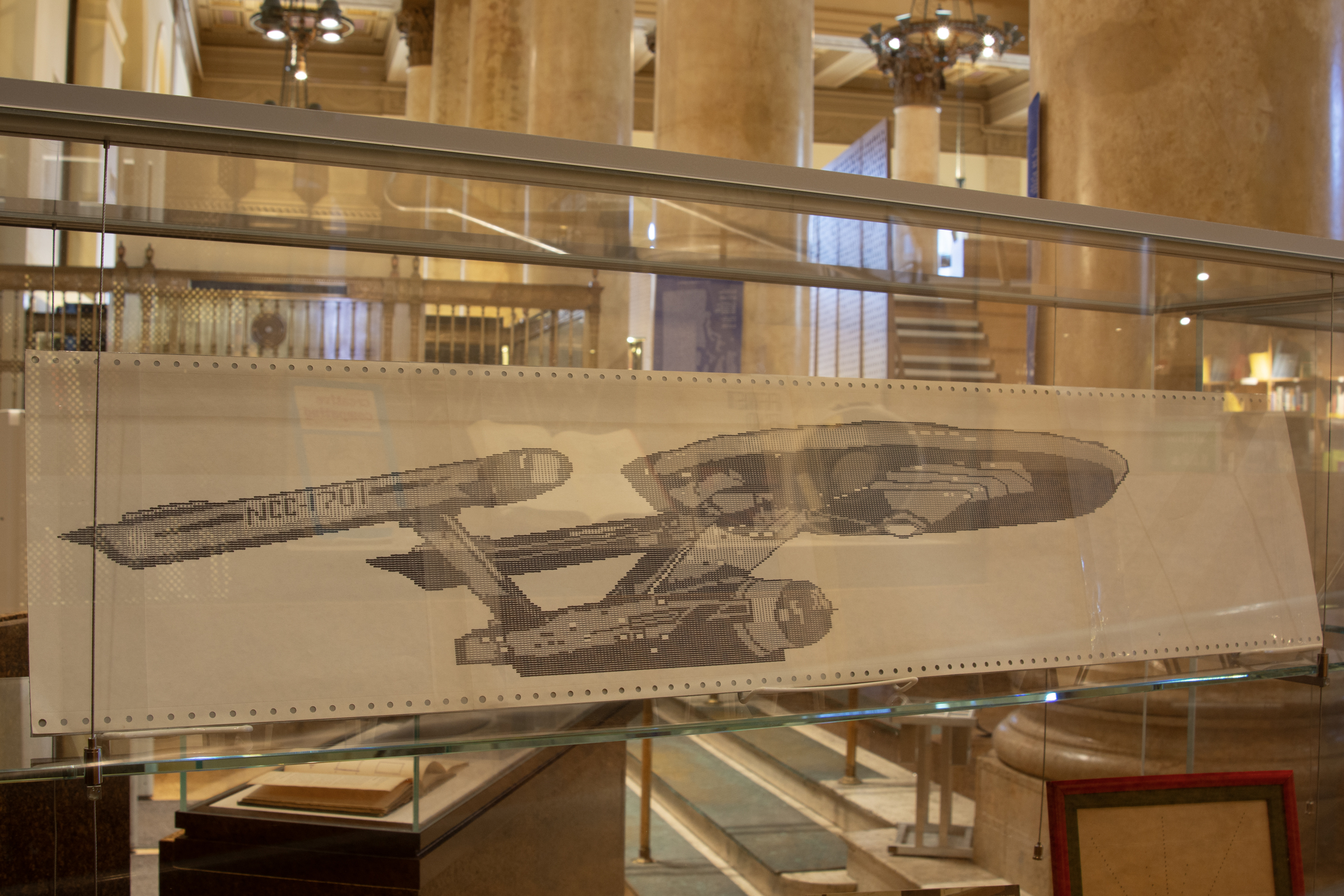
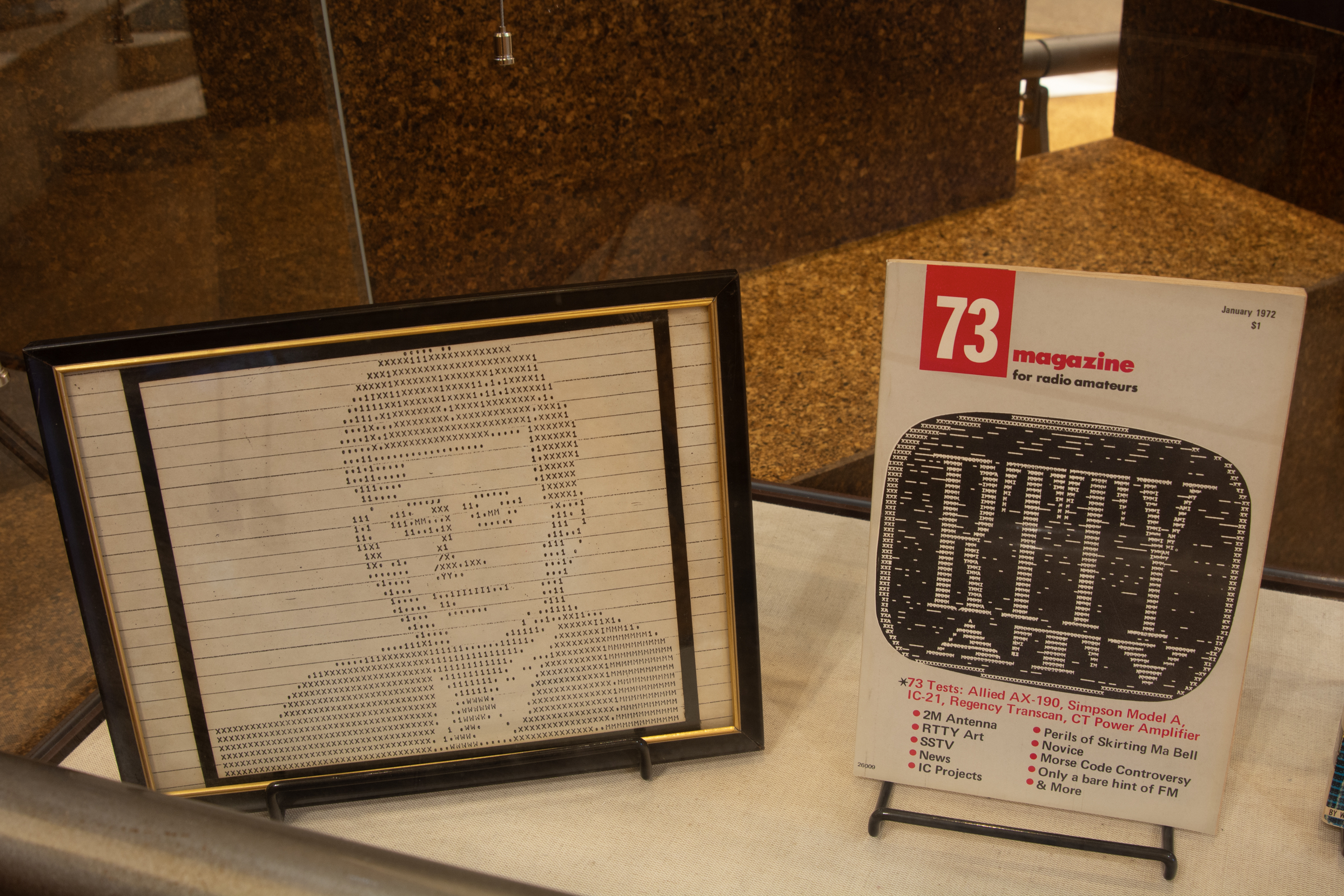
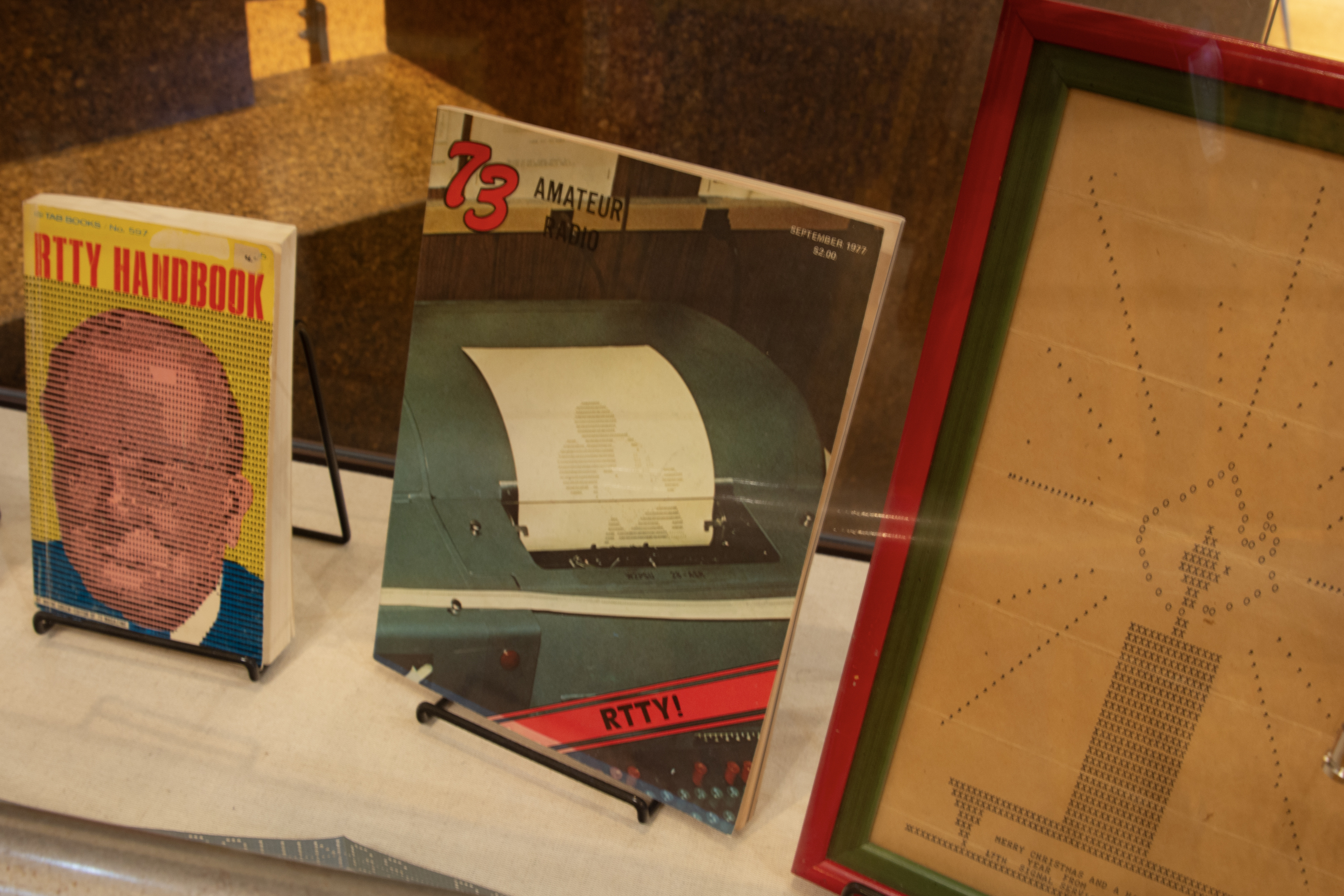
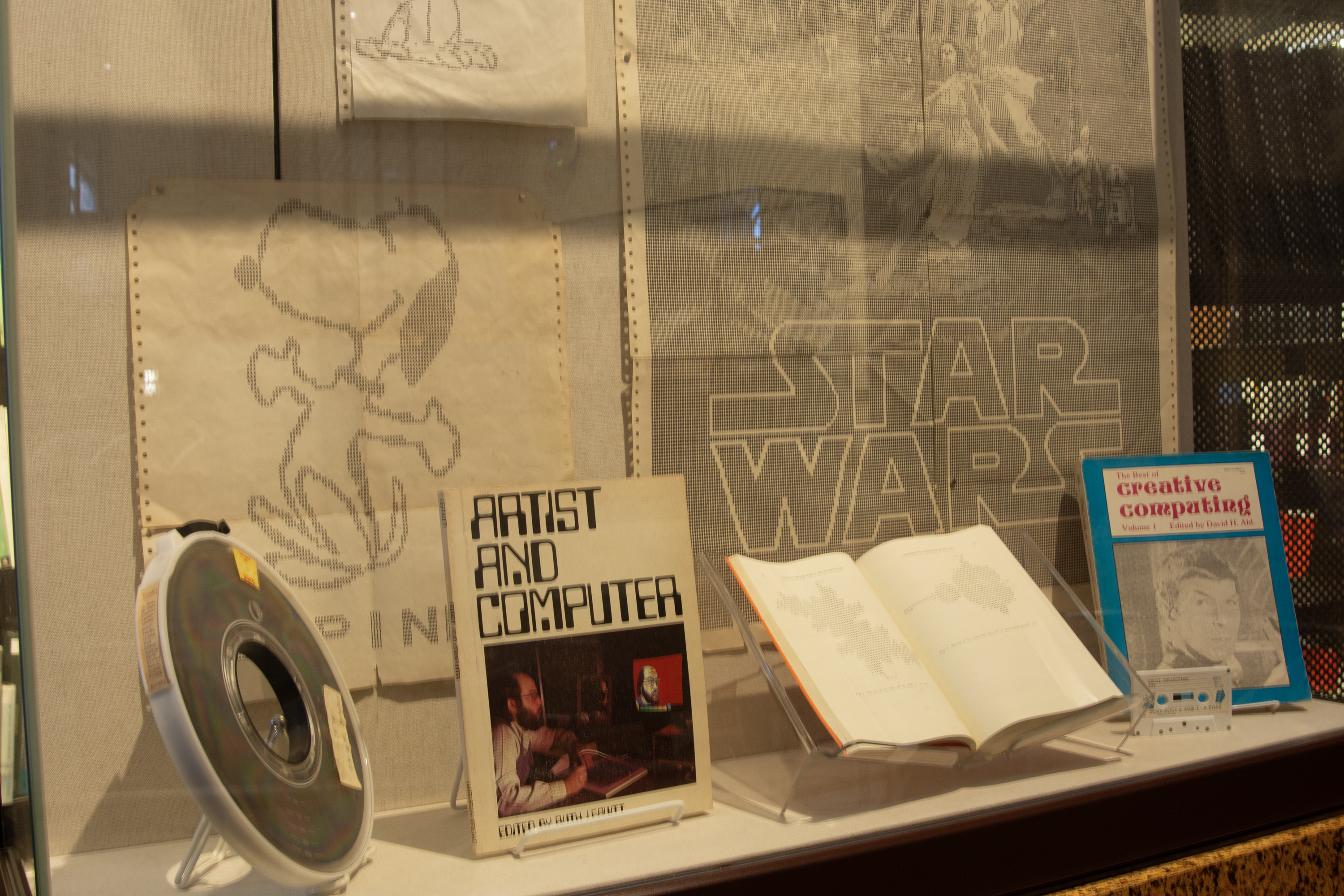
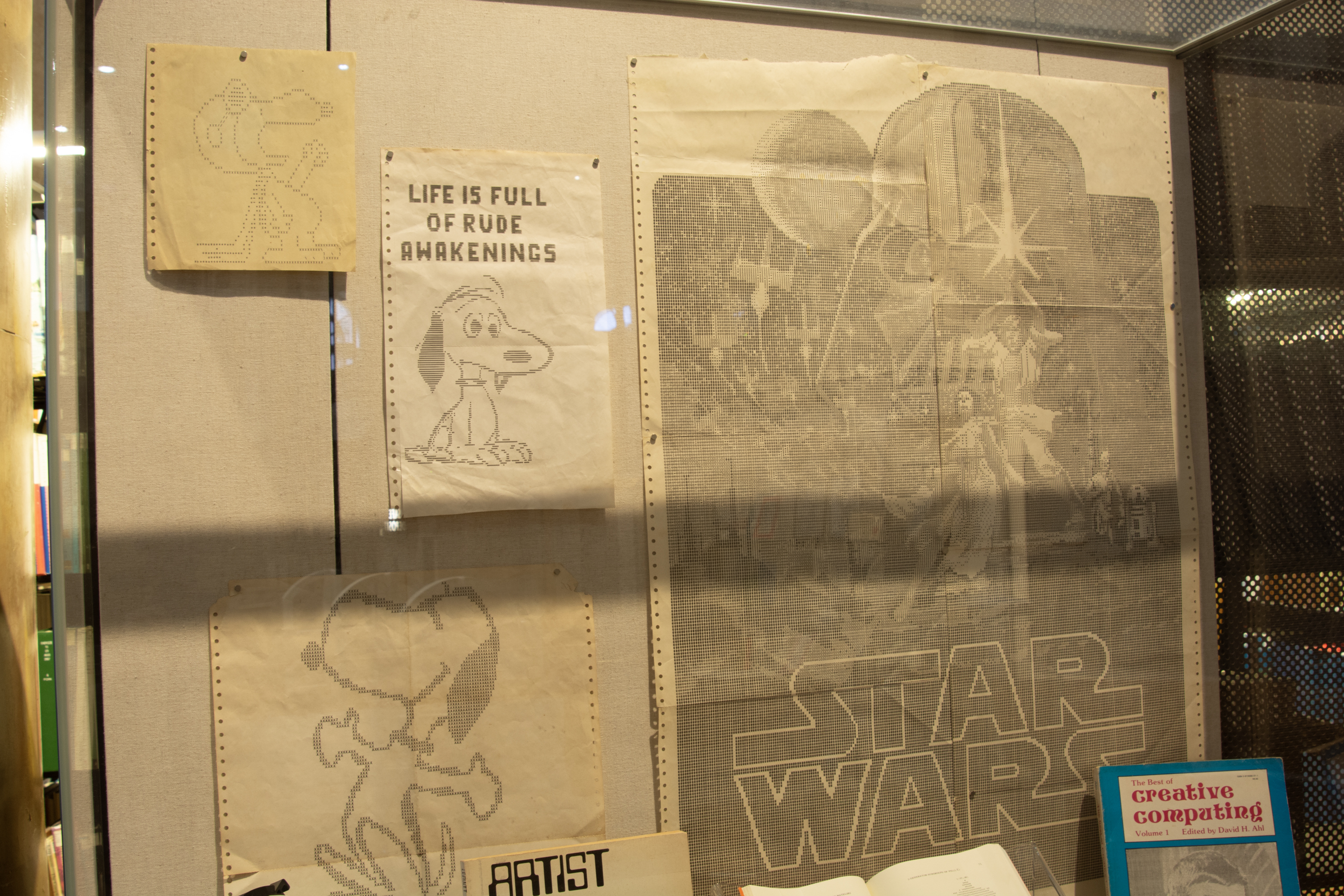
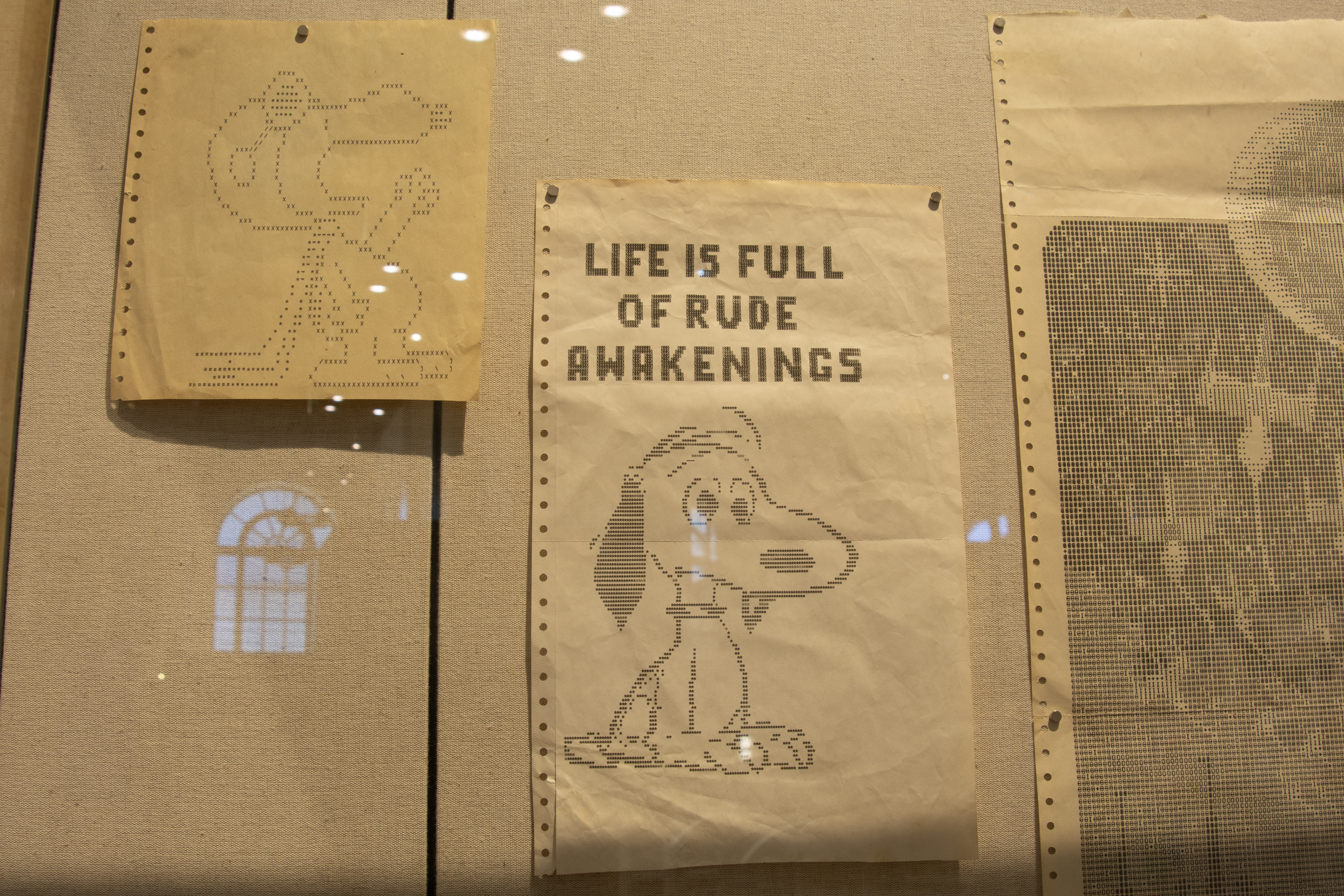
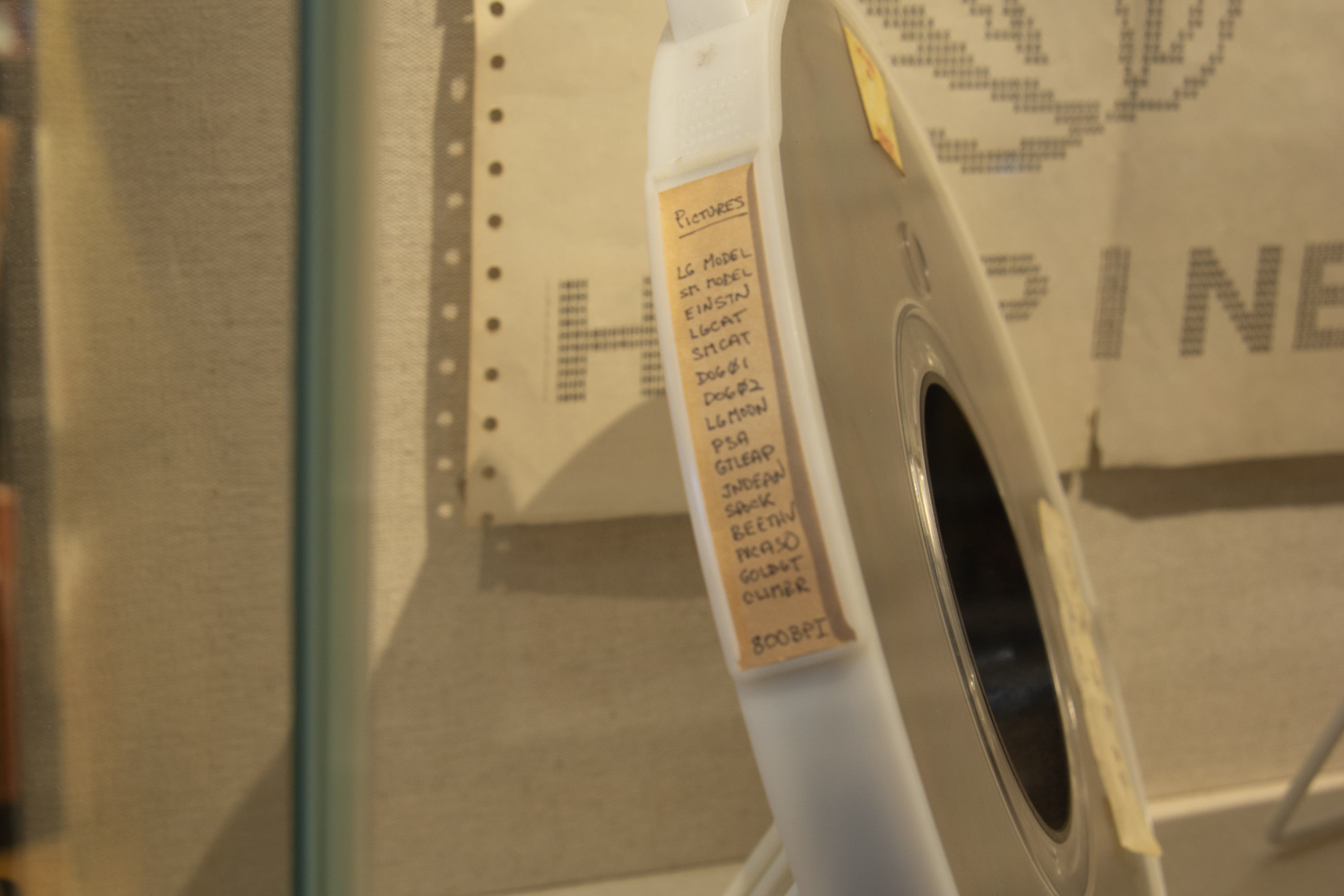
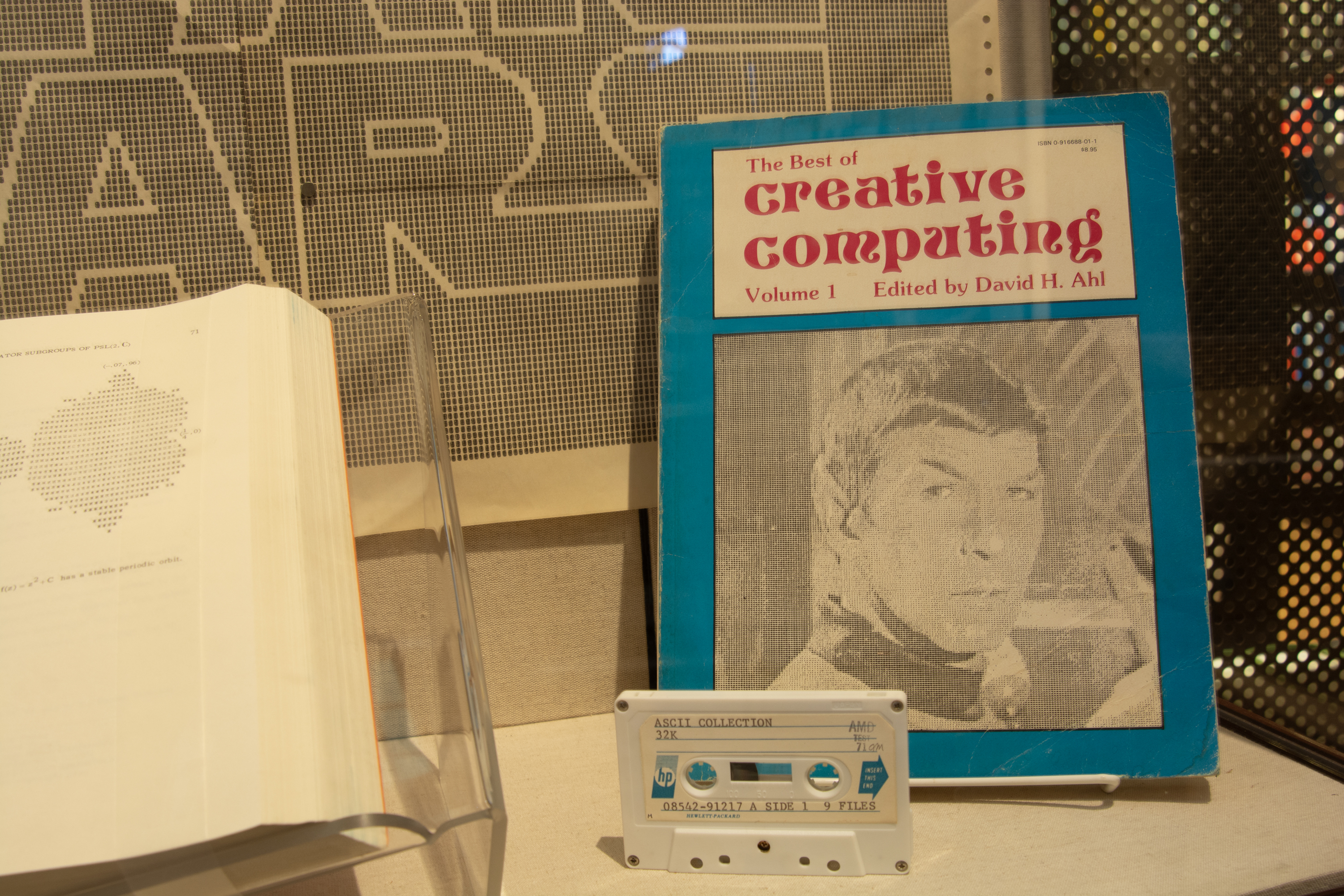
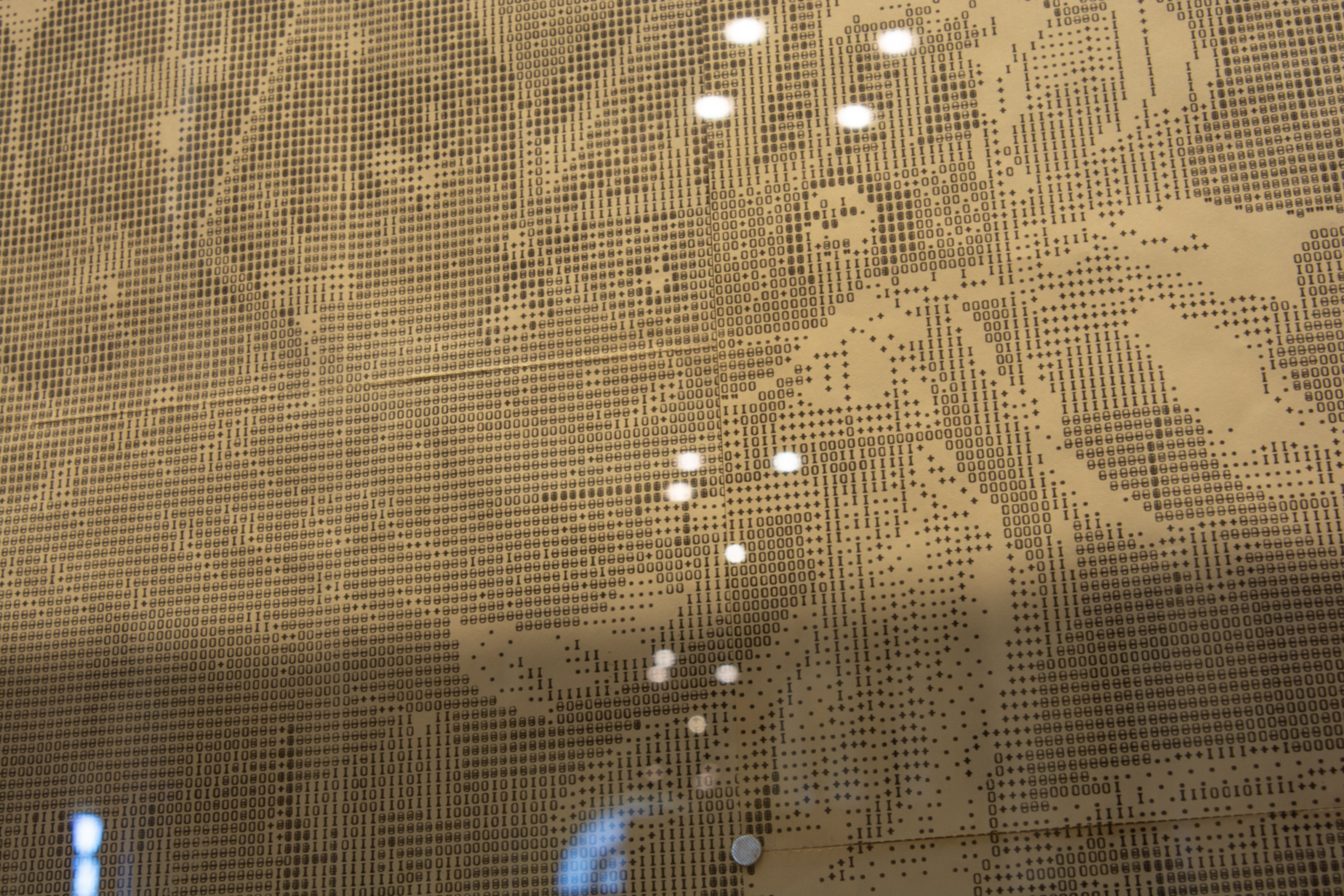
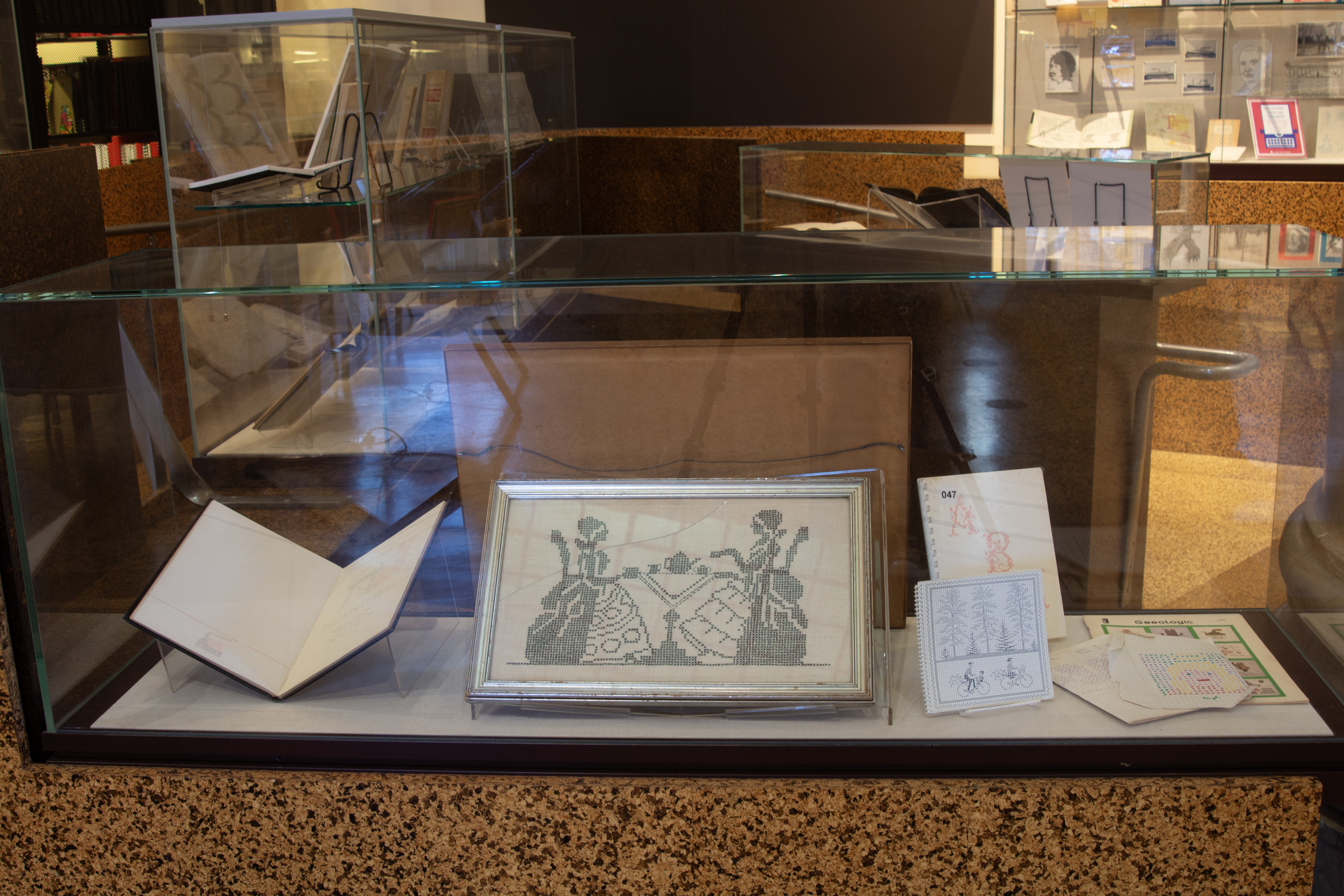
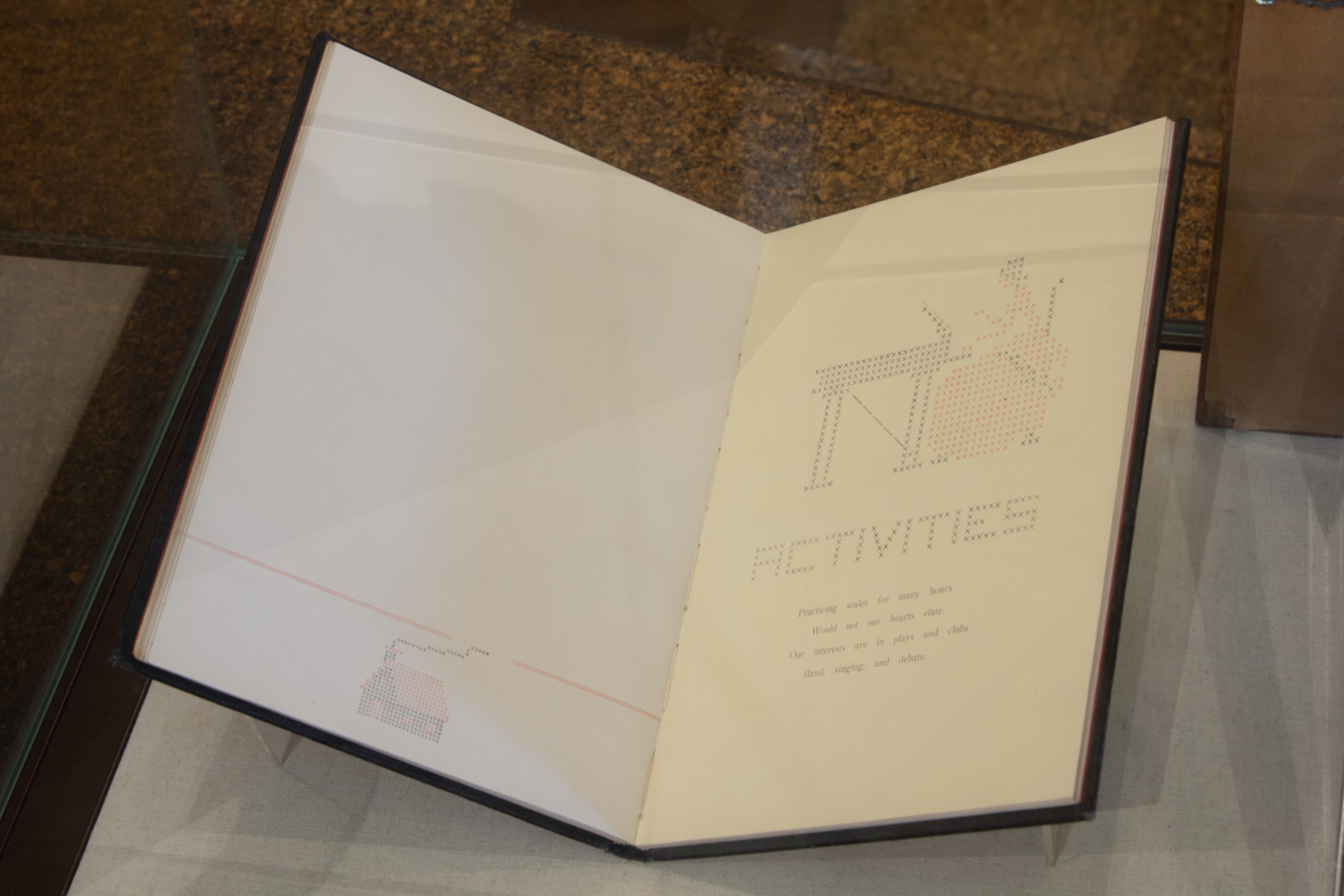
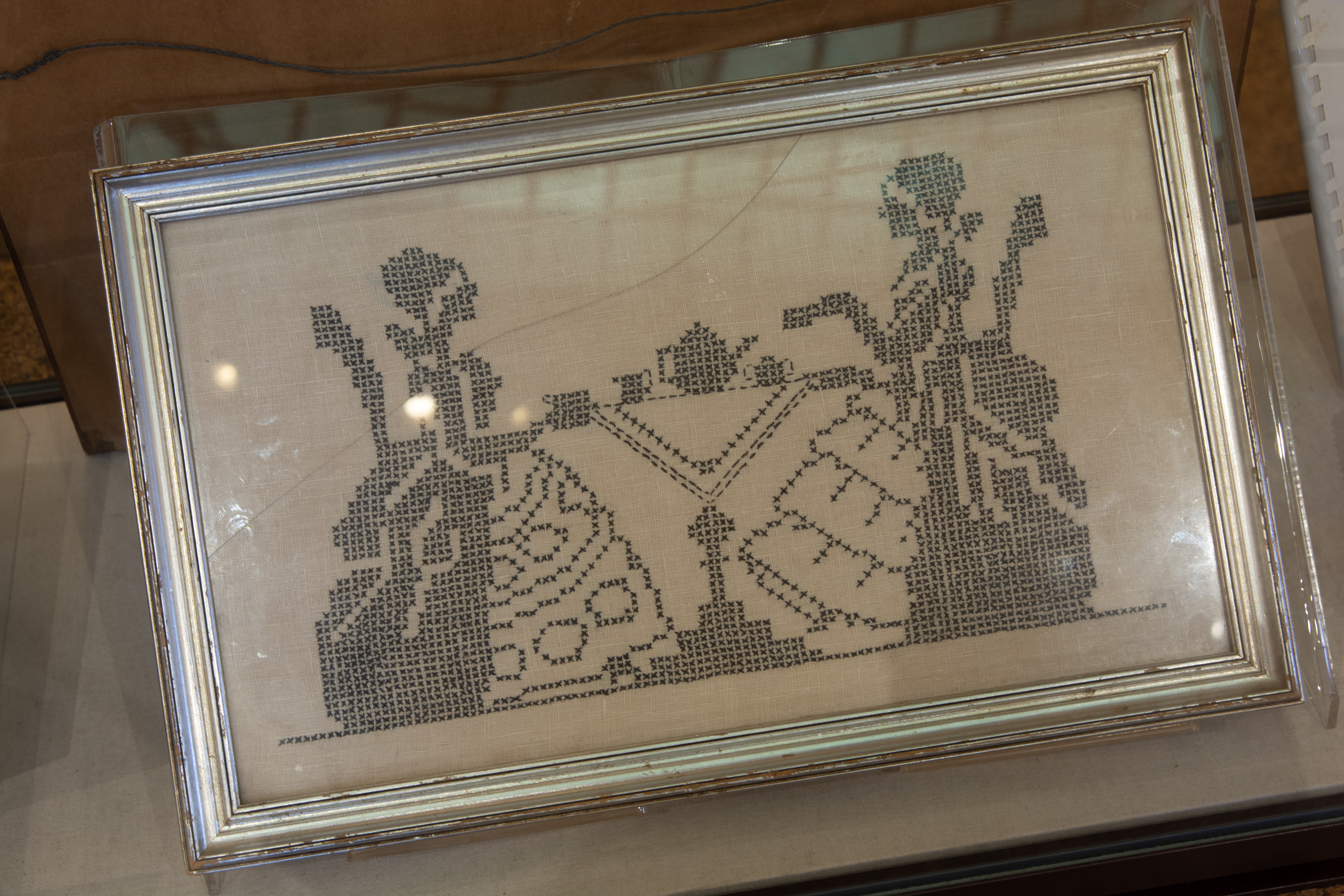
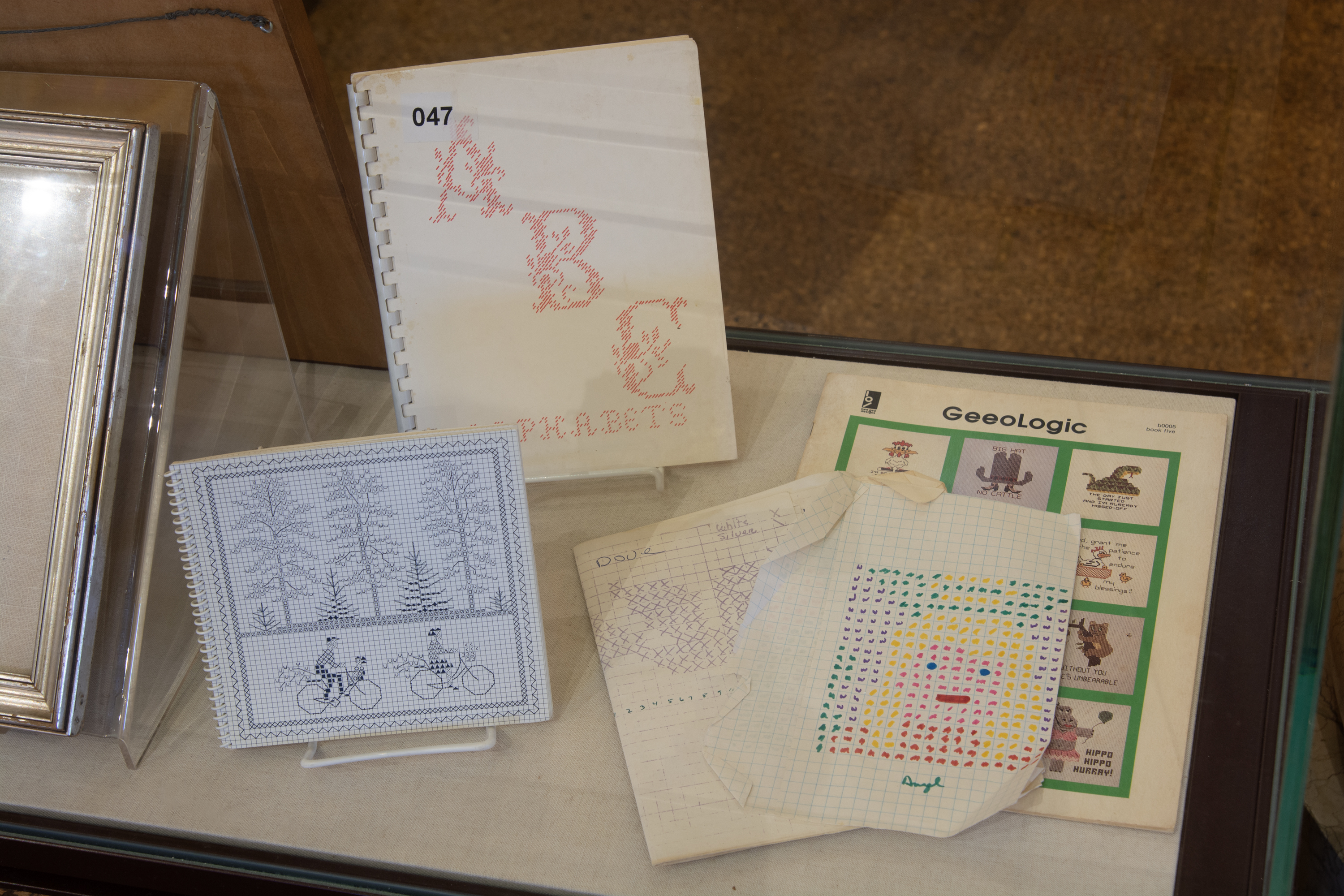
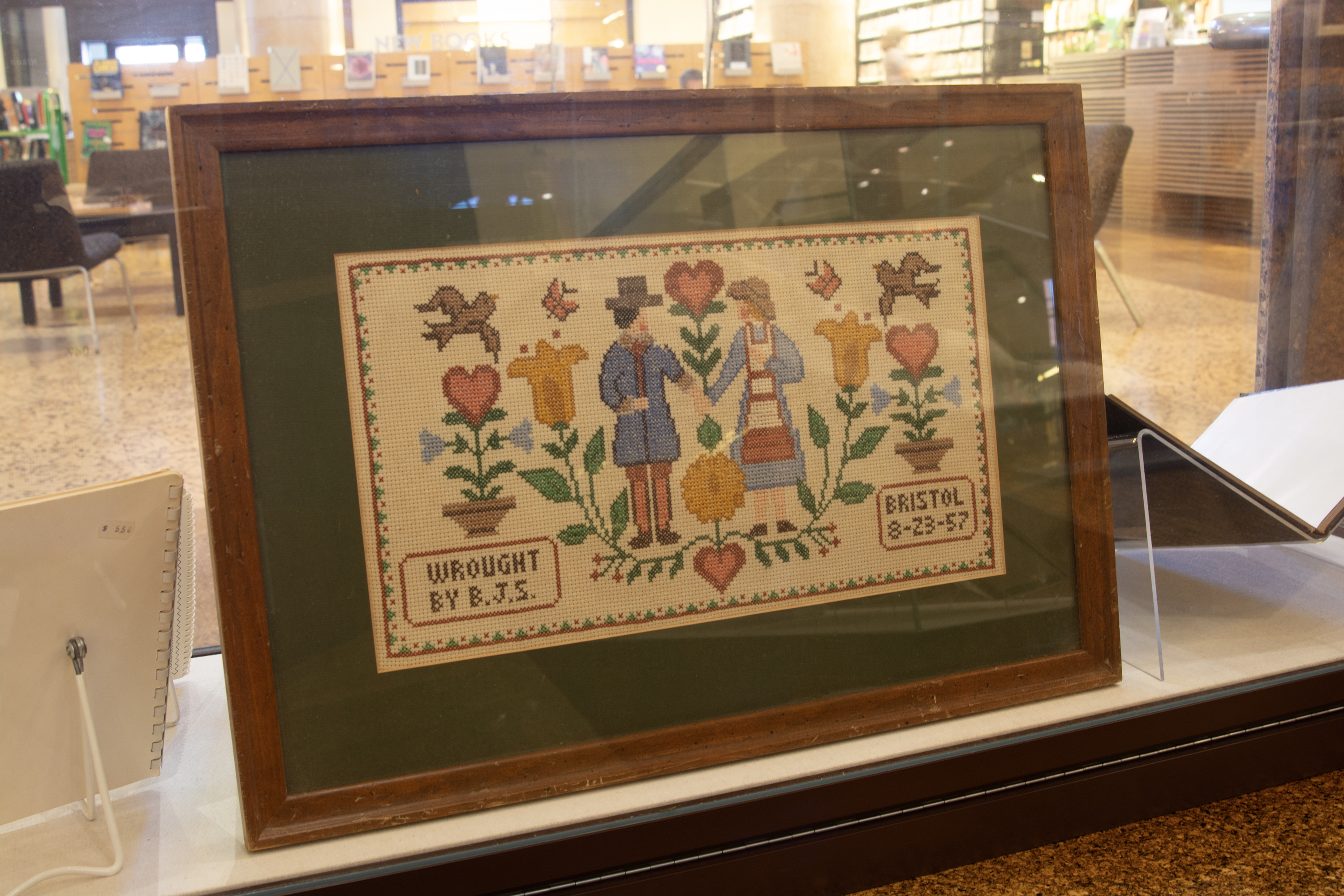
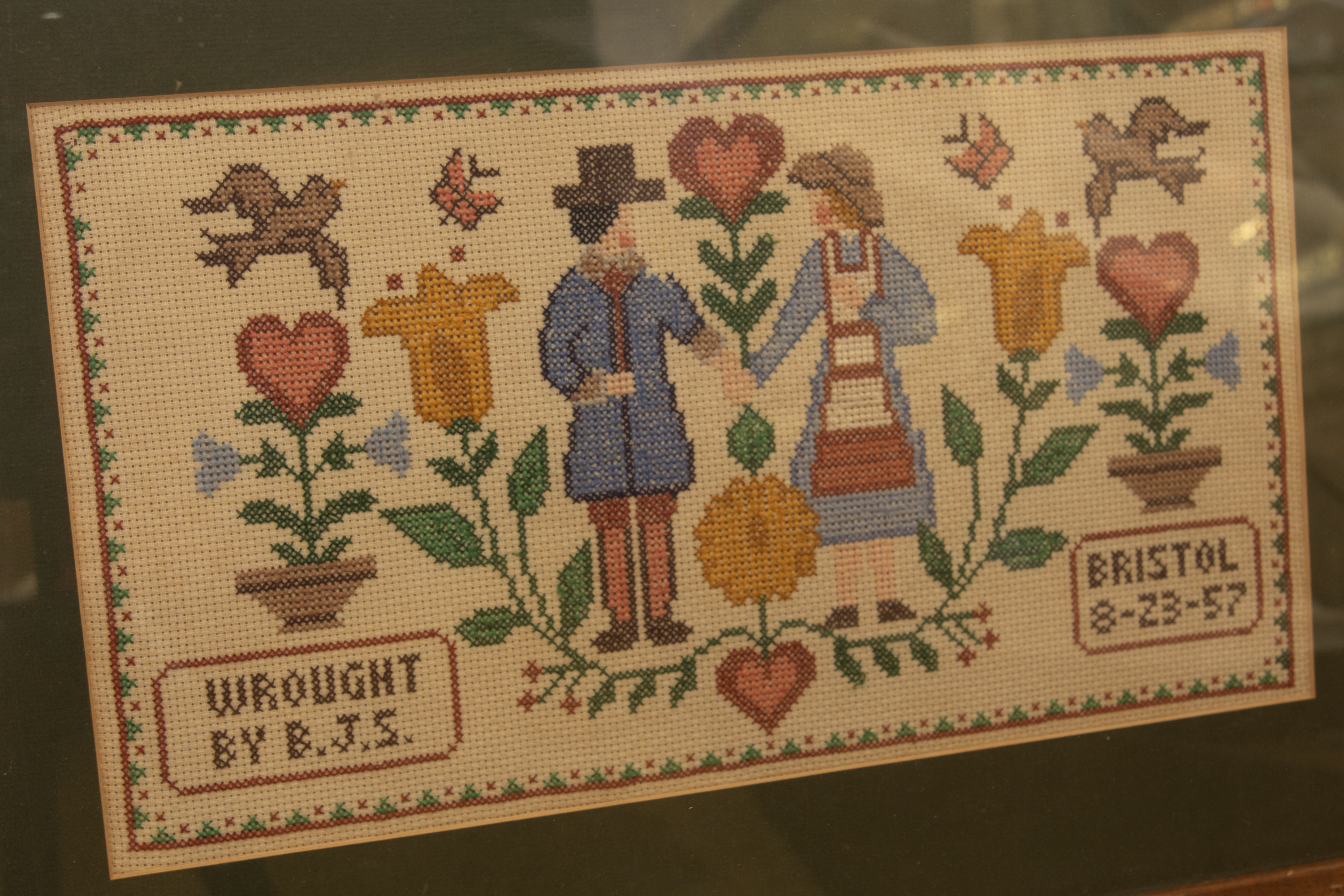
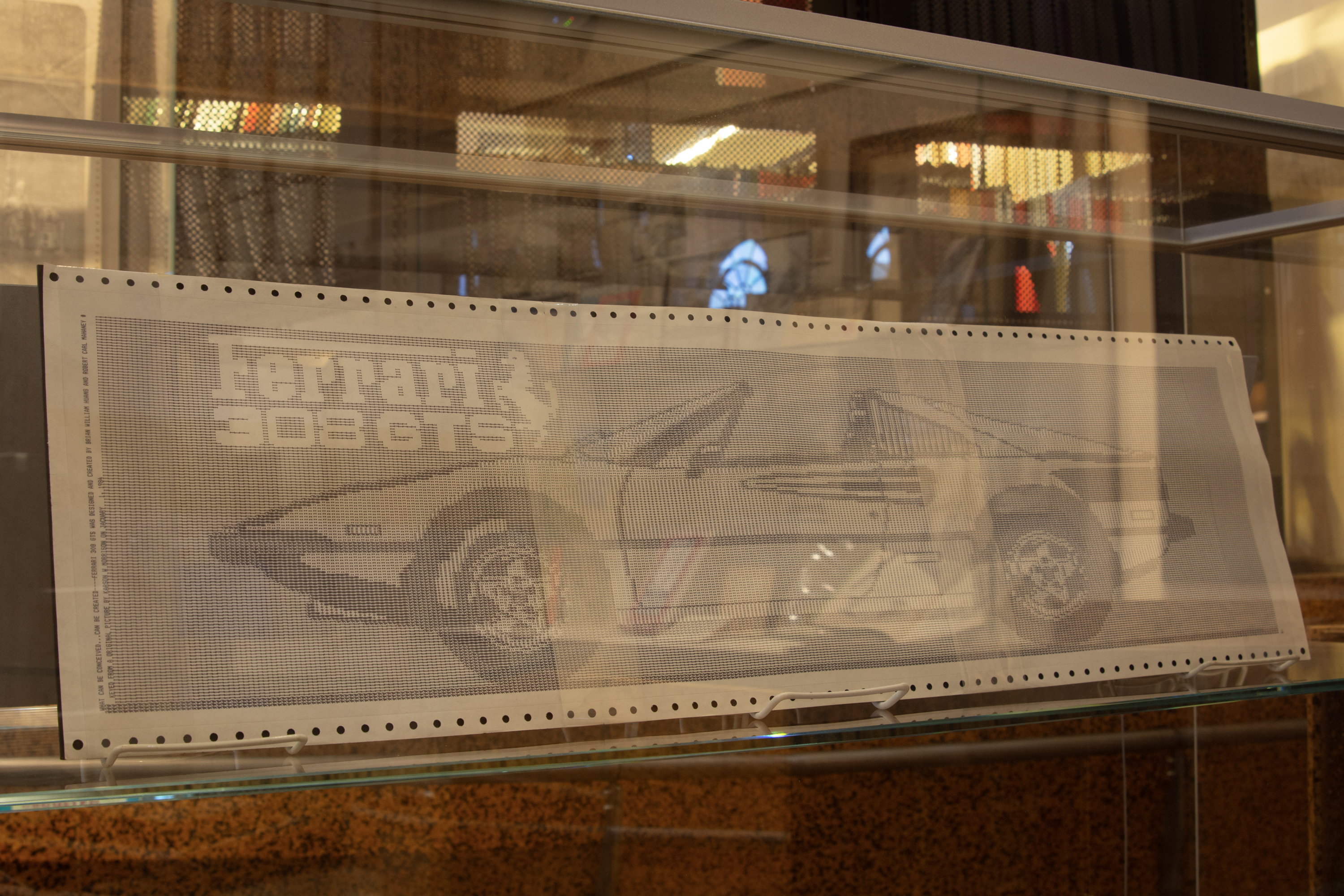
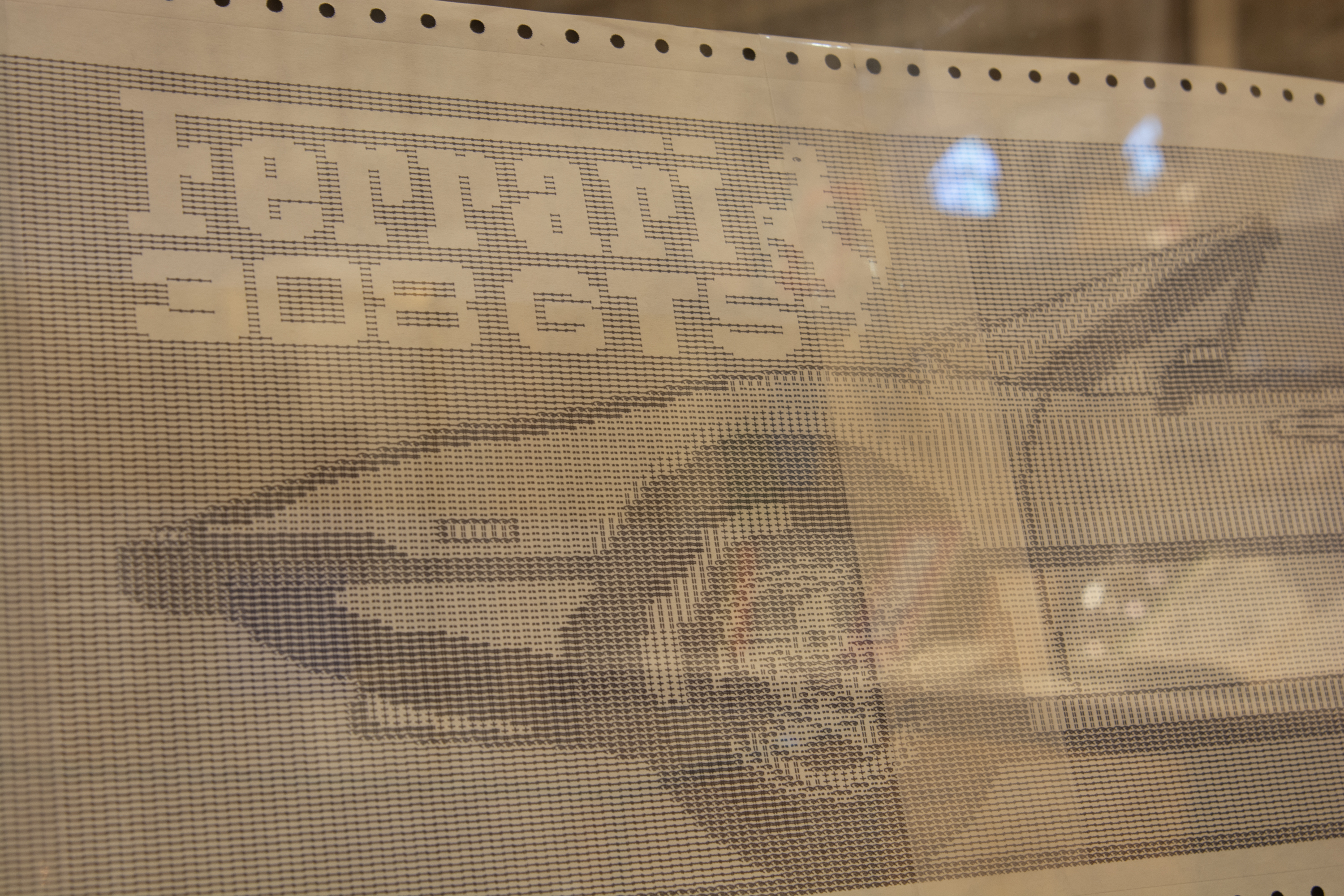
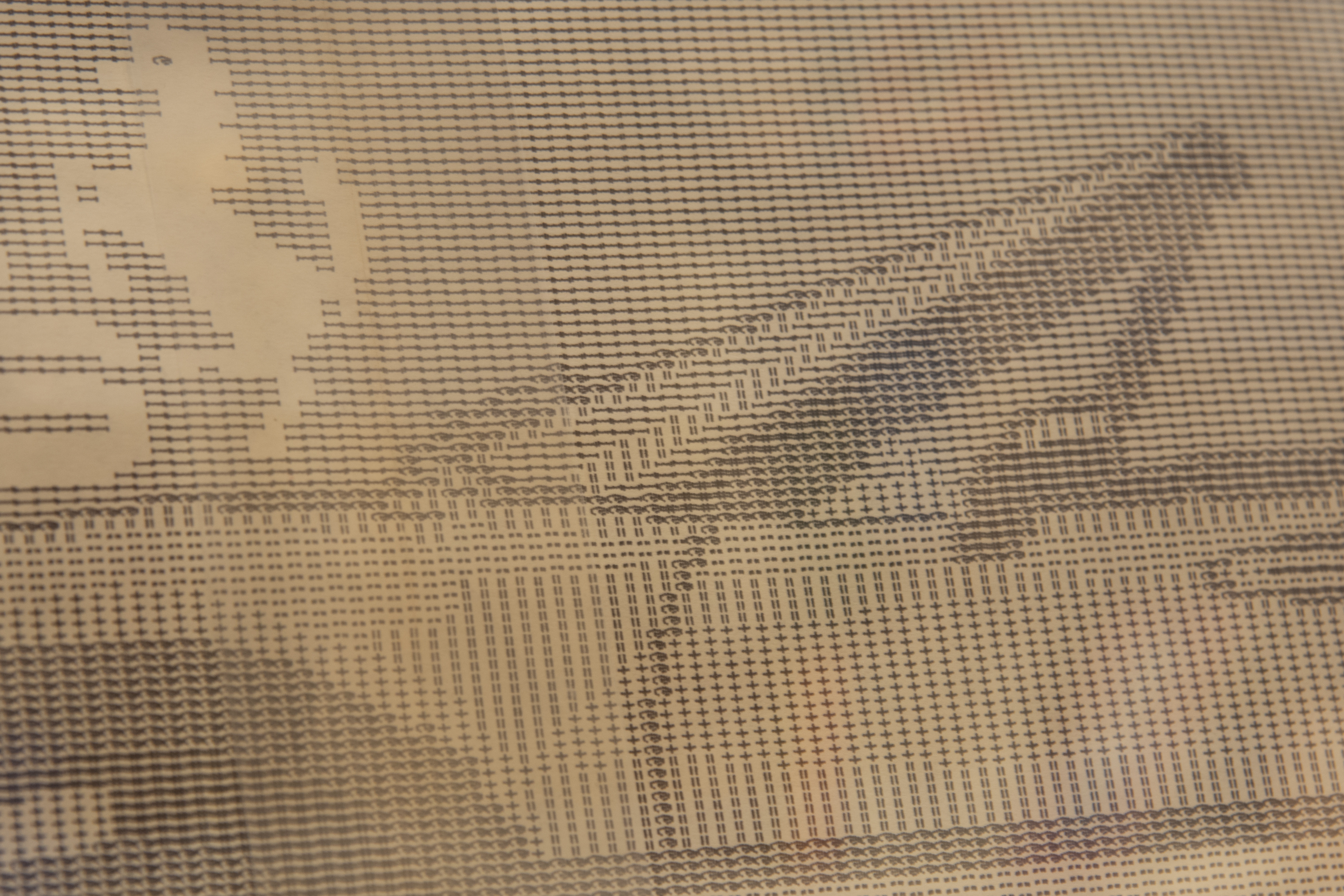
In parallel, the craft of needlepoint arose in ancient Egypt in the form of canvas tent stitching. Follow this thread to cross stitch and the technique of folk “samplers.” In the oldest surviving sampler (Jane Bostocke, 1590s) we clearly see the underlying grid-logic that later informed typewriter art when it emerged soon after Remington’s typewriter landed in the 1870s. Artists like Flora F.F. Stacey distributed works widely via newspaper, helping to popularize the movement, while Linotype operators in the 1880s began exploring the machine's ability to set decorative borders and figures. The 1930s-1970s saw an explosion of typewriter art, and glyph-based images on teleprinters and early fax machines, informing subsequent works in early computing. Minimalist ASCII-drawings of Snoopy began adorning computer science labs on university campuses, and in 1982, we officially got the :-) emoticon from Scott Fahlman at Carnegie Mellon.
In the networked decades that followed, artists like the prolific Joan G. Stark (jgs) produced widely-shared ASCII art that harkens to the lighthearted, humorous scenes of cross stitch. Hacker teens in the BBS scene promoted their software piracy with ASCII logos inspired by hip hop and graffiti culture. Today, “ASCII art” has become an umbrella term to broadly describe these aesthetics; it can be found in all corners of art, design, and pop culture. Perhaps because text is inherently a spatial artifact before it's a semantic one, or perhaps because we just like to bend the rules, it seems that no matter the century, no matter the technology, we love making images from glyphs.